
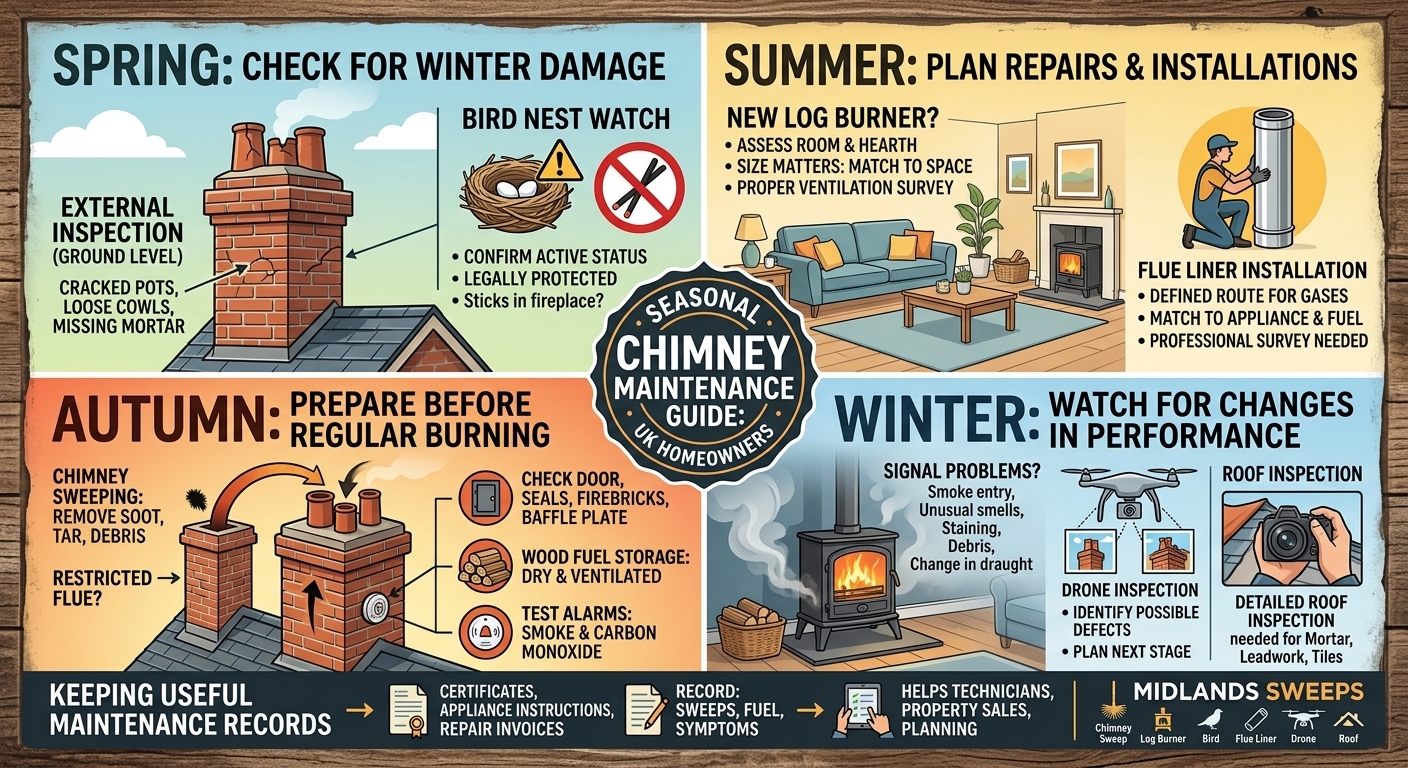
Chimneys work throughout the year, even when a fireplace or stove is used mainly during colder months. Rain, wind, nesting birds, temperature changes, and regular burning can affect different parts of the system.
Spring: Check for Winter Damage
From ground level, check whether chimney pots appear tilted, cowls look loose, or mortar seems to be missing. Damp patches near a chimney breast, peeling decoration, or debris in the fireplace may also justify further investigation.
Spring is also when birds may begin nesting. Sticks or other material dropping into the fireplace can indicate activity higher in the flue. Bird nest removal should never be attempted without confirming whether a nest is active, as wild birds, eggs, and nests may be legally protected.
Summer: Plan Repairs and Installation Work
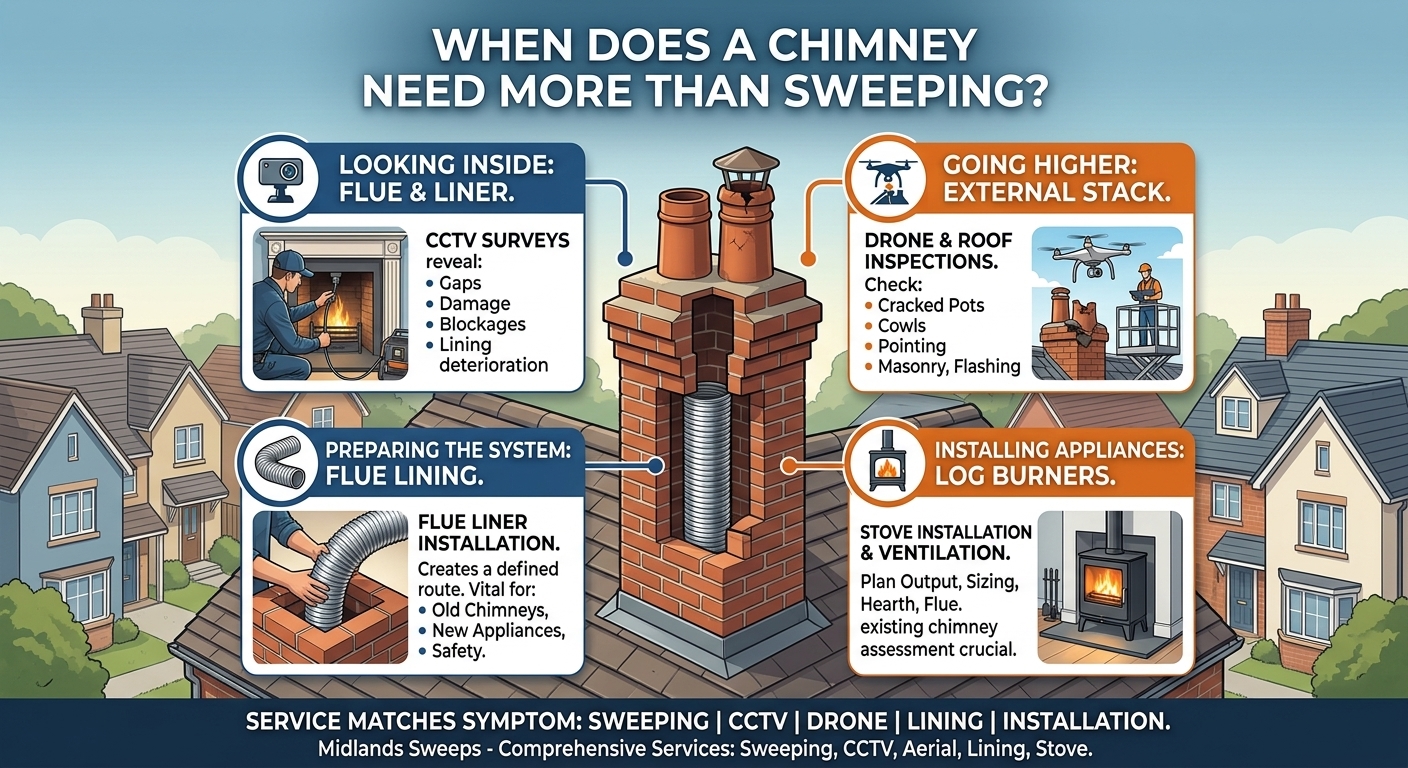
Homeowners considering log burner installation should begin with a complete assessment of the room, chimney, hearth, and ventilation. Stove size matters: an appliance that produces too much heat for the space may be uncomfortable and difficult to operate efficiently.
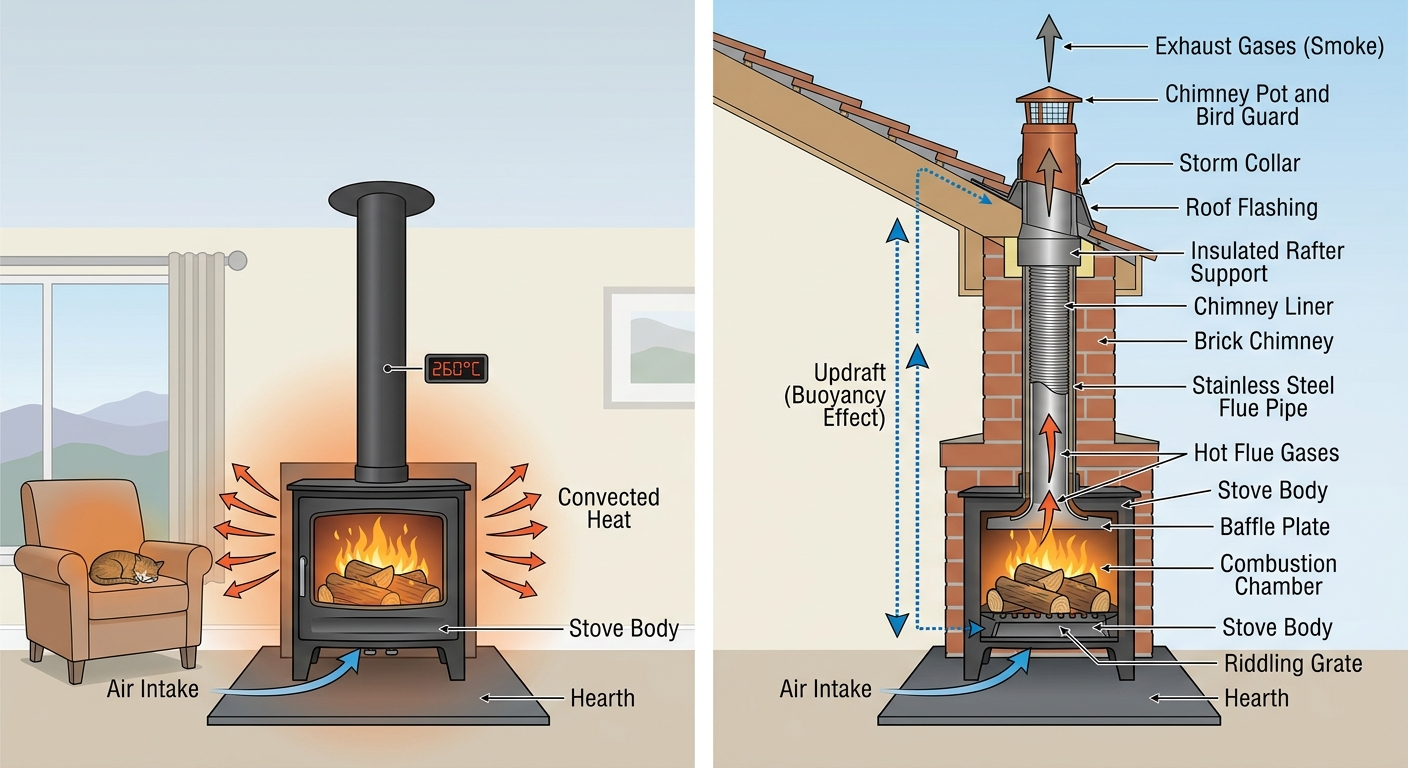
Some properties may require flue liner installation, particularly where the existing chimney is unlined, deteriorated, or unsuitable for the intended appliance. A liner provides a defined route for combustion gases, but its material and diameter must match the fuel, appliance, and chimney arrangement. Installation should therefore follow a proper survey rather than a one size fits all approach.
Autumn: Prepare Before Regular Burning
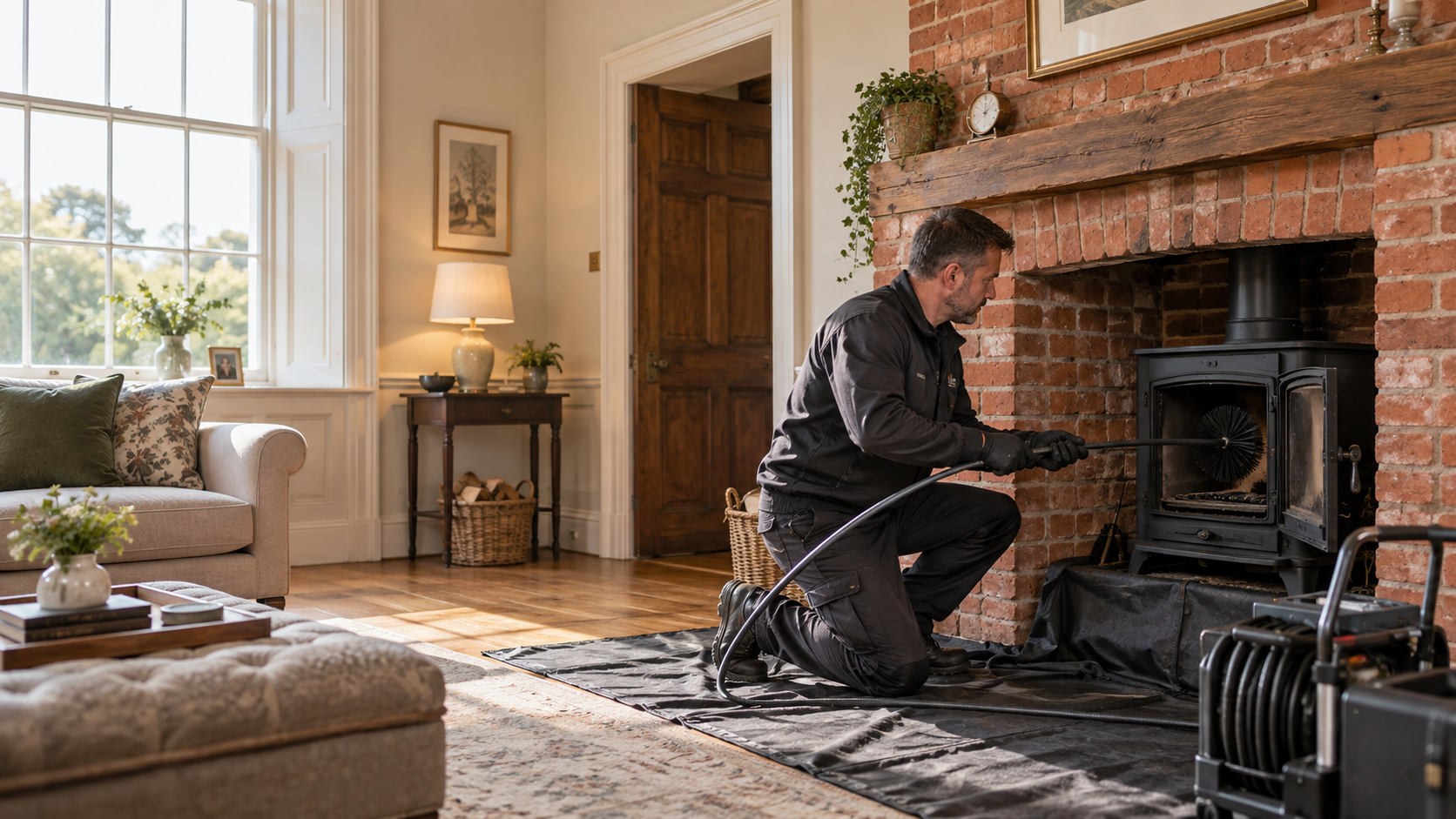
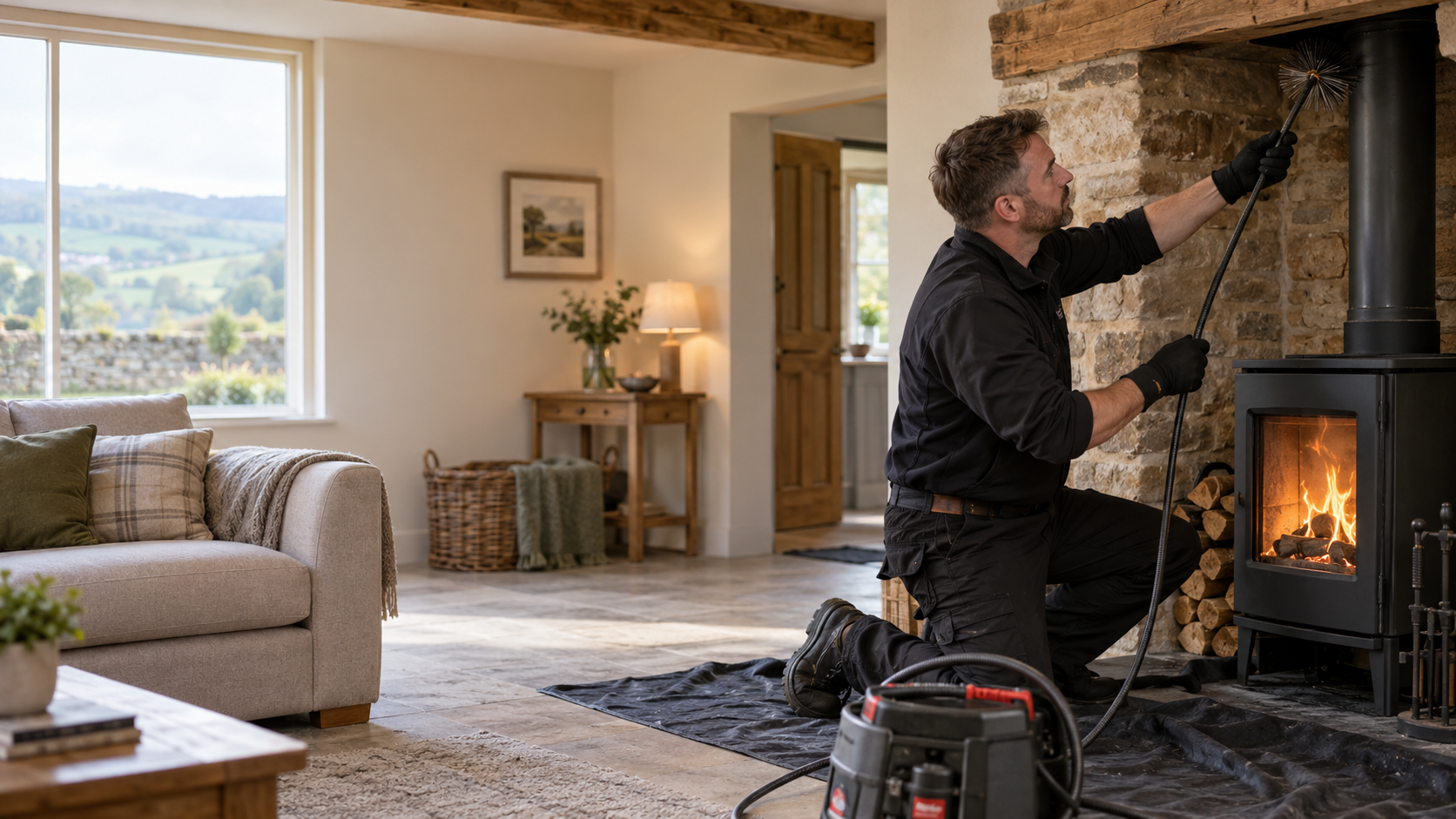
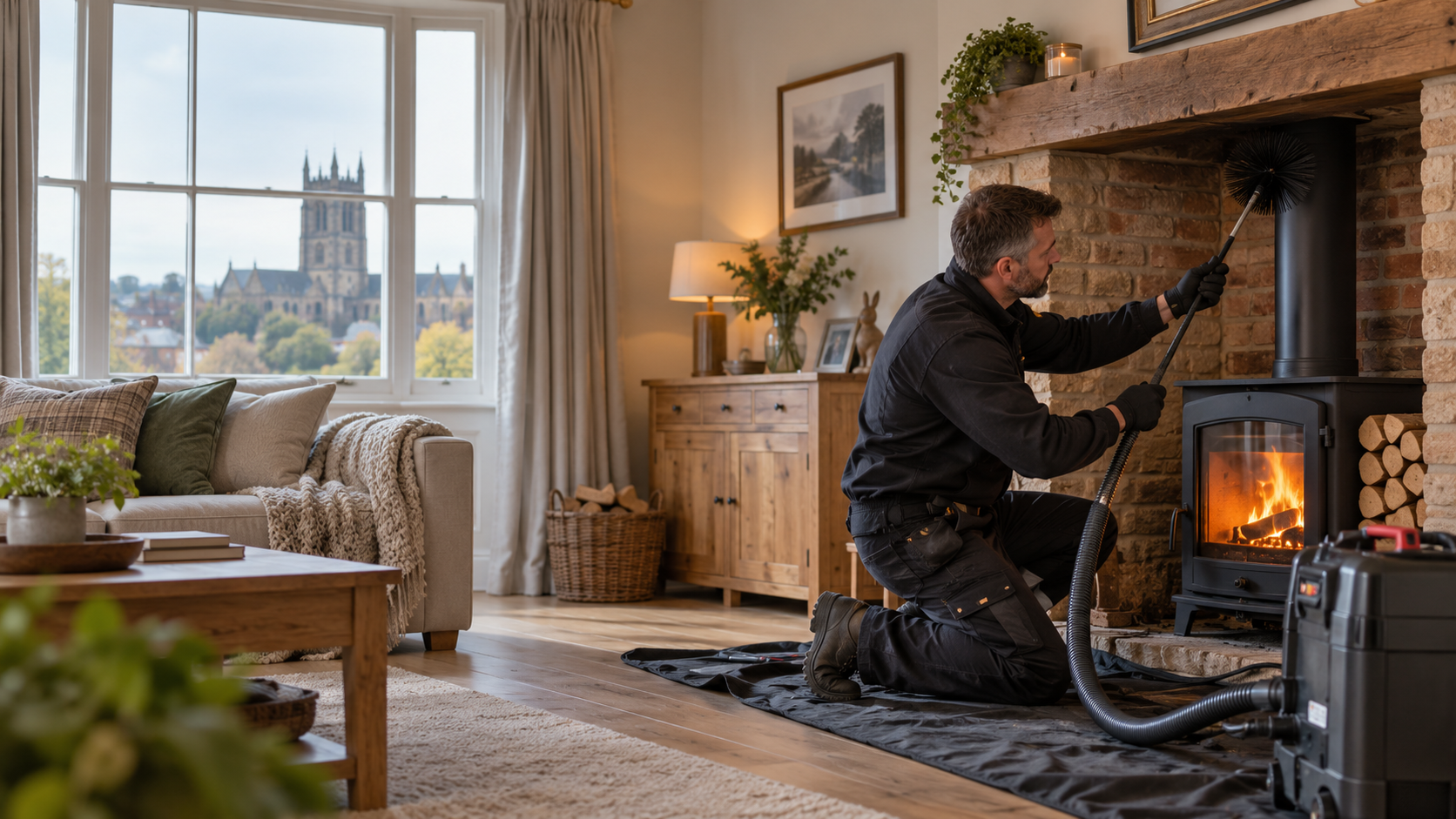
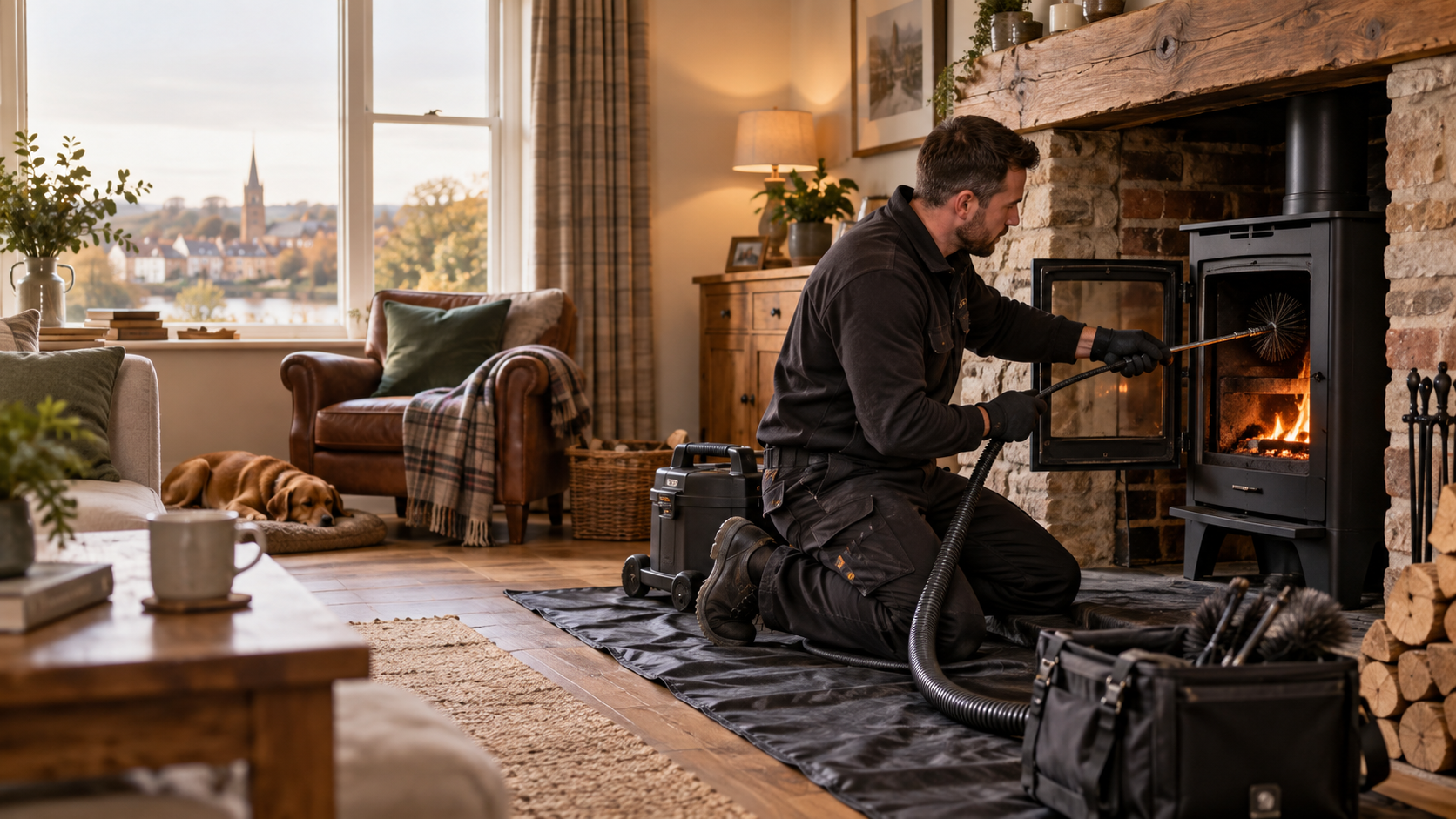
Autumn is the ideal time to prepare a fireplace or stove for frequent use. Sweeping removes soot, tar, and loose debris that may restrict the flue. The appliance door, seals, firebricks, baffle plate, and controls should also be checked for obvious wear.
A smoke alarm does not replace a carbon monoxide alarm. Both should be tested according to their instructions, with batteries or entire units replaced when required. Wood fuel should be stored somewhere dry and ventilated. Burning appropriately seasoned wood helps reduce smoke and excessive deposits, although every chimney still needs suitable maintenance.
Winter: Watch for Changes in Performance
During winter, pay attention to how the fire lights and burns. Smoke spilling into the room, persistent unusual smells, staining, falling debris, or a noticeable change in the air may signal a problem. Stop using the appliance if its behavior suggests that fumes are not leaving correctly, and arrange an assessment before relighting it.
Never assume that a visible chimney stack is sound throughout. Damage can occur in areas that cannot be safely viewed from the ground. A drone inspection can provide images of pots, crowns, flashing, and masonry without requiring immediate close access. It is useful for identifying possible defects and planning the next stage.
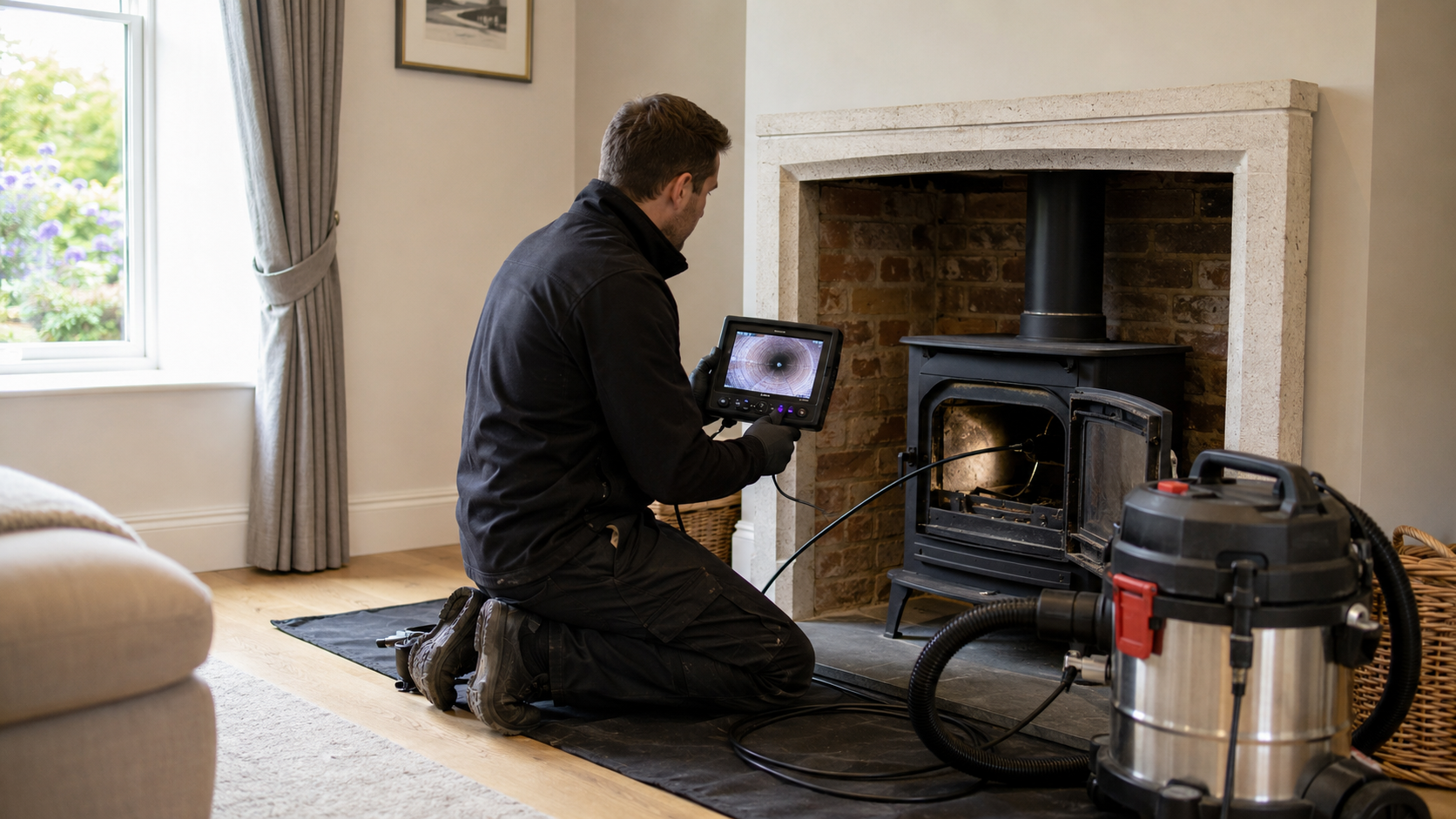
However, aerial images have limits. A detailed roof inspection may still be necessary to examine mortar, lead work, tiles, or structural movement closely. Internal CCTV, smoke testing, or other checks may also be appropriate when the concern relates to the inside of the flue.
Keeping Useful Maintenance Records
Keep certificates, inspection images, appliance instructions, and repair invoices together. Record when the chimney was swept, which fuel was used, and whether any unusual symptoms occurred. These notes can help a technician understand recurring problems and may be useful when selling the property or planning future work.
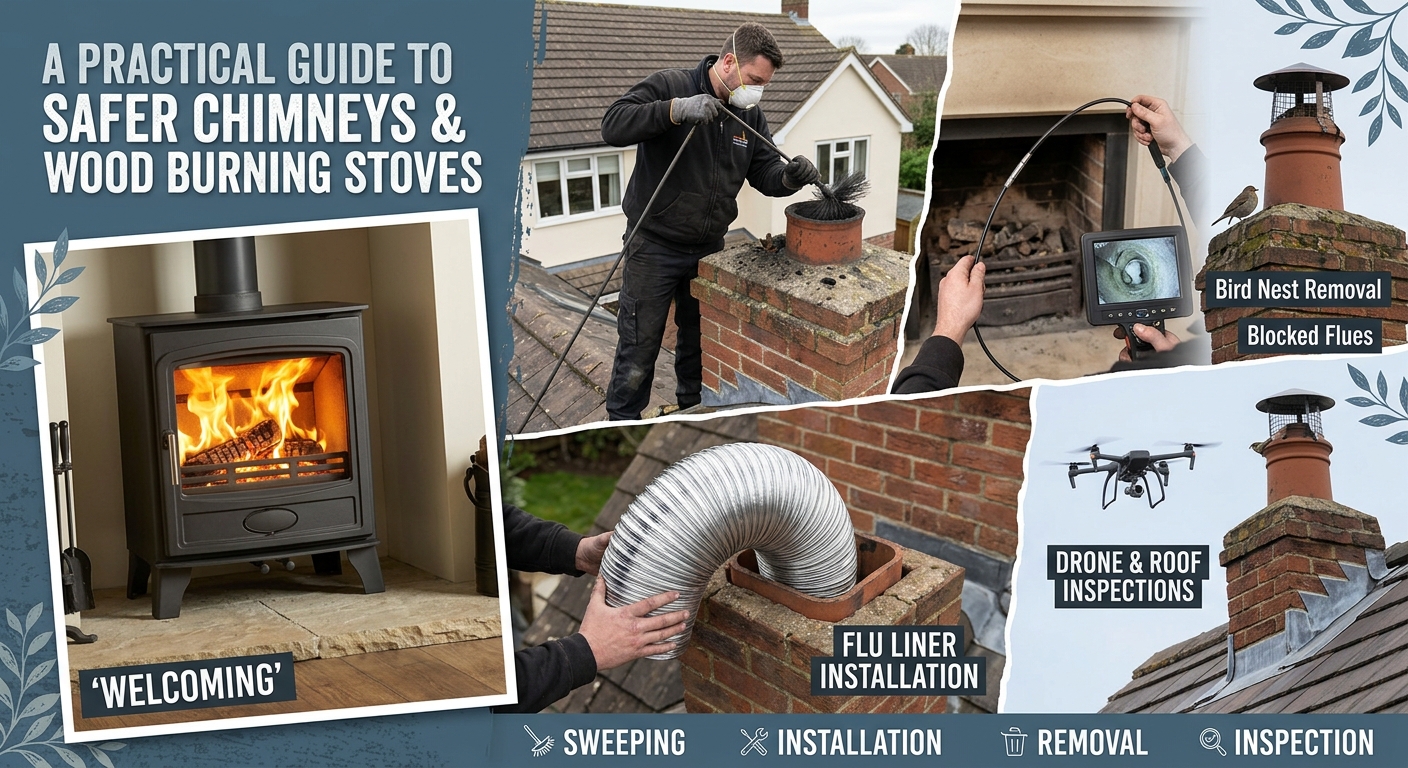
Midlands Sweeps lists services including chimney sweeping, log burner installation, bird nest removal, flue liner installation, drone inspection, and roof inspection. Whatever provider is chosen, homeowners should ask what will be examined, whether limitations apply, and what evidence will be supplied afterward.
Conclusion
Seasonal chimney care is about observing changes, cleaning at appropriate intervals, and investigating warning signs promptly. Planning work during quieter months can reduce disruption, while careful winter monitoring helps identify problems when the system is under regular demand.
Frequently Asked Questions
How often should a chimney be swept?
The appropriate frequency depends on the appliance, fuel, and level of use. Follow manufacturer guidance and advice based on the individual system.
Can a drone inspect inside a chimney?
No. A drone normally records external areas. Internal flue conditions may require CCTV equipment or other testing.
What should I do if I suspect a bird nest?
Stop using the fireplace, avoid disturbing the nest, and request advice from someone familiar with chimney work and wildlife protections.