How a Chimney and Log Burner Work Together

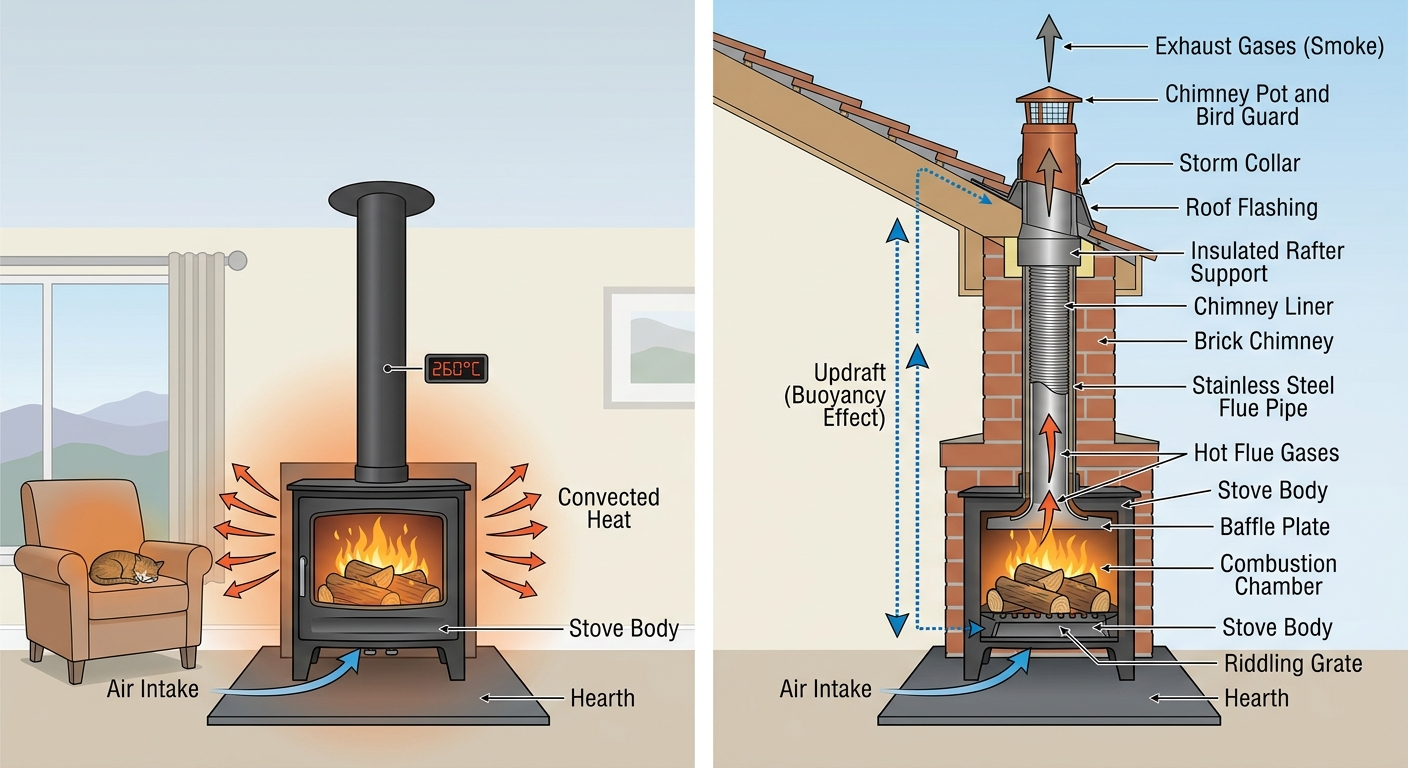
Cross section diagram showing how a log burner and chimney work together, highlighting air intake, heat output, flue gas flow, and updraft through the chimney liner.

How a Chimney and Log Burner Work Together

When a log burner is working well, most of what happens is out of sight. Air feeds the fire, smoke rises through the flue, and gases leave through the chimney. Each part of that route matters. A clean stove cannot work as intended if the flue is blocked, and a sound chimney still needs an appliance that suits it. Understanding the basics can help homeowners recognize when to arrange maintenance, ask useful questions during an inspection, and make informed choices about a new stove.

The Stove: Where the Fire Begins

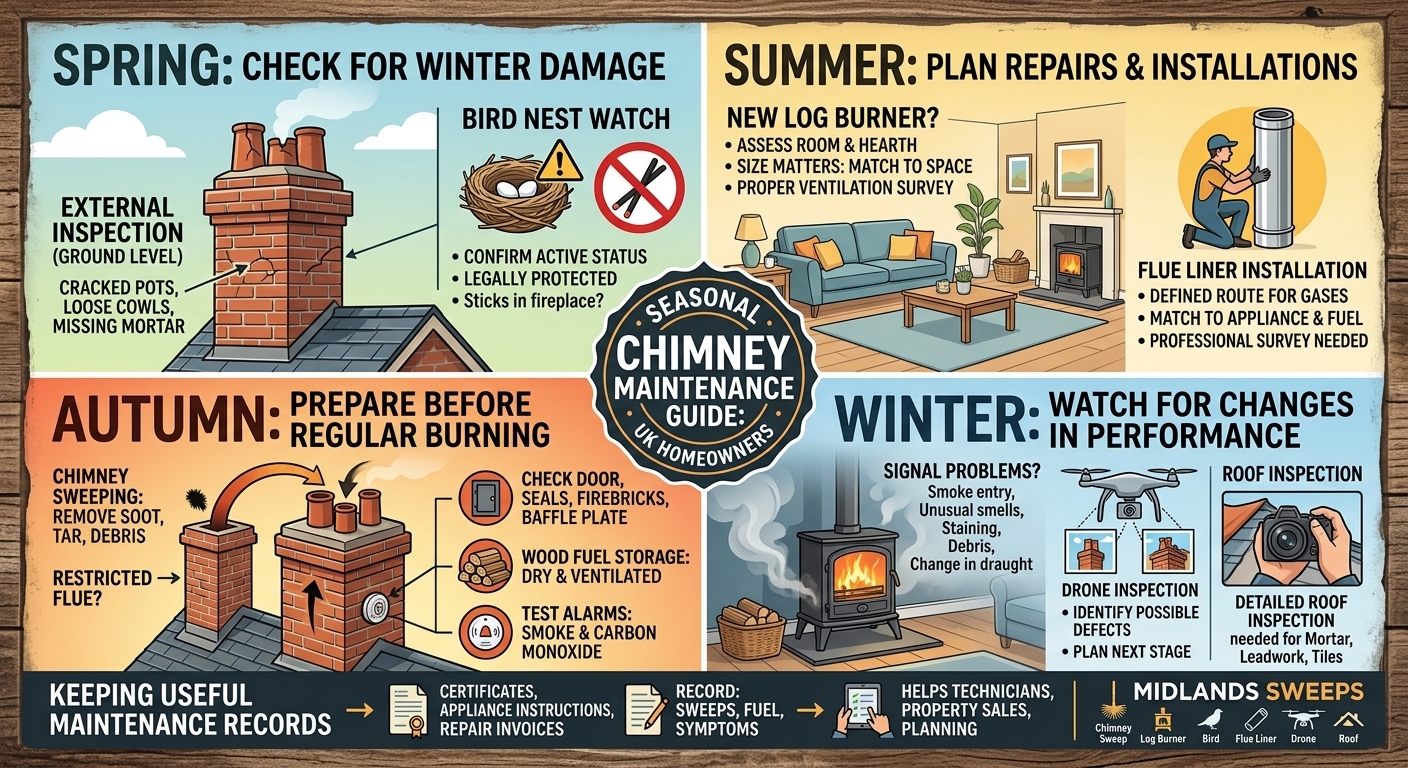
A log burner controls how air reaches the fire. Its doors, seals, and air vents help maintain combustion while keeping smoke within the appliance. Different stoves have different output levels, so the size of the room matters when selecting one. Log burner installation involves more than fitting the stove into an opening. The installer needs to consider the hearth, ventilation, the connection to the flue, and the condition of the chimney. Choosing an appliance before those details are assessed can make a project more complicated than expected.

The Flue: The Route Out of the House

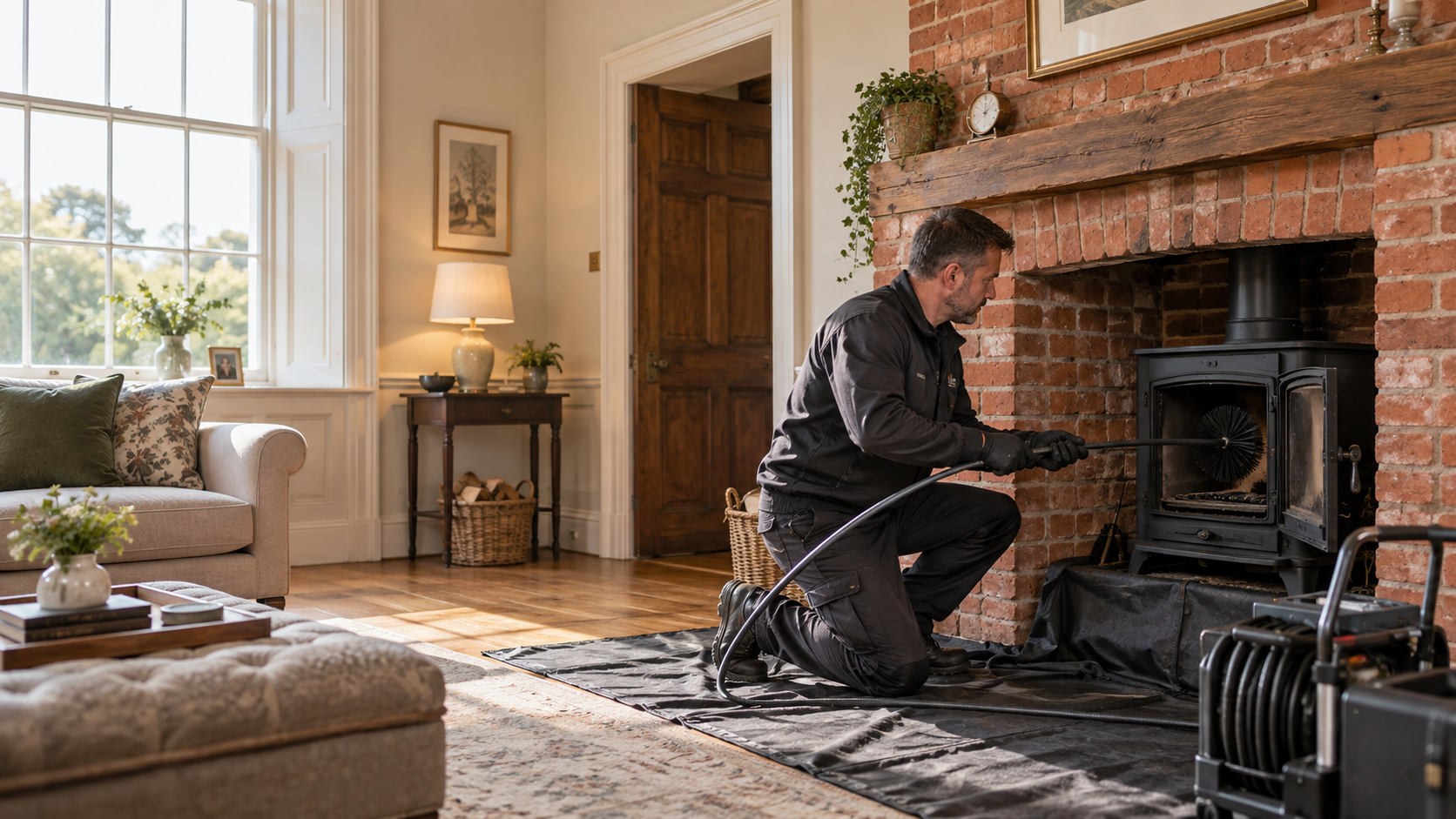
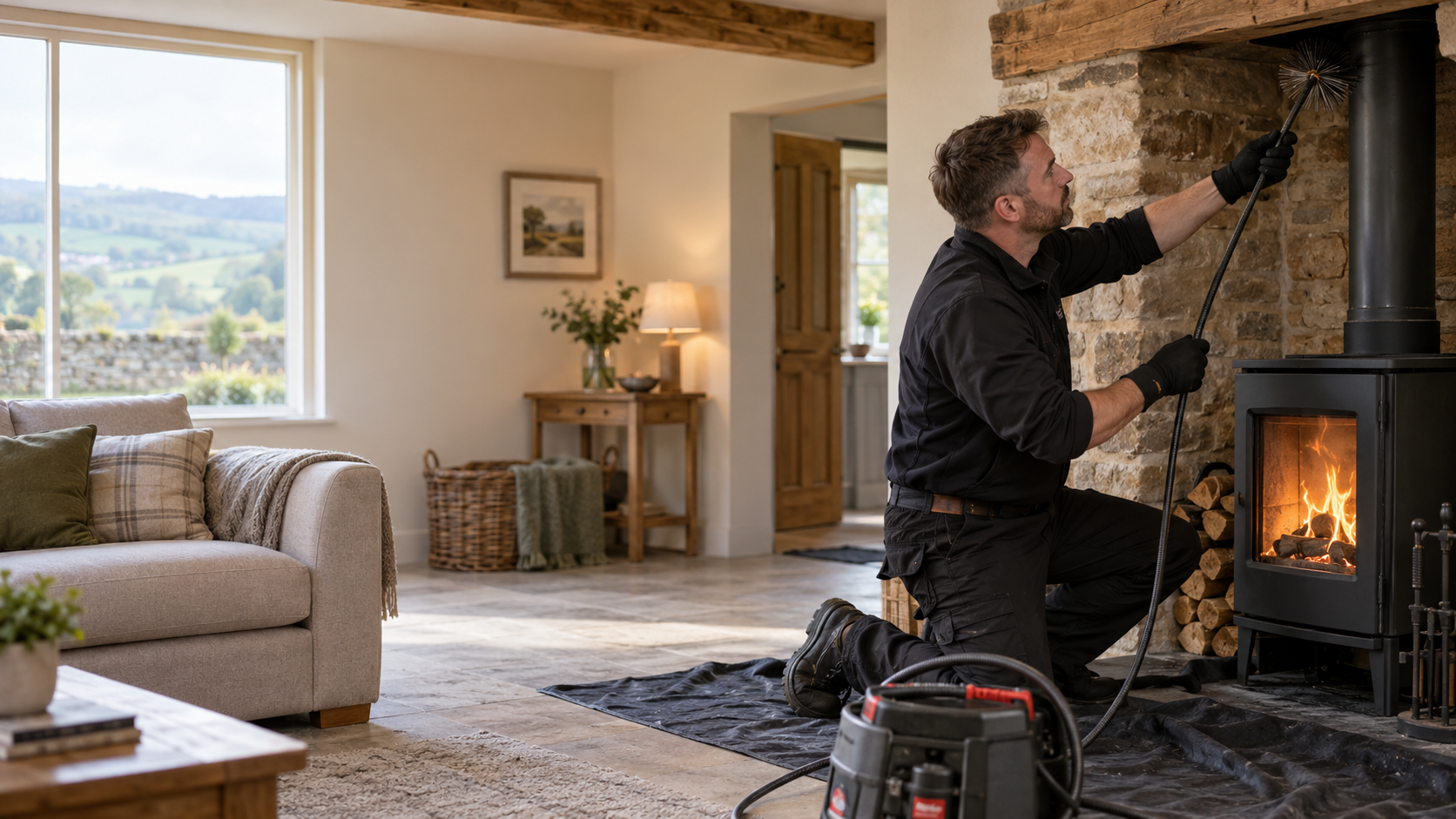
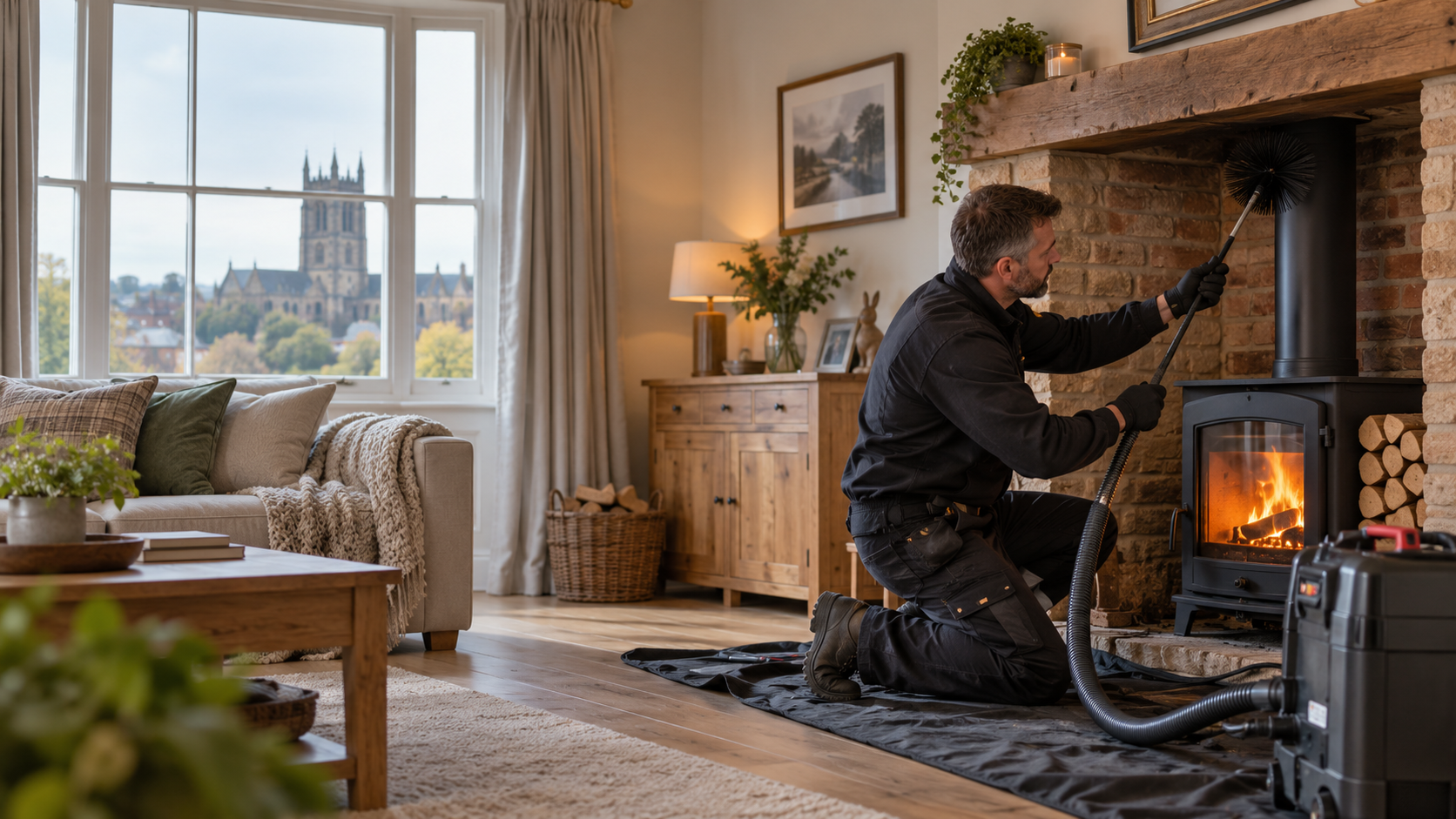
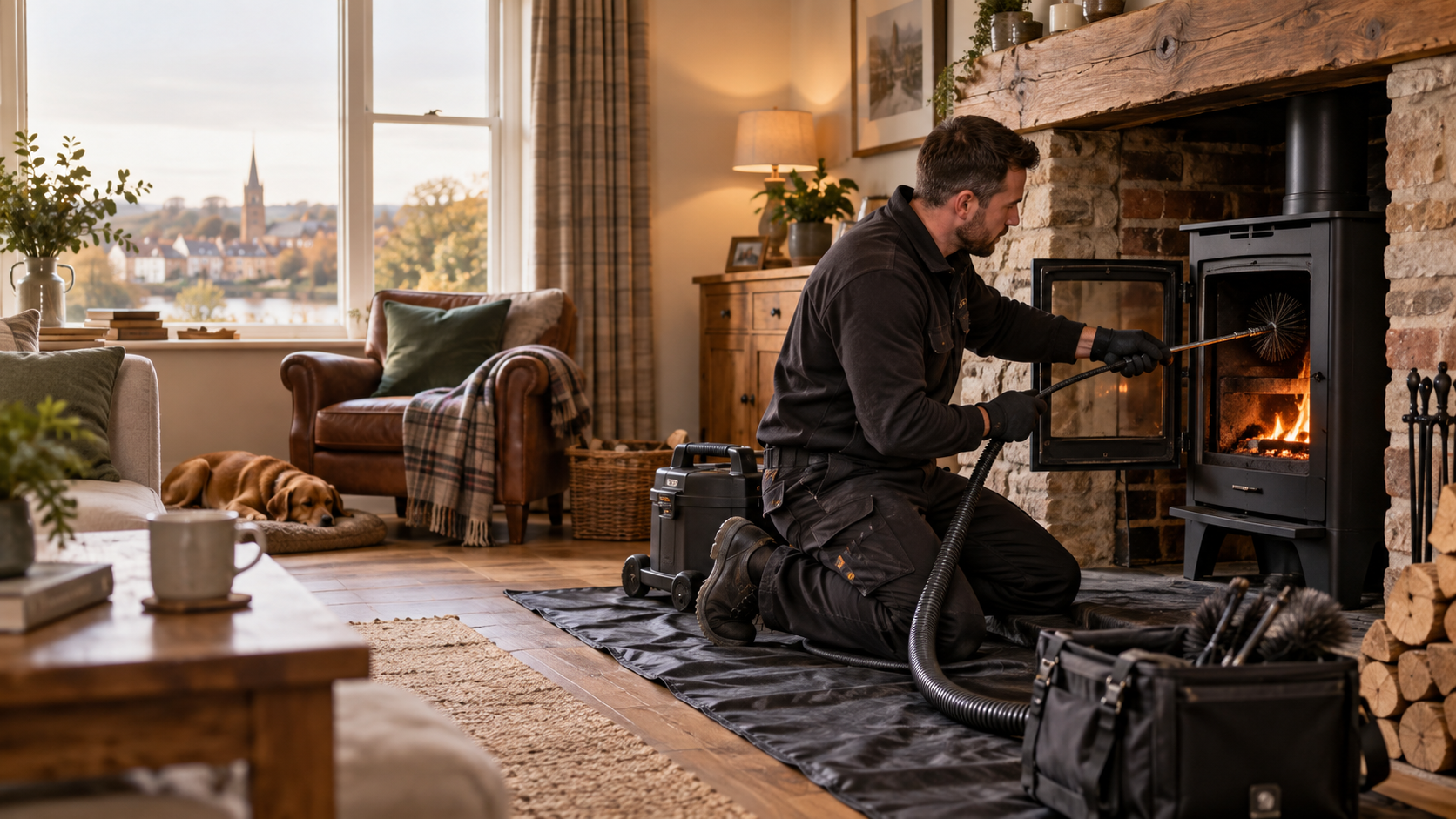
The flue carries smoke and combustion gases away from the stove or fireplace. Over time, deposits can collect on its inner surfaces. Loose debris may also fall from an older chimney. Both can affect the passage through which gases escape. A chimney sweep removes accumulated deposits and can identify signs that further investigation is needed. The right sweeping schedule depends on the appliance, fuel, and frequency of use. Keeping a record of each visit makes it easier to track maintenance and share the chimney’s history if the property changes hands.

When a Liner Comes Into the Picture

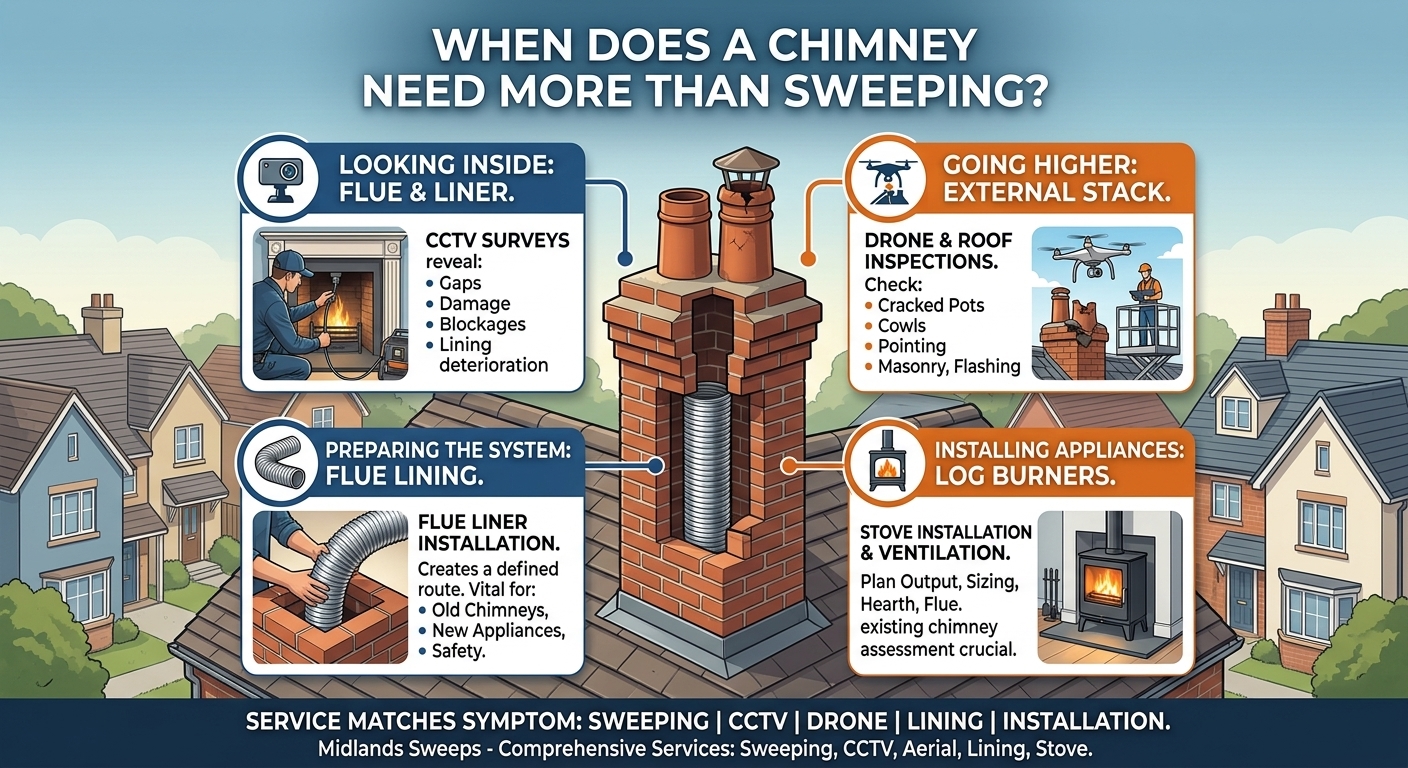
A flue liner creates a defined passage inside the chimney. Its suitability depends on the appliance and the existing structure. If an older flue has deteriorated or a new stove requires a different arrangement, flue liner installation may form part of the work. A liner is selected according to factors such as fuel type, appliance requirements, and chimney dimensions. It should be considered after the existing flue has been assessed, so the installation addresses the actual condition of the system.

The Chimney Pot and Roofline

At the top of the system, the chimney pot provides an outlet. From ground level, it can be difficult to judge the condition of the pot, stack, mortar, or surrounding roof. Weather can gradually wear these areas, while fallen debris may find its way into the flue. A drone inspection and roof inspection can help examine visible areas around the chimney. Drone images offer a useful view of places that are hard to see from below. If they show a possible defect, a closer inspection may be needed to confirm its cause and decide what work is appropriate.

What an Internal Camera Can Reveal

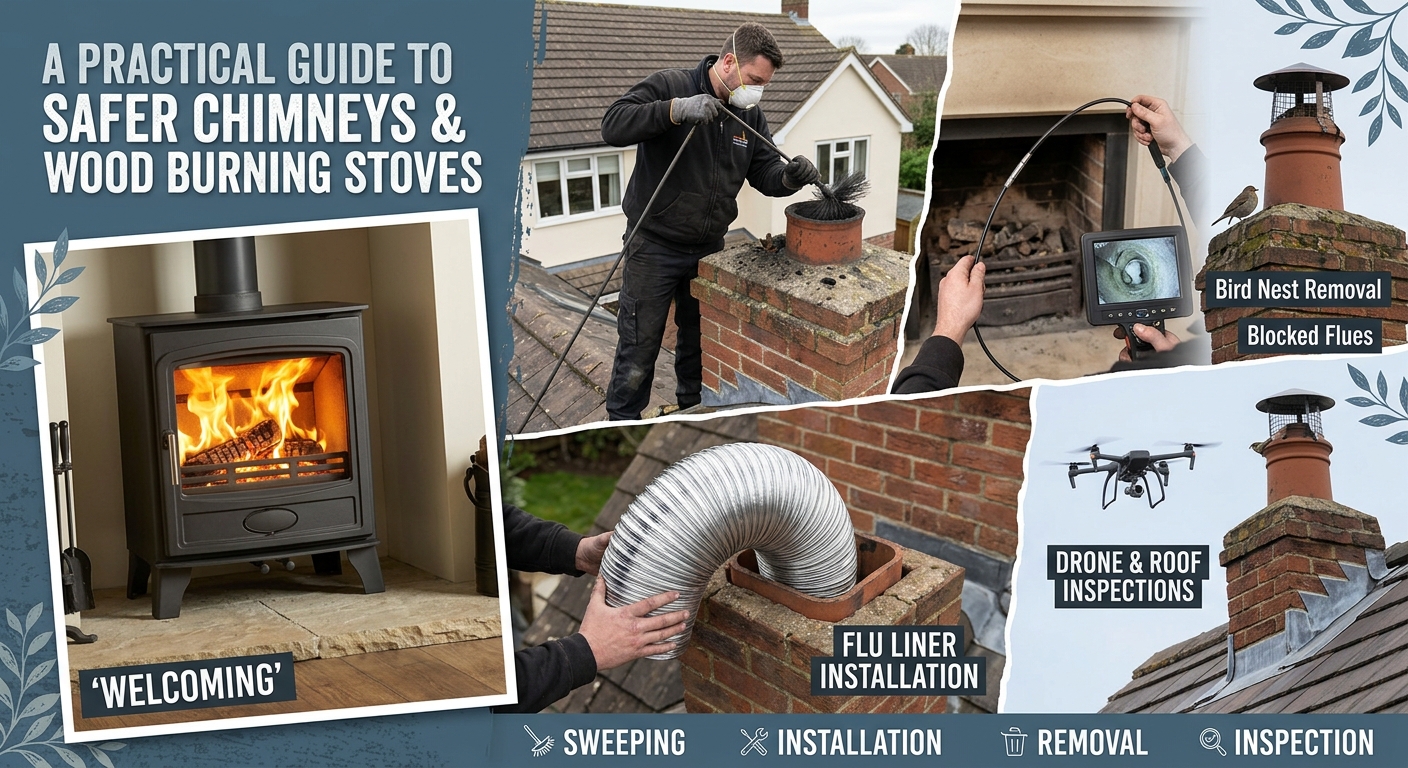
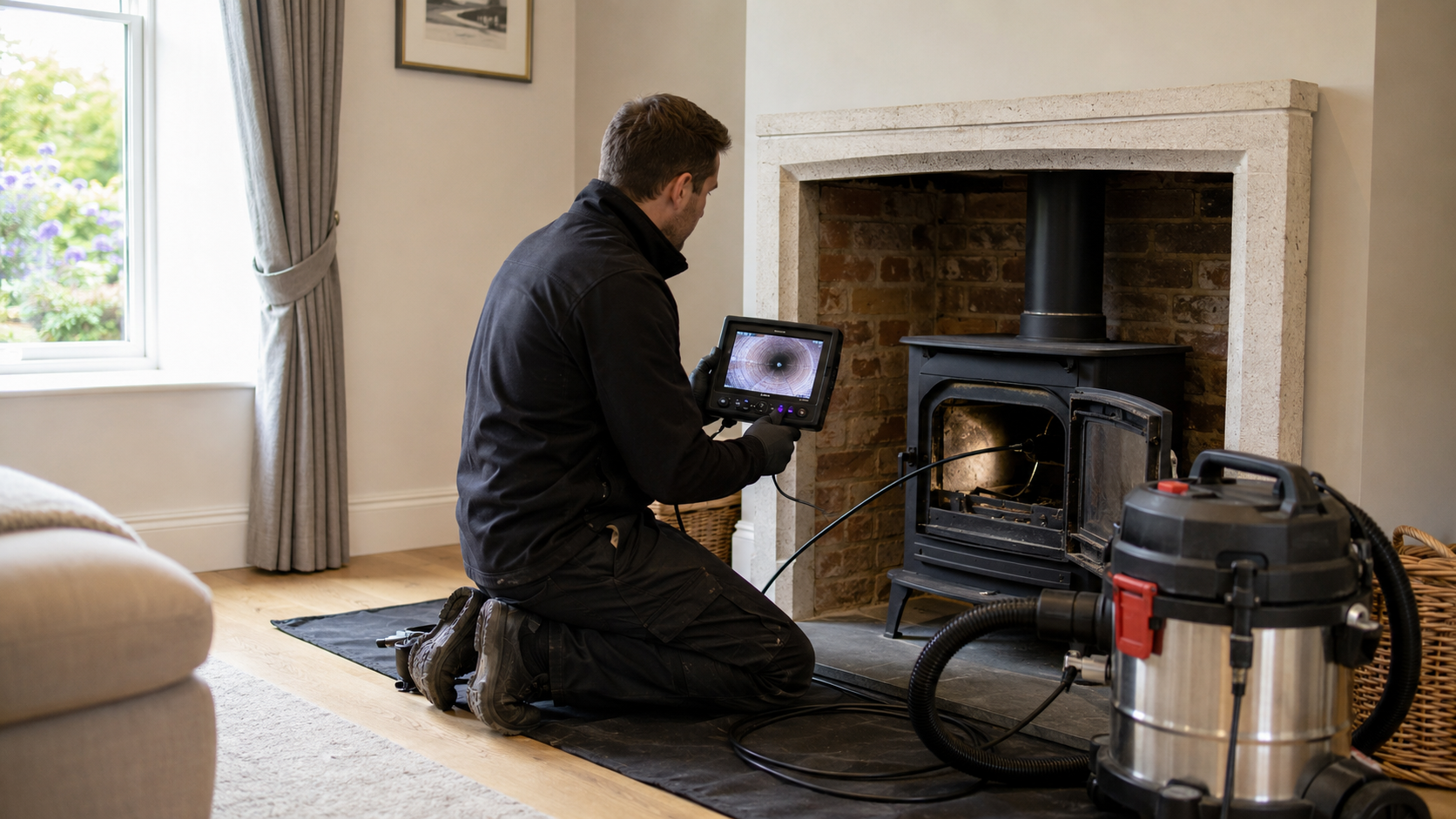
External images cannot show everything happening inside a chimney. A CCTV camera may help locate a blockage, damaged section, or change in the flue’s condition. Combining CCTV and drone inspection gives a clearer view of the internal route and the exposed chimney above the roof. Midlands Sweeps lists sweeping, installation, and inspection services, reflecting the different parts of chimney care. The useful question for a homeowner is which assessment fits the concern: a routine sweep, a closer look inside the flue, or an examination of the roofline.

When Birds Enter the System

Birds can build nests in open chimney pots. Sticks and other nesting material may block the route for smoke and gases, even if the fireplace has not been used recently. Signs can include sounds from the chimney or debris appearing in the hearth. If you suspect a nest, leave the appliance unlit. Bird nest removal should follow an assessment because active nests and wild birds may be protected. Once the situation has been resolved at an appropriate time, a suitable chimney cowl may help discourage future nesting.

Conclusion

A stove, flue, and chimney operate as one system. Sweeping deals with deposits, inspections help locate hidden concerns, and installation work should account for the condition of the whole route. Knowing what each part does makes it easier to describe a problem and understand the next step.

Frequently Asked Questions

Does sweeping show every chimney problem?

No. Sweeping removes deposits, but a CCTV or external inspection may be needed to investigate damage or an unexplained blockage.

Does every log burner need a new flue liner?

That depends on the appliance and the condition and suitability of the existing flue. An assessment should guide the decision.

Should I use the stove if I hear birds in the chimney?

Leave it unlit until the chimney has been checked and any obstruction has been dealt with appropriately.