Regular sweeping is an important part of fireplace and stove care, but it does not answer every question about a chimney. Some problems occur inside the flue, while others affect the external stack, roof junctions, or appliance connection. Understanding the purpose of each service helps homeowners arrange the right investigation rather than relying on one check for every situation.
What a Chimney Sweep Can Identify
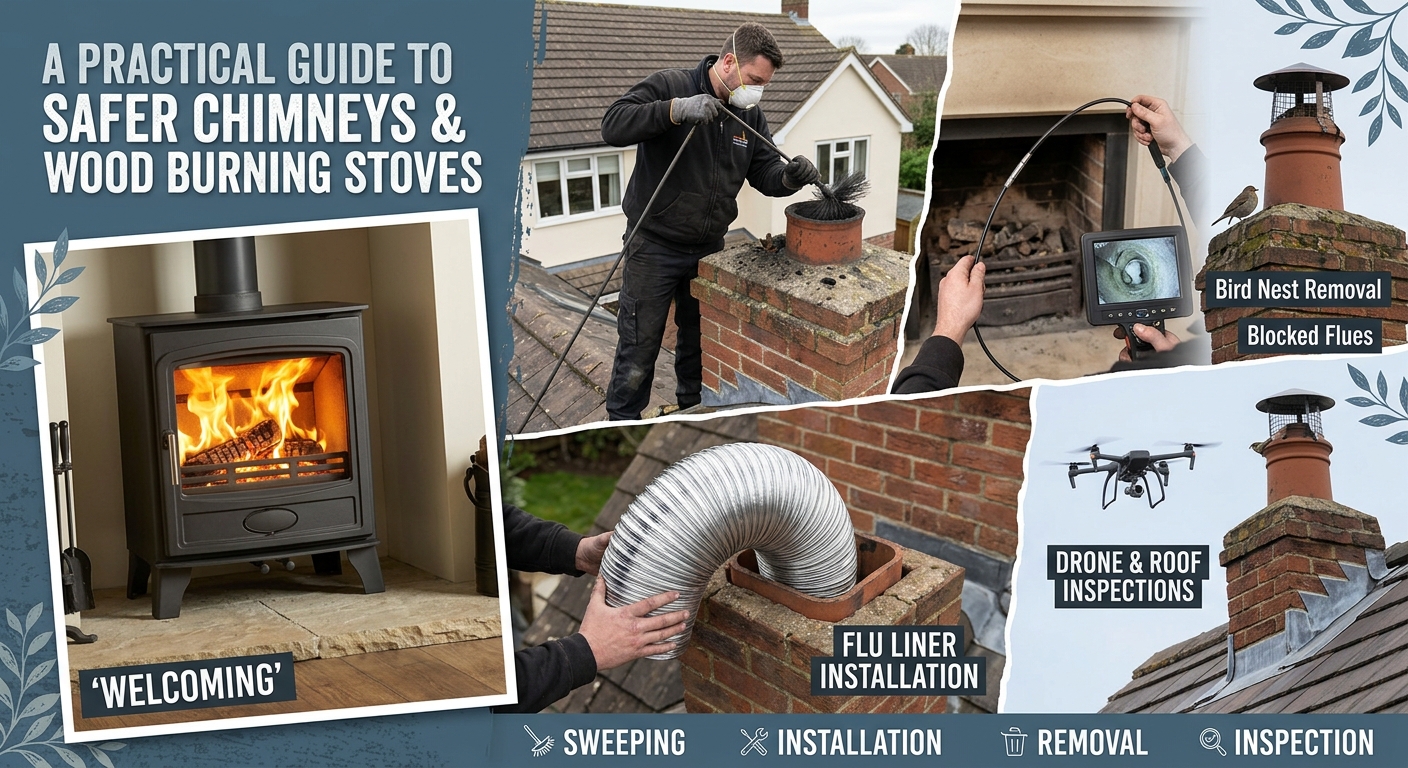
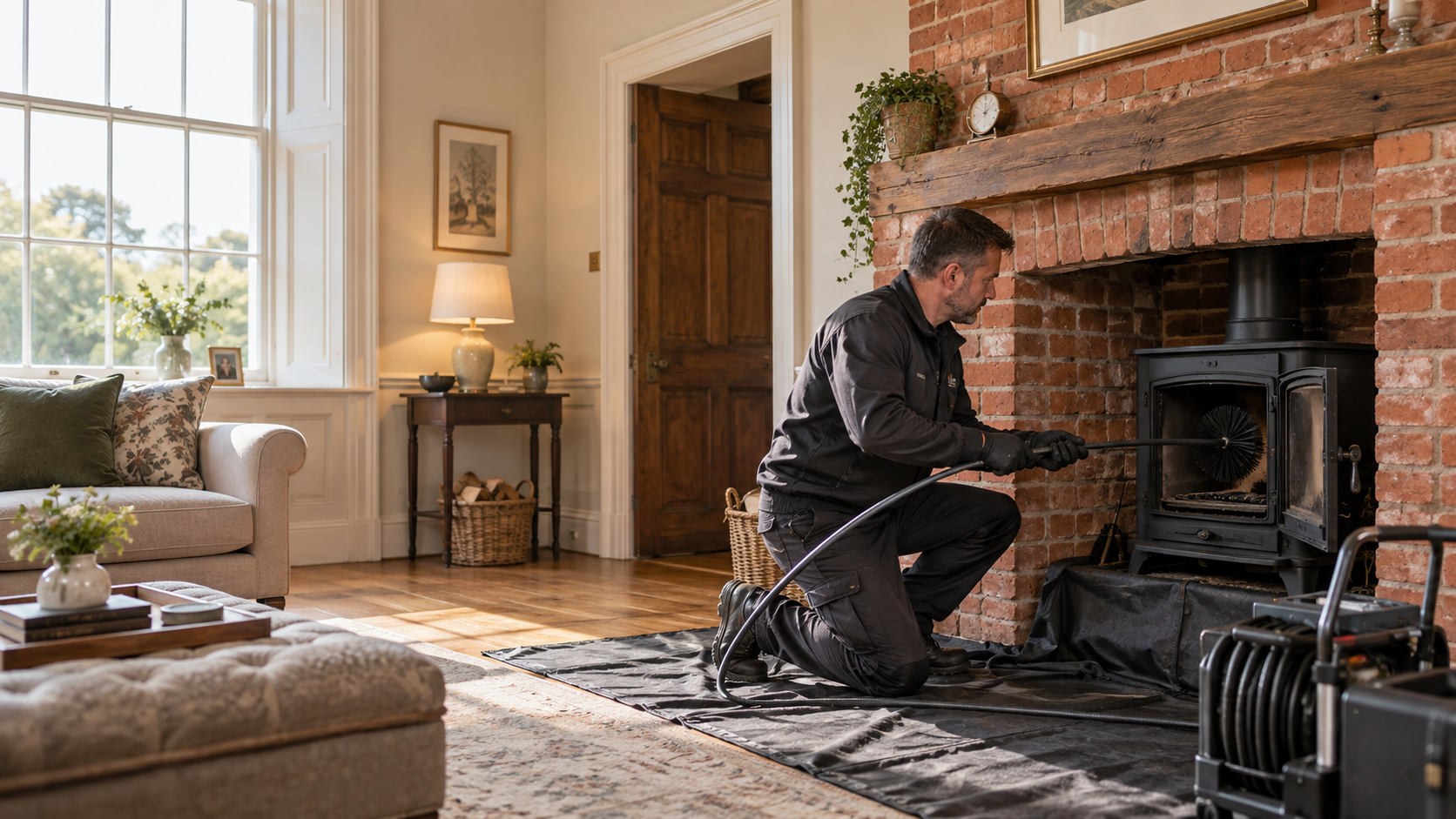
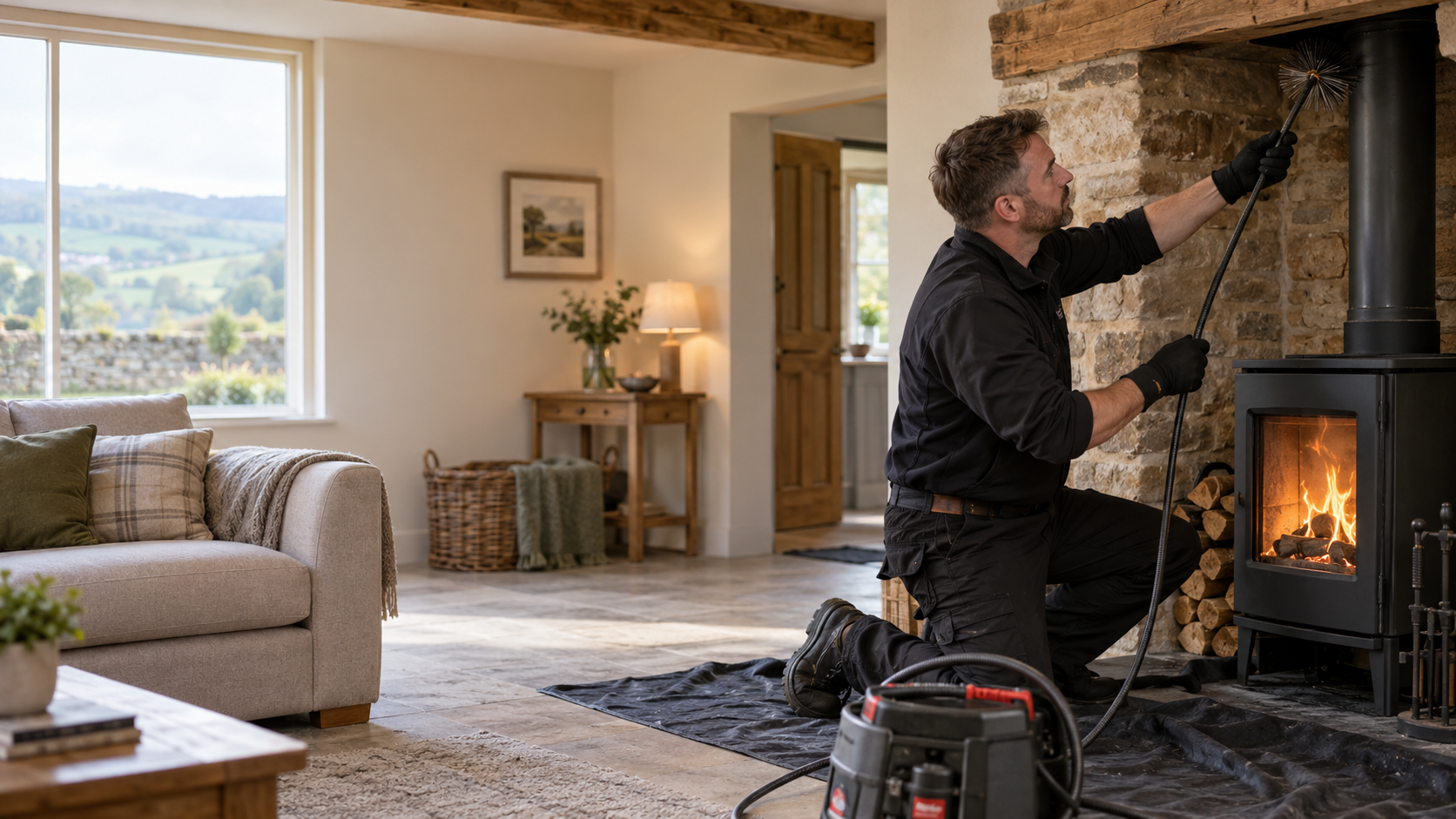
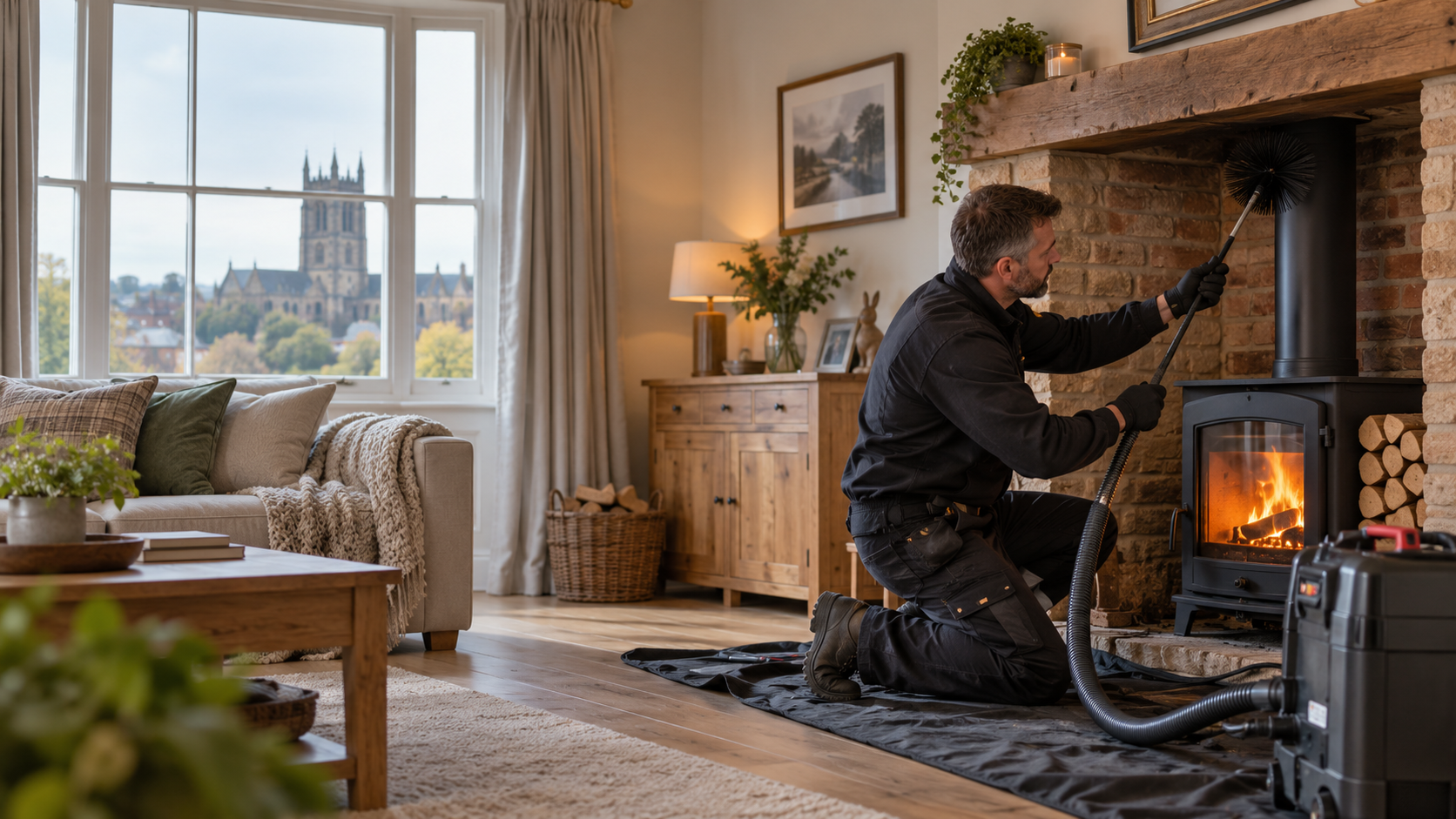
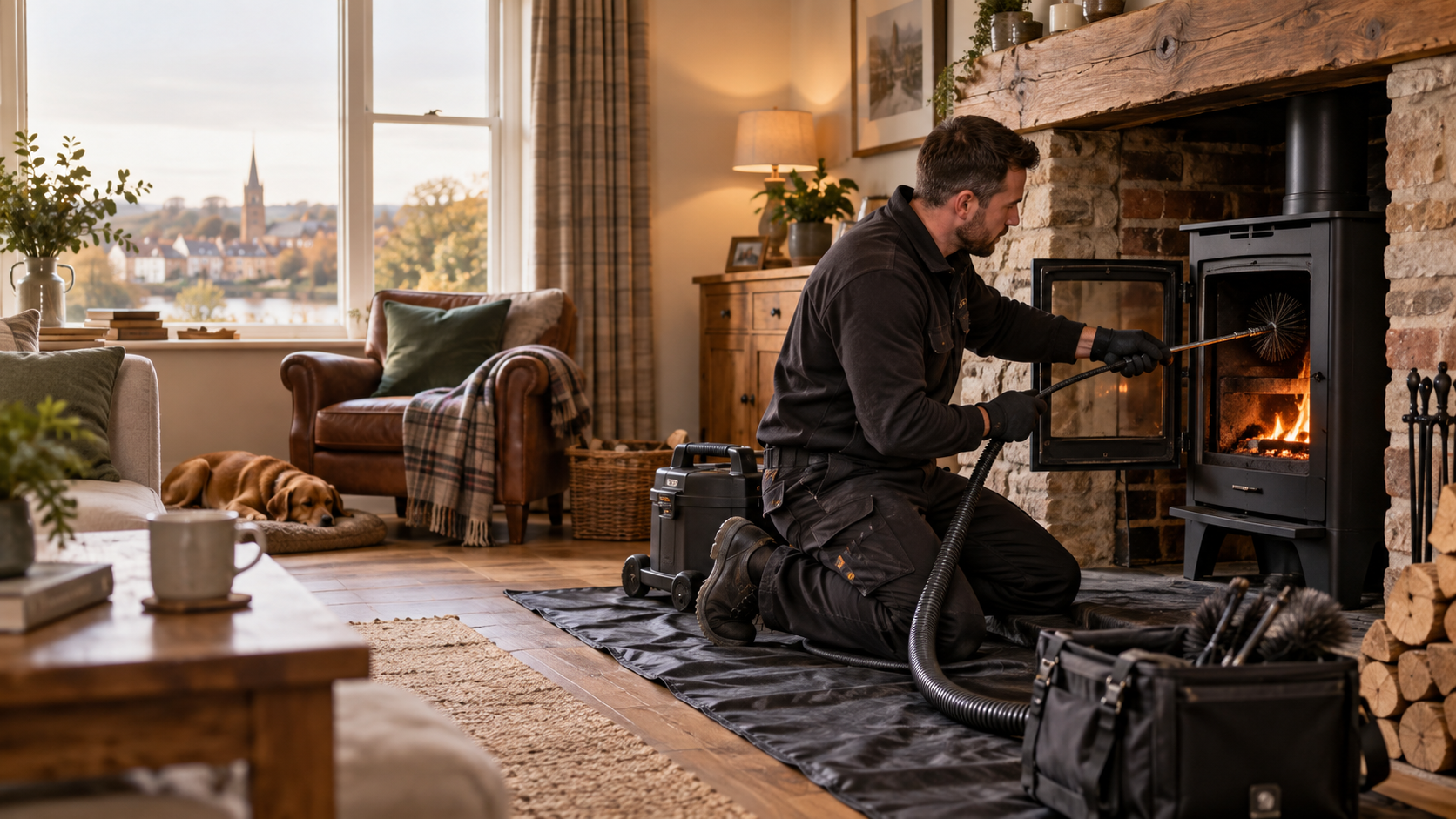
A professional chimney sweep removes soot, tar, and loose debris from the flue.
Sweeping is not the same as a complete structural survey. If smoke enters the room, debris repeatedly falls into the fireplace, or damp marks appear nearby, further investigation may be appropriate.
Looking Inside With CCTV
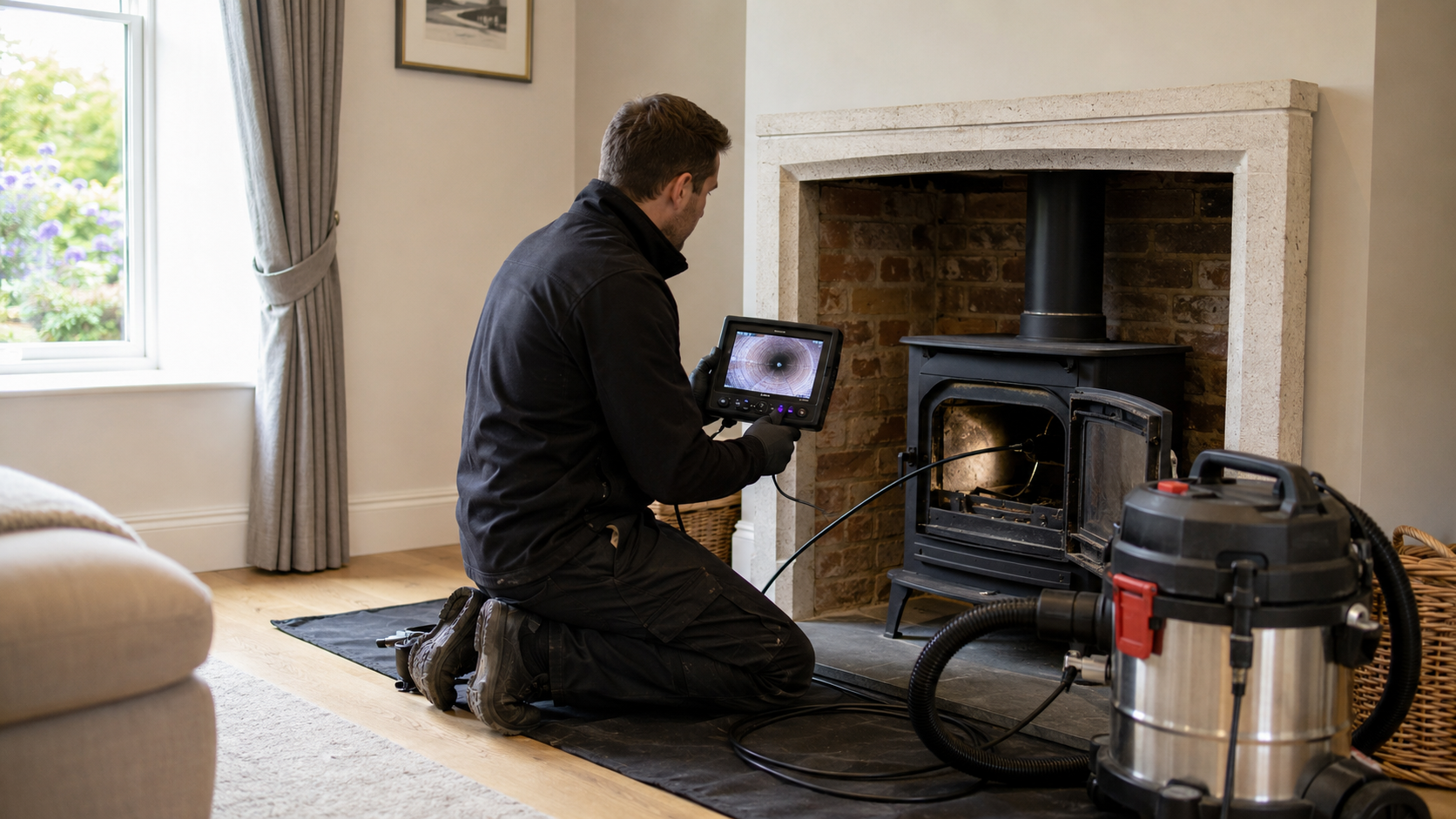
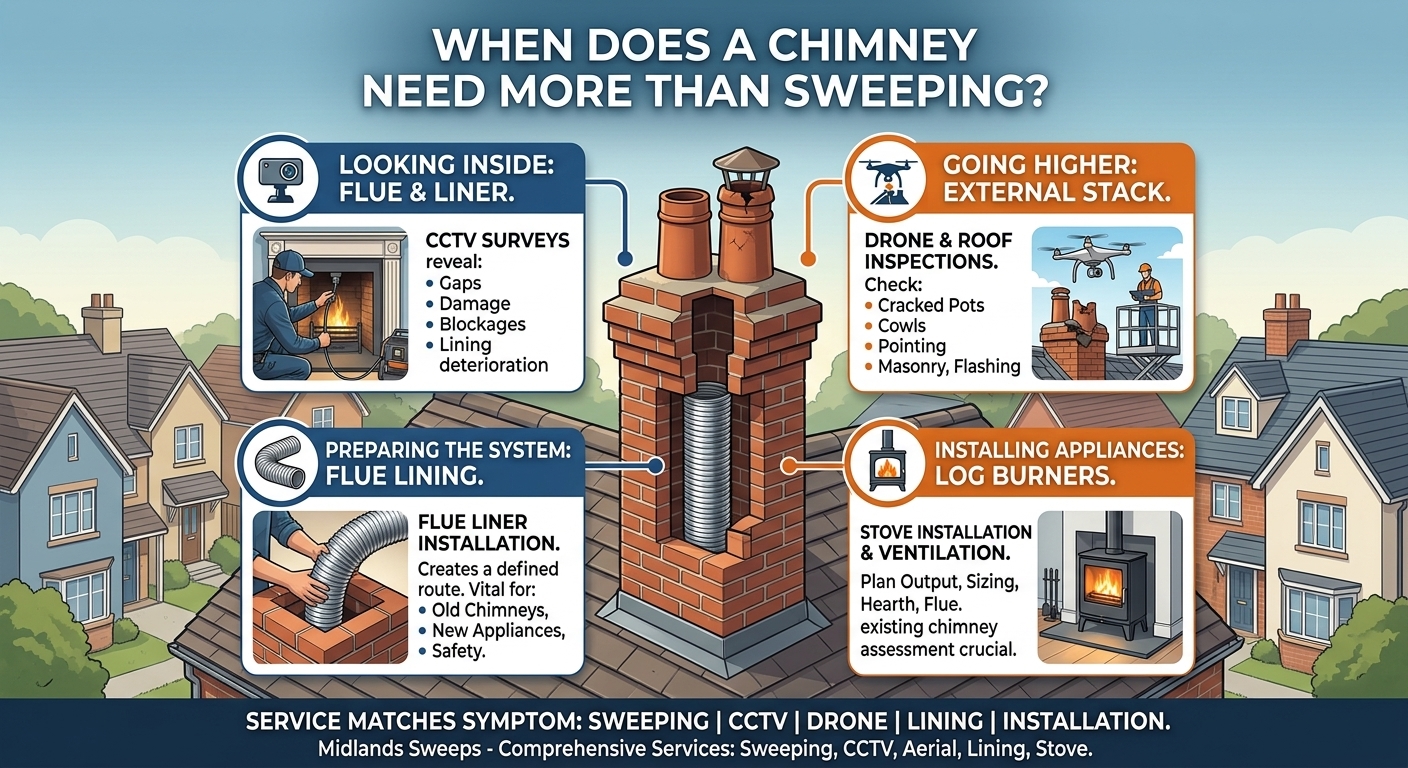
An internal camera survey provides a closer view of areas that cannot be examined directly. It may reveal damaged liners, gaps, obstructions, poor connections, or changes in the flue’s route.
A CCTV and drone inspection combines two different perspectives. CCTV concentrates on the internal passage, while aerial photography examines the chimney above roof level.
When a Flue Liner May Be Considered
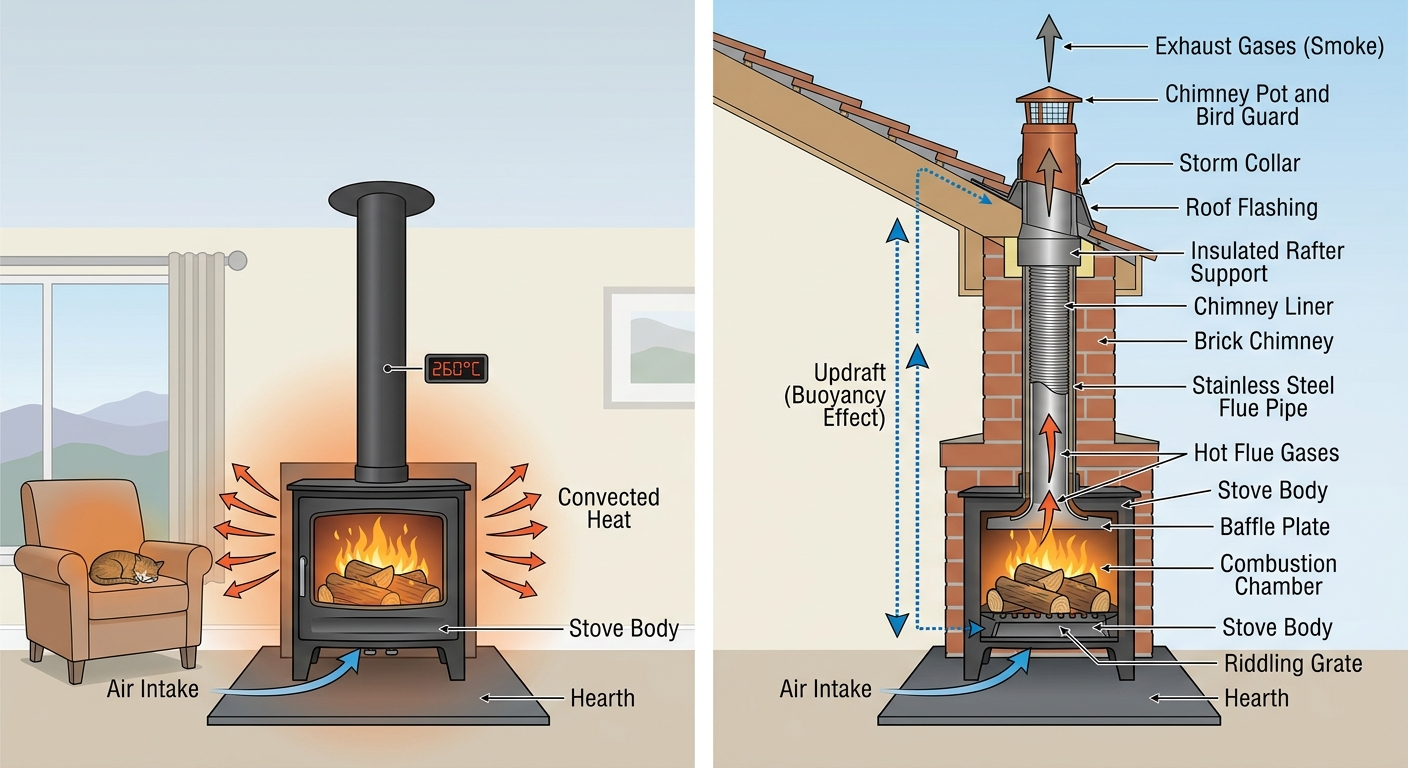
A chimney liner creates a defined route for smoke and combustion gases. Older chimneys may be unlined, or their original lining may have deteriorated over time.
Before flue liner installation, the chimney and intended appliance should be assessed. The correct liner type and diameter depend on the fuel, appliance output, chimney arrangement, and relevant installation requirements.
Understanding External Chimney Checks
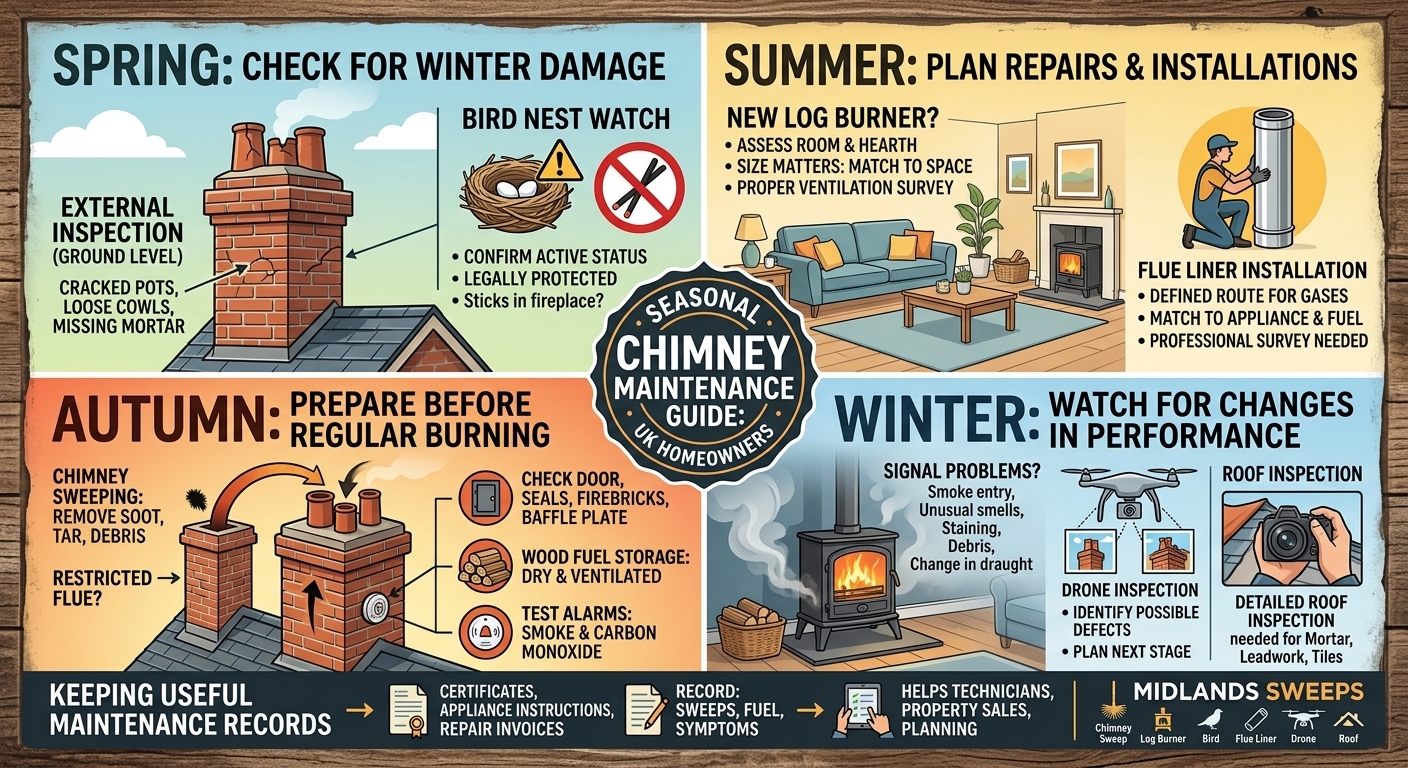
Parts of a chimney exposed above the roof face wind, rain, frost, and temperature changes. Cracked pots, failed pointing, damaged flashing, and loose masonry may allow water to enter or create a risk of falling materials. These areas are often difficult to assess safely from ground level.
A drone inspection can provide detailed images of the stack, pots, cowls, flashing, and surrounding roof.
However, photographs do not replace every hands on assessment. A roof inspection may be required when someone needs to check whether mortar is loose, examine lead work closely, or assess tiles and structural movement.
Planning a Log Burner Installation
Log burner installation begins with more than choosing an appliance that suits the room’s appearance. The stove output, hearth, ventilation, chimney condition, and flue route must work together. An appliance that is too powerful may make the room uncomfortable, while inadequate ventilation can interfere with safe combustion.
The existing chimney should be evaluated before installation work starts. This provides an opportunity to identify obstructions, deterioration, or sizing issues that could affect the proposed stove.
Responding to Bird Nests
Open chimney pots can attract nesting birds, particularly when a flue is quiet for long periods. Homeowners should avoid lighting a fire when a blockage is suspected.
Bird nest removal must take wildlife protections into account. Active nests, eggs, and birds may be protected, meaning removal may need to wait until nesting has finished.
Choosing the Right Type of Assessment
The most useful service depends on the symptom. Routine deposits may call for sweeping, an unexplained internal restriction may require CCTV, and visible storm damage may justify an external survey. Some situations require several methods because one inspection cannot show the entire system.
Midlands Sweeps lists chimney sweeping, CCTV surveys, aerial checks, stove installation, lining, and nest removal among its services. Regardless of the provider, homeowners should ask what an assessment includes, which areas cannot be viewed, and whether photographs or written findings will be supplied.
Conclusion
Chimney care works best when the method matches the problem. Sweeping, internal cameras, aerial imagery, and close roof checks provide different forms of evidence. Using that evidence before selecting repairs can reduce guesswork and support safer decisions.
Frequently Asked Questions
Does sweeping prove that a chimney is structurally sound?
No. Sweeping removes deposits and may reveal warning signs, but additional inspection can be needed to assess structural condition.
Can a drone see inside the flue?
No. A drone normally examines external areas, while a CCTV camera is designed to view inside the chimney.
Can a bird nest be removed immediately?
Not always. The nest must be checked, and wildlife protections may prevent disturbance while it is active.