If you use an open fireplace, log burner or multi-fuel stove, you may eventually wonder: how do I know if my chimney needs sweeping?
Sometimes the answer is obvious. Smoke may start entering the room, soot may fall into the fireplace or your stove may become difficult to light. In other cases, a chimney can accumulate soot, creosote or debris without producing obvious symptoms.
This is why you should not wait until something goes wrong before arranging chimney maintenance.
HETAS recommends having a chimney swept at least once a year, depending on the appliance and fuel, while NACS provides more frequent guidance for some fuels, including quarterly sweeping for wood-burning chimneys while in regular use.
Here are 10 signs that your chimney may be due for a professional sweep.
1. You Cannot Remember When the Chimney Was Last Swept
One of the simplest signs that you should arrange a chimney sweep is having no record of the last one.
If you cannot remember when your chimney was cleaned — or you have recently moved into a property and do not know its maintenance history — it is sensible to have the flue professionally checked before using the fireplace or stove regularly.
A chimney can contain:
- Soot
- Creosote
- Tar
- Bird nesting material
- Leaves
- Cobwebs
- Fallen mortar
- Other debris
Even if the fireplace appears clean from below, deposits can be present much higher inside the flue.
HETAS recommends sweeping at least annually as part of maintaining a stove or open fire.
2. Soot Is Falling Into Your Fireplace
Finding soot in the hearth can be a clear indication that deposits have accumulated inside your chimney.
Watch for:
- Fine black powder
- Black flakes
- Crumbly deposits
- Dark pieces falling from above
- Soot appearing shortly after you clean the fireplace
Some loose soot can naturally fall from an older chimney, but repeated deposits suggest that the flue should be inspected.
The more soot accumulates, the more it can restrict the chimney and interfere with the safe movement of combustion gases.
Regular chimney sweeping physically removes these deposits before they become excessive.
3. Smoke Is Entering the Room
A correctly functioning chimney should carry smoke away from the fireplace and outside the property.
If smoke begins entering your room instead, there may be a problem with the chimney draught.
Potential causes include:
- Heavy soot buildup
- Creosote
- A bird nest
- Leaves or debris
- Fallen masonry
- Poor ventilation
- A cold chimney
- Downdraught
- A damaged flue
Smoke entering the room does not always mean the chimney simply needs sweeping, but cleaning and checking the flue is one of the first things that should be considered.
Midlands Sweeps advises stopping fireplace or stove use when persistent smoke is entering the room until the cause has been investigated.
4. Your Fire Is Becoming Difficult to Light
Has your fireplace or log burner become harder to start than it used to be?
A restricted chimney can reduce draught.
Good chimney draught helps pull air through the fire while moving combustion gases upward through the flue.
When deposits start restricting this airflow, you may notice:
- The fire takes longer to establish
- Flames repeatedly die down
- Logs smoulder instead of burning properly
- More smoke is produced
- The stove feels less responsive
- The fire goes out unexpectedly
Poor fire performance can also be caused by wet wood, insufficient ventilation or incorrect appliance operation.
However, if the chimney has not been swept recently, it should be checked.
5. You Notice a Strong Sooty or Tar Smell
A dirty chimney often produces a distinctive smell.
You might notice an odour resembling:
- Old smoke
- Burnt wood
- Damp soot
- Tar
- Creosote
The smell can sometimes become stronger during warm or humid weather.
This happens because air movement through the chimney can carry odours from deposits back into the room.
A strong smell may also indicate:
- Damp inside the chimney
- Bird nesting material
- An animal or bird trapped in the flue
- Heavy creosote deposits
If the smell persists, arranging a professional sweep can help identify and remove common sources.
6. Your Log Burner Glass Is Blackening Quickly
Some discolouration of stove glass can occur during normal use.
However, if your log burner glass is turning black significantly faster than before, combustion may not be working efficiently.
Common causes include:
- Wet wood
- Insufficient air supply
- Operating the stove at too low a temperature
- Restricting the air controls too much
- Poor chimney draught
- A dirty or restricted flue
A dirty chimney can weaken draught, which in turn affects combustion inside the stove.
If rapid glass blackening appears alongside smoke, poor fire performance or strong chimney smells, arranging a sweep is sensible.
7. You Can See Heavy Soot or Creosote
If you can see substantial black deposits around accessible sections of your chimney or flue, it is time to have the system checked.
Creosote is particularly important.
It forms when combustion products from wood smoke cool and condense inside a chimney.
It can appear as:
- Dry black flakes
- Sticky dark deposits
- Tar-like material
- Hard shiny or glazed coatings
Creosote is combustible. Allowing large amounts to accumulate can increase chimney-fire risk.
Regular chimney sweeping removes soot and creosote before excessive deposits develop. NACS identifies regular cleaning as important for keeping chimneys clear and reducing chimney-fire risk.
Severe glazed creosote may require more than an ordinary routine sweep.
8. Twigs, Leaves or Feathers Are Falling Into the Fireplace
Finding natural material in your hearth can indicate a blockage rather than ordinary soot buildup.
Look for:
- Twigs
- Leaves
- Grass
- Moss
- Feathers
- Nesting material
Birds — particularly jackdaws — can build substantial nests inside unused or open chimneys.
A large nest may significantly restrict or completely block the flue.
NACS specifically identifies nests as another reason chimneys may require cleaning.
Never try to remove a suspected bird nest by lighting a fire beneath it.
If you notice nesting activity, have the chimney professionally assessed.
9. You Hear Birds or Scratching Inside the Chimney
Unusual noises coming from your chimney are another warning sign.
You may hear:
- Chirping
- Scratching
- Fluttering
- Movement above the fireplace
Birds can enter chimneys during periods when the fireplace is unused.
You might also see birds repeatedly entering or leaving the chimney pot from outside.
If you suspect a nest, stop using the fireplace until the chimney has been checked.
Active nests and nesting birds are protected, so removal needs to be handled appropriately.
10. It Has Been a Year or More Since Your Last Sweep
Even if you have noticed none of the warning signs above, the chimney may still be due for maintenance.
You should not rely entirely on visible symptoms.
HETAS recommends having chimneys swept at least annually, while NACS currently gives the following general fuel-based guidance:
- Wood: Quarterly when in use
- Smokeless fuel: At least once a year
- Oil: Once a year
- Gas: Once a year
The ideal schedule for your property depends on the appliance, fuel and amount of use.
A professional sweep can recommend an appropriate interval after seeing how much material has accumulated in your chimney.
What Happens If You Do Not Sweep Your Chimney?
Ignoring chimney maintenance can lead to more than a dirty fireplace.
Soot and Creosote Can Accumulate
Every burning season can add another layer of combustion deposits.
Eventually, these deposits may restrict the flue.
Chimney-Fire Risk Can Increase
Combustible creosote and soot inside the chimney can ignite.
Regular sweeping removes accumulated material and helps reduce this risk.
Chimney Draught Can Become Poorer
Restricted airflow may make your fireplace or stove:
- Harder to light
- Less efficient
- Smokier
- More difficult to control
Smoke Can Enter Your Home
If combustion gases cannot travel effectively through the chimney, smoke may spill back into the room.
Hidden Problems Can Go Unnoticed
A professional sweep may also discover visible warning signs such as:
- Fallen masonry
- Excessive tar
- Bird nests
- Water ingress
- Damaged chimney components
Finding these issues early can help prevent more serious problems.
How Often Should I Have My Chimney Swept?
There is no perfect schedule for every chimney.
The appropriate frequency depends on:
- The fuel you burn
- How frequently you use the fireplace
- Moisture content of your firewood
- Appliance type
- Chimney design
- Amount of soot found during previous sweeps
At minimum, annual professional sweeping is a useful baseline recommended by HETAS.
Wood-burning chimneys used heavily may need cleaning more frequently. NACS currently recommends quarterly sweeping for wood while it is in use.
Your own chimney sweep can recommend a schedule based on the actual condition of your system.
Does a Log Burner Chimney Need Sweeping?
Yes.
Installing a modern wood-burning stove does not eliminate the need for chimney sweeping.
Wood combustion still produces:
- Soot
- Creosote
- Ash
- Other combustion deposits
The chimney or stainless steel flue liner needs to remain clear so combustion gases can escape effectively.
A professional can normally sweep the chimney while the log burner remains installed. Midlands Sweeps explains that most log-burner flues can be accessed through the stove or a suitable sweeping point.
Does an Open Fireplace Need Sweeping?
Yes.
An open fireplace relies heavily on natural chimney draught.
Accumulated soot or debris can restrict the chimney and increase the likelihood of smoke entering your living space.
Regular sweeping is therefore an important part of open fire maintenance.
Midlands Sweeps recommends professional cleaning when an open fireplace produces smoke, soot, unusual smells or debris, or when the chimney has not been cleaned recently.
Does a Rarely Used Chimney Still Need Sweeping?
Yes, potentially.
A rarely used chimney may accumulate combustion deposits more slowly, but other problems can develop while it sits unused.
These include:
- Bird nests
- Leaves
- Cobwebs
- Fallen masonry
- Moisture
- Old soot and creosote
If you have not used your fireplace for several years, have the chimney checked before lighting it again.
Midlands Sweeps advises an inspection before bringing a long-unused chimney back into service, particularly when its maintenance history is unknown.
Can I Check Whether My Chimney Needs Sweeping Myself?
You can look for obvious warning signs.
For example, check for:
- Soot falling down
- Twigs or feathers
- Strong smells
- Smoke entering the room
- Poor fire performance
However, you cannot see most of the chimney from the fireplace.
A flue may contain deposits or blockages several metres above the room.
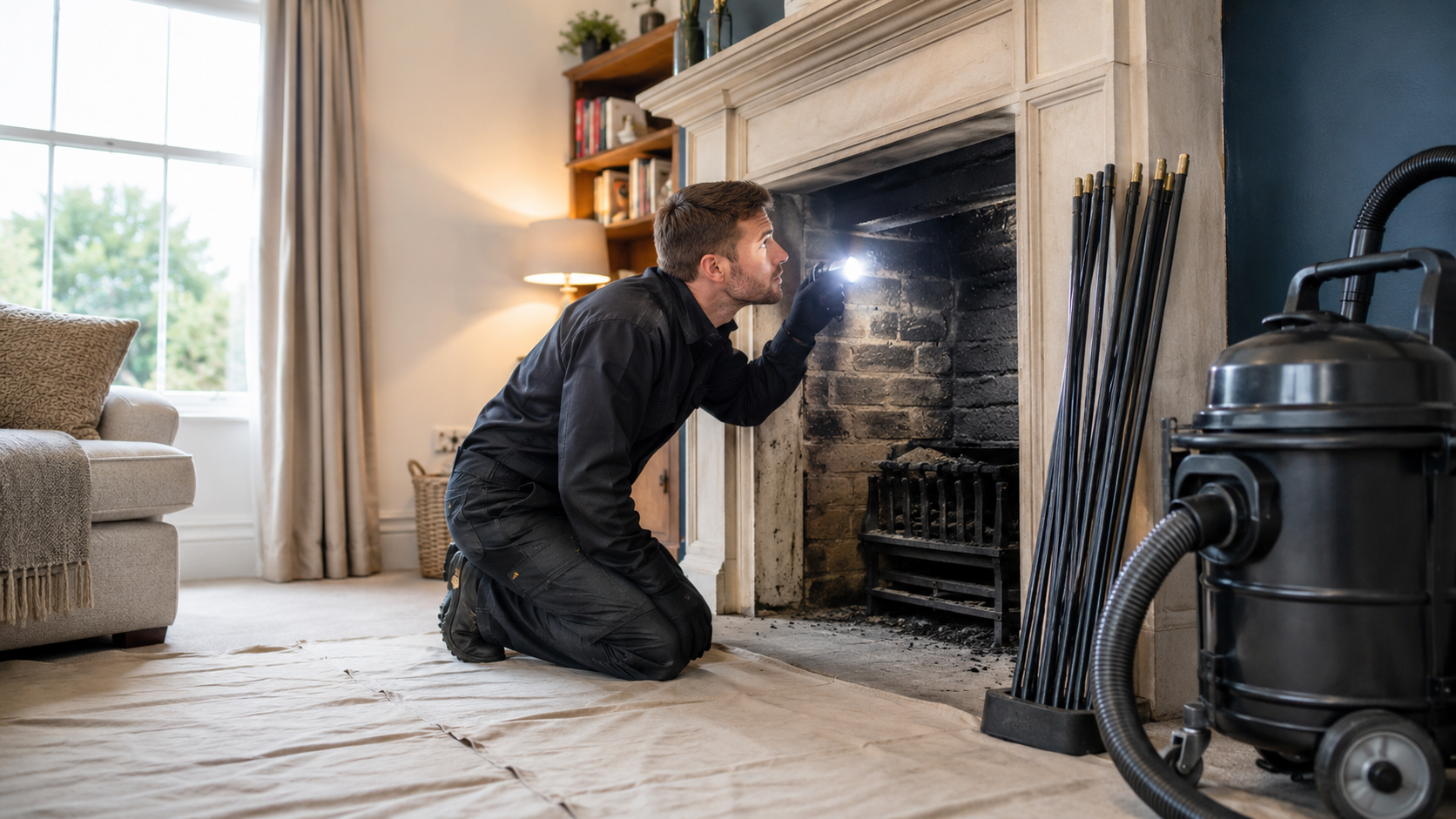
This means looking up the chimney with a torch is not enough to confirm that it is clean.
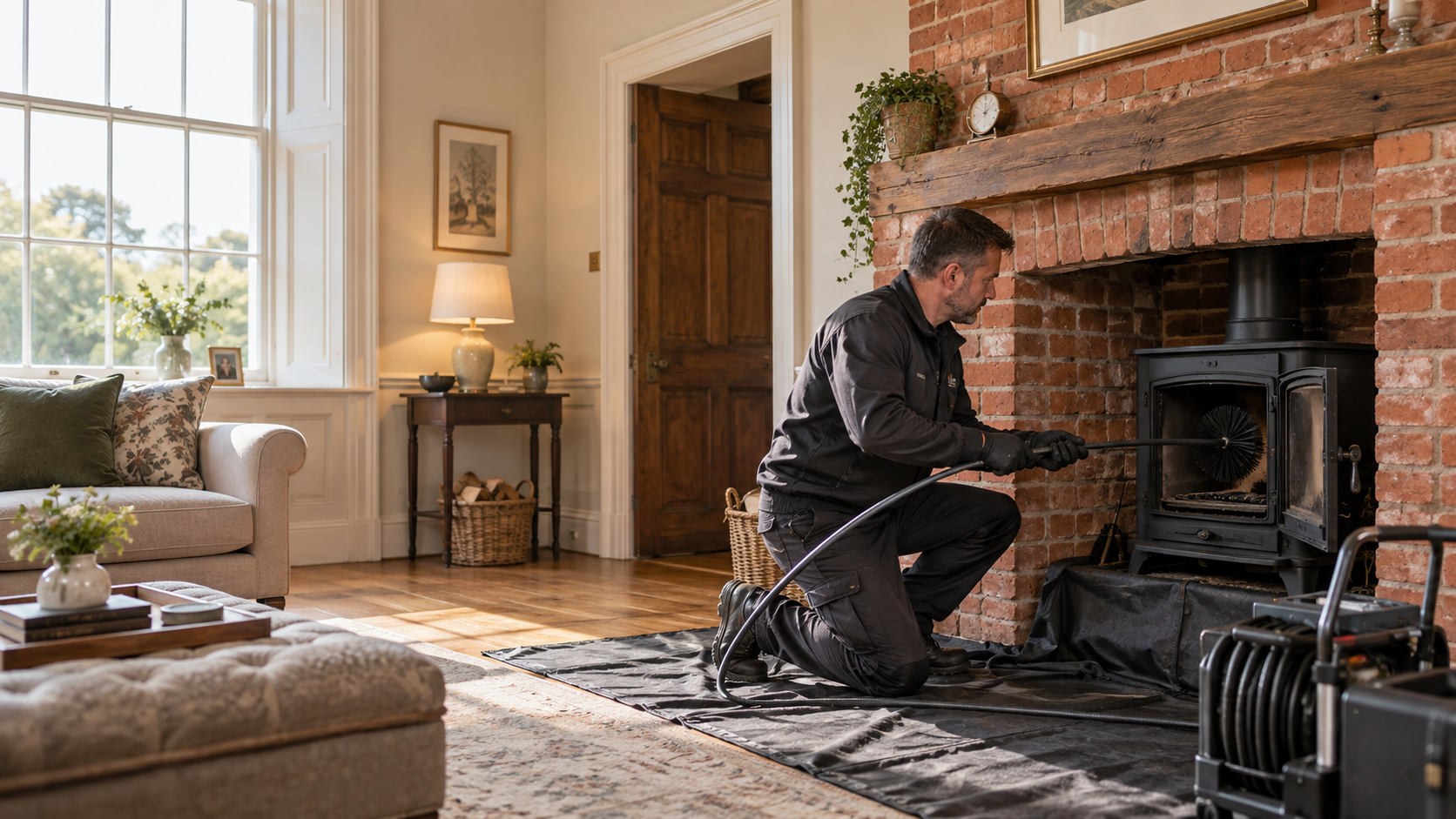
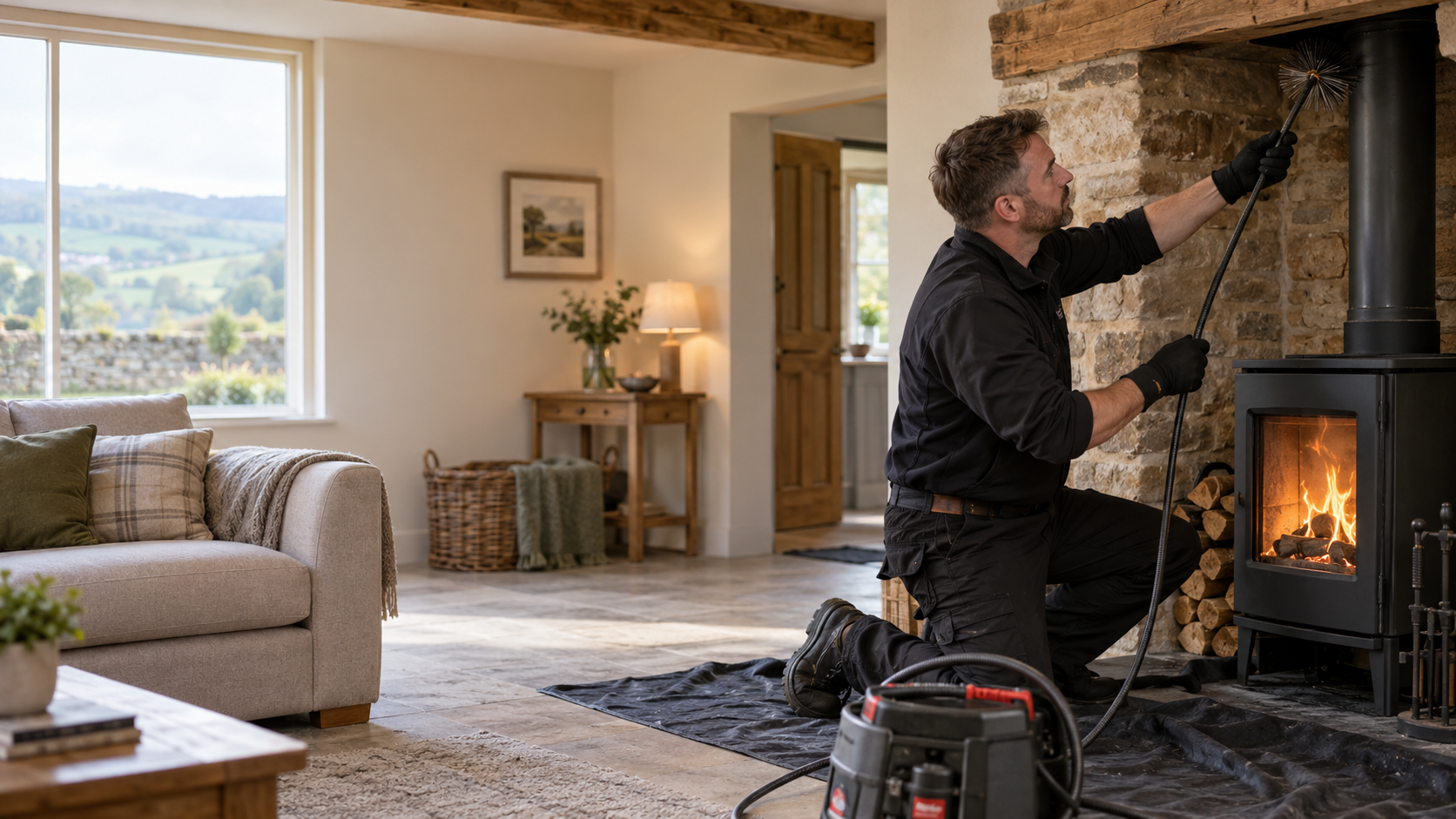
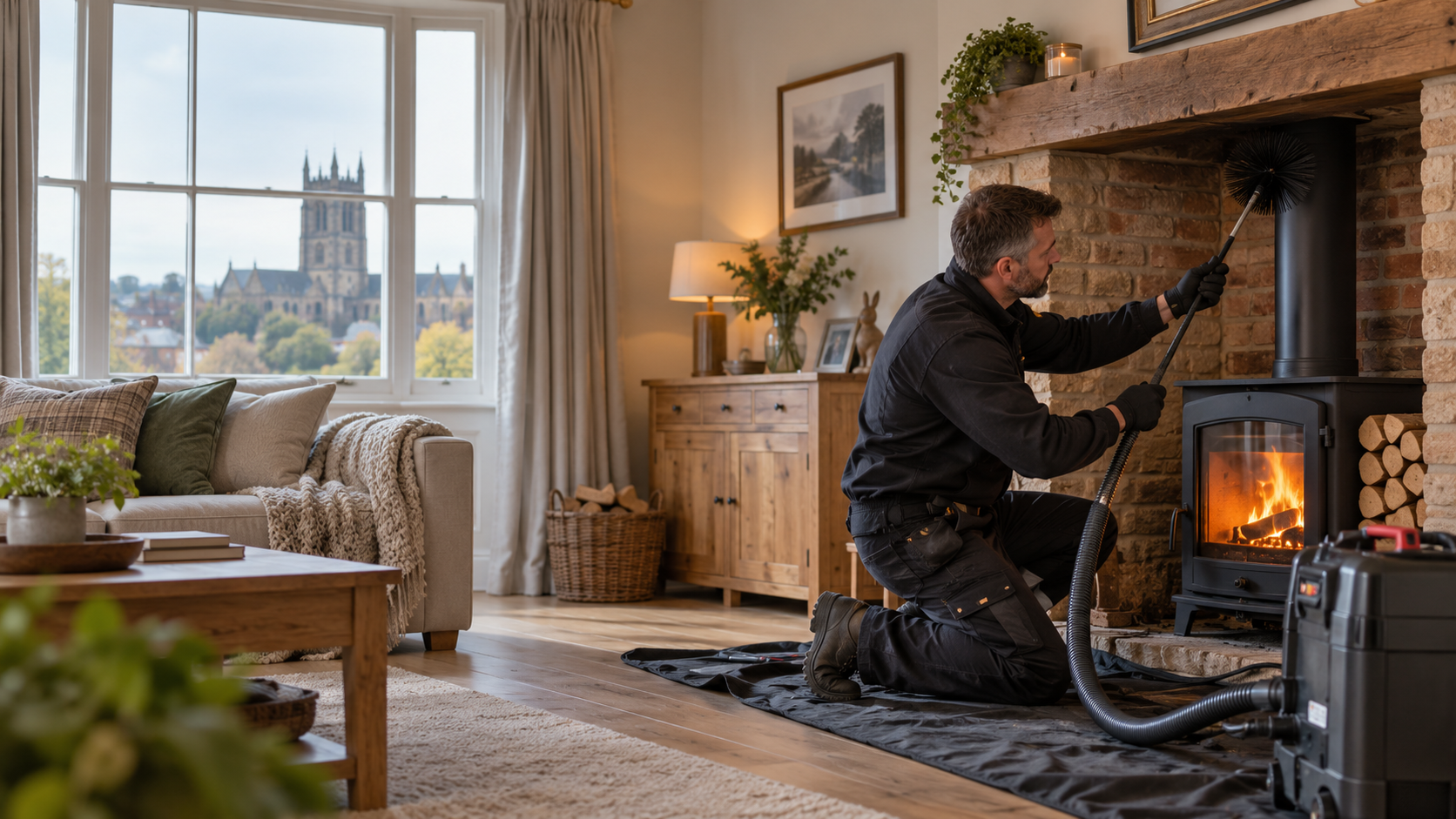
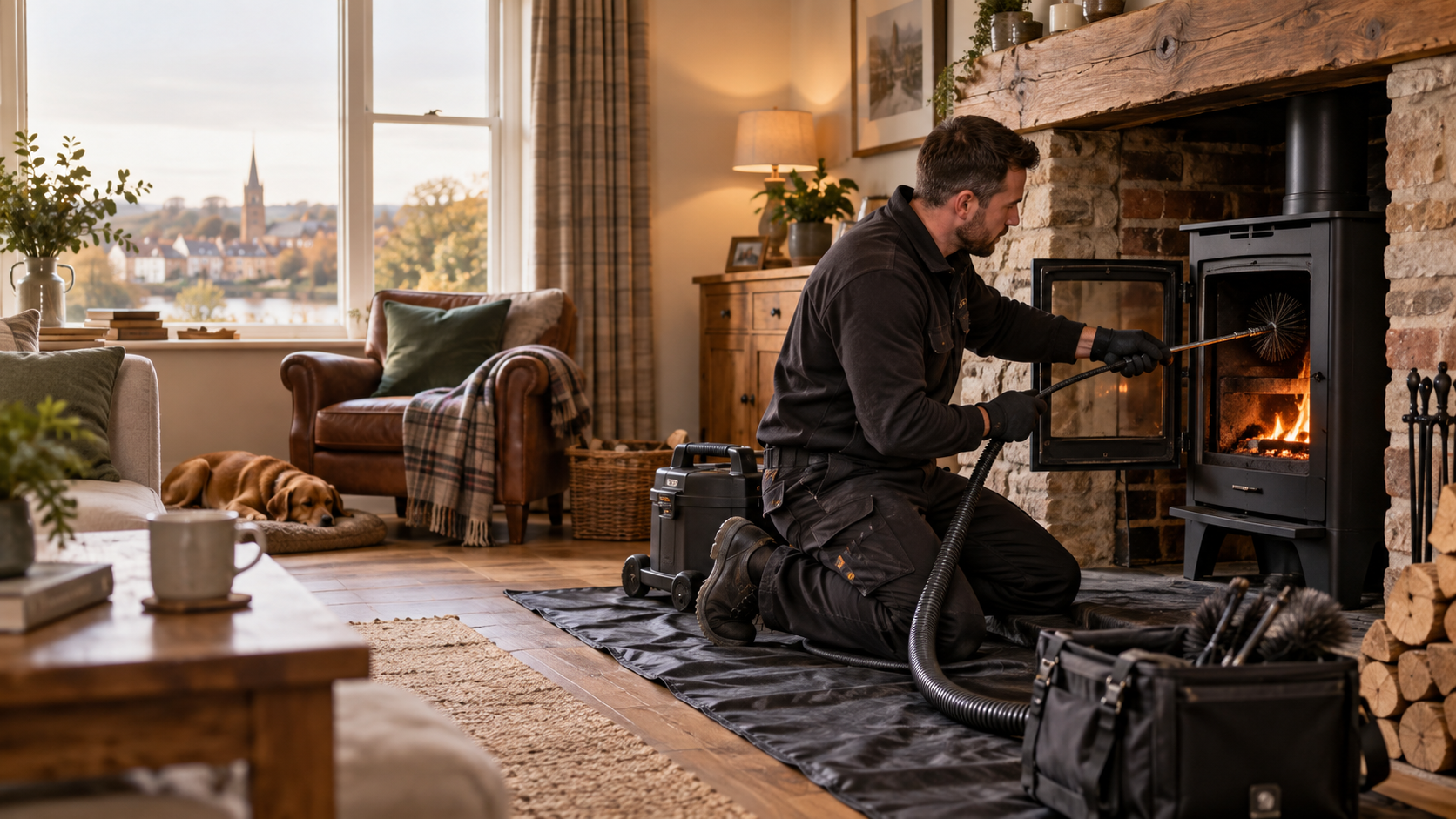
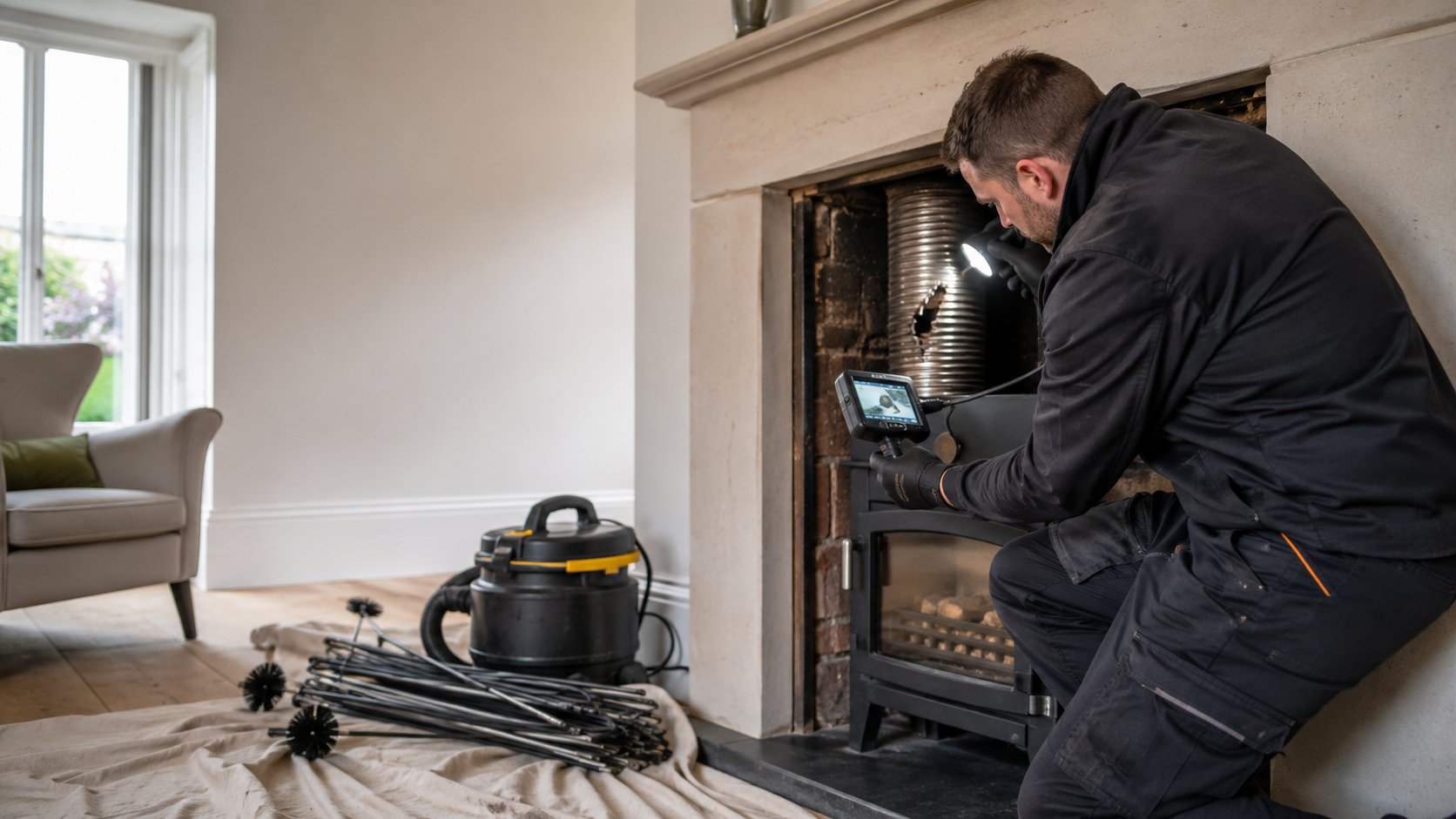
Professional chimney sweeps have suitable rods, brushes, vacuum equipment and inspection tools to clean the complete accessible flue.
Can I Sweep My Chimney Myself?
Removing cold ash from your fireplace or stove is normal household maintenance.
Sweeping the complete chimney is different.
Professional sweeps use equipment suitable for:
- Chimney diameter
- Flue material
- Stainless steel liners
- Chimney bends
- Stove installations
- Different types of deposit
Incorrect tools may fail to clean the entire flue or potentially damage a liner.
A professional sweep can also identify unusual material or visible defects while carrying out the work.
What Does a Professional Chimney Sweep Include?
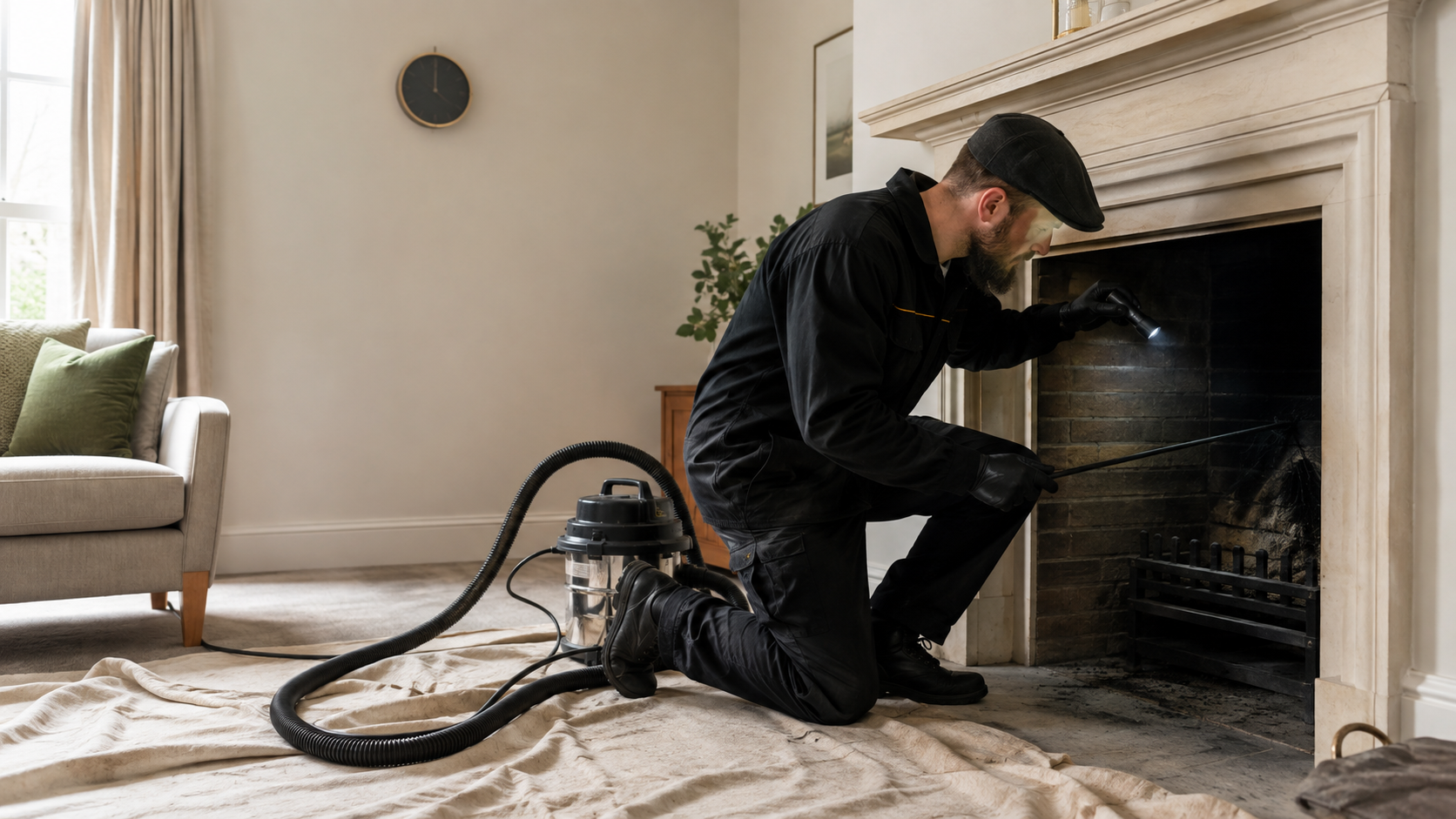
The exact service varies according to your appliance and chimney, but a professional appointment may include:
- Assessing the fireplace or stove
- Asking about fuel and recent performance
- Protecting the surrounding floor
- Sealing the fireplace where appropriate
- Sweeping the complete accessible flue
- Removing soot and loose deposits
- Checking for obvious blockages
- Inspecting accessible chimney components
- Carrying out appropriate smoke or draught checks
- Advising you about any issues discovered
Midlands Sweeps’ chimney service includes complete flue cleaning, fire-hazard prevention, smoke and odour control, chimney safety inspection and support for heating performance.
When Might You Need More Than a Chimney Sweep?
Standard sweeping is suitable for routine soot and common deposits.
However, additional inspection may be necessary when:
- Large amounts of masonry have fallen
- The chimney remains blocked after sweeping
- Smoke continues entering the room
- A flue liner may be damaged
- There has been a chimney fire
- Heavy glazed creosote is present
- The chimney’s internal condition is unknown
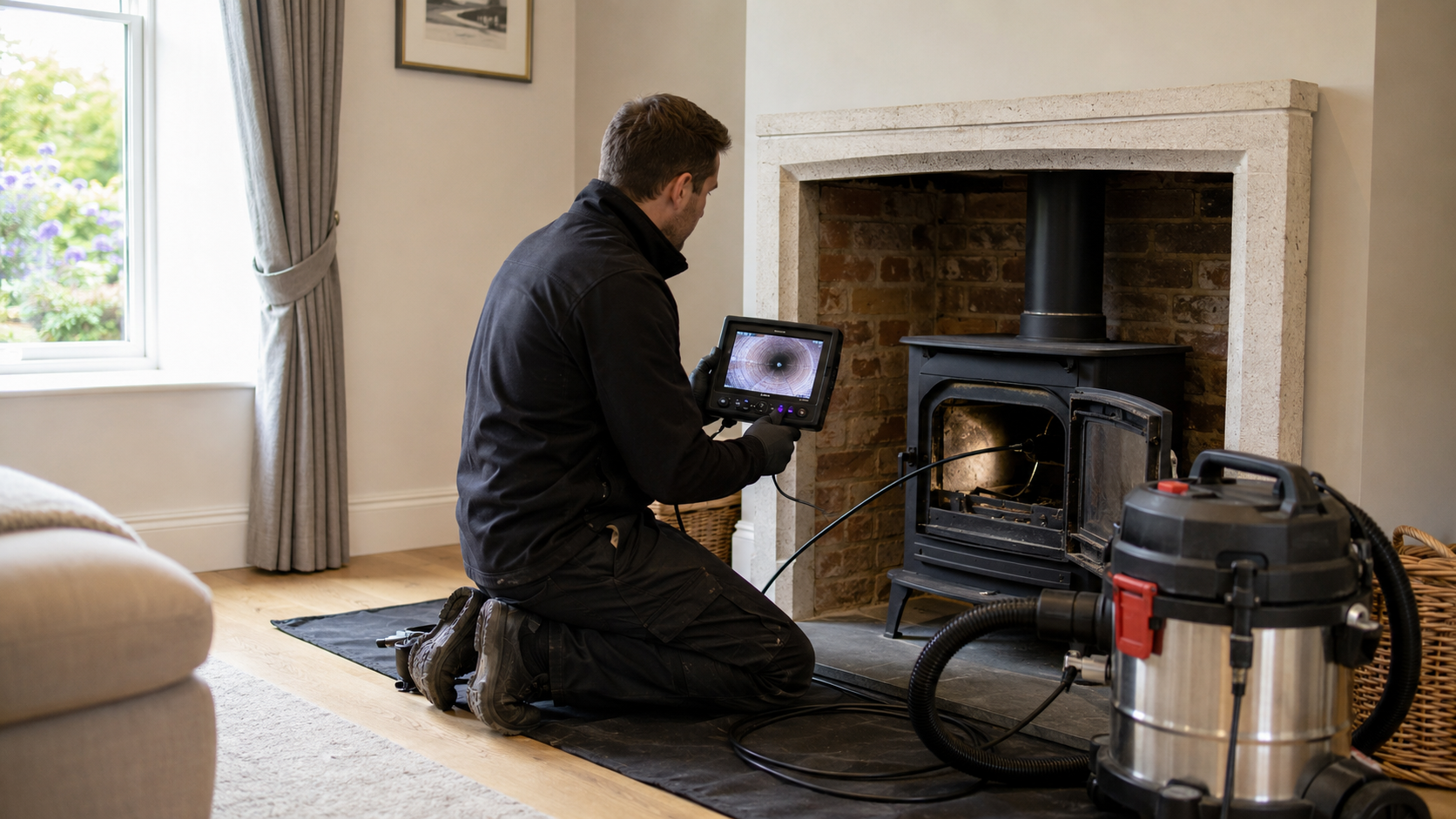
A CCTV chimney inspection can provide a clearer view of the internal flue where ordinary visual inspection is insufficient.
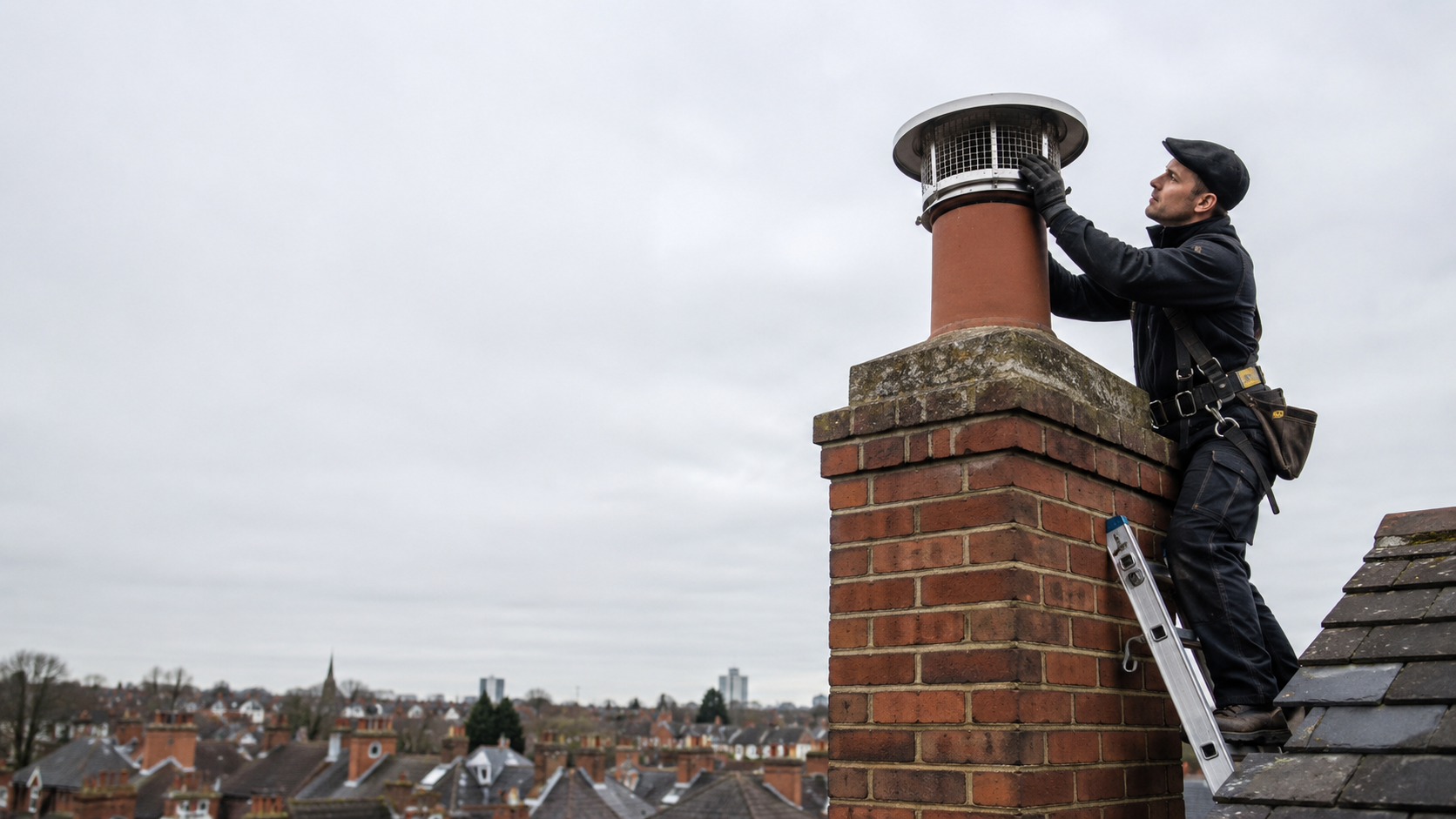
Midlands Sweeps also provides high-definition internal CCTV surveys and drone roof or chimney-stack inspections.
How Can I Reduce Chimney Buildup?
Regular sweeping cannot be replaced, but good burning habits can help keep deposits under control.
Burn Dry Wood
If using a wood-burning appliance, burn properly dried fuel.
HETAS advises using wood with moisture content no higher than 20%.
Avoid Smouldering Fires
Do not repeatedly operate a stove with insufficient airflow purely to make logs burn for longer.
Low-temperature combustion can create more deposits.
Burn Only Appropriate Fuel
Never burn:
- Painted timber
- Treated wood
- MDF
- Chipboard
- Plastic
- Household rubbish
Keep Required Ventilation Clear
Do not block permanent ventilation installed for a combustion appliance.
Watch Your Chimney
Pay attention to changes in:
- Smoke
- Draught
- Odour
- Fire performance
- Stove-glass cleanliness
Changes can provide an early warning that something needs attention.
Frequently Asked Questions
What is the easiest way to tell if my chimney needs sweeping?
Common signs include soot falling into the fireplace, smoke entering the room, strong chimney smells, poor fire performance and visible deposits. However, reaching your recommended sweeping interval is reason enough to arrange maintenance even if you notice no symptoms.
How do I know if there is too much soot in my chimney?
Visible soot, falling black deposits, poor draught or repeated smoke problems may indicate excessive buildup. Most of the chimney cannot be inspected from the fireplace, so a professional assessment is more reliable.
Should I wait until my chimney starts smoking?
No. Regular sweeping is preventative maintenance. Waiting until smoke enters the room can mean the chimney has already developed a significant restriction or another problem.
Why is soot falling down my chimney?
Loose soot can break away from deposits on the chimney walls. Repeated falling soot is a good reason to arrange a sweep.
Does a chimney need sweeping every year?
HETAS recommends at least annual sweeping, with frequency depending on appliance and fuel. Some regularly used wood-burning chimneys require more frequent cleaning.
Do I need my chimney swept if I only use it occasionally?
It may still need sweeping or inspection. Old deposits remain in the chimney, while birds, leaves and other debris can enter when the fireplace is inactive.
Can a chimney sweep tell if my chimney is damaged?
A sweep can identify some visible concerns, but a standard chimney sweep is not a complete structural survey. CCTV inspection or further assessment may be required if damage is suspected.
Should I sweep my chimney before winter?
Having the chimney swept before the main burning season is a sensible approach, particularly if it has not been used for several months.
Book a Professional Chimney Sweep
If you are asking “How do I know if my chimney needs sweeping?”, the safest approach is not to wait until smoke, heavy soot or poor draught becomes obvious.
Regular chimney sweeping helps keep the flue clear of soot and combustion deposits while giving a professional the opportunity to identify obvious blockages and other concerns.
Midlands Sweeps provides professional chimney sweep services in Swadlincote and surrounding areas, including Burton upon Trent, Derby, Newhall, Ashby-de-la-Zouch, Melbourne, Hilton, Etwall, Repton, Willington and Hatton. The company also provides CCTV and drone inspections, flue liner installation and log burner services.
If your chimney has not been swept recently — or you have noticed smoke, soot, smells, falling debris or poor fire performance — arrange a professional chimney sweep before continuing regular use.