If you are booking a professional chimney sweep for the first time, one of the most common questions is: how long does a chimney sweep take?
A straightforward chimney sweep can often be completed in around 45 minutes to an hour, but the full appointment may take longer when inspection, smoke testing, appliance access or additional cleaning is required.
At Midlands Sweeps, a chimney sweep combined with an inspection and smoke evacuation check takes approximately 1.5 hours under normal circumstances. (midlandsweeps.com)
The exact time depends on the type of chimney, how much soot has accumulated, whether the flue is lined, the appliance connected to it and whether any blockages or other problems are discovered.
In this guide, we explain how long chimney sweeping normally takes, what happens during the appointment and which problems can make a sweep take longer.
How Long Does a Typical Chimney Sweep Take?
For a straightforward, regularly maintained chimney, the physical sweeping process commonly takes around 45 to 60 minutes.
However, homeowners should allow additional time for:
- Protecting the room
- Inspecting the fireplace or stove
- Accessing the flue
- Removing and refitting stove components where necessary
- Sweeping the complete chimney
- Removing soot and debris
- Checking chimney draught
- Smoke evacuation testing
- Discussing any concerns found
This means a complete professional appointment may take around 60 to 90 minutes depending on the service provided.
Midlands Sweeps advises customers to allow approximately 1.5 hours for a sweep, inspection and smoke evacuation check. (midlandsweeps.com)
A professional chimney sweep should focus on completing the work properly rather than trying to finish as quickly as possible.
What Happens During a Chimney Sweep Appointment?
Understanding the process makes it easier to see why chimney sweeping is not simply a five-minute job with a brush.
A professional appointment usually involves several stages.
1. Initial Chimney and Fireplace Assessment
Before sweeping begins, the professional may ask questions about your chimney and appliance.
These can include:
- When was the chimney last swept?
- How frequently do you use the fireplace?
- What type of fuel do you burn?
- Have you noticed smoke entering the room?
- Have you experienced poor chimney draught?
- Are there any unusual smells?
- Have birds been active around the chimney?
- Has the chimney previously had a fire?
This initial assessment helps determine the most suitable sweeping method and whether additional investigation may be required.
2. Protecting the Room
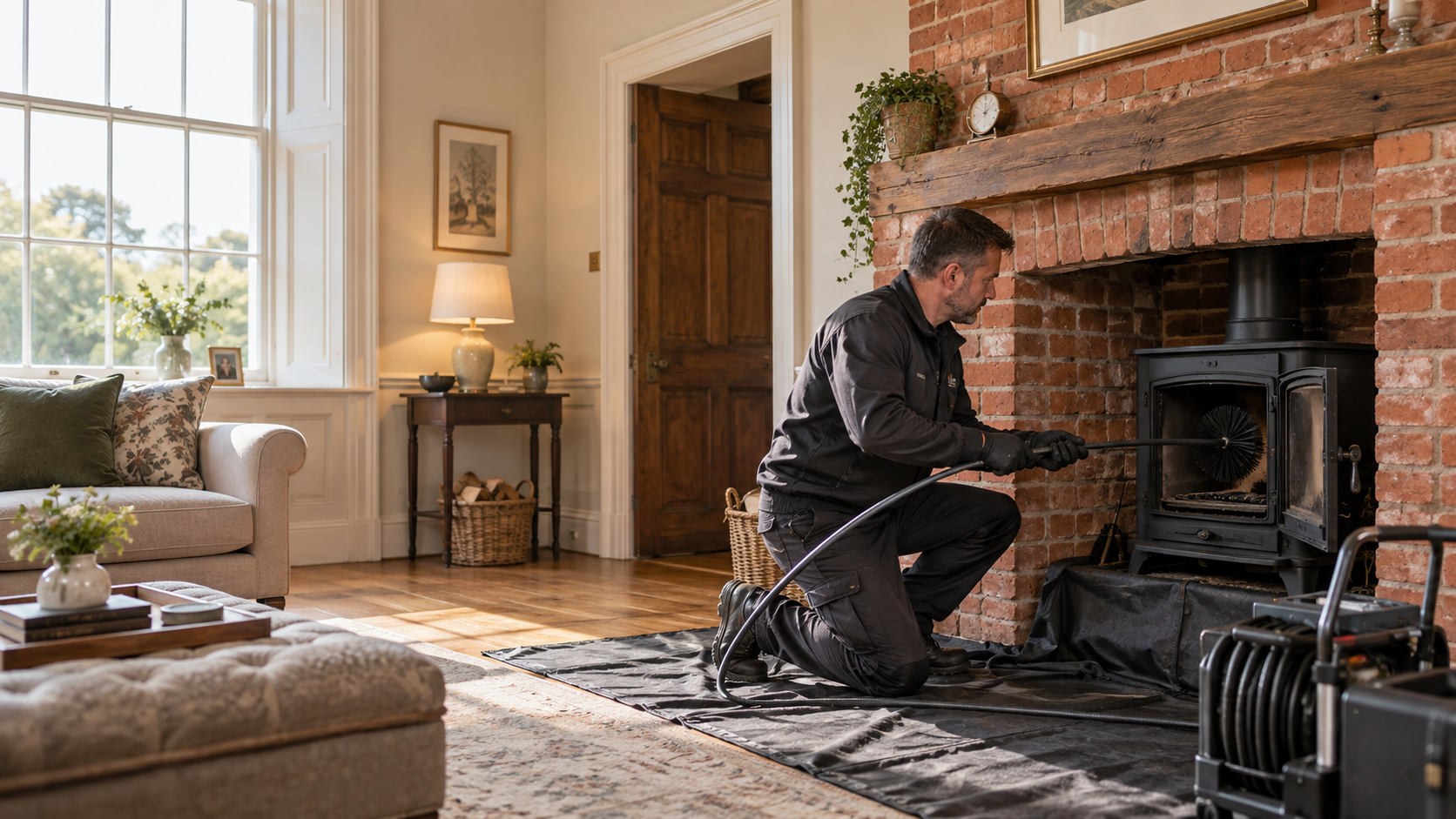
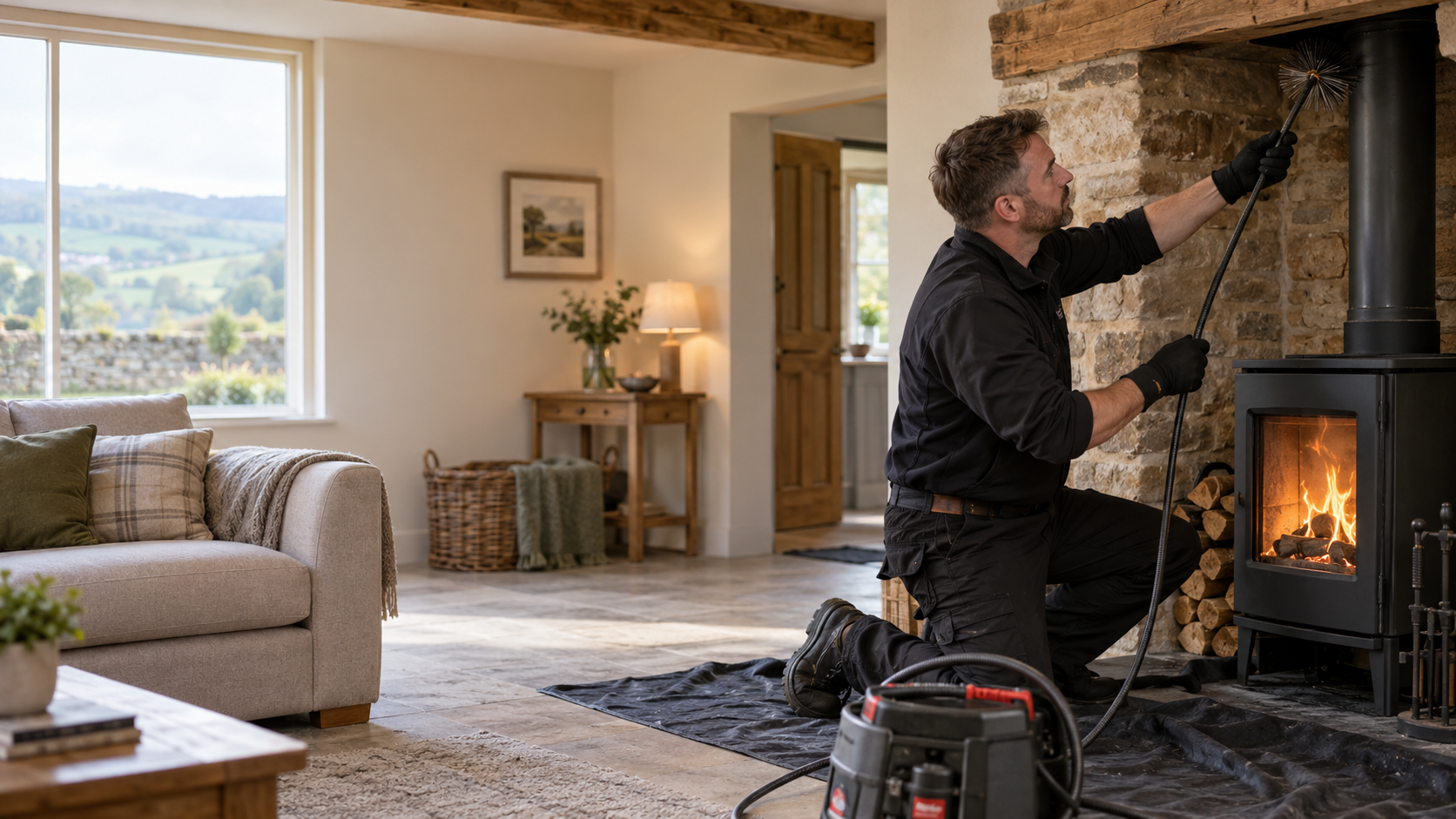
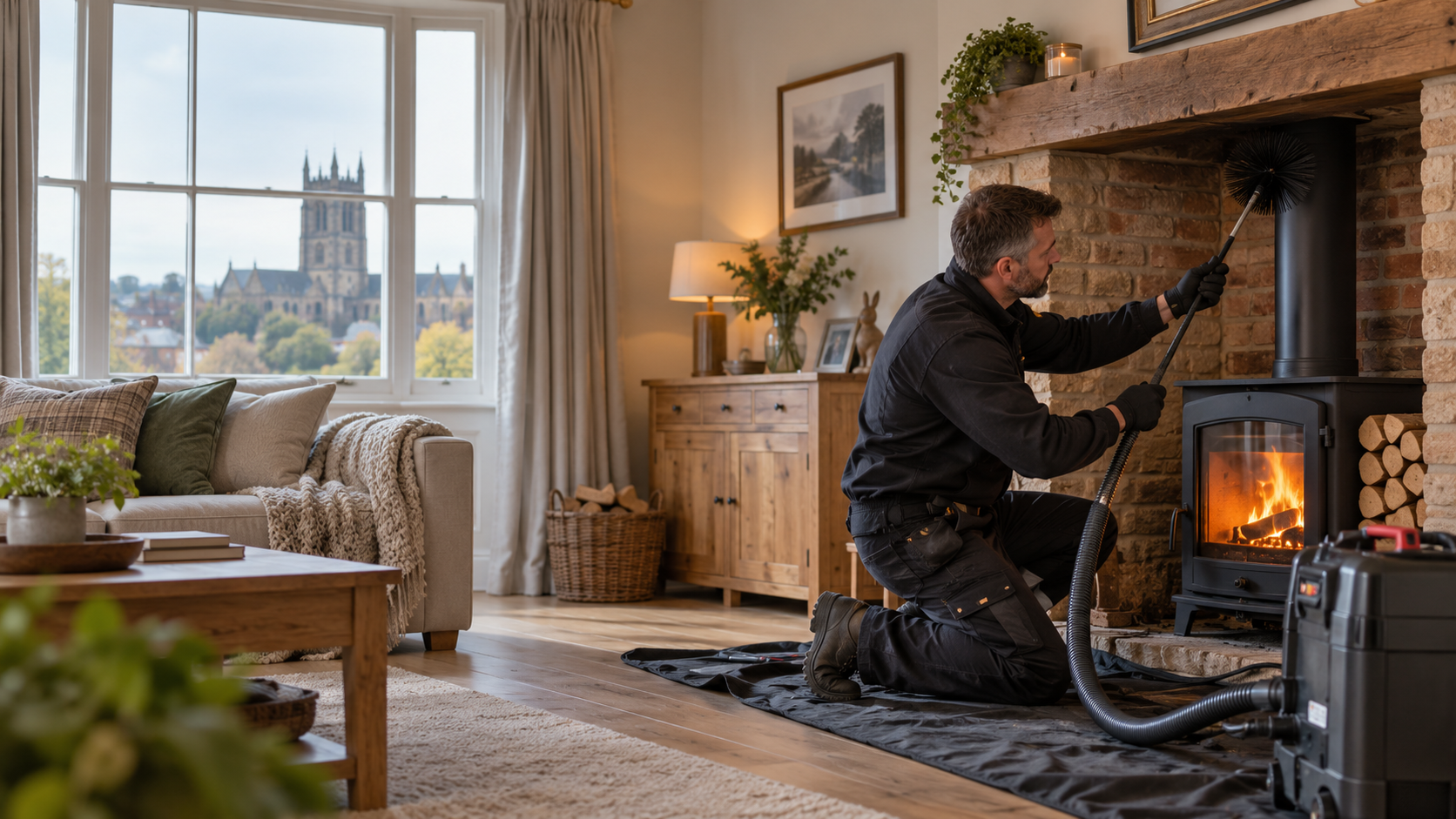
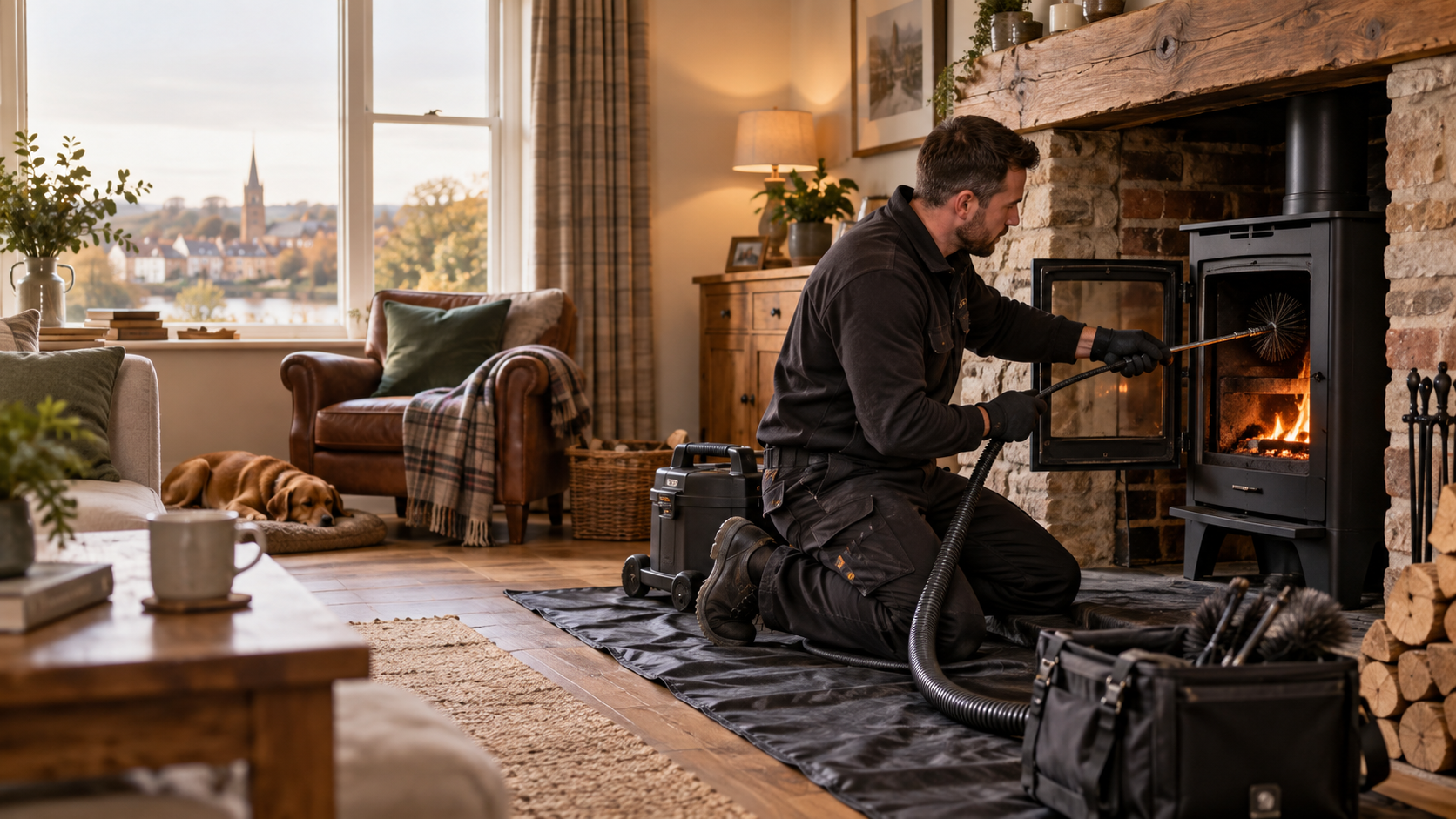
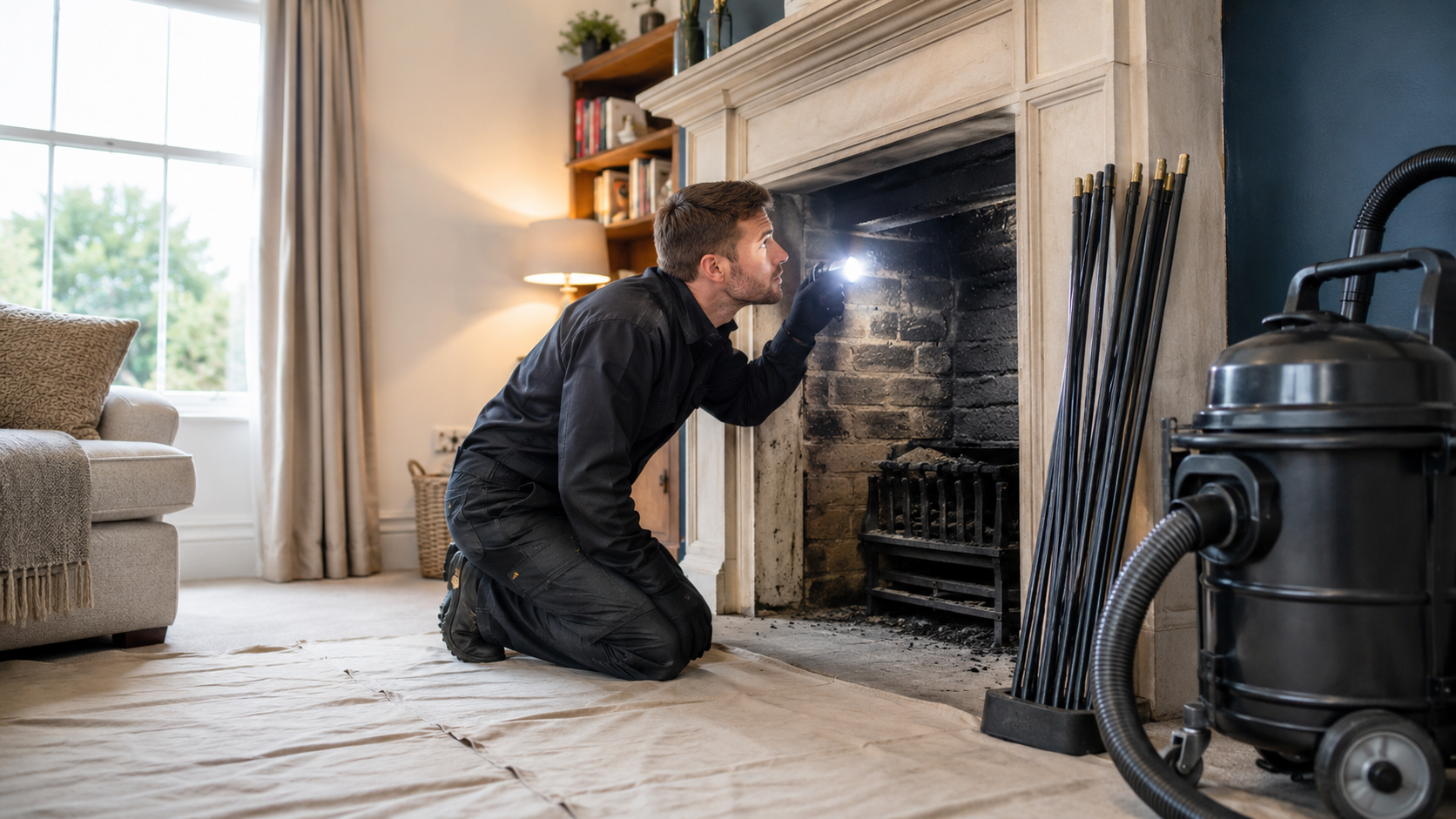
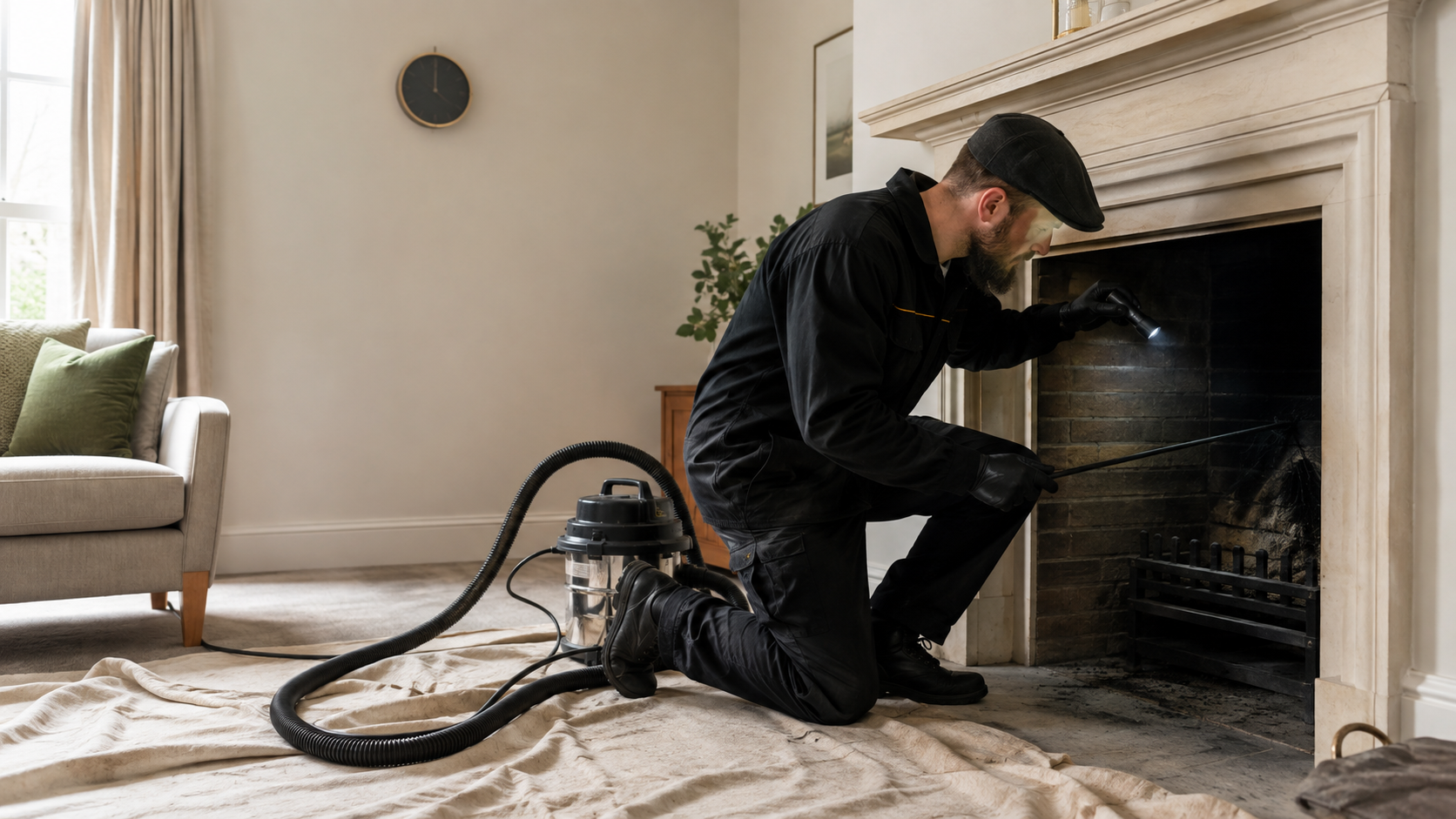
A professional chimney sweep should protect your home before soot is disturbed.
This may involve:
- Protective dust sheets
- Fireplace covers or seals
- Hearth protection
- Specialist soot-vacuum equipment
NACS states that its professional chimney sweeps are trained to minimise dust escaping during sweeping and carry protective sheets for carpets, floors and furniture. (nacs.org.uk)
Preparing and sealing the working area takes additional time but helps keep the room clean.
3. Preparing the Fireplace or Stove
The required preparation depends on the appliance.
With an open fireplace, access may be relatively straightforward.
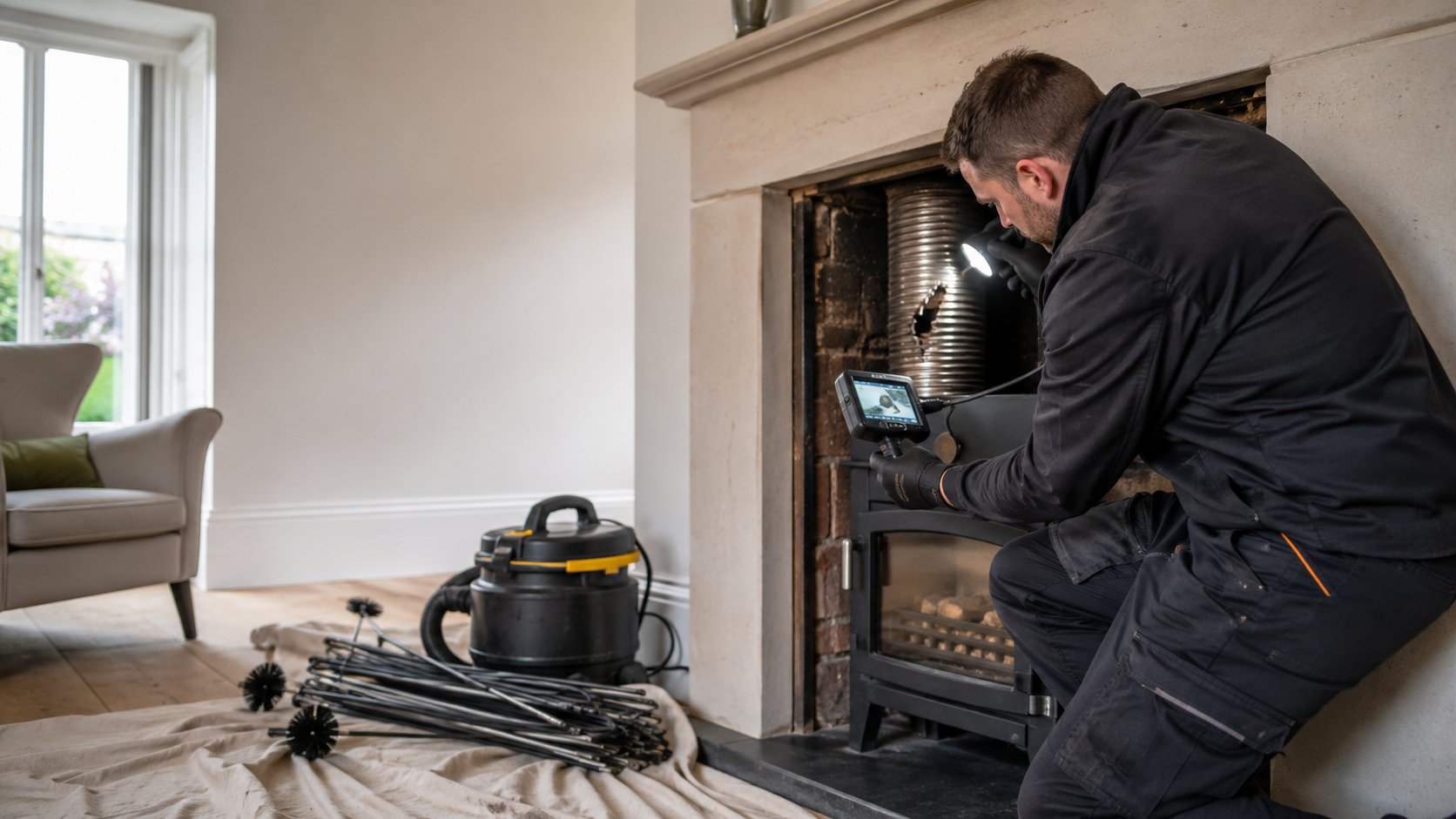
With a log burner, the chimney sweep may need to temporarily remove components such as:
- Baffle plates
- Throat plates
- Internal deflectors
- Certain firebricks
This creates a clear route into the chimney or flue.
The stove itself normally remains installed.
Midlands Sweeps notes that most log burner chimneys can be swept through the appliance or another purpose-designed sweeping point without removing the complete stove. (midlandsweeps.com)
4. Sweeping the Chimney
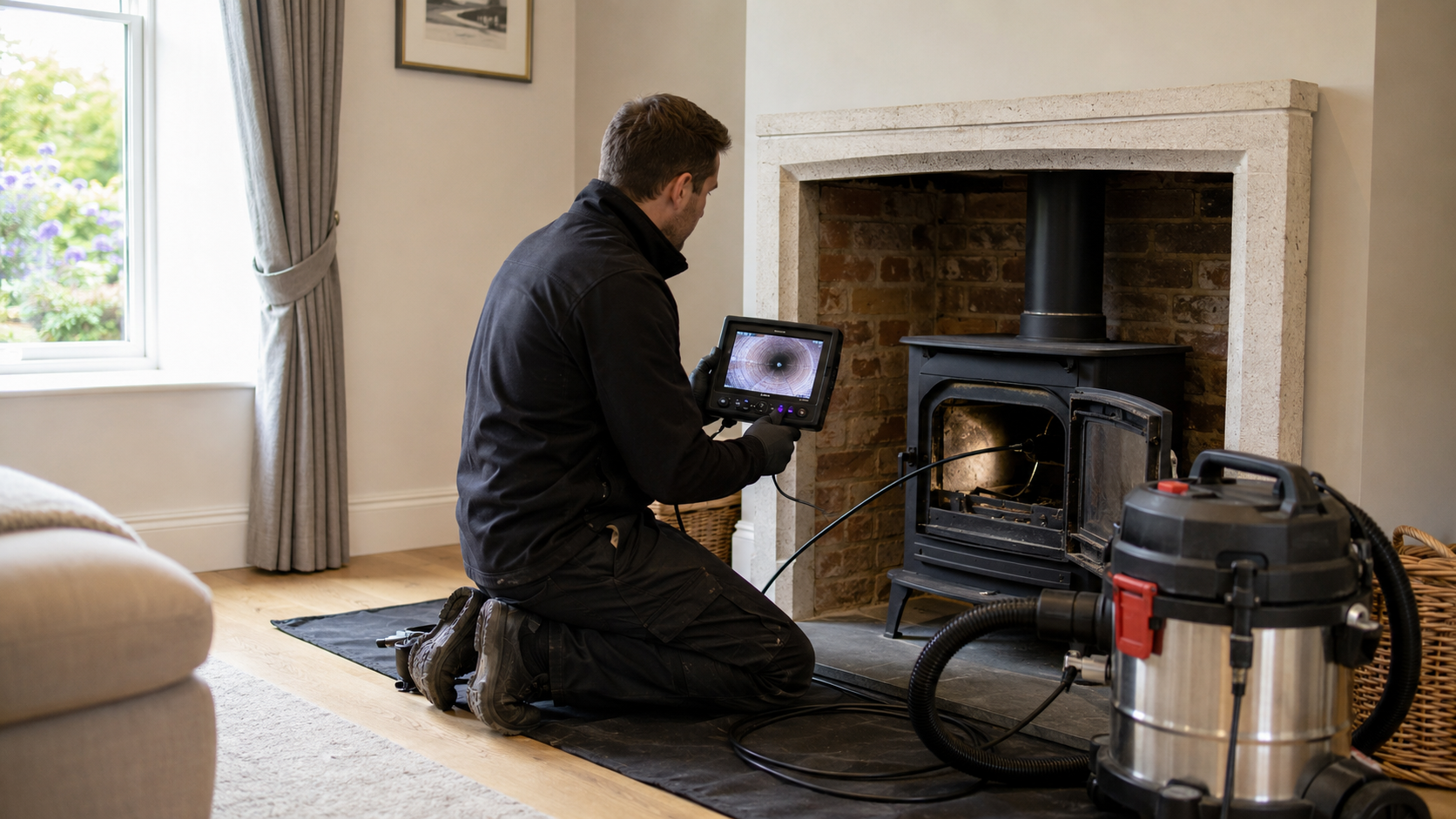
Suitable rods and brushes are passed through the chimney or flue to remove accumulated deposits.
A professional may use:
- Traditional brushes
- Flexible chimney rods
- Rotary power sweeping
- Specialist liner-safe brushes
- Different heads for difficult deposits
The equipment should reach the complete accessible length of the chimney.
NACS explains that regular sweeping removes soot, creosote, bird nests, cobwebs and other material that could restrict the free passage of combustion gases. (nacs.org.uk)
5. Removing Soot and Debris
Material loosened during the sweep needs to be collected and removed.
This may include:
- Soot
- Ash
- Loose creosote
- Small amounts of tar
- Leaves
- Cobwebs
- Loose nesting material
- Fallen chimney debris
Specialist vacuum equipment is normally used to keep fine particles contained.
6. Checking the Chimney
After cleaning, the accessible parts of the chimney and appliance may be inspected.
The sweep may identify:
- Excessive creosote
- Tar deposits
- Fallen masonry
- Bird nesting material
- Damaged components
- Signs of moisture
- Poor draught
- Unusual debris
If anything significant is discovered, additional investigation may be recommended.
7. Smoke Evacuation or Draught Check
An appropriate smoke test may be performed once the chimney is clean.
This helps check whether smoke appears to travel correctly through the flue and exit through the chimney terminal.
Midlands Sweeps includes a smoke evacuation check as part of its normal sweep and inspection process, with the overall appointment taking approximately 1.5 hours. (midlandsweeps.com)
8. Cleaning Up and Providing Advice
The working area should then be cleaned and protective sheets removed.
A professional sweep may discuss:
- The condition of the chimney
- How much soot was removed
- Whether creosote was present
- When the chimney should next be swept
- Recommended fuel
- Any defects discovered
- Whether additional inspection is required
NACS members also issue a Certificate of Chimney Sweeping after completing their work. (nacs.org.uk)
All of these steps contribute to the overall appointment time.
What Can Make a Chimney Sweep Take Longer?
Not every chimney is equally easy to clean.
Several factors can turn a straightforward one-hour sweep into a longer appointment.
1. The Chimney Has Not Been Swept for Years
A regularly maintained chimney is usually easier to sweep than one that has been neglected.
If several years of soot and combustion deposits have accumulated, more passes with the sweeping equipment may be required.
The sweep may also discover:
- Heavy creosote
- Thick soot
- Fallen debris
- Old bird nesting material
The longer a chimney goes without maintenance, the less predictable the appointment becomes.
2. Heavy Creosote or Tar Is Present
Normal loose soot can often be removed relatively quickly.
Creosote can be more difficult.
It may appear as:
- Dry flaky material
- Sticky deposits
- Thick tar
- Hard glazed coatings
Severe glazed creosote may not be removable during an ordinary routine sweep and can require additional treatment.
If this is discovered, the chimney sweep should explain the next step rather than rushing the job.
3. There Is a Bird Nest
Bird nests can significantly increase the amount of time required.
A chimney nest can contain a surprising amount of material, including:
- Twigs
- Leaves
- Moss
- Grass
- Feathers
Some nests can extend several feet down a chimney.
NACS identifies bird nests among the common blockages removed from chimneys during professional maintenance. (nacs.org.uk)
A substantial nest will normally be treated as a separate blockage-removal service rather than an ordinary chimney sweep.
Midlands Sweeps offers nest removal that includes chimney sweeping, CCTV checking and a smoke evacuation check. (midlandsweeps.com)
4. The Chimney Has Difficult Bends
Some chimneys run relatively straight from the fireplace to the chimney pot.
Others contain:
- Bends
- Offsets
- Narrow sections
- Changes in diameter
- Difficult liner configurations
Flexible rods can navigate many normal chimney bends, but complicated layouts may take longer to sweep thoroughly.
If rods unexpectedly stop passing through the flue, the professional may need to investigate whether there is a blockage or structural issue.
5. A Log Burner Needs Additional Preparation
A chimney connected to a wood burner can normally be swept without removing the stove.
However, internal components may need to be removed first.
Depending on the stove, this can include the:
- Baffle
- Throat plate
- Firebricks
- Deflector
These components must then be correctly refitted after sweeping.
This can make the appointment slightly longer than a very straightforward open-fireplace sweep.
6. The Chimney Is Blocked
A blockage can dramatically change the scope of the appointment.
Possible chimney blockages include:
- Bird nests
- Fallen bricks or mortar
- Damaged liner material
- Heavy tar
- Construction debris
- Leaves
- Dead birds or animals
A professional sweep may need to determine whether the obstruction can safely be removed through normal sweeping or requires a separate service.
7. A CCTV Inspection Is Required
If something unusual is found during sweeping, the chimney may need to be inspected with a camera.
A CCTV chimney survey can help identify:
- Hidden blockages
- Damaged liners
- Cracks
- Fallen masonry
- Tar accumulation
- Internal deterioration
Midlands Sweeps offers high-definition CCTV chimney inspection for situations where the condition of the flue cannot be established through routine sweeping alone. (midlandsweeps.com)
A full CCTV survey is generally a separate service and will extend the appointment.
8. You Have More Than One Chimney
If your property has multiple working fireplaces or stoves, each chimney or flue needs to be properly swept.
Two chimneys do not necessarily take exactly twice as long because room preparation and access may overlap, but you should expect a longer appointment.
Tell your sweep how many fireplaces or appliances you want cleaned when making the booking.
How Long Does It Take to Sweep an Open Fireplace?
A straightforward open fireplace chimney sweep commonly takes around 45 minutes to an hour for the cleaning itself.
Open fireplaces can offer relatively direct chimney access.
However, additional time may be needed for:
- Room protection
- Heavy soot
- Bird nests
- Smoke testing
- Inspection
- Difficult chimney construction
Midlands Sweeps’ broader appointment including sweeping, inspection and smoke evacuation testing is approximately 1.5 hours. (midlandsweeps.com)
How Long Does It Take to Sweep a Log Burner Chimney?
A straightforward log burner flue can also commonly be swept in around an hour, although appliance preparation may add time.
The chimney sweep may need to:
- Protect the room.
- Open the stove.
- Remove the baffle where required.
- Access the flue.
- Sweep the complete chimney or liner.
- Remove loosened soot.
- Reassemble the stove.
- Check chimney performance.
The stove normally remains installed during this process.
If the log burner has a complicated baffle arrangement or difficult flue bends, the service may take longer.
How Long Does Bird Nest Removal Take?
Bird nest removal cannot be given the same standard timeframe as routine chimney sweeping.
Some nests are relatively small.
Others may fill a substantial length of the chimney.
The appointment time depends on:
- Size of the nest
- Chimney height
- Chimney diameter
- Accessibility
- Type of chimney
- Whether additional debris is present
- Whether CCTV inspection is required
Bird nest removal should also only take place when it is lawful and appropriate to do so.
Do not light a fire underneath a suspected nest in an attempt to remove it.
How Long Does a CCTV Chimney Inspection Take?
A CCTV inspection takes additional time because the camera needs to travel through the flue while the operator examines the internal condition.
It may be recommended when:
- A blockage is suspected
- Masonry has fallen
- A liner may be damaged
- The chimney has experienced a fire
- Smoke problems continue after sweeping
- A new stove is being considered
- The chimney history is unknown
This is generally separate from a basic routine sweep unless specifically included in the service booked.
Does a Faster Chimney Sweep Mean a Better Service?
No.
You should not select a chimney sweep based on who promises to complete the job fastest.
A proper appointment involves more than moving a brush through the flue.
Time is needed to:
- Protect your home
- Inspect the appliance
- Sweep thoroughly
- Remove soot
- Identify blockages
- Check the chimney
- Test where appropriate
- Clean the work area
- Explain any problems
A rushed chimney sweep could miss deposits or warning signs.
The important factor is whether the work is completed thoroughly and professionally.
Will Chimney Sweeping Make a Mess?
Professional chimney sweeping should create very little mess under normal conditions.
NACS states that its members are trained to minimise dust escaping during the work and carry protective sheets for flooring and furniture. (nacs.org.uk)
Professional equipment may include:
- Fireplace seals
- Protective floor sheets
- Industrial soot vacuums
- Specialist rods and brushes
A severe bird nest or unusual blockage can make dust control more difficult, but routine sweeping should normally leave the surrounding room clean.
How Should I Prepare Before the Chimney Sweep Arrives?
Preparing the fireplace can help the appointment proceed efficiently.
Before your sweep arrives:
- Do not light the fire.
- Make sure the fireplace or stove is completely cold.
- Remove fuel from the hearth.
- Clear loose ash if requested.
- Remove ornaments from the mantelpiece.
- Move delicate belongings away.
- Provide a clear route to the fireplace.
- Keep pets and children away from the working area.
- Tell the sweep about previous smoke or draught problems.
NACS recommends providing a clear passage and adequate working space around the chimney or appliance. (nacs.org.uk)
You normally do not need to cover your entire room or dismantle your stove yourself.
Can I Stay in the House While the Chimney Is Swept?
Yes, in most cases.
You generally do not need to leave the property while a routine chimney sweep is carried out.
However, it is sensible to keep:
- Children
- Pets
- Delicate belongings
away from the immediate working area.
The chimney sweep will need unobstructed access to the fireplace or stove.
Can I Use My Fireplace Immediately After Sweeping?
Generally, yes, provided the chimney sweep has completed the work and has not advised you to stop using the appliance.
However, you may be asked not to use it if the sweep discovers:
- A serious blockage
- A damaged flue
- Heavy glazed creosote
- Structural defects
- Unsafe appliance components
- A problem requiring further investigation
Always follow the advice provided after the sweep.
How Often Should I Book a Chimney Sweep?
The amount of time between appointments depends on your:
- Fuel
- Appliance
- Frequency of use
- Chimney type
- Wood moisture content
NACS currently gives the following general guidance:
- Wood: Quarterly while in use
- Smokeless fuel: At least once a year
- Oil: Once a year
- Gas: Once a year
The association notes that these are general guidelines and that your chimney sweep should advise based on your individual system. (nacs.org.uk)
A heavily used wood-burning chimney may therefore require considerably more frequent sweeping than a lightly used appliance.
What Happens If My Chimney Takes Much Longer Than Expected?
A longer appointment does not necessarily mean there is a serious problem.
Your chimney sweep may simply have discovered:
- More soot than expected
- Difficult flue bends
- A partially blocked chimney
- Heavy creosote
- Appliance-access difficulties
If significant additional work is required, a professional should explain what has been found and whether it can be completed during the appointment or requires a separate service.
Frequently Asked Questions
How long does a chimney sweep normally take?
The physical sweep of a straightforward chimney commonly takes around 45 to 60 minutes. A complete appointment including preparation, inspection and testing can take around 60 to 90 minutes.
How long does Midlands Sweeps take?
Midlands Sweeps states that a sweep, inspection and smoke evacuation check takes approximately 1.5 hours. (midlandsweeps.com)
Can a chimney be swept in 30 minutes?
A very straightforward chimney may sometimes be cleaned quickly, but appointment time varies. Proper room protection, inspection, sweeping, cleanup and testing should not be skipped simply to meet a short timeframe.
Does a log burner take longer to sweep?
It can. Internal components such as the baffle may need to be removed to access the flue and then correctly refitted.
Does the log burner have to be removed?
Usually not. Most correctly installed log burners can remain in place while the chimney is swept through the stove or an appropriate access point.
How long does an open fireplace chimney sweep take?
A straightforward open fireplace sweep often takes around an hour, although inspection, testing or blockages can increase the appointment length.
Does a blocked chimney take longer?
Yes. Bird nests, fallen masonry, heavy creosote and other obstructions can require considerably more work than routine sweeping.
Will a chimney sweep inspect the chimney at the same time?
A professional sweep typically carries out basic accessible checks during the appointment. A full CCTV or structural survey is a separate level of inspection.
Do I need to prepare the fireplace before the sweep arrives?
Keep the appliance cold, clear access around the fireplace, remove ornaments and follow any specific instructions provided by your sweep.
Will I receive a certificate after the sweep?
NACS members issue a Certificate of Chimney Sweeping after completing their work and advise when future cleaning is needed. (nacs.org.uk)
Book a Professional Chimney Sweep
So, how long does a chimney sweep take?
For a straightforward chimney, the actual cleaning may take around 45 minutes to an hour. For a complete professional appointment involving preparation, sweeping, inspection and testing, allowing around 60 to 90 minutes is more realistic.
At Midlands Sweeps, customers are advised that a standard chimney sweep, inspection and smoke evacuation check takes approximately 1.5 hours. (midlandsweeps.com)
The appointment can take longer if your chimney has heavy soot, creosote, a bird nest, difficult bends or another blockage.
Midlands Sweeps provides professional chimney sweeping in Swadlincote and surrounding areas, alongside log burner installation, flue liner work, bird nest removal and CCTV or drone inspections. The company is also a member of the National Association of Chimney Sweeps.
Rather than worrying about how quickly the job can be finished, choose a chimney sweep who takes enough time to clean the flue properly, protect your home and check that the chimney is ready for continued use.