Yes, you can sweep a chimney with a log burner installed. In fact, this is the normal way most log burner chimneys and flues are professionally cleaned.
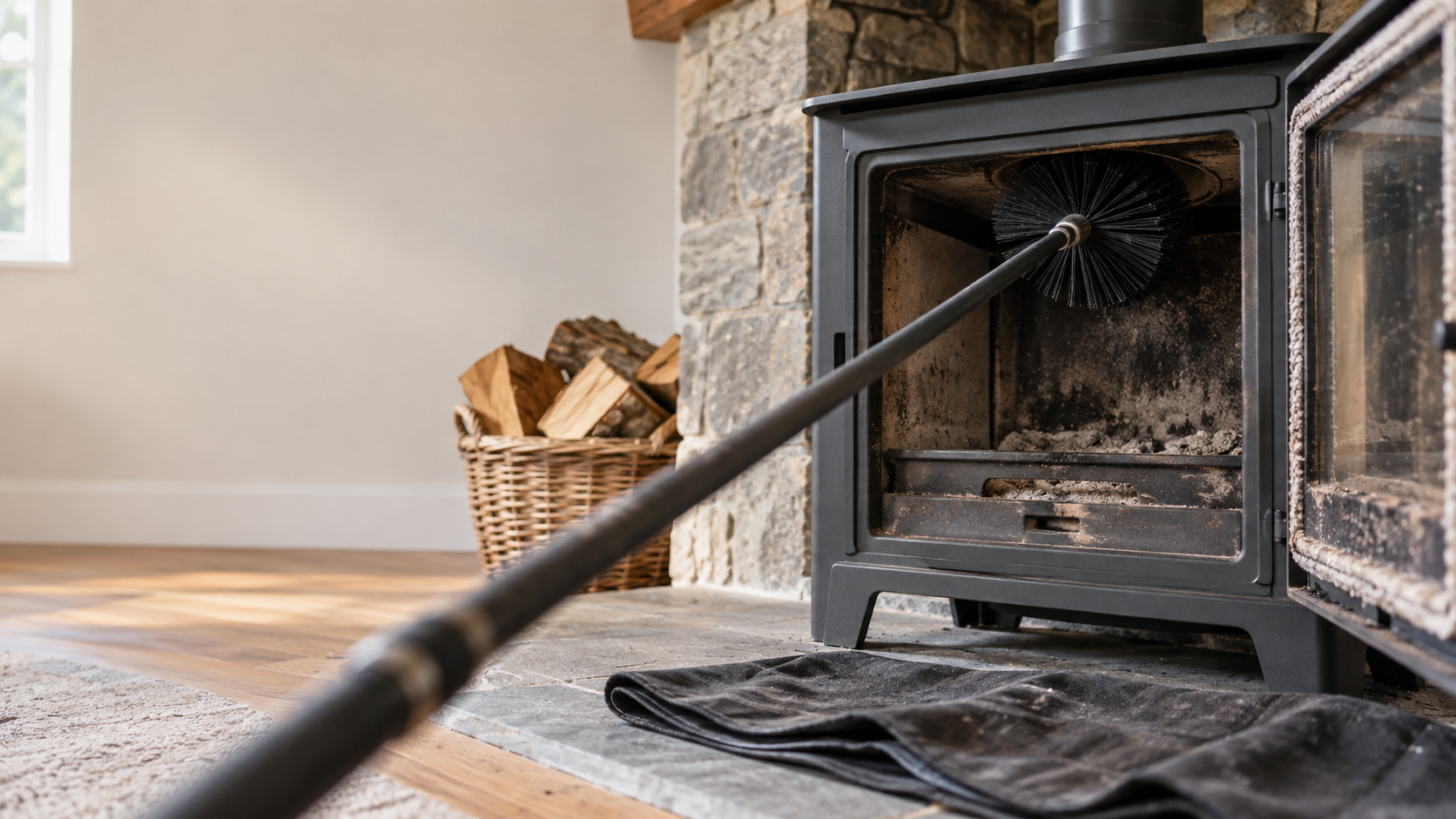
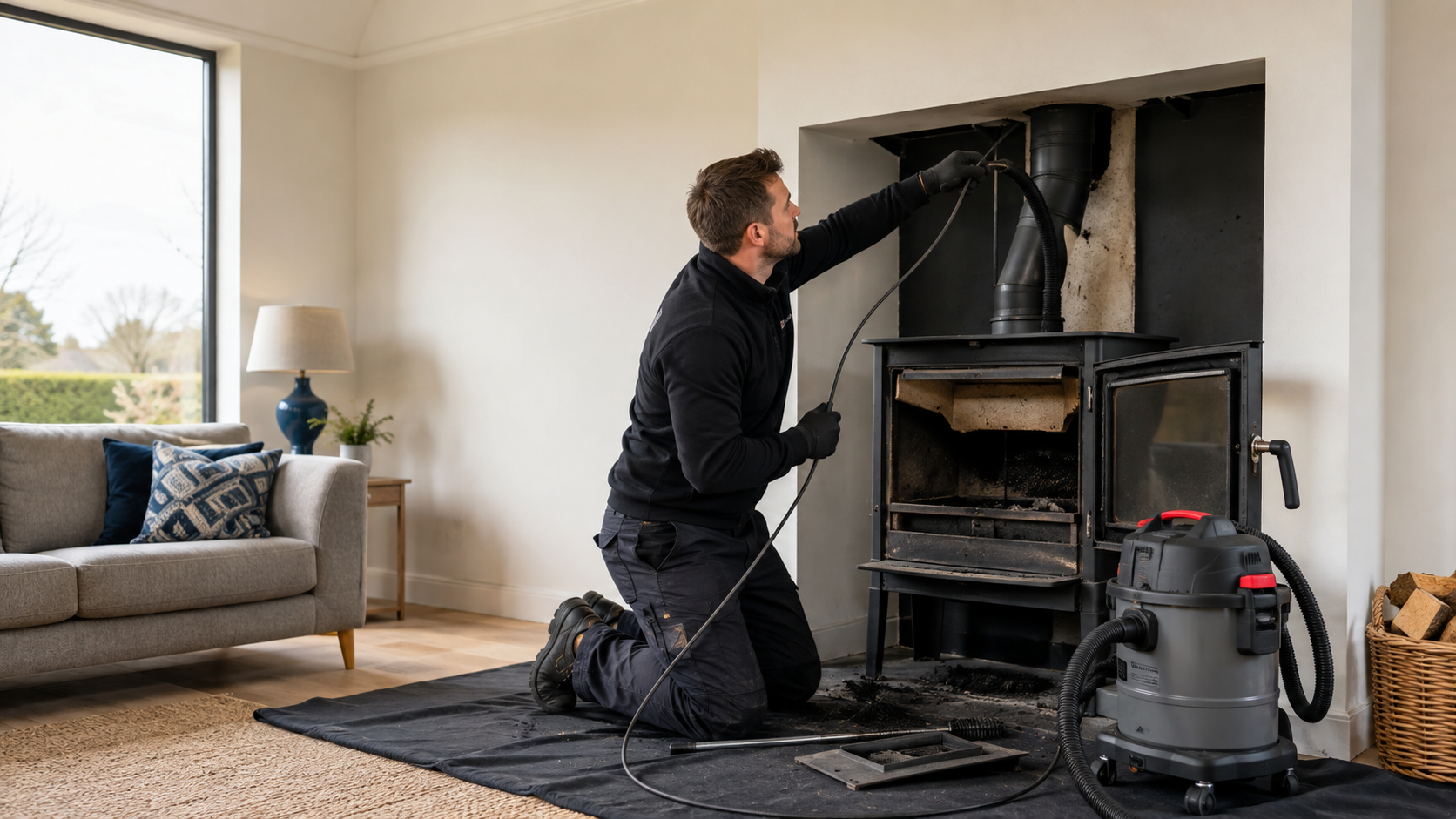
The stove usually does not need to be removed from the fireplace. Instead, a professional chimney sweep accesses the flue through the appliance, often after removing or repositioning internal components such as the baffle plate or throat plate.
Specialist rods and brushes can then be passed through the flue to remove soot, creosote and other deposits.
Regular sweeping is an important part of maintaining a wood-burning stove. HETAS recommends having a chimney swept at least once a year, with the required frequency depending on the appliance, fuel and level of use.
In this guide, we explain exactly how a chimney is swept when a log burner is already installed, whether the stove needs dismantling and how to prepare for your appointment.
Does a Log Burner Need to Be Removed to Sweep the Chimney?
Usually, no.
A correctly installed log burner should normally provide a suitable way for the chimney or flue to be swept without removing the whole appliance.
Depending on the stove design, the chimney sweep may access the flue:
- Through the stove itself
- Through the flue outlet
- Through a removable access plate
- Through a soot door or sweeping hatch
- Via another purpose-designed access point
Some internal stove components may need to be removed temporarily to provide a clear route into the flue.
These can include:
- Baffle plates
- Throat plates
- Firebricks
- Internal deflector plates
- Other removable components specified by the stove manufacturer
Stove manufacturer guidance commonly requires the chimney, flue connection and appliance baffles or throat plates to be swept, cleaned and inspected as part of ongoing maintenance.
The precise method therefore depends on your stove and flue configuration.
How Is a Chimney Swept Through a Log Burner?
A professional log burner chimney sweep normally follows a controlled process designed to clean the complete flue while keeping soot inside the working area.
1. The Stove Is Allowed to Cool
The stove must be completely cold before sweeping begins.
Do not use the log burner on the day of your appointment unless your chimney sweep has specifically advised otherwise.
Hot ash, embers or stove components can create an unnecessary safety risk.
2. The Stove and Flue Are Assessed
Before sweeping, the professional may inspect the accessible parts of the appliance and ask:
- When was the chimney last swept?
- How frequently do you use the log burner?
- What type of wood do you burn?
- Have you noticed smoke entering the room?
- Does the stove draw properly?
- Have you noticed tar or strong chimney smells?
- Has the stove glass started blackening more quickly?
- Have birds been active around the chimney?
This information can help identify signs of excessive deposits or a potential blockage.
3. The Room Is Protected
Modern chimney sweeping should not mean covering your living room in soot.
A professional sweep should use suitable:
- Floor coverings
- Hearth protection
- Appliance sealing methods
- Specialist soot-vacuum equipment
NACS states that its chimney sweeps are trained to prevent dust escaping during sweeping and normally require a clear working space around the appliance.
Midlands Sweeps similarly focuses on keeping the home clean while thoroughly sweeping the flue.
4. Internal Stove Components May Be Removed
Many log burners contain a baffle or throat plate near the top of the firebox.
Its purpose is to control the path of hot combustion gases before they enter the flue.
Because this component may restrict direct access to the chimney, the sweep may remove it temporarily.
Depending on the appliance, other removable parts may also need to come out.
This does not mean the entire log burner needs to be removed.
Once the sweep is complete, the components should be correctly refitted.
5. Sweeping Rods Are Passed Through the Flue
Once suitable access has been created, chimney rods and the correct brush or sweeping head can be passed up the chimney.
The sweep may use:
- Manual chimney rods
- Flexible rods
- Specialist chimney brushes
- Rotary power-sweeping equipment
The correct equipment depends on:
- Flue diameter
- Flue construction
- Type of liner
- Stove installation
- Amount of soot
- Type of deposits
- Bends or offsets in the chimney
Midlands Sweeps is listed by NACS as offering both manual sweeping and rotary power sweeping, along with smoke testing and flue-lining services.
6. Soot and Creosote Are Removed
As the brush passes through the flue, soot and loose combustion deposits are dislodged.
A professional sweep may remove:
- Soot
- Loose creosote
- Ash
- Tar deposits
- Cobwebs
- Small amounts of debris
- Other chimney deposits
Regular sweeping is important because chimneys need to allow the free passage of combustion gases. NACS states that sweeping removes soot, creosote, bird nests, cobwebs and other blockages while helping reduce chimney-fire risk.
7. The Stove Is Cleaned and Reassembled
Once the chimney has been swept, loose material is collected from the stove and surrounding working area.
Any baffle plates or other removable components should then be correctly returned to their normal positions.
The immediate working area should be left clean.
8. Chimney Performance May Be Checked
An appropriate smoke evacuation or draught check may be carried out once the sweeping process is complete.
This can help establish whether smoke appears to travel correctly through the flue.
NACS-listed Midlands Sweeps includes smoke testing among its professional services.
If something unusual is found during the sweep, further inspection may be recommended.
Can Every Log Burner Be Swept From Inside the Stove?
Most installations should provide a practical means of sweeping the chimney, but the exact method varies.
A chimney sweep may need another access point if:
- The stove design prevents direct access
- The flue has an unusual configuration
- The installation contains difficult bends
- A sweeping hatch has been installed
- The appliance cannot safely be dismantled enough to provide access
A poorly designed installation that provides no suitable sweeping access may need further assessment.
This is one reason professional log burner installation is important. Future inspection, cleaning and maintenance should be considered when the stove and flue system are designed.
Does the Baffle Plate Have to Come Out?
Often, yes.
The baffle plate sits near the top of many wood-burning stoves and can prevent a sweeping brush from travelling directly into the flue.
Removing it also allows soot dislodged during sweeping to be collected more easily.
However, stove designs differ.
Some appliances may have:
- Multiple baffles
- Vermiculite panels
- Cast-iron throat plates
- Secondary combustion components
- Special access arrangements
The appliance manufacturer’s instructions should therefore be followed.
Never force a baffle plate out if you are unsure how it is designed to be removed.
Can You Sweep a Stainless Steel Flue Liner With the Stove Installed?
Yes.
A stainless steel flue liner still needs regular sweeping, and it can normally be cleaned without removing the log burner.
However, it is particularly important that the sweep uses equipment appropriate for the liner.
Aggressive or unsuitable tools could potentially damage some flue systems.
Midlands Sweeps provides both chimney sweeping and flue-lining services and is listed by NACS as a full member offering flue linings, manual sweeping and rotary power sweeping.
What About a Twin-Wall Flue?
A log burner connected to a twin-wall flue still requires sweeping.
Twin-wall systems are commonly used where a property does not have a suitable traditional chimney.
Although the construction is different, soot and creosote can still accumulate inside the flue.
The sweeping equipment and access method should be appropriate for that specific system.
Having a modern flue does not mean chimney cleaning is unnecessary.
Why Does a Log Burner Chimney Need Sweeping?
Burning wood creates combustion deposits.
Even when you burn properly seasoned logs and operate the stove correctly, some soot can still accumulate inside the flue.
Regular chimney sweeping helps:
- Remove soot
- Remove creosote
- Maintain chimney draught
- Keep the flue clear
- Reduce chimney-fire risk
- Identify potential blockages
- Support efficient stove operation
NACS explains that sweeping keeps chimneys clear for combustion gases and removes combustible creosote that can contribute to chimney fires.
How Often Should a Log Burner Chimney Be Swept?
The correct frequency depends on:
- How often the stove is used
- Type of fuel
- Moisture content of the wood
- Flue type
- Chimney design
- How efficiently the stove is operated
HETAS recommends chimney sweeping at least once a year, depending on appliance and fuel.
NACS provides more frequent guidance for wood-burning chimneys, listing wood as quarterly when in use as general guidance.
Your chimney sweep can recommend a suitable interval based on the deposits found during your appointment.
Does a Rarely Used Log Burner Still Need Sweeping?
Yes.
Even if the stove is only used occasionally, the chimney can still contain:
- Old soot
- Creosote
- Bird nests
- Cobwebs
- Leaves
- Fallen debris
NACS specifically states that regular sweeping removes nests, cobwebs and other obstructions in addition to combustion deposits.
If the log burner has not been used for a long time, having the chimney swept and inspected before bringing it back into service is sensible.
Some stove manufacturer instructions specifically call for the flue connection, appliance baffles and chimney to be swept and inspected following prolonged shutdown periods.
Will Chimney Sweeping Make a Mess Around My Log Burner?
It should not make a significant mess when performed professionally.
The appliance opening can be sealed appropriately, and specialist vacuum equipment is used to contain loosened soot.
NACS states that professional members are trained in preventing dust from escaping during chimney sweeping.
Before the appointment, you can help by:
- Removing ornaments from around the stove
- Clearing logs and fuel away
- Allowing the appliance to cool
- Providing a clear route to the fireplace
- Moving delicate belongings away
Your chimney sweep should provide the specialist protective equipment.
Is Chimney Sweeping the Same as Servicing a Log Burner?
No.
They are related maintenance services, but they are not exactly the same.
Chimney Sweeping Usually Focuses On:
- Cleaning the chimney or flue
- Removing soot and creosote
- Identifying blockages
- Checking basic flue performance
- Keeping the passage clear for combustion gases
Log Burner Servicing May Include:
- Checking door rope seals
- Inspecting firebricks
- Checking the baffle plate
- Cleaning internal components
- Examining moving parts
- Checking for corrosion or damage
- Replacing worn components where necessary
HETAS distinguishes stove servicing from chimney sweeping and recommends regular maintenance to keep solid-fuel appliances operating efficiently and safely.
Ask what is included when booking if you want both the chimney swept and the stove serviced.
What If the Sweep Finds Heavy Creosote?
Loose soot and normal deposits can often be removed during routine sweeping.
However, severe tar or hardened glazed creosote may require additional treatment.
Warning signs can include:
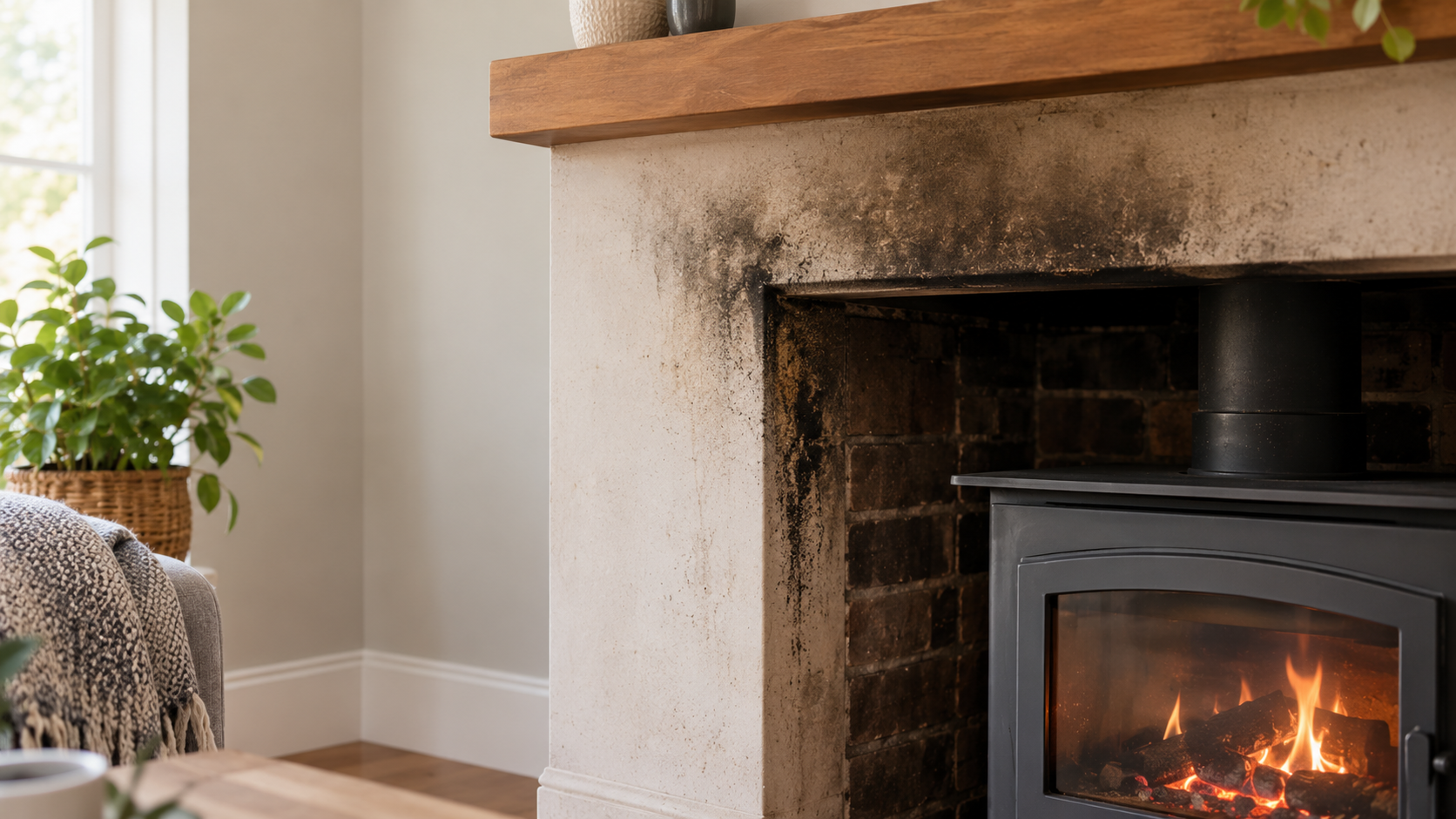
- Thick shiny deposits
- Strong tar smells
- Sticky black material
- Frequent chimney deposits
- Poor draught
- Previous use of wet wood
If heavy creosote is discovered, your sweep should explain the appropriate next step before you continue using the stove.
What If There Is a Bird Nest?
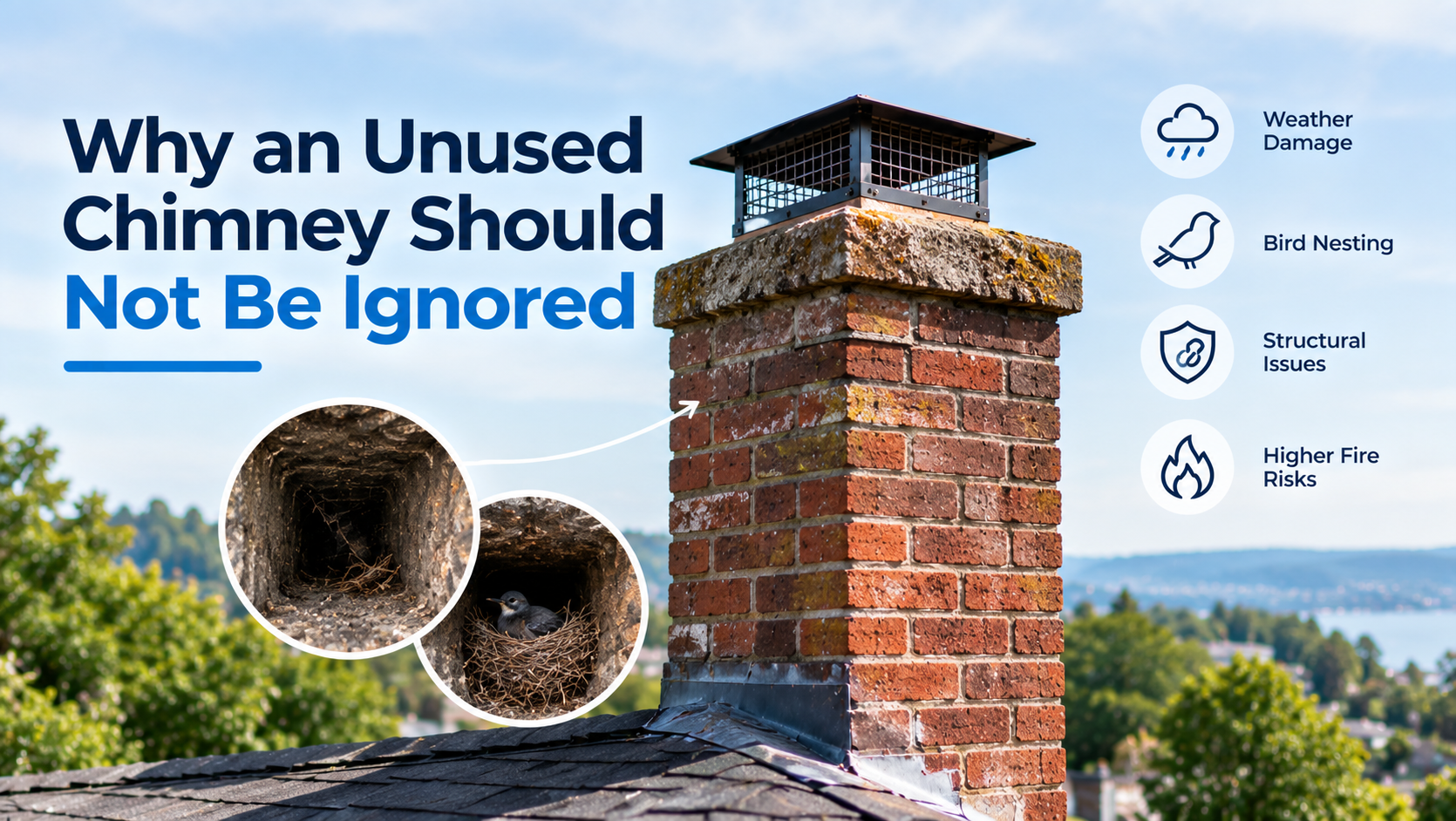
A bird nest can partially or completely block the flue.
Signs may include:
- Twigs falling into the stove
- Fluttering sounds
- Birds repeatedly visiting the chimney pot
- Poor chimney draught
- Smoke entering the room
- Strong unusual smells
Do not try to burn a nest out.
Nest removal may require a separate service, particularly where a large amount of material is involved.
Midlands Sweeps provides chimney sweeping alongside specialist chimney services and can advise when a blockage requires more than routine cleaning.
Can the Chimney Be Swept If the Stove Pipe Has Bends?
Usually, yes, provided the installation has been designed correctly and suitable access is available.
Professional sweeping systems use flexible rods capable of travelling through many common offsets and bends.
However, unusually tight bends or poorly configured flues can make sweeping more difficult.
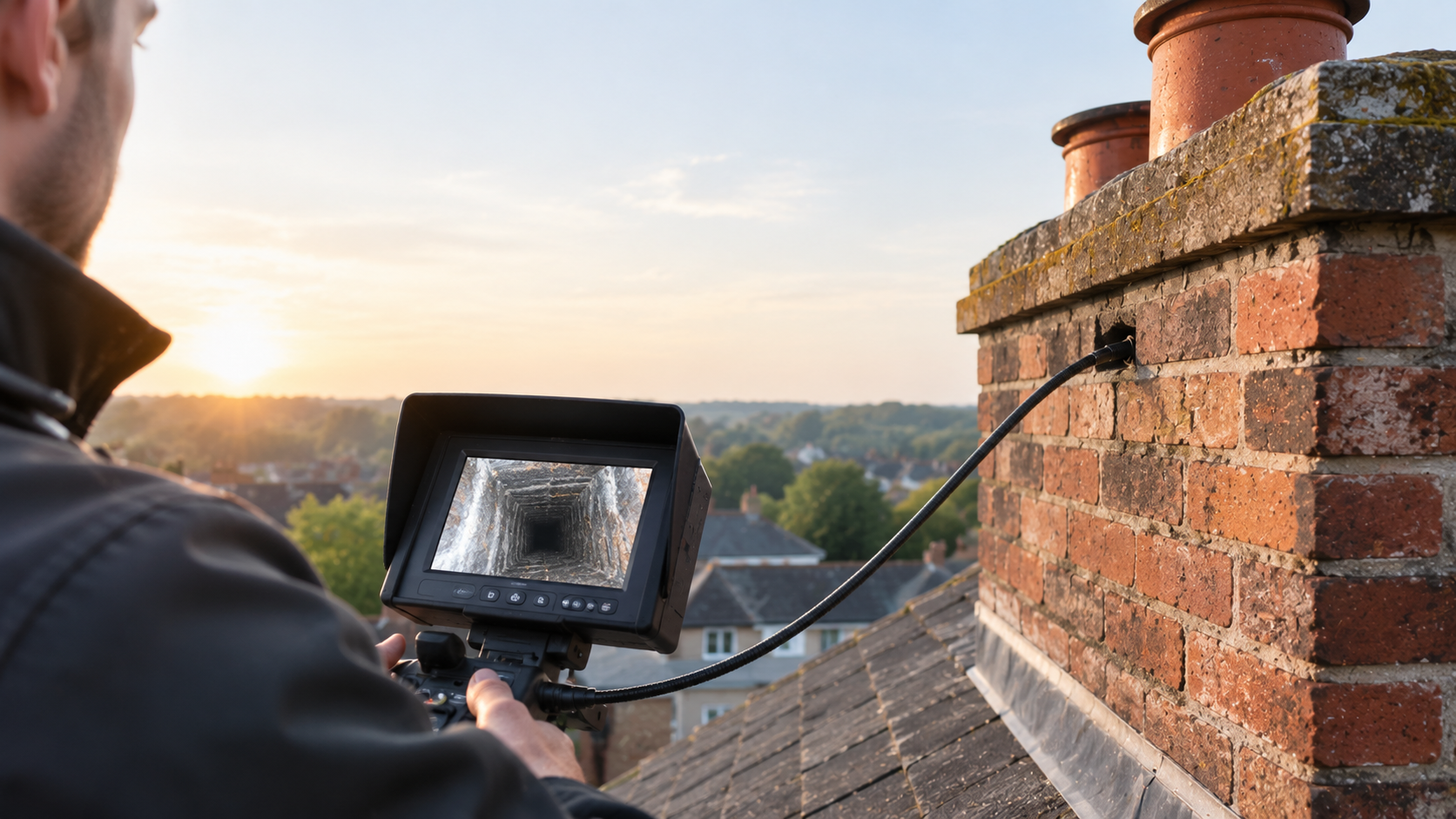
In one NACS training example, a sweep working on a lined stove system used CCTV when the rods became difficult to pass through the chimney before successfully continuing the sweep.
If an obstruction or unusual flue arrangement prevents normal sweeping, a camera inspection may help determine what is happening.
Can You Sweep a Chimney From the Top Instead?
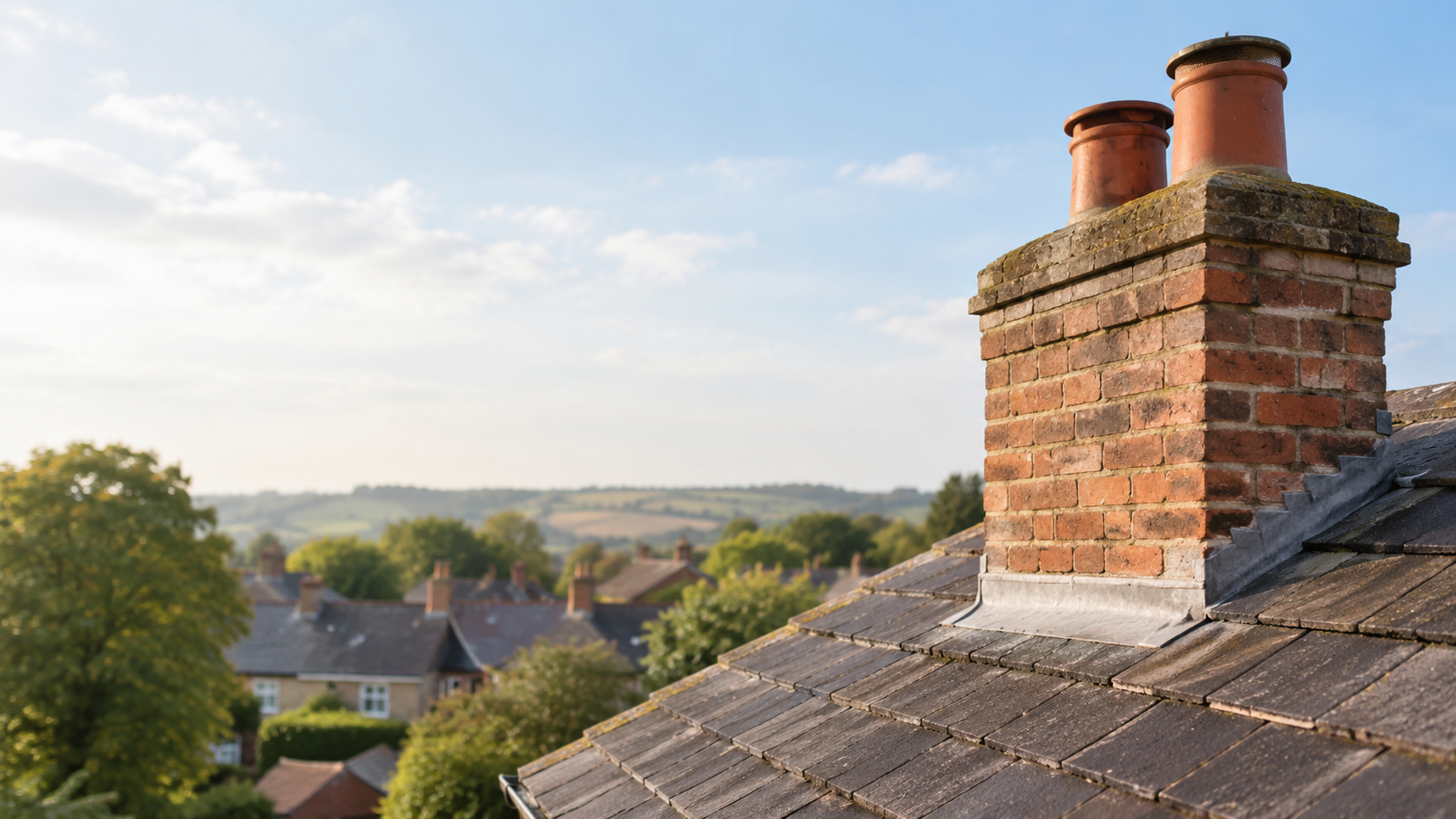
In some circumstances, a chimney may be swept from above.
However, professional sweeps commonly clean stove installations from inside the property using the available flue access.
The most appropriate method depends on:
- Appliance configuration
- Chimney construction
- Access
- Safety
- Flue condition
- Type of blockage
Roof access should not be attempted unnecessarily when the chimney can be safely and effectively swept from below.
Can I Sweep My Own Log Burner Chimney?
Homeowners can carry out basic maintenance such as removing cold ash and cleaning stove glass, but full chimney sweeping is different.
Professional sweeping requires suitable equipment and an understanding of:
- Flue-liner materials
- Correct brush sizes
- Stove access
- Baffle removal
- Chimney blockages
- Creosote
- Smoke testing
- Chimney draught
Incorrect sweeping can leave deposits behind or potentially damage the liner.
A professional chimney sweep can also identify warning signs that might otherwise go unnoticed.
Signs Your Log Burner Chimney Needs Sweeping
Arrange a professional sweep if you notice:
- Smoke entering your room
- Poor chimney draught
- Difficulty lighting the stove
- Strong soot or tar smells
- Soot falling into the firebox
- Rapidly blackening stove glass
- Twigs or debris inside the stove
- Signs of bird activity
- Heavy visible deposits
- The chimney has not been swept recently
A sudden change in how the stove behaves is particularly worth investigating.
How Should I Prepare My Log Burner for a Chimney Sweep?
Before your appointment:
- Do not light the stove.
- Make sure it is completely cold.
- Remove logs and stored fuel from around it.
- Clear ornaments and delicate objects nearby.
- Provide easy access to the appliance.
- Tell the sweep about any smoke or draught problems.
- Mention bird activity or falling debris.
- Have appliance documentation available if you know the stove model.
You normally do not need to dismantle the stove yourself.
Let the professional decide which components need to be removed to access the flue.
Frequently Asked Questions
Can you sweep a chimney without removing the log burner?
Yes. In most installations, the chimney can be swept through the stove or another purpose-designed access point without removing the complete appliance.
Does the baffle need removing to sweep a log burner?
Often it does because the baffle may obstruct access to the flue. The exact procedure depends on the stove design.
Can a chimney liner be swept through the stove?
Yes. Stainless steel flue liners are routinely swept through appropriately designed stove installations using suitable equipment.
Will the chimney sweep clean inside the stove too?
The sweep will normally remove soot associated with accessing and sweeping the flue, but a complete stove service may be a separate service.
Can a log burner stay connected during chimney sweeping?
Usually, yes. The appliance itself normally remains installed and connected while internal access components are temporarily removed where necessary.
How long does it take to sweep a log burner chimney?
A straightforward sweep commonly takes around an hour, although heavy deposits, difficult flue arrangements or blockages can increase the time required.
Does a new log burner still need chimney sweeping?
Yes. New appliances still produce soot and combustion deposits. The chimney or flue should be swept at appropriate intervals once the stove is in use.
Can chimney sweeping damage my flue liner?
Professional sweeping using equipment appropriate for the liner should not damage it. This is one reason choosing a trained sweep with suitable tools is important.
Book a Log Burner Chimney Sweep
So, can you sweep a chimney with a log burner installed?
Yes. In most cases, the log burner stays exactly where it is.
A professional sweep can access the flue through the appliance or a suitable sweeping point, temporarily remove any necessary internal components and clean the chimney using equipment appropriate for the flue system.
Regular sweeping helps remove soot and creosote, maintain chimney draught and keep the route for combustion gases clear.
Midlands Sweeps provides professional chimney sweeping alongside log burner installation and flue-liner services. The company is based in Swadlincote and covers Burton upon Trent, Derby, Ashby-de-la-Zouch and surrounding Midlands areas. Midlands Sweeps is also listed as a full NACS member providing manual and rotary power sweeping, smoke tests and flue-lining services.
If your log burner chimney is due for sweeping, you do not need to remove the stove first. Arrange a professional sweep and let the chimney sweep handle the appliance and flue access correctly.