
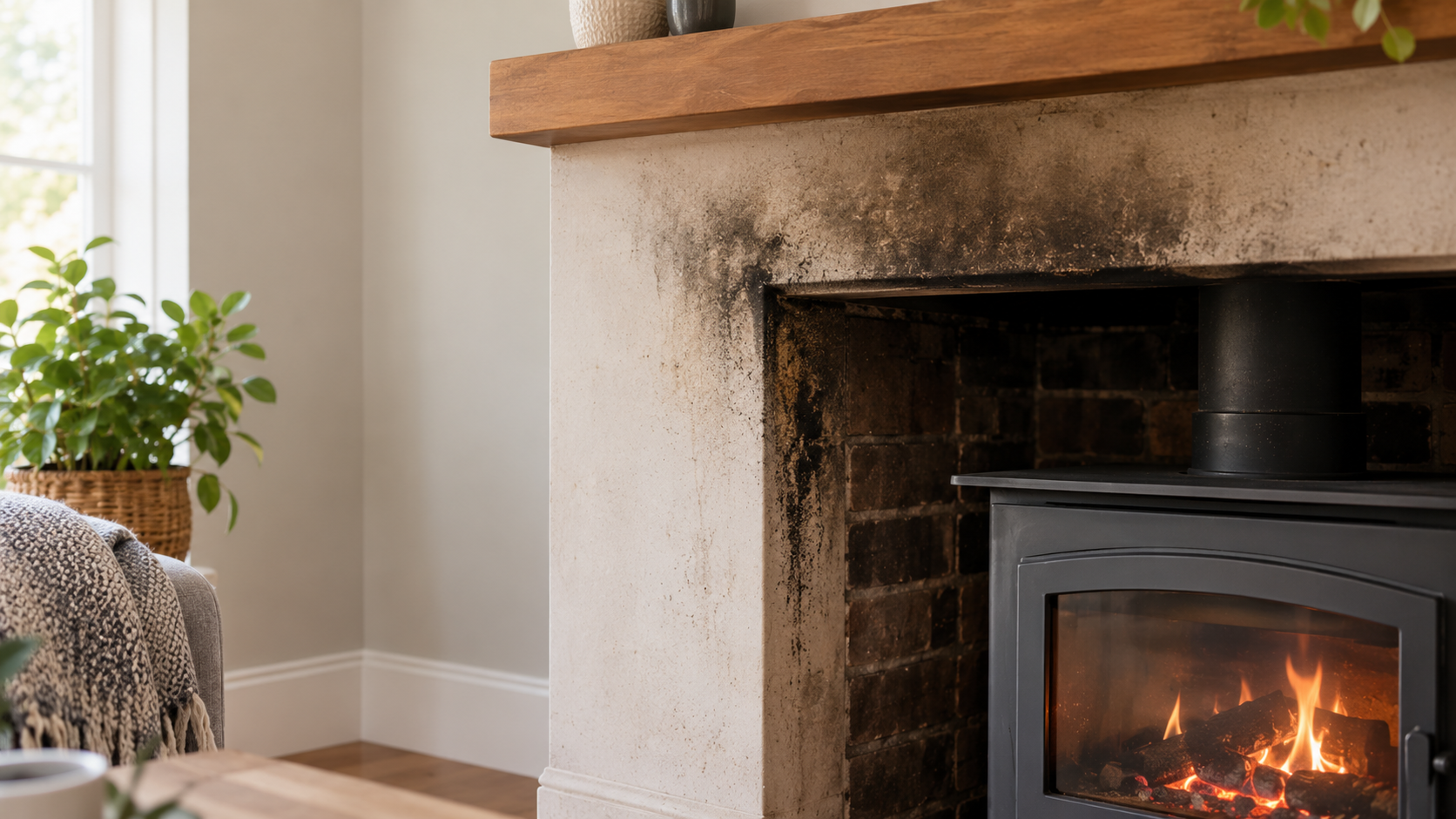
Black or grey marks around a fireplace can make the surrounding wall look dirty, but they may also provide useful information about how the chimney is working. These stains are often caused by soot, smoke, or fine particles escaping into the room.
Cleaning the marks may improve the appearance temporarily, but understanding their cause is more important. If the underlying issue continues, the staining is likely to return.
Soot Escaping From the Fireplace
Soot is produced when fuel does not burn completely. Small particles normally travel up the chimney with the smoke, but some can settle around the fireplace opening.
Staining may become more noticeable when a fire is first lit, when additional fuel is added or when the room lacks enough ventilation. Damp or unseasoned wood can also create more smoke and deposits than properly dried fuel.
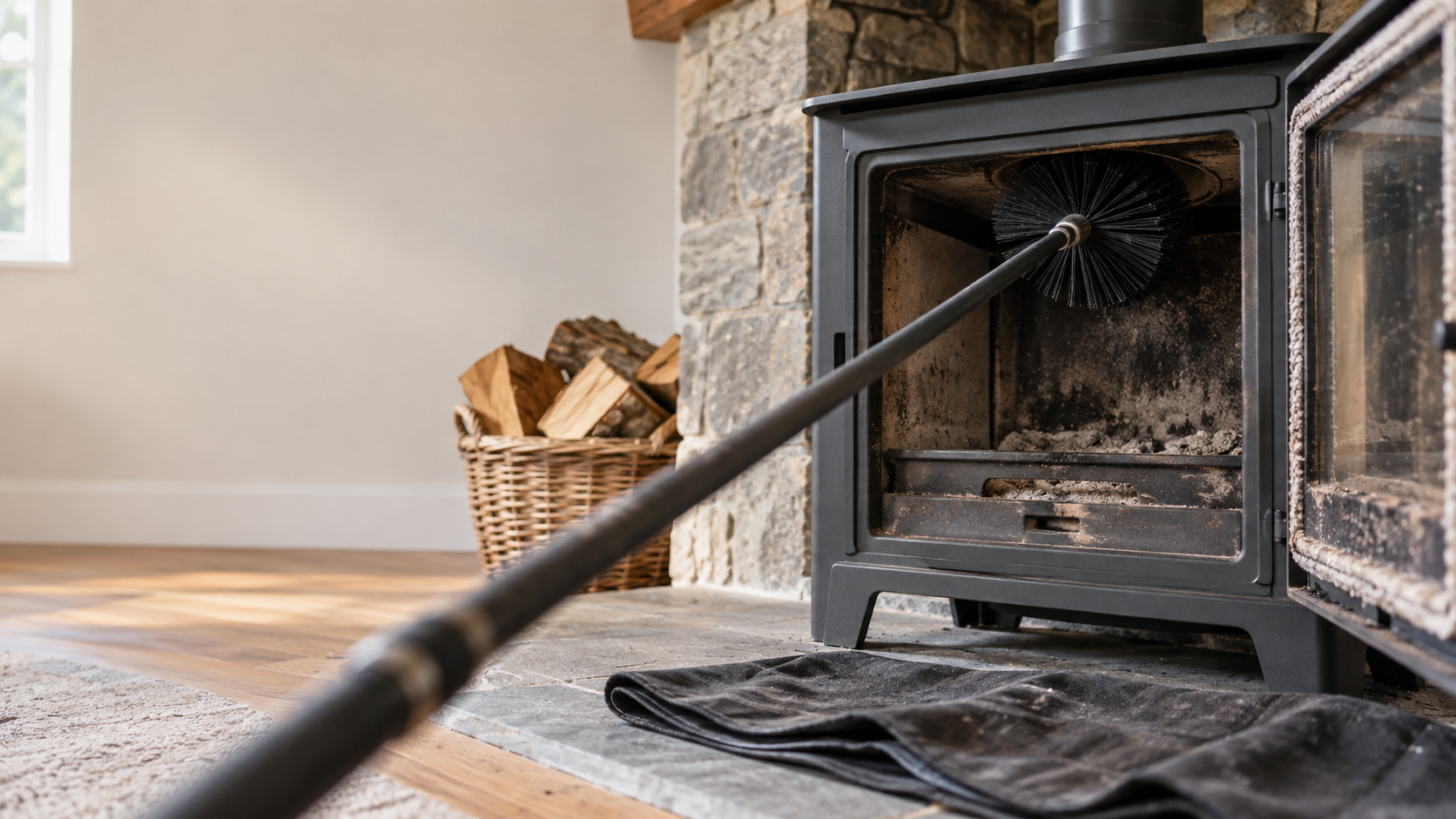
A professional chimney sweep can remove accumulated soot and identify visible blockages that may be restricting the flue.
Poor Chimney Draught
A chimney depends on rising warm air to carry smoke and gases away from the room. If the draught is weak or unstable, smoke may escape from the front of the fireplace and leave dark marks above it.
Several factors can affect draught, including the chimney’s height, flue size, nearby buildings, cold weather, and room ventilation. Extractor fans may also compete with the fireplace by removing air from the property.
During a Log burner installation, the appliance, flue, and ventilation should be considered together. Installing a stove without assessing the complete system may lead to performance problems.
A Blocked or Damaged Flue
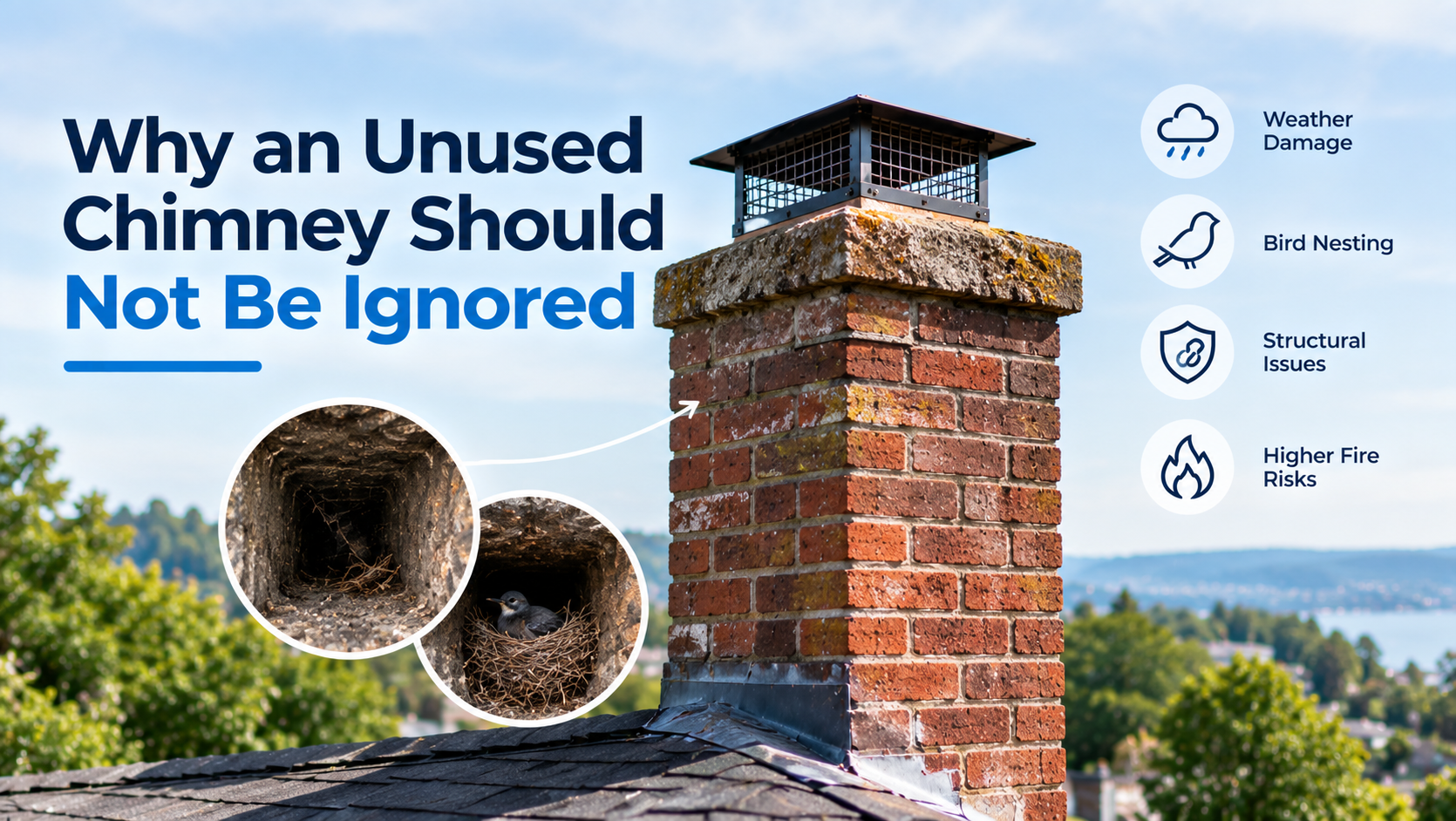
Bird nests, leaves, masonry, and heavy soot deposits can reduce the available space inside a chimney. If a nest is suspected, bird nest removal should only take place after confirming that it is not active. Birds, eggs, and active nests may be legally protected in the UK.
A damaged liner can also affect the safe movement of combustion gases. Where deterioration is confirmed, flue liner installation may be considered. The correct liner type and diameter depend on the appliance, fuel, and chimney arrangement.
Hidden Problems Inside the Chimney
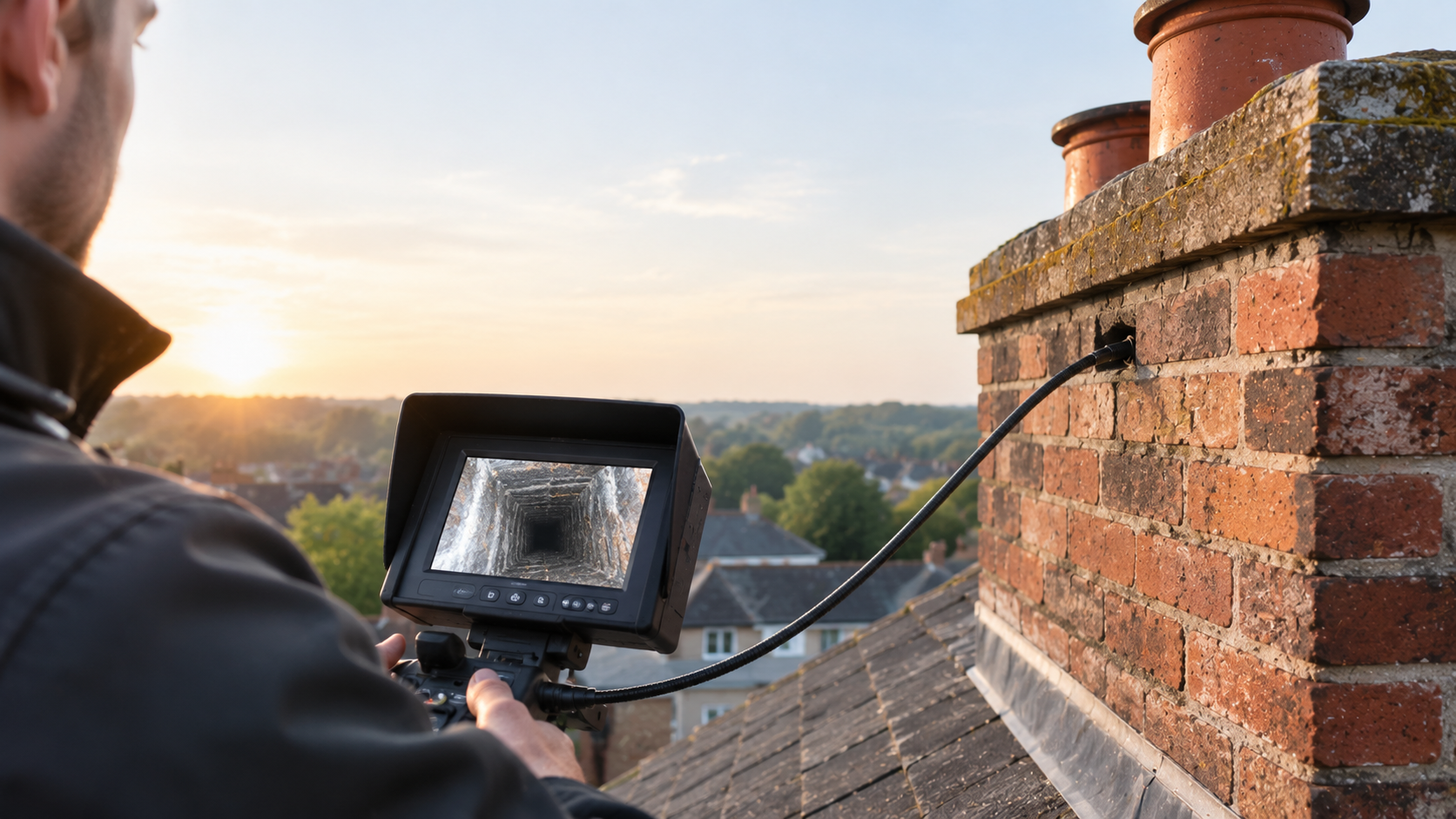
A standard sweep can remove deposits, but it may not reveal every internal defect. A camera can help locate cracked liners, loose mortar, old nesting material, or unexpected changes in the flue.
A CCTV and drone inspection provides views of both the inside and outside of the chimney. This can be useful when staining continues despite regular sweeping or when the source of a draught problem is unclear.
Weather and External Chimney Damage
Rain, wind, and damaged masonry can also contribute to fireplace staining. Moisture entering the chimney can mix with soot and create dark marks or unpleasant smells inside the home.
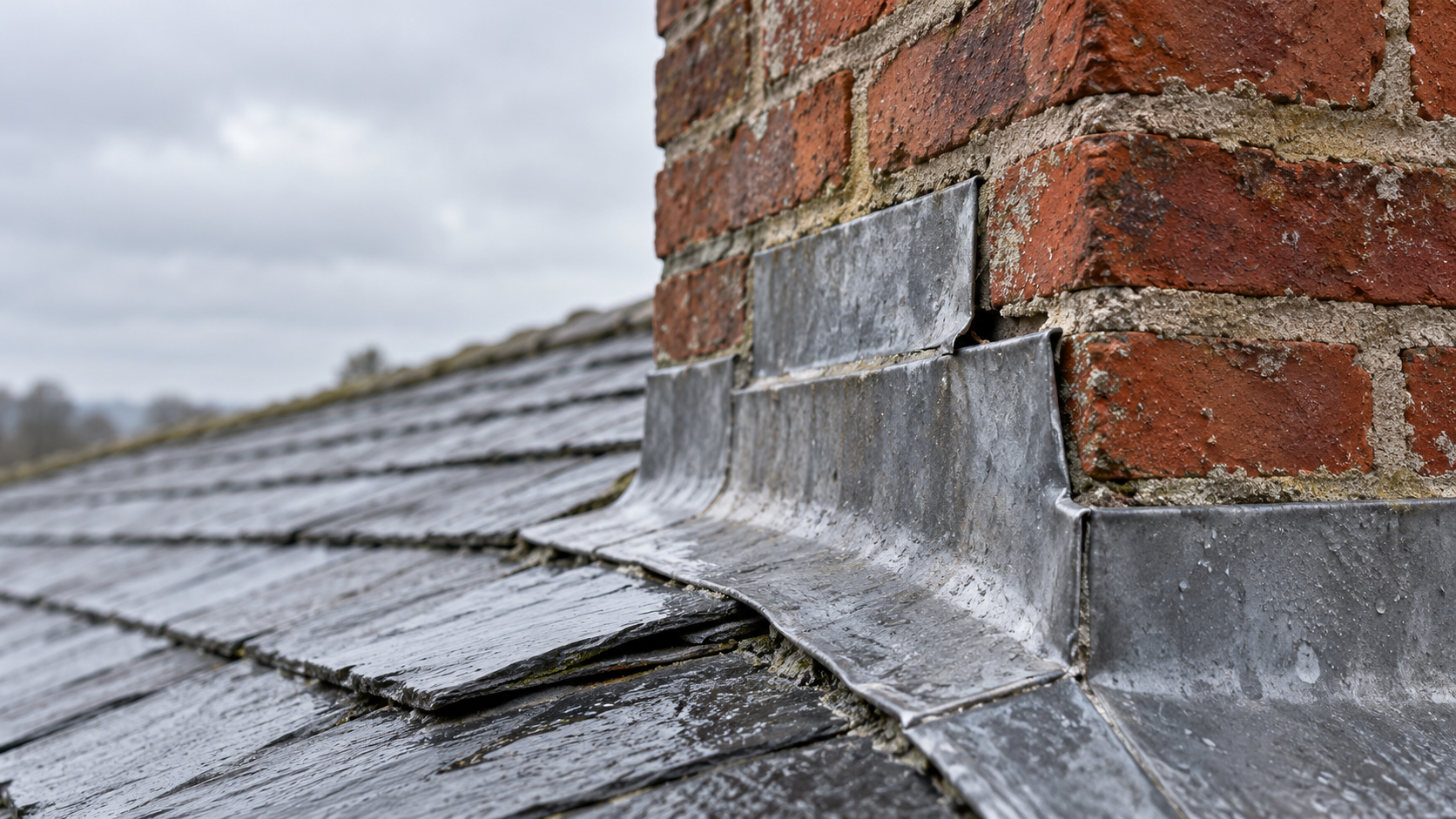
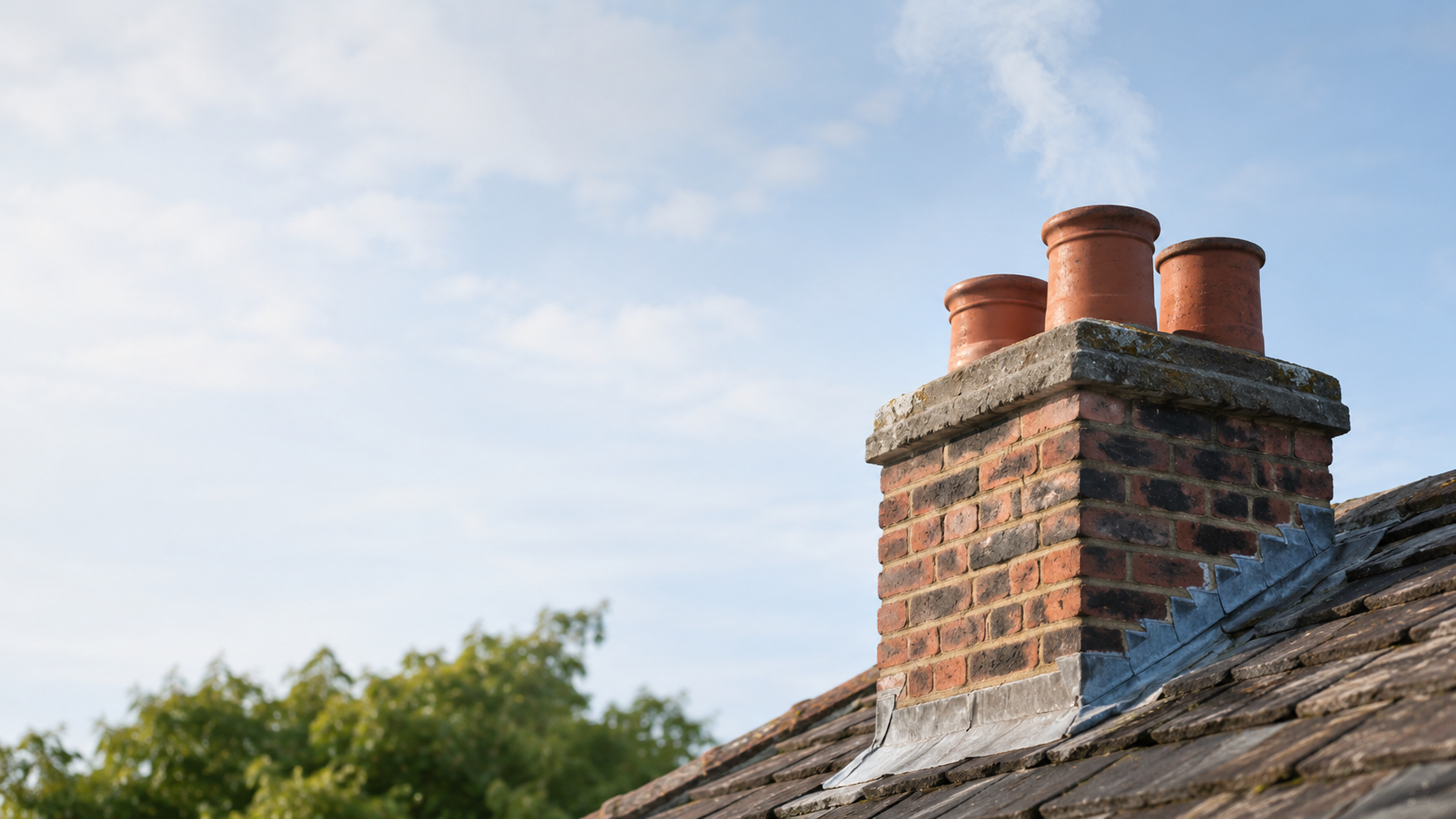
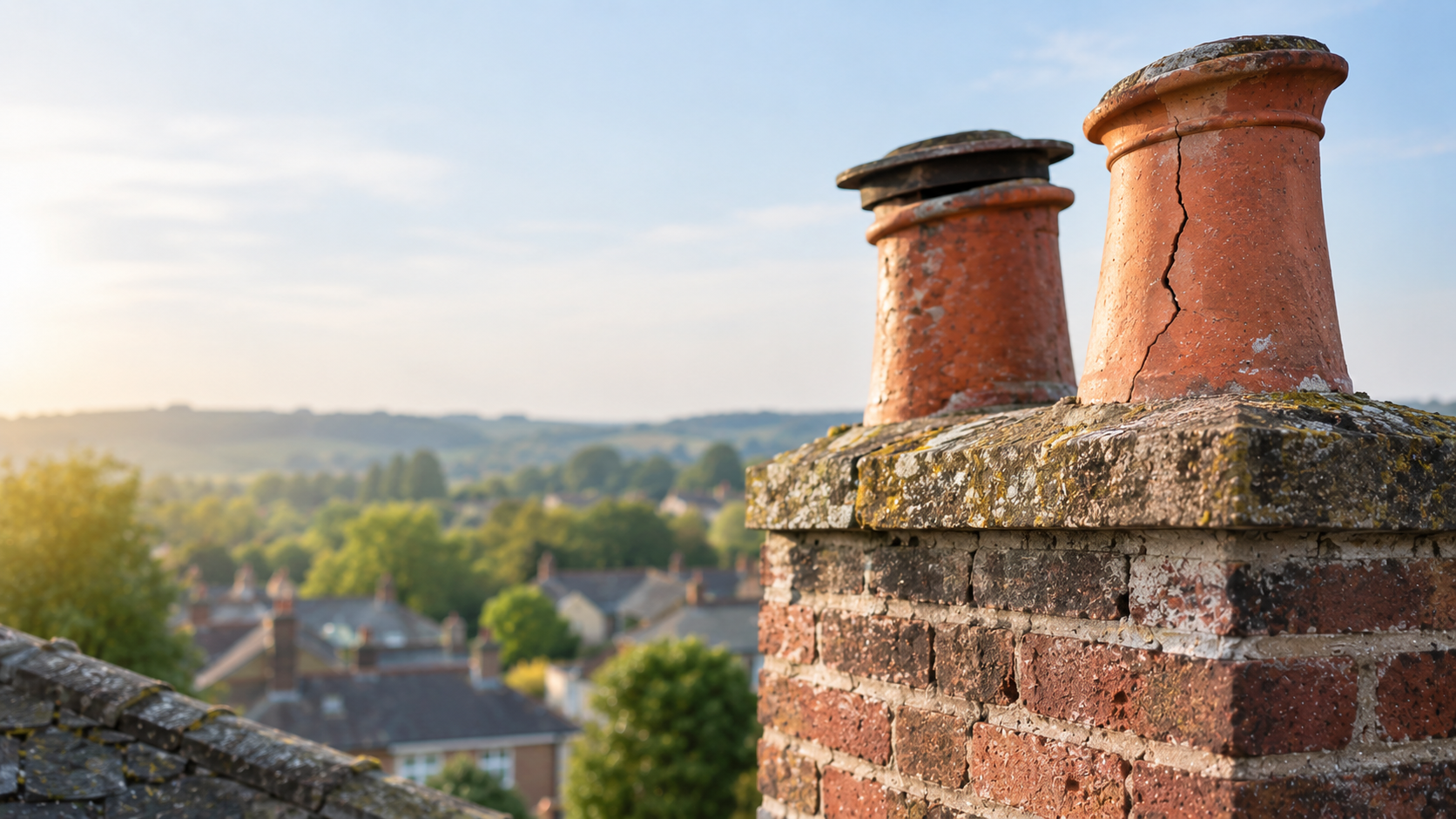
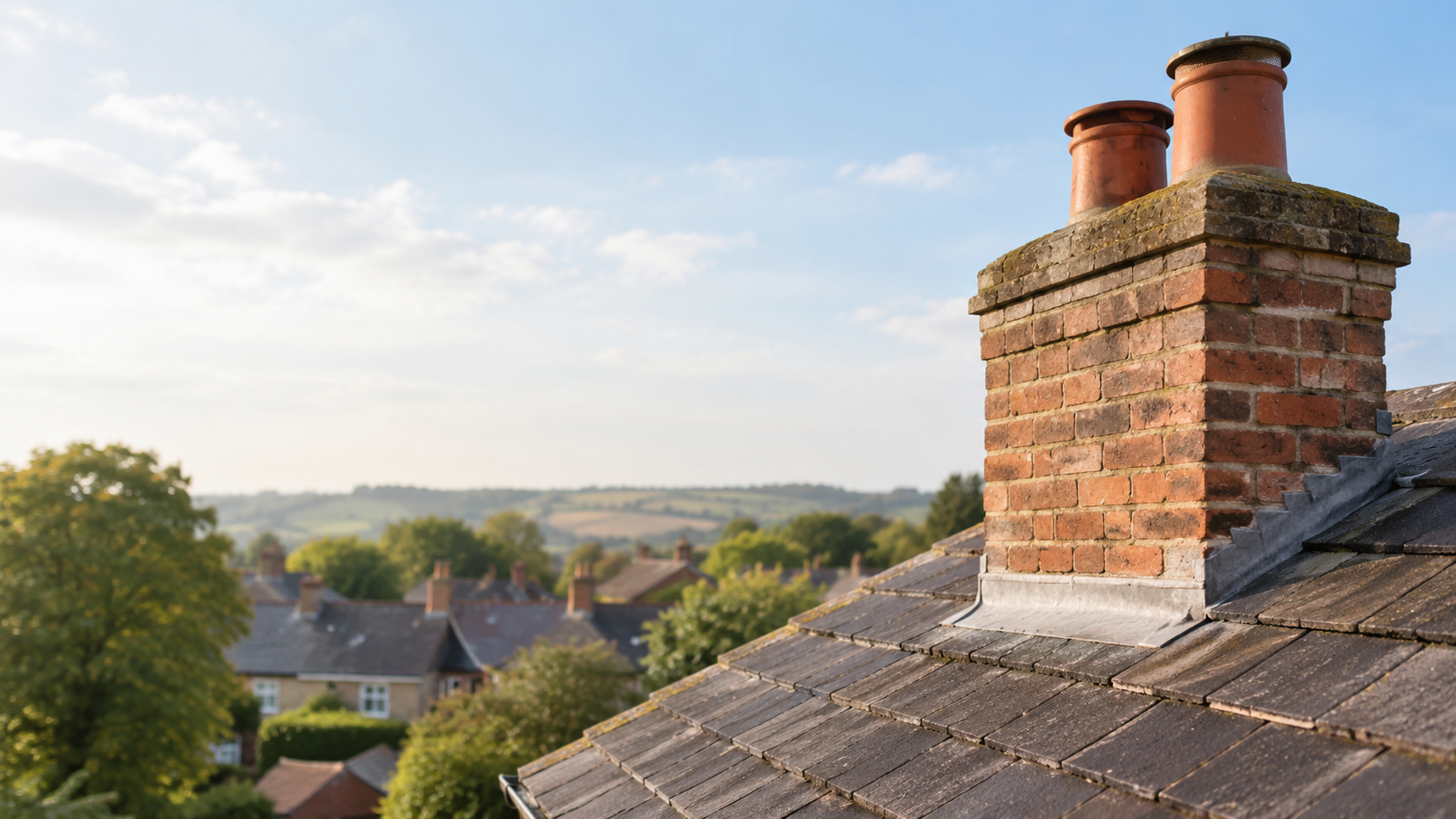
A drone inspection and roof inspection may reveal cracked pots, damaged flashing, missing pointing, or loose cowls. Drone footage offers a broad external view, while a closer roof inspection may be needed to confirm repair requirements.
Midlands Sweeps covers chimney sweeping and inspection work, but the cause of black marks should always be assessed according to the individual property and appliance.
What to Do When Staining Appears
Avoid painting over fresh marks before the cause has been investigated. Take photographs, note when the staining becomes worse, and stop using the appliance if smoke is entering the room.
A carbon monoxide alarm should be installed in the correct location, but it is not a substitute for maintenance or professional assessment.
Conclusion
Black marks around a fireplace may result from soot, weak draught, poor ventilation, blockages, or moisture. Treating the stain alone will not resolve the source. A clear flue and a suitable supply of air are essential for smoke to leave the property correctly.
Frequently Asked Questions
Can I clean soot marks with household products?
Some marks can be cleaned, but the surface type should be considered. Investigate the cause before redecorating.
Does black staining always mean the chimney is blocked?
No. It may also be caused by poor draught, damp fuel, ventilation problems, or appliance use.
Should I continue using the fire if smoke enters the room?
No. Stop using it, ventilate the room, and arrange an inspection before lighting it again.