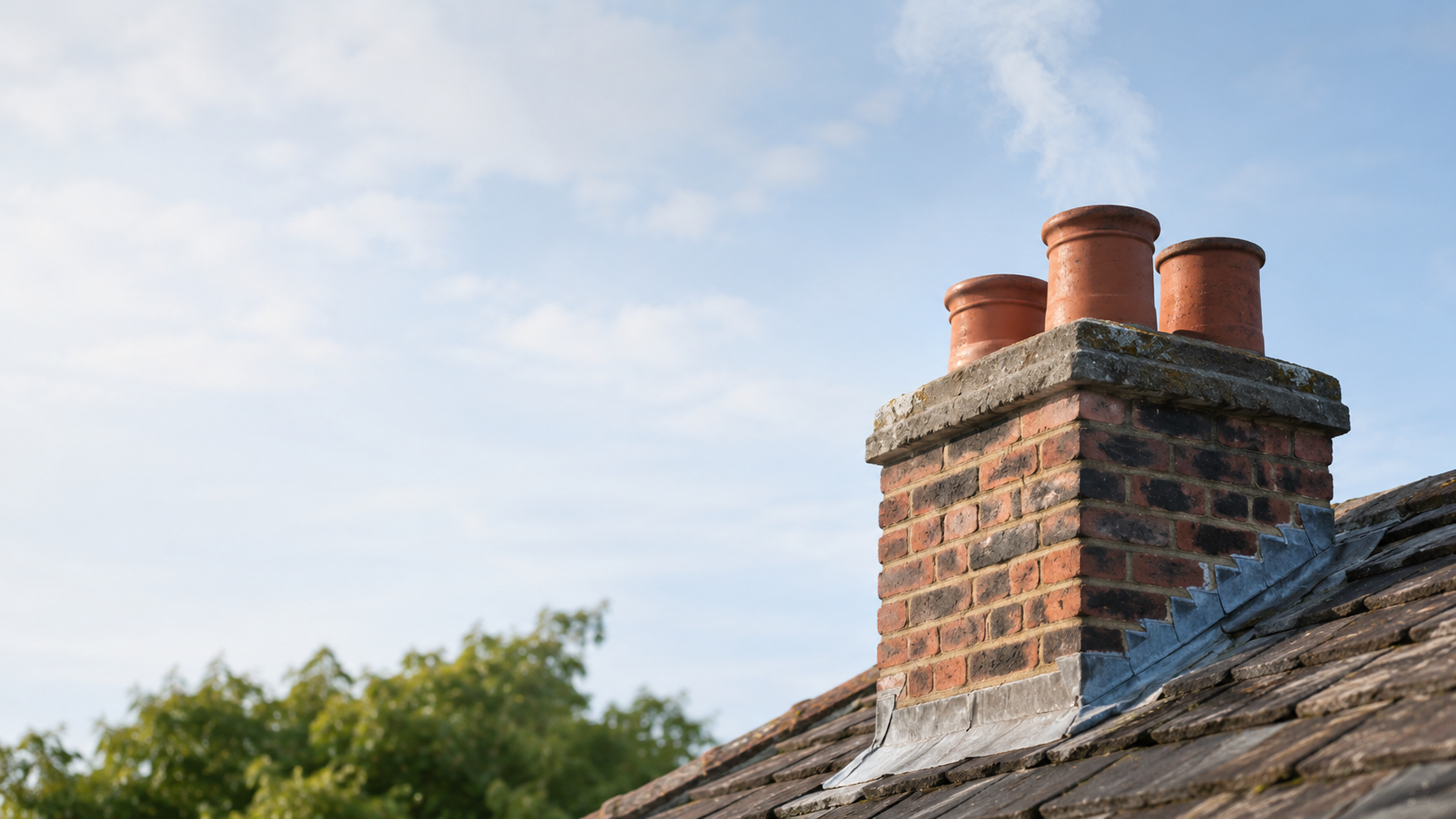
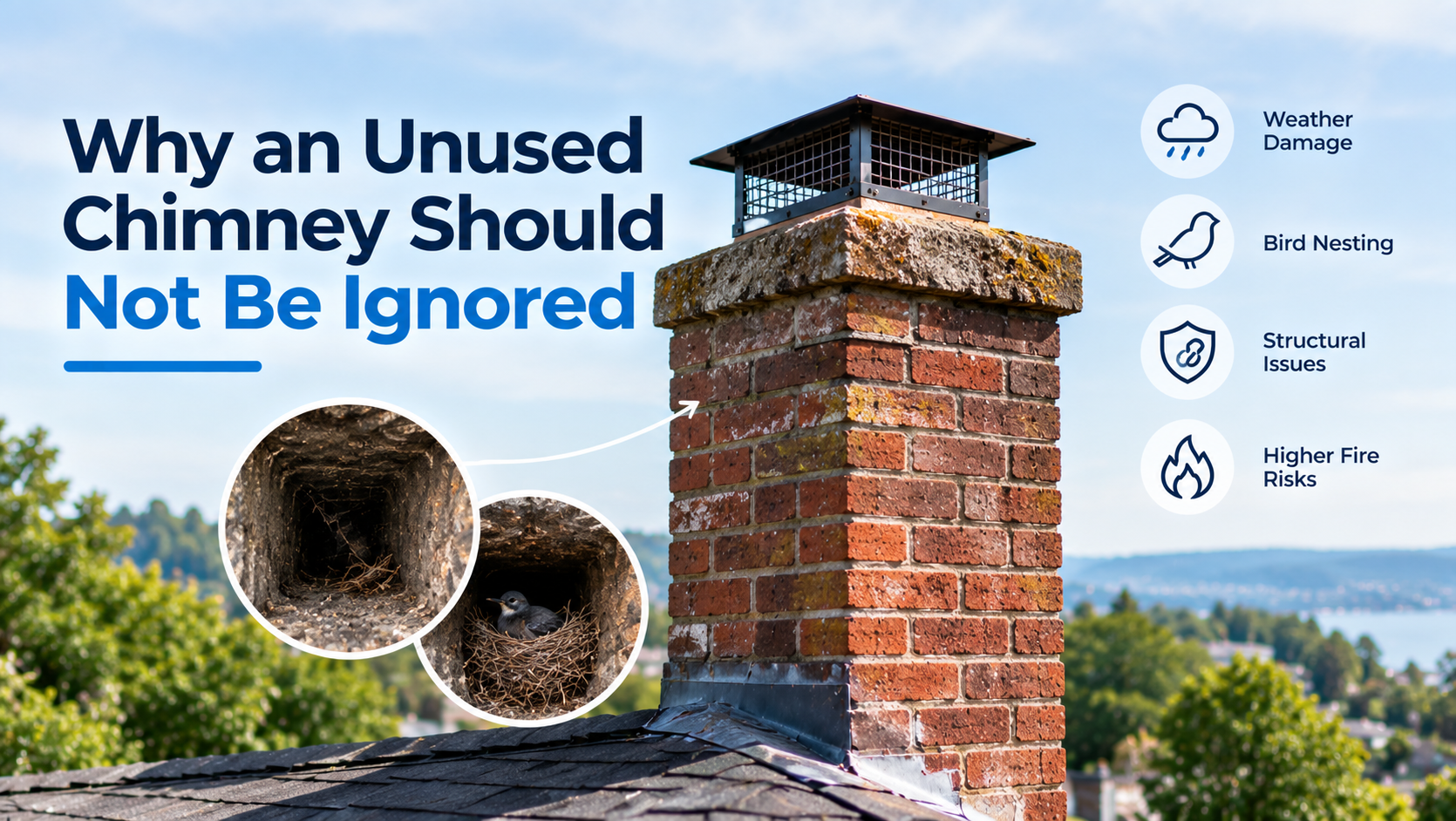
A chimney that is no longer connected to an open fire or stove may appear to need little attention. However, unused chimneys remain exposed to rain, wind, nesting birds and changing temperatures. Without occasional checks, small defects can develop into damp patches, unpleasant smells, or falling debris inside the home.
Understanding what happens to a disused chimney can help homeowners maintain it correctly and decide whether it should remain ventilated, be repaired, or be prepared for future use.
Moisture Can Become Trapped Inside
A working chimney benefits from warm air moving through the flue. When the chimney is no longer used, its internal surfaces stay colder and may take longer to dry.
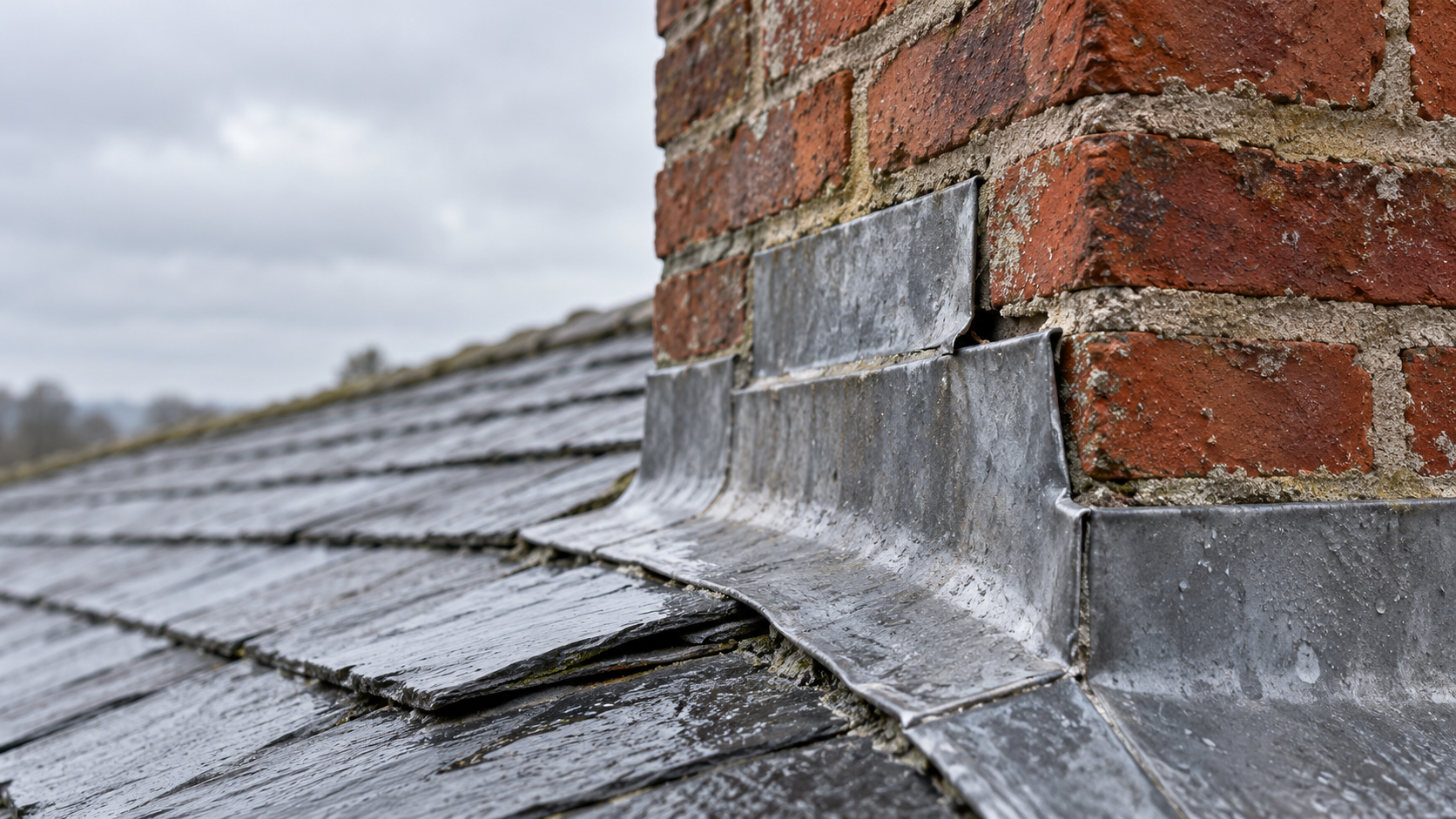
Rain can enter through an open pot, while damaged pointing or flashing may allow water into the stack. Moisture can also form through condensation when warm indoor air reaches the cold flue. If the fireplace opening has been completely sealed, the lack of ventilation may make the problem worse.
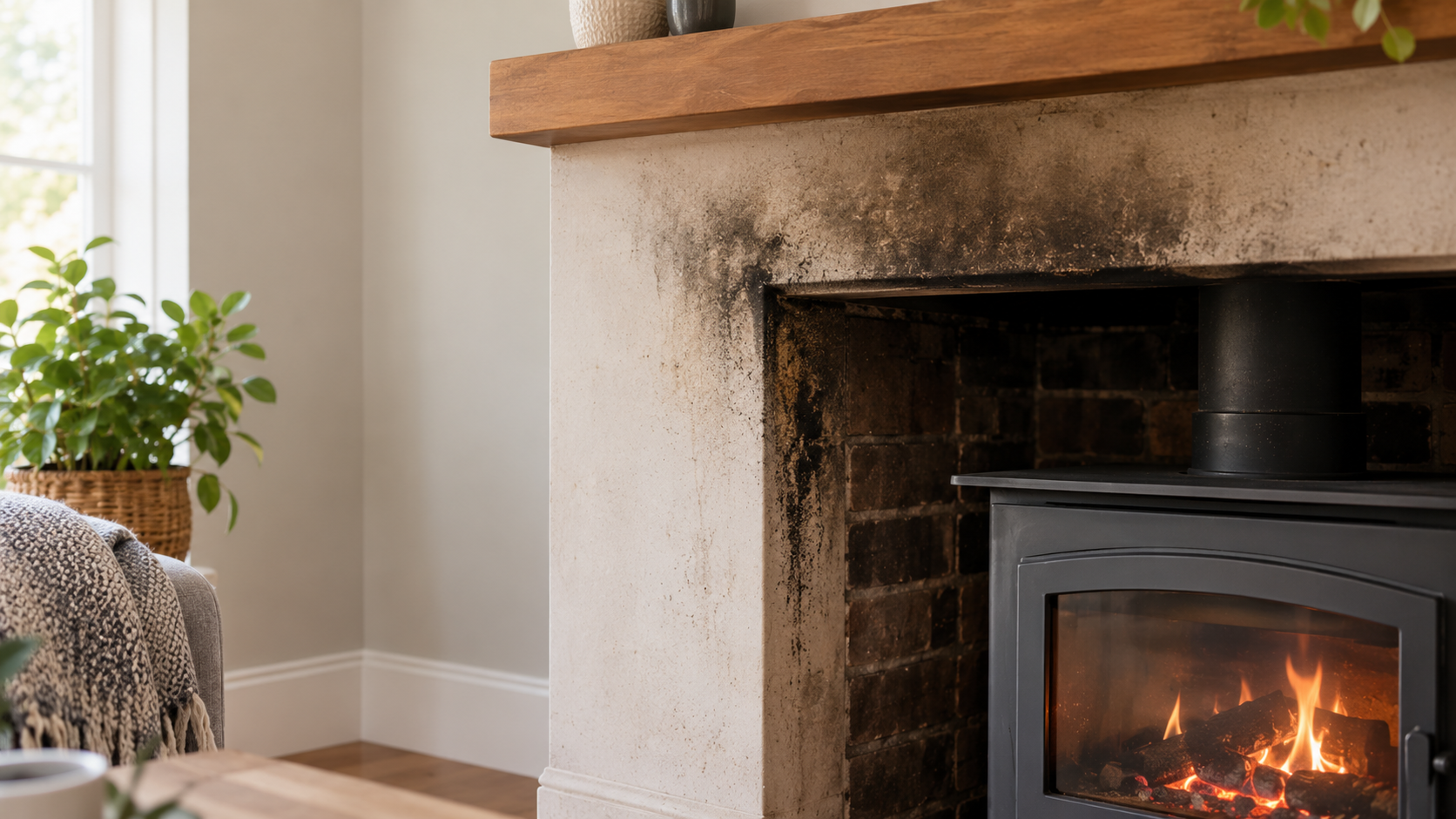
Staining, peeling wallpaper, and a musty smell near the chimney breast can all suggest that moisture needs investigation.
Birds and Debris May Block the Flue
An unused chimney provides a sheltered space where birds may attempt to nest. Twigs, leaves, and other materials can create a substantial blockage over time. Old mortar or pieces of masonry may also fall inside as the chimney ages.
Professional bird nest removal must be approached carefully. Active nests, birds, and eggs may be legally protected, so the chimney should be checked before any removal begins. Once the flue is safely cleared, a suitable guard may help prevent birds from returning while still allowing ventilation.
External Damage Is Easy to Miss
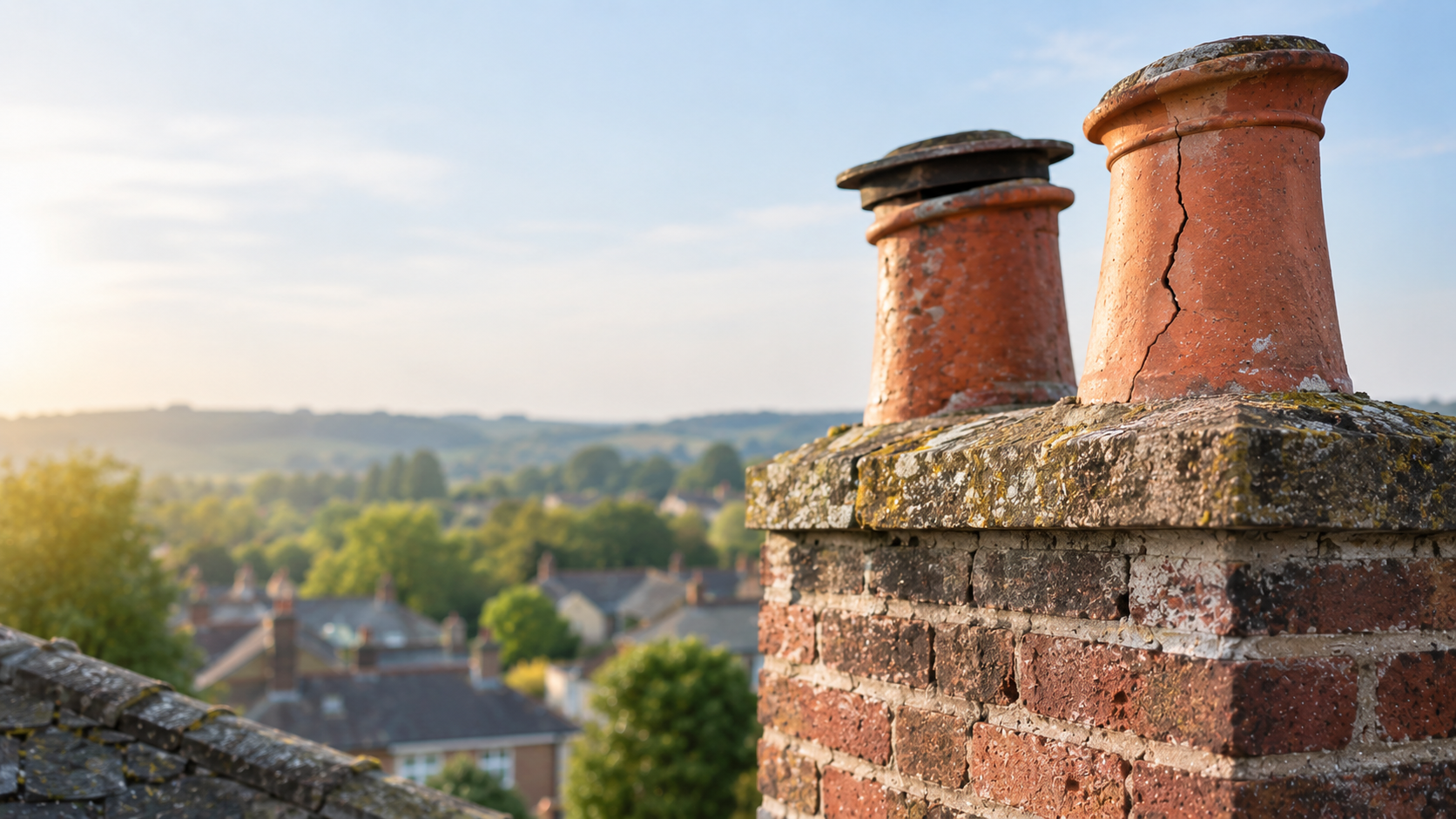
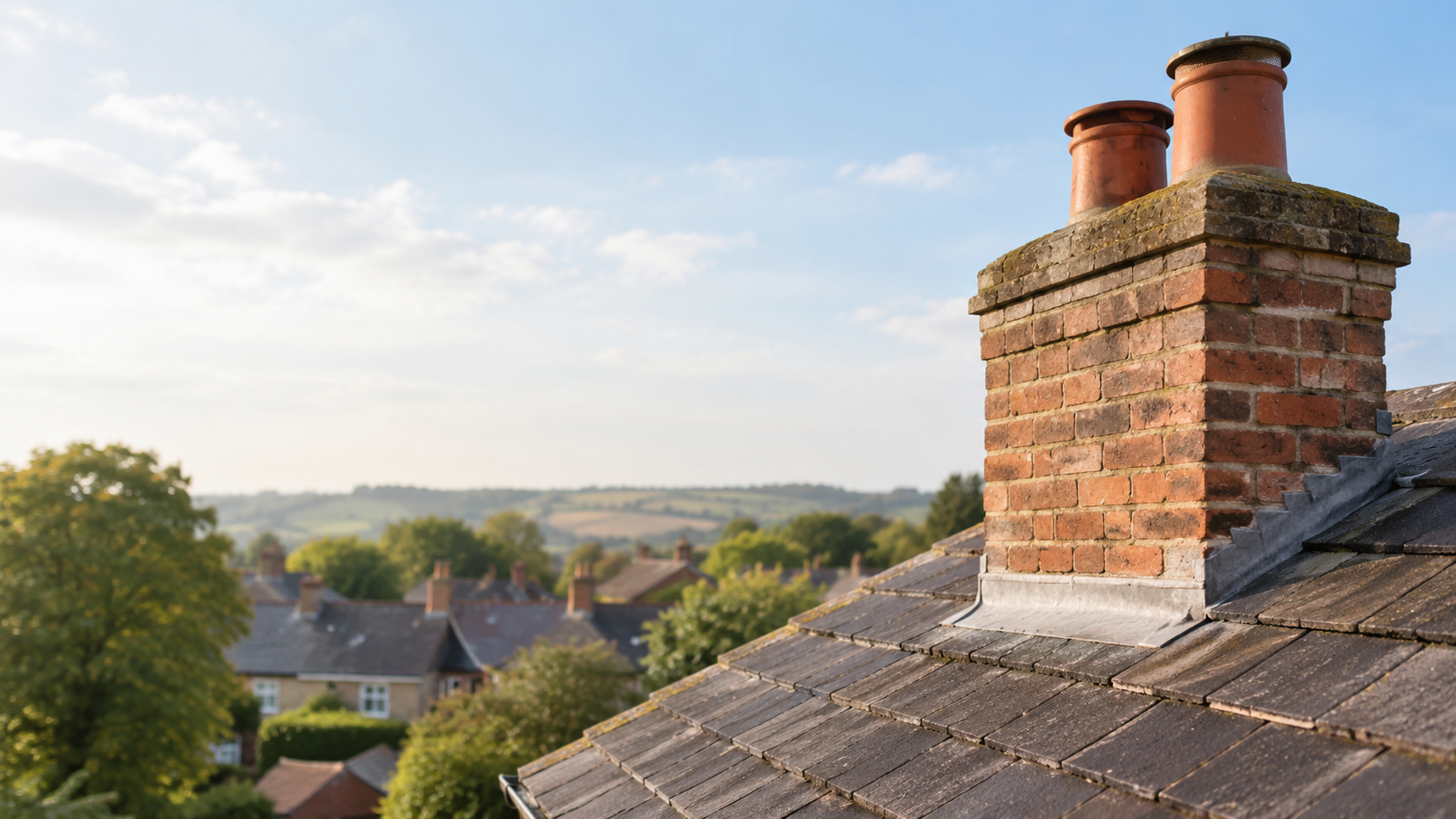
Chimney pots, mortar joints, and flashing can be difficult to inspect properly from ground level. Cracks may remain unnoticed until water appears inside the property or pieces of masonry become loose.
A drone inspection and roof inspection can provide useful information about the external condition of the stack. Drone images can highlight damaged pointing, vegetation, slipped cowls, and worn leadwork. A close roof inspection may then be required to confirm the extent of any repair.
Internal Checks Can Reveal Hidden Problems
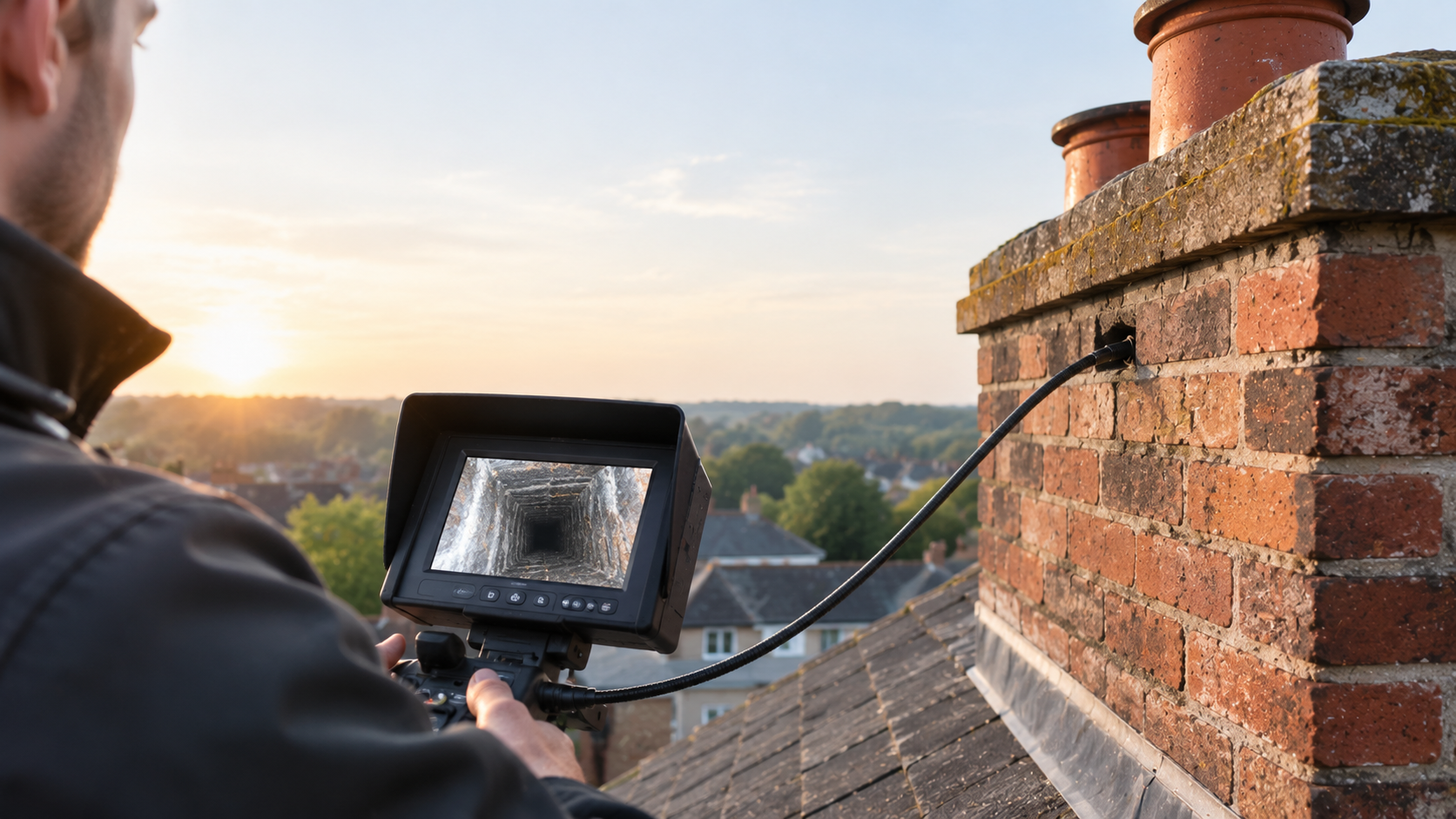
The outside of a chimney may look reasonable while the inside contains a blockage or damaged lining. A CCTV and drone inspection combines internal and external views, helping to build a clearer picture of the complete system.
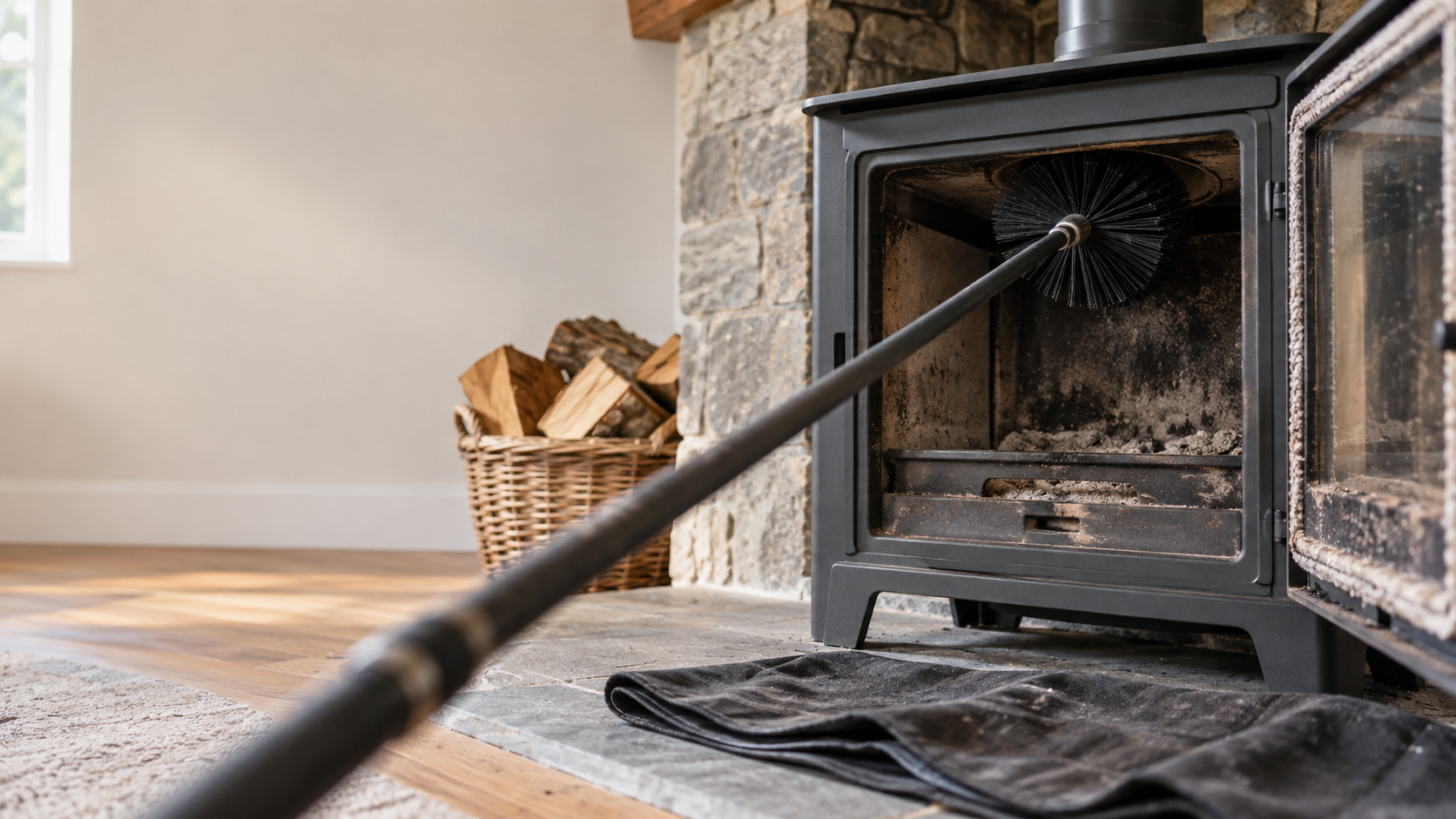
A qualified chimney sweep can remove loose soot and debris where appropriate. If the existing liner is damaged, flue liner installation may be considered before the chimney is brought back into service. The correct liner depends on the intended appliance, fuel, and chimney dimensions.
Reopening an Old Fireplace
An unused chimney should never be assumed safe simply because it worked in the past. Before lighting a fire, the flue should be swept and inspected for nests, deterioration, and hidden obstructions.
If a homeowner is planning a log burner installation, the chimney, ventilation, hearth, and flue route must all be assessed. Building changes made since the fireplace was last used may also affect airflow or appliance suitability.
Midlands Sweeps provides chimney related services, but every disused chimney requires an individual assessment. Its age, construction, previous fuel, and exposure to weather will influence what work may be necessary.
Conclusion
Unused chimneys still need ventilation, observation, and occasional inspection. Moisture, birds, and deterioration can continue even when no fire is being used. Checking the chimney before problems become visible can help homeowners make sensible decisions about maintenance, repair, or future use.
Frequently Asked Questions
Should an unused chimney be completely sealed?
Usually, some ventilation is helpful to reduce trapped moisture. The correct arrangement depends on the chimney and property.
Can rain enter through an unused chimney pot?
Yes. Rain may enter through an open pot or through damaged masonry and flashing.
Does an unused chimney still need sweeping?
It may need sweeping if it contains old soot, nesting material or loose debris, especially before being used again.