
A chimney passes through the roof, creating a joint that must remain protected from rain and changing weather. Flashing is installed around this joint to direct water away from the chimney and into the roof drainage system. When flashing becomes loose, cracked or poorly sealed, moisture may enter the roof space and surrounding walls.
Because the damage is often hidden at first, understanding the warning signs can help homeowners investigate the problem before it spreads.
What Is Chimney Flashing?
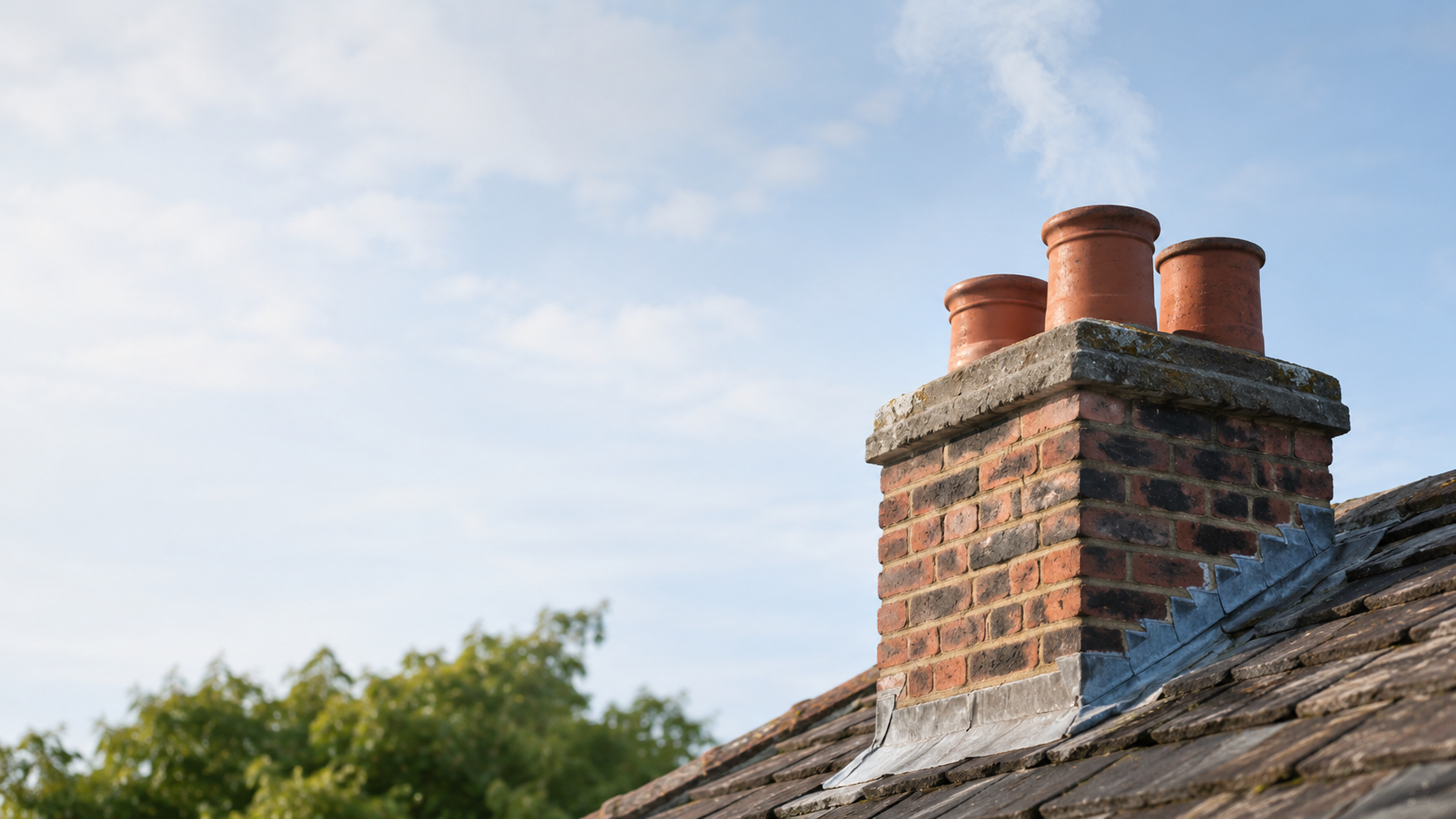
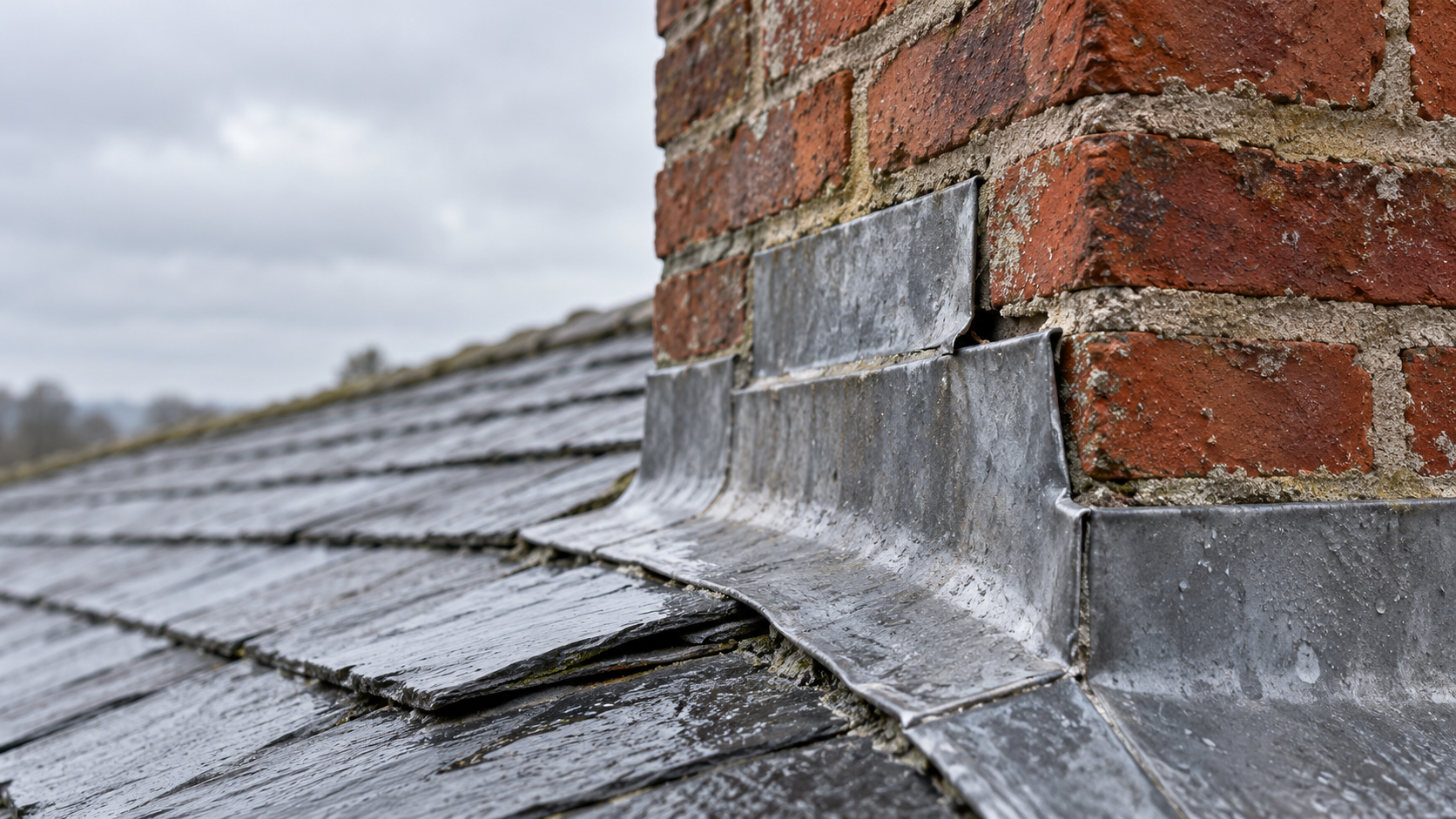
Chimney flashing is usually made from metal and fitted where the chimney stack meets the roof. Different sections work together to cover the joint while allowing water to flow down the roof.
Lead is commonly found around chimneys on UK properties, although other suitable materials may be used. Correct installation is important because the flashing must cope with rain, wind and the natural movement of the building.
The surrounding bricks and mortar also affect how well this area performs. Sound flashing cannot always prevent leaks if the chimney stack itself has cracks or damaged pointing.
Common Signs of Damaged Flashing
Water marks on ceilings or walls near the chimney are among the most noticeable warning signs. Damp patches may become more visible after heavy rain or wind driven storms. Other signs can include peeling paint, stained plaster, musty smells and moisture inside the loft.
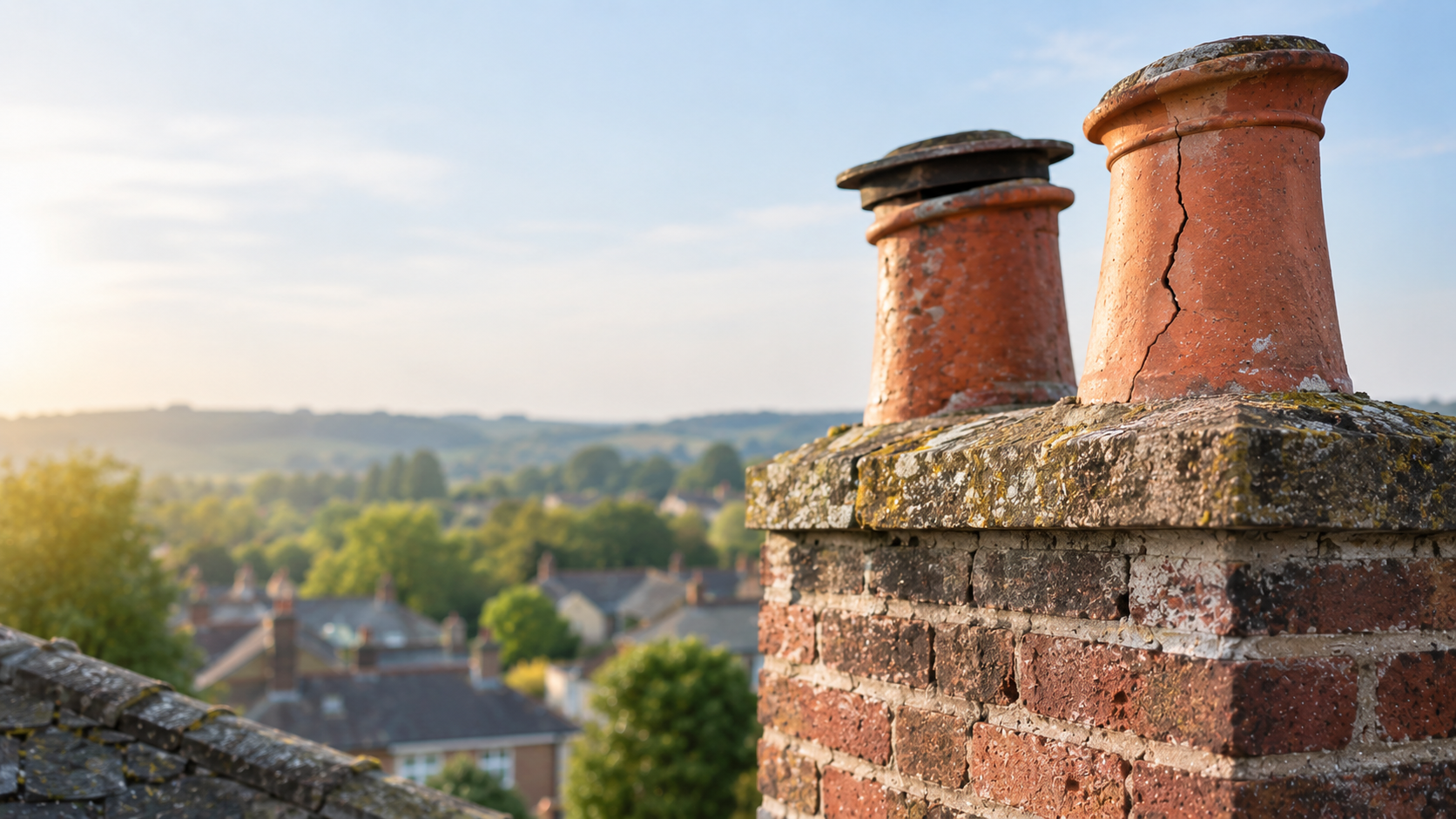
From outside, flashing may appear lifted, split or separated from the masonry. Mortar around the edges can also crack and fall away.
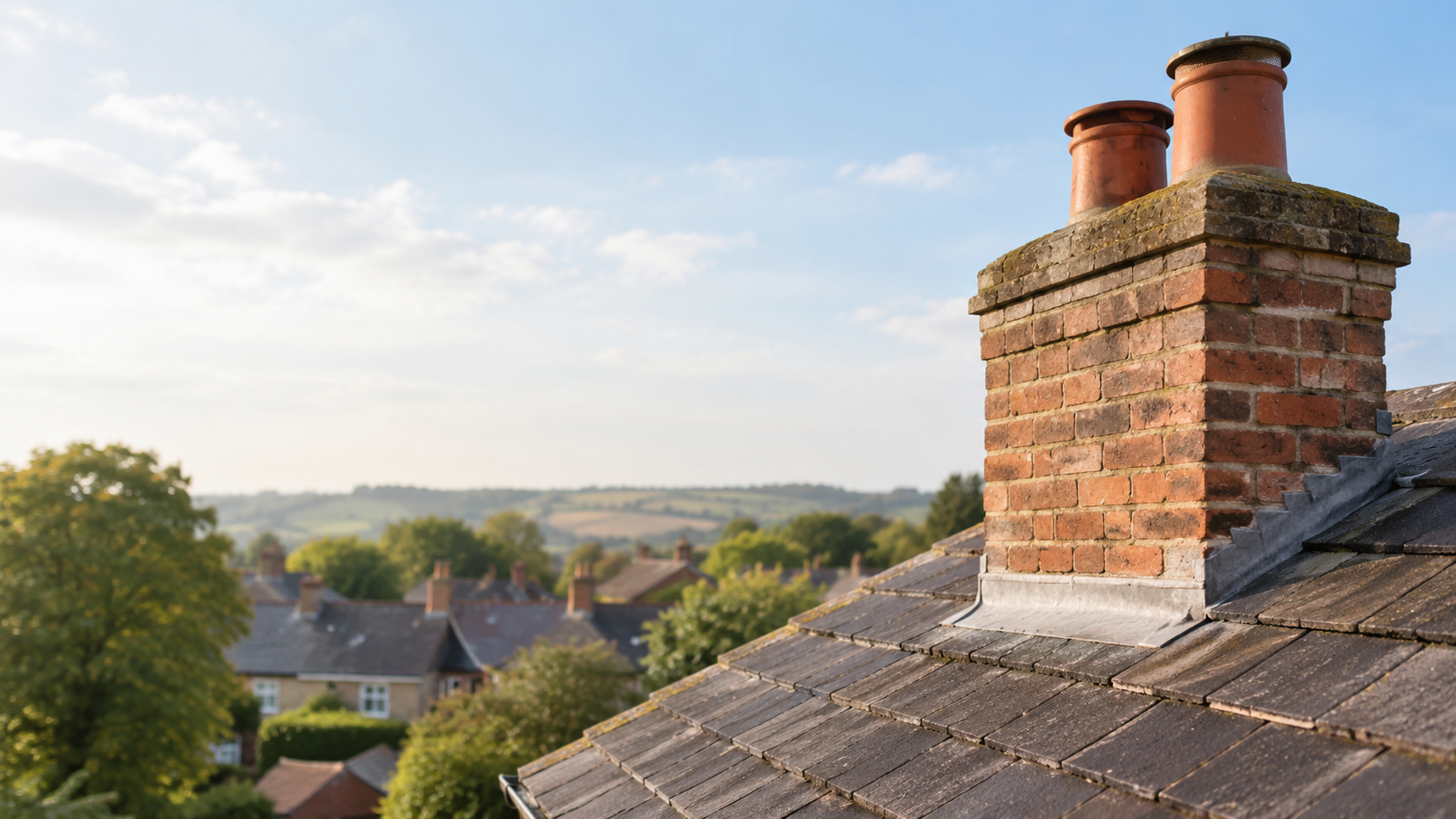
These problems are not always easy to identify from ground level. A drone inspection and roof inspection can provide useful images of the flashing, chimney pot, masonry and nearby roof covering. A closer physical examination may still be needed before repairs are planned.
Why Leaks Need Prompt Attention
A small gap can allow water to enter repeatedly. Over time, this may affect roof timbers, insulation, plaster and decorative finishes. Moisture can also contribute to deterioration inside the chimney.
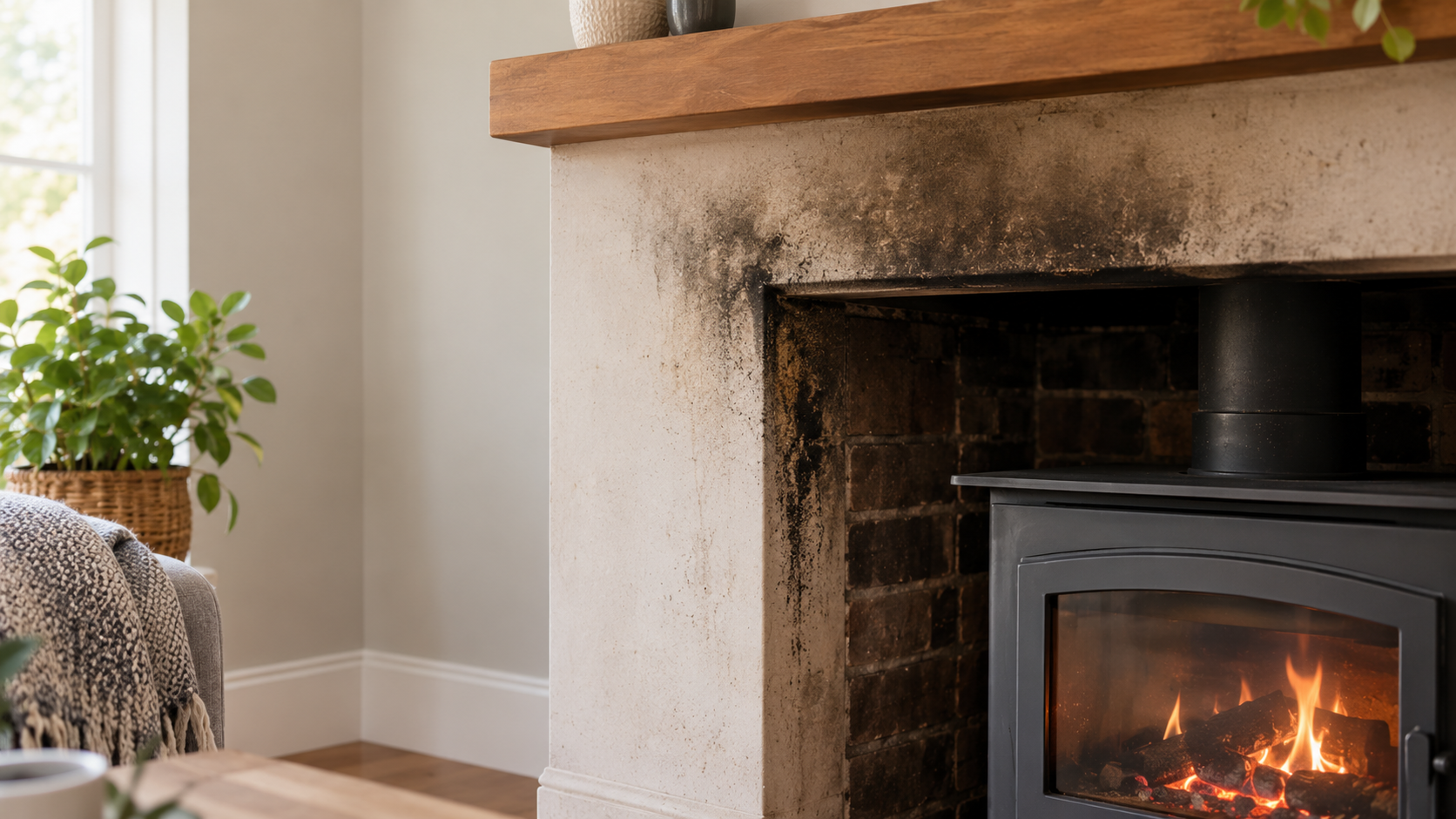
If water mixes with soot or combustion deposits, dark stains and unpleasant odours may appear around the fireplace. These symptoms should not be treated only as cosmetic issues because the original source of the moisture may still be active.
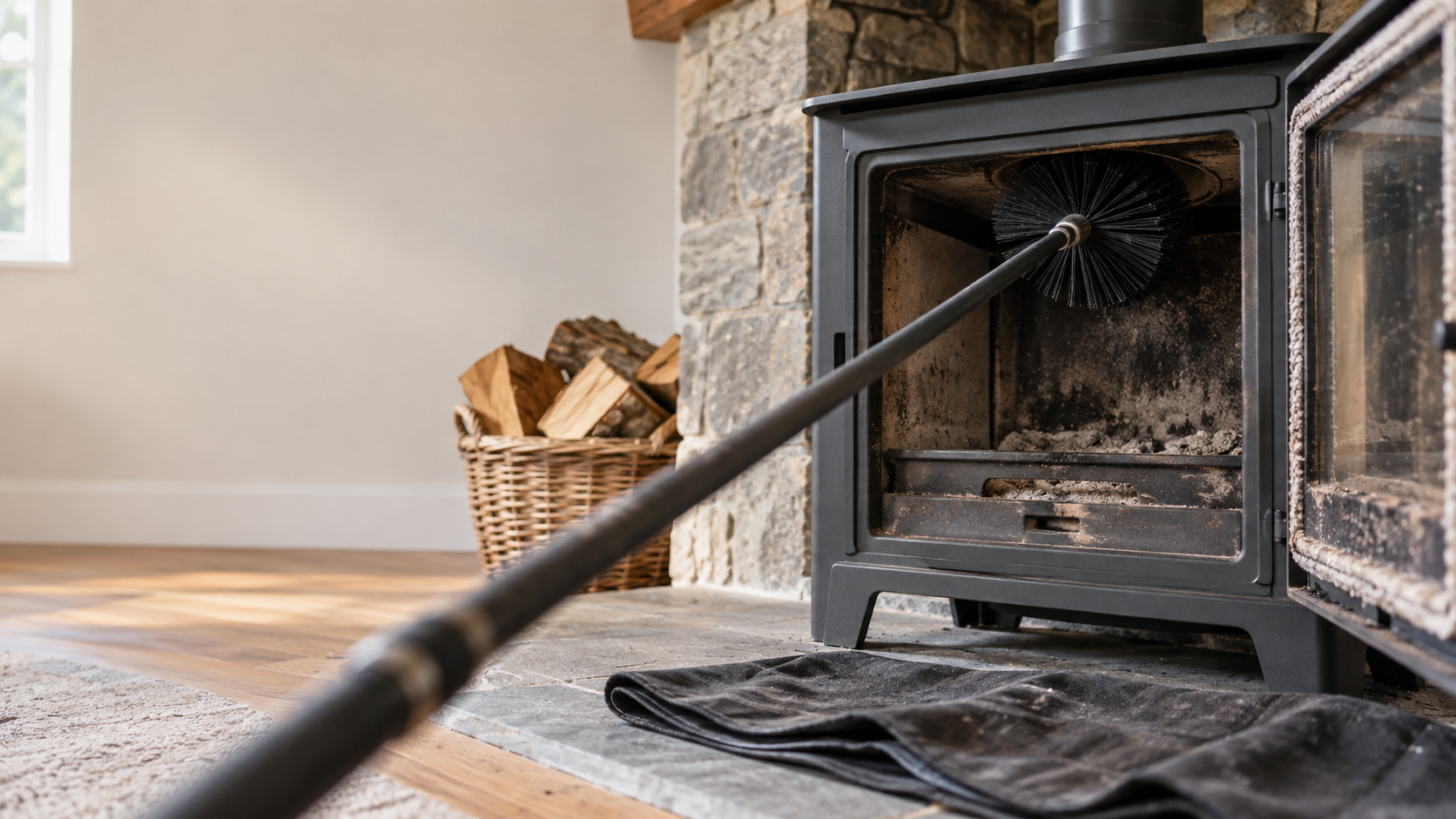
A Chimney Sweep can check the accessible parts of the chimney and remove deposits, but sweeping alone will not repair faulty flashing or damaged masonry.
Checking the Inside of the Flue
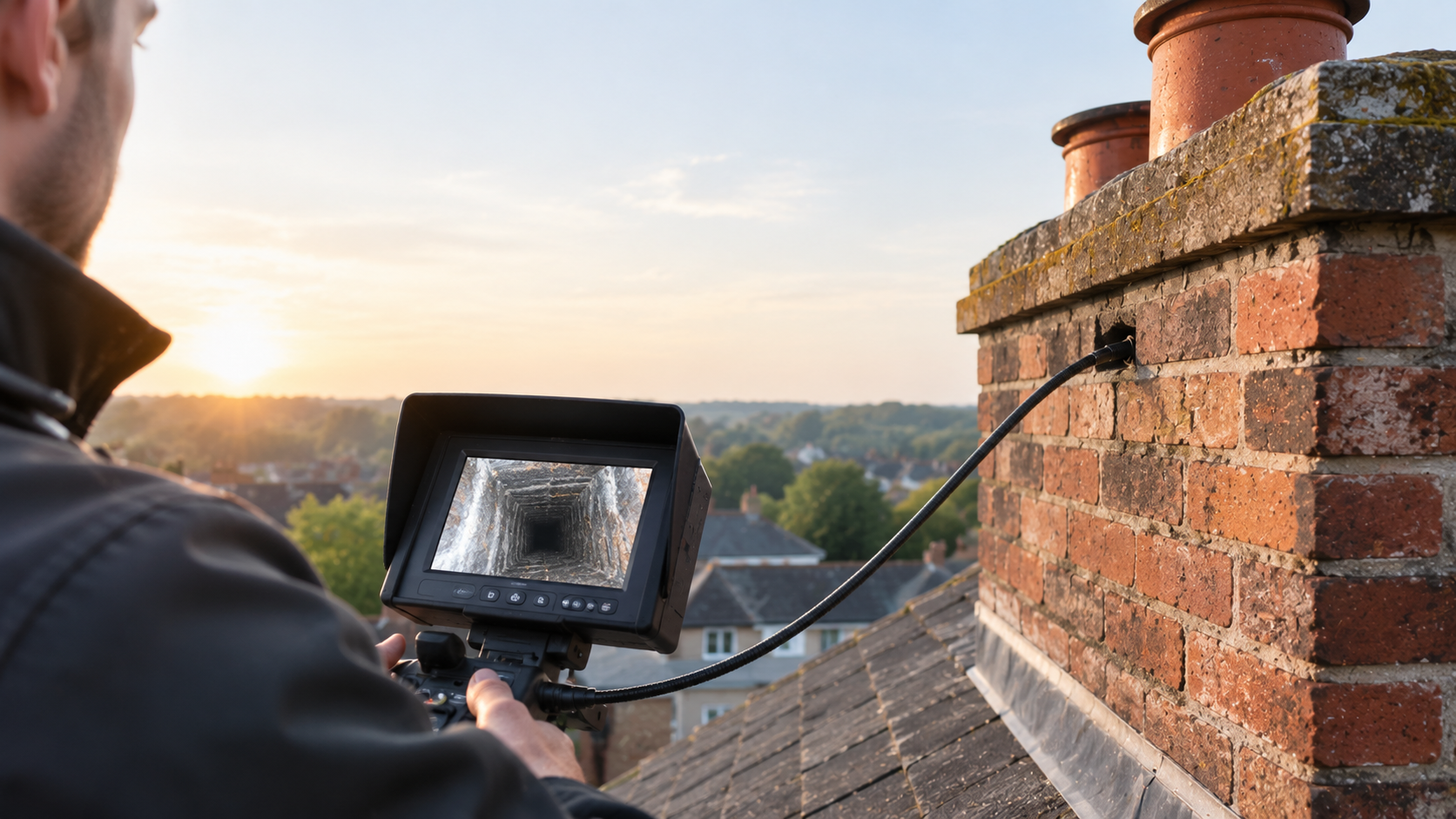
An external inspection helps identify roof-level damage, while an internal examination can reveal problems inside the chimney. CCTV and drone inspection methods are useful together because they provide views of both the internal flue and the exterior stack.
CCTV equipment may reveal cracks, displaced materials, blockages or signs of water entry. If the flue is damaged or unsuitable for an appliance, flue liner installation may be considered after a proper assessment. A liner should not be used simply to hide an unresolved leak, so the source of moisture must be addressed first.
Other Problems That May Appear at Roof Level
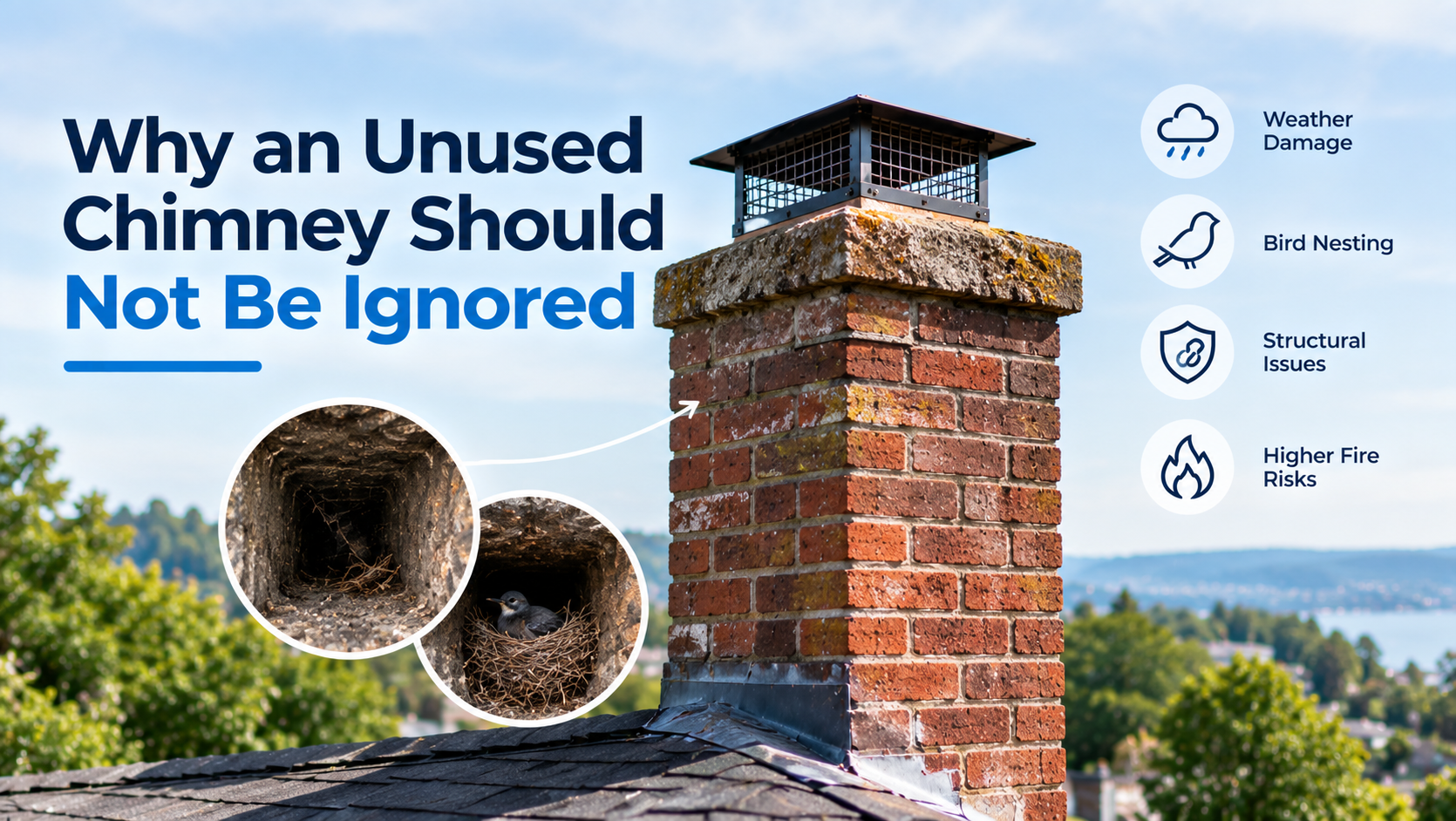
Not every chimney issue is caused by flashing. Cracked pots, missing mortar, blocked gutters and damaged roof tiles can create similar symptoms. Birds may also build nests inside open chimney pots.
Where nesting materials are present, bird nest removal must follow wildlife protection requirements. Active nests, eggs and birds may be legally protected, so the chimney should be checked before any work begins.
A suitable cowl may reduce future nesting and rain entry, but it must be compatible with the chimney and appliance.
Check the Chimney Before Installing a Stove
Anyone planning a Log burner installation should have the chimney and surrounding roof area assessed beforehand. Existing leaks, damaged flashing or weak masonry may need to be repaired before the appliance is fitted.
The chimney, ventilation, hearth and flue must work as one system. Addressing exterior defects early can help protect the new installation and the surrounding building fabric.
Midlands Sweeps may be associated with sweeping and inspection services, but homeowners should also consult an appropriate roofing professional when flashing or roof repairs are required.
Conclusion
Chimney flashing plays a simple but important role in keeping water out of a property. Damp marks, stained plaster, damaged mortar and lifted metalwork may indicate that the joint around the chimney is no longer weatherproof.
Combining external roof checks with internal flue inspection can provide a clearer understanding of the problem. Early investigation may prevent a minor leak from causing more extensive damage to the chimney, roof and rooms below.
Frequently Asked Questions
Can damaged chimney flashing cause damp indoors?
Yes. Water can pass through gaps around the chimney and affect ceilings, walls, insulation or roof timbers.
Can flashing be checked with a drone?
A drone can provide detailed exterior images, but a hands-on roof inspection may still be needed to confirm the defect and plan repairs.
Will chimney sweeping stop a leak?
No. Sweeping removes soot and deposits from the flue, but damaged flashing, masonry or roof materials require separate repair.
Should flashing be checked before fitting a log burner?
Yes. Roof leaks and chimney defects should be identified and addressed before a new appliance and flue system are installed.