Your chimney flue liner performs an important job: it provides a controlled route for smoke and combustion gases to travel from your fireplace or log burner to the outside of your home.
When a liner becomes damaged, corroded, incorrectly sized or disconnected, the chimney may no longer operate as intended.
The difficulty is that most of the flue liner is hidden inside the chimney. You cannot normally tell whether it is in good condition simply by looking into your fireplace.
Government guidance for existing flues specifically recommends checking for deterioration, cracks, damaged linings, leakage and restrictions before a chimney is brought into use.
So, how do you know when a chimney liner may need replacing?
Here are 10 warning signs that should prompt a professional chimney inspection.
1. Smoke Is Entering Your Room
One of the most important warning signs is smoke escaping into the living space.
A healthy chimney system should carry combustion gases upward through the flue and safely outside.
If smoke begins entering the room, possible causes include:
- A blocked chimney
- Poor chimney draught
- Insufficient ventilation
- Heavy soot or creosote
- A damaged flue liner
- Failed flue connections
- Incorrect installation
Smoke entering the room does not automatically mean the liner needs replacing.
However, if the chimney has already been swept and the problem continues, the condition of the liner should be investigated.
Midlands Sweeps identifies damaged, incorrectly sized, disconnected or obstructed flue liners as possible causes of persistent smoke problems in log burner installations.
Do not continue regularly using an appliance that is spilling smoke into the room until the cause has been identified.
2. Smoke or Tar Stains Are Appearing on the Chimney Breast
Dark stains appearing on the chimney breast can indicate that combustion products or condensates are escaping somewhere they should not.
Look for:
- Brown staining
- Black marks
- Tar-like patches
- Persistent smoky smells
- Staining appearing through plaster or decoration
Approved Document J specifically identifies smoke or tar staining on the outside of a chimney or chimney breast as a possible indication of leakage or damage.
This does not necessarily prove that a flexible liner itself has failed, as damage to an unlined chimney or other flue components can create similar symptoms.
It does mean the chimney needs further investigation.
3. Your Fireplace or Log Burner Has Poor Draught
A sudden change in chimney performance can be another warning sign.
You might notice:
- The fire is harder to light
- Logs struggle to remain burning
- Smoke lingers inside the stove
- Smoke escapes when the door opens
- The appliance produces less heat
- The chimney does not appear to draw as strongly as before
Poor draught has many possible causes, including soot, a bird nest, wet wood, ventilation problems or a cold chimney.
But a damaged, restricted or incorrectly sized liner can also affect flue performance.
If sweeping does not improve the problem, the liner and complete flue system should be inspected.
4. Pieces of Flue Material or Unusual Debris Are Found During Sweeping
Pay attention to what comes down the chimney during a professional sweep.
Normal material may include:
- Soot
- Creosote
- Ash
- Cobwebs
- Small amounts of loose debris
More concerning material can include:
- Pieces of masonry
- Liner fragments
- Significant amounts of mortar
- Corroded metal
- Unusual hard debris
Approved Document J specifically advises examining debris removed during sweeping. Excessive quantities of brickwork or flue-lining material can indicate that further repairs are required.
If your chimney sweep finds unusual material, a CCTV inspection can help establish where it came from.
5. The Liner Shows Signs of Corrosion
Flexible stainless steel chimney liners are designed to withstand demanding conditions, but they are not immune to deterioration.
Corrosion can be encouraged by factors such as:
- Combustion condensates
- Persistent moisture
- Heavy tar deposits
- Inappropriate fuel
- Poor burning practices
- Long periods without cleaning
- Incorrect liner specification
Corrosion may eventually lead to thinning, pinholes or sections of the liner becoming unreliable.
Because most flexible liners are hidden inside masonry chimneys, corrosion is not always obvious from the fireplace.
Professional CCTV inspection may therefore be necessary when liner deterioration is suspected.
6. You Have Persistent Tar or Creosote Problems
Heavy tar and creosote deposits do not automatically mean the flue liner needs replacing.
However, repeated severe contamination deserves investigation.
Creosote and condensates can create an aggressive environment inside a flue, particularly where fires are repeatedly burned at low temperatures or wet wood is used.
Signs may include:
- Thick black deposits
- Sticky tar
- Strong smoky smells
- Hard glazed creosote
- Rapid accumulation between sweeps
Heavy deposits may also conceal the condition of the liner underneath.
The chimney should first be professionally swept and, if concerns remain, inspected more closely.
Regular cleaning is important because existing flues can become restricted by soot and tar, while chimney deterioration itself can also create debris and obstruction.
7. The Chimney Has Experienced a Chimney Fire
A previous chimney fire is a major reason to have the flue liner inspected.
Chimney fires can generate extremely high temperatures.
Even when the fire appears to remain contained inside the chimney, the heat can potentially affect:
- Flexible stainless steel liners
- Clay liners
- Chimney joints
- Masonry
- Flue connections
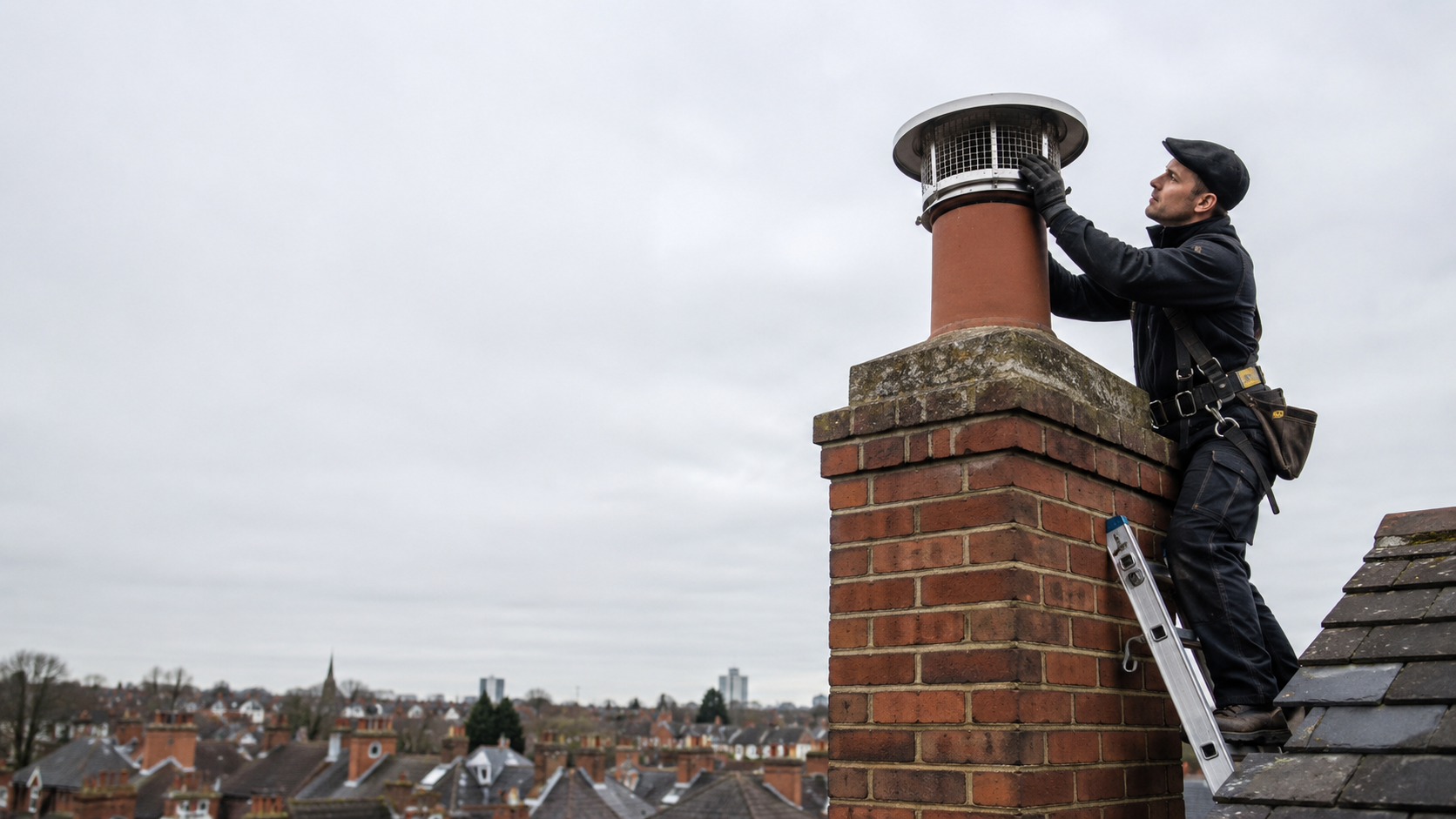
- Chimney terminals
The appliance should not simply be returned to normal use without establishing that the chimney remains suitable.
A professional may recommend:
- CCTV inspection
- Smoke testing
- Examination of accessible flue components
- Liner replacement if significant damage is found
Approved Document J describes smoke testing as one way to identify damaged chimney sections or incorrectly sealed joints that allow gases to escape.
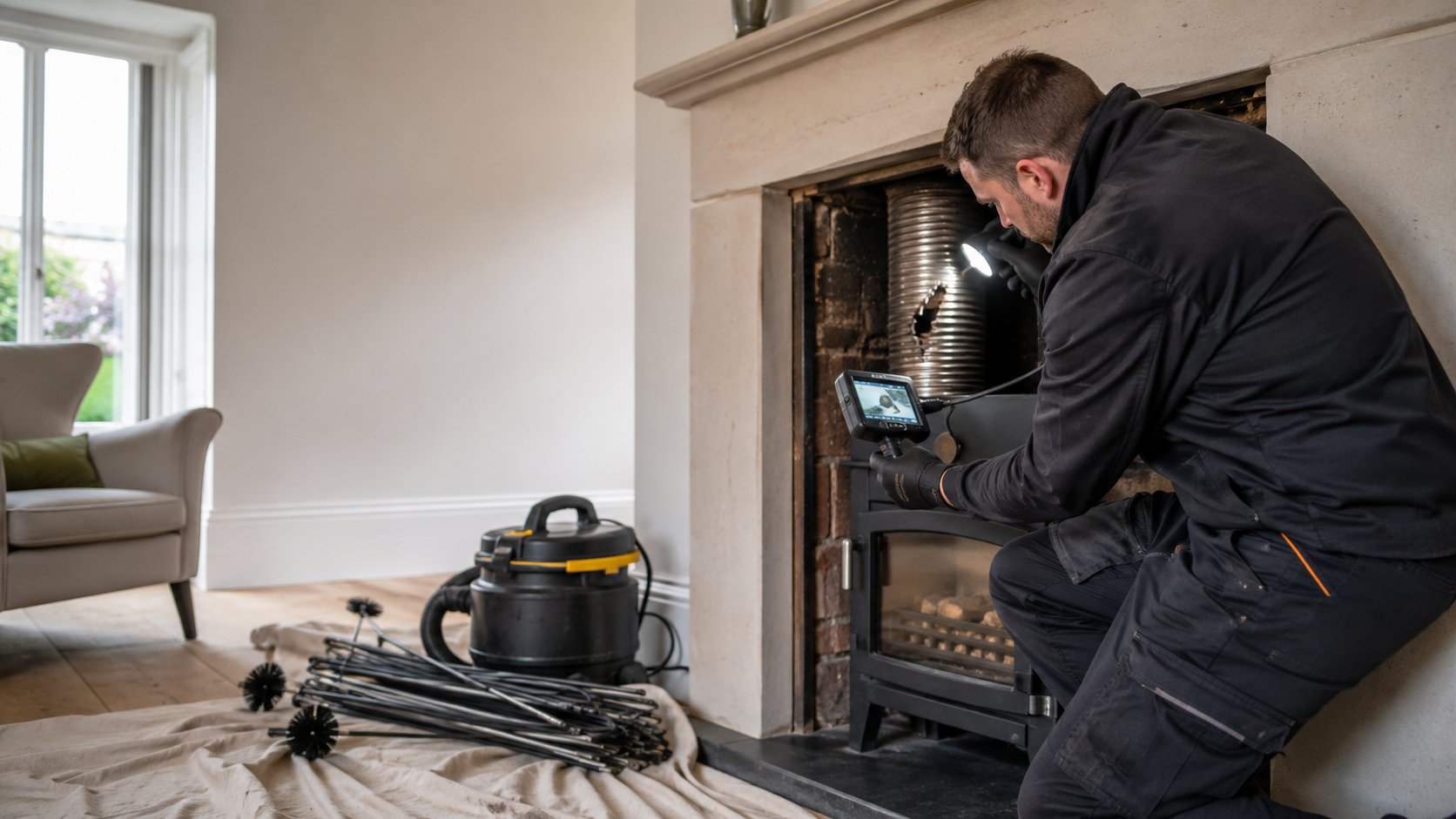
8. A CCTV Inspection Shows Holes, Splits or Disconnected Sections
Sometimes there are no obvious symptoms inside the room.
A chimney may appear to work reasonably well while damage exists higher inside the flue.
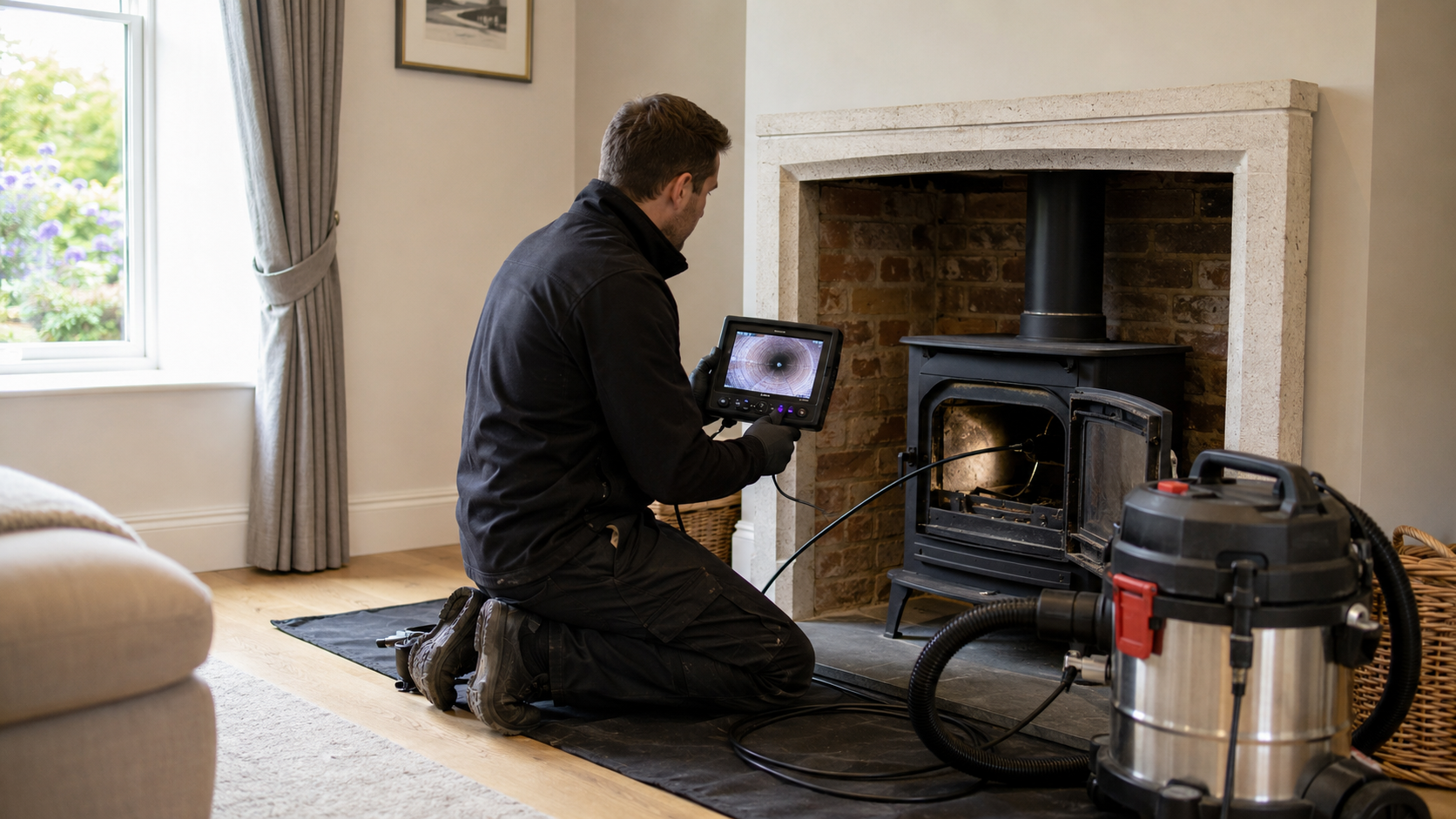
A CCTV chimney inspection can reveal problems such as:
- Holes
- Splits
- Corrosion
- Crushed sections
- Disconnections
- Poor joints
- Obstructions
- Incorrect routing
Midlands Sweeps offers high-definition internal CCTV inspection specifically for identifying hidden chimney and flue problems that cannot be properly assessed from the fireplace opening.
If significant damage is visible, replacement may be safer and more practical than attempting to continue using the existing liner.
9. The Existing Liner Is Incorrect for Your Appliance
A flue liner does not only need to be physically intact; it must also be suitable for the appliance connected to it.
Factors include:
- Internal diameter
- Fuel type
- Temperature rating
- Liner material
- Appliance manufacturer’s requirements
- Chimney configuration
A liner that worked with a previous appliance may not automatically be suitable for a new log burner or multi-fuel stove.
HETAS-hosted manufacturer guidance states that an existing flue must be confirmed as suitable for its intended new use and that the liner must be the correct diameter and approved for the fuel being burned.
An unsuitable liner may therefore need replacing even if it does not appear visibly damaged.
10. You Are Replacing the Stove and the Existing Liner Cannot Be Proven to Be in Good Condition
Replacing a log burner is an ideal time to assess the complete chimney system.
Do not automatically assume that an existing liner should remain simply because it is already there.
Before reusing it, a competent installer should consider:
- Its condition
- Age and installation history
- Diameter
- Material specification
- Fuel compatibility
- Evidence of corrosion
- Previous chimney fires
- Whether the installation can be properly inspected
HETAS-hosted appliance guidance specifically states that a flue liner should be replaced when an appliance is replaced unless the liner can be shown to have been recently installed and to remain in good condition.
The final decision should be based on the actual liner, appliance and manufacturer’s installation requirements.
What Does a Chimney Flue Liner Actually Do?
A chimney liner creates an internal flue through which combustion products travel.
Depending on the installation, this may help:
- Provide a continuous route for combustion gases
- Match the flue diameter to the appliance
- Protect surrounding chimney masonry
- Improve the reliability of chimney draught
- Provide a suitable flue for a modern stove installation
A liner needs to remain suitable for both the fuel and appliance.
Building Regulations guidance covers the safe discharge of combustion products through fireplaces, flues and chimneys.
What Types of Chimney Liner Are There?
UK properties may contain several different flue systems.
Flexible Stainless Steel Liners
These are commonly used when installing a wood-burning or multi-fuel stove into an existing masonry chimney.
The flexible liner is lowered through the existing chimney and connected to the appliance using suitable components.
Different stainless steel specifications are available, commonly including 316 and 904 grades, depending on manufacturer specification and intended use. Manufacturers such as Schiedel currently supply both 316L and 904L flexible chimney-liner systems.
Clay or Ceramic Liners
Some masonry chimneys are constructed using clay or ceramic sections.
These can develop:
- Cracks
- Failed joints
- Displacement
- Physical deterioration
Repair or relining options depend on the extent of the problem.
Factory-Made Twin-Wall Flues
Properties without a traditional chimney may use an insulated stainless steel twin-wall chimney system.
These systems also require inspection, cleaning and correct installation.
HETAS-hosted installation guidance states that twin-wall systems need suitable support and inspection access and must follow the flue manufacturer’s instructions.
How Long Does a Chimney Flue Liner Last?
There is no single replacement age that applies to every chimney liner.
Its service life depends on factors such as:
- Liner material
- Manufacturer
- Fuel
- Frequency of use
- Quality of installation
- Moisture and condensation
- Chimney temperature
- Sweeping frequency
- Burning practices
For this reason, homeowners should not replace a liner purely because it has reached an arbitrary age — nor assume that an old liner is safe simply because it still appears to function.
Condition and suitability matter more.
If you do not know when the liner was installed, arrange an inspection rather than guessing.
Can a Chimney Sweep Tell If My Flue Liner Is Damaged?
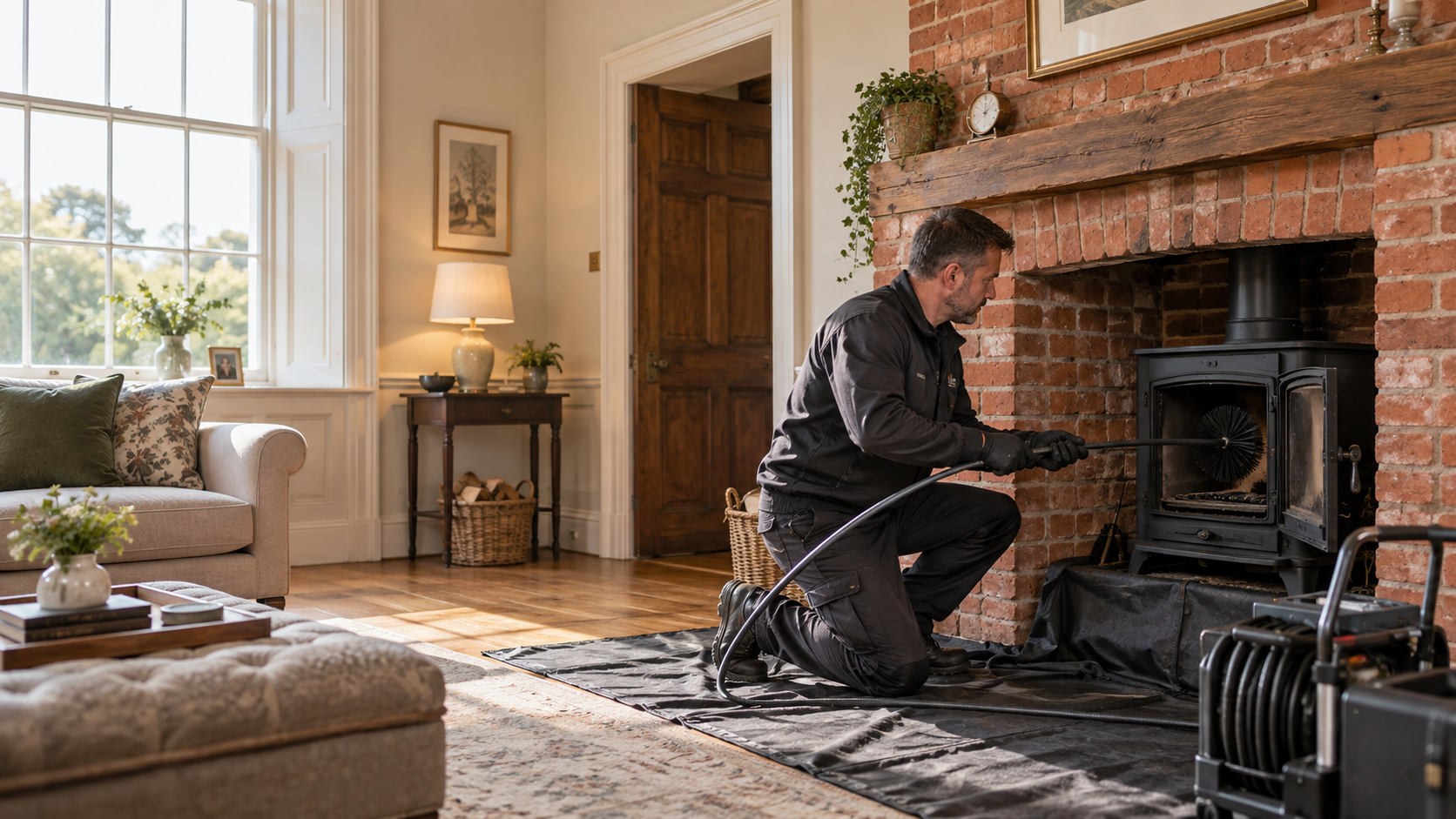
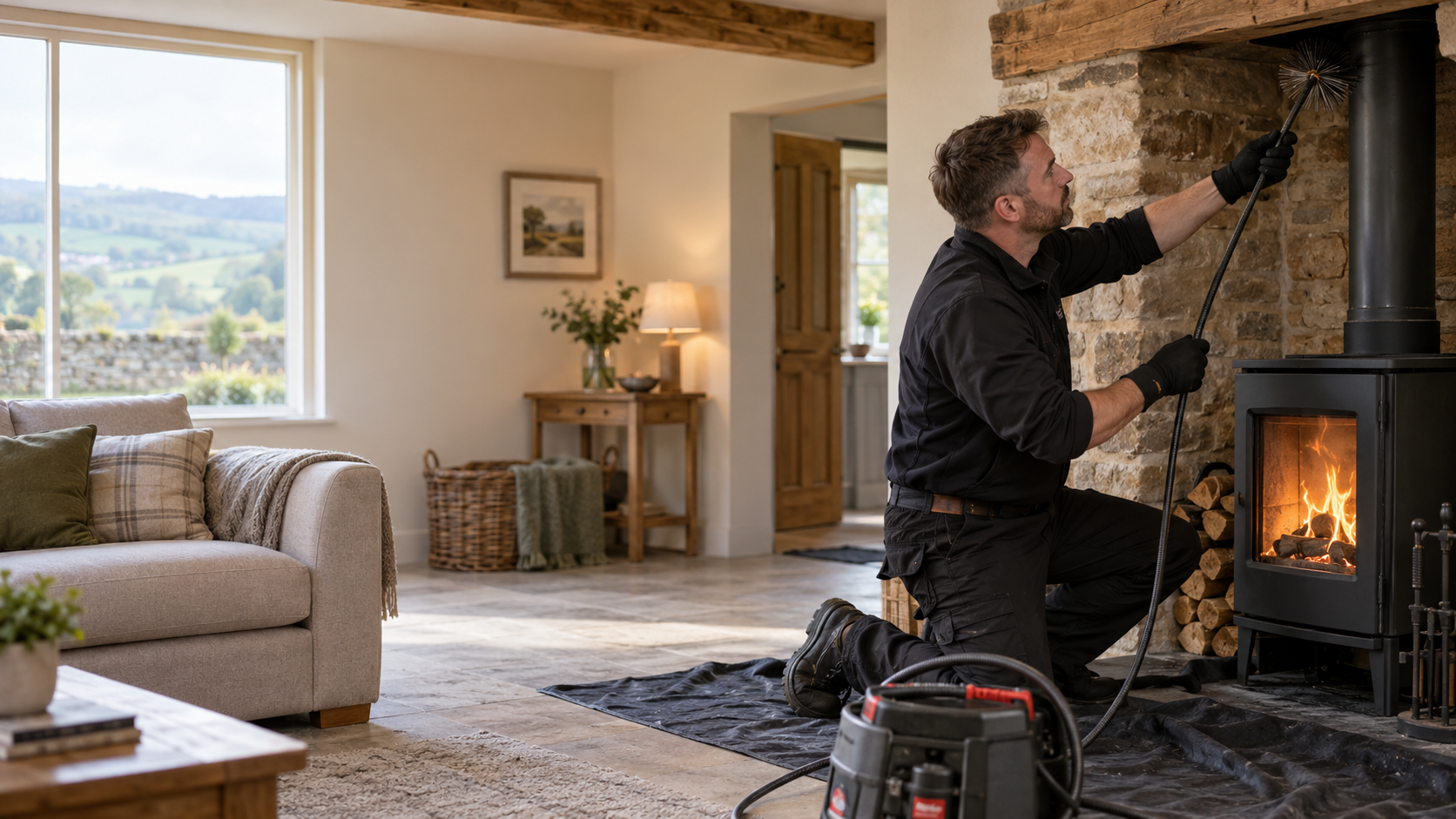
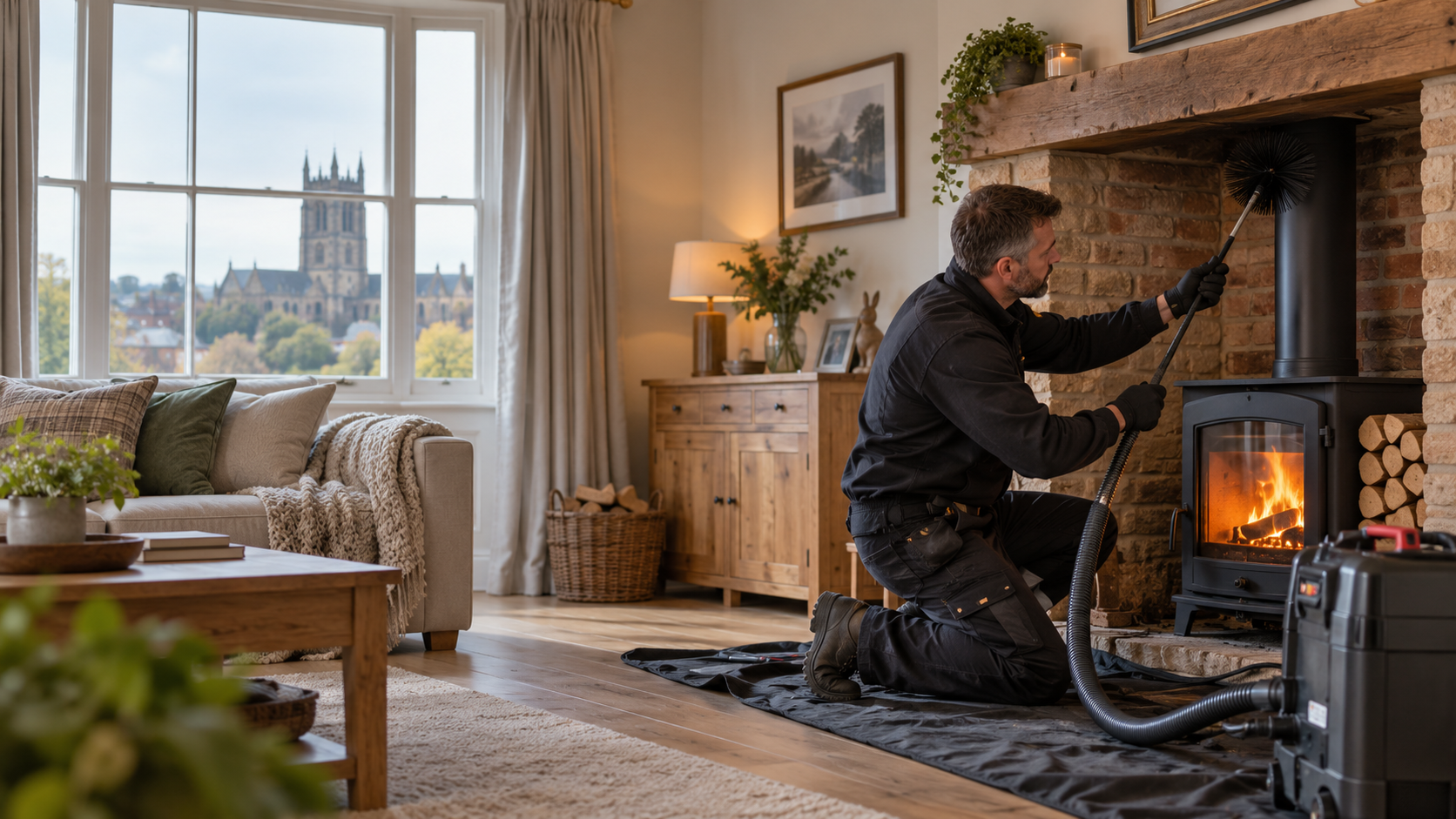
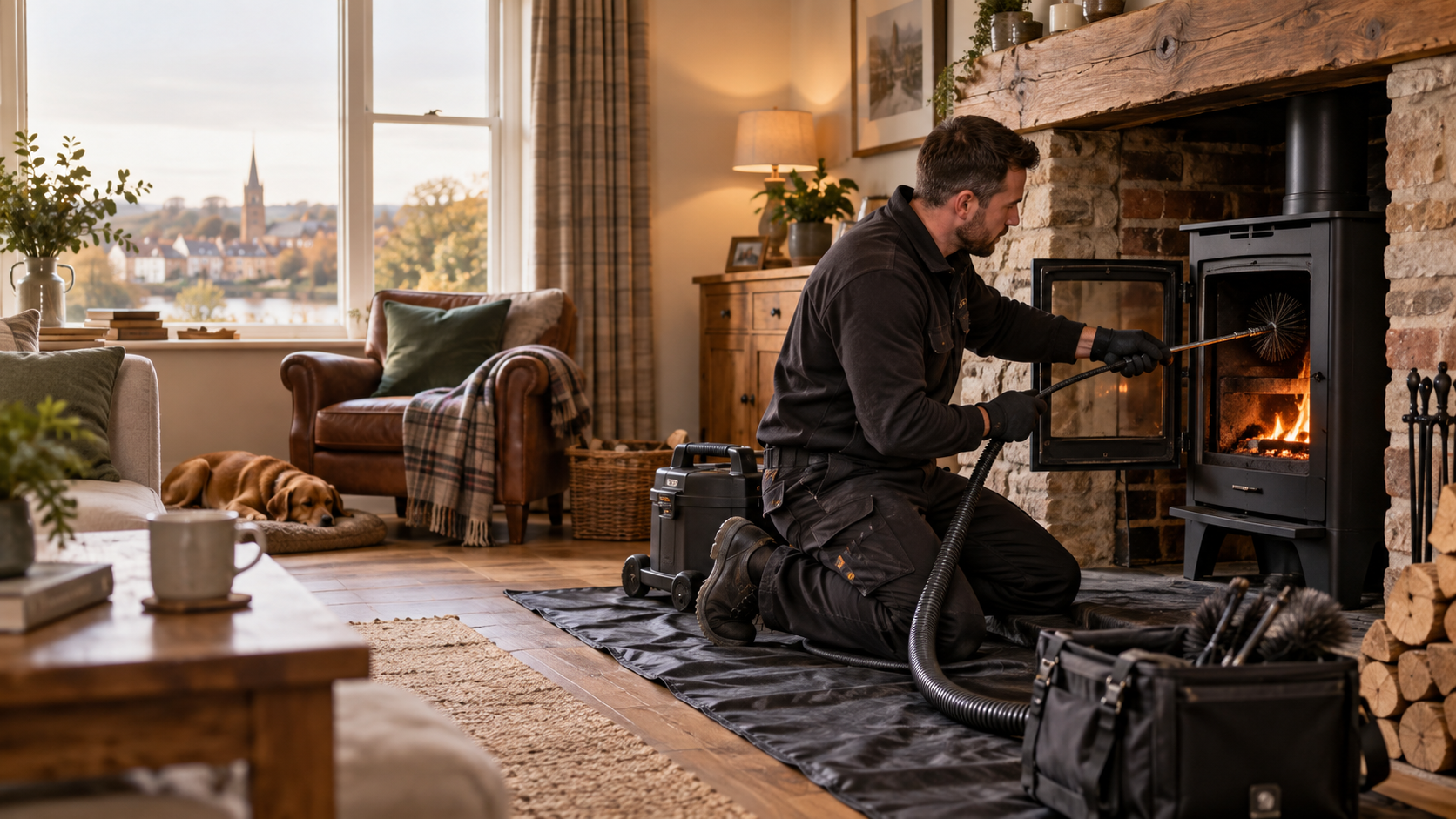
A professional sweep may identify warning signs during routine cleaning.
These can include:
- Unexpected resistance during sweeping
- Excessive corrosion debris
- Liner fragments
- Unusual deposits
- Smoke problems
- Poor draught
However, routine chimney sweeping is not the same as a complete liner survey.
Midlands Sweeps notes that standard sweeping includes basic accessible checks, while suspected hidden liner damage may require a CCTV survey or more detailed flue testing.
How Is a Flue Liner Checked?
Several methods may be used depending on the problem.
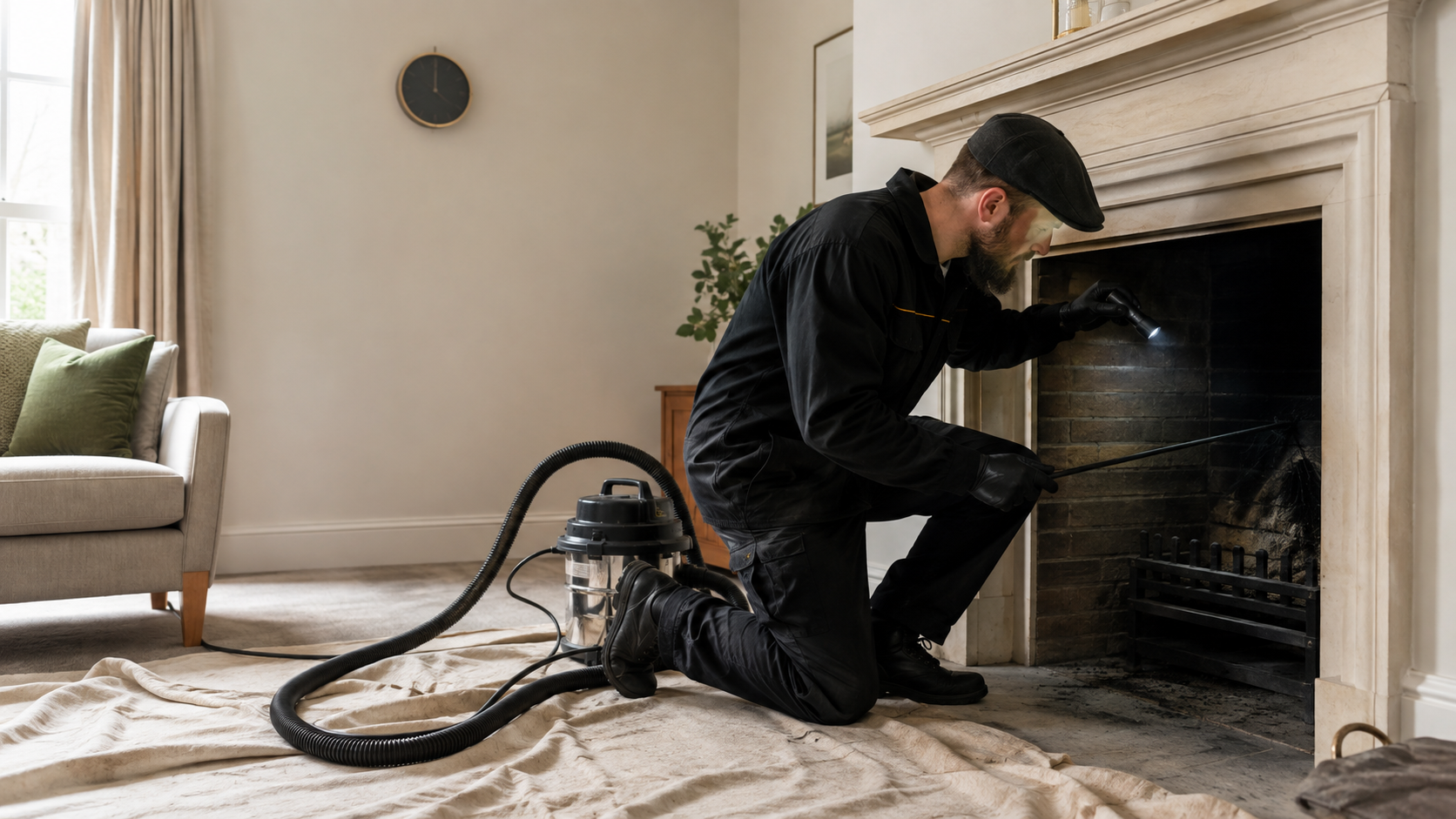
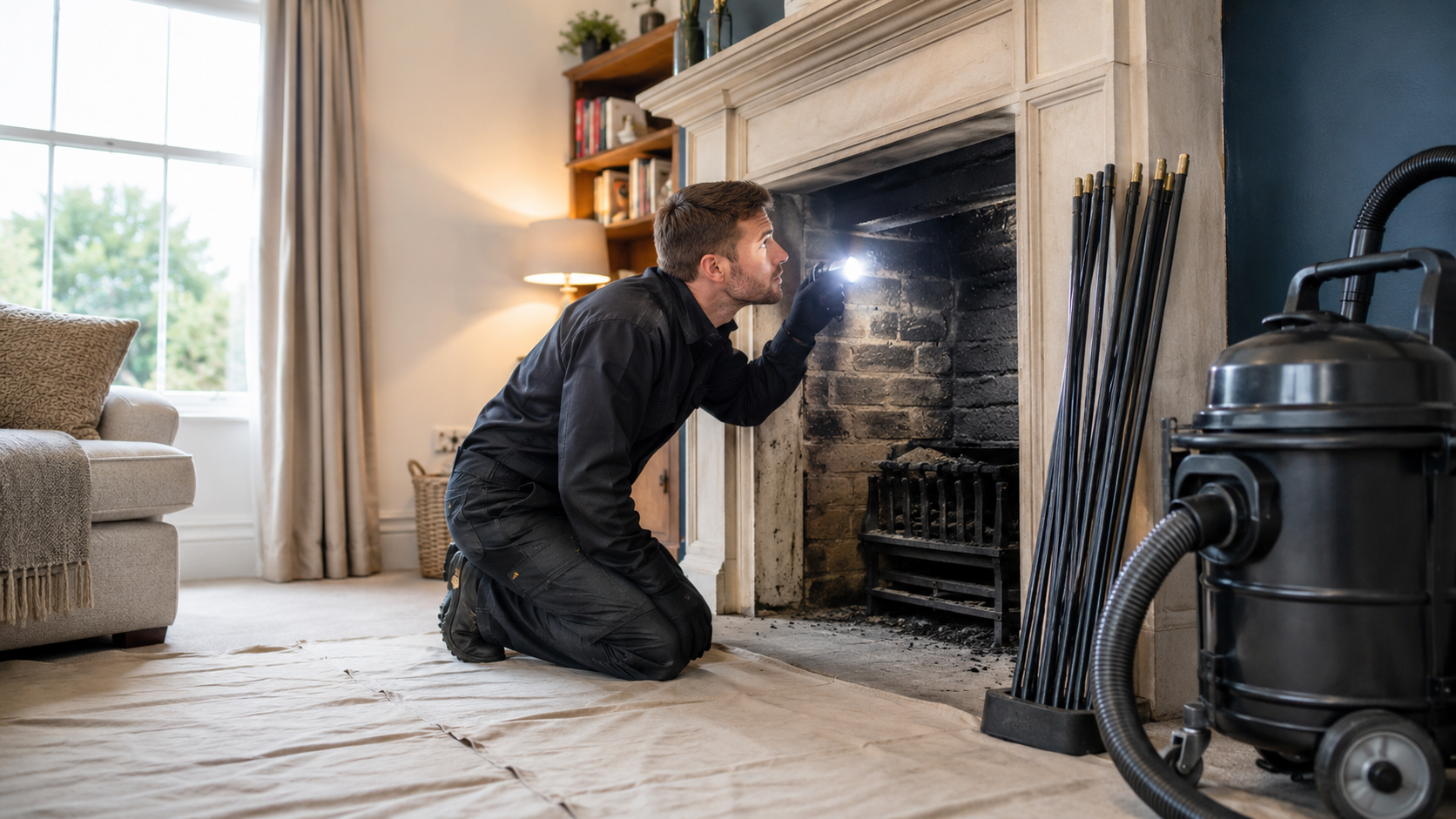
Professional Chimney Sweep
Cleaning the chimney first removes soot and deposits that could hide defects.
Approved Document J recommends sweeping existing flues before further inspection because this helps demonstrate that the flue is clear and allows better inspection.
CCTV Chimney Inspection
A specialist camera can travel through the chimney and provide a detailed internal view.
This can help locate:
- Corrosion
- Physical damage
- Obstructions
- Misaligned components
- Failed sections
Smoke Testing
Smoke testing can help determine whether gases are escaping from areas where they should remain contained.
Approved Document J explains that smoke testing can identify major faults such as damaged chimney sections or incorrectly made connections.
The appropriate testing method depends on the flue and appliance.
Does Smoke Leakage Always Mean the Liner Needs Replacing?
No.
Smoke leakage can result from several different problems.
These include:
- A damaged liner
- Failed joints
- Poor flue connections
- Masonry defects
- Incorrect installation
This is why diagnosis comes before replacement.
A qualified professional should determine where the leakage is occurring and whether repair, replacement or another remedial measure is appropriate.
Can You Repair a Damaged Flexible Flue Liner?
A flexible chimney liner runs through much of the chimney and is generally installed as a continuous system.
Whether any problem can be repaired depends on:
- Where the damage is
- Which component has failed
- Whether the liner itself is damaged
- Manufacturer requirements
- Accessibility
A failed top connection or terminal may involve a different repair from a perforated or badly corroded liner.
When the liner itself has suffered significant damage, full replacement may be the appropriate solution.
Can a Damaged Flue Liner Cause Carbon Monoxide Problems?
Potentially, yes.
The flue forms part of the system responsible for carrying combustion products away from the property.
If it has significant leakage or damage, combustion gases may not remain safely contained.
Approved Document J requires flues to provide an acceptably gas-tight route and includes testing methods specifically intended to identify leakage and damaged chimney sections.
A carbon monoxide alarm is essential where required, but it should never be treated as a substitute for maintaining the appliance and chimney correctly.
If your carbon monoxide alarm activates, follow its emergency instructions and do not continue using the appliance until it has been professionally checked.
Should You Replace a Flue Liner After a Chimney Fire?
It should at least be professionally inspected.
Whether replacement is necessary depends on whether the chimney fire damaged the liner.
The inspection may involve:
- CCTV
- Smoke testing
- Visual assessment
- Examination of connections
- Manufacturer guidance
Do not assume that because the liner still appears connected, it remains suitable for continued use.
Can Poor Fuel Damage a Flue Liner?
Poor fuel and burning practices can contribute to conditions that are hard on a chimney system.
For example, frequently burning wet wood can create:
- Cooler flue gases
- More smoke
- Increased tar
- More creosote
- Greater condensation
Heavy deposits should be removed through regular sweeping.
Burn properly dried, suitable fuel and operate the stove according to manufacturer instructions to reduce unnecessary chimney contamination.
How Can You Help Your Flue Liner Last Longer?
Good chimney maintenance can help reduce avoidable deterioration.
Have the Chimney Swept Regularly
This removes soot, creosote and deposits that can restrict the flue.
Burn Suitable Dry Fuel
For wood-burning appliances, use properly dried wood and follow current fuel guidance.
Avoid Constant Smouldering
Very low-temperature combustion encourages smoke and deposits.
Deal With Water Entry
Rain and persistent chimney moisture should be investigated rather than ignored.
Investigate Heavy Tar
Repeated severe tar accumulation indicates that something about the fuel, appliance operation or chimney system may need attention.
Have Problems Inspected Early
Persistent smoke, poor draught and unusual debris should not be left until the system completely fails.
Frequently Asked Questions
How do I know if my flue liner is damaged?
Possible signs include smoke leakage, chimney-breast staining, poor draught, unusual debris, persistent smoke problems and evidence discovered during CCTV inspection. Many liner defects cannot be confirmed without professional inspection.
How often should a flue liner be replaced?
There is no universal fixed replacement interval. Liner condition, material, installation, fuel and manufacturer guidance should determine whether replacement is necessary.
Can you see a damaged flue liner from the fireplace?
Usually only a small part is visible from below. Damage higher inside the chimney may require CCTV inspection.
Does a damaged flue liner cause smoke in the room?
It can, although blocked chimneys, inadequate ventilation and poor draught can create similar symptoms.
Can I continue using my log burner with a damaged liner?
If liner damage is suspected, the safest approach is to stop using the appliance until the chimney has been professionally assessed.
Does a chimney fire damage a stainless steel liner?
It can. The liner should be inspected after a chimney fire before normal use resumes.
Should a liner be checked when replacing a log burner?
Yes. The existing liner needs to be confirmed as suitable for the new appliance and in acceptable condition. Some manufacturer guidance calls for replacement unless the existing liner is recent and demonstrably sound.
Can a chimney sweep inspect the liner?
A chimney sweep may identify warning signs during cleaning, but a detailed assessment may require CCTV or appropriate flue testing.
Is a CCTV chimney inspection worth having?
It can be particularly useful where liner damage, structural deterioration or a hidden blockage is suspected because it allows areas inside the chimney to be examined directly.
Think Your Flue Liner Needs Replacing?
A damaged chimney liner is not always obvious from inside your home.
Persistent smoke problems, chimney-breast staining, poor draught, unusual debris, corrosion or a previous chimney fire are all good reasons to have the flue properly inspected.
Do not replace a liner based on guesswork, but do not continue using a system where significant damage is suspected either.
Midlands Sweeps provides stainless steel flue liner installation, chimney sweeping, log burner installation and high-definition CCTV chimney inspections from its base in Swadlincote, serving Burton upon Trent, Derby, Ashby-de-la-Zouch and surrounding areas.
If you suspect your chimney liner is damaged, a professional sweep and internal inspection can help determine whether it remains suitable or whether replacement is the safer option.