
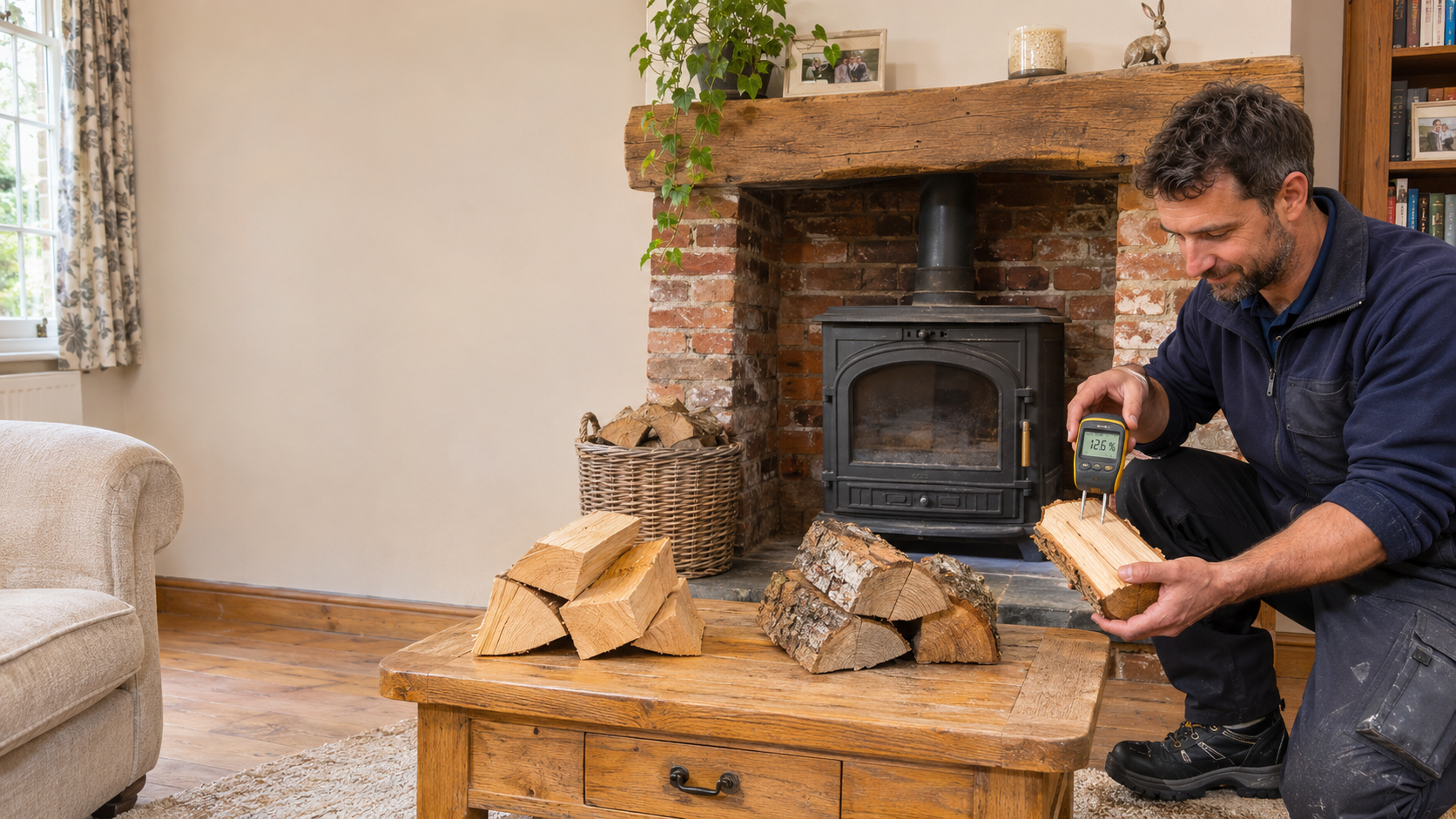
Choosing the right firewood can make a noticeable difference to how your wood-burning stove performs. From the amount of heat produced to how quickly soot collects on the glass and inside the chimney, fuel quality plays an important role in everyday stove operation.
When shopping for firewood, homeowners often come across two common options: kiln-dried logs and seasoned logs.
Both can provide excellent heating when properly dried, but there are important differences in how they are prepared, their moisture content, cost and storage requirements.
Kiln-dried logs are dried using controlled heat, while seasoned logs are allowed to dry naturally over time.
So, which option is better for your log burner?
In this guide, Midlands Sweeps compares kiln-dried and seasoned firewood, explains why moisture content matters and offers practical advice for homeowners who want to maintain their stoves and chimneys.
What Are Kiln-Dried Logs?
Kiln-dried logs are pieces of firewood that have been dried in a specially designed heated chamber.
The kiln uses controlled temperatures and airflow to remove moisture from the wood more quickly than traditional air drying.
When properly processed, kiln-dried logs can reach a moisture content of 20% or less, making them suitable for use in compatible wood-burning appliances.
Benefits of Kiln-Dried Firewood
Ready for immediate use: Properly dried and stored logs can generally be burned without additional seasoning.
Consistent moisture levels: Controlled drying can produce more predictable results between batches.
Easier lighting: Dry logs usually ignite more readily than damp firewood.
Better combustion: Low moisture content helps reduce unnecessary smoke and combustion deposits.
Convenient storage: Homeowners do not need to store freshly cut wood for extended periods before using it.
However, kiln-dried logs are often more expensive than wood purchased for seasoning.
It is also important to remember that the description kiln-dried does not automatically guarantee the moisture content of every log. Look for appropriate certification and store the wood correctly after purchase.
What Are Seasoned Logs?
Seasoned logs are pieces of firewood that have been left to dry naturally through exposure to moving air.
The process usually involves splitting the wood, stacking it in a well-ventilated location and protecting it from excessive rainfall.
Over time, moisture gradually evaporates from the timber.
Depending on the wood species, log size, local climate and storage conditions, seasoning can take many months or longer.
Some wood may require two summers of suitable drying conditions before reaching the recommended moisture content.
Benefits of Seasoned Firewood
Potentially lower cost: Purchasing unseasoned wood in larger quantities and drying it yourself can be economical.
Natural drying: Seasoning does not require the same controlled heating process as kiln drying.
Suitable for long-term storage: Homeowners with a dedicated log store can prepare firewood ahead of the heating season.
Comparable burning performance: Properly seasoned logs can perform just as well as kiln-dried logs when their moisture content and other characteristics are similar.
The main disadvantage is that seasoning takes time and requires suitable storage.
Wood described as seasoned is not necessarily dry enough to burn. The actual moisture content should always be checked.
Kiln-Dried vs Seasoned Logs: Key Differences
The following table compares the two common firewood options.
| Feature | Kiln-dried logs | Seasoned logs |
|---|---|---|
| Drying method | Heated kiln with controlled airflow | Natural air drying |
| Drying time | Usually much faster | Often many months or longer |
| Moisture content | Can reliably reach 20% or less | Depends on seasoning and storage |
| Ready to burn | Usually, if properly dried | Only when sufficiently dry |
| Lighting | Generally easy when dry | Equally easy when properly dry |
| Heat performance | Good with suitable moisture content | Comparable at similar moisture content |
| Typical cost | Often higher | Can be lower when buying wood to season |
| Storage | Must remain dry | Needs suitable drying and storage space |
| Soot and smoke | Reduced compared with wet wood | Comparable when equally dry and burned correctly |
The main takeaway: Kiln-dried logs are generally more convenient, while properly seasoned logs can offer good value. Neither has an automatic performance advantage when both contain similar amounts of moisture.
Why Firewood Moisture Content Matters
The moisture content of your logs is one of the most important factors affecting wood burner performance.
Freshly cut wood contains substantial amounts of water.
When wet wood is burned, part of the fire’s energy is used to evaporate that moisture.
This leaves less useful heat available for warming your home and can contribute to cooler, less complete combustion.
Wet wood can also produce more smoke and undesirable deposits inside the chimney.
For this reason, UK guidance recommends using firewood with a moisture content of 20% or less.
A properly seasoned log at 18% moisture may perform better than a poorly stored kiln-dried log that has absorbed additional water.
The drying method matters less than the condition of the wood when it reaches your stove.
Which Logs Produce More Heat?
A common misconception is that kiln-dried logs always produce more heat than seasoned logs.
In reality, the amount of useful heat depends on several factors, including moisture content, wood species, quantity and how efficiently the stove operates.
If two logs are made from the same species of wood and have similar moisture levels, their heating performance will generally be comparable regardless of how they were dried.
However, a dry log can provide more useful heat than an equivalent wet log because less energy is wasted evaporating water.
Does Hardwood or Softwood Make a Difference?
Yes, but this is a separate consideration from kiln drying or seasoning.
Hardwoods such as oak, ash and beech are often denser than common softwoods.
For a similar volume, dense hardwood logs may contain more fuel and provide longer-lasting heating.
Softwoods can also be suitable for wood-burning stoves when recommended by the manufacturer and properly dried.
The important factors are choosing an appropriate wood species, using clean untreated timber and maintaining correct combustion conditions.
Which Fuel Creates Less Soot and Creosote?
Both kiln-dried and well-seasoned logs can help reduce unnecessary soot accumulation when burned correctly.
However, firewood containing too much moisture can contribute to smoke and tar-like deposits.
When damp logs burn, combustion temperatures may be lower, and more unburned compounds can enter the chimney.
Some of these compounds can condense on cooler internal flue surfaces and contribute to creosote formation.
Creosote is combustible and excessive deposits increase the risk of chimney fires.
Does Kiln-Dried Wood Keep Your Chimney Cleaner?
Compared with wet or insufficiently seasoned wood, properly kiln-dried firewood will generally support cleaner combustion.
However, properly air-seasoned logs with the same moisture content can provide similar benefits.
Other important factors include:
- Correct stove air-control settings.
- Appropriate chimney draught.
- Suitable appliance sizing.
- Avoiding prolonged smouldering.
- Regular stove maintenance.
- Professional chimney sweeping.
Even when using high-quality dry firewood, your chimney still requires routine sweeping.
Are Kiln-Dried Logs Worth the Extra Money?
Whether kiln-dried logs are worth the additional cost depends on your circumstances.
For homeowners who use their log burner occasionally, buying certified kiln-dried firewood can be convenient.
The logs are generally ready to use, and there is no need to spend months drying them.
For households that use wood-burning stoves frequently and have suitable outdoor storage, buying larger quantities of wood for seasoning may offer better value.
However, the cheapest wood is not necessarily the most economical.
Wet logs can provide less useful heat, meaning a lower purchase price may not translate into lower heating costs.
When comparing suppliers, consider the log species, moisture content, quantity, delivery charges and the amount of usable heat rather than simply comparing bag prices.
Which Is More Environmentally Friendly?
Both kiln-dried and seasoned firewood have environmental considerations.
Natural air seasoning typically requires little energy for the drying process itself.
Kiln drying requires energy to heat the drying chamber, although the environmental impact depends on how that energy is generated.
Transport distances and responsible woodland management can also influence the overall environmental footprint.
When possible, choose appropriately sourced firewood from reputable local suppliers.
However, neither drying method makes wood burning emission-free.
All wood fires produce particulate pollution and other combustion emissions, even when dry fuel is used.
Using a suitable, well-maintained stove correctly can help reduce unnecessary emissions, but avoiding unnecessary burning is the most effective way to prevent wood-smoke pollution.
What Does Ready to Burn Mean in England?
In England, the Ready to Burn certification scheme helps homeowners identify suitable dry firewood.
Under current rules, wood sold for domestic burning in quantities of less than two cubic metres must be certified as Ready to Burn.
This certification confirms that the wood has a moisture content of 20% or less.
Certified wood should display the official Ready to Burn logo, supplier details and certification number.
For sales of two cubic metres or more, different rules apply. Suppliers must provide information explaining how to dry, store and check the wood before burning.
These larger deliveries are not automatically ready for immediate use.
When purchasing firewood, always check its condition and store it correctly, even when it was certified as dry at the time of sale.
You can learn more through the UK Government’s guidance on selling wood for domestic use.
How to Check Whether Your Logs Are Dry Enough
The most reliable practical way to check the moisture content of firewood is to use a suitable wood moisture meter.
For a more accurate reading:
- Choose a representative log from your supply.
- Split the log to expose a fresh internal surface.
- Follow the moisture meter manufacturer’s instructions.
- Test the freshly split surface rather than relying on the outside of the log.
- Repeat the process with several logs from different parts of your supply.
Aim for a moisture content of 20% or less.
Dry logs may also have cracked ends, loose bark or feel lighter than wet logs of a similar size and species.
However, visual clues are not sufficiently reliable on their own.
A moisture meter provides a more useful indication of whether your firewood is ready to burn.
How Should You Store Kiln-Dried and Seasoned Logs?
Proper storage is essential regardless of how your firewood was dried.
Both kiln-dried and seasoned logs can absorb moisture if they are exposed to rain or stored in damp conditions.
To keep your logs in suitable condition:
- Store them in a dry, well-ventilated location.
- Keep the wood raised off the ground.
- Protect the top of the stack from rainfall.
- Allow air to circulate around the sides.
- Avoid wrapping logs tightly in non-breathable materials.
- Bring only a suitable amount indoors as needed.
- Keep firewood away from hot stove surfaces and required appliance clearances.
A covered outdoor log store with adequate ventilation can be a practical solution for homeowners who purchase firewood in bulk.
Can You Burn Either Type of Wood in a Smoke Control Area?
The drying method does not determine whether wood can legally be burned in a Smoke Control Area.
In England, wood is generally only permitted in such areas when burned in an appliance that is exempt for that purpose.
The appliance must also be operated using the fuel permitted by its approval and according to manufacturer instructions.
Both kiln-dried and seasoned logs must be sufficiently dry, but dry wood alone does not make a non-exempt appliance suitable for burning wood in a Smoke Control Area.
Check your local council’s requirements before using a wood-burning stove.
Does Using Dry Firewood Mean You Need Fewer Chimney Sweeps?
Using suitably dried logs can help reduce excessive soot and creosote formation compared with burning wet wood.
However, it does not eliminate combustion deposits.
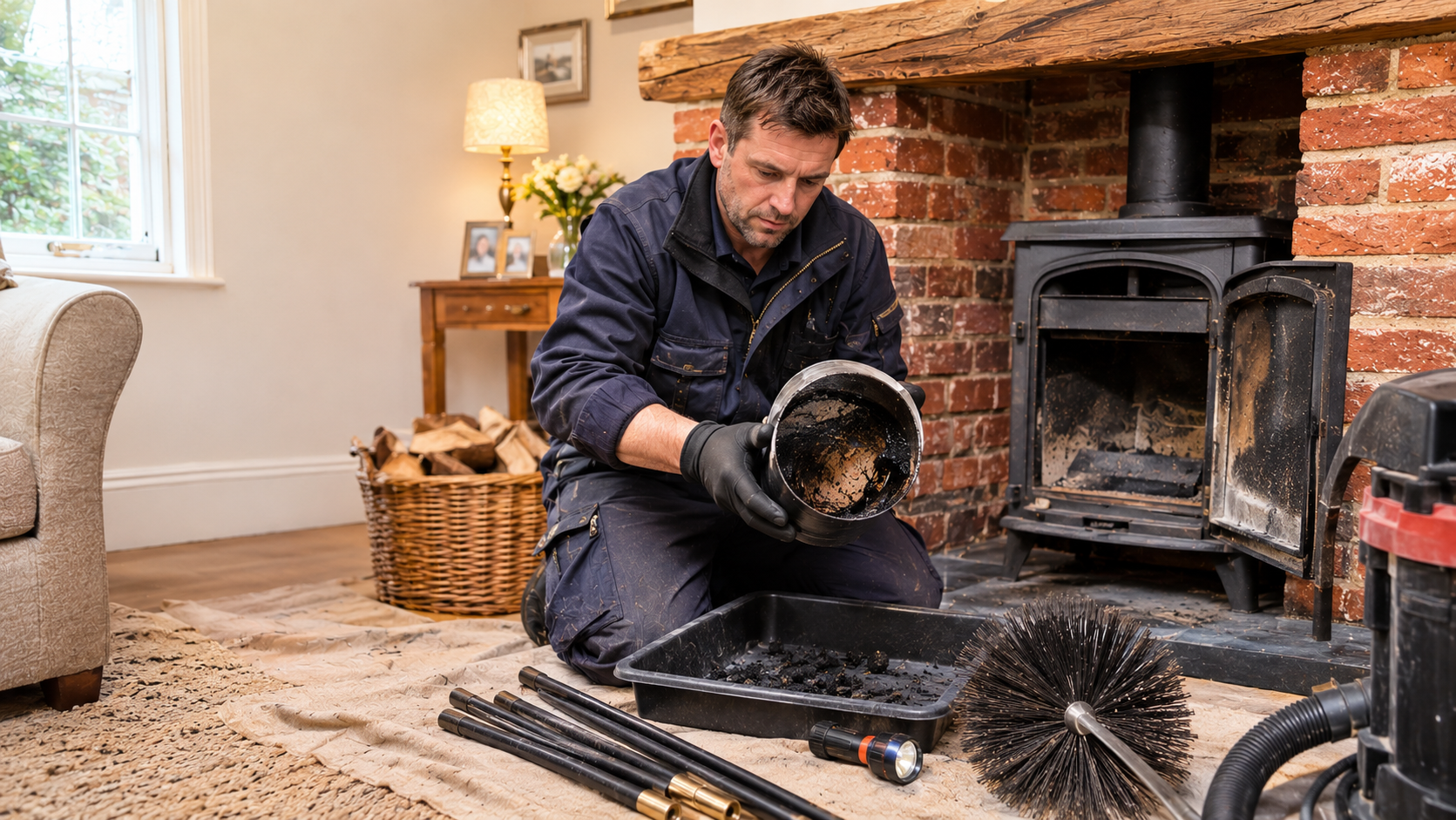
Even well-maintained wood-burning stoves produce residues that can accumulate inside the chimney or flue liner.
HETAS generally recommends sweeping chimneys used for wood burning at least twice a year, with additional sweeping where required by usage and conditions.
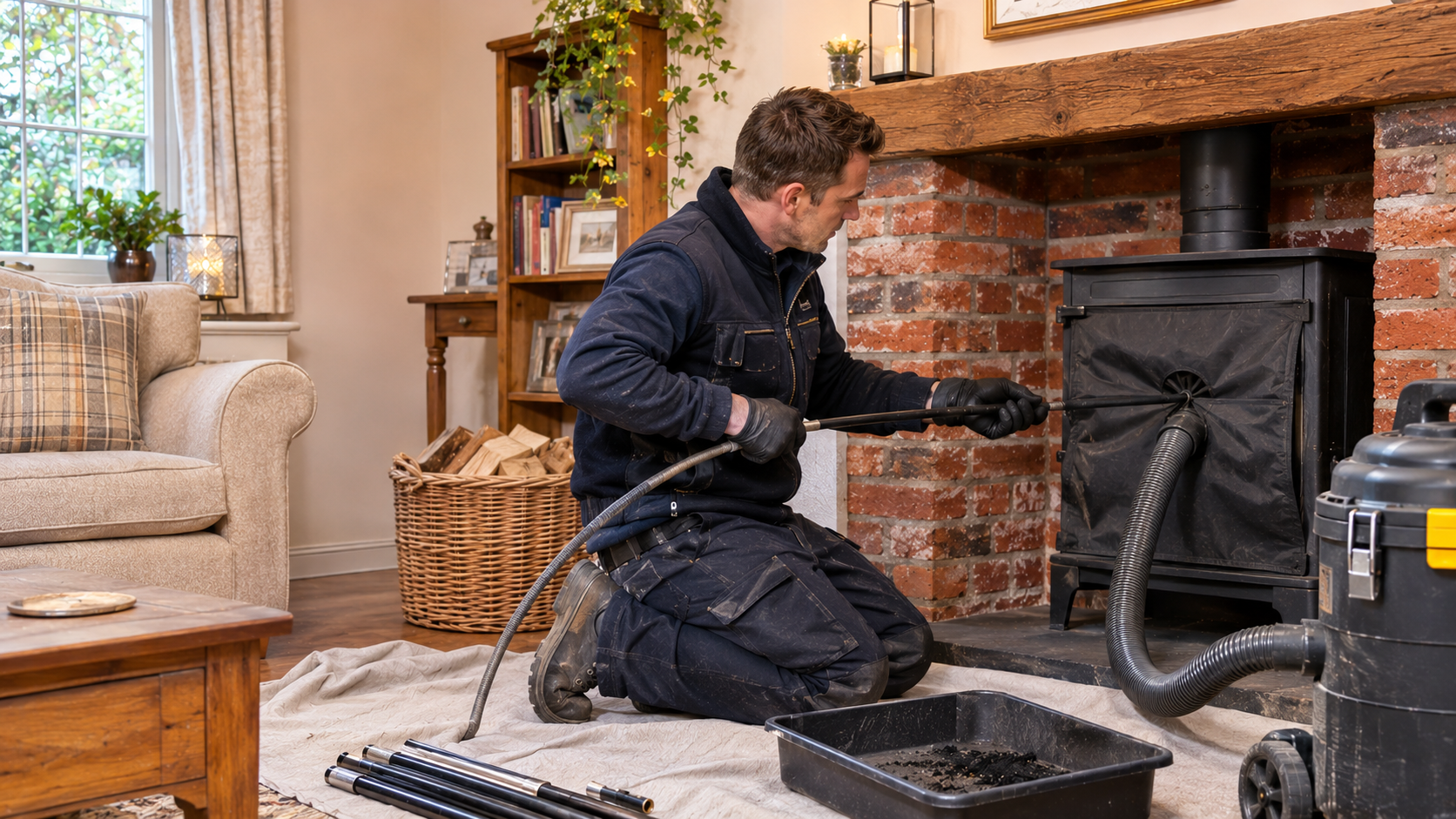
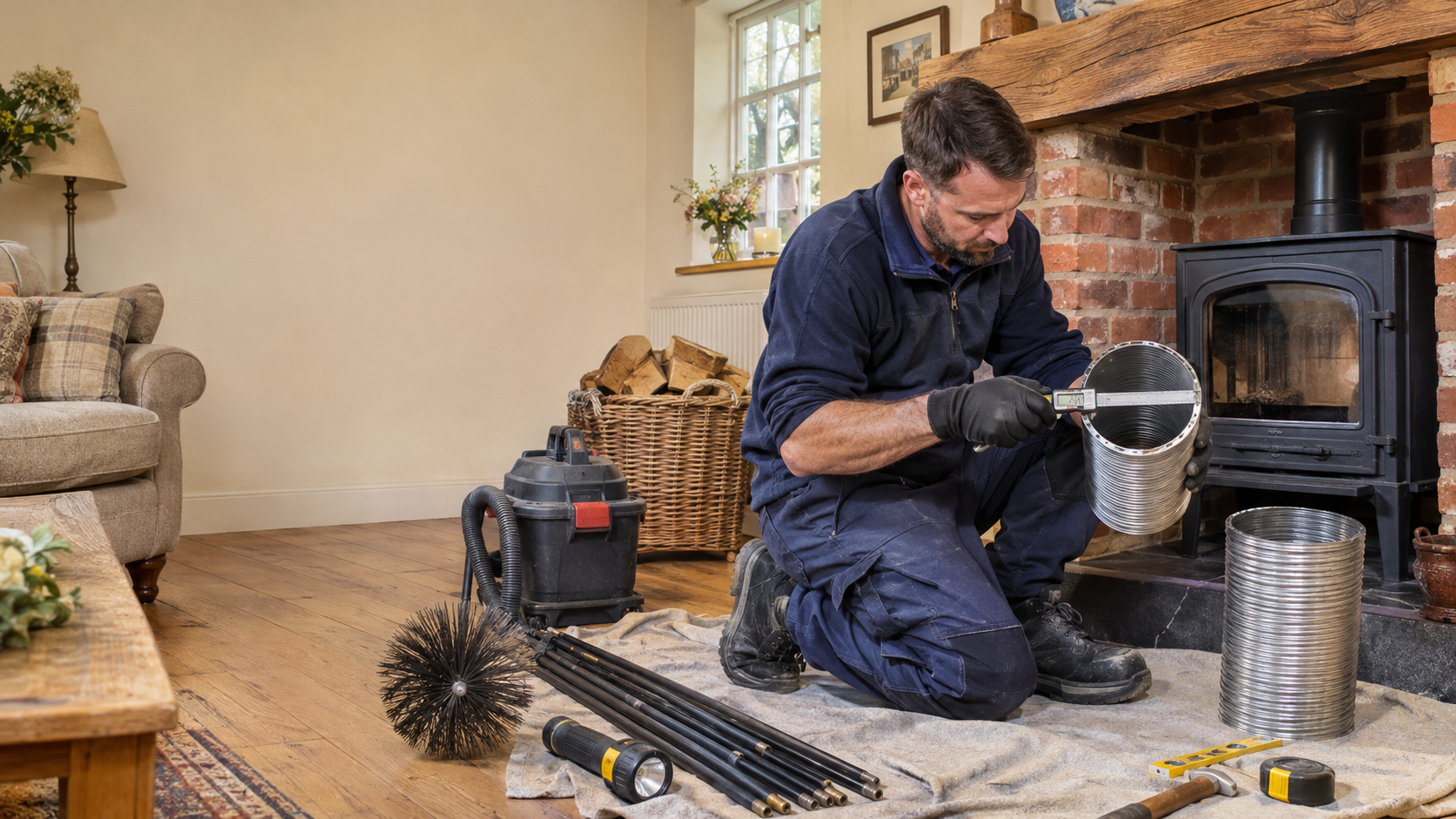
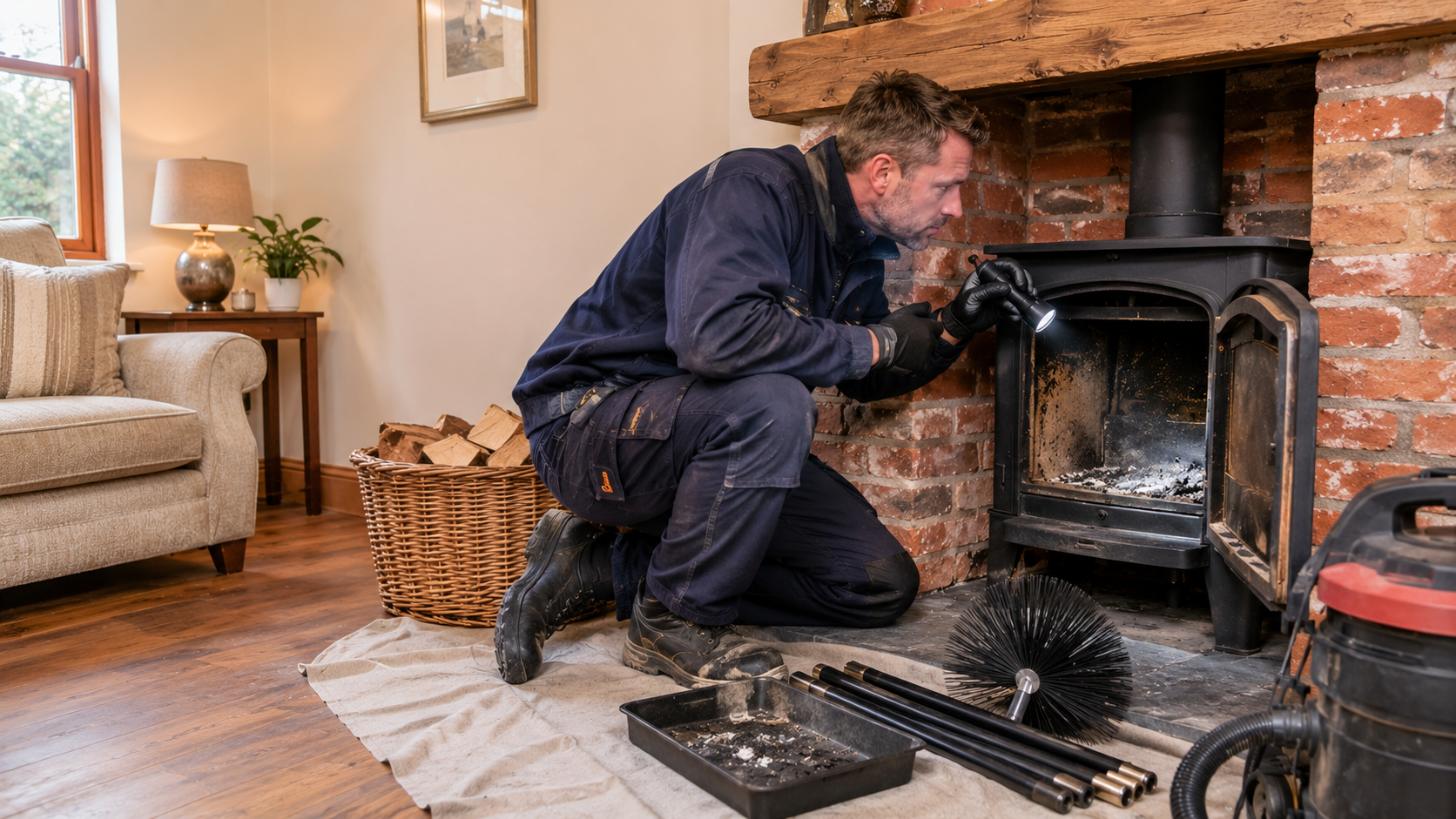
A professional chimney sweep can assess the deposits being removed and recommend a suitable cleaning schedule.
For homeowners across Swadlincote, Derby, Burton on Trent and surrounding areas, combining dry firewood with regular chimney maintenance is an important part of looking after a wood-burning stove.
Frequently Asked Questions About Kiln-Dried and Seasoned Logs
Are kiln-dried logs better than seasoned logs?
Not necessarily. Properly seasoned logs can perform just as well as kiln-dried wood when their moisture content and other characteristics are comparable. Kiln-dried logs are generally more convenient because they are dried more quickly.
Do kiln-dried logs burn longer?
Not automatically. Burn duration depends on the species, density, log size, stove design and operating conditions. Kiln drying itself does not guarantee a longer-lasting fire.
How dry should seasoned logs be before burning?
Firewood should have a moisture content of 20% or less before it is used in a wood-burning stove.
Can seasoned logs produce as much heat as kiln-dried logs?
Yes. When the wood species, quantity and moisture content are similar, heating performance is generally comparable.
Can kiln-dried logs become wet again?
Yes. Kiln-dried wood can absorb moisture from rain or unsuitable storage conditions, so it must be kept dry.
Is it cheaper to season your own firewood?
It can be, particularly when purchasing larger quantities of unseasoned wood. However, you need suitable storage space and enough time for the logs to dry properly.
Does burning kiln-dried wood prevent chimney fires?
No. Dry wood can help reduce unnecessary deposits compared with wet wood, but it does not eliminate chimney fire risks. Regular sweeping, correct stove operation and suitable maintenance remain essential.
Why does my log burner glass still turn black with dry logs?
Blackened stove glass can also be caused by restricted combustion air, prolonged low-temperature burning, airwash problems or poor chimney draught. If the issue persists, the stove and chimney may need professional attention.
Which Fuel Should You Choose for Your Wood-Burning Stove?
For most homeowners, the best firewood is clean, untreated wood with a verified moisture content of 20% or less.
Kiln-dried logs are a convenient choice if you want firewood that is ready to use without additional drying.
Properly seasoned logs can be equally effective and may offer better value when you have suitable storage and can plan ahead.
Whichever option you choose, the quality of the fuel, correct stove operation and regular chimney maintenance matter more than the drying method alone.
Professional Chimney Sweeping With Midlands Sweeps
Choosing good-quality firewood is an important part of looking after your wood-burning stove, but regular chimney care is just as essential.
Even when using properly dried logs, soot and combustion deposits can gradually accumulate inside your chimney or flue liner.
At Midlands Sweeps, we provide professional chimney sweeping, flue liner cleaning and related chimney services for homeowners throughout Swadlincote, Burton on Trent, Derby, Ashby-de-la-Zouch, Coalville and surrounding areas.
As a veteran-owned business, we focus on professional workmanship, careful chimney maintenance and practical advice for homeowners.
If your chimney is overdue for sweeping or you’re concerned about excessive soot, poor draught or unusual stove performance, contact Midlands Sweeps to discuss the appropriate service.
Book your professional chimney sweeping appointment with Midlands Sweeps today.
Phone: +44 782 483 0604
Email: midlandsweeps@gmail.com
Website: https://midlandsweeps.com/
Chimney Sweeping Services: https://midlandsweeps.com/services/chimney-sweep/
Book an Appointment: https://midlandsweeps.com/contact-us/
Midlands Sweeps — professional chimney care for well-maintained wood-burning stoves.