When installing a wood-burning stove, most homeowners focus on choosing the right design, heat output and position in the room. However, one of the most important elements of a successful installation is hidden inside the chimney: the flue liner.
A properly selected flue liner helps your stove operate efficiently by providing a suitable passage for smoke and combustion gases to escape.
Choosing the wrong diameter can contribute to poor chimney draught, smoke entering the room, increased soot deposits and disappointing stove performance.
That is why correct flue liner sizing matters just as much as choosing the right appliance.
Whether you are installing a new log burner or upgrading an older chimney, understanding how flue liner dimensions affect performance can help you avoid costly mistakes.
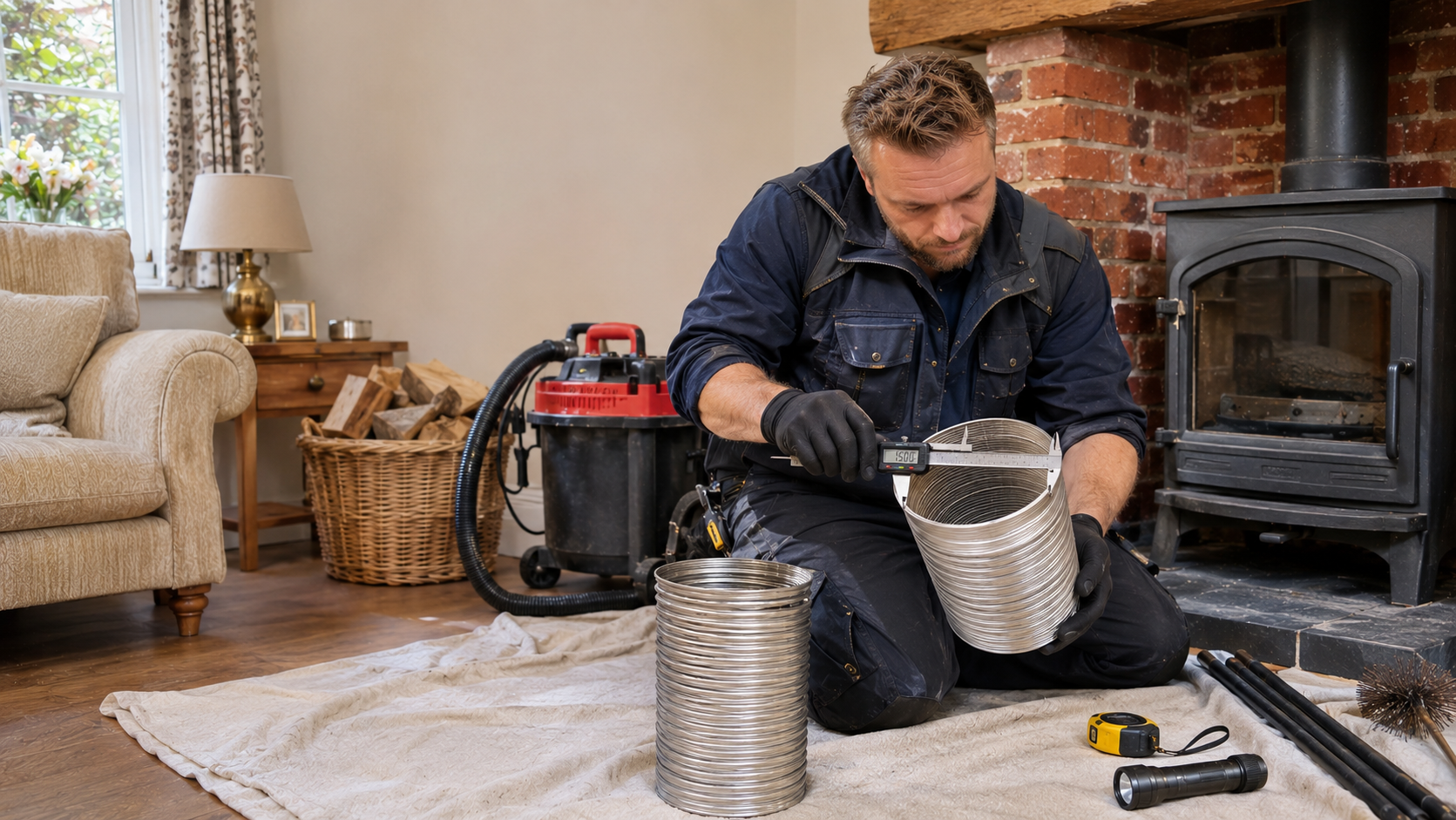
In this guide, Midlands Sweeps explains how flue sizing works, the difference between 125mm and 150mm liners, and why professional assessment is essential.
What Is a Flue Liner?
A flue liner is a component installed inside a chimney to create a suitable passage for combustion gases.
When a wood-burning stove operates, hot gases rise through the flue and are discharged safely outside the property.
In many older British homes, traditional masonry chimneys were originally designed for open fireplaces rather than modern closed wood-burning stoves.
Depending on their condition and construction, these chimneys may need a suitable liner before a stove can be installed.
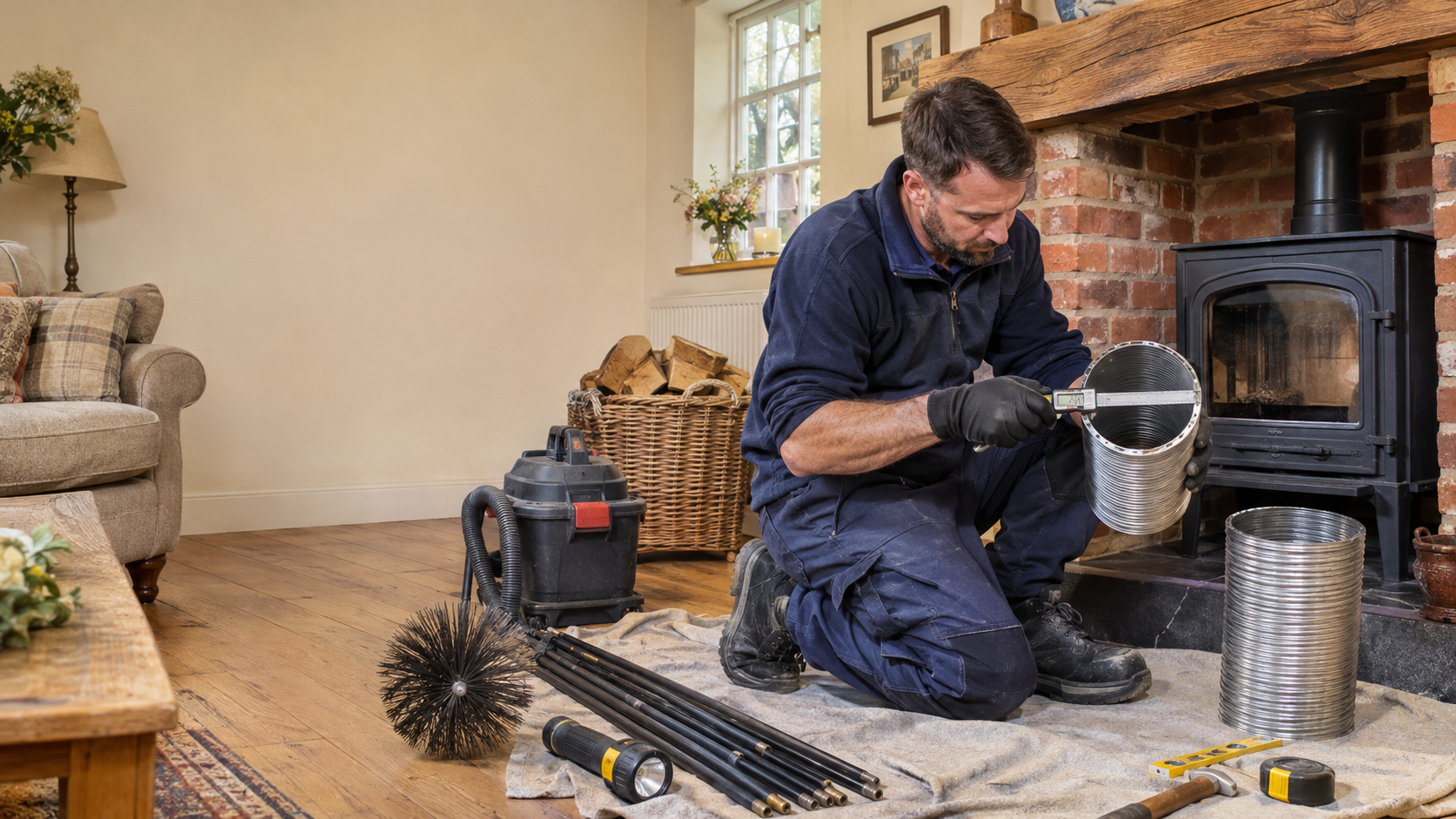
Stainless-steel flexible flue liners are commonly used when adapting existing masonry chimneys.
A correctly specified liner helps support appropriate gas flow, suitable chimney draught and reliable stove operation.
However, not every existing chimney automatically requires relining. Its condition and suitability must first be assessed.
Why Does Flue Liner Diameter Matter?
The diameter of your flue liner affects how combustion gases move through the chimney.
A wood-burning stove relies on suitable chimney draught to carry smoke outside and support correct combustion.
If the flue is too narrow, it may create excessive resistance to gas flow.
If the flue is unnecessarily large, combustion gases may cool more quickly, potentially weakening draught under certain conditions.
Both situations can affect stove performance.
The correct diameter depends on the appliance manufacturer’s requirements, fuel type, chimney height, flue construction and overall installation design.
The goal is not to choose the biggest or smallest liner available. It is to select the diameter that is suitable for the connected stove and chimney system.
What Happens If Your Flue Liner Is Too Small?
An undersized liner can restrict the movement of smoke and combustion gases.
This may create excessive resistance within the chimney system, preventing the stove from operating as intended.
Possible symptoms include:
- Smoke entering the room when the stove door is opened.
- Difficulty establishing a fire.
- Weak or inconsistent chimney draught.
- Poor combustion performance.
- Difficulty maintaining normal stove operation.
An undersized flue can also contribute to dangerous combustion-gas spillage.
However, these symptoms can have other causes, including blockages, inadequate ventilation or unsuitable appliance operation.
If smoke enters your home, stop using the stove until the problem has been professionally investigated.
Can a Flue Liner Be Too Large?
Yes. A liner with an unnecessarily large diameter may also contribute to performance problems.
As hot combustion gases travel through a chimney, they gradually lose heat.
In some installations, an oversized flue can encourage excessive cooling, reducing the temperature difference that helps generate natural chimney draught.
This can contribute to condensation and the accumulation of combustion deposits.
Potential problems include slow draught development, smoke during lighting, inconsistent stove performance and increased tar-like deposits.
However, flue performance depends on several interacting factors.
An appropriately sized larger liner can work perfectly well when the overall chimney design supports it.
A professional installer must assess the complete system before deciding whether its diameter is contributing to a problem.
125mm vs 150mm Flue Liners: What’s the Difference?
Two common flue liner diameters for domestic wood-burning stoves are:
- 125mm (5 inches)
- 150mm (6 inches)
The correct choice depends on the connected appliance and the applicable installation requirements.
Under England’s Approved Document J, certain qualifying closed appliances rated up to 20kW, including wood-burning appliances meeting the relevant Clean Air Act requirements, may use a minimum circular flue diameter of 125mm.
Other closed solid-fuel appliances rated up to 30kW generally fall under the 150mm minimum guidance.
The flue must also be no smaller than the appliance outlet or the size recommended by its manufacturer.
Flue liner size comparison
| Diameter | When it may be appropriate |
|---|---|
| 125mm / 5 inches | Certain qualifying appliances where the manufacturer and regulations permit |
| 150mm / 6 inches | Common domestic solid-fuel installations where the general 150mm minimum applies |
| 175mm / 7 inches or larger | Certain higher-output appliances or installations requiring larger flues |
These are examples from Approved Document J, not universal sizing instructions.
A 5kW wood burner does not automatically qualify for a 125mm liner simply because the appliance has a relatively modest heat output.
The manufacturer’s installation instructions and applicable regulations must always be followed.
Does the Stove’s Heat Output Determine Flue Size?
The stove’s kilowatt rating is important, but it does not determine the required flue diameter on its own.
For example, two wood-burning stoves rated at 5kW may have different flue outlet sizes or manufacturer requirements.
Other factors also influence flue performance, including:
- Stove fuel type and approved operating conditions.
- Flue outlet dimensions.
- Chimney height and terminal position.
- Number of bends or offsets.
- Chimney insulation.
- Local wind conditions.
- Required combustion-air supply.
This is why selecting a liner based only on a stove’s advertised heat output can lead to installation problems.
A professional assessment helps establish whether the proposed liner and chimney arrangement are suitable.
How Flue Liner Sizing Affects Stove Efficiency
A wood-burning stove needs the correct combination of fuel, air and heat to maintain efficient combustion.
Chimney draught helps move exhaust gases away from the appliance and supports the flow of combustion air.
When the flue system is correctly designed, the stove is better able to operate under the conditions intended by its manufacturer.
An unsuitable flue can interfere with these conditions.
This may lead to incomplete combustion, increased smoke and unwanted deposits inside the chimney.
However, correct liner sizing alone does not guarantee efficient stove operation.
Homeowners must also use suitably dry firewood, follow the manufacturer’s air-control instructions and maintain the appliance regularly.
Can Incorrect Flue Sizing Cause Soot and Creosote Build-Up?
Yes. An unsuitable flue arrangement can contribute to conditions that encourage soot and creosote deposits.
Creosote forms when substances carried in wood smoke condense on cooler chimney surfaces.
If combustion gases cool excessively or the stove burns inefficiently, deposits may accumulate more quickly.
A poorly matched liner can contribute to these conditions.
However, damp fuel, insufficient combustion air, low-temperature burning and chimney insulation also influence creosote formation.
If heavy deposits repeatedly return after sweeping, it is important to investigate the underlying cause.
Simply cleaning the chimney more frequently may not resolve a design or appliance problem.
Why Chimney Height Is Just as Important as Diameter
Flue diameter is only one element of effective chimney design.
The chimney must also have sufficient height to establish suitable draught.
Approved Document J explains that the required height depends on the appliance, flue design, number of bends and local wind conditions.
It notes that a minimum flue height of 4.5 metres may be satisfactory in certain circumstances, but this is not a universal requirement or guarantee of performance.
Chimneys with multiple bends or unsuitable terminal positions may experience different draught characteristics from straighter installations.
A competent installer considers the entire chimney route, not just the diameter of the liner.
Do Older Properties Need Special Flue Liner Considerations?
Older homes throughout Derbyshire, Staffordshire and Leicestershire often have traditional masonry chimneys originally built for open fireplaces.
Some contain wide internal passages, while others have narrow sections, bends or previous modifications.
Before installing a modern wood-burning stove, the condition and suitability of the original chimney should be checked.
In some cases, a stainless-steel liner can provide a more suitable passage for combustion gases.
However, older chimneys may contain deteriorating mortar, blockages or structural defects that need attention before installation.
A professional CCTV chimney inspection can help investigate internal areas that cannot easily be examined from the fireplace.
This is particularly useful when the chimney’s previous maintenance or installation history is unclear.
What Should a Professional Check Before Installing a Flue Liner?
A professional installation assessment should consider more than simply whether a liner can fit inside the existing chimney.
Important checks include:
- Appliance specifications: Confirming the stove’s flue outlet and manufacturer requirements.
- Chimney dimensions: Assessing the existing flue route, bends and available space.
- Chimney condition: Identifying visible deterioration or suspected defects.
- Liner suitability: Selecting materials and specifications appropriate for the fuel and appliance.
- Ventilation: Assessing the combustion-air supply.
- Flue termination: Checking the chimney outlet and proposed terminal components.
- Maintenance access: Ensuring the installed flue can be swept and inspected.
- Commissioning: Completing the appropriate inspections and testing after installation.
In England, applicable work must comply with Building Regulations, including the relevant provisions of Approved Document J.
Homeowners should ensure that any required notification, approval or certification is handled through the appropriate process.
How to Know If Your Existing Flue Liner May Be Incorrectly Sized
Homeowners generally cannot confirm flue sizing problems without professional measurements and installation information.
However, possible warning signs include:
- Smoke spilling into the room during normal stove operation.
- Persistent difficulty lighting the appliance.
- Poor or unpredictable chimney draught.
- Excessive soot deposits despite suitable burning habits.
- Repeated tar-like buildup.
- A history of unsuccessful chimney modifications.
These symptoms do not prove that the liner is incorrectly sized.
A chimney obstruction, ventilation problem, appliance defect or unsuitable operation could produce similar effects.
If you suspect a flue problem, stop using the appliance where safety is in doubt and arrange a professional assessment.
Frequently Asked Questions About Flue Liner Sizing
What size flue liner do I need for a 5kW wood burner?
The correct diameter depends on the manufacturer’s instructions, flue outlet, appliance approval and applicable regulations. Some qualifying stoves may use a 125mm liner, while others require 150mm or another specified size.
Is a 6-inch flue liner better than a 5-inch liner?
Not automatically. The correct choice depends on the stove and chimney system. A larger diameter is not necessarily more efficient.
Can I reduce a 150mm stove outlet to a 125mm liner?
Approved Document J generally requires the flue to be no smaller than the stove outlet and manufacturer’s recommended size. Do not reduce a connection without a compliant design confirmed by a competent professional.
Can an oversized flue cause poor stove performance?
Yes. Depending on the installation, an unnecessarily large flue may contribute to excessive gas cooling, condensation and weak chimney draught.
Does every log burner need a stainless-steel flue liner?
No. An existing chimney may be suitable if its condition and construction meet the relevant installation requirements. A professional inspection can determine whether relining is necessary.
How long should a flue liner last?
Service life depends on the liner specification, installation, fuel, operating conditions and maintenance. Regular sweeping and appropriate inspection help identify deterioration before it leads to more serious problems.
Can incorrect flue liner sizing cause carbon monoxide problems?
An unsuitable flue can contribute to poor combustion-gas discharge. If gases spill into the property, dangerous exposure may result. Ensure suitable carbon monoxide alarms are installed and never continue using an appliance with suspected flue problems.
Professional Flue Liner Installation With Midlands Sweeps
Choosing the correct flue liner size is an essential part of a well-designed wood-burning stove installation.
A suitable liner supports reliable chimney draught, appropriate combustion conditions and the effective removal of smoke and combustion gases.
Whether you’re replacing an ageing chimney liner, fitting a new log burner or investigating poor stove performance, professional advice can help you select the right solution.
At Midlands Sweeps, we provide stainless-steel flue liner installation, log burner installation, chimney sweeping and related chimney inspection services across Swadlincote, Burton on Trent, Derby, Ashby-de-la-Zouch, Coalville and surrounding areas.
Our veteran-owned business focuses on careful workmanship, practical advice and professional chimney maintenance.
Need help with flue liner sizing or installation?
Contact Midlands Sweeps to discuss your stove and chimney requirements.
Phone: +44 782 483 0604
Email: midlandsweeps@gmail.com
Website: https://midlandsweeps.com/
Flue Liner Installation: https://midlandsweeps.com/services/flue-liner-instalation/
Book an Appointment: https://midlandsweeps.com/contact-us/
Midlands Sweeps — professional flue liner installation and chimney care across the Midlands.