
Hearing scratching, fluttering or strange noises coming from your chimney can be unsettling, particularly when you cannot see what is happening inside. In many UK homes, these sounds may be caused by birds exploring or nesting in the flue.
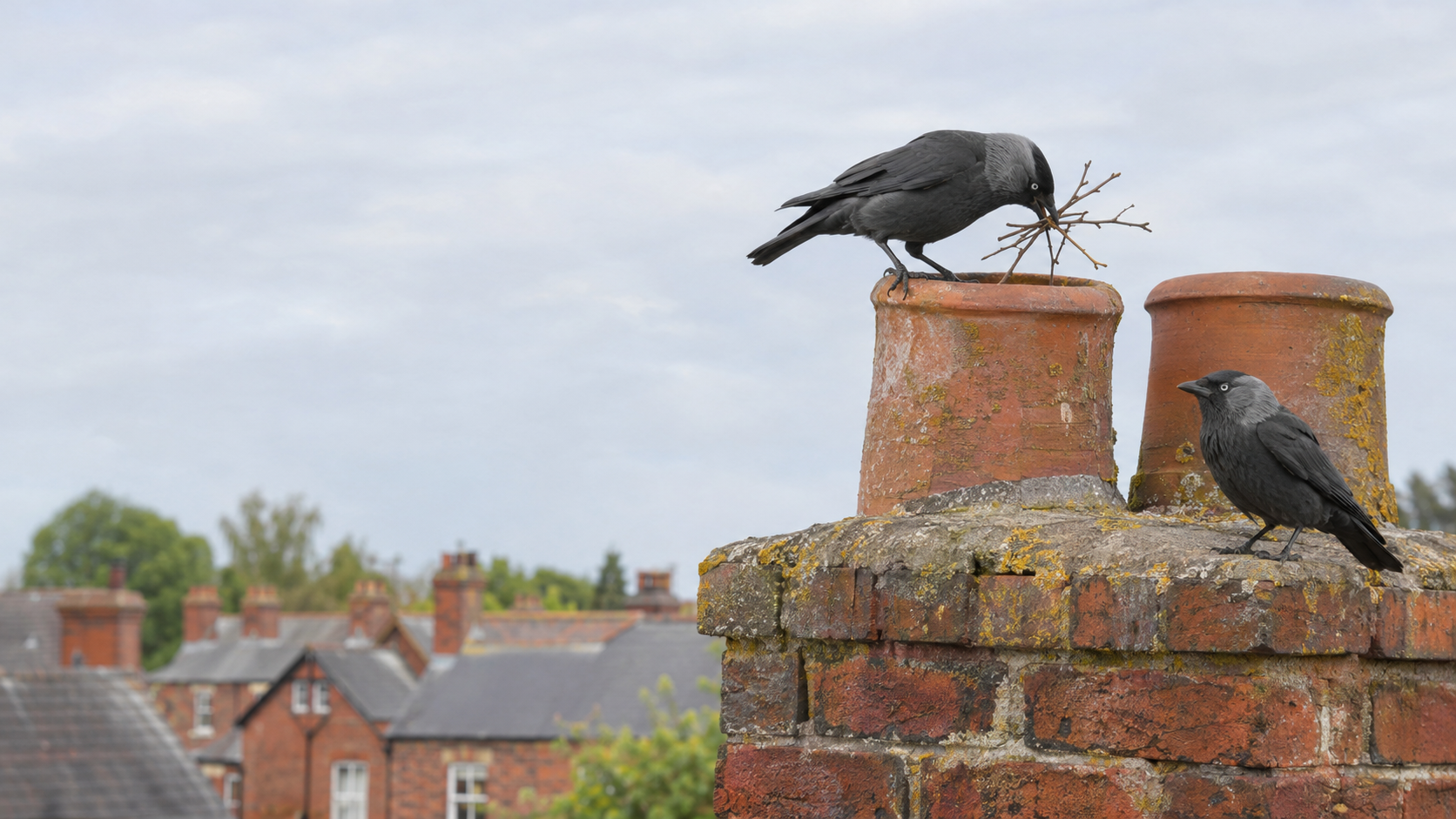
One bird that frequently uses chimneys as a nesting location is the jackdaw.
Jackdaws are intelligent members of the crow family, known for their distinctive calls, pale eyes and habit of building nests in sheltered cavities. Traditional chimney pots can provide an attractive nesting space, particularly in older properties.
However, jackdaws nesting in your chimney can create serious problems if their nesting materials restrict the flue.
Knowing how to recognise the warning signs can help you protect your fireplace, avoid dangerous blockages and arrange appropriate professional assistance.
In this guide, Midlands Sweeps explains how to identify jackdaw activity, when these birds typically nest and what to do if you suspect a nest inside your chimney.
Why Do Jackdaws Nest Inside Chimneys?
Jackdaws naturally seek out sheltered cavities when choosing somewhere to build their nests.
In the wild, they may use holes in trees, rock crevices and other enclosed spaces. Around towns and residential areas, traditional chimney pots can provide similar conditions.
A chimney may appeal to jackdaws because it offers:
- A sheltered location above ground level.
- Protection from some predators.
- An enclosed space for building a nest.
- A relatively quiet environment during warmer months.
- A suitable cavity for raising young birds.
Older homes with wide, open chimney pots can be particularly attractive to jackdaws.
In areas such as Derbyshire, Staffordshire and Leicestershire, properties with traditional masonry chimneys may provide suitable nesting locations.
However, not every bird seen sitting on a chimney is nesting inside it. Understanding the birds’ behaviour is essential before drawing conclusions.
1. Jackdaws Repeatedly Visit the Same Chimney Pot
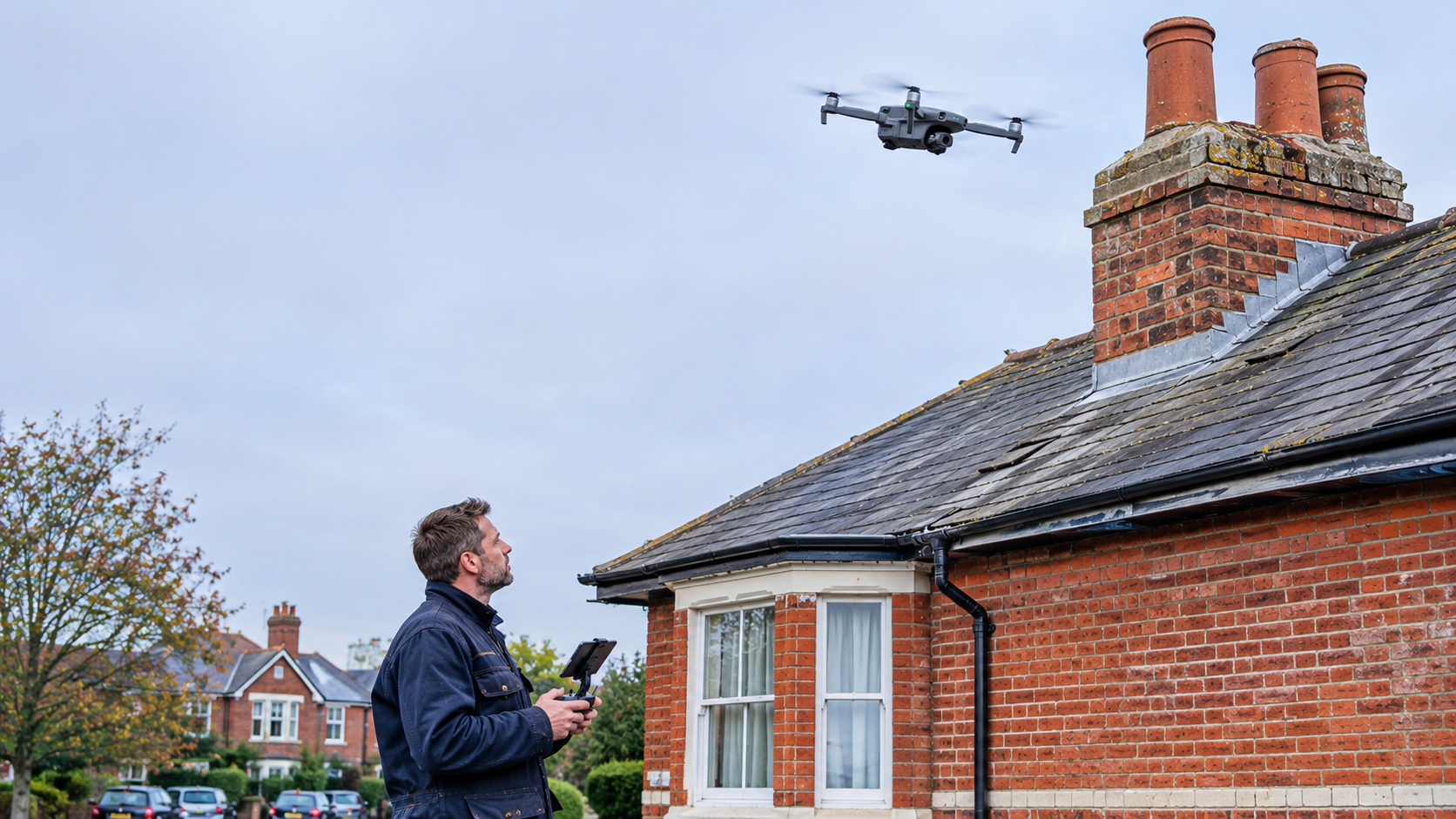
One of the most noticeable signs of potential jackdaw nesting is repeated activity around a particular chimney.
You may see one or two birds landing on the same chimney pot throughout the day.
Rather than simply resting on the roof, they may appear to inspect the opening, stand on the rim or disappear inside.
Jackdaws often form long-term pairs, so seeing two birds repeatedly visiting the same location can be a useful clue.
Watch for birds:
- Landing on the same chimney pot several times.
- Looking inside the chimney opening.
- Disappearing into the flue.
- Returning to the chimney after short flights.
- Carrying objects towards the opening.
Occasional visits do not confirm a nest, but regular entry and exit can suggest that the chimney is being used.
Observe from a safe position at ground level rather than attempting to inspect the roof yourself.
2. Birds Are Carrying Twigs Into Your Chimney
Perhaps the clearest visible indication of nest construction is a jackdaw carrying twigs or other nesting materials into the chimney.
Jackdaws build substantial nests using sticks, twigs and additional materials.
If you repeatedly see a bird arriving with vegetation in its beak and disappearing into the chimney pot, nest building may be underway.
Over time, the material can accumulate inside the flue.
Depending on the chimney’s construction, a nest may become large enough to significantly restrict the passage of smoke and combustion gases.
Important: If you see birds actively carrying nesting material into your chimney, stop using the connected fireplace or stove and seek professional advice.
Do not attempt to light a fire to discourage them.
3. Scratching and Fluttering Sounds Come From the Fireplace
Another common sign of birds nesting in a chimney is unusual noise.
You may hear scratching, movement, fluttering wings or bird calls coming from somewhere above the fireplace.
These sounds are often easier to notice when the house is quiet.
Possible noises include:
- Light scratching against internal chimney surfaces.
- Wings flapping inside the flue.
- Repeated bird calls.
- Twigs moving or falling.
- Small movements from above the fireplace opening.
Jackdaws have a distinctive, sharp call often described as tchack or chak.
However, sounds alone cannot reliably identify the species.
Similar noises can be caused by other birds, trapped animals or loose chimney debris.
If you hear persistent movement inside your chimney, avoid using the fireplace until the situation has been assessed.
4. Twigs, Feathers or Nesting Materials Fall Into Your Fireplace
Discovering unusual debris inside your fireplace is another warning sign.
A small amount of ash or soot may be expected after using a solid-fuel appliance. However, natural materials falling from above the firebox suggest something different.
Look for:
- Small twigs and sticks.
- Dried grass or leaves.
- Feathers.
- Moss or other vegetation.
- Pieces of nesting material.
Jackdaws can carry considerable amounts of material into a chimney when constructing a nest.
Some pieces may fall through the flue and collect inside the fireplace or stove.
Even if you do not hear birds, finding repeated quantities of twigs or nesting material should prompt an inspection.
Do not attempt to push chimney rods upwards to dislodge the suspected nest, as this could disturb protected nesting birds or cause the obstruction to collapse.
5. You Hear Young Birds Calling Inside the Chimney
Once a nest contains chicks, homeowners may notice more frequent bird calls.
Young birds can make repeated begging sounds, particularly when adult birds return with food.
You might hear higher-pitched chirping or persistent calling from inside the chimney.
Regular adult bird movements combined with these sounds may indicate an active nest.
This is particularly important because wild birds, their eggs and nests in use or being built are protected under the Wildlife and Countryside Act 1981.
An active nest must not be deliberately damaged or destroyed without a lawful basis or appropriate authorisation.
If you suspect chicks are present, do not attempt to remove the nest, block the chimney opening or disturb the birds.
Keep the fireplace unused and seek appropriate professional advice.
6. Your Fireplace Develops Unusual Smells
A chimney containing nesting material may occasionally develop unpleasant odours.
These can originate from damp vegetation, bird droppings, feathers or other accumulated debris.
Some homeowners notice a musty or unusual smell around an unused fireplace.
However, chimney odours can also be associated with soot, moisture, creosote or deteriorating masonry.
An unpleasant smell alone does not prove that jackdaws are present.
If the smell is accompanied by bird activity, scratching noises or falling twigs, a nest becomes a stronger possibility.
7. Your Chimney Draught Suddenly Becomes Poor
A substantial bird nest can obstruct the internal passage of a chimney.
This may prevent smoke and combustion gases from travelling outside as intended.
Possible warning signs include difficulty lighting a fire, excessive smoke or smoke spilling into the room.
However, poor chimney draught can also result from other problems, including soot accumulation, inadequate ventilation or damaged flue components.
If you suspect a nest, do not light a fire to test whether the chimney is blocked.
Burning nesting material can create a serious chimney fire hazard and may expose occupants to smoke or harmful combustion gases.
If smoke is already entering your home, stop using the appliance. If a carbon monoxide alarm sounds or an immediate danger is suspected, leave the property and seek emergency assistance.
How Can You Identify a Jackdaw?
Not every black bird visiting a chimney is a jackdaw.
Jackdaws belong to the crow family but have several distinctive characteristics.
| Feature | Typical jackdaw appearance |
|---|---|
| Size | Smaller than a carrion crow or rook |
| Plumage | Mostly black with a grey neck and nape |
| Eyes | Distinctive pale grey or blue-grey |
| Beak | Relatively short and compact |
| Call | Sharp, repeated tchack sounds |
| Behaviour | Often seen in pairs or groups, using cavities and chimney pots |
Jackdaws can sometimes be confused with other members of the crow family.
A reliable identification usually involves observing several features together rather than relying on colour alone.
When Do Jackdaws Nest in the UK?
According to the RSPB, jackdaws usually nest between April and June, although the exact timing of nesting activity can vary.
During the breeding period, adults may spend considerable time collecting nesting materials, feeding chicks and visiting their chosen nest site.
Jackdaws are present in the UK throughout the year, so seeing them around a chimney outside spring does not necessarily mean an active nest is present.
Equally, it would be unsafe to assume that every nest is inactive simply because a particular month has passed.
Before removing any nesting materials, it is important to establish that the nest is no longer being built or used.
Are Jackdaw Nests in Chimneys Dangerous?
A jackdaw nest inside a chimney can create significant safety concerns.
The main risks include:
Blocked smoke passages: Large nests can restrict or completely obstruct the chimney flue.
Chimney fires: Dry twigs and nesting materials can contribute to fire hazards if the fireplace is used.
Combustion-gas problems: A blocked flue can prevent harmful gases, including carbon monoxide, from escaping correctly.
Falling debris: Sticks, feathers and other materials may fall into the firebox or stove.
Reduced appliance performance: A restricted chimney may affect draught and combustion.
Even after the birds leave, abandoned nesting materials can remain inside the chimney.
This is why professional inspection and appropriate cleaning are important before the fireplace is used again.
Can You Legally Remove a Jackdaw Nest From Your Chimney?
Under the Wildlife and Countryside Act 1981, wild birds and nests that are being built or are in use receive legal protection.
You must not intentionally take, damage or destroy an active wild bird nest unless a specific legal exception or appropriate licence permits the activity.
In ordinary circumstances, homeowners should wait until the birds have finished nesting and the young have left.
Once the nest is confirmed inactive, a competent professional can assess removal and arrange chimney sweeping.
Certain exceptional circumstances may justify licensed intervention, but these require specialist advice and compliance with the relevant legal conditions.
Never assume that an active nest can be removed simply because it is blocking a chimney.
For more information, consult the RSPB’s advice on birds nesting in homes.
What Should You Do If Jackdaws Are Nesting in Your Chimney?
If you suspect jackdaws have established a nest, the safest approach is straightforward.
Step 1: Stop Using the Fireplace
Do not light your wood-burning stove, open fire or other appliance connected to the suspected blocked flue.
Never attempt to burn out the nesting material.
Step 2: Observe From a Safe Distance
Watch the chimney pot for repeated bird activity, particularly birds carrying twigs or entering the opening.
Do not climb onto the roof or disturb the suspected nest.
Step 3: Seek Professional Advice
Contact a chimney sweeping company and explain the symptoms you have observed.
A professional can advise on inspection and the appropriate next steps.
Step 4: Allow the Nesting Period to Finish
If the nest is active, it will normally need to remain undisturbed until the birds have finished using it.
Step 5: Arrange Nest Removal and Chimney Sweeping
Once removal is legally appropriate, a professional can clear the nesting material and sweep the chimney.
The flue should also be checked for remaining debris, obstructions or damage before being returned to use.
How to Prevent Jackdaws Nesting in Your Chimney Again
After the chimney has been cleared, preventive measures can help reduce the likelihood of future nesting.
One common solution is fitting a suitable chimney cowl or bird guard.
These fittings are designed to help prevent birds entering the chimney while allowing the system to function correctly.
However, not every cowl is suitable for every appliance.
The correct design depends on the chimney pot, flue construction and connected heating appliance.
A professional should select and install an appropriate fitting without restricting ventilation or combustion-gas discharge.
Homeowners can also reduce future problems by arranging regular chimney maintenance and having unused chimneys assessed before bringing them back into service.
Frequently Asked Questions About Jackdaws in Chimneys
How do I know if jackdaws are building a nest in my chimney?
Repeated visits to the same chimney pot, birds carrying twigs, scratching noises and nesting materials falling into the fireplace are common indicators. A professional assessment may be needed to confirm the situation.
Can I use my fireplace if jackdaws are nesting inside?
No. A suspected nest may obstruct the chimney and create fire and combustion-gas hazards. Keep the appliance unused until the nest is no longer active and the flue has been appropriately cleared and checked.
Will jackdaws leave the chimney on their own?
Adult jackdaws and their young normally leave the nest after the breeding period. However, nesting materials can remain inside the chimney and may need professional removal.
Do jackdaws return to the same chimney every year?
Jackdaws may revisit a suitable nesting location in later seasons. Installing an appropriate bird guard or chimney cowl after the nest is inactive and the chimney has been cleared can help prevent repeat nesting.
How long do jackdaws nest in chimneys?
The nesting process includes nest construction, egg incubation and raising chicks. The overall period can extend over several weeks, and timing varies. Do not rely on a fixed number of days to determine when removal is lawful.
Can a chimney sweep remove an active jackdaw nest?
Routine removal of an active nest is generally prohibited by wildlife protection law. Any exceptional intervention must meet the relevant legal requirements and may require specialist authorisation.
Should a chimney be swept after jackdaws have nested in it?
Yes. Once the nest is confirmed inactive and removed, professional sweeping can help clear remaining twigs, feathers, soot and other debris before the fireplace is used again.
Professional Bird Nest Removal With Midlands Sweeps
Jackdaws are fascinating birds, but their nesting habits can create significant problems when they choose an active chimney system.
Recognising the warning signs early can help homeowners avoid using a potentially blocked flue and arrange appropriate maintenance.
At Midlands Sweeps, we provide professional chimney sweeping, bird nest removal and related chimney inspection services across Swadlincote, Burton on Trent, Derby, Ashby-de-la-Zouch, Coalville and surrounding areas.
As a veteran-owned, fully insured business and registered member of the National Association of Chimney Sweeps, we focus on careful chimney maintenance and responsible bird nest removal.
Our services include assessing suspected chimney obstructions, removing old or inactive nesting materials when appropriate, sweeping the flue and advising on suitable chimney cowls to help prevent future nesting.
If you suspect jackdaws are nesting in your chimney, contact Midlands Sweeps before using your fireplace again.
Phone: +44 782 483 0604
Email: midlandsweeps@gmail.com
Website: https://midlandsweeps.com/
Bird Nest Removal: https://midlandsweeps.com/services/bird-nest-removal/
Book an Appointment: https://midlandsweeps.com/contact-us/
Midlands Sweeps — professional chimney care and responsible bird nest removal for your home.