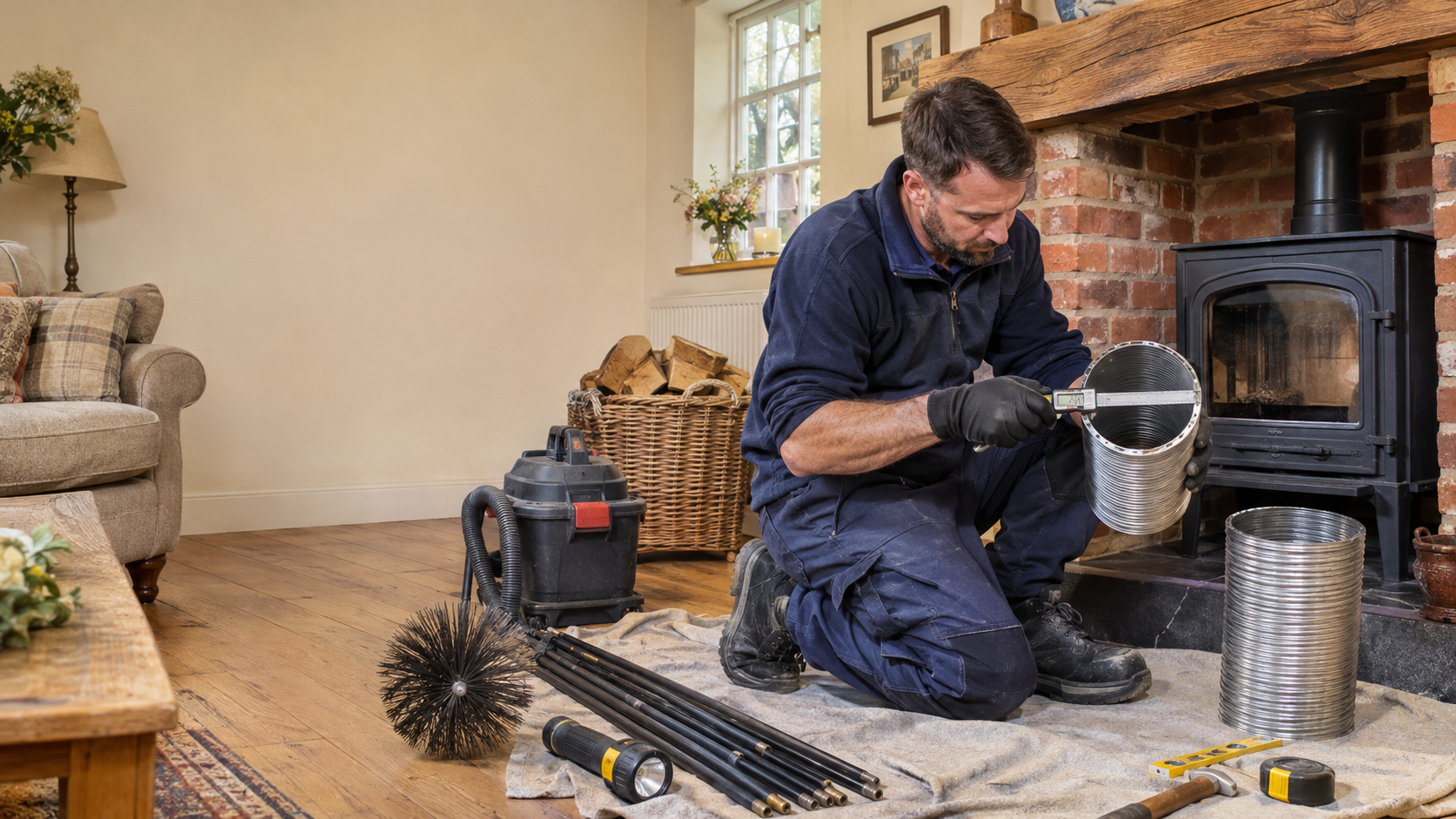
When installing a wood-burning stove, homeowners often focus on the appliance’s appearance, heat output and overall design. However, one of the most important parts of a successful installation is usually hidden from view: the chimney flue liner.
A flue liner provides a passage through which smoke and combustion gases travel from the stove to the outside of the property.
While the liner’s material and condition are important, its internal diameter also plays a major role in how the heating system operates.
Correct flue liner sizing helps maintain suitable chimney draught, supports efficient combustion and allows smoke to leave the appliance as intended.
An incorrectly sized liner, on the other hand, can contribute to poor stove performance, excessive deposits and potentially dangerous operating conditions.
In this guide, Midlands Sweeps explains why flue diameter matters, what the UK sizing requirements involve and why professional assessment is essential before installing or replacing a chimney liner.
What Is a Flue Liner and What Does It Do?
A flue liner is a component installed inside a chimney to provide a suitable passage for combustion gases.
Many existing British homes contain traditional masonry chimneys originally constructed for open fireplaces.
When a modern wood-burning stove is connected to an older chimney, the original flue may not be suitable for the appliance without additional work.
Depending on the condition and construction of the chimney, installing a suitable liner can help:
- Provide a defined route for smoke and combustion gases.
- Match the flue dimensions to the connected appliance.
- Reduce the risk of gases escaping through defective masonry.
- Support consistent chimney draught.
- Improve the suitability of the chimney for modern stove operation.
- Allow appropriate cleaning and maintenance.
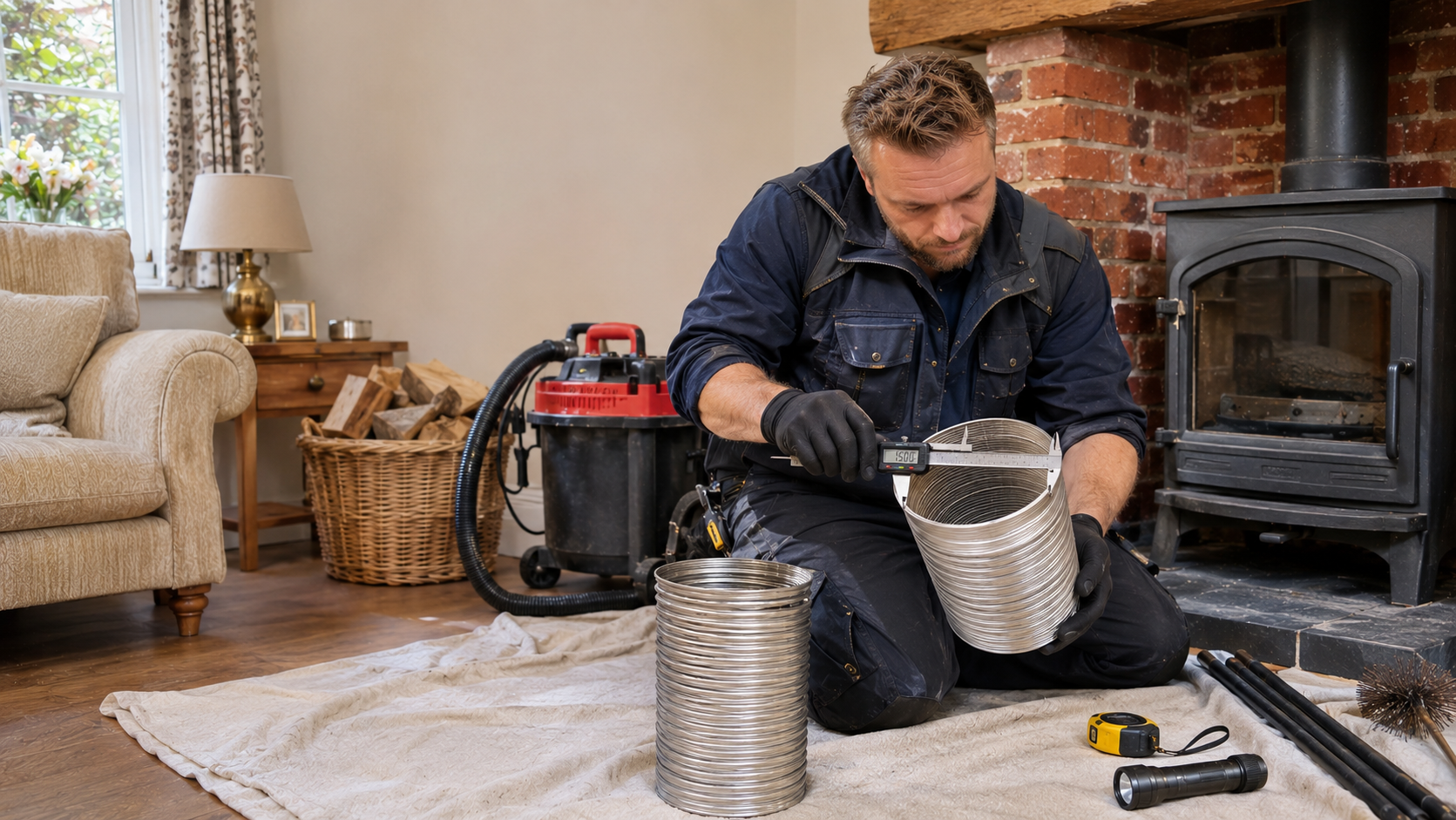
Flexible stainless-steel liners are commonly used when adapting existing masonry chimneys for wood-burning stoves.
However, not every chimney requires a new liner. Its suitability should be established through professional inspection and appropriate testing.
Why Does Flue Liner Diameter Matter?
Chimney draught is created partly by differences in temperature and pressure between the warm gases inside the flue and the surrounding outside air.
This draught helps carry combustion gases away from the stove and supports the supply of combustion air.
The diameter of the flue influences how gases move through the chimney.
If the passage is too narrow, resistance to gas flow may be excessive.
If the passage is unnecessarily large, the gases may cool more rapidly, which can weaken the draught under certain conditions.
Neither situation is desirable.
The correct flue diameter should be determined by the stove manufacturer’s requirements, the appliance’s fuel type and the overall chimney design.
A properly sized flue liner is not simply the smallest diameter that will fit inside the chimney. It must be suitable for the entire heating installation.
1. What Happens If a Flue Liner Is Too Small?
An undersized flue liner can restrict the movement of combustion gases.
The chimney must carry the volume of gases produced by the appliance without creating excessive flow resistance.
If the liner is too narrow, the stove may struggle to establish or maintain suitable draught.
Possible symptoms include:
- Difficulty lighting the stove.
- Smoke entering the room when the door is opened.
- Weak or inconsistent combustion.
- Poor stove performance.
- Problems maintaining the manufacturer’s recommended operating conditions.
A restricted flue can also increase the risk of combustion gases spilling into the property.
However, these symptoms can have several causes, including inadequate ventilation or chimney obstructions.
If smoke enters your home, stop using the appliance until the problem has been professionally investigated.
Never attempt to solve an undersized flue problem by altering the chimney connection yourself.
2. What Happens If a Flue Liner Is Too Large?
It might seem logical that a larger flue liner would improve performance by allowing more space for smoke to escape.
However, this is not always the case.
A flue that is unnecessarily large for a particular appliance may allow combustion gases to lose heat more quickly.
As the gases cool, the temperature difference that helps generate chimney draught can decrease.
Depending on the installation, this may contribute to sluggish draught, condensation and the formation of combustion deposits.
Potential symptoms include:
- Difficulty establishing good chimney draught.
- Smoke problems during lighting.
- Increased condensation inside the chimney.
- Tar-like deposits forming on cooler internal surfaces.
- Inconsistent stove performance.
The relationship between flue size and draught is complex. A larger flue is not automatically unsuitable, and its performance depends on height, insulation, temperature and appliance characteristics.
A competent installer should assess the whole system before recommending changes.
3. Understanding 125mm and 150mm Flue Liners in the UK
Two common internal diameters for domestic wood-burning stove flue liners are 125mm (5 inches) and 150mm (6 inches).
However, these sizes are not interchangeable.
Approved Document J provides guidance on minimum flue dimensions for solid-fuel appliances in England.
For certain qualifying closed appliances with a rated output of up to 20kW, including appropriately exempted wood-burning appliances, the guidance allows a minimum circular flue diameter of 125mm.
For other closed solid-fuel appliances of up to 30kW, the general guidance specifies a minimum circular flue diameter of 150mm.
Importantly, the flue must also meet the appliance manufacturer’s requirements and must not be smaller than the appliance outlet or the minimum size recommended by the manufacturer.
Flue Liner Size Comparison
| Flue liner diameter | Typical considerations |
|---|---|
| 125mm (5 inches) | May be suitable for qualifying appliances where regulations and manufacturer instructions permit |
| 150mm (6 inches) | Commonly used for domestic wood-burning stoves where a 150mm minimum applies |
| Larger diameters | May be necessary for higher-output appliances or particular chimney installations |
A smaller stove does not automatically qualify for a 125mm liner.
For example, a 5kW stove must not be connected to a 125mm liner merely because its output is relatively low.
The installation must satisfy the applicable regulations and the stove manufacturer’s requirements.
4. Does Stove Heat Output Determine Flue Liner Size?
Heat output is one factor that installers consider when selecting a flue liner.
A larger appliance may produce a greater volume of combustion gases than a smaller stove, potentially requiring a different flue arrangement.
However, stove output alone does not determine the correct chimney diameter.
Other important factors include:
- The manufacturer’s specified flue outlet diameter.
- Whether the appliance burns wood or other solid fuels.
- The stove’s approved operating characteristics.
- The height of the chimney.
- The number of bends or offsets.
- The flue’s construction and insulation.
- The chimney terminal and surrounding wind conditions.
For this reason, homeowners should avoid purchasing a liner solely from the stove’s advertised kilowatt rating.
Professional assessment is necessary to confirm the correct specification.
5. How Flue Liner Sizing Affects Combustion Efficiency
A wood-burning stove relies on suitable airflow to burn fuel effectively.
If the chimney produces inadequate draught, combustion may become incomplete.
This can result in increased smoke, soot deposits and poor appliance performance.
A correctly designed flue system helps maintain appropriate operating conditions, allowing the stove to function as intended.
However, even a perfectly sized flue cannot compensate for poor burning habits.
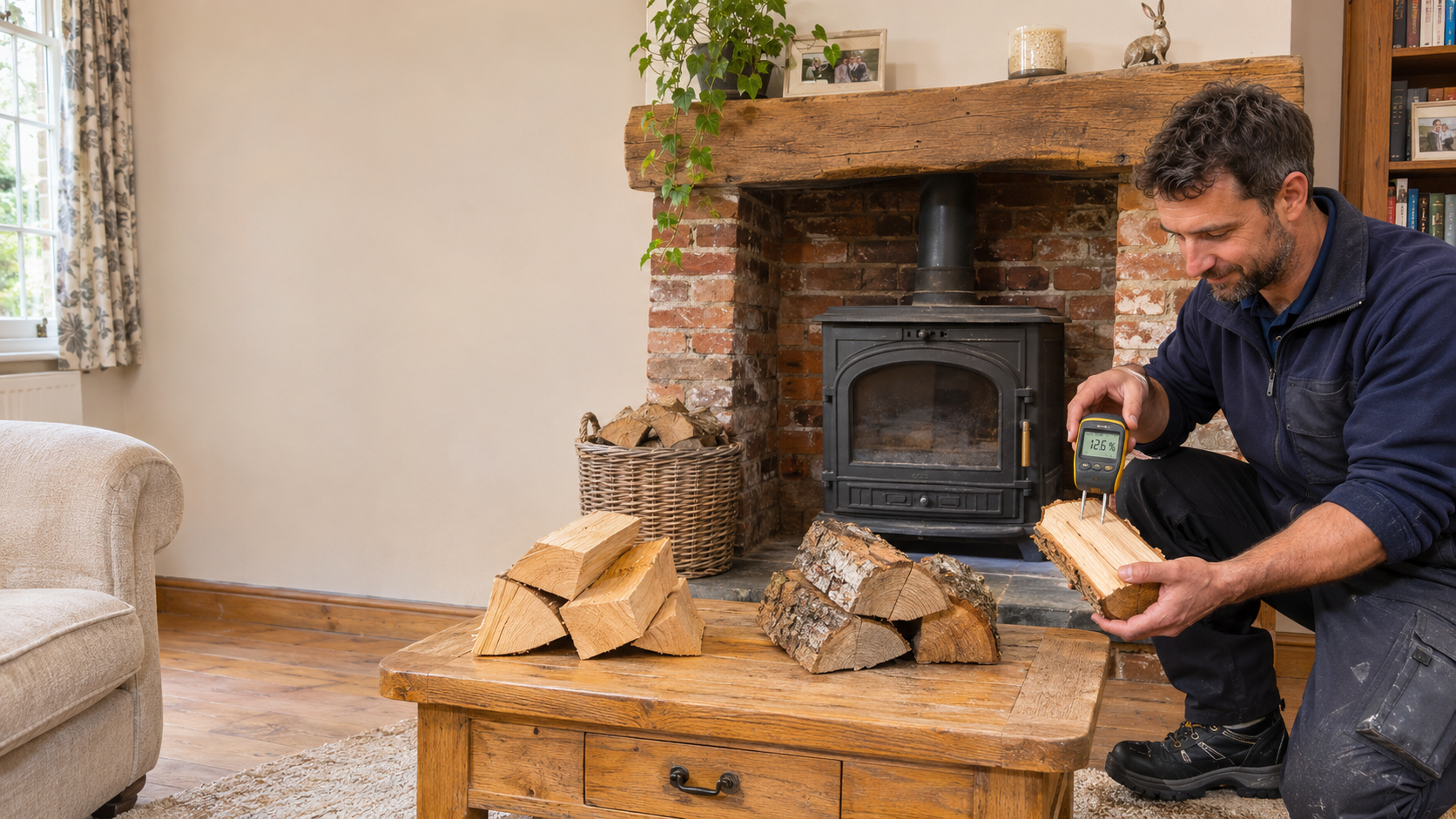
Wet firewood, excessively restricted air controls and unsuitable fuel can still produce significant combustion deposits.
For efficient operation, homeowners should use appropriately dried wood, follow the manufacturer’s instructions and arrange regular chimney maintenance.
6. Can Incorrect Flue Sizing Cause Creosote Build-Up?
Flue sizing can influence the conditions that contribute to creosote formation.
Creosote is a combustible deposit that develops when compounds carried in wood smoke condense on cooler chimney surfaces.
If a flue arrangement allows combustion gases to cool excessively, tar-like deposits may accumulate more readily.
Similarly, poor draught can affect combustion, potentially increasing the amount of smoke and unburned material entering the chimney.
However, creosote formation is influenced by several factors.
These include fuel moisture, appliance operation, chimney insulation and maintenance frequency.
Incorrect flue sizing is therefore one possible contributor rather than the only cause.
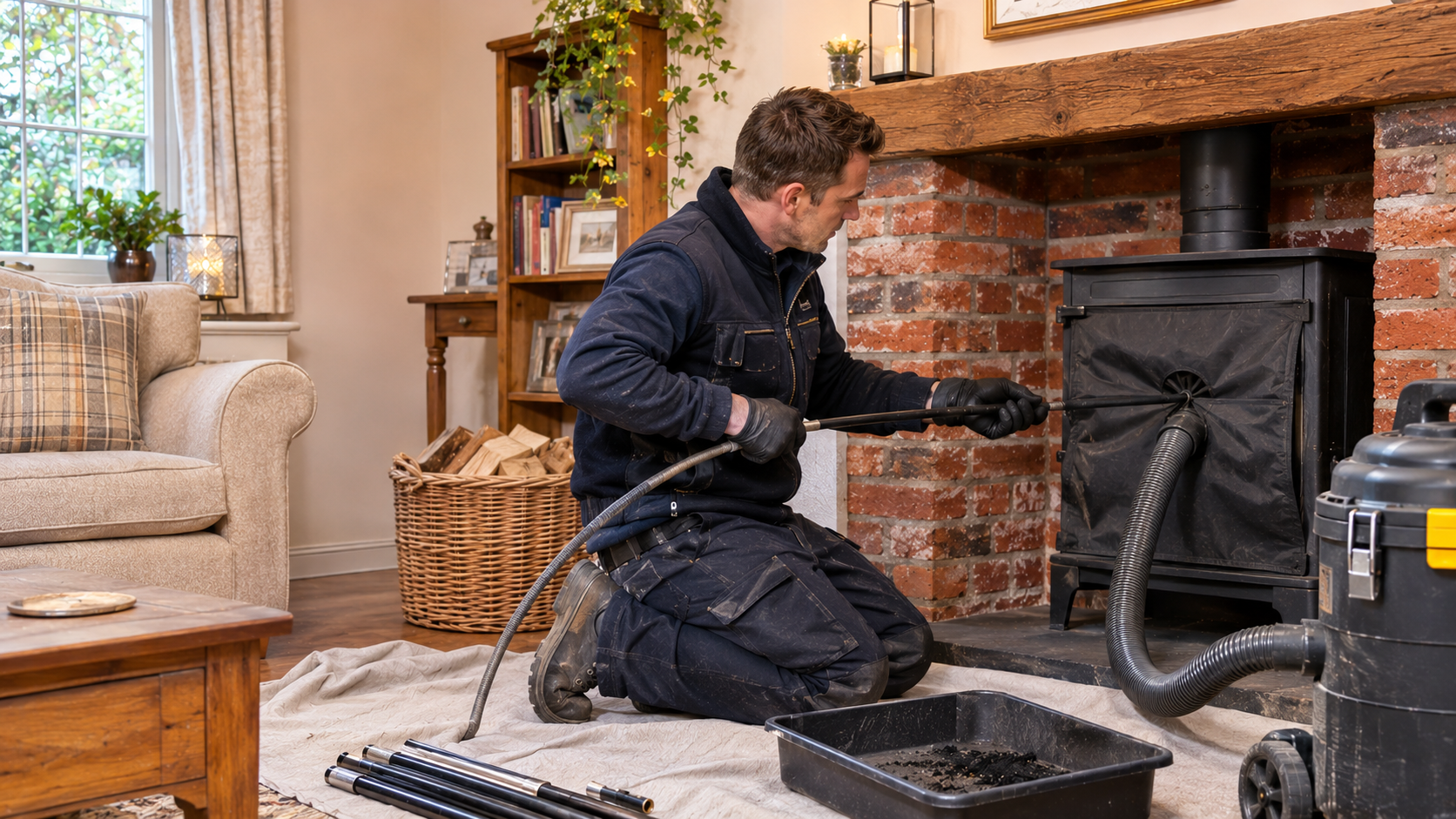
Regular professional chimney sweeping remains important, regardless of whether the liner is correctly sized.
7. Why Chimney Height and Design Matter Too
Correct liner diameter is only one part of chimney design.
A properly sized liner may still perform poorly if the chimney is too short, contains excessive bends or is affected by unsuitable terminal positioning.
Approved Document J explains that flue height must be sufficient to establish an appropriate draught for the installation.
Chimney height, building design, surrounding structures and local wind conditions can all influence performance.
The number and arrangement of bends also matter because they create additional resistance to gas flow.
This is why professional installers assess the complete flue route instead of looking only at the diameter.
In complicated installations, specialist chimney design calculations may be needed to confirm the system’s suitability.
8. Do Older Properties Need Different Flue Liner Considerations?
Older properties across Derbyshire, Staffordshire and Leicestershire often contain traditional masonry chimneys originally constructed for open fires.
Some of these chimneys have relatively large internal passages compared with the outlets of modern wood-burning stoves.
Others contain narrow sections, offsets, deteriorating mortar or previous alterations.
Before fitting a new stove, the condition and dimensions of the existing chimney should be assessed.
A suitable liner may help create a correctly sized flue passage within an older masonry chimney.
However, installation can be more complicated when the original flue contains tight bends or structural defects.
For older properties in areas such as Ashby-de-la-Zouch, Burton on Trent and Derby, a CCTV chimney inspection may help identify hidden problems before installation.
9. What Should Be Checked Before Installing a Flue Liner?
A professional flue liner installation involves more than selecting a stainless-steel pipe.
Before fitting a liner, a competent installer should consider several important factors.
These include:
- Stove specifications: Confirming the manufacturer’s flue diameter and installation requirements.
- Chimney condition: Assessing whether the existing structure is sound and suitable.
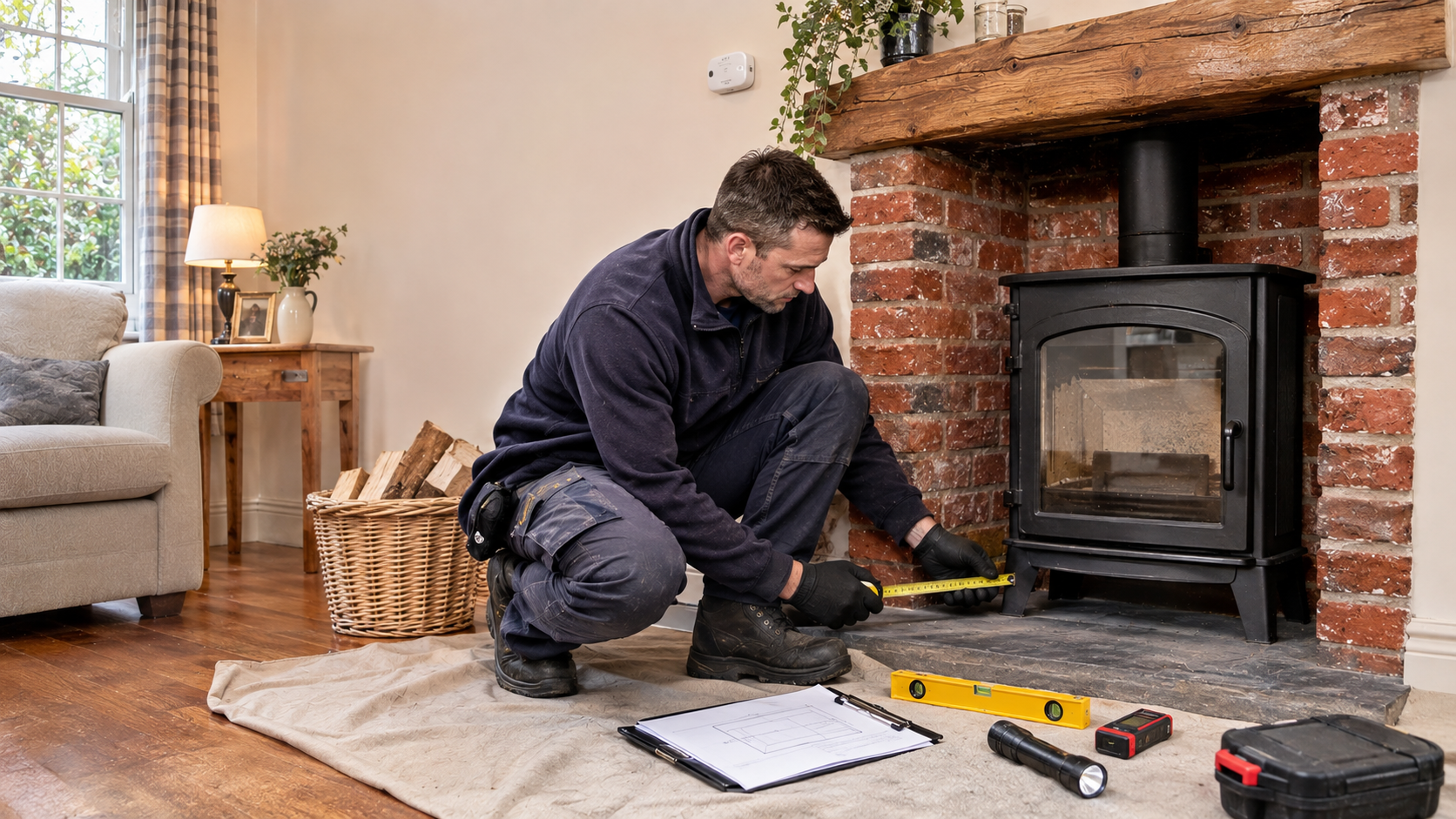
- Flue dimensions: Checking the available route, height and internal restrictions.
- Fuel compatibility: Selecting a liner suitable for the intended solid fuel and operating temperatures.
- Ventilation: Confirming that the appliance receives sufficient combustion air.
- Connections and terminals: Selecting appropriate components to connect the stove and terminate the flue.
- Maintenance access: Ensuring that the flue can be swept and inspected correctly.
- Commissioning: Carrying out the appropriate checks and tests after installation.
Work involving a new heating appliance or chimney modifications must comply with the applicable building regulations.
Where relevant, the installation must be carried out through a competent-person certification scheme or approved through the appropriate building control process.
10. Can You Change Flue Liner Size Without Replacing the Stove?
In some cases, an existing flue liner may need to be replaced because it is damaged, unsuitable or incorrectly specified.
However, changing its diameter is not something homeowners should attempt without professional guidance.
A smaller liner may create excessive flow resistance, while a larger liner may not resolve the underlying problem.
An installer must consider the manufacturer’s requirements and the whole chimney system.
If you experience recurring smoke problems, poor draught or unusually heavy deposits, a professional assessment can help establish whether liner sizing is involved.
Not every performance problem requires a replacement liner.
Sometimes the cause may be an obstruction, incorrect appliance operation, inadequate ventilation or a damaged component.
Frequently Asked Questions About Flue Liner Sizing
What size flue liner do I need for a 5kW wood burner?
There is no universal diameter based on the 5kW rating alone. Depending on the appliance’s approval status, outlet dimensions, manufacturer instructions and relevant regulations, a 125mm or 150mm liner may be appropriate. A competent installer must confirm the correct size.
Can I use a 125mm flue liner for any DEFRA-approved stove?
Not automatically. The appliance must qualify under the relevant regulatory provisions, and the manufacturer’s installation requirements must permit that diameter. The stove outlet size and chimney arrangement must also be considered.
Is a 150mm flue liner better than a 125mm liner?
Neither diameter is universally better. The correct choice is the one that meets the appliance’s requirements and provides suitable performance for the chimney system.
Can an oversized chimney affect wood burner performance?
Yes. An excessively large flue may contribute to cooler exhaust gases, condensation and reduced draught under certain conditions. However, the complete installation needs to be assessed before recommending alterations.
Do all wood-burning stoves need a new flue liner?
No. An existing chimney may be suitable without additional lining if its condition and performance meet the relevant requirements. A professional inspection is necessary to determine whether relining is needed.
Does a stainless-steel liner need chimney sweeping?
Yes. Stainless-steel flue liners can accumulate soot and creosote and require regular sweeping using suitable equipment.
Can incorrect flue liner sizing cause smoke to enter the room?
Yes. An unsuitable flue diameter can contribute to poor draught or excessive flow resistance. However, smoke spillage may have other causes and should always be professionally investigated before the appliance is used again.
Professional Flue Liner Installation With Midlands Sweeps
Choosing the correct flue liner size is an important part of getting the best performance from a wood-burning stove.
An appropriately designed flue helps support reliable chimney draught, suitable combustion conditions and the safe discharge of smoke and gases.
Incorrect sizing can contribute to poor stove performance, excessive deposits and other chimney problems.
At Midlands Sweeps, we provide professional flue liner installation, log burner installation, chimney sweeping and related inspection services for homeowners throughout Swadlincote, Burton on Trent, Derby, Ashby-de-la-Zouch, Coalville and surrounding areas.
Whether you’re installing a new wood burner, replacing an existing liner or investigating problems with chimney draught, our team can help assess your installation requirements.
Planning a flue liner installation or concerned about your existing chimney?
Contact Midlands Sweeps to discuss the appropriate service for your property.
Phone: +44 782 483 0604
Email: midlandsweeps@gmail.com
Website: https://midlandsweeps.com/
Our Services: https://midlandsweeps.com/services/
Book an Appointment: https://midlandsweeps.com/contact-us/
Midlands Sweeps — professional chimney and flue liner services for safer, better-performing stove installations.