Your chimney and roof are constantly exposed to the British weather. Heavy rainfall, strong winds, freezing temperatures and seasonal changes can gradually affect brickwork, mortar joints, chimney pots and roof coverings.
While some problems are visible from the ground, others develop in places that homeowners cannot easily inspect.
A damaged chimney pot, cracked flaunching or loose roof tile may go unnoticed until water begins entering the property or more serious deterioration occurs.
This is where a professional drone chimney inspection can be particularly useful.
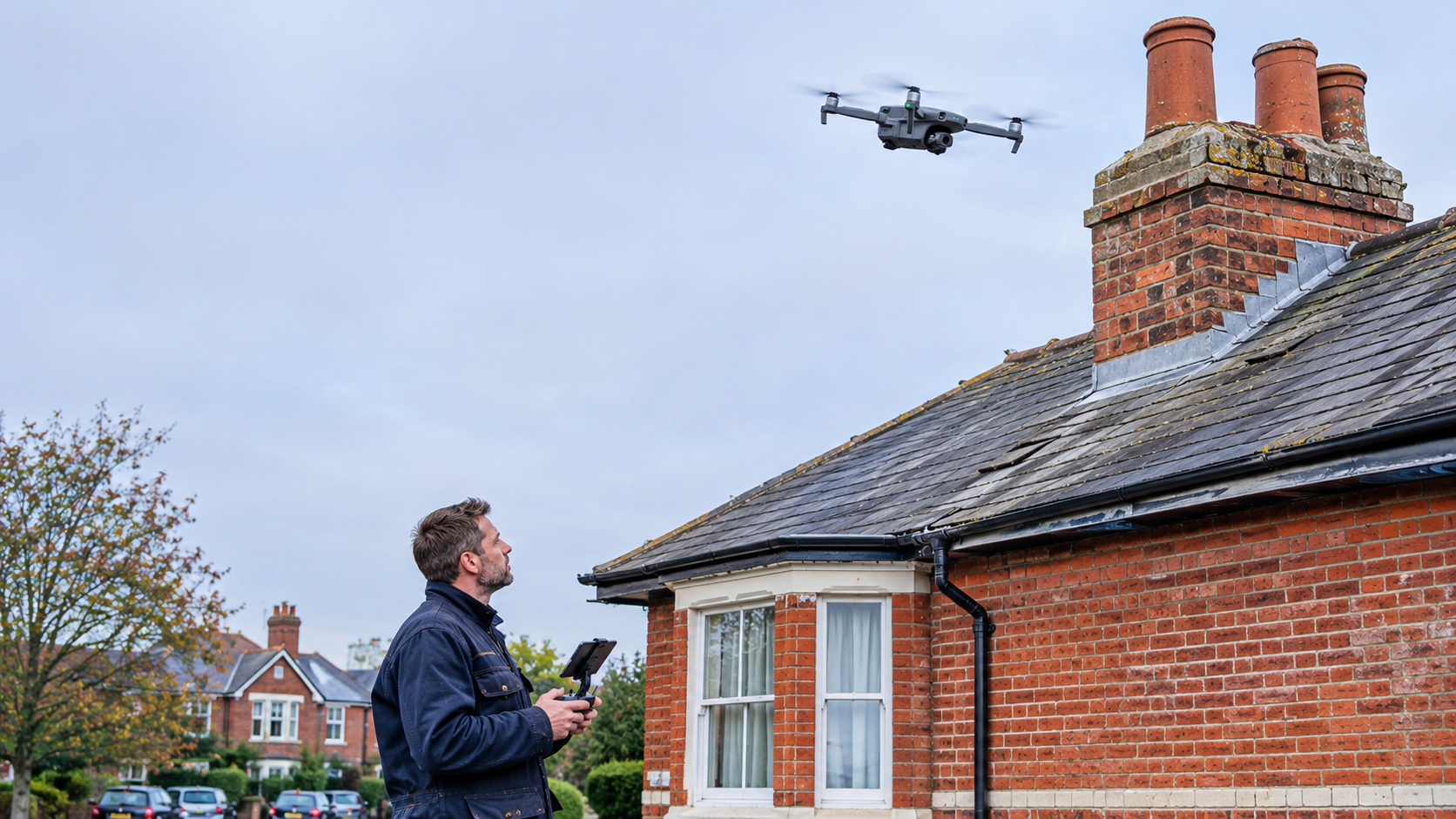
Modern drones equipped with high-resolution cameras allow specialists to examine difficult-to-reach parts of a chimney stack and roof without requiring ladders or scaffolding for the initial visual assessment in many circumstances.
In this guide, Midlands Sweeps explains how drone inspections work, what types of chimney and roof damage they can identify, and when homeowners should consider arranging one.
What Is a Drone Chimney Inspection?
A drone chimney inspection involves using a camera-equipped drone to capture detailed images and video footage of a chimney stack and surrounding roof.
Unlike a traditional inspection carried out from ground level, a drone can provide elevated views of areas that would otherwise be difficult to see.
Professional 4K drone chimney inspections can help examine:
- Chimney stacks and external masonry.
- Chimney pots and cowls.
- Flaunching around chimney pots.
- Roof flashing around the chimney base.
- Roof tiles and ridge lines.
- Gutters and visible roof drainage areas.
- Signs of weather-related damage.
The camera footage allows the technician to review the visible condition of these components and identify areas that may require closer examination.
However, a drone survey is a visual assessment. It cannot confirm the condition of hidden materials or replace every type of structural investigation.
1. Identifying Cracks and Deteriorating Chimney Brickwork
One of the main benefits of a drone chimney stack inspection is the ability to examine masonry that is difficult to see from below.
Traditional British chimney stacks are often built using brickwork and mortar.
Over time, rainwater, frost and general weather exposure can contribute to deterioration.
A drone may reveal visible problems such as:
- Cracked or damaged bricks.
- Missing or deteriorating mortar joints.
- Bulging or uneven masonry.
- Vegetation growing from the chimney.
- Loose-looking or displaced components.
- Visible weathering around exposed sections.
These warning signs can indicate that further investigation or repair is required.
For older properties across Derbyshire, Staffordshire and Leicestershire, maintaining traditional chimney brickwork can be particularly important.
A drone inspection can help identify visible areas of deterioration before homeowners arrange a closer physical assessment.
2. Checking Chimney Flaunching for Damage
Flaunching is the mortar bed around the base of chimney pots.
It helps secure the pots and is shaped to direct rainwater away from the top of the chimney stack.
Because flaunching is located at roof level, homeowners rarely get a clear view of its condition.
Over time, it can deteriorate due to weather exposure and repeated freezing and thawing.
Possible defects include cracking, crumbling mortar, gaps around chimney pots and sections that appear loose or displaced.
A drone can provide an elevated view of the flaunching, allowing visible deterioration to be documented.
Damaged flaunching can contribute to water entering the chimney structure and may be associated with chimney pot instability.
If significant damage is identified, suitable access and further physical assessment may be necessary before repairs can be planned.
3. Inspecting Chimney Pots and Cowls
Chimney pots and cowls play important roles in the operation and protection of a chimney system.
Chimney pots form part of the terminal arrangement, while suitable cowls may help address particular weather or bird-entry concerns depending on their design.
However, these components can become damaged or displaced.
Strong winds, ageing fixings and deteriorating masonry may affect their condition.
During a drone inspection, a technician can look for visible signs of:
- Cracked or broken chimney pots.
- Pots that appear out of position.
- Damaged or displaced chimney cowls.
- Missing or loose-looking terminal components.
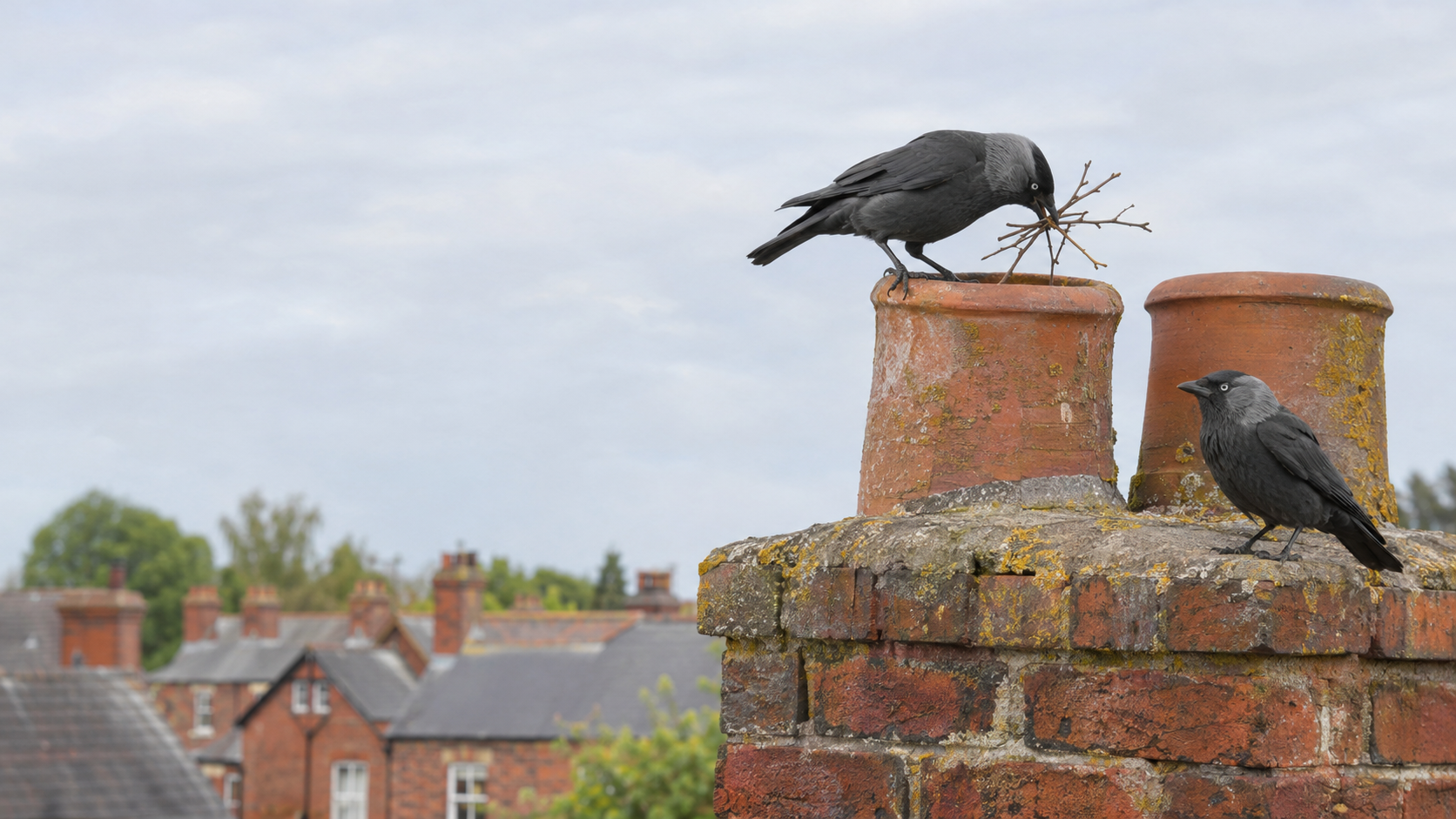
- Openings that may allow rain or birds to enter.
- Vegetation or visible debris around the terminal.
A damaged pot or cowl should not be ignored, particularly when pieces could become loose.
The correct repair or replacement will depend on the chimney system and the appliance connected to it.
4. Spotting Damaged Roof Tiles and Ridge Lines
Drone inspections are useful for more than chimney maintenance.
While examining the chimney stack, the technician may also be able to assess visible sections of the surrounding roof.
Roof tiles are exposed to wind, rain and temperature changes throughout the year.
Over time, individual tiles can crack, slip or become displaced.
A drone roof inspection may help identify:
- Slipped or missing roof tiles.
- Cracked or broken tiles.
- Displaced ridge tiles.
- Gaps in visible roof coverings.
- Storm-related damage.
- Areas with excessive moss or debris.
These problems may not be obvious when looking up from a garden or driveway.
High-resolution images provide a clearer view of the roof surface and can help homeowners decide whether further investigation by a roofing specialist is needed.
5. Identifying Possible Chimney Flashing Problems
Flashing is an important part of weatherproofing the junction between a chimney and the surrounding roof.
Lead or other suitable flashing materials are installed to help prevent rainwater entering where the chimney stack meets the roof covering.
If flashing becomes loose, displaced or deteriorated, water may find its way into the building.
Possible warning signs inside the property include damp patches around the chimney breast, stained ceilings or moisture appearing after heavy rainfall.
A drone inspection can help identify visible problems such as:
- Flashing that appears lifted or displaced.
- Gaps around the chimney base.
- Damaged visible flashing sections.
- Loose material at roof junctions.
- Deteriorated surrounding masonry.
However, drone images cannot always establish the precise source of a leak.
Water may travel beneath roofing materials before becoming visible indoors.
Where the cause remains uncertain, a closer roof inspection or specialist investigation may be necessary.
6. Detecting Visible Roof and Guttering Problems
Guttering helps carry rainwater away from the roof and building.
When gutters become blocked or damaged, overflowing water may contribute to dampness and deterioration around external walls.
A drone can sometimes provide useful elevated views of guttering and surrounding roof features.
Visible problems may include accumulated leaves, vegetation, damaged gutter sections or obvious displacement.
The camera may also reveal moss buildup and areas where debris has collected on the roof.
Although a drone cannot always confirm whether a gutter is functioning correctly, it can highlight areas worth examining more closely.
This makes aerial inspection useful when homeowners have concerns about the general condition of difficult-to-access roofline components.
7. Assessing Chimney Damage After Severe Weather
Storms and periods of strong wind can affect chimney stacks and roofs.
After severe weather, homeowners may discover fallen tiles, damaged chimney components or unexpected moisture inside the property.
However, some damage remains difficult to identify from ground level.
A professional drone roof damage inspection can help document visible changes without requiring immediate roof access.
This may be especially useful after:
- Strong winds or storms.
- Prolonged heavy rainfall.
- Freeze-thaw weather conditions.
- Falling chimney or roof debris.
- Newly discovered damp patches.
- Reports of unusual chimney pot movement.
If masonry appears unstable, roof tiles are falling or there is an immediate risk to people, keep clear of the affected area and arrange urgent professional assistance.
A routine drone survey should not delay necessary emergency safety measures.
Drone Inspection vs CCTV Chimney Inspection: What’s the Difference?
Although both services use camera technology, they examine different areas of the chimney system.
| Inspection type | Main purpose | Can help identify |
|---|---|---|
| Drone chimney inspection | Examines the exterior chimney stack and visible roof areas | Cracked masonry, flaunching damage, displaced pots, damaged tiles and visible flashing defects |
| CCTV chimney inspection | Examines accessible internal sections of the chimney or flue | Blockages, nesting materials, damaged liners, internal masonry deterioration and deposits |
A drone is useful for understanding the condition of the chimney’s external structure.
CCTV equipment is designed to investigate areas inside the flue that cannot be seen from the roof or fireplace opening.
In some situations, using both inspection methods provides a more complete picture of the chimney system.
Midlands Sweeps offers CCTV chimney inspections for homeowners who need a closer assessment of internal flue conditions.
What Are the Benefits of a Professional Drone Chimney Inspection?
Reduced Need for Initial Roof Access
Inspecting a chimney stack often involves working at height.
A drone can capture useful images without requiring someone to climb onto the roof for the initial visual survey.
This can reduce exposure to certain working-at-height risks.
However, scaffolding or other suitable access equipment may still be necessary for close inspection and repairs.
Clearer Views of Difficult Areas
Roof-level chimney components can be difficult to examine from the ground.
Drone photography provides elevated perspectives of the flaunching, chimney pots, masonry and roof coverings.
Useful Photographic Evidence
High-resolution images can help homeowners understand visible defects and discuss them with repair specialists.
They also provide a useful record of the chimney’s condition at the time of inspection.
Better Planning for Further Work
Identifying the location of visible damage can help determine what type of specialist assessment or repair may be required.
This may reduce unnecessary exploratory work, although some problems still require physical access to diagnose.
Are Drone Chimney Inspections Safe and Legal in the UK?
Professional drone inspections must comply with applicable UK Civil Aviation Authority requirements.
The rules depend on factors such as the aircraft’s weight and classification, the operating category, surrounding people and the flight location.
Relevant requirements can include operator and flyer registration, suitable separation from uninvolved people, airspace restrictions and maintaining direct visual sight of the aircraft.
There is also a general maximum operating height of 120 metres for flights in the Open Category.
A professional operator must assess whether a flight can be conducted safely and legally at the particular property.
Weather conditions, neighbouring buildings, overhead cables and privacy are also important considerations.
Not every property is suitable for a drone inspection, and alternative methods may sometimes be necessary.
When Should Homeowners Arrange a Drone Inspection?
You do not necessarily need a drone survey every time your chimney is swept.
However, there are situations where an external aerial inspection can be especially useful.
Consider arranging one if:
- You notice unexplained damp patches around the chimney breast.
- A chimney pot or cowl appears damaged.
- Roof tiles have fallen after strong winds.
- Your chimney stack has visible cracks or deteriorating mortar.
- You are buying an older property and have concerns about the chimney.
- You plan significant chimney repairs or modifications.
- Parts of your roof are difficult to examine from ground level.
- You need to investigate suspected external chimney deterioration.
If the chimney is connected to an active fireplace or wood-burning stove and you suspect structural damage or an unsafe flue, stop using the appliance until it has been appropriately assessed.
How Midlands Sweeps Uses Drone Inspections
At Midlands Sweeps, we provide professional 4K drone chimney and roof inspections for homeowners concerned about external chimney deterioration and roofline damage.
Our service focuses on examining visible areas such as chimney stacks, chimney pots, cowls, flaunching, roof tiles and guttering.
Drone footage can help identify potential concerns that are difficult to assess from ground level.
Where the available images suggest hidden damage or a more serious defect, further inspection or specialist repair work may be recommended.
We also provide professional chimney sweeping, CCTV flue inspections, flue liner services and log burner installations.
This allows homeowners to discuss both external chimney concerns and related internal chimney maintenance requirements.
Frequently Asked Questions About Drone Chimney Inspections
Can a drone detect cracks in a chimney stack?
Yes. High-resolution drone footage can reveal visible cracks in bricks, mortar and external chimney surfaces. However, fine cracks, concealed defects and structural stability may require closer professional assessment.
Can drone inspections identify roof leaks?
A drone can identify visible defects that may contribute to water entry, such as displaced flashing or damaged roof tiles. It cannot always determine the precise source of a leak, particularly when damage is concealed.
Can a drone inspect the inside of a chimney?
An ordinary roof inspection drone is intended to examine external features. Internal chimney inspections generally require suitable CCTV equipment or other specialist inspection methods.
Do drone inspections eliminate the need for scaffolding?
They can reduce the need for access equipment during an initial visual survey. However, scaffolding, ladders or other safe access arrangements may still be required for closer investigation and repairs.
Are drone chimney inspections useful for older properties?
Yes. Traditional properties may contain ageing brickwork, worn mortar, historic chimney pots and difficult-to-access roof features. Drone imagery can help document visible conditions before more detailed work is planned.
Can a drone inspection check chimney flaunching?
Yes. An elevated camera can provide useful views of the mortar surrounding chimney pots, helping identify visible cracks, gaps and deterioration.
Should I arrange a chimney inspection after a storm?
If strong winds or severe weather have caused visible damage, falling debris or new damp problems, an appropriate inspection is advisable. A drone survey may be useful when it can be conducted safely.
Book a Professional Drone Chimney Inspection With Midlands Sweeps
Chimney stacks and roofs can develop damage long before the signs become obvious inside your home.
Cracked mortar, damaged flaunching, displaced chimney pots and deteriorating flashing are just some of the issues that may be difficult to see from ground level.
A professional drone chimney inspection provides a practical way to examine visible roof-level components and identify potential maintenance concerns.
At Midlands Sweeps, we offer 4K drone chimney and roof inspections, chimney sweeping, CCTV flue inspections and related services across Swadlincote, Burton on Trent, Derby, Ashby-de-la-Zouch, Coalville and surrounding areas.
As a veteran-owned, fully insured business and registered member of the National Association of Chimney Sweeps, we focus on professional chimney care and careful inspection work.
Whether you’re concerned about storm damage, deteriorating chimney brickwork or a potential problem around your roofline, contact our team to discuss the most appropriate inspection service.
Book your professional drone chimney inspection with Midlands Sweeps today.
Phone: +44 782 483 0604
Email: midlandsweeps@gmail.com
Website: https://midlandsweeps.com/
Drone & Roof Inspection: https://midlandsweeps.com/services/drone-inspection-roof-inspection-2/
Book an Appointment: https://midlandsweeps.com/contact-us/
Midlands Sweeps — professional chimney inspections and maintenance across the Midlands.