One of the most common concerns homeowners have before booking a chimney sweep is the possibility of soot and dust spreading throughout their living room.
After all, chimneys can contain considerable amounts of black soot, ash and combustion deposits. It is understandable to worry about carpets, furniture, curtains and freshly decorated walls.
Fortunately, modern professional chimney sweeping is designed to be a clean, controlled process.
With appropriate protective sheets, specialist vacuum equipment and careful sweeping techniques, most routine chimney cleaning appointments can be completed with very little mess.
However, there are some circumstances where additional precautions may be necessary.
In this guide, Midlands Sweeps explains how professional chimney sweeps protect your home, what equipment they use and how you can prepare for a cleaner, more convenient appointment.
Does Chimney Sweeping Make a Mess?
A professionally carried out chimney sweep should normally create very little mess inside your home.
Modern chimney sweeping methods are different from the traditional image of a soot-covered sweep sending clouds of dust into the living room.
Professional technicians use specialised equipment to contain and collect soot as it is removed from the chimney.
The National Association of Chimney Sweeps (NACS) states that its members are trained to minimise dust escaping during sweeping and carry protective sheets for household surfaces.
However, complete dust containment cannot be guaranteed in every situation.
For example, a heavily blocked chimney, large accumulation of nesting material or unexpected structural problem may make cleaning more complicated.
The aim is to remove soot and debris thoroughly while keeping disruption to the surrounding room as low as reasonably possible.
1. Professional Chimney Sweeps Use Protective Dust Sheets
Before sweeping begins, a professional technician should take steps to protect the immediate working area.
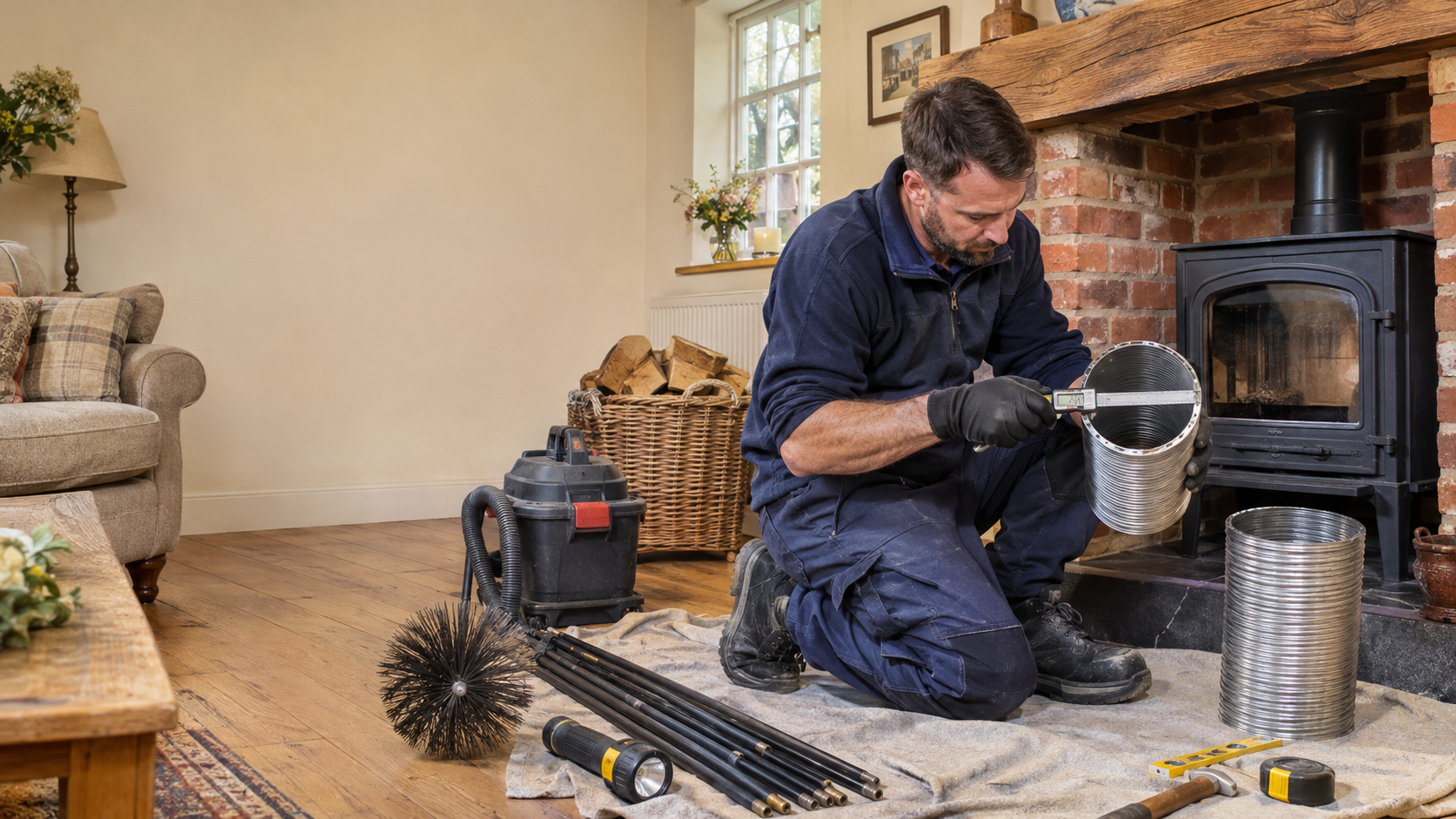
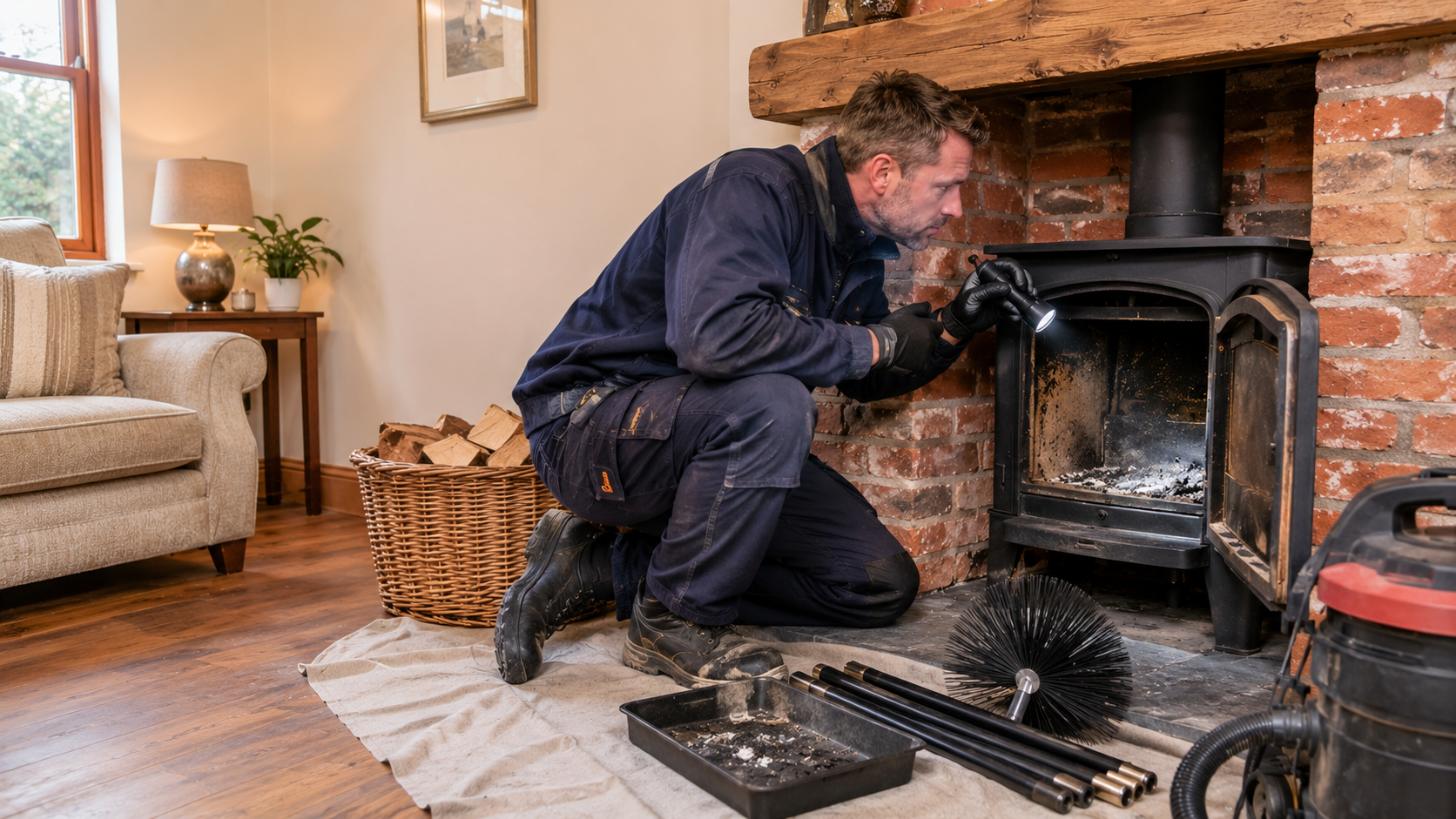
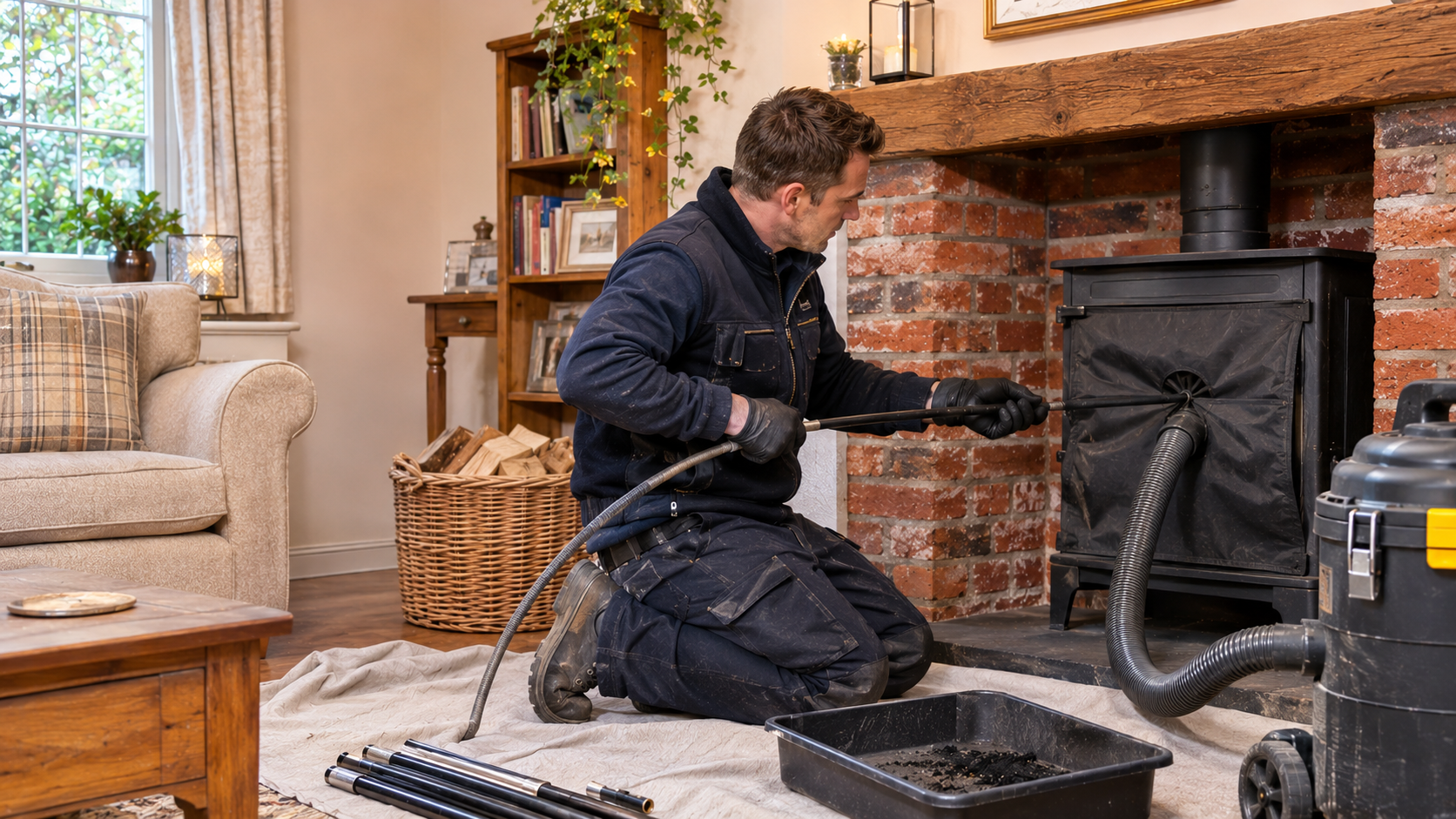
This commonly involves placing protective dust sheets around the fireplace or wood-burning stove.
The sheets help protect carpets, wooden flooring, rugs and other surfaces from accidental soot contact.
Depending on the fireplace and available space, nearby furniture may also be covered.
A well-organised working area gives the technician room to position the sweeping rods, vacuum equipment and other necessary tools.
Homeowners generally do not need to cover the entire living room themselves.
However, removing delicate ornaments and small items near the fireplace can make the process easier.
2. The Fireplace Opening Is Carefully Sealed
One of the most effective ways to reduce mess during chimney sweeping is to prevent loosened soot from escaping into the room.
Professional sweeps often use temporary sealing materials around the fireplace opening or appliance access point.
Depending on the installation, these may include specialist sweeping sheets, foam blocks or suitable protective covers.
The sealing arrangement usually allows the sweeping rods and vacuum hose to pass through while limiting the escape of dust.
As the brush moves through the chimney, loosened deposits fall towards the bottom of the flue.
The seal helps contain these materials until they can be collected.
The method depends on whether the chimney serves an open fireplace, wood-burning stove or another heating appliance.
3. Specialist Chimney Sweep Vacuums Collect Fine Soot
One of the biggest differences between professional chimney sweeping and ordinary household cleaning is the type of vacuum equipment used.
Chimney soot can contain extremely fine particles that should not be handled using an unsuitable domestic vacuum cleaner.
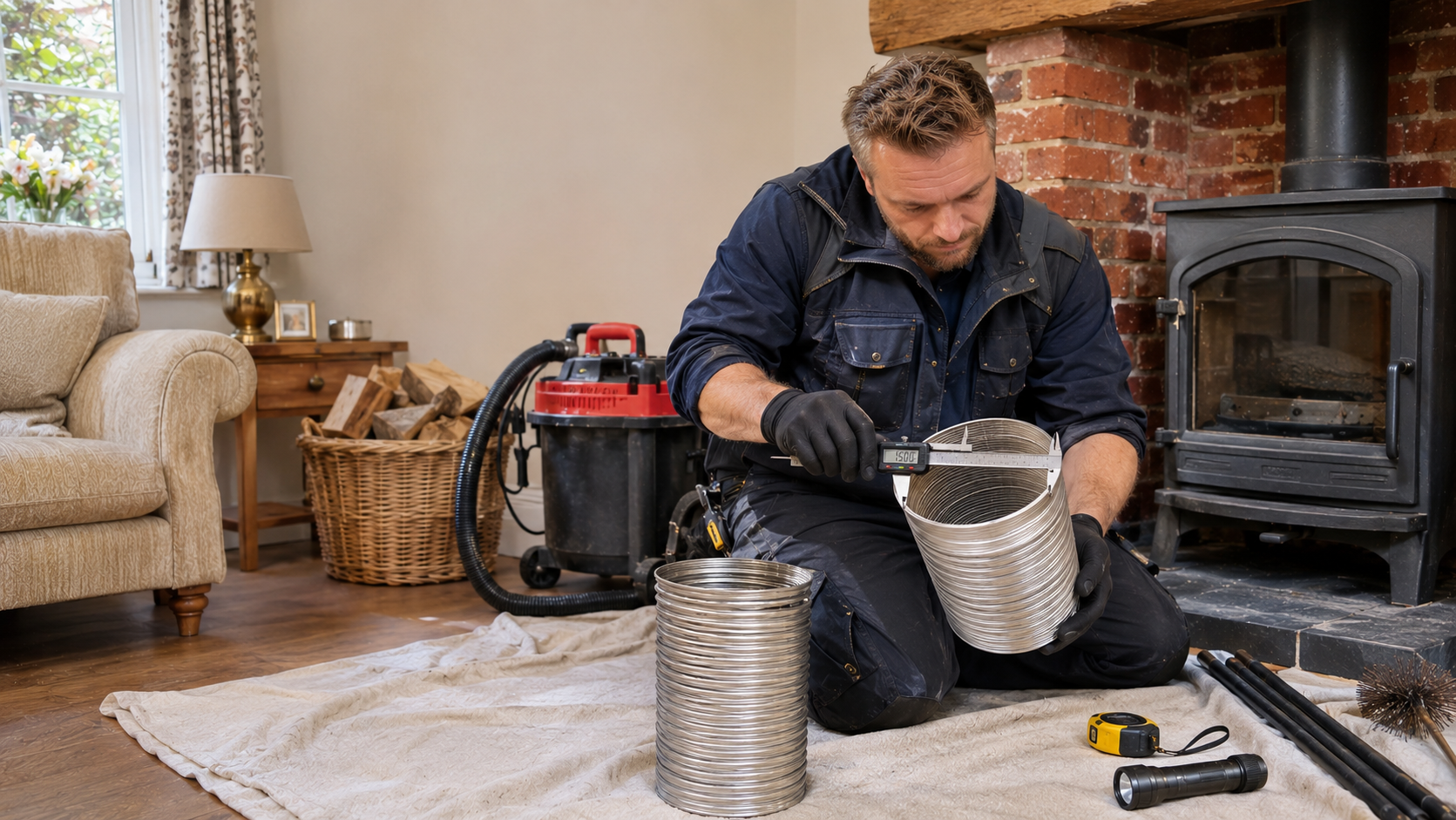
Professional chimney sweeps use specialist soot-extraction equipment designed for collecting combustion deposits.
Appropriate high-hazard dust extraction equipment, such as H-Class vacuums fitted with HEPA filtration, can help capture fine particles while reducing their release back into the room.
These systems are particularly important because soot may contain substances that are harmful when inhaled.
During sweeping, the vacuum can be used to collect deposits as they are dislodged.
However, vacuuming alone is not a substitute for mechanically sweeping the chimney.
Professional cleaning still requires suitable brushes, rods or other approved sweeping equipment to remove deposits from the flue surfaces.
4. Modern Sweeping Equipment Helps Keep the Process Controlled
Chimney sweeps use different cleaning methods depending on the chimney’s construction and condition.
Traditional sweeping commonly involves passing a suitable brush through the chimney using flexible rods.
Rotary sweeping equipment may also be appropriate for certain flue systems.
Both methods are intended to dislodge soot and deposits from internal surfaces.
The important factor is selecting tools that suit the chimney.
For example, some stainless-steel flue liners require particular brush materials to avoid unnecessary damage.
A professional technician should assess the installation and select suitable equipment before beginning.
When effective dust containment and extraction are used alongside the sweeping tools, most loosened deposits can be collected without spreading around the surrounding living space.
5. What Happens to the Soot After the Chimney Is Swept?
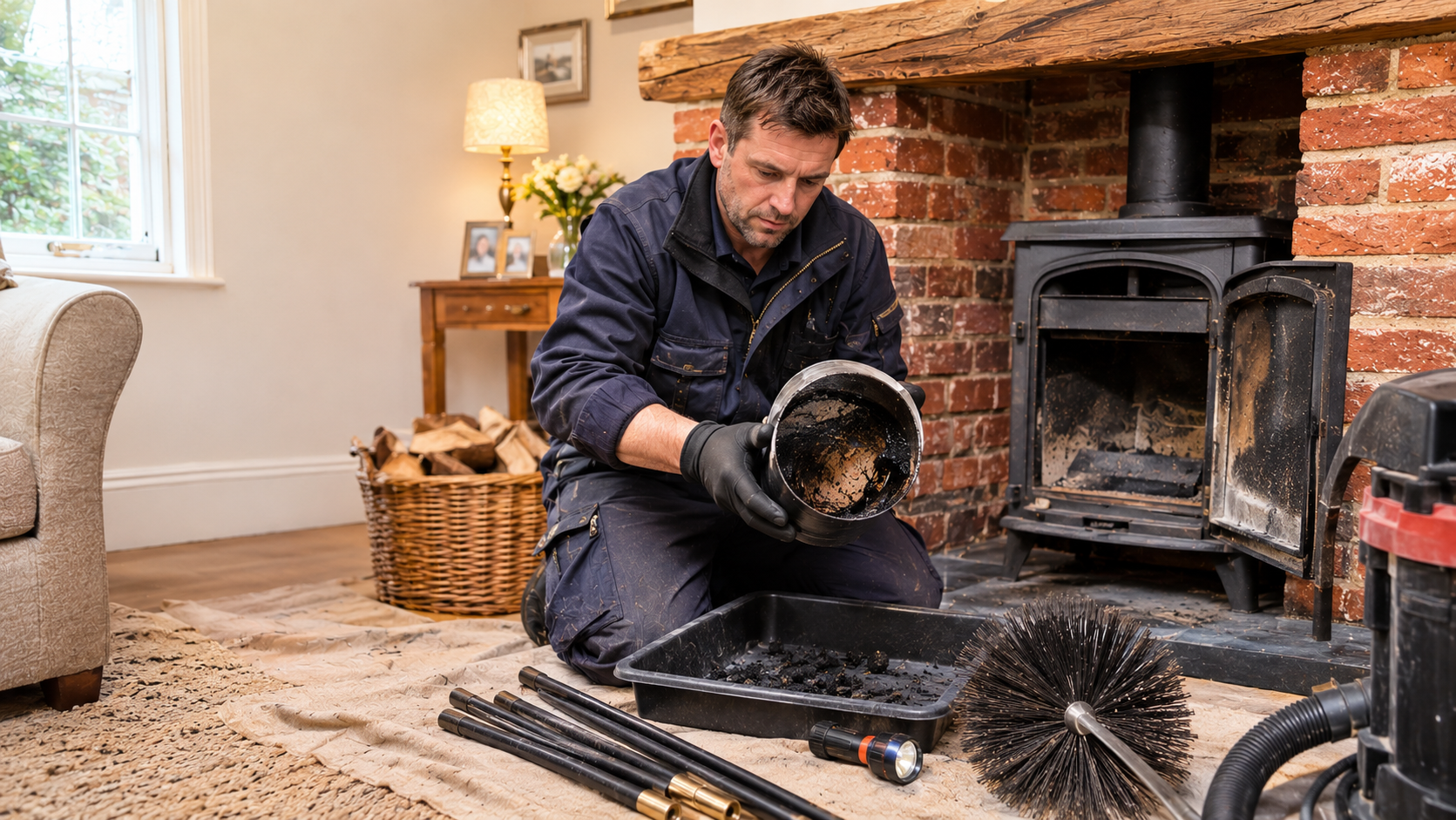
Once the sweeping process is complete, the technician collects the soot and debris removed from the flue.
This may include dry soot, small combustion deposits, ash and other loose material.
Specialist vacuum equipment allows the waste to be captured and contained for appropriate disposal.
The technician should then carefully remove the temporary fireplace sealing and protective sheets.
Any remaining deposits around the immediate working area should be cleaned up.
A professional service should aim to leave your fireplace and surrounding floor in a tidy condition.
It is worth asking your chimney sweeping company whether collection and disposal of the removed soot are included in the quoted service.
When Might Chimney Sweeping Create More Mess Than Usual?
Although routine chimney sweeping is normally a clean process, some situations can make dust containment more difficult.
A Heavily Blocked Chimney
A chimney containing large amounts of soot, fallen debris or other obstructions may require more extensive cleaning.
Removing substantial deposits can create additional material that needs to be carefully contained.
Old Bird Nesting Materials
Bird nests can contain twigs, feathers, leaves and other debris.
Removing a large, inactive nest may require specialist equipment and additional precautions.
Active bird nests are legally protected, and removal must only take place where lawful.
Deteriorating Chimney Masonry
Older chimneys sometimes contain loose mortar or damaged internal brickwork.
If masonry debris becomes dislodged during an inspection or sweeping appointment, the technician may need to stop and recommend further assessment.
Heavy Tar or Creosote Deposits
Sticky or hardened creosote can be more difficult to remove than ordinary loose soot.
Such deposits may require specialist cleaning methods beyond a standard sweep.
A reliable chimney sweep should explain unexpected problems and any additional work required rather than continuing with an unsuitable cleaning method.
Does Sweeping a Log Burner Make Less Mess Than an Open Fireplace?
The amount of mess depends more on the condition of the chimney and the methods used than on the type of appliance alone.
A wood-burning stove typically has an enclosed firebox, which can provide a convenient location for suitable sealing arrangements.
An open fireplace has a larger opening that needs to be protected during sweeping.
However, professional technicians have methods for containing deposits in both situations.
| Feature | Wood-burning stove | Open fireplace |
|---|---|---|
| Access | Through stove or designated access point | Through fireplace opening |
| Dust containment | Suitable stove opening seals | Fireplace sealing sheets or foam |
| Equipment | Compatible rods and brushes | Appropriate chimney sweeping equipment |
| Soot collection | Specialist vacuum extraction | Specialist vacuum extraction |
| Expected mess | Normally minimal | Normally minimal |
Neither type of fireplace should automatically result in soot spreading throughout your room when properly maintained and professionally swept.
How to Prepare Your Home for a Clean Chimney Sweep
A few simple preparations can make the appointment easier and help the technician protect your home.
Allow Your Fireplace to Cool
Do not use your stove or fireplace for at least 24 hours before the appointment, unless your sweep gives different instructions.
The appliance, chimney and remaining ashes must be completely cool.
Remove Items From Around the Hearth
Move fireplace tools, ornaments, firewood baskets and other unnecessary objects away from the working area.
Protect Valuable Belongings
Although professional sweeps use protective coverings, moving delicate or difficult-to-clean belongings away from the fireplace is sensible.
Provide Clear Access
Make sure there is an unobstructed route between the entrance to your property and the fireplace.
Keep Pets and Children Away
Arrange for pets and young children to remain away from the working area while the chimney is being cleaned.
Tell the Sweep About Any Problems
If you have noticed unusual smells, smoke entering the room or debris falling from the chimney, explain this before the work begins.
These details can help the technician determine whether additional precautions or inspections are necessary.
Why You Should Avoid DIY Chimney Cleaning
Homeowners sometimes consider sweeping their own chimneys to save money.
However, cleaning a chimney requires more than simply pushing a brush into the flue.
Different chimney systems need suitable tools and cleaning techniques.
Using inappropriate equipment can damage internal surfaces or fail to remove important deposits.
There is also the risk of soot escaping into the room when dust containment is inadequate.
An ordinary household vacuum is not suitable for collecting hazardous fine soot particles.
Professional sweeping provides the advantage of specialist equipment, appropriate protective measures and the ability to identify certain warning signs.
For most homeowners, arranging a trained chimney sweep is a practical way to avoid unnecessary mess and reduce maintenance risks.
Why Regular Chimney Sweeping Is Worthwhile
The purpose of chimney sweeping is not simply to improve cleanliness inside the fireplace.
Soot, creosote and other deposits can accumulate within the flue as solid fuels burn.
If left untreated, they can restrict the passage of combustion gases and increase the risk of chimney fires.
Regular sweeping removes appropriate deposits and helps maintain a clear flue.
HETAS recommends sweeping wood-burning chimneys at least twice a year and chimneys used with smokeless fuels at least once a year.
The correct schedule depends on the fuel, appliance and frequency of use.
An important benefit of modern professional sweeping is that homeowners can arrange this maintenance without expecting major disruption to their living rooms.
Professional Chimney Sweeping Across Swadlincote, Derby and Burton on Trent
Homeowners across Derbyshire, Staffordshire and Leicestershire use a variety of fireplaces and solid-fuel heating appliances.
From traditional open fires in older properties to modern wood-burning stoves with stainless-steel flue liners, every installation requires suitable maintenance.
At Midlands Sweeps, we provide professional chimney sweeping and flue cleaning for domestic fireplaces, wood-burning stoves and multi-fuel appliances.
Our veteran-owned business is fully insured and a registered member of the National Association of Chimney Sweeps.
We understand that homeowners want more than a clean chimney. They also want their living spaces treated with care and respect throughout the appointment.
Using appropriate preparation, suitable equipment and professional sweeping practices helps minimise disruption while maintaining your chimney.
Frequently Asked Questions About Mess-Free Chimney Sweeping
Will soot get on my carpet when the chimney is swept?
A professional chimney sweep should use protective sheets and suitable dust-control equipment to minimise soot reaching nearby flooring. However, no service can guarantee zero dust in every situation.
Do chimney sweeps bring their own vacuum cleaners?
Professional sweeps normally bring specialist soot-extraction equipment designed for handling combustion deposits. You should not need to provide your household vacuum.
Should I cover my furniture before chimney sweeping?
Professional sweeps typically protect the immediate working area. You can help by moving delicate belongings and covering nearby valuable fabrics if appropriate.
Will a chimney sweep leave my living room dirty?
A properly organised routine sweep should normally leave the surrounding room clean and tidy. Unexpected blockages or damaged chimney components can make the work more complicated.
Can a chimney be swept without removing the log burner?
Many stove installations allow chimney sweeping through the appliance or a suitable access point without removing the entire stove. The correct method depends on the installation.
How long does a chimney sweep take?
The time varies depending on the appliance, chimney design and amount of material present. Straightforward appointments are generally quicker than cleaning heavily blocked or difficult flues.
Is chimney sweeping dusty?
Sweeping can release fine soot from the chimney walls, but professional sealing and dust-extraction equipment are used to contain it.
Do chimney sweeps clean up afterwards?
A professional chimney sweeping service should include clearing the immediate working area and safely collecting soot removed during the process. Ask your provider about disposal arrangements when booking.
Book a Professional Chimney Sweep With Midlands Sweeps
If you’ve been putting off chimney sweeping because you’re worried about soot and dust spreading around your home, modern professional cleaning methods can provide reassurance.
Protective sheets, suitable fireplace seals and specialist vacuum equipment help keep the process controlled and minimise mess.
At Midlands Sweeps, we provide professional chimney sweeping and flue liner cleaning for homeowners throughout Swadlincote, Derby, Burton on Trent, Ashby-de-la-Zouch, Coalville and surrounding areas.
Whether you own an open fireplace or a modern log burner, regular chimney maintenance is important for reducing combustible deposits and maintaining proper flue operation.
Ready to book a professional chimney sweep?
Contact Midlands Sweeps to discuss your chimney and arrange an appropriate cleaning appointment.
Phone: +44 782 483 0604
Email: midlandsweeps@gmail.com
Website: https://midlandsweeps.com/
Chimney Sweeping Services: https://midlandsweeps.com/services/chimney-sweep/
Book an Appointment: https://midlandsweeps.com/contact-us/
Midlands Sweeps — professional chimney sweeping with care for your home.