A warm fire or wood-burning stove can make your home feel comfortable during colder months. However, every time you burn wood, combustion by-products travel through your chimney, and some can settle on the internal flue surfaces.
One of the most important deposits to understand is creosote build-up in chimneys.
Creosote is a combustible, often tar-like substance that can accumulate inside chimney systems. When deposits become excessive, they can restrict airflow, contribute to chimney deterioration and significantly increase the risk of a chimney fire.
The good news is that appropriate burning habits and regular professional chimney sweeping can help reduce unnecessary creosote accumulation.
In this guide, Midlands Sweeps explains what causes creosote, how to recognise potential problems, why heavy deposits are dangerous and what homeowners can do to keep their chimneys properly maintained.
What Is Creosote in a Chimney?
Creosote is a name commonly used for combustible deposits that form when substances carried in combustion gases cool and collect on chimney surfaces.
When wood burns, it releases smoke containing particles, gases and vapours. As these move through the chimney, some of the compounds may condense on the cooler internal flue walls.
Over time, these deposits accumulate.
Creosote can appear in several forms, including dry black residue, brittle flakes, sticky brown-black material and thick, shiny tar-like coatings.
The type and amount of creosote depend on several factors, including fuel moisture, stove operation, combustion temperature and chimney design.
While limited deposits can develop during normal wood burning, heavy accumulation should be addressed by a competent professional.
What Causes Excessive Creosote Build-Up?
Understanding the causes of creosote is the first step towards reducing it.
1. Burning Wet or Unseasoned Firewood
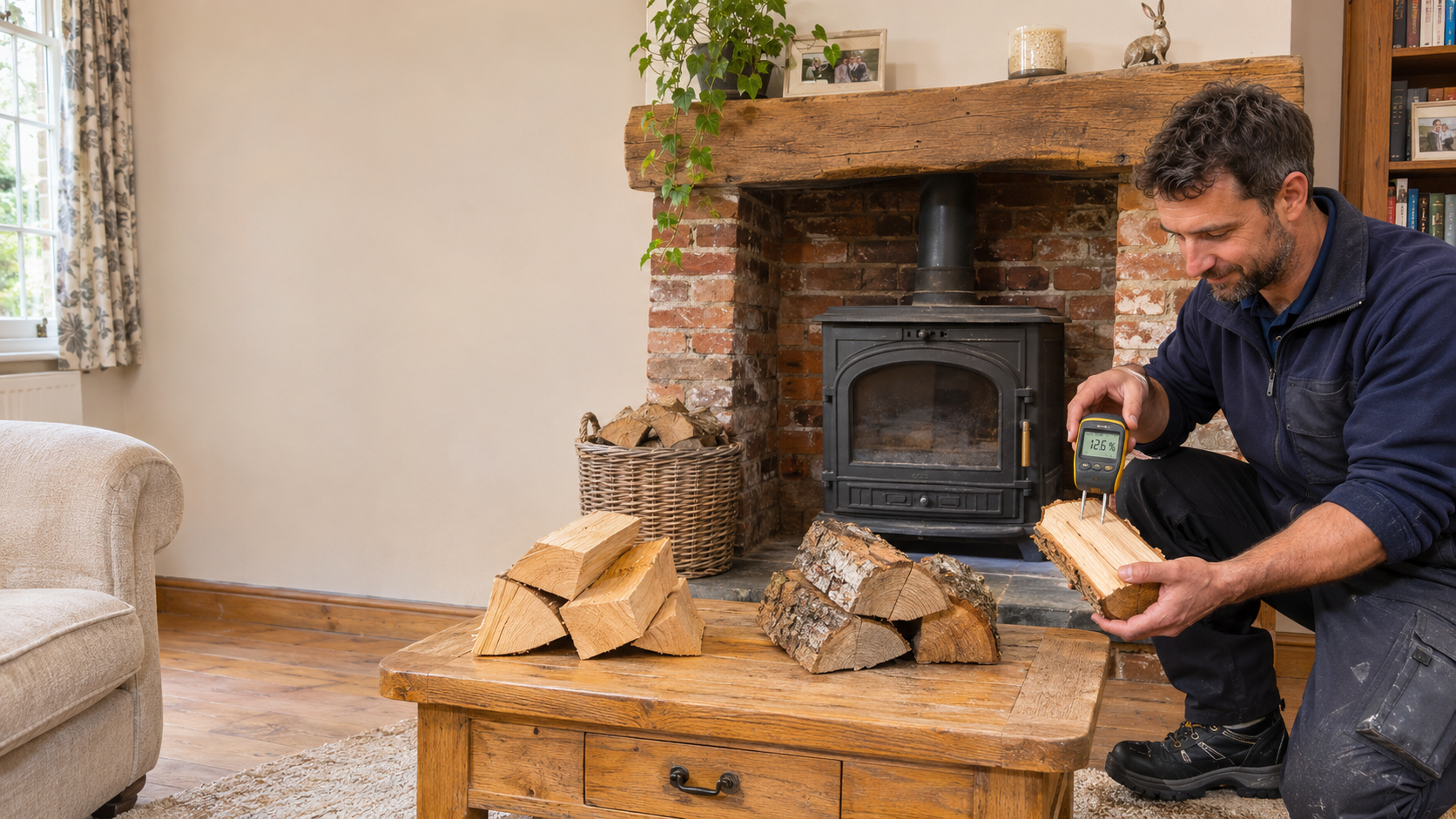
One of the most common contributors to excessive creosote formation is burning wood with a high moisture content.
When damp logs burn, much of the fire’s energy is used to evaporate water. This can lower combustion temperatures and increase smoke production.
As the smoky gases travel through the chimney, more compounds may condense and form deposits.
For cleaner combustion, choose appropriately seasoned or kiln-dried firewood with a moisture content of 20% or less, as recommended by HETAS.
Store logs somewhere dry, sheltered and well ventilated, and avoid burning wood that has been exposed to prolonged rainfall.
2. Restricting the Stove’s Air Supply
Wood-burning stoves need sufficient combustion air to burn fuel effectively.
Some homeowners close the air controls excessively to keep logs burning for longer.
However, starving the fire of oxygen can cause smouldering, incomplete combustion and increased smoke production.
These conditions can accelerate creosote accumulation.
Always follow the manufacturer’s instructions for lighting, refuelling and operating your stove.
Avoid prolonged low-air burning unless the appliance is specifically designed and approved for that operating method.
3. Low Chimney and Flue Temperatures
Creosote is more likely to accumulate when combustion gases cool significantly inside the chimney.
This may happen when a stove burns at a very low output or when a flue loses heat rapidly.
External chimney walls, poorly insulated flues and unsuitable chimney dimensions can all influence gas temperatures.
For example, a large, cold masonry chimney connected to a relatively small appliance may create different operating conditions from a correctly designed insulated flue.
If heavy tar deposits repeatedly develop, an installer or chimney specialist may need to assess whether the flue system is appropriate for the appliance.
4. Using an Oversized Wood-Burning Stove
Choosing a stove that produces more heat than the room requires can also contribute indirectly to creosote problems.
If the appliance makes the room uncomfortably hot, the homeowner may repeatedly reduce the air supply to control the heat.
This can encourage inefficient combustion and increased deposits.
A properly sized stove should provide suitable warmth while operating within the manufacturer’s recommended conditions.
5. Infrequent Chimney Sweeping
Even when a stove is used correctly, combustion deposits can gradually accumulate.
Without regular sweeping, small amounts of residue may develop into thicker layers.
A neglected chimney can eventually become restricted by soot, tar or other deposits.
Professional chimney sweeping removes appropriate removable deposits and helps maintain a clear passage for smoke and combustion gases.
Understanding the Different Types of Creosote
Chimney professionals commonly describe creosote accumulation using three broad classifications.
| Type | Appearance | Cleaning difficulty | First-degree | Fine, dry, dark deposits | Usually removable by routine professional sweeping | Second-degree | Thicker, brittle, shiny black flakes | May require specialist sweeping equipment | Third-degree | Heavy, sticky or hard glazed tar-like coating | Often requires specialist assessment and treatment |
|---|
First-Degree Creosote
This is generally the least stubborn form and often resembles dark powdery soot.
It may develop during normal stove operation and can usually be removed with appropriate professional chimney sweeping equipment.
Second-Degree Creosote
These deposits are thicker and often have a shiny, flaky appearance.
They can be more difficult to dislodge and may restrict the internal passage of the chimney as they accumulate.
Specialist rotary or other appropriate equipment may be needed.
Third-Degree Creosote
Severe creosote accumulation can form a dense, glossy coating resembling hardened tar.
These deposits can be particularly difficult to remove without specialist techniques and may conceal or accompany other chimney problems.
A professional must assess the flue construction and condition before choosing an appropriate removal method.
Important: These classifications are general descriptions. Homeowners should not attempt to diagnose the severity of hidden chimney deposits themselves.
Why Is Creosote Build-Up Dangerous?
Excessive creosote can create several serious risks.
Increased Risk of Chimney Fires
Creosote is combustible.
If accumulated deposits ignite inside the chimney, the resulting fire can generate intense heat.
A chimney fire can damage flue liners, masonry and surrounding building materials. In severe cases, it may spread beyond the chimney structure.
Restricted Chimney Draught
Heavy deposits can reduce the internal area available for combustion gases to escape.
This may affect chimney draught and cause the fireplace or stove to perform poorly.
A severely restricted flue can contribute to smoke entering the room.
Carbon Monoxide Hazards
Carbon monoxide is produced by incomplete combustion.
A blocked or defective flue can prevent combustion gases from leaving the property correctly, increasing the risk of dangerous exposure.
Every home using a solid-fuel appliance should have suitable, correctly positioned and maintained carbon monoxide alarms.
Potential Chimney and Flue Damage
Some combustion deposits and condensates contain corrosive compounds.
Where deposits accumulate and remain exposed to moisture, they may contribute to the deterioration of metal liners or other chimney components.
Regular maintenance and suitable professional inspections can help identify developing problems.
Signs Your Chimney May Have Excessive Creosote
Most homeowners cannot see the entire internal chimney, so significant deposits may remain hidden.
However, possible warning signs include:
- Strong tar-like smells around the fireplace.
- Black, shiny flakes falling into the firebox.
- Sticky, dark deposits around accessible flue areas.
- Rapid blackening of wood-burning stove glass.
- Increasing smoke production.
- Poor chimney draught.
- Difficulty maintaining normal stove operation.
- An overdue or unknown chimney sweeping history.
These symptoms can have several causes and do not automatically confirm excessive creosote.
However, if your chimney shows these warning signs, arrange a professional assessment.
If smoke enters the room or you suspect a flue obstruction, stop using the appliance until the problem has been investigated.
How to Prevent Creosote Build-Up in Your Chimney
Although creosote formation cannot always be eliminated completely, sensible maintenance and burning habits can significantly reduce unnecessary deposits.
1. Choose Properly Dried Firewood
Use firewood with a moisture content of 20% or less.
Look for Ready to Burn certified wood and store your logs appropriately.
Dry fuel supports more efficient combustion and generally produces less smoke than damp logs.
2. Follow the Correct Lighting Method
Build your fire using suitable kindling and the lighting method recommended by your stove manufacturer.
Avoid putting large logs onto a weak, struggling fire.
Allow the appliance to establish appropriate combustion before reducing the air supply to its normal operating position.
3. Avoid Prolonged Smouldering
A slowly smouldering fire can produce large amounts of smoke and unburned compounds.
Operate the stove within the manufacturer’s recommended conditions rather than continually restricting oxygen to make logs last longer.
Do not deliberately overfire the stove in an attempt to burn off deposits.
4. Use Only Suitable Fuel
Never burn painted timber, chemically treated wood, household waste, plastics or other unsuitable materials.
These can produce harmful emissions and undesirable residues.
Always check which fuels are approved for your appliance and comply with any local Smoke Control Area requirements.
5. Maintain Your Wood-Burning Stove
Worn door seals, damaged baffle plates and malfunctioning air controls can affect combustion.
Regular stove servicing can help identify problems that contribute to inefficient burning.
HETAS recommends servicing solid-fuel appliances at least annually, alongside the appropriate chimney sweeping schedule.
6. Arrange Regular Professional Chimney Sweeping
Professional chimney sweeping is one of the most important ways to manage accumulated deposits.
A trained sweep can select suitable equipment for your chimney construction and advise whether additional cleaning or inspection is needed.
If heavy creosote repeatedly returns, identifying the underlying cause is just as important as removing the deposits.
How Often Should You Have Your Chimney Swept?
The required frequency depends on the fuel, appliance, frequency of use and condition of the chimney.
HETAS generally recommends:
- Wood-burning appliances: At least twice a year.
- Smokeless-fuel appliances: At least once a year.
- Heavily used or problem installations: More frequent sweeping when appropriate.
The National Association of Chimney Sweeps advises that wood-burning chimneys may need quarterly sweeping while in use.
A professional sweep can recommend a schedule appropriate to your particular installation.
For many homeowners, arranging a chimney sweep before the heating season and another after the busiest period of use is a practical starting point.
Can You Remove Creosote Yourself?
Homeowners sometimes look for DIY solutions, including chimney-cleaning logs, chemical treatments or attempts to create a hotter fire.
However, these methods should not be treated as substitutes for professional chimney sweeping.
Chemical products may be marketed as aids for certain deposits, but they do not guarantee that the flue has been properly cleaned.
Deliberately overheating a stove or attempting to burn creosote out of a chimney can create serious fire hazards.
Likewise, aggressively scraping internal chimney surfaces without knowing the flue construction may cause damage.
For heavy, sticky or glazed deposits, professional assessment is the appropriate approach.
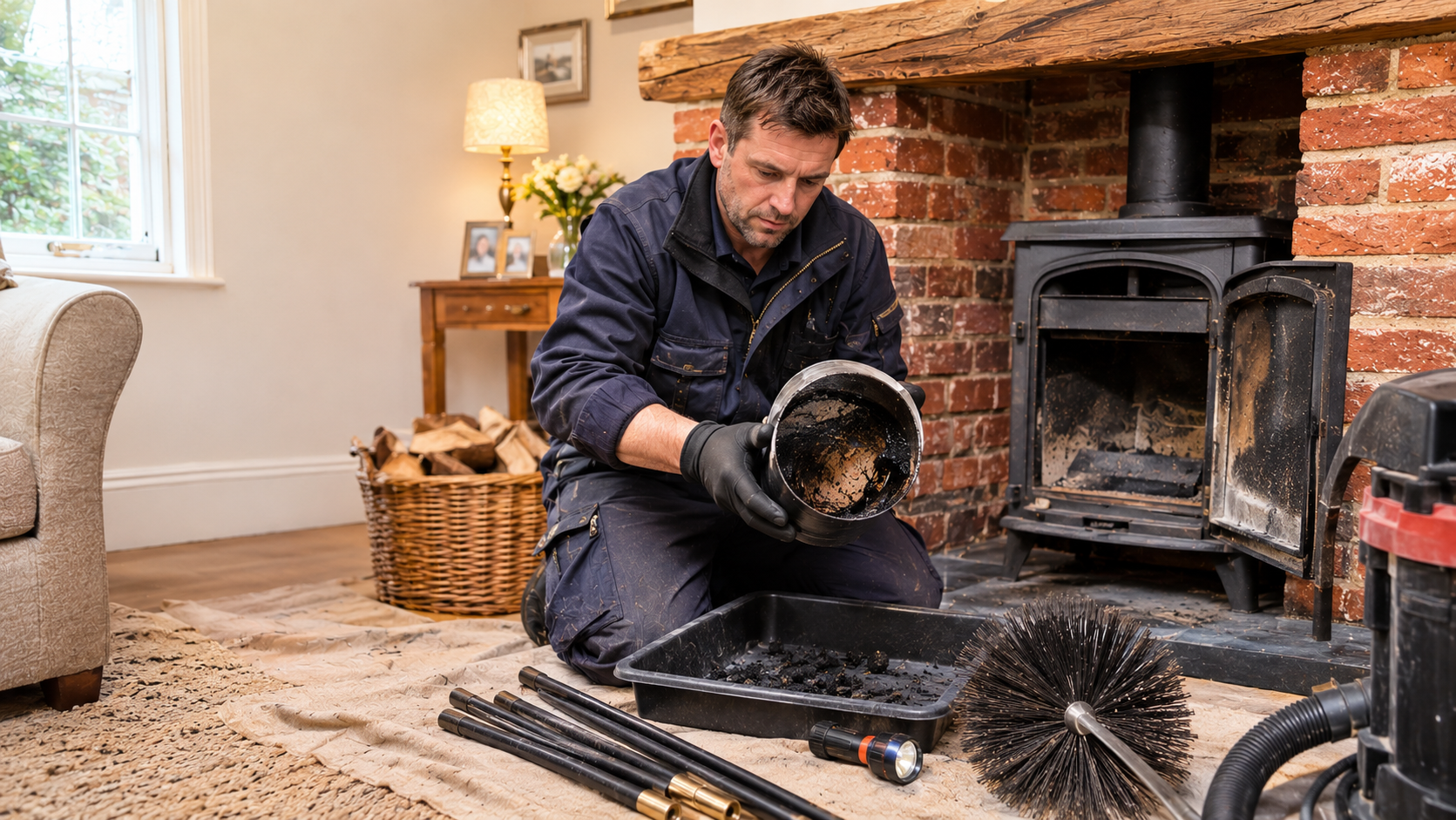
How Does a Professional Chimney Sweep Remove Creosote?
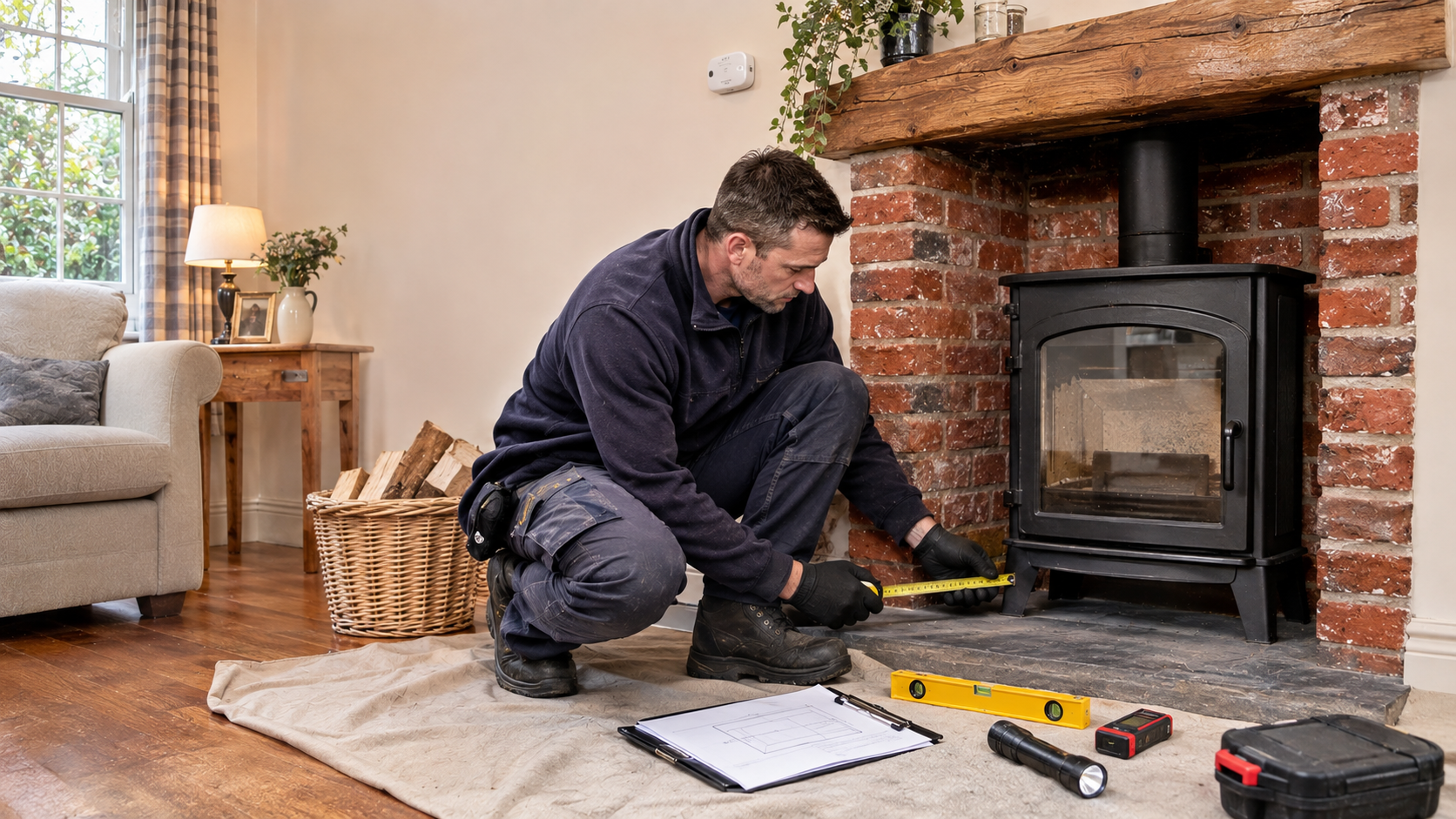
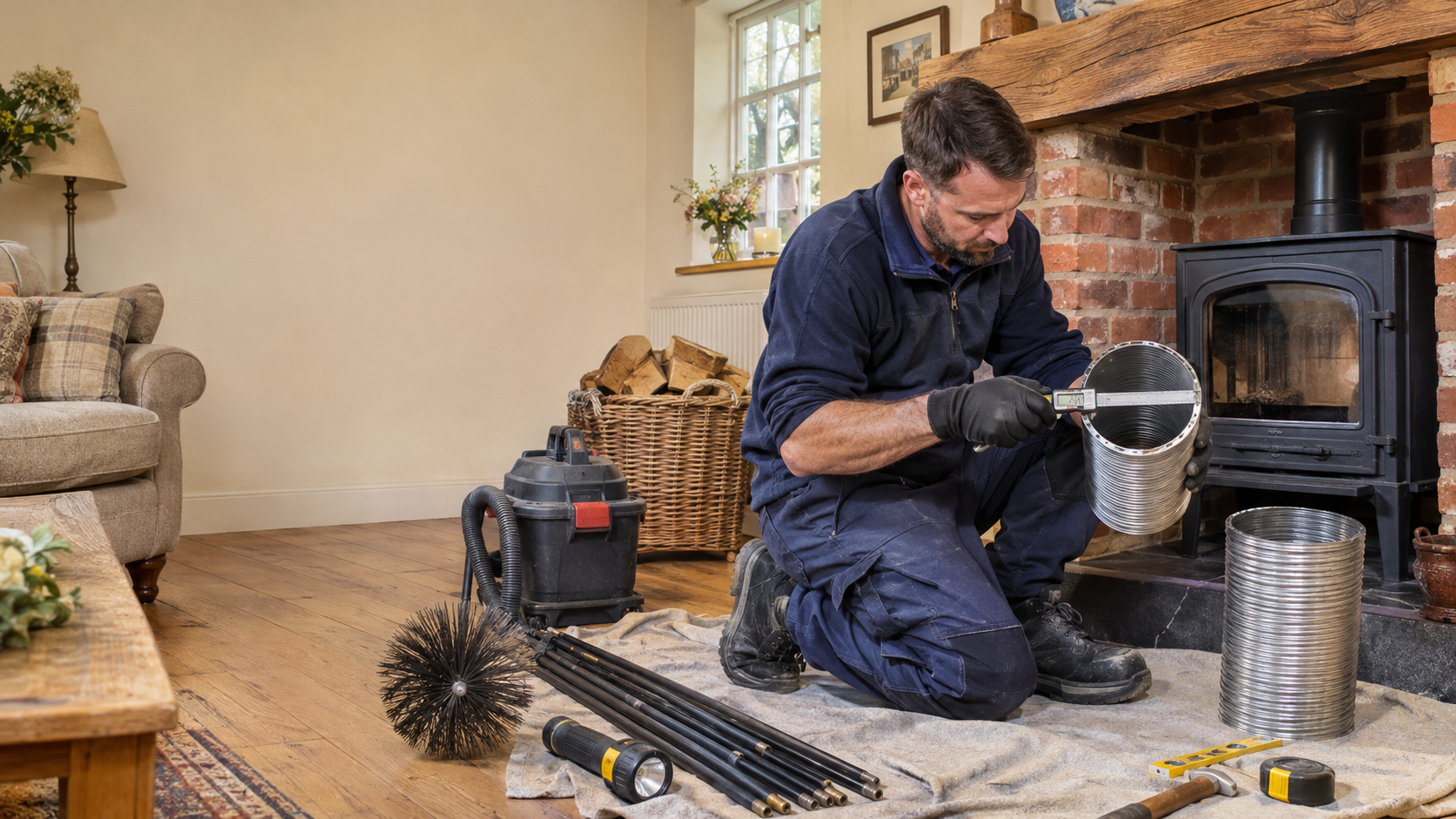
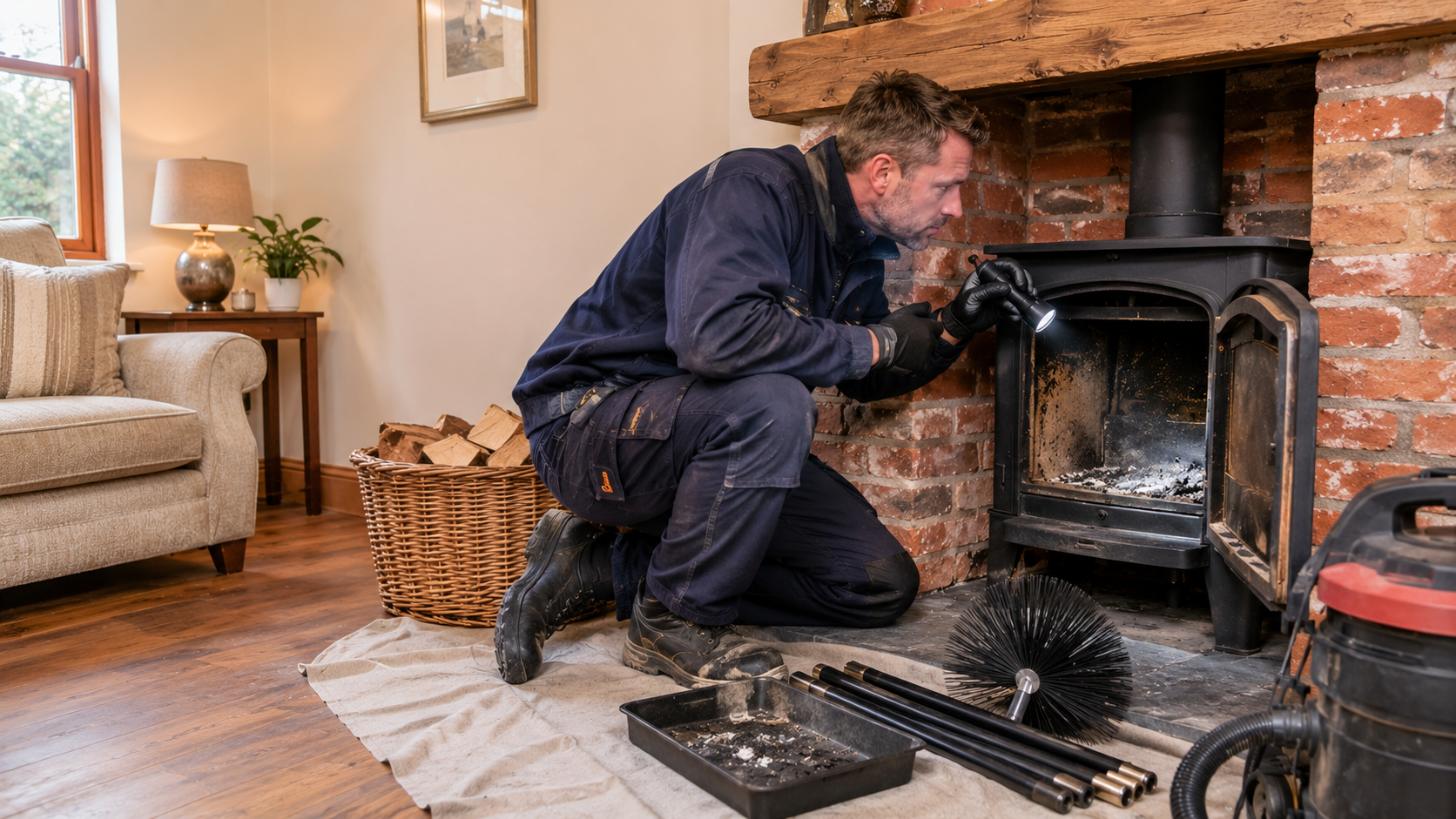
A professional chimney sweeping appointment begins with assessing the installation and choosing an appropriate cleaning method.
Depending on the chimney and deposits, the process may involve:
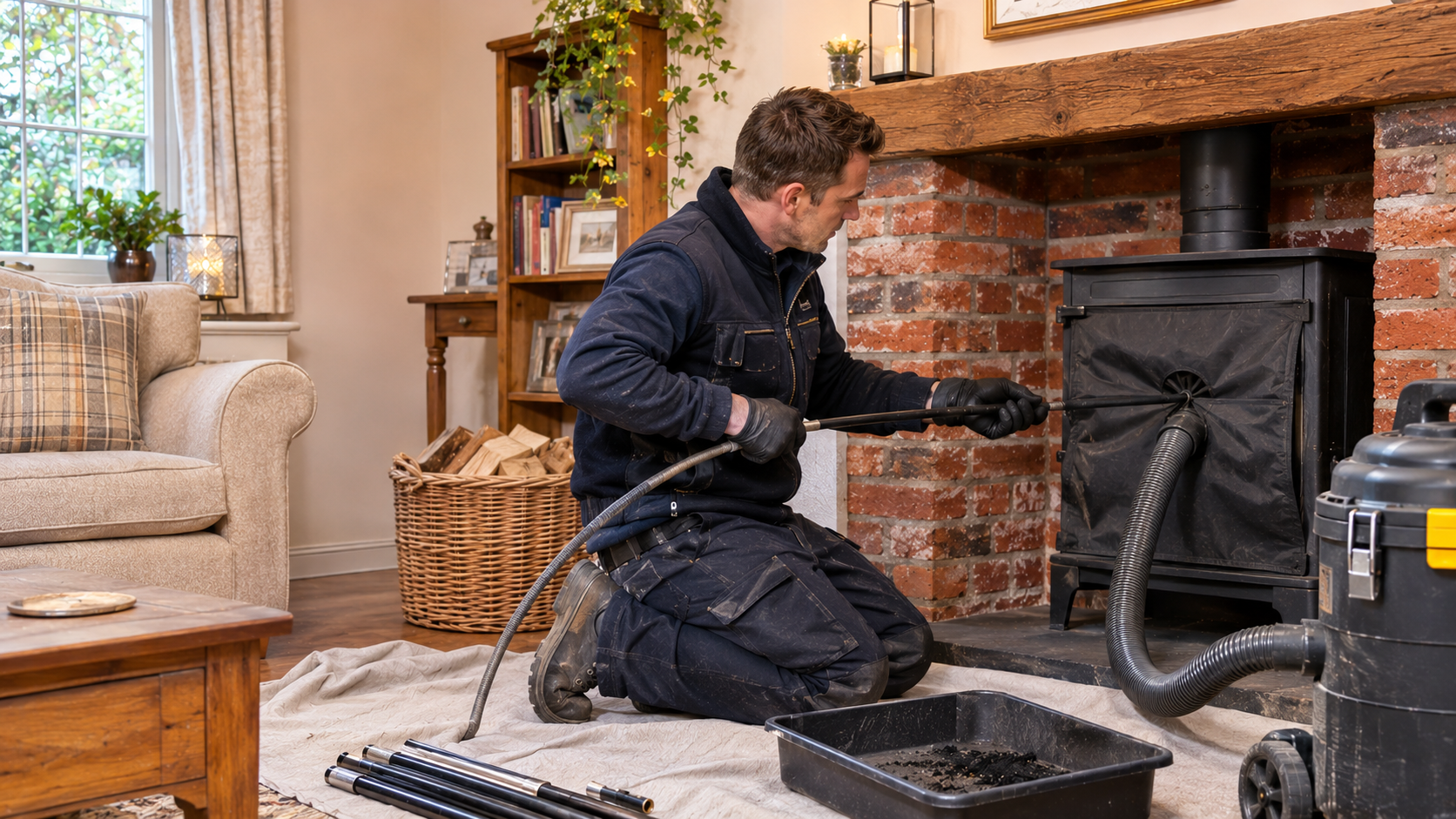
- Protecting the fireplace area with suitable dust sheets.
- Examining accessible parts of the stove and chimney.
- Using suitable sweeping rods and brushes to remove loose deposits.
- Employing specialist equipment where the flue construction and deposit type permit.
- Collecting removed material using suitable soot-extraction equipment.
- Identifying signs of persistent deposits, blockages or other defects.
- Advising whether further inspection or specialist treatment is necessary.
Some hard or glazed creosote deposits cannot be removed safely through ordinary sweeping alone.
Where serious accumulation or hidden damage is suspected, a CCTV chimney inspection may help assess the condition of the flue.
Midlands Sweeps provides professional chimney sweeping and flue liner cleaning for a range of domestic fireplace and stove installations.
What Should You Do If You Suspect a Chimney Fire?
Possible signs of an active chimney fire include loud roaring noises, unusual vibration, sparks or flames emerging from the chimney and unusually heavy smoke.
Not every chimney fire is immediately obvious.
If you suspect one:
- Leave the property and call 999, asking for the fire and rescue service.
- Do not attempt to extinguish the chimney fire yourself.
- Do not pour water into the stove or chimney.
- Do not use the fireplace again until the chimney and appliance have been professionally assessed.
Even if a suspected chimney fire appears to have stopped, hidden damage may remain.
A Simple Creosote Prevention Checklist
Use this checklist to maintain better burning habits throughout the heating season.
-
Burn properly dried firewood with a moisture content of 20% or less.
-
Follow your stove manufacturer’s operating instructions.
-
Avoid prolonged smouldering or excessive air restriction.
-
Do not burn treated timber or household waste.
-
Keep combustion-air vents unobstructed.
-
Arrange regular chimney sweeping.
-
Have your stove serviced appropriately.
-
Check carbon monoxide alarms regularly.
-
Investigate recurring tar smells, smoke problems or excessive deposits.
-
Keep records of professional chimney maintenance.
Following these steps can help reduce unnecessary creosote accumulation and support better appliance performance.
Frequently Asked Questions About Creosote Build-Up
How quickly can creosote build up in a chimney?
There is no fixed accumulation rate. Deposits can form more rapidly when burning damp wood, operating a stove at low combustion temperatures or using a poorly matched flue system.
Is a small amount of creosote normal?
Limited deposits can develop during normal wood burning. However, combustible material should not be allowed to accumulate excessively, and the chimney still requires regular sweeping.
What is the difference between soot and creosote?
Soot is generally a fine carbon-rich combustion residue. Creosote refers to a broader range of condensed combustion deposits, which may be flaky, sticky or hardened into tar-like coatings.
Can creosote cause a chimney fire?
Yes. Creosote is combustible, and accumulated deposits can ignite, causing a chimney fire that may damage the flue or surrounding structure.
Does burning dry wood completely prevent creosote?
No. Dry wood generally supports cleaner combustion, but deposits can still form. Regular sweeping remains necessary.
Can chimney-cleaning logs replace a professional sweep?
No. Such products do not replace proper mechanical sweeping or a professional assessment of chimney condition.
Will a chimney sweep remove hardened creosote?
Some deposits require specialist equipment or treatment beyond a routine sweep. A professional should assess the type of deposit and the condition of the flue before deciding how to proceed.
Does a stainless-steel flue liner collect creosote?
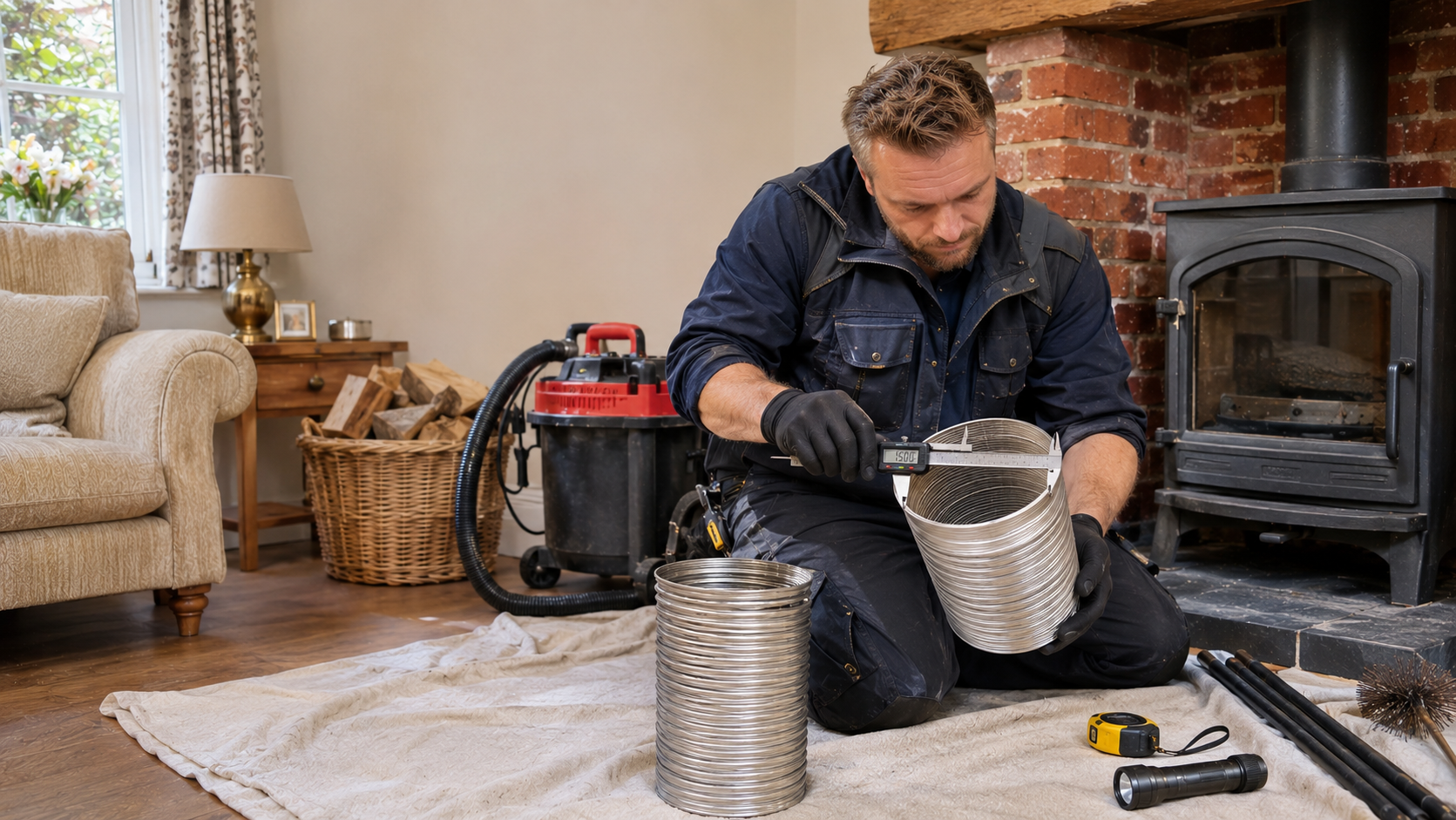
Yes. Stainless-steel flue liners can accumulate soot and creosote and must be swept using equipment appropriate for their construction.
Professional Creosote Removal and Chimney Sweeping With Midlands Sweeps
Creosote build-up is an important chimney maintenance concern for anyone using a wood-burning stove or open fireplace.
Although some deposits can develop during ordinary operation, excessive accumulation may increase chimney fire risks, restrict airflow and contribute to flue deterioration.
Using dry firewood, operating your stove correctly and arranging regular professional sweeping can help reduce these problems.
At Midlands Sweeps, we provide professional chimney sweeping, flue liner cleaning and related chimney inspection services for homeowners across Swadlincote, Derby, Burton on Trent, Ashby-de-la-Zouch, Coalville and surrounding areas.
As a veteran-owned, fully insured business and registered member of the National Association of Chimney Sweeps, Midlands Sweeps provides careful, professional chimney maintenance.
If you’re concerned about excessive creosote, tar-like deposits, unusual chimney smells or an overdue sweep, contact our team to discuss the appropriate next steps.
Book your professional chimney sweep with Midlands Sweeps today.
Phone: +44 782 483 0604
Email: midlandsweeps@gmail.com
Website: www.midlandsweeps.com
Chimney Sweeping: Professional Chimney Sweep Services
Book an Appointment: Contact Midlands Sweeps
Midlands Sweeps — professional chimney care and maintenance for your home.