
The difference between wet wood and dry wood can have a major impact on how your log burner performs.
Dry, properly seasoned firewood burns hotter, cleaner and more efficiently. Wet wood does the opposite. It can create excessive smoke, produce less useful heat, blacken your stove glass and encourage soot, tar and creosote to build up inside the chimney.
For a log burner, the moisture content of your firewood is therefore just as important as the type of wood you choose.
UK guidance recommends using firewood with a moisture content of 20% or less. DEFRA explains that wet or unseasoned wood creates more smoke and harmful particles, can damage the stove and chimney, and provides less useful heat for your home.
In this guide, we explain the difference between wet and dry wood, how moisture affects your log burner and chimney, and how to check whether your logs are ready to burn.
What Is the Difference Between Wet Wood and Dry Wood?
The main difference is the amount of water contained inside the timber.
Freshly cut wood contains a significant amount of moisture. Before it becomes suitable firewood, that water needs to evaporate through seasoning or controlled drying.
Wet Wood
Wet or unseasoned wood generally contains more than 20% moisture.
Freshly cut or “green” wood can contain considerably more.
When wet logs are placed inside your stove, much of the available energy is initially used to evaporate this water rather than heating your room.
Dry Wood
Dry firewood has generally been seasoned or kiln-dried until its moisture content reaches 20% or below.
At this level, the wood can burn more efficiently and produce significantly less smoke.
HETAS guidance also advises using Ready to Burn logs or briquettes with moisture content of 20% or less because they produce less smoke and harmful emissions.
Why Does Moisture Content Matter in a Log Burner?
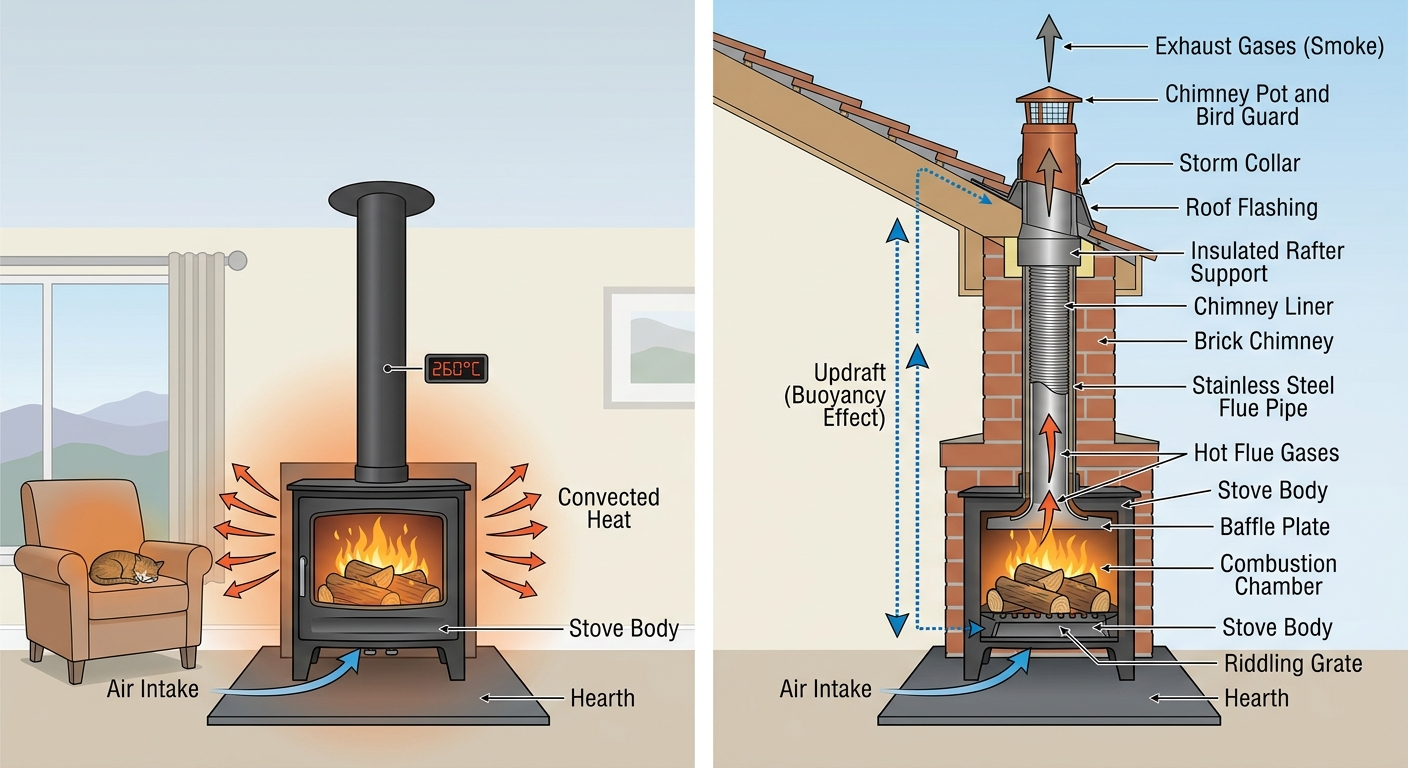
A log burner works best when the fire reaches an appropriate combustion temperature.
When you burn wet wood, the fire has to use energy to heat and evaporate the water contained inside each log.
That can lead to:
- Lower fire temperatures
- Less heat entering the room
- More smoke
- Increased soot
- Greater tar production
- Increased creosote accumulation
- Blacker stove glass
- Poorer chimney draught
- More frequent chimney maintenance
Using properly dried logs allows more of the wood’s stored energy to be converted into useful heat.
Wet Wood Produces Less Useful Heat
One of the most noticeable differences between wet and dry wood is heat output.
Imagine placing a wet saucepan on a stove. Before the water can disappear, energy has to be used to heat and evaporate it.
The same principle applies inside your log burner.
With wet wood, part of the fire’s heat is wasted removing moisture from the fuel.
That means you may:
- Burn more logs
- Wait longer for the room to warm up
- Struggle to maintain a strong fire
- Use more fuel for the same amount of heat
Manufacturer guidance available through HETAS identifies wet wood above 20% moisture as a cause of difficulty lighting fires, poor burning and low heat output.
Dry wood provides a much more efficient fuel source.
Wet Wood Creates More Smoke
Wet wood generally produces significantly more smoke than properly dried firewood.
Lower combustion temperatures mean more material leaves the wood without being completely burned.
This can create thick smoke inside the firebox and more visible emissions from the chimney.
You may notice:
- Smoke while lighting
- Smoke when refuelling
- Darker chimney emissions
- Strong smoky smells
- Poor flame quality
- Increased deposits inside the stove
DEFRA specifically advises against burning wet or unseasoned wood because its moisture creates additional smoke and harmful particulates.
If your log burner has suddenly become much smokier, checking the moisture content of your logs should be one of your first steps.
Wet Wood Can Increase Creosote and Tar
This is one of the biggest reasons moisture content matters to chimney maintenance.
Cool, smoky combustion creates conditions that encourage combustion products to condense inside the chimney.
The result can be increased:
- Soot
- Tar
- Creosote
Creosote can appear as:
- Dry black flakes
- Sticky dark deposits
- Thick tar
- Hard glazed coatings
Heavy creosote is particularly concerning because it is combustible and can increase chimney-fire risk.
Midlands Sweeps also highlights wet wood as one of the major contributors to excessive creosote accumulation in wood-burning chimneys.
Using dry wood will not eliminate the need for chimney sweeping, but it can significantly reduce unnecessary deposits.
Wet Wood Can Blacken Your Stove Glass
If your log burner glass becomes black very quickly, your fuel may be part of the problem.
Wet wood produces cooler and smokier combustion.
Instead of burning cleanly, unburned particles can settle onto the glass and leave a dark coating.
Other causes of black stove glass can include:
- Closing the air controls too much
- Poor chimney draught
- Overloading the firebox
- Incorrect stove operation
- Blocked air vents
But if the glass blackens particularly quickly whenever you use certain logs, test their moisture content.
Wet Wood Can Make a Log Burner Difficult to Light
Wet logs are more difficult to ignite and keep burning.
You may find yourself:
- Using excessive kindling
- Repeatedly relighting the fire
- Leaving air controls fully open for longer
- Struggling to establish strong flames
- Producing lots of smoke but little heat
HETAS-linked appliance guidance specifically identifies wood above 20% moisture as a cause of difficulty getting a fire alight and keeping it burning effectively.
If your stove normally lights easily but suddenly begins struggling, your firewood is worth checking before assuming there is a fault with the appliance.
Can Burning Wet Wood Damage Your Chimney?
Over time, wet wood can contribute to chimney problems because it encourages greater soot, tar and creosote accumulation.
These deposits can:
- Restrict chimney airflow
- Increase maintenance requirements
- Produce strong smells
- Increase chimney-fire risk
- Contribute to contamination of a flue liner
DEFRA warns that burning wet wood can damage both the stove and chimney while reducing the amount of useful heat produced.
A dirty flue can also weaken chimney draught, potentially leading to even worse combustion.
This can create a cycle:
Wet wood → cooler combustion → more deposits → poorer draught → even less efficient burning.
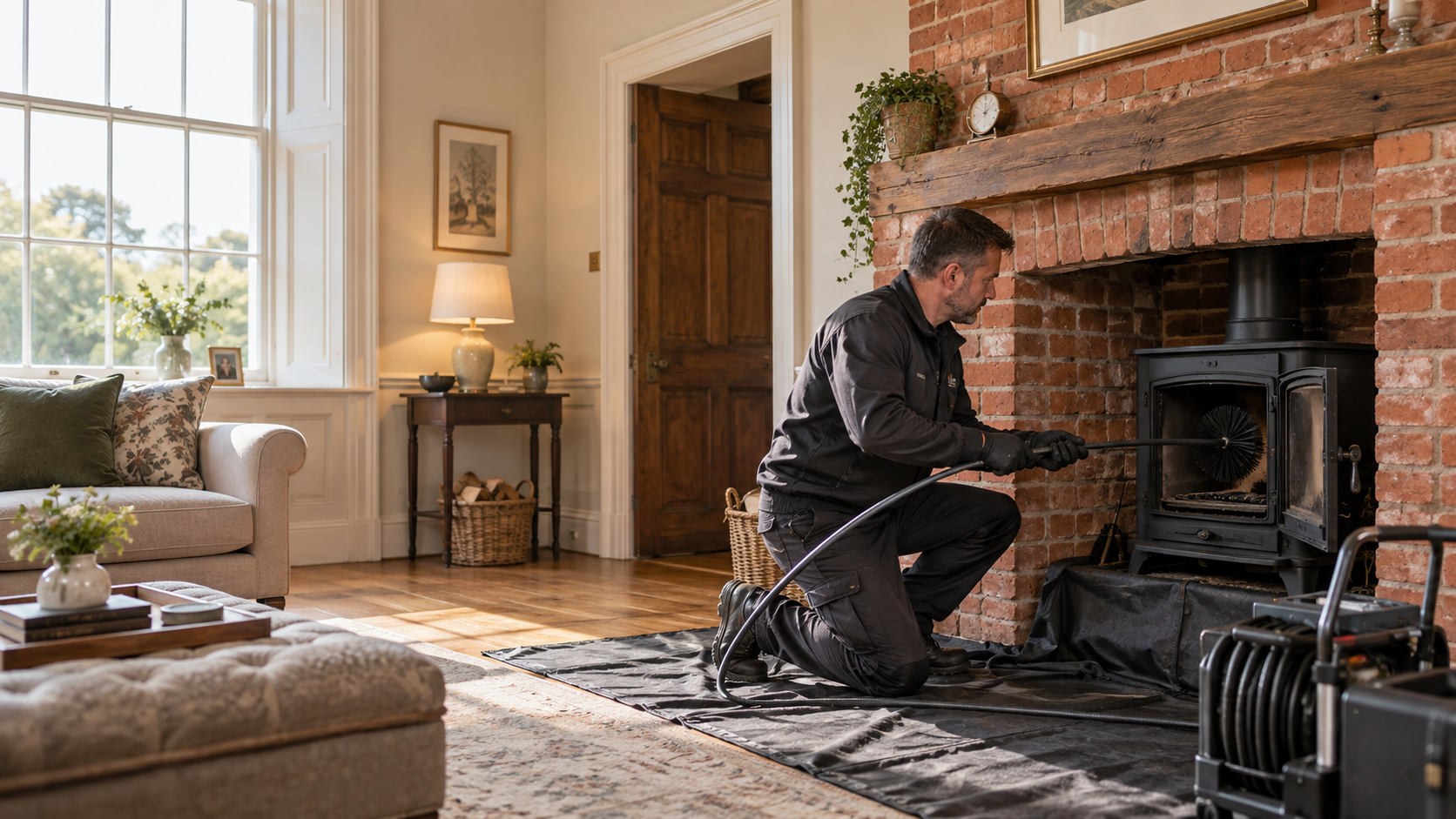
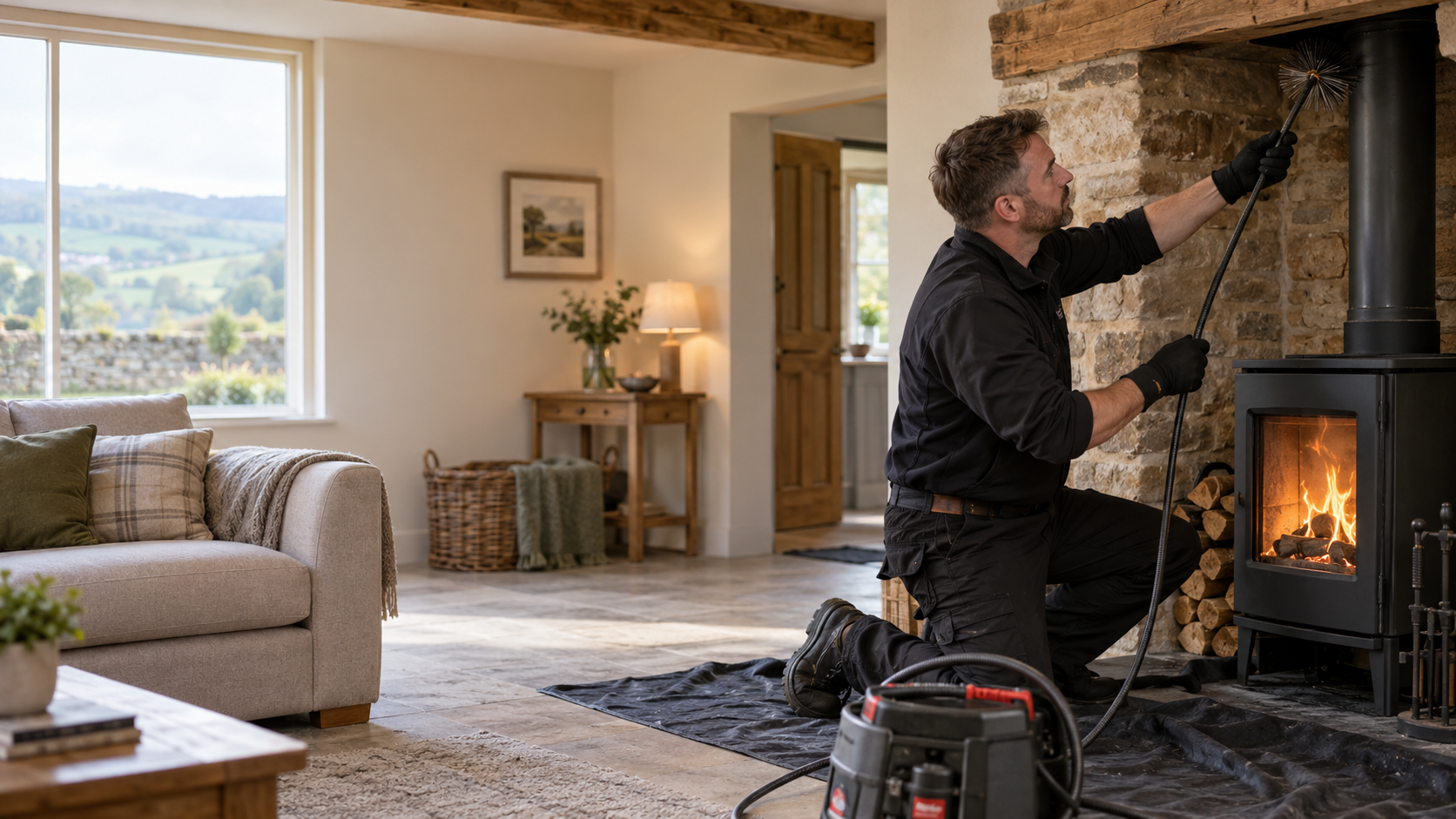
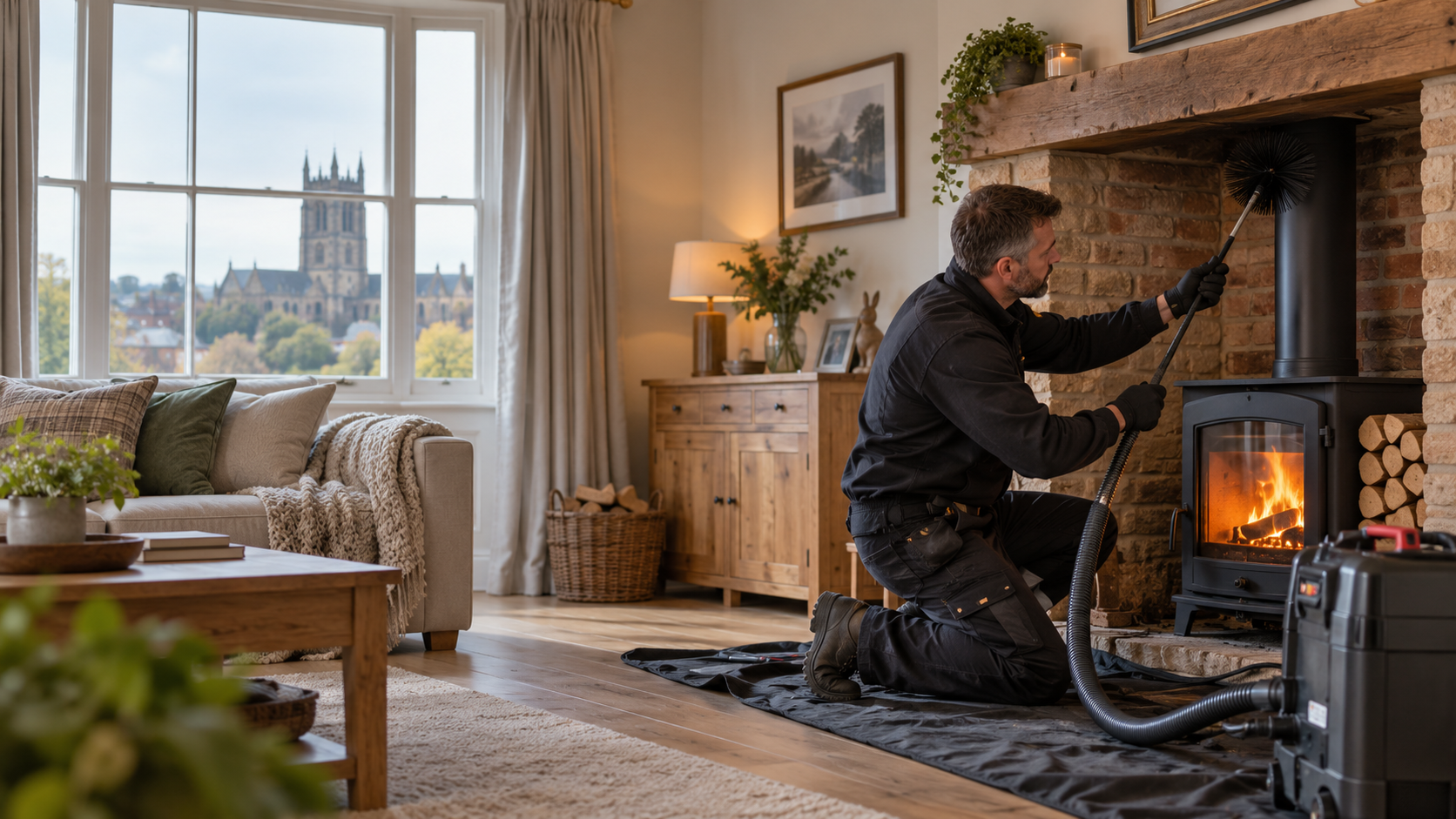
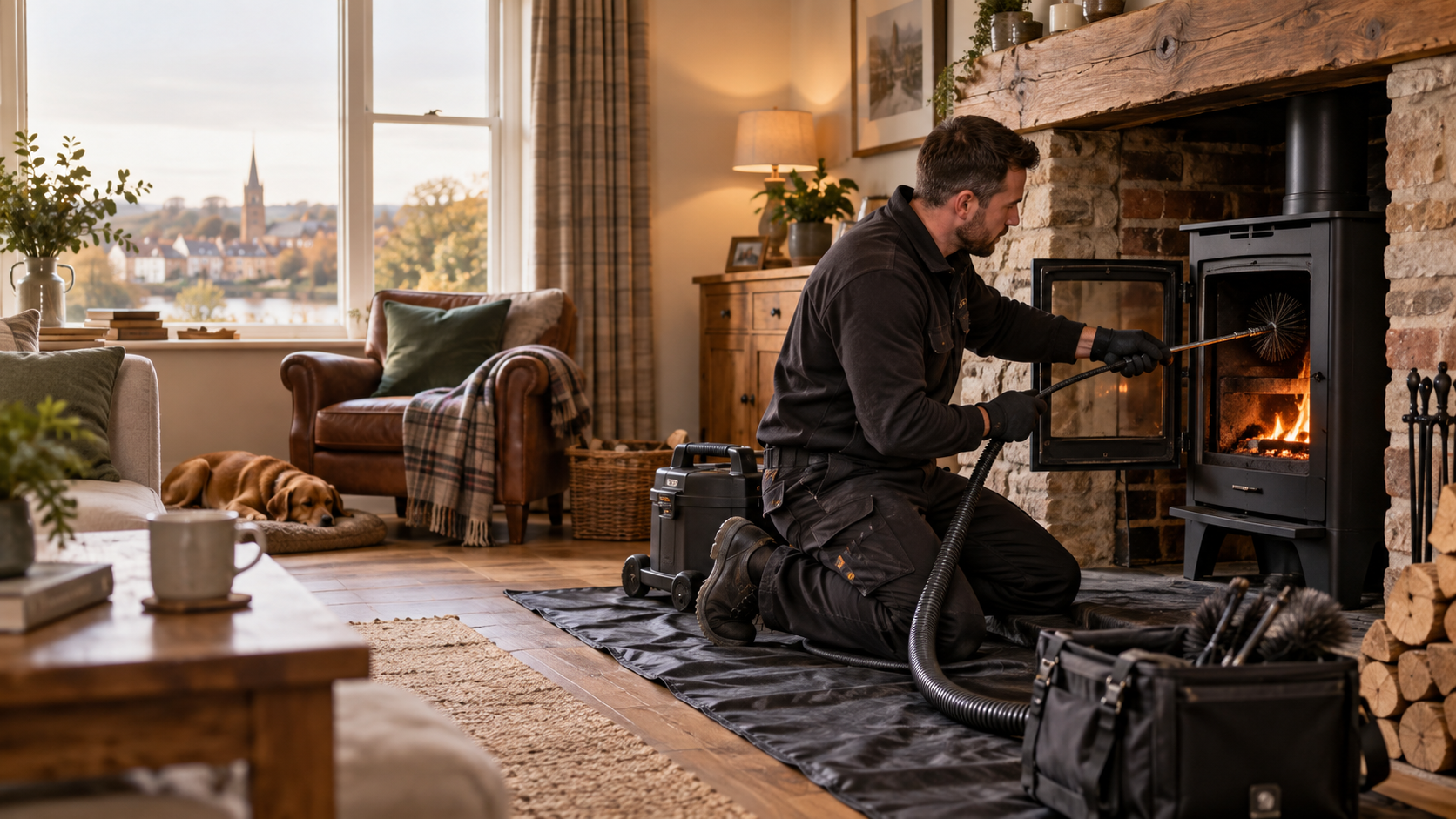
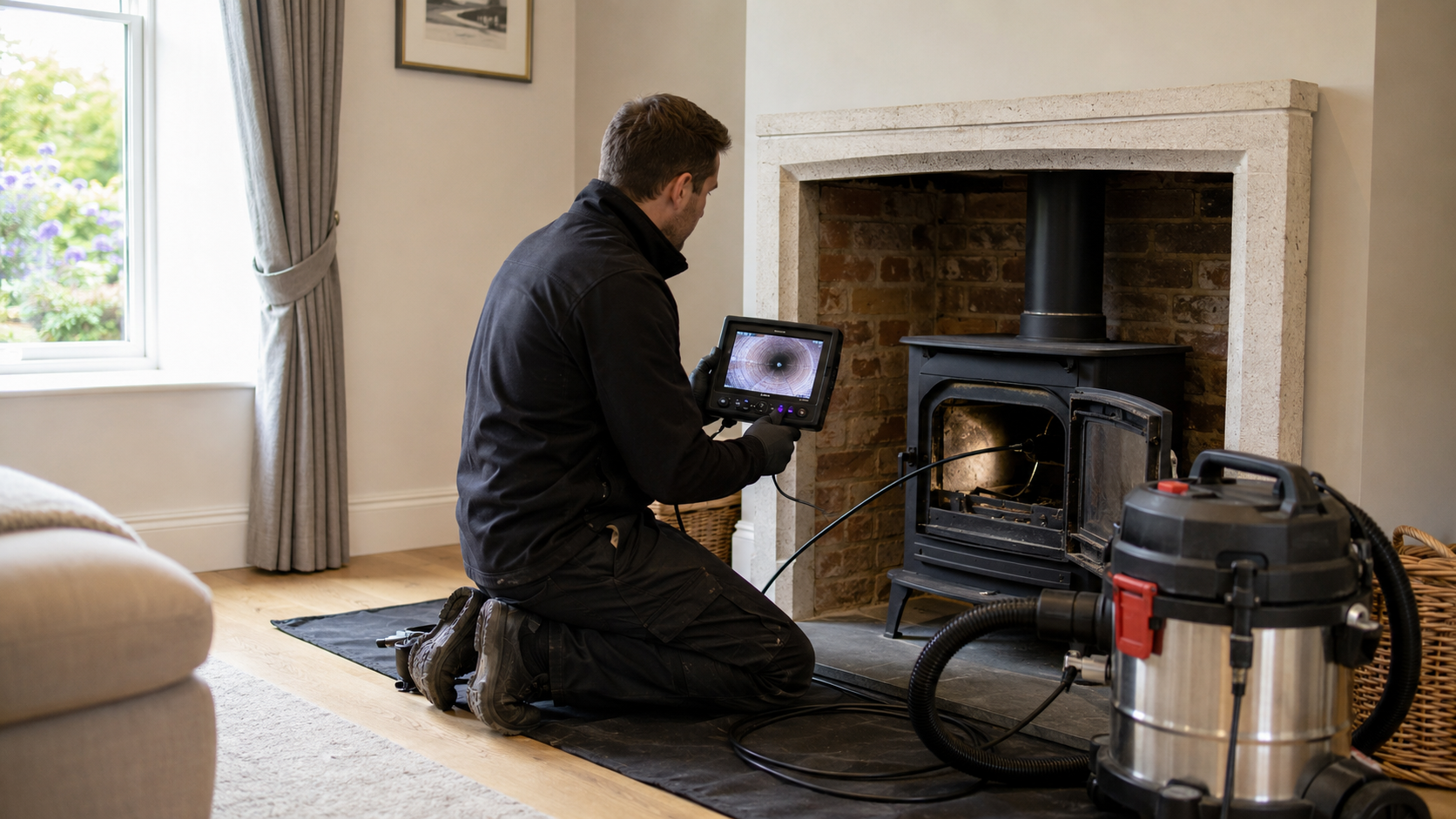
Regular professional chimney sweeping helps break this cycle by removing accumulated deposits.
Can Wet Wood Cause a Chimney Fire?
Wet logs themselves are not likely to create an intense fire because of their high moisture content.
The danger comes from what repeated wet-wood burning can leave behind.
Heavy soot, tar and especially creosote can accumulate inside the flue.
These deposits can be combustible.
If they later ignite during a hot fire, a chimney fire can occur.
This is why good fuel quality and regular chimney sweeping work together.
Burning dry wood reduces unnecessary deposits, while sweeping removes the deposits that still develop during normal stove use.
What Moisture Content Should Firewood Have?
For a domestic log burner, aim for 20% moisture content or less.
DEFRA’s guidance says dry wood should contain 20% moisture or less.
HETAS guidance gives the same threshold for suitable Ready to Burn fuel.
For many homeowners, logs in the region of approximately 15–20% moisture are ideal for normal domestic wood-burning appliances, subject to the stove manufacturer’s instructions.
Can Wood Be Too Dry?
For normal seasoned domestic firewood, this is rarely the biggest homeowner concern.
However, extremely dry or unsuitable processed timber can burn very quickly.
You should not assume that any extremely dry piece of wood is automatically suitable fuel.
Avoid burning:
- Construction timber
- Pallets of unknown treatment
- Painted wood
- Treated timber
- MDF
- Chipboard
- Furniture
- Household waste
Use natural firewood suitable for your appliance and follow the stove manufacturer’s instructions.
How Do You Check the Moisture Content of Firewood?
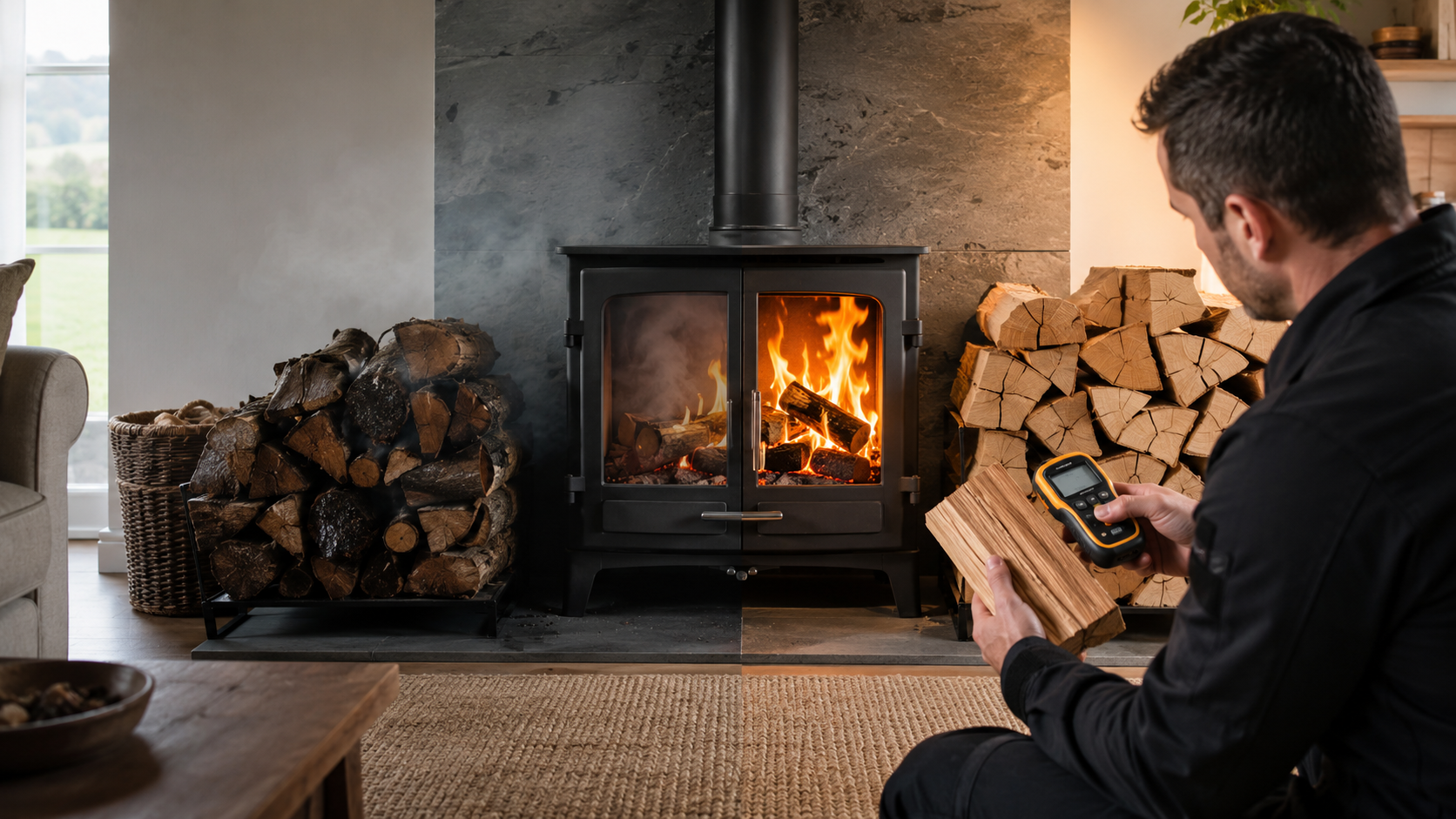
The easiest and most reliable method is a wood moisture meter.
These inexpensive handheld devices use probes to estimate moisture content inside the timber.
However, how you test the log matters.
Correct Way to Test Firewood
For a more useful reading:
- Bring the log to approximately room temperature if practical.
- Split the log through the centre.
- Test the newly exposed internal face.
- Push the moisture-meter probes firmly into the wood.
- Test several logs from your supply rather than relying on one reading.
HETAS-hosted appliance guidance recommends splitting the log and measuring the freshly exposed centre rather than simply testing the outside surface.
Testing only the outer surface may give a misleading result because the outside can feel dry while the centre still contains significant moisture.
Can You Tell If Firewood Is Dry Without a Moisture Meter?
There are some traditional clues, but they are less reliable than measuring.
Dry seasoned logs may:
- Feel lighter than freshly cut wood
- Develop cracks at the ends
- Have looser bark
- Produce a sharper sound when struck together
Wet wood may:
- Feel noticeably heavy
- Look freshly cut
- Have tightly attached bark
- Feel cool or damp
- Produce a dull sound when struck
However, appearance alone cannot accurately confirm whether a log is below 20% moisture.
A moisture meter is a better option.
What Does “Seasoned Wood” Mean?
Seasoning is the process of allowing freshly cut wood to dry naturally.
Logs are typically:
- Cut to suitable length
- Split
- Stacked
- Protected from rain
- Exposed to good airflow
The length of time required depends on factors including:
- Wood species
- Log thickness
- Local weather
- Storage location
- Air circulation
- Initial moisture content
There is no reliable rule that every log will be ready after exactly six months or one year.
The final moisture reading matters more than how long the wood has been stored.
What Is Kiln-Dried Wood?
Kiln-dried firewood has been dried in a controlled environment to reduce its moisture content.
It can be ready for use much faster than naturally seasoned wood.
However, the important measurement is still the moisture content.
A label saying “kiln dried” does not change the basic requirement: use suitable logs with moisture content at or below the level recommended for your stove.
What Is Ready to Burn Wood?
In England, the Ready to Burn scheme helps customers identify suitable dry firewood sold in applicable quantities.
DEFRA advises consumers who want to burn wood immediately to look for Ready to Burn fuel, which provides assurance that the wood meets the required moisture standard.
For a homeowner who does not want to season their own wood, this can be one of the easiest ways to source appropriate fuel.
Hardwood vs Softwood: Which Is Better for a Log Burner?
Both properly dried hardwood and softwood can burn successfully in suitable appliances.
Moisture content is often more important than simply choosing hardwood because of its name.
Hardwood
Examples include:
- Oak
- Ash
- Beech
Hardwoods are generally denser and may:
- Burn for longer
- Produce a more sustained heat output
- Require less frequent refuelling
Softwood
Examples include:
- Pine
- Spruce
- Fir
Properly dried softwood can:
- Ignite quickly
- Produce useful heat
- Work well for kindling or establishing a fire
However, it may burn more quickly because it is generally less dense.
A dry softwood log can often be preferable to a wet hardwood log.
Dryness matters.
Is Ash the Best Wood for a Log Burner?
Ash is a popular firewood because it generally splits and seasons well and provides good heat when dry.
However, there is no single wood species that removes the need to check moisture content.
Wet ash is still wet wood.
Dry oak, ash, beech and many other suitable untreated woods can all work well when properly seasoned.
How Should Firewood Be Stored?
Correct storage helps prevent dry wood from becoming damp again.
Ideally, logs should be stored:
- Off the ground
- In a ventilated log store
- Protected from direct rain
- With open or ventilated sides
- With air able to circulate around the stack
Avoid completely wrapping wet logs in plastic because trapped moisture can slow drying and encourage mould.
A roof or top cover is useful, but airflow around the sides remains important.
Should You Store Logs Next to the Log Burner?
Only keep a small amount of fuel indoors and maintain the safe clearance specified by the stove manufacturer.
Large stacks of logs should not be stored immediately beside a hot appliance.
HETAS advises keeping combustible materials, including firewood, a safe distance away from the stove and hearth.
Bring in only the amount you need and store the main supply safely elsewhere.
Can Dry Wood Still Produce Creosote?
Yes.
Using dry wood reduces excessive smoke and creosote, but it does not make the chimney maintenance-free.
Every working wood-burning system can accumulate some combustion deposits.
Factors including:
- Stove operation
- Chimney temperature
- Chimney design
- Frequency of use
- Air supply
can still influence the amount of soot and creosote produced.
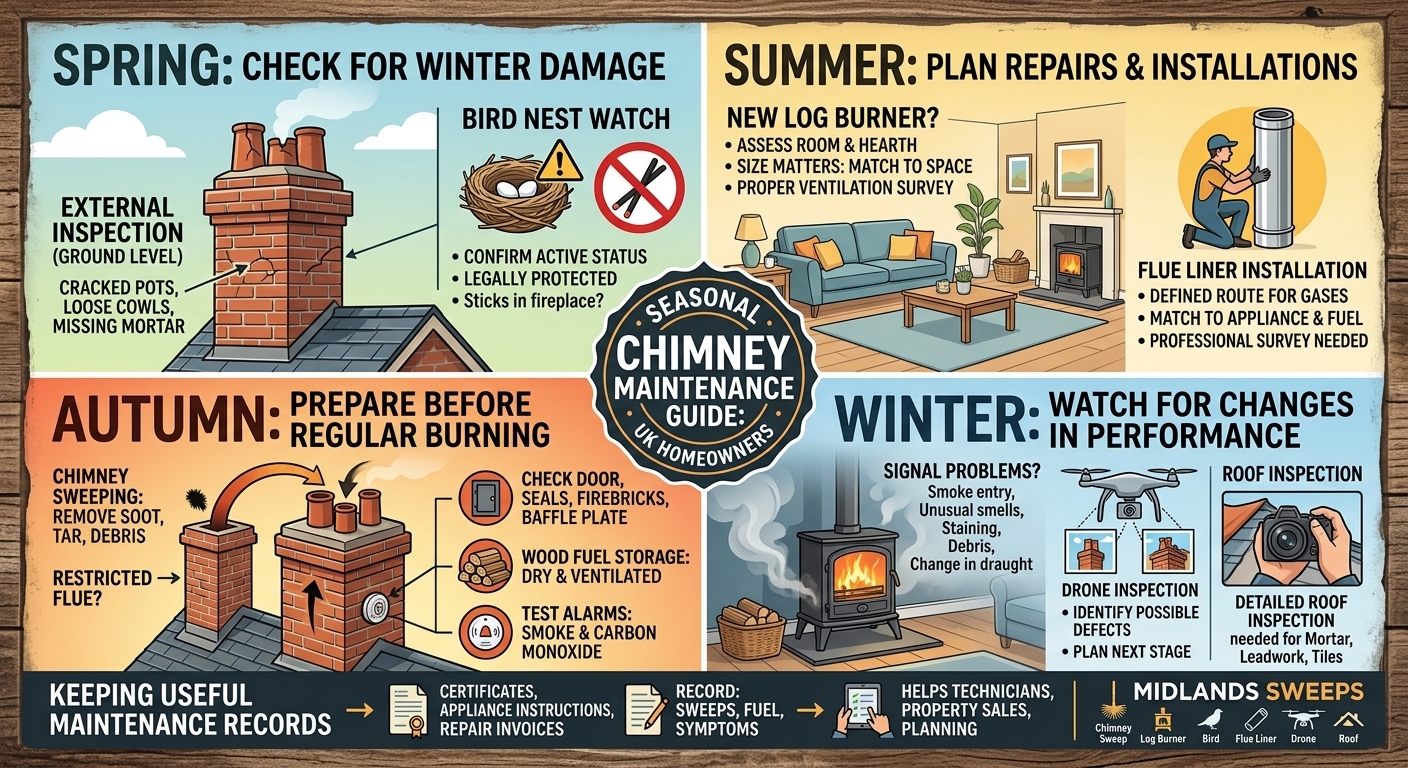
Your chimney therefore still needs regular professional sweeping.
How Often Should a Log Burner Chimney Be Swept?
The appropriate schedule depends on your installation, fuel and usage.
Even when you burn good-quality dry wood, the flue should be professionally swept at suitable intervals.
More frequent sweeping may be needed if:
- The stove is used every day
- Heavy deposits are found
- You previously burned wet wood
- The chimney has poor draught
- Tar or creosote has accumulated
- Smoke enters the room
- The stove has an unknown maintenance history
A professional chimney sweep can assess the amount and type of deposit found and recommend an appropriate future schedule.
Signs Wet Wood May Be Affecting Your Log Burner
Look for several symptoms occurring together:
- Difficulty lighting the stove
- Weak or lazy flames
- Excessive smoke
- Low heat output
- Rapidly blackening glass
- Strong tar smells
- Sticky black deposits
- Increased fuel consumption
- Heavy chimney contamination
These symptoms can also have other causes, including a blocked chimney or insufficient ventilation.
If switching to verified dry fuel does not improve performance, arrange a professional stove and chimney inspection.
Wet Wood vs Dry Wood: Quick Comparison
Wet Wood
- More than approximately 20% moisture
- Harder to light
- Produces more smoke
- Gives less useful heat
- Encourages tar and creosote
- Can blacken stove glass faster
- Can increase chimney maintenance
- Burns less efficiently
Dry Wood
- 20% moisture or less
- Easier to light
- Burns hotter and cleaner
- Produces more useful heat
- Generates less unnecessary smoke
- Helps reduce tar and creosote formation
- Supports better stove performance
- Is the preferred choice for a log burner
Frequently Asked Questions
Can you burn wet wood in a log burner?
You should avoid it. Wet wood burns inefficiently, produces more smoke and can increase tar and creosote deposits in the chimney.
What moisture level is too wet for a log burner?
Wood above approximately 20% moisture is generally considered too wet for immediate burning. UK guidance recommends firewood at 20% moisture or less.
What is the ideal moisture content for firewood?
Aim for 20% or less. Many well-seasoned logs will fall around the 15–20% range.
Does dry wood produce more heat?
Dry wood generally provides more useful heat because less energy is wasted evaporating moisture from the fuel.
Why does wet wood blacken stove glass?
Wet logs create cooler and smokier combustion, allowing more unburned particles to settle on the glass.
Can wet logs cause creosote?
Yes. Wet wood encourages cooler, smokier combustion and can contribute to increased tar and creosote deposits.
Does kiln-dried wood need to be tested?
You can still check it with a moisture meter if you are unsure how it has been stored.
Where should I test a log with a moisture meter?
Split the log and measure on the freshly exposed internal surface rather than only testing the outside.
Is hardwood always better than softwood?
Not necessarily. Moisture content is extremely important. Properly dried softwood can be more suitable for burning than wet hardwood.
Do I still need my chimney swept if I only burn dry wood?
Yes. Dry wood helps reduce excessive deposits but does not eliminate soot and creosote completely.
Burn Dry Wood and Keep Your Chimney Maintained
When comparing wet wood vs dry wood, dry firewood is clearly the better choice for your log burner.
Wood at 20% moisture content or below burns more efficiently, produces less unnecessary smoke and helps reduce the amount of soot, tar and creosote accumulating inside your chimney. UK guidance specifically recommends dry wood at 20% moisture or less for domestic wood burning.
But good fuel is only one part of maintaining a wood-burning stove.
Even when using high-quality dry logs, your chimney still needs professional sweeping to remove combustion deposits and maintain a clear flue.
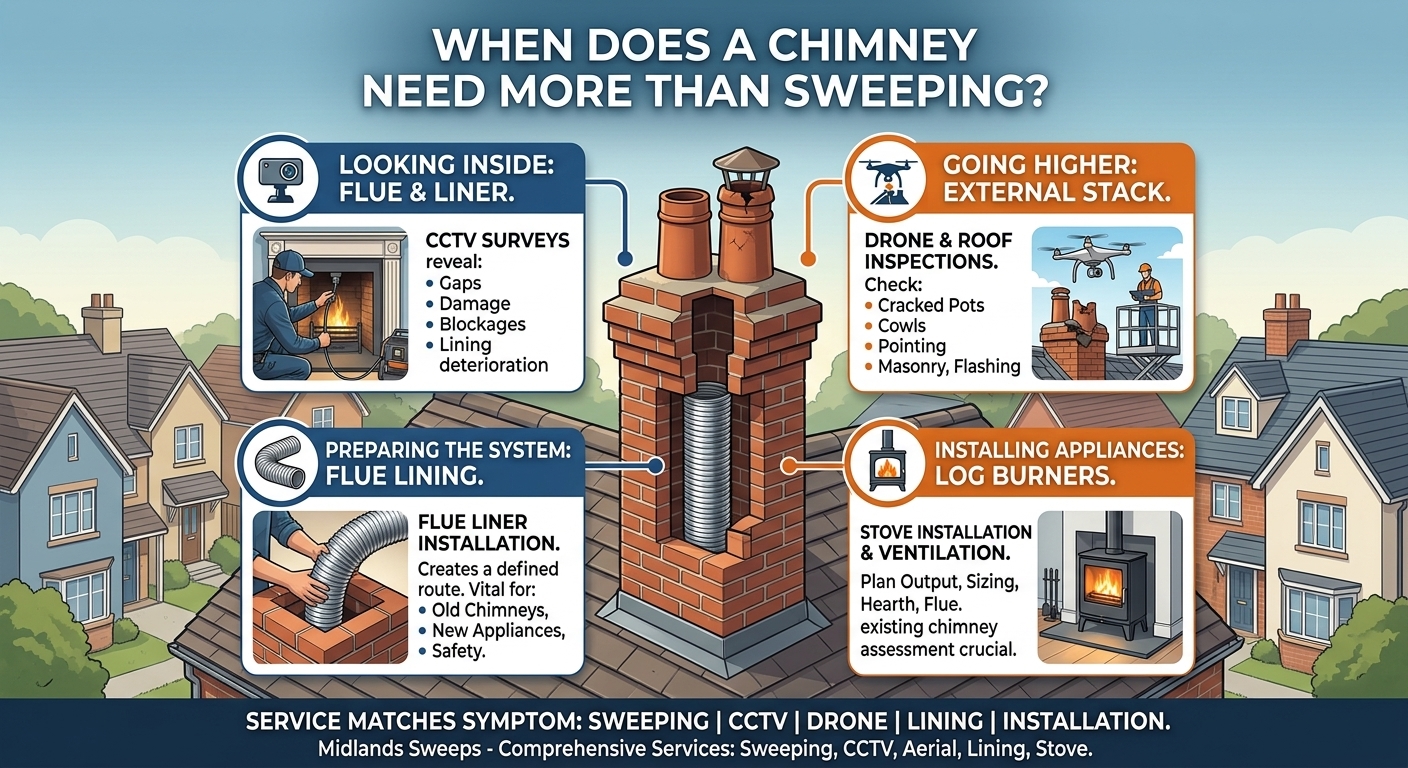
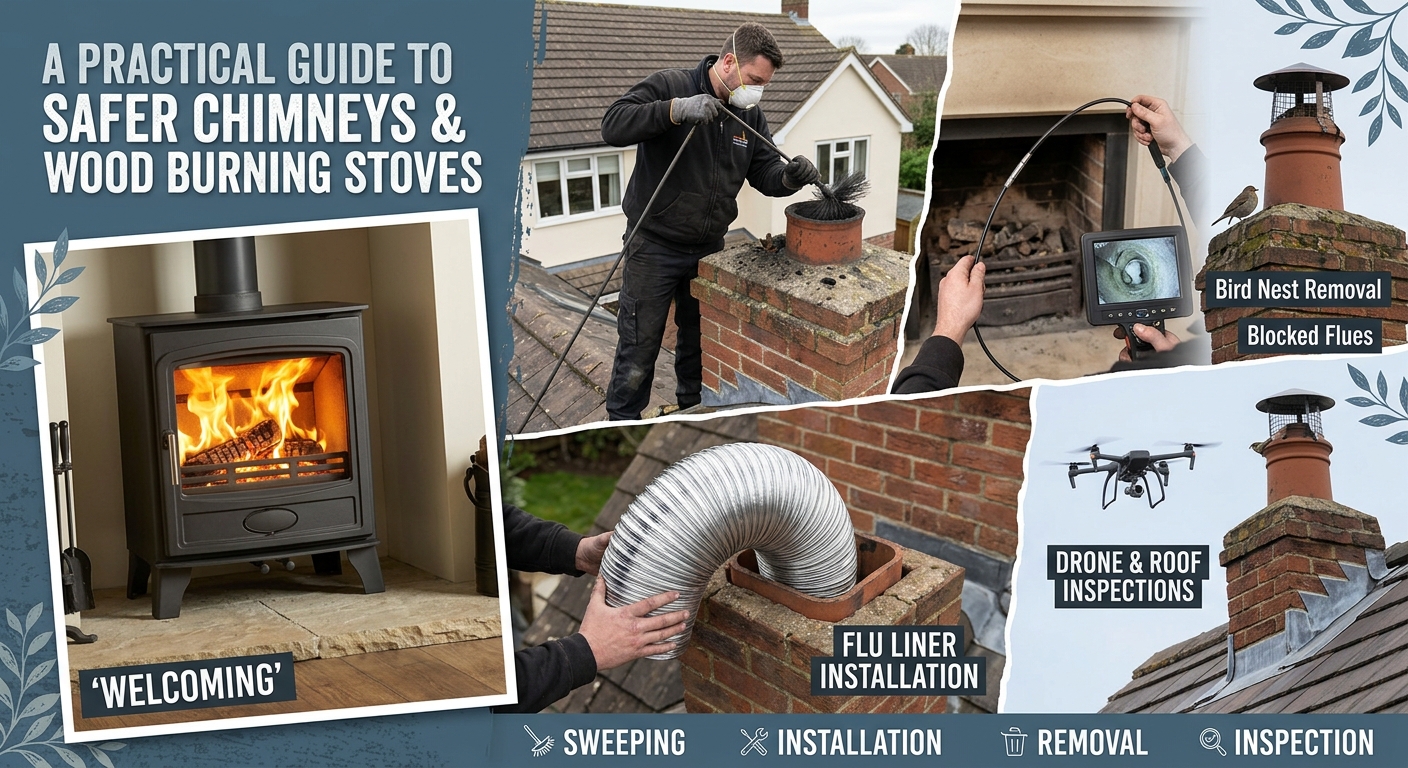
Midlands Sweeps provides professional chimney sweeping alongside log burner installation, flue liner work, bird nest removal and chimney inspection services. The company is based in Swadlincote and provides chimney services across surrounding Midlands areas.
If your log burner is producing excessive smoke, blackening its glass quickly or leaving heavy tar deposits inside the chimney, check your firewood moisture first — and if the problem continues, have the chimney professionally inspected and swept.