Finding the best chimney sweep is not simply about choosing the first company that appears in a local search. The right professional should be properly trained, insured, well-equipped and careful when working inside your home.
A reliable chimney sweep should clean the complete chimney or flue, protect your flooring and furniture, identify visible concerns and explain any additional work that may be required. They should also provide suitable documentation after completing the service.
This guide explains what to look for when comparing local chimney sweeps and how to choose a professional who can keep your fireplace, stove and chimney working safely.
What Makes a Chimney Sweep the Best Choice?
The best chimney sweep for your property should combine technical knowledge with reliable customer service.
They should understand different chimney systems and appliances, including:
- Open fireplaces
- Wood-burning stoves
- Multi-fuel burners
- Traditional masonry chimneys
- Stainless steel flue liners
- Twin-wall flue systems
- Domestic heating appliances
A professional sweep should assess your chimney before starting, select a suitable sweeping method and use equipment that will not unnecessarily damage the chimney or flue liner.
HETAS explains that the appropriate sweeping method depends on the condition and construction of the chimney. A professional should inspect the system and determine whether traditional brushing, power sweeping or further investigation is appropriate.
1. Look for Professional Training and Registration
One of the first things to check is whether the chimney sweep has completed recognised professional training.
Membership of an established trade organisation can provide reassurance that the sweep has been assessed against appropriate standards.
The National Association of Chimney Sweeps requires its members to complete training and assessment, hold valid insurance and carry suitable chimney-sweeping equipment.
When contacting a chimney sweep, ask:
- Which organisation are you registered with?
- Have you completed professional chimney-sweeping training?
- Can you provide your membership or registration details?
- Do you regularly work with my type of chimney or appliance?
- Will I receive a sweeping certificate?
A reputable professional should be willing to answer these questions clearly.
2. Check That the Chimney Sweep Is Insured
The best chimney sweeps should hold appropriate public liability insurance.
Chimney sweeping involves working with soot, fireplaces, heating appliances and sometimes specialist access equipment. Insurance provides protection if accidental damage occurs while work is being completed.
NACS states that its members must hold valid insurance as part of its code of conduct.
Do not be afraid to ask a company whether it is insured before confirming your appointment.
3. Choose a Sweep Who Protects Your Home
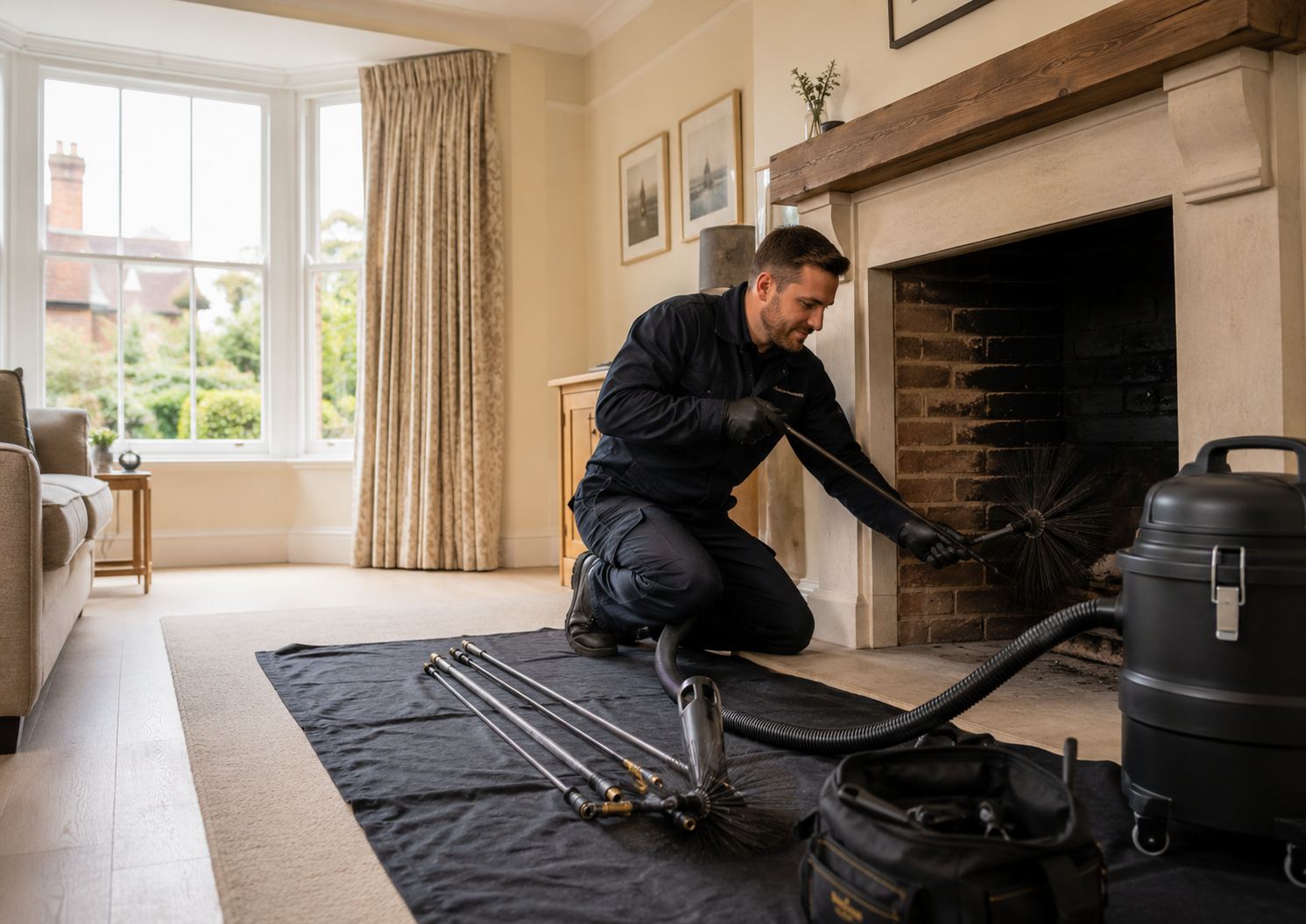
Many homeowners worry that chimney sweeping will cover the room in soot. A properly equipped professional should take practical steps to prevent this.
The sweep should normally use:
- Protective floor sheets
- Fireplace seals
- Suitable appliance coverings
- Specialist soot-vacuum equipment
- Clean rods and brushes
- Appropriate personal protective equipment
NACS members are trained to minimise dust escaping during the sweeping process and carry protective sheets for carpets, floors and furniture.
Before the appointment, you may be asked to clear the hearth, remove ornaments and create a clear route to the fireplace. The sweep should handle the specialist room protection.
4. Make Sure the Complete Chimney or Flue Is Swept
Cleaning visible soot from the fireplace is not the same as sweeping the complete chimney.
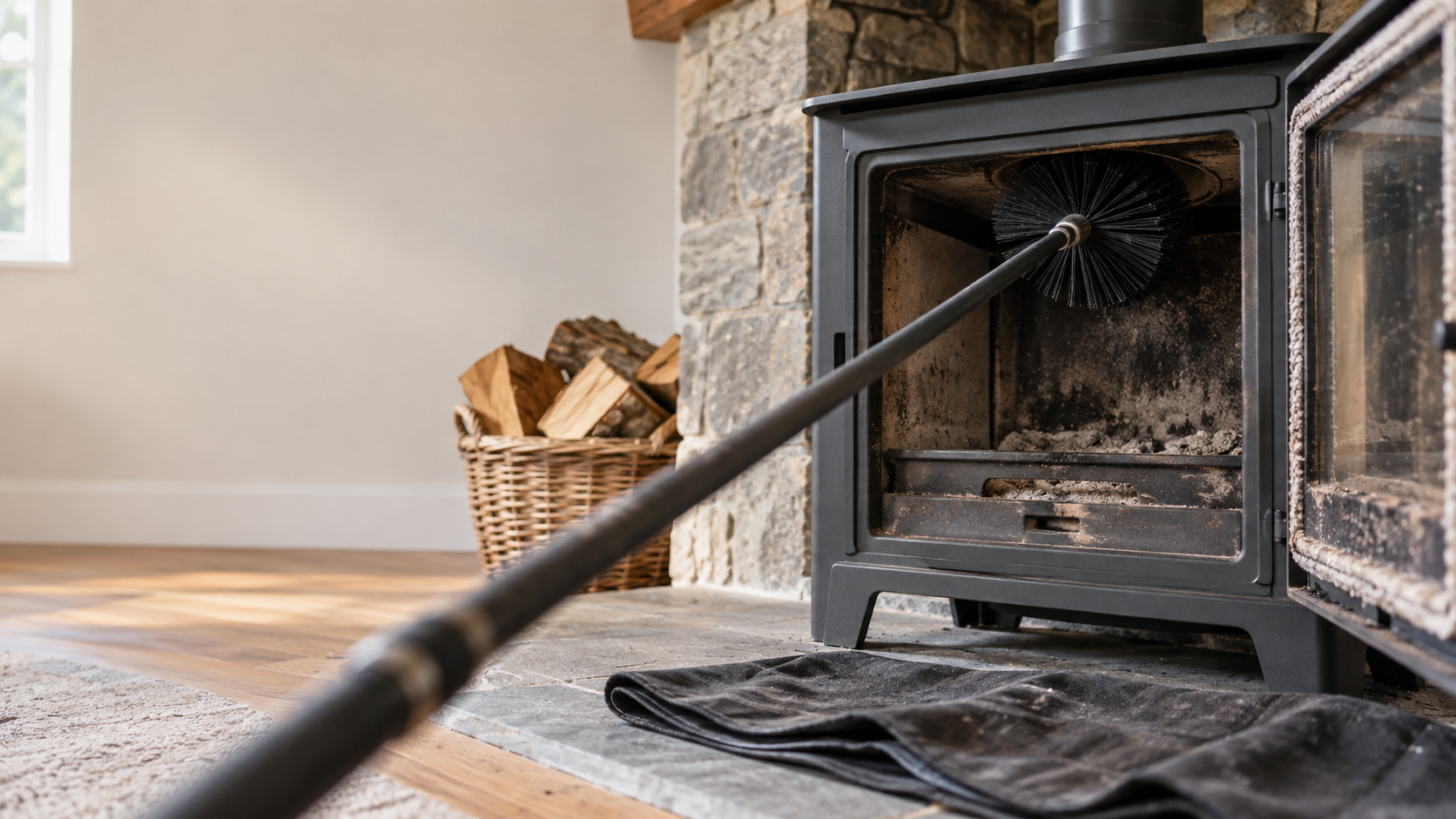
A professional chimney sweep should pass suitable rods and brushes through the full accessible length of the flue. The process should loosen and remove deposits that have collected on the internal surfaces.
Common materials removed during chimney sweeping include:
- Soot
- Creosote
- Tar
- Ash and fuel residue
- Cobwebs
- Bird nesting material
- Leaves and twigs
- Loose chimney debris
- Minor blockages
Midlands Sweeps provides professional chimney and flue liner sweeping designed to remove soot, creosote, tar, nesting material and debris from fireplaces, stoves and flue systems.
5. Look for the Right Equipment
Different chimneys require different tools.
A traditional brick chimney may need a different approach from a modern stainless steel liner. Using equipment that is too aggressive could damage certain flue systems.
Professional sweeping equipment may include:
- Traditional chimney brushes
- Flexible sweeping rods
- Rotary power-sweeping systems
- Specialist industrial vacuums
- Smoke-testing equipment
- Inspection mirrors
- Chimney cameras
- Protective fireplace seals
HETAS notes that traditional sweeping is suitable for many chimneys, while power sweeping can remove more stubborn deposits. However, power sweeping must be used carefully because it can damage some chimney liners.
The best chimney sweep will select equipment based on the chimney’s condition rather than using the same method for every property.
6. Expect an Initial Chimney Assessment
A professional sweep should ask a few questions before beginning the work.
These may include:
- When was the chimney last swept?
- Which fuel do you burn?
- How often do you use the appliance?
- Have you experienced smoke entering the room?
- Have you noticed strong soot or tar smells?
- Has any debris fallen into the fireplace?
- Have birds been active around the chimney?
- Has the property recently been renovated?
- Has the chimney experienced a previous fire?
The accessible parts of the fireplace, appliance and flue should also be visually checked.
HETAS explains that an initial visual assessment helps identify soot, creosote, bird nests and other obstructions before the sweeping method is selected.
7. Choose Someone Who Identifies Warning Signs
A chimney sweep is not necessarily a structural engineer or roofing contractor. However, an experienced sweep may identify visible signs that further investigation is needed.
These may include:
- Excessive tar or creosote
- Poor chimney draught
- Damaged flue components
- Fallen masonry
- Signs of water entry
- Loose stove components
- Deteriorated seals
- Bird nesting activity
- Smoke leakage
- Evidence of a previous chimney fire
A standard sweep may not reveal every hidden defect. CCTV inspection, smoke-pressure testing, roof inspection or specialist repair work may be recommended where a more serious issue is suspected.
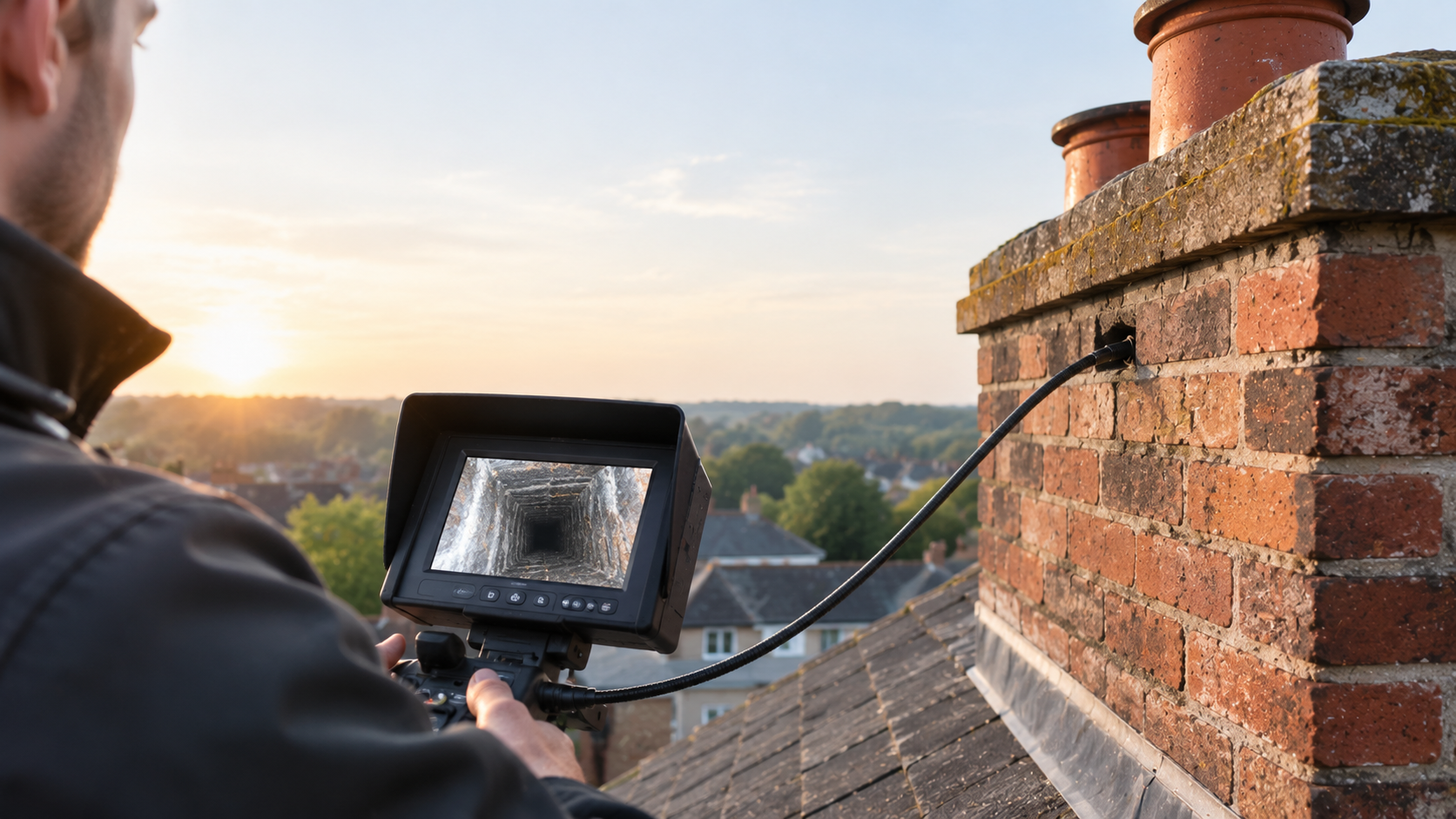
Midlands Sweeps also provides CCTV and drone inspection services that can help identify internal blockages, damage, tar accumulation and external chimney concerns.
8. Ask Whether Testing Is Included
After sweeping, an appropriate smoke evacuation or draught test may be carried out.
This can help check whether smoke travels through the chimney and exits correctly. It may also identify obvious problems with restricted airflow or smoke spilling back into the room.
More detailed testing may be needed following:
- A chimney fire
- Structural alterations
- Installation of a new appliance
- A change in fuel
- Long periods without use
- Suspected leakage
- Purchase of a property with no chimney records
HETAS describes smoke-leakage and pressure tests as additional inspection procedures that may be needed when there has been a significant change or when the chimney’s condition is uncertain.
Ask the sweep which tests are included in the quoted service and which would involve an additional charge.
9. Confirm That You Will Receive Documentation
The best chimney sweep should provide a certificate or written service record after completing the work.
This document may include:
- The property address
- Date of sweeping
- Appliance or chimney cleaned
- Fuel type
- Sweeping method
- Condition of the chimney
- Problems identified
- Recommendations
- Suggested date for the next sweep
- Chimney sweep’s business details
NACS requires its members to issue a Certificate of Chimney Sweeping for each chimney cleaned. If a dangerous defect is identified, an appropriate warning notice should be provided.
Keep the certificate with your property maintenance records. It may also be useful when discussing chimney maintenance with an insurer, landlord, installer or future buyer.
10. Read Genuine Local Customer Reviews
Online reviews can help you understand how a chimney sweep treats customers and their homes.
Look beyond the overall star rating. Read recent reviews and check whether customers consistently mention:
- Punctual arrival
- Clear communication
- Clean and tidy work
- Professional behaviour
- Honest explanations
- Fair pricing
- Care around flooring and furniture
- Useful maintenance advice
- Reliable follow-up service
Reviews are most useful when they describe a service similar to the one you need.
Be cautious when a company has only vague testimonials, unusually repetitive reviews or no information about its qualifications and insurance.
11. Compare Value, Not Only Price
The cheapest chimney sweep is not always the best choice.
A very low quotation may exclude important parts of the service, such as testing, certification, difficult access or removal of a blockage.
The price can vary depending on:
- Appliance type
- Chimney construction
- Property location
- Flue accessibility
- Number of chimneys
- Amount of soot or tar
- Bird nests or other blockages
- Additional testing
- CCTV inspection requirements
NACS advises that sweeping costs depend on the type of chimney or appliance, the time required and the location of the property.
Before booking, ask exactly what the price includes.
Questions to Ask a Chimney Sweep Before Booking
Use these questions to compare local companies:
- Are you professionally trained?
- Are you registered with a recognised trade organisation?
- Do you hold public liability insurance?
- Do you sweep my type of stove, fireplace or flue?
- What is included in the price?
- Will you protect my flooring and furniture?
- Will the complete chimney or liner be swept?
- Is smoke or draught testing included?
- Will I receive a sweeping certificate?
- Do you provide CCTV inspections if a blockage is suspected?
- Can you remove bird nests?
- How frequently should my particular chimney be swept?
Clear and professional answers are usually a positive sign.
Warning Signs of an Unreliable Chimney Sweep
Be cautious if a chimney sweep:
- Cannot explain their qualifications
- Refuses to confirm whether they are insured
- Does not use protective sheets
- Uses an ordinary domestic vacuum
- Cannot explain the sweeping method
- Offers an unrealistically low price
- Rushes the appointment
- Does not inspect the fireplace first
- Refuses to provide documentation
- Cannot explain identified problems
- Pressures you into immediate repairs
- Makes guarantees without inspecting the chimney
A professional should explain concerns calmly and distinguish between urgent safety issues and optional maintenance.
How Often Should the Best Chimney Sweep Visit?
The correct schedule depends on your appliance, fuel, chimney design and frequency of use.
NACS provides the following general guidance:
- Wood: Quarterly while in regular use
- Bituminous coal: Quarterly while in regular use
- Smokeless fuel: At least once a year
- Oil: Once a year
- Gas: Once a year
Your sweep should provide advice based on your specific installation rather than relying only on a general schedule.
You may need an earlier appointment if you notice smoke entering the room, poor draught, falling debris, strong tar smells or birds around the chimney.
What Should a Professional Sweep Include?
A standard professional visit will commonly include:
- A discussion about the chimney and appliance
- A basic visual assessment
- Protection of the surrounding room
- Sealing of the fireplace where necessary
- Sweeping with appropriate equipment
- Removal of soot and loose debris
- Checks for visible blockages
- Cleaning of the immediate work area
- Smoke or draught testing where appropriate
- Advice about visible defects
- A chimney-sweeping certificate
More complex work, including nest removal, heavy tar treatment, CCTV surveys and structural repairs, may require a separate quotation.
Why Choose Midlands Sweeps?
Midlands Sweeps is a Swadlincote-based, veteran-owned chimney and stove services company.
The company states that it is fully insured and registered with the National Association of Chimney Sweeps. It provides professional sweeping for open fireplaces, wood-burning stoves, multi-fuel burners, flue liners and other domestic heating appliances.
Available services include:
- Chimney sweeping
- Flue liner sweeping
- Log burner installation
- Flue liner installation
- Bird nest removal
- CCTV chimney inspections
- Drone and roof inspections
Midlands Sweeps also has experience and qualifications covering log burner and multi-fuel burner installations, chimney sweeping, brickwork, plastering and electrical installation.
Frequently Asked Questions
How do I know whether a chimney sweep is qualified?
Ask which professional organisation they are registered with and request their membership details. You can also search recognised industry directories for local registered sweeps.
Should a chimney sweep be insured?
Yes. Appropriate insurance protects both the customer and the business if accidental damage occurs during the work.
How long should chimney sweeping take?
The time depends on the chimney’s size, condition and level of blockage. HETAS advises that an average appointment may take approximately 60 to 90 minutes per chimney, although straightforward or more complex jobs can vary.
Will a good chimney sweep make a mess?
A properly equipped sweep should use protective coverings, fireplace seals and specialist vacuum equipment. Some dust may be unavoidable when dealing with a severe blockage or large bird nest, but the room should normally remain clean.
Should I receive a certificate?
A registered professional should provide appropriate documentation after completing the sweep. Ask about certification before booking.
Does the best chimney sweep need camera equipment?
Not every routine sweep requires a camera. However, CCTV equipment can be valuable when the chimney has an unknown history, a difficult blockage, suspected liner damage or evidence of a previous fire.
Can a chimney sweep repair my chimney?
Some sweeps provide additional installation or repair services, while others concentrate only on cleaning. Repairs, liner replacement and external chimney work are normally quoted separately.
How can I prepare for the appointment?
Allow the appliance to cool completely, remove fuel and ash, clear ornaments from the mantelpiece and provide a clear route to the fireplace.
Book a Professional Chimney Sweep
The best chimney sweep is a professional who combines training, insurance, suitable equipment, careful room protection and honest advice.
Do not choose based on price alone. Check the company’s qualifications, reviews, documentation and experience with your particular appliance or chimney system.
Midlands Sweeps provides professional chimney and flue liner sweeping in Swadlincote and surrounding locations. To discuss your chimney, stove or flue requirements, call 07824 830604 or submit an appointment request through the Midlands Sweeps website.