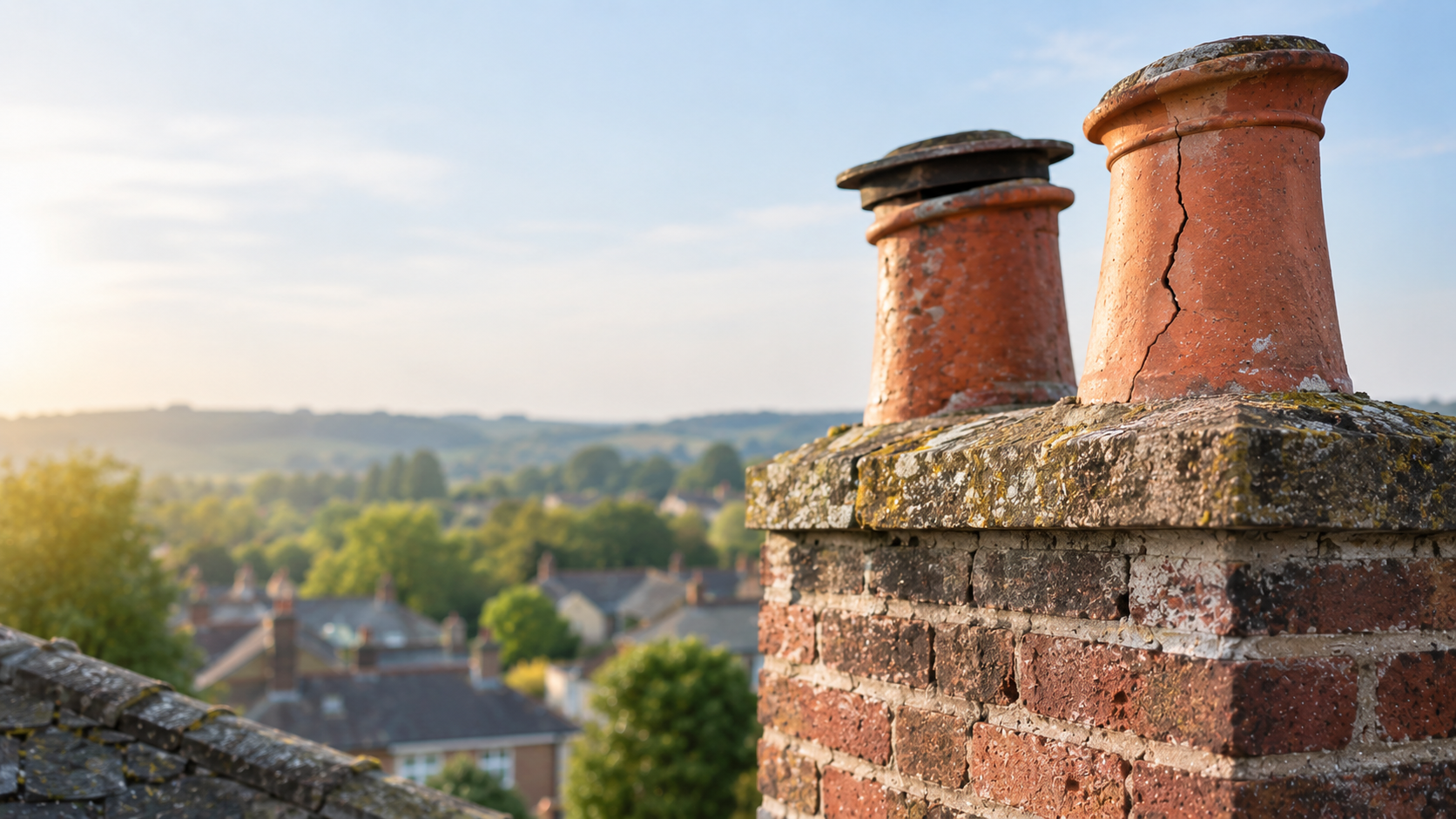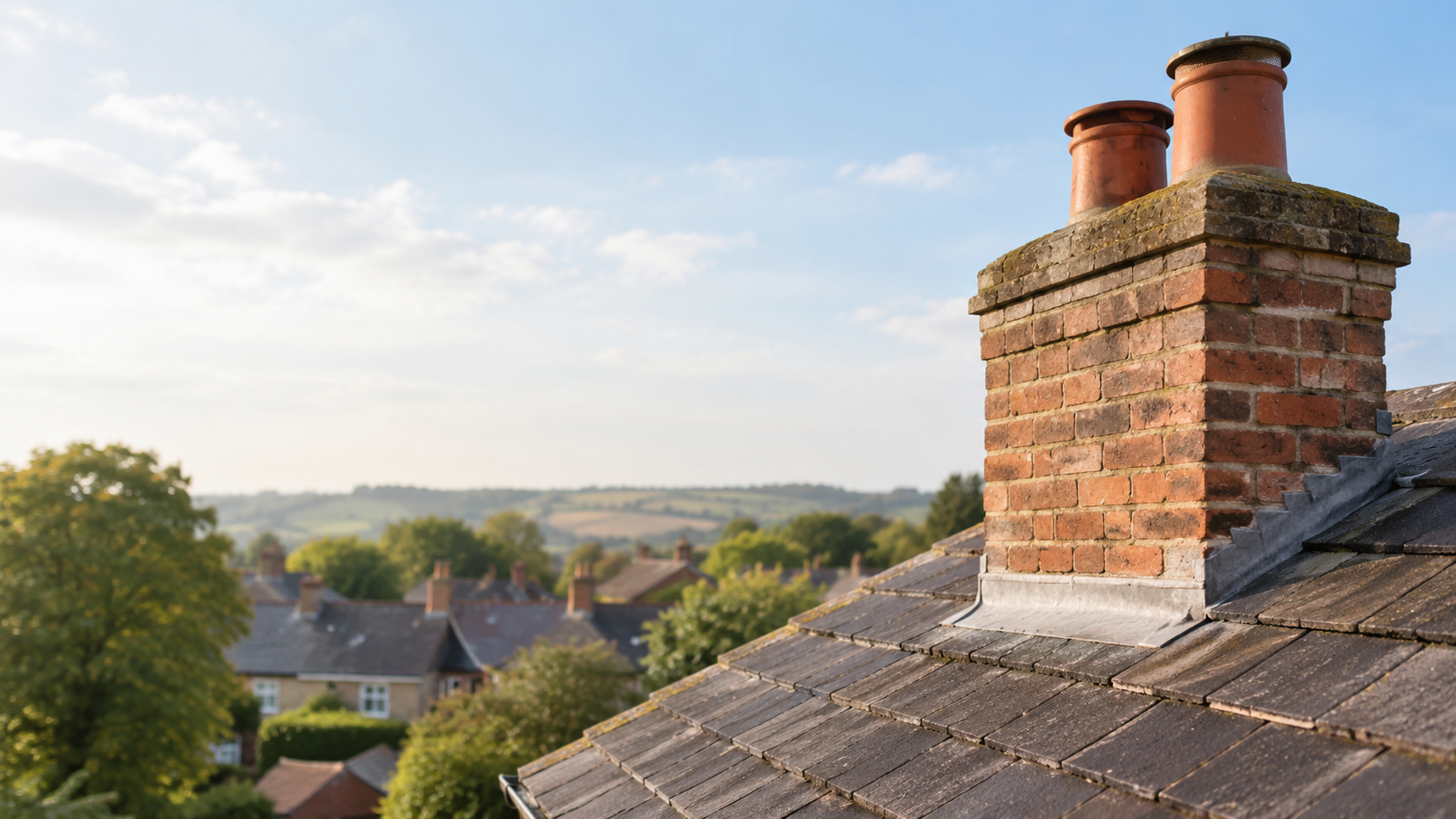
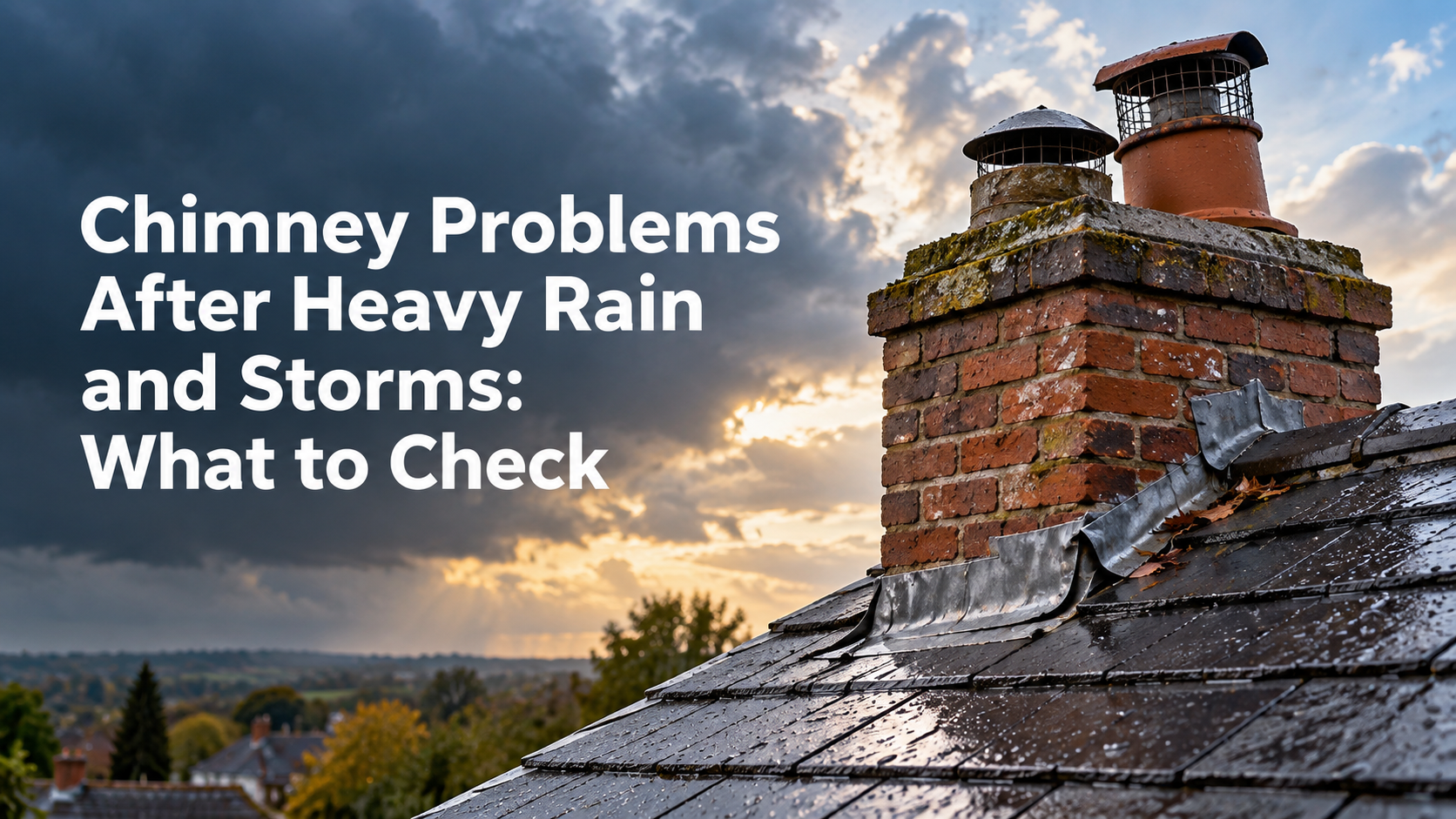
Heavy rain, strong winds, and freezing temperatures can affect parts of a chimney that are difficult to see from the ground. A fireplace may continue to look normal inside the room while the chimney pot, mortar, flashing, or roof tiles have developed damage outside.
Checking a chimney after severe weather can help homeowners notice problems before they lead to damp, falling debris, or poor fireplace performance. Here are the main warning signs to watch for and the types of inspection that may be useful.
Look for New Damp Marks
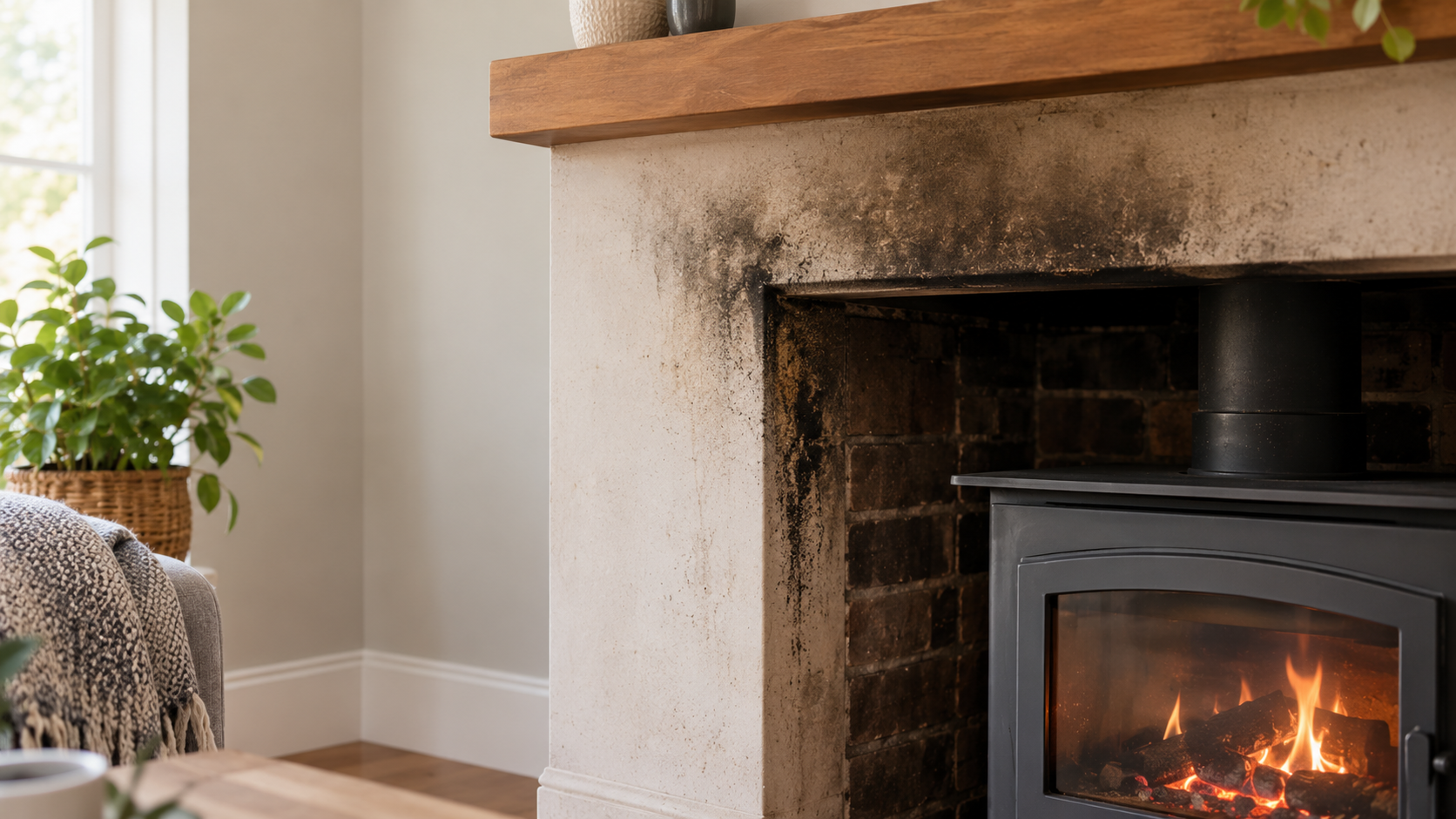
Water entering around a chimney can travel through masonry before becoming visible inside the home. Look for damp patches, peeling paint, or discolored wallpaper near the chimney breast. A musty smell may also indicate moisture.
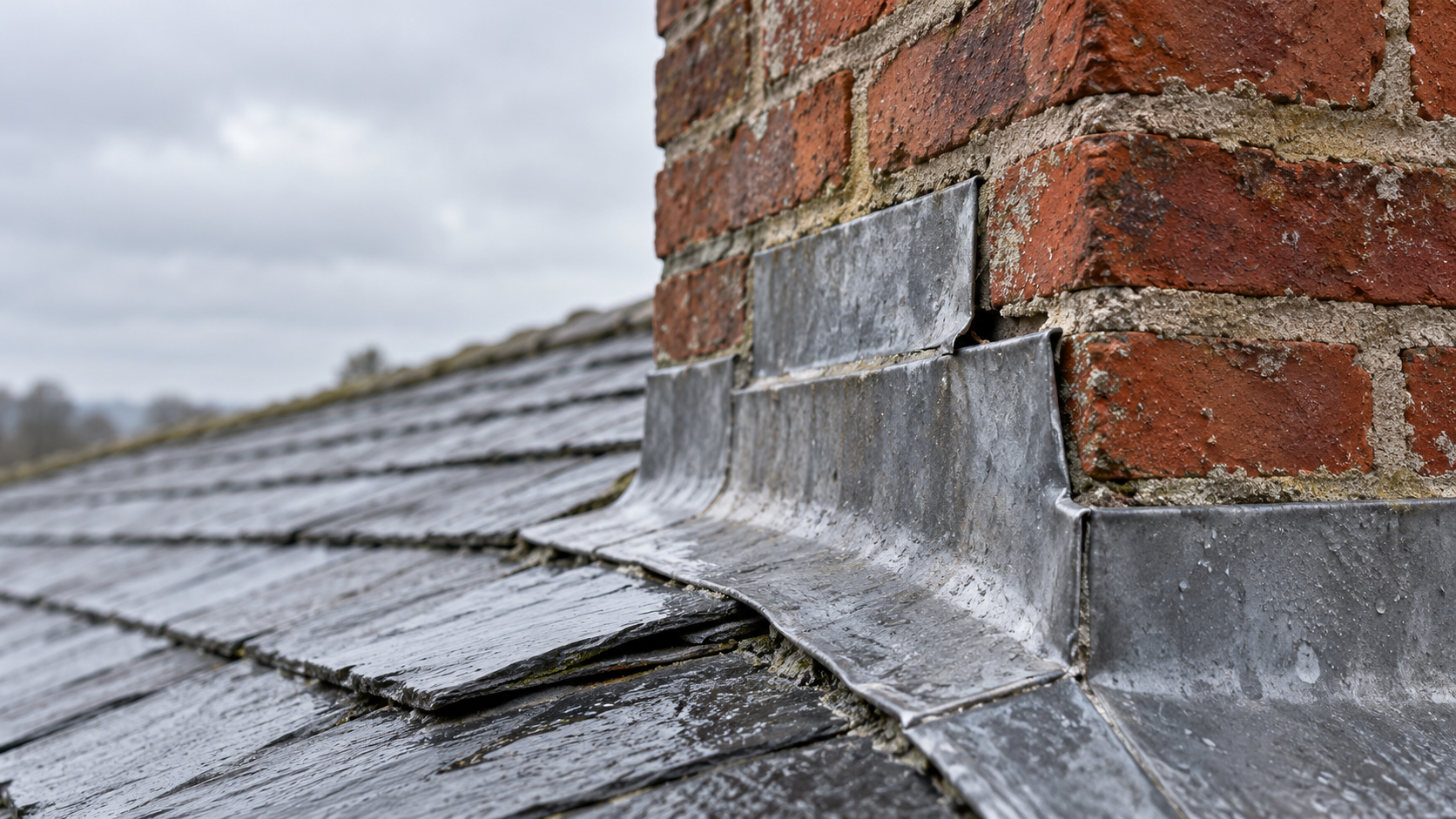
Damp does not always mean that rain is entering through the chimney opening. Damaged flashing, cracked mortar, worn chimney pots, and nearby roof tiles can all allow water into the property. The source should be identified before repairs are planned.
Check the Fireplace for Fallen Debris
After strong winds, small pieces of mortar, brick, or chimney pot may fall into the fireplace. Soot and old deposits can also be disturbed by moisture or changes in airflow.
A small amount of soot does not always indicate serious damage, but repeated debris should not be ignored. Avoid lighting the fire until the chimney has been checked, especially if the material includes pieces of brick, clay, or mortar.
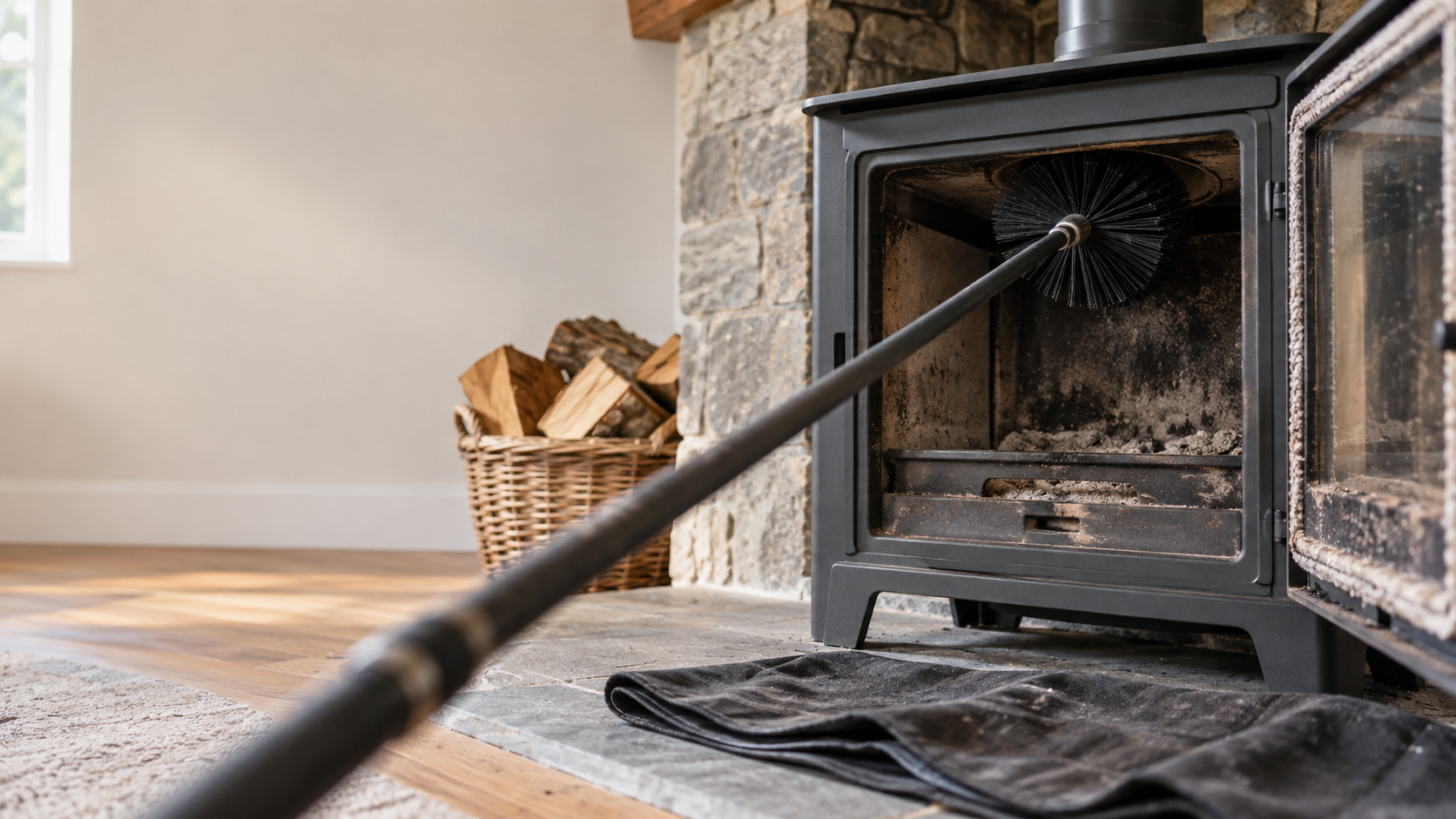
A professional chimney sweep can clear soot and loose material from the flue. During the visit, the sweep may also identify signs that a closer internal or external assessment is required.
Inspect the Chimney From a Safe Position
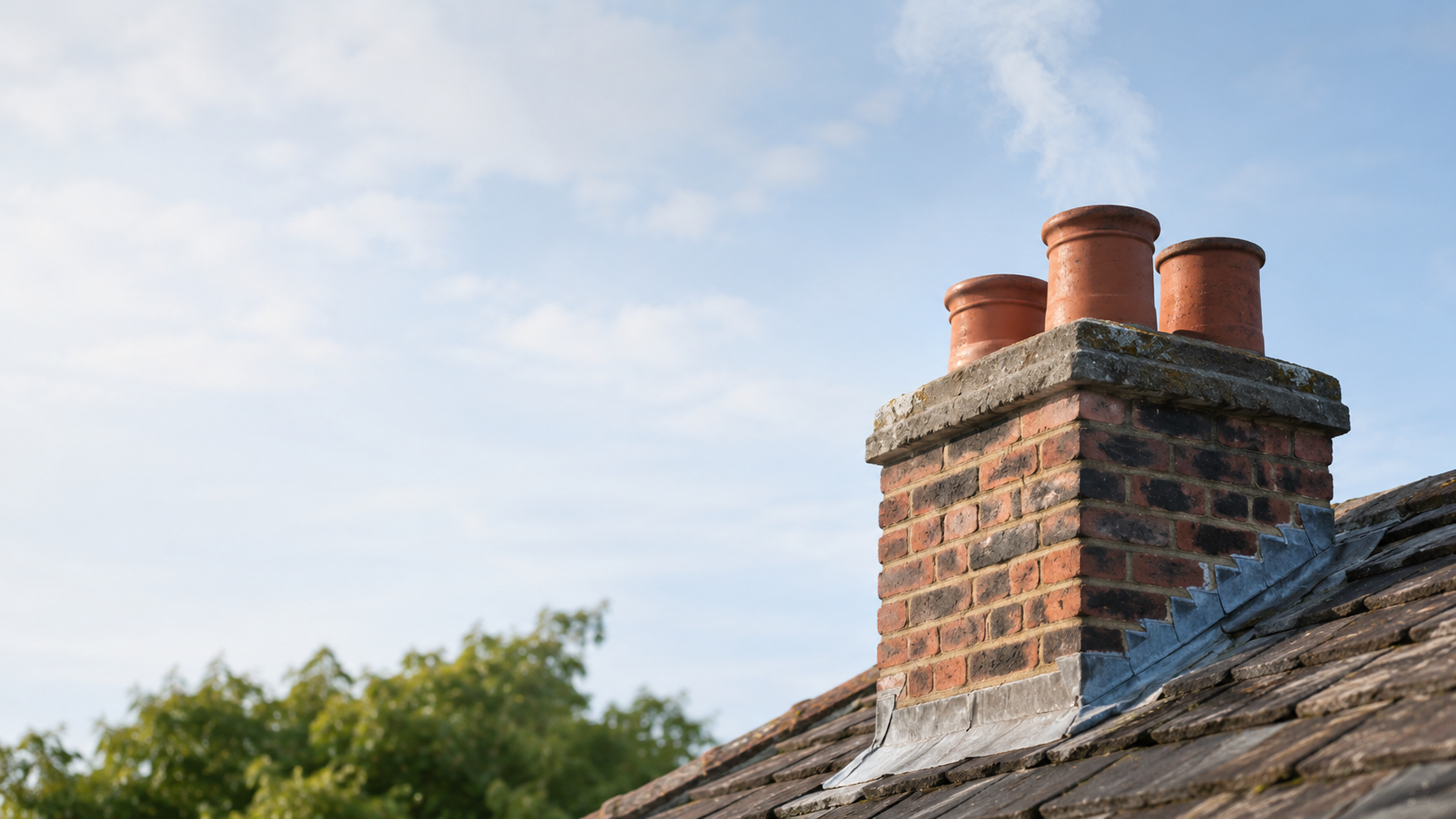
From ground level, look for an obviously leaning chimney pot, missing cowl, or loose material around the stack. Binoculars may help, but avoid climbing onto the roof without the correct equipment and experience.
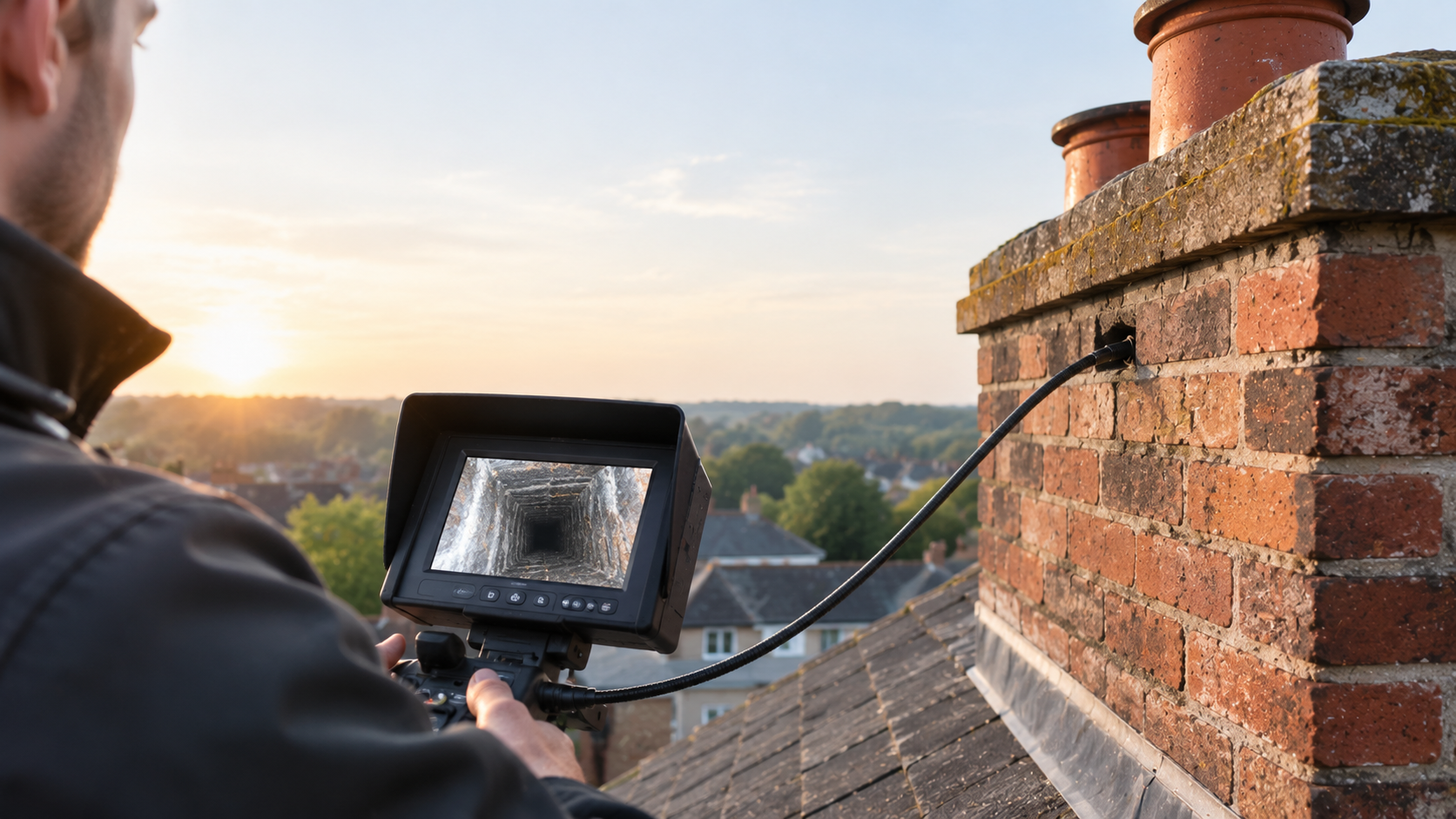
A drone inspection and roof inspection can provide a clearer view of chimney pots, pointing, flashing, and nearby tiles. Drone photographs can help document visible damage and identify areas that require closer attention. When a defect needs to be touched, measured, or tested, a hands on roof inspection may still be necessary.
Pay Attention to Changes in the Fire
A chimney problem may first become noticeable when the appliance is used. Warning signs include smoke entering the room, difficulty lighting the fire, unusual smells, or a noticeable change in how the stove burns.
Stop using the appliance if smoke or fumes are not leaving correctly. Testing alarms and opening windows can improve immediate safety, but the cause still needs to be investigated before the fire is lit again.
An internal camera survey can examine sections of the flue that are not visible from the fireplace. CCTV and drone inspection can be particularly helpful after a storm because it provides information about both the internal passage and the exposed chimney above the roof.
Consider the Condition of the Flue Liner
A flue liner provides a route through which smoke and combustion gases leave the property. Age, corrosion, heat, and moisture can affect some liners over time. Storm damage to the upper chimney may also allow water to reach parts of the flue system.
If an inspection finds deterioration, flue liner installation may be considered. The correct solution depends on the appliance, fuel, chimney dimensions, and existing condition. A liner should be selected following an assessment rather than installed simply because the chimney is old.
Watch for Signs of Bird Activity
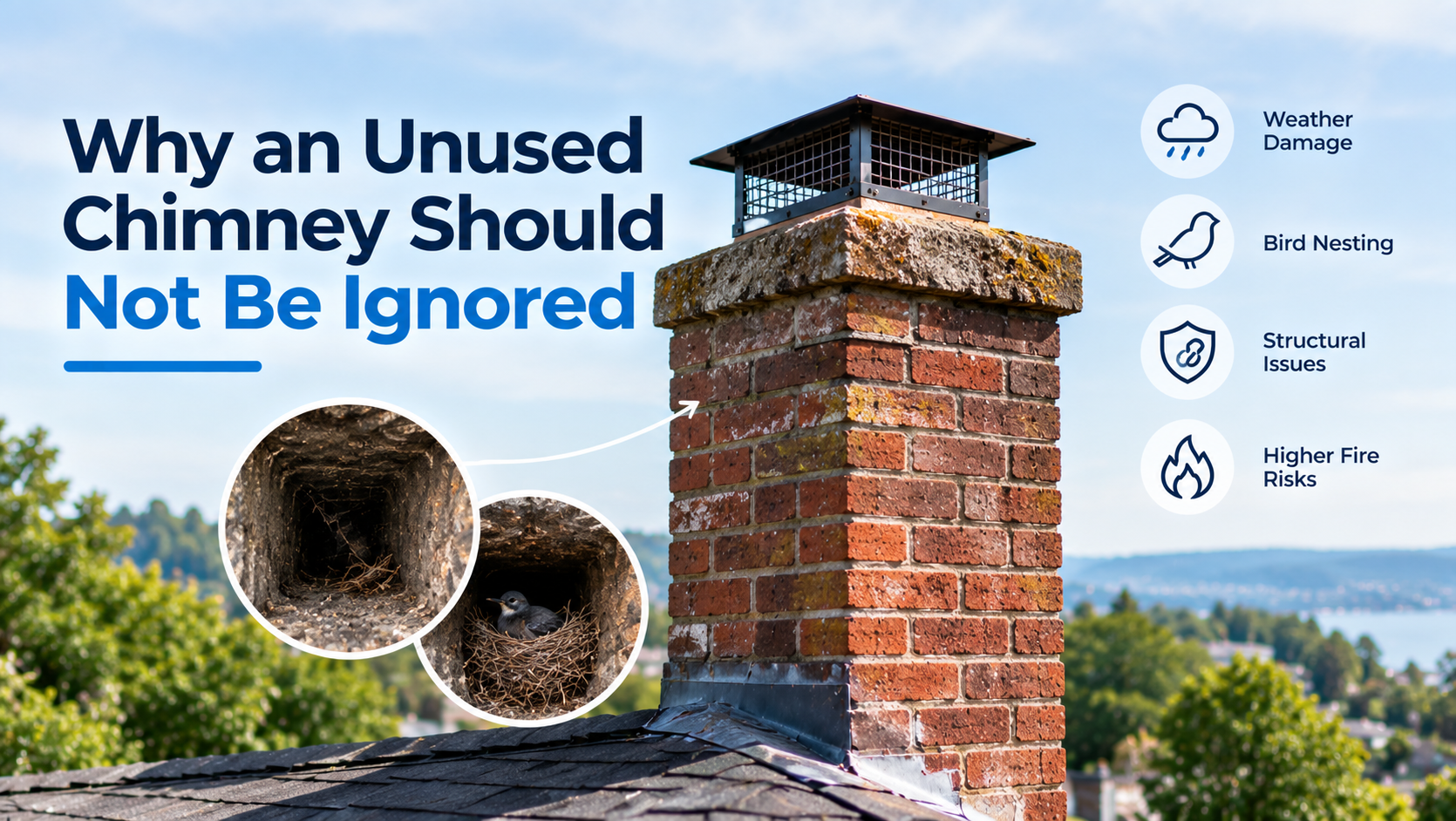
Storms can damage cowls or move protective coverings, leaving chimney pots more accessible to birds. Twigs in the fireplace, scratching sounds, or repeated bird calls from the flue may indicate nesting activity.
Do not light a fire when a nest is suspected. Bird nest removal must take wildlife protections into account, as active nests, eggs, and wild birds may be legally protected. Once removal can be completed lawfully, an appropriate cowl may help discourage future nesting.
Check Before Installing a New Stove
If bad weather has exposed problems with an older fireplace, you may decide to replace it with a stove. A log burner installation should begin with an assessment of the chimney, hearth, ventilation, and intended flue route.
Repairing storm damage before fitting the appliance can prevent hidden defects from becoming part of the new system. The stove output should also suit the room, and every connection should be checked before use.
Midlands Sweeps provides chimney sweeping, inspections, lining, nest removal, and stove installation across its listed service areas. Each service addresses a different part of the system, so the findings from an inspection should guide what happens next.
Conclusion
After heavy rain or strong winds, check for damp marks, fallen debris, unusual smells, and changes in fireplace performance. External damage may require a drone or roof assessment, while internal concerns may need sweeping or CCTV inspection. Acting on new warning signs can prevent a minor weather-related issue from developing into a larger chimney or roof problem.
Frequently Asked Questions
Can rain come directly down a chimney?
Yes, but water can also enter through damaged pots, mortar, flashing, or roof tiles. An inspection can help locate the source.
Should I use my fireplace after a storm?
Do not use it if you notice debris, smoke, damp smells, or visible chimney damage. Have the system checked first.
Can a drone confirm every type of chimney damage?
A drone can record many external defects, but close access or an internal inspection may be required for a complete assessment.