Are you searching for a reliable chimney sweep in Burton?
Regular chimney sweeping is essential for keeping open fires, log burners and multi-fuel stoves operating safely. Over time, soot, tar, creosote and other debris can collect inside the chimney or flue, restricting airflow and increasing the risk of smoke problems or chimney fires.
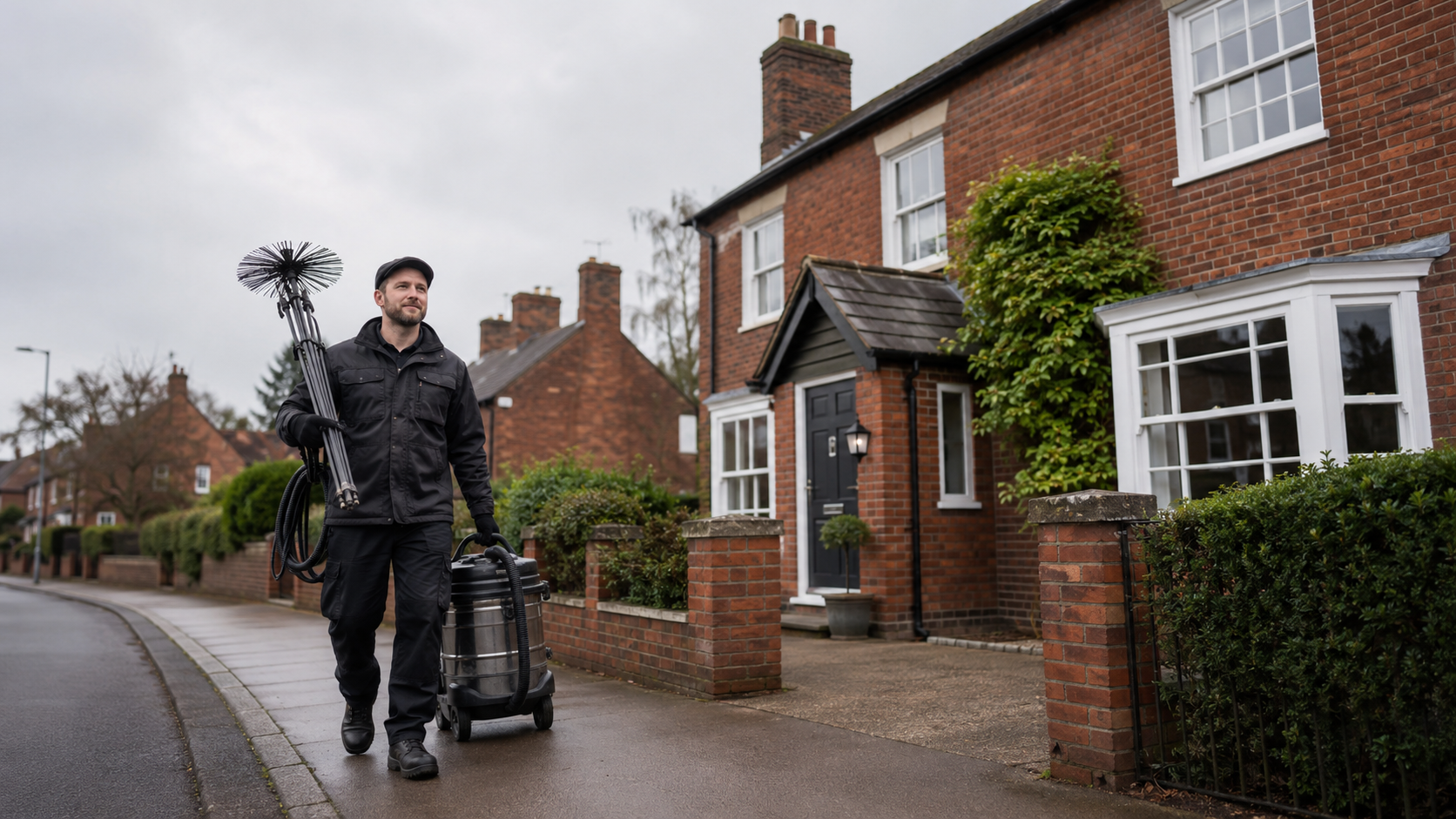
Midlands Sweeps provides professional chimney and stove services for customers in Burton upon Trent and surrounding areas. Based nearby in Swadlincote, the company offers chimney sweeping, bird nest removal, flue liner installation, log burner installation and specialist chimney inspections.
Professional Chimney Sweeping in Burton upon Trent
A professional chimney sweep does more than remove visible soot from the fireplace.
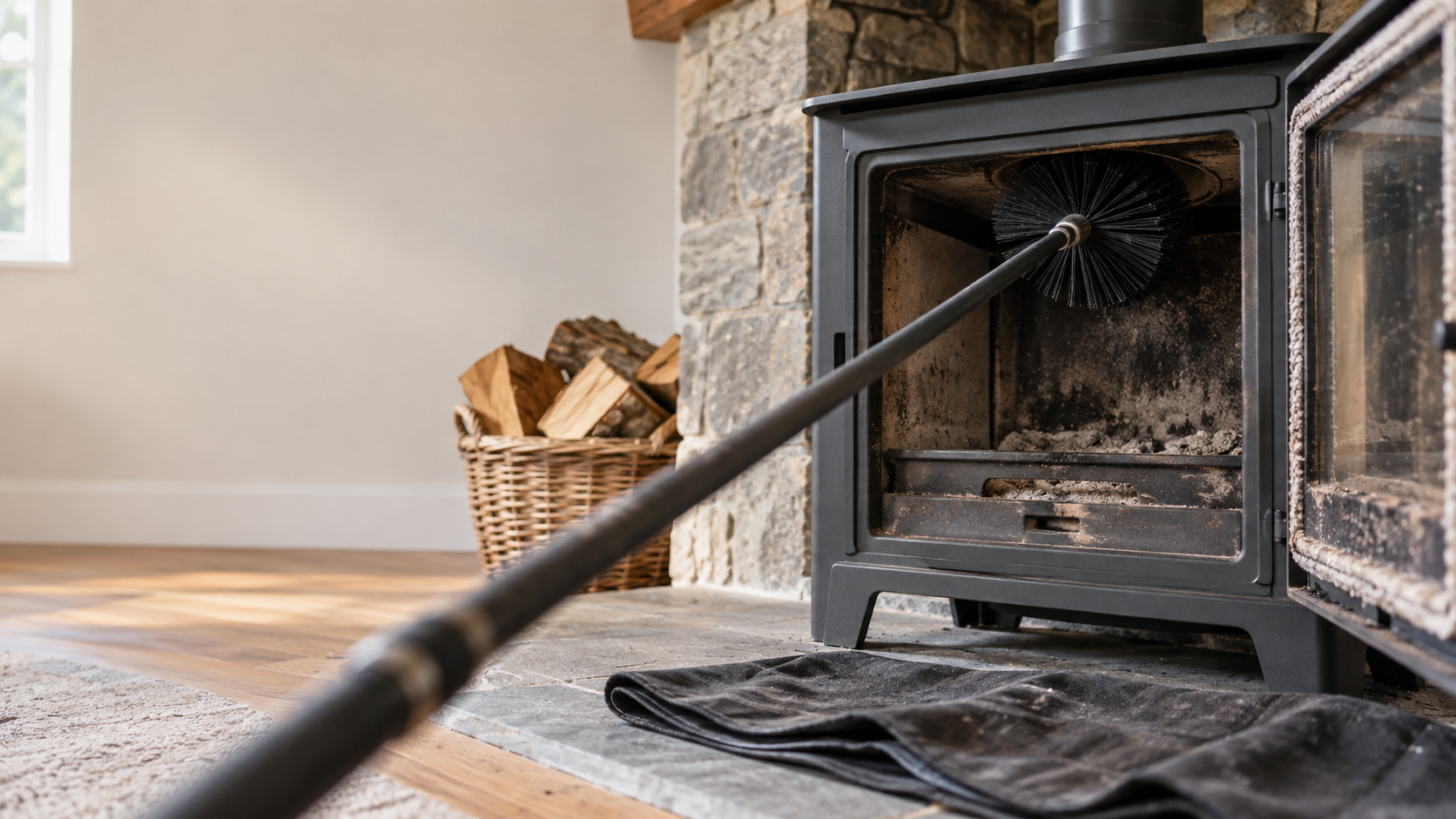
The complete chimney or flue should be cleaned using equipment suitable for its construction and the appliance connected to it. This may include traditional chimney brushes, flexible rods or specialist rotary sweeping equipment.
A typical chimney sweep may remove:
- Loose soot
- Tar and creosote deposits
- Ash and fuel residue
- Cobwebs
- Leaves and twigs
- Loose nesting material
- Fallen chimney debris
- Minor obstructions
The purpose is to create a clear passage through which smoke and combustion gases can safely leave your property.
Why Chimneys in Burton Need Regular Sweeping
Every time you use an open fire, wood burner or multi-fuel stove, combustion deposits can collect inside the chimney.
If these deposits are not removed, they can reduce chimney draught and affect the performance of your appliance. Soot and tar are also combustible, which means excessive accumulation may increase the risk of a chimney fire.
DEFRA advises homeowners to have chimneys connected to stoves or open fires professionally swept at least once a year. It notes that soot and tar build-up can reduce efficiency and increase chimney-fire risks.
Regular sweeping can help:
- Reduce combustible soot and creosote
- Maintain an effective chimney draught
- Prevent smoke from spilling into the room
- Remove loose debris and minor blockages
- Improve fireplace or stove performance
- Identify visible signs of deterioration
- Reduce unpleasant soot and tar odours
- Maintain a record of chimney care
Which Chimneys and Appliances Can Be Swept?
A professional chimney sweep in Burton may work with several types of domestic chimney and heating system.
These commonly include:
- Traditional open fireplaces
- Wood-burning stoves
- Multi-fuel burners
- Brick and masonry chimneys
- Stainless steel flue liners
- Twin-wall flue systems
- Inset fires
- Domestic oil or gas appliance flues designed to be swept
Tell the sweep which appliance you have when making your booking. This helps ensure that appropriate rods, brushes and cleaning equipment are brought to your property.
How Often Should Your Chimney Be Swept?
The correct sweeping frequency depends on the fuel you burn, how regularly the appliance is used and the condition of the chimney.
General guidance includes:
Wood-Burning Fires
NACS recommends that chimneys used for burning wood are swept quarterly while they are in use. HETAS advises sweeping at least twice a year when burning wood, with one appointment before the heating season and another after the main period of use.
Smokeless Fuel
Chimneys used with smokeless fuel should generally be swept at least once a year.
Bituminous Coal
NACS advises quarterly sweeping while bituminous coal is in use.
Oil and Gas
Flues serving oil or gas appliances that are designed to be swept should generally be checked and swept once a year. Appliance work must also be handled by an appropriately qualified professional.
Your chimney sweep may recommend a different schedule based on your appliance, fuel and usage.
Signs You Need a Chimney Sweep in Burton
You should not always wait for your regular maintenance appointment. Book a chimney inspection or sweep if you notice any of the following warning signs.
Smoke Coming Into the Room
Smoke spilling from an open fireplace or escaping when a stove door is opened may indicate poor draught, a blockage or inadequate ventilation.
Stop using the appliance if smoke repeatedly enters the room.
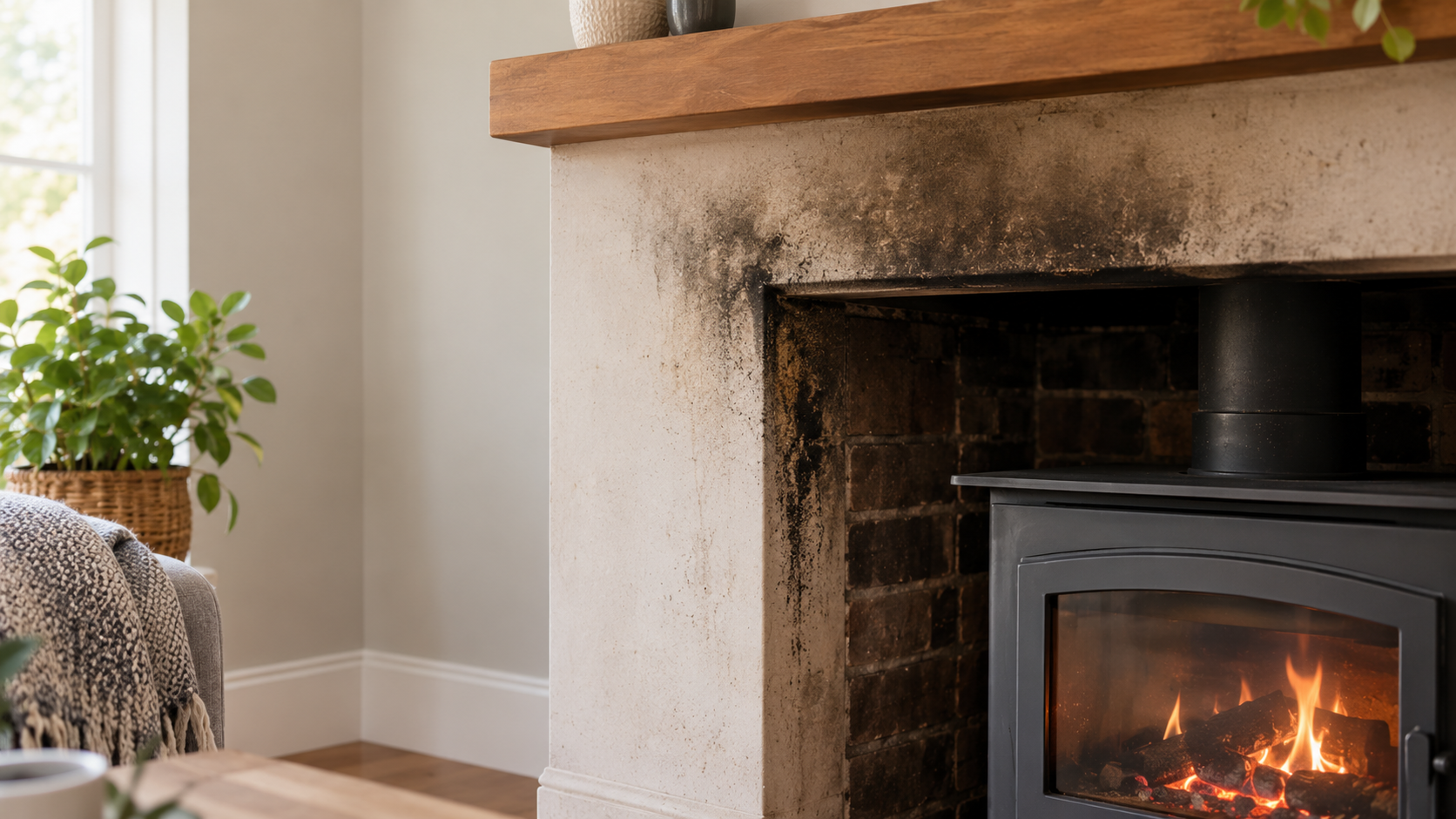
A Strong Sooty or Tar Smell
Persistent smoky or tar-like odours may indicate deposits inside the chimney. These smells can become more noticeable during warm or damp weather.
Falling Soot or Debris
Soot, twigs, feathers or pieces of masonry falling into the fireplace can indicate a blockage, bird activity or internal chimney deterioration.
Poor Fire Performance
A fire that is difficult to light, burns weakly or repeatedly goes out may be affected by restricted airflow.
Rapidly Blackening Stove Glass
Stove glass can become dirty because of damp wood, incorrect air control or poor combustion. Rapid blackening may indicate that the appliance and chimney system need attention.
Birds Around the Chimney
Birds entering and leaving the chimney pot may be building a nest. Jackdaws can create substantial blockages using twigs and other materials.
Do not light the fire when a nest is suspected.
The Chimney Has Not Been Used Recently
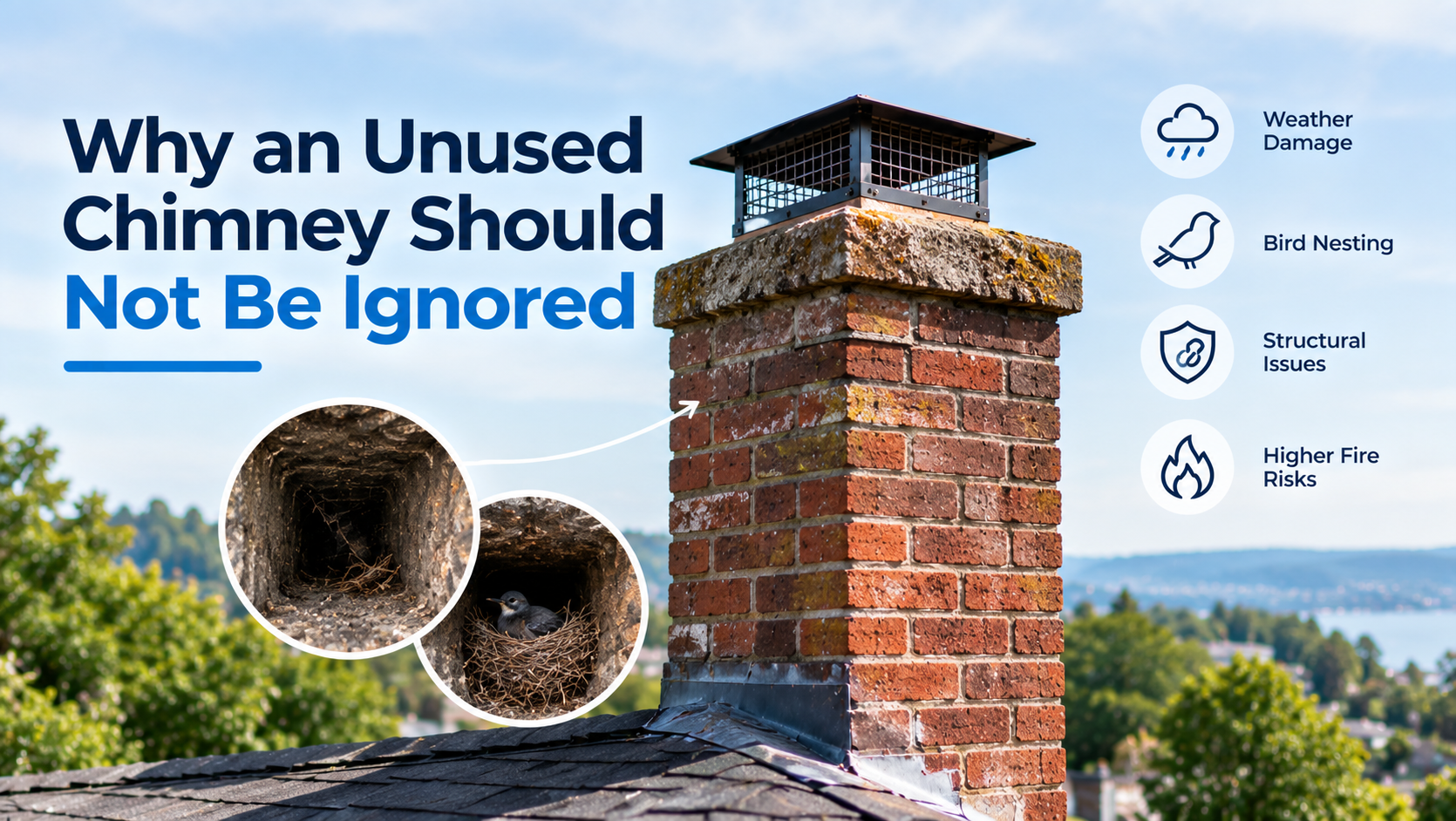
A rarely used chimney can still become blocked by nests, leaves, cobwebs and fallen material. Arrange an inspection before using a fireplace or stove that has been inactive for a long time.
What Happens During a Chimney Sweep?
A professional sweeping appointment should be organised, clean and appropriate for your chimney system.
1. Initial Assessment
The sweep may ask:
- When was the chimney last cleaned?
- Which fuel do you use?
- How frequently is the appliance operated?
- Have you noticed smoke or unusual smells?
- Has debris fallen into the fireplace?
- Have birds been seen around the chimney?
- Has there been a previous chimney fire?
The accessible fireplace, stove and flue components may also be visually checked.
2. Protecting the Room
Protective sheets should be placed around the hearth and working area.
The fireplace or appliance opening may be sealed to prevent soot from escaping. A specialist industrial vacuum can then be used to control fine particles while the chimney is swept.
3. Sweeping the Chimney or Flue
Suitable rods and brushes are passed through the chimney to loosen deposits from its internal surfaces.
The cleaning method should be selected according to:
- Chimney construction
- Flue diameter
- Type of liner
- Connected appliance
- Level of build-up
- Presence of bends or offsets
- Suspected blockages
A stainless steel flue liner should only be swept with suitable equipment to reduce the risk of damage.
4. Removing Soot and Debris
Material dislodged during sweeping is collected from the fireplace or appliance and removed from the working area.
Severe glazed creosote, substantial bird nests or difficult obstructions may require additional treatment beyond a standard sweep.
5. Checking Chimney Performance
Where appropriate, a smoke evacuation or draught check may be completed after sweeping.
This can help assess whether smoke travels through the chimney correctly. A more detailed pressure test or CCTV survey may be recommended if leakage, internal damage or an unusual obstruction is suspected.
6. Providing Advice
The sweep should explain any visible concerns and recommend an appropriate future maintenance schedule.
You may also receive advice about:
- Suitable fuel
- Correct stove operation
- Chimney ventilation
- Carbon monoxide alarms
- Bird guards or cowls
- Further inspections
- Repairs or liner work
Chimney Sweeping for Log Burners in Burton
A modern log burner still requires regular chimney sweeping.
Burning logs creates soot and creosote, even when the stove is operating efficiently. Deposits may form more quickly when:
- Wet wood is burned
- The stove is operated at a low temperature
- Air controls are closed too early
- The fire is allowed to smoulder
- The chimney has poor draught
- The flue is cold or incorrectly sized
Use dry, untreated wood and operate the stove according to the manufacturer’s instructions. However, good burning practices do not remove the need for professional sweeping.
HETAS recommends at least two sweeps per year when burning wood, depending on the appliance and frequency of use.
Bird Nest Removal in Burton
Quiet or unused chimneys can provide attractive nesting spaces for birds.
Signs of a possible bird nest include:
- Scratching or fluttering sounds
- Twigs falling into the fireplace
- Birds repeatedly landing on the chimney
- Strong or unusual smells
- Feathers or nesting material in the hearth
- A sudden loss of chimney draught
A bird nest can partially or completely block the flue.
Active nests, eggs and nesting birds are legally protected and should not be disturbed. A professional can assess the situation and advise when removal can be carried out.
Midlands Sweeps offers bird nest removal as a separate chimney service.
CCTV Chimney Inspections
Standard chimney sweeping includes basic accessible checks, but it is not a complete structural survey.
A CCTV chimney inspection may be appropriate when:
- The chimney has an unknown history
- A blockage cannot be cleared normally
- A flue liner may be damaged
- Loose masonry is discovered
- Heavy tar accumulation is present
- A new log burner or liner is planned
- The chimney has experienced a fire
- Smoke leakage is suspected
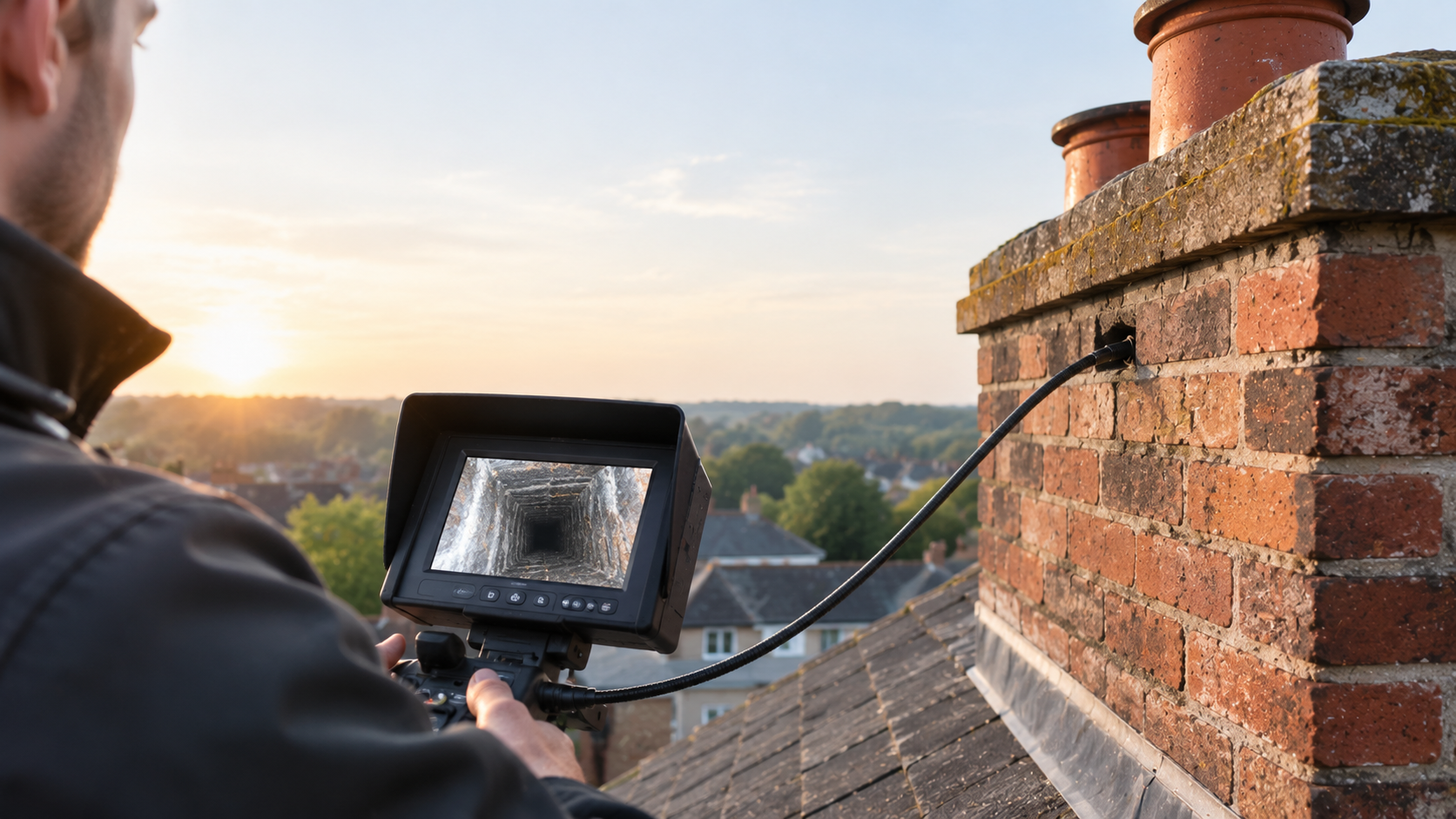
Midlands Sweeps uses HD CCTV equipment to investigate internal blockages, damaged masonry, liner deterioration, cracks, tar build-up and combustible materials near the chimney.
How to Choose a Chimney Sweep in Burton
Before booking a local chimney sweep, check that the company offers the appropriate experience and protection.
Professional Membership
Look for membership of a recognised chimney-sweeping organisation such as NACS, HETAS or the Guild of Master Chimney Sweeps.
Suitable Insurance
A professional chimney sweep should hold appropriate insurance for the services being provided.
Correct Equipment
The sweep should have suitable brushes, rods, protective sheets, fireplace seals and specialist vacuum equipment.
Experience With Your Appliance
Confirm that the sweep works with your type of fireplace, wood burner, multi-fuel stove or flue liner.
Clear Pricing
Ask exactly what is included in the quotation and whether there are additional charges for:
- Bird nests
- Heavy tar deposits
- Multiple chimneys
- Difficult access
- CCTV inspections
- Additional testing
Written Documentation
Ask whether a sweeping certificate or written service record will be provided after the appointment.
How to Prepare for Your Chimney Sweep
Before the sweep arrives:
- Stop using the fire and allow it to cool completely.
- Remove logs, coal and accessories from the hearth.
- Clear ornaments from the mantelpiece.
- Move delicate belongings away from the fireplace.
- Provide a clear route from the entrance to the appliance.
- Keep children and pets away from the working area.
- Tell the sweep about previous smoke or chimney problems.
- Mention any suspected birds or nesting activity.
A professional sweep should bring the protective equipment needed to keep the surrounding room clean.
Why Choose Midlands Sweeps?
Midlands Sweeps provides chimney and stove services from its base in Swadlincote, close to Burton upon Trent.
Available services include:
- Professional chimney sweeping
- Log burner installation
- Bird nest removal
- Flue liner installation
- CCTV chimney inspections
- Drone and roof inspections
The company states that it is fully insured, veteran-owned and registered with the National Association of Chimney Sweeps.
Frequently Asked Questions
How much does a chimney sweep in Burton cost?
The cost depends on the appliance, chimney condition, accessibility and whether additional work is required. Request a clear quotation based on your property rather than relying only on a national average.
How long does chimney sweeping take?
A straightforward chimney sweep commonly takes around an hour. A heavily soiled chimney, large bird nest or difficult obstruction may take longer.
Will chimney sweeping make a mess?
A professional sweep should use protective sheets, fireplace seals and specialist vacuum equipment to contain soot and protect your home.
Do log burners need sweeping every year?
Yes. A log burner flue should be swept regularly. HETAS recommends at least twice a year when burning wood, while the appropriate frequency can vary according to usage and fuel.
Can you sweep a stainless steel chimney liner?
Yes. Stainless steel liners require sweeping, but the sweep must use equipment suitable for the liner’s construction.
Can a chimney sweep remove a bird nest?
Bird nest removal may be available as an additional service. Active nests should not be disturbed, so the chimney must be assessed before work begins.
Should an unused chimney be swept?
An unused chimney should be checked before it is brought back into service. Birds, leaves, debris and fallen masonry may have blocked the flue.
Do I need a carbon monoxide alarm?
Homes with fuel-burning appliances should have an appropriately positioned and functioning carbon monoxide alarm. The alarm should be tested regularly and replaced according to its manufacturer’s instructions.
Book a Chimney Sweep in Burton upon Trent
Regular sweeping helps keep your chimney clear, supports effective airflow and reduces the accumulation of combustible soot and tar.
Whether you have an open fire, log burner, multi-fuel stove or lined chimney, Midlands Sweeps can provide professional chimney services for properties in Burton upon Trent and surrounding areas.
Call 07824 830604 to discuss your chimney or request an appointment through the Midlands Sweeps website.