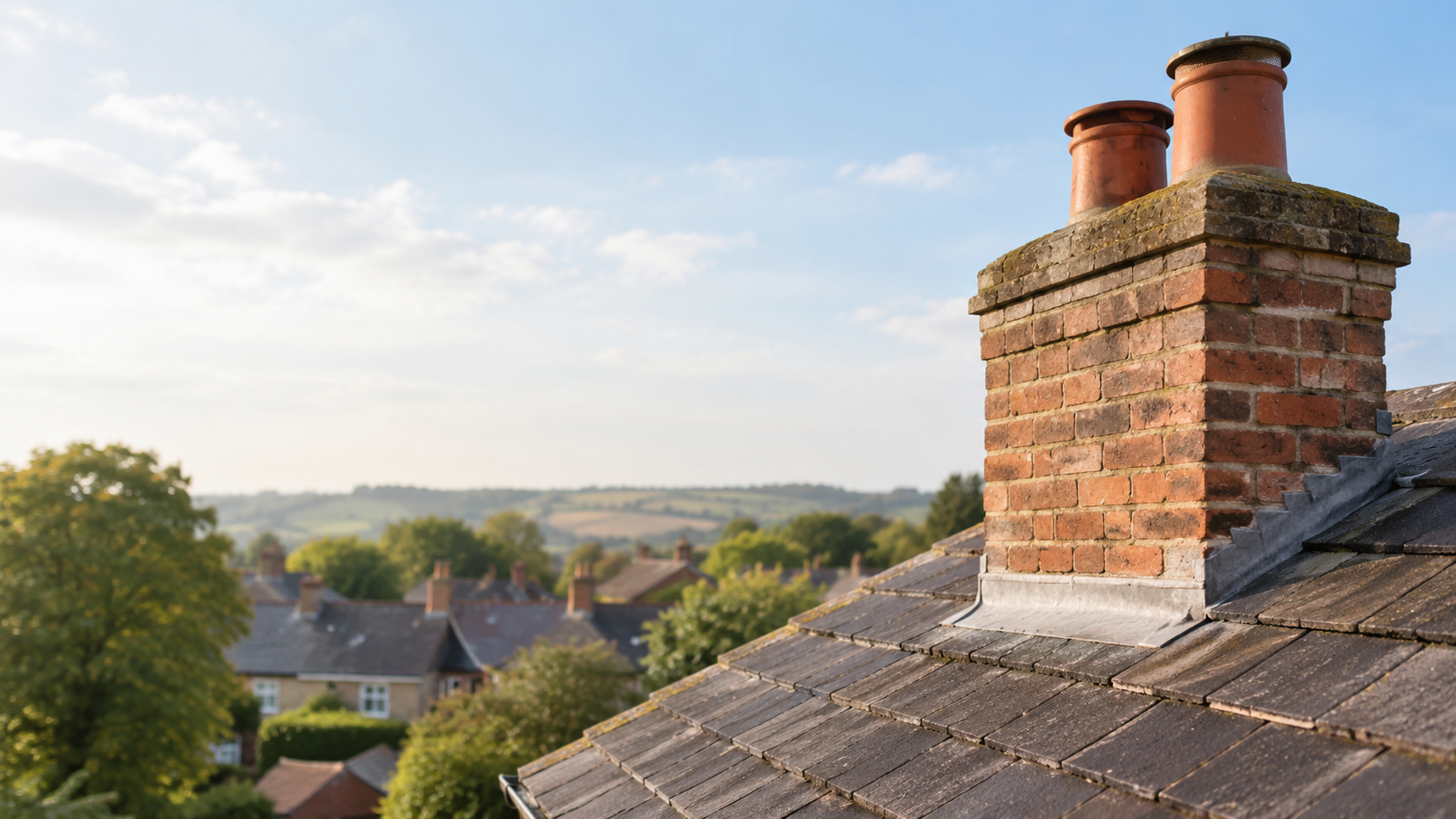

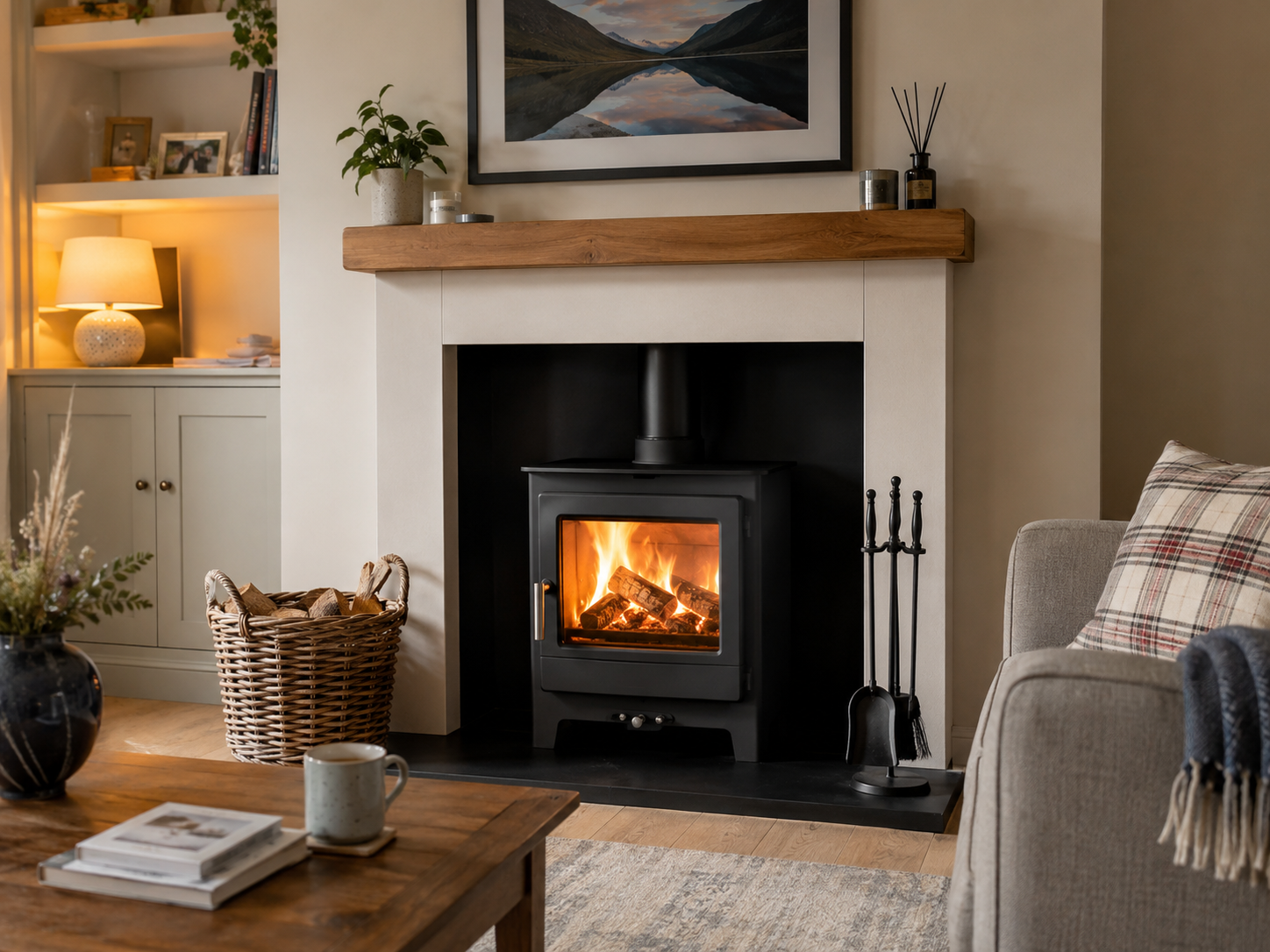
Many UK homes can have a log burner installed, but not every property is automatically suitable.
Your home needs the right chimney, flue system, ventilation, hearth, appliance location, and installation setup. The stove must also be fitted safely and in line with UK building regulations.
The best way to know for sure is to arrange a professional survey before buying or installing a stove.
A professional installer or chimney specialist can check your home and confirm whether a log burner is suitable, what work is needed, and whether your chimney or flue needs upgrading.
1. Do You Have an Existing Chimney?
One of the first things to check is whether your home already has a chimney.
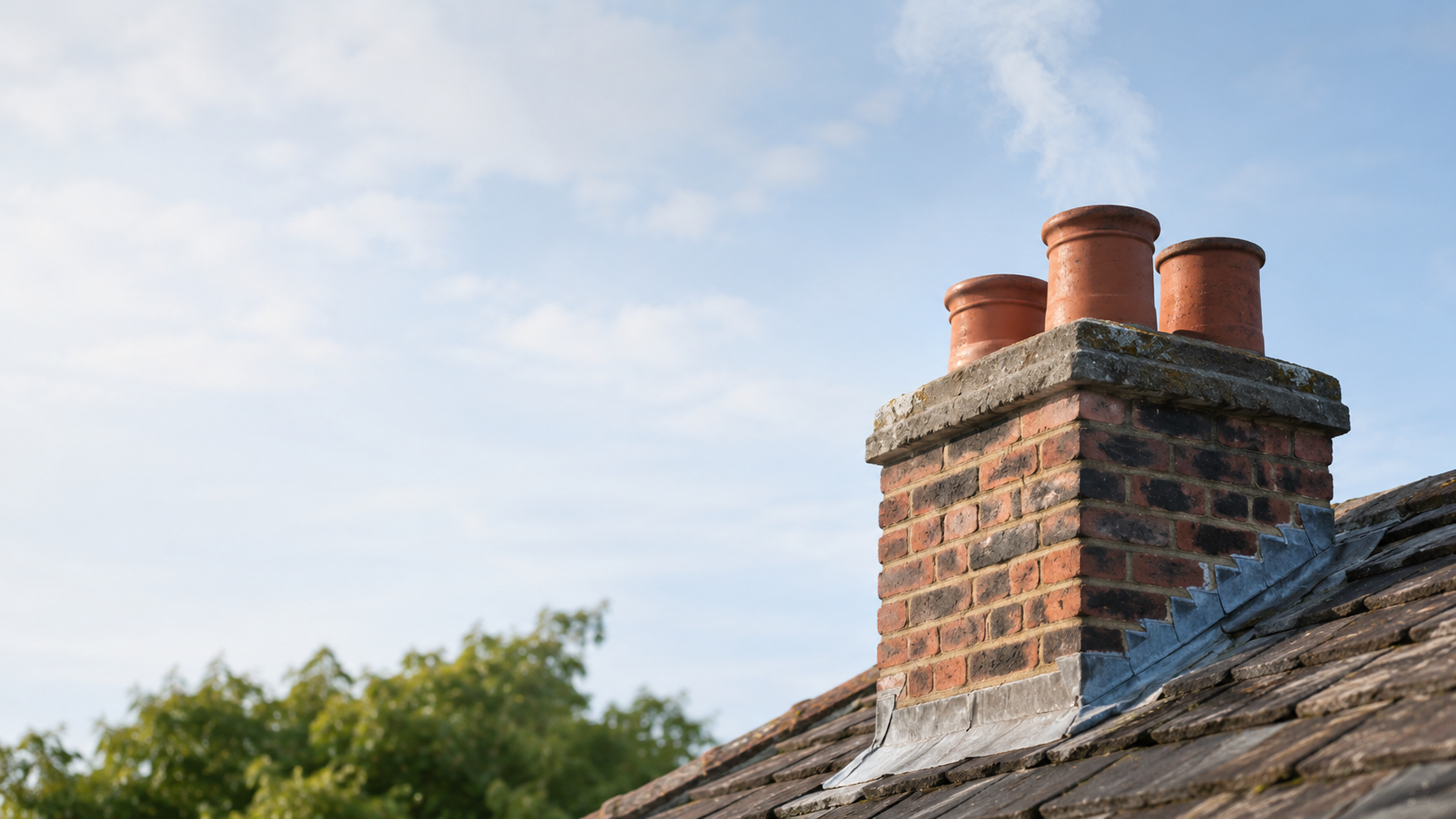
If your property has a traditional chimney, it may be possible to install a log burner into an existing fireplace opening. However, the chimney still needs to be checked before use.
A chimney may need:
- Sweeping
- Smoke testing
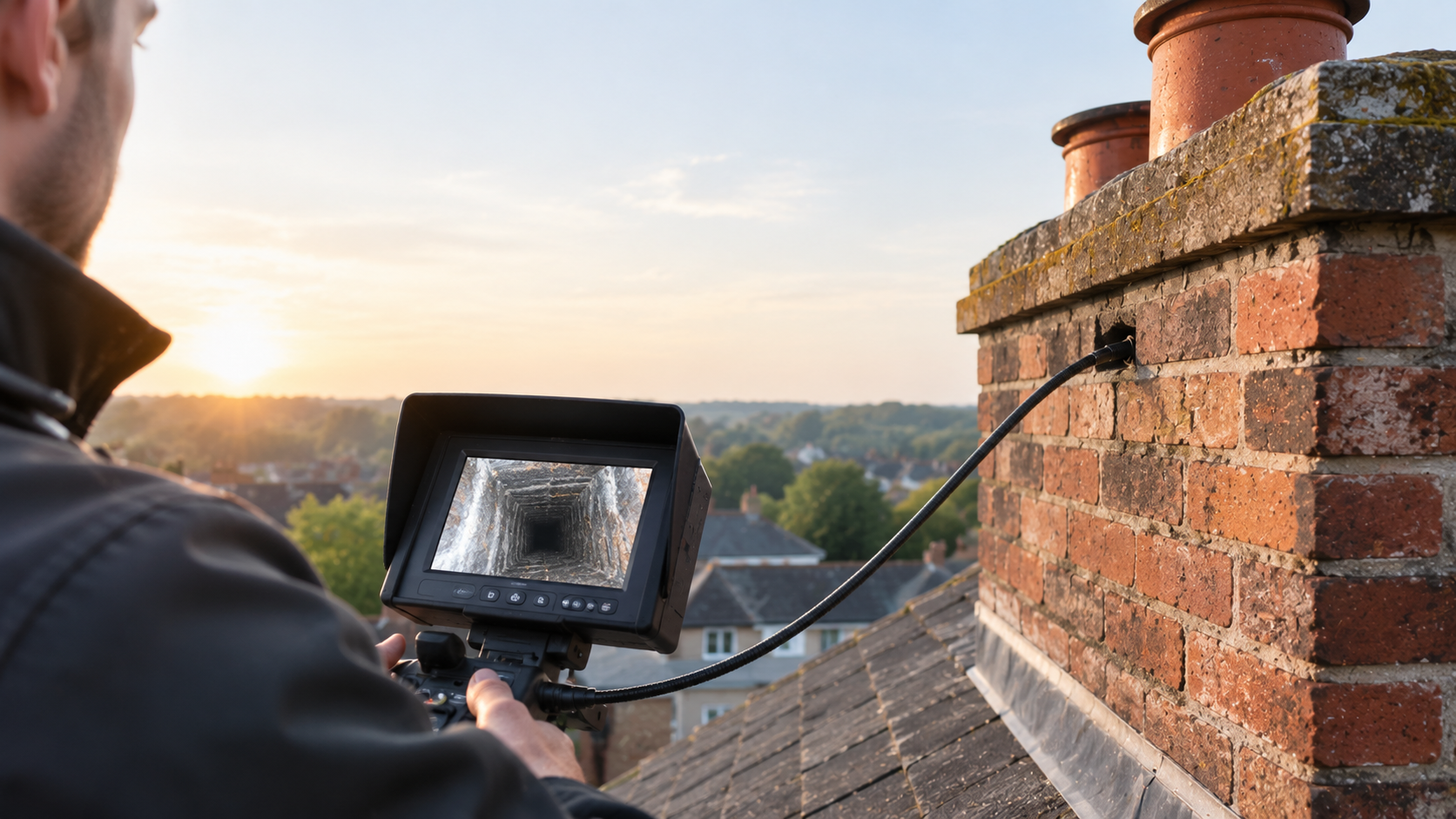
- Flue inspection
- Flue lining
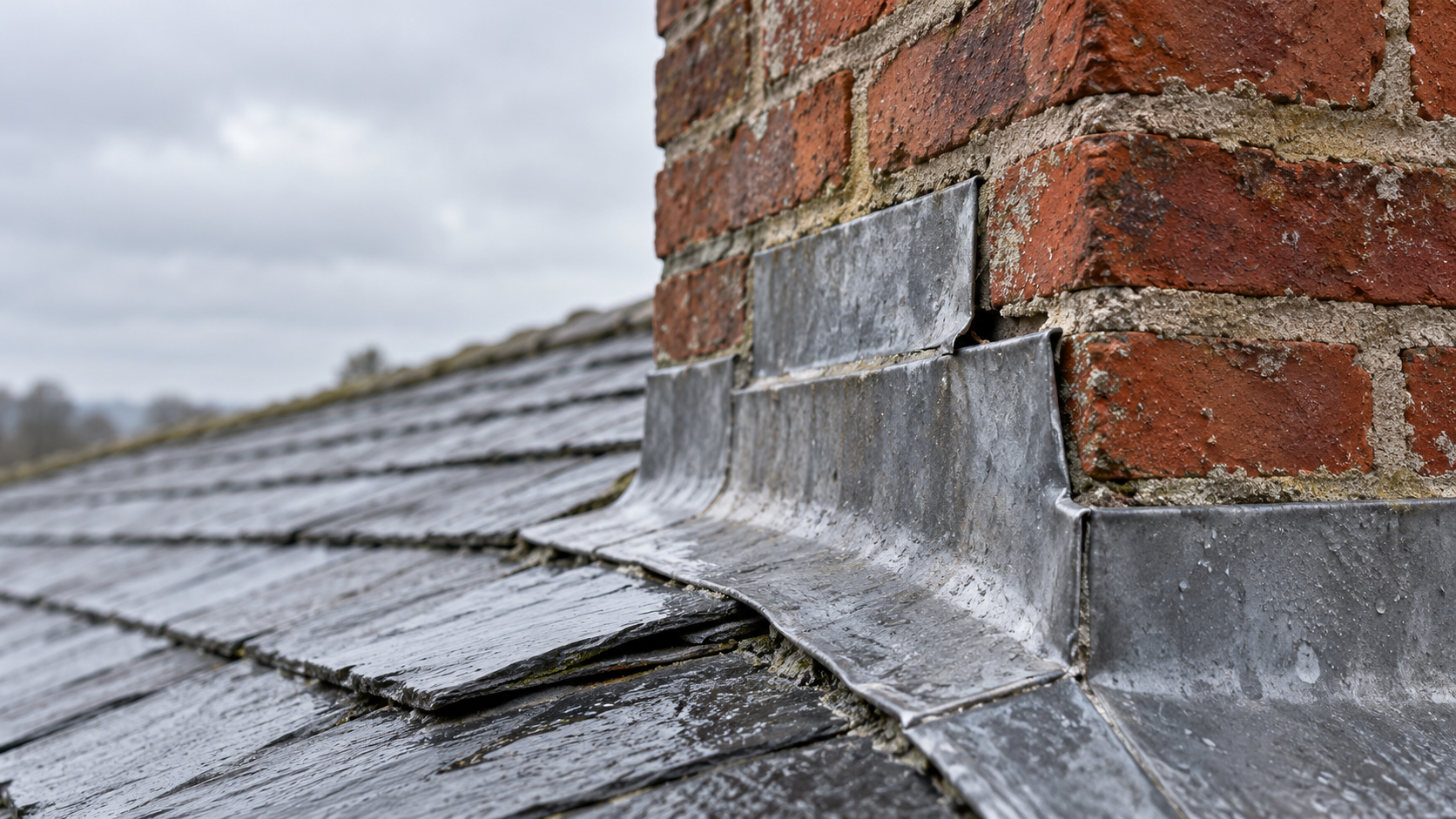
- Brickwork repairs
- Chimney pot repairs
- Cowl or bird guard fitting
Even if the chimney looks fine from inside the room, there may be hidden issues inside the flue.
2. Can You Install a Log Burner Without a Chimney?
Yes, a log burner can sometimes be installed in a home without a traditional chimney.
In this case, you may need a twin-wall insulated flue system. This type of flue can be routed through the property and out through the roof or external wall, depending on the layout.
A twin-wall flue system must be designed and installed correctly. It needs the right clearances, height, support, and route to safely remove smoke and gases from the stove.
This type of installation is usually more expensive than using an existing chimney.
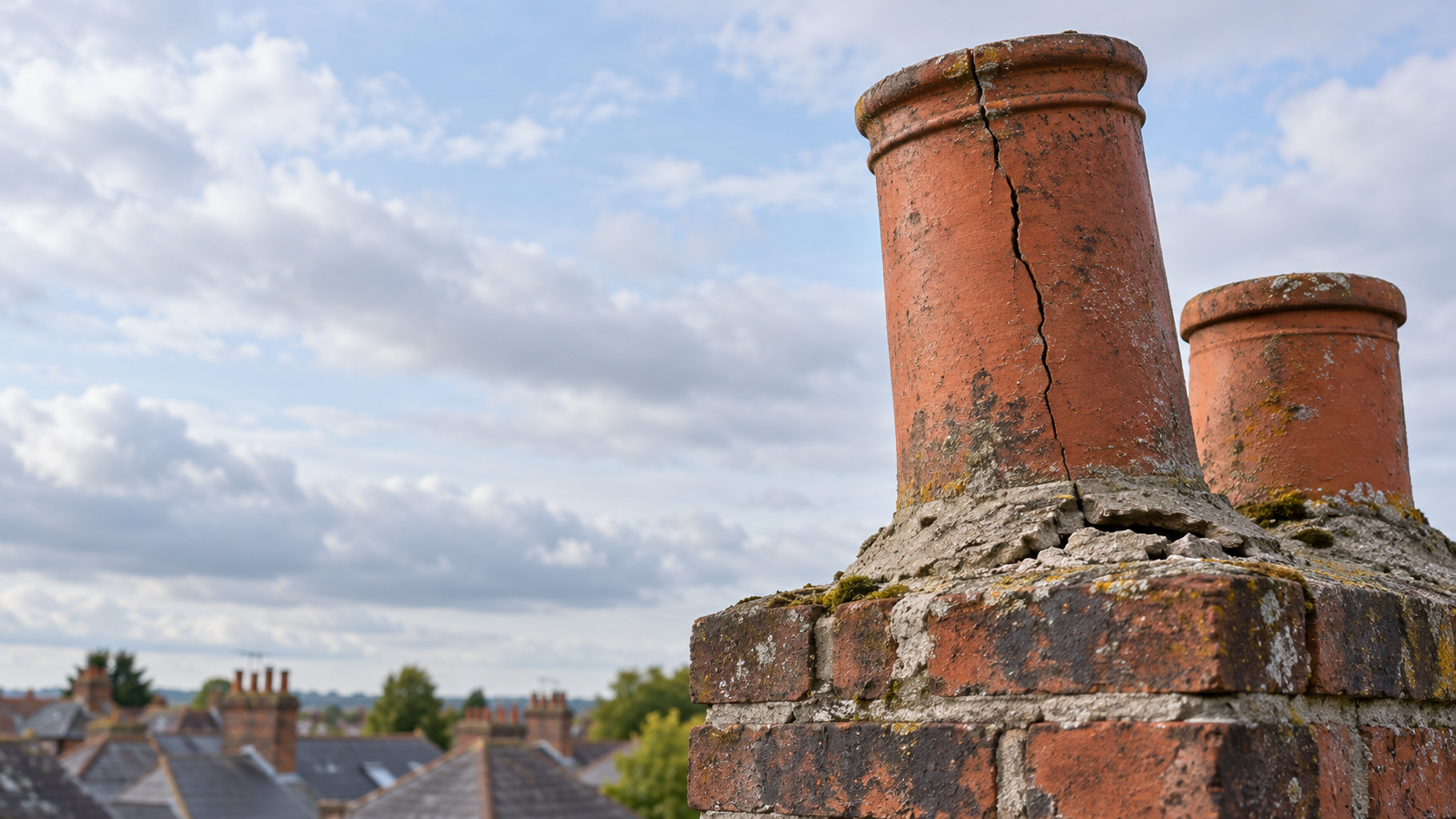
3. Is Your Chimney in Good Condition?
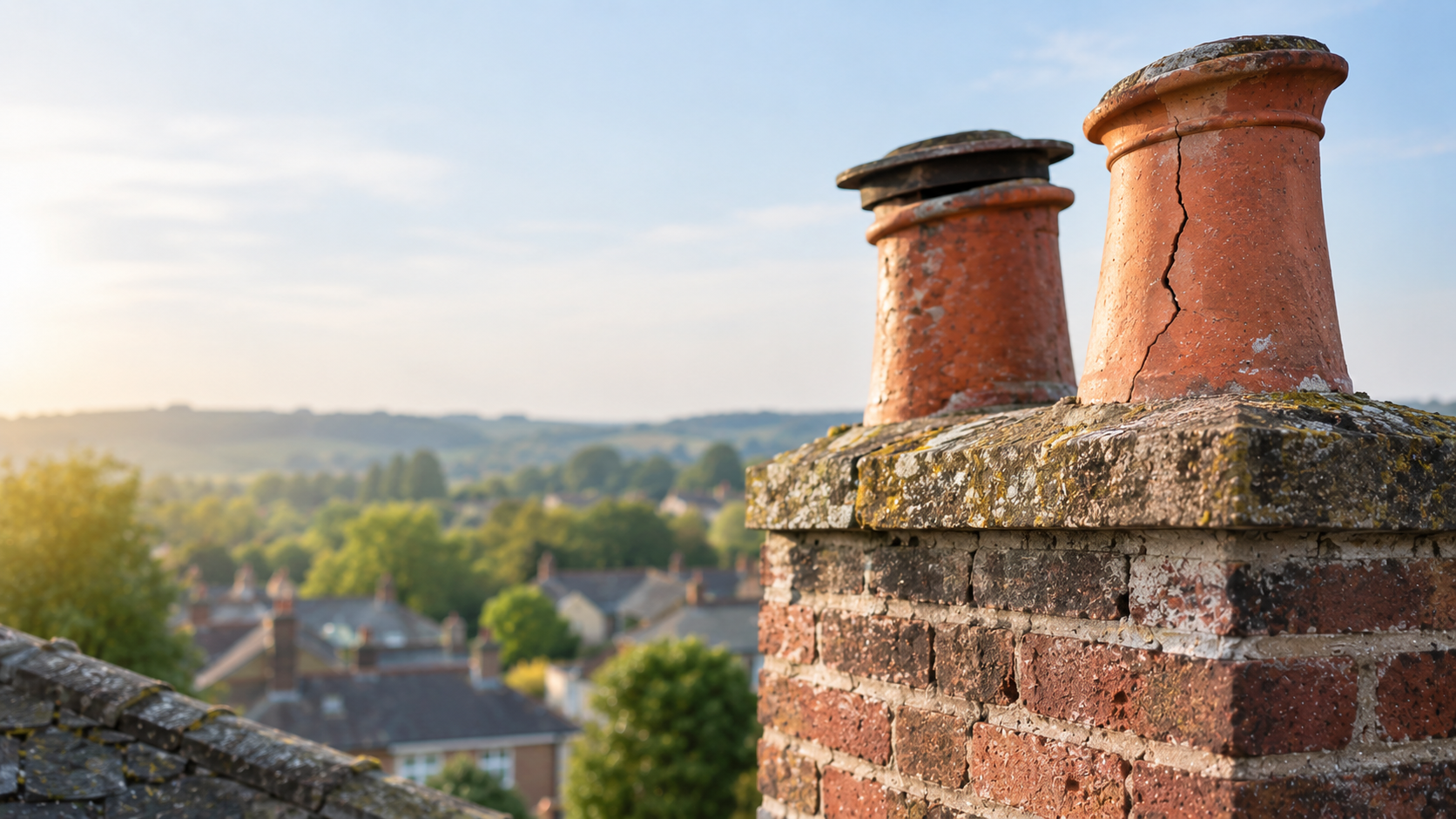
A damaged chimney may not be safe for a log burner.
Your chimney should be checked for:
- Cracks
- Loose mortar
- Smoke leakage
- Blockages
- Bird nests
- Tar or creosote build-up
- Damp issues
- Old or unsuitable flue lining
- Poor chimney draught
If the chimney is damaged or unsuitable, it may need repairs or a new flue liner before a stove can be installed.
4. Do You Need a Flue Liner?
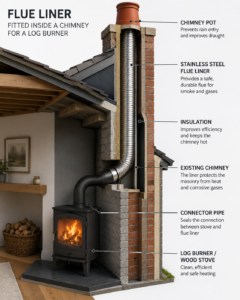
Many homes need a flue liner when installing a log burner.
A flue liner helps carry smoke and combustion gases safely out of the property. It can also improve the stove’s performance by helping create a more suitable flue size and better draught.
You may need a flue liner if:
- The chimney is old
- The flue is damaged
- Smoke could leak through the chimney walls
- The flue is too large for the stove
- The existing liner is unsuitable for solid fuel
- The stove manufacturer requires a specific flue size
- The chimney has poor draught
A professional installer can confirm whether a liner is needed after inspecting the chimney.
5. Does the Room Have Enough Ventilation?
A log burner needs enough air to burn fuel safely and efficiently.
If the room does not have enough airflow, the stove may struggle to burn properly. Poor ventilation can also increase the risk of smoke entering the room or combustion gases not leaving the property correctly.
Ventilation may be especially important in:
- Modern airtight homes
- Recently insulated properties
- Homes with double glazing
- Rooms with extractor fans nearby
- Homes with powerful kitchen hoods
- Rooms where the stove is above 5kW
A professional survey will check whether extra ventilation is needed.
6. Is There Enough Space for a Safe Hearth?
A log burner needs a suitable hearth to protect the floor and surrounding area from heat.
The hearth must be made from a non-combustible material and must be the correct size for the appliance and installation type.
Common hearth materials include:
- Slate
- Stone
- Granite
- Concrete
- Glass
- Tile
If your existing hearth is too small, damaged, or unsuitable, it may need to be replaced or extended before installation.
7. Is the Fireplace Opening Suitable?
If you want the log burner installed inside an existing fireplace, the opening needs to be suitable.
A professional may check:
- Opening width
- Opening height
- Depth
- Clearance around the stove
- Condition of the brickwork
- Whether a lintel is needed
- Whether old fireplace materials need removing
- Whether the chamber needs boarding or rendering
Some fireplaces need building work before a stove can be fitted safely.
8. Are There Safe Distances From Combustible Materials?
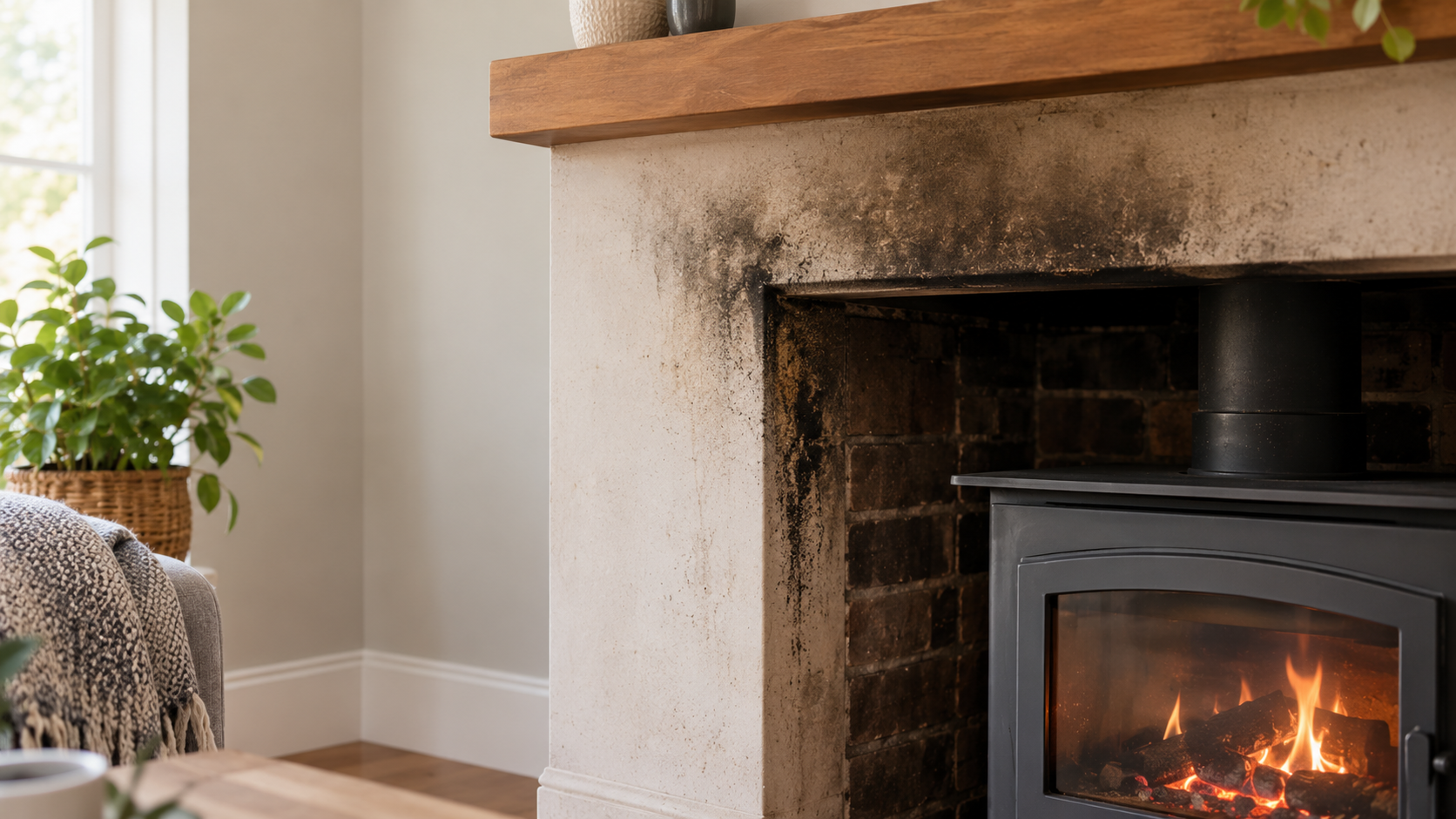
A log burner must be installed with safe distances from combustible materials.
Combustible materials can include:
- Wooden beams
- Timber surrounds
- Shelving
- Furniture
- Curtains
- Flooring
- Wall panels
- Plasterboard in some situations
The required distance depends on the stove model, heat output, manufacturer instructions, and surrounding materials.
This is one reason why a professional installation survey is important.
9. Are You in a Smoke Control Area?
Before installing a log burner, you should check whether your property is in a smoke control area.
In a smoke control area, you may need to use a DEFRA-exempt appliance if you want to burn wood. You must also use suitable fuel and follow local rules.
Many towns and cities in the UK have smoke control areas, so this should be checked before choosing a stove.
If you choose the wrong appliance, you may not be allowed to burn wood legally in your area.
10. Is the Stove the Right Size for the Room?
A log burner needs to be the right size for the room.
If the stove is too small, it may not heat the space properly. If it is too large, the room may become too hot, and you may end up running the stove inefficiently at a low temperature.
A professional installer can calculate the right heat output based on:
- Room size
- Ceiling height
- Insulation
- Number of windows
- Property age
- Open-plan layout
- Heat loss
- Existing heating system
A 5kW stove is common in many UK homes, but the correct size depends on the property.
11. Can the Installation Be Certified?
A log burner installation should be signed off correctly.
In England and Wales, many homeowners use a HETAS registered installer because they can usually self-certify the work and provide a Certificate of Compliance.
This certificate can be important for:
- Building regulation compliance
- Home insurance
- Future property sale
- Safety records
- Warranty requirements
If you do not use a registered competent person, you may need approval from local Building Control.
12. Do You Have a Carbon Monoxide Alarm?
A carbon monoxide alarm is essential for any room with a log burner or solid fuel appliance.
Carbon monoxide cannot be seen, smelled, or tasted, which makes it extremely dangerous.
A proper flue system, correct ventilation, regular chimney sweeping, and a working carbon monoxide alarm all help protect your home.
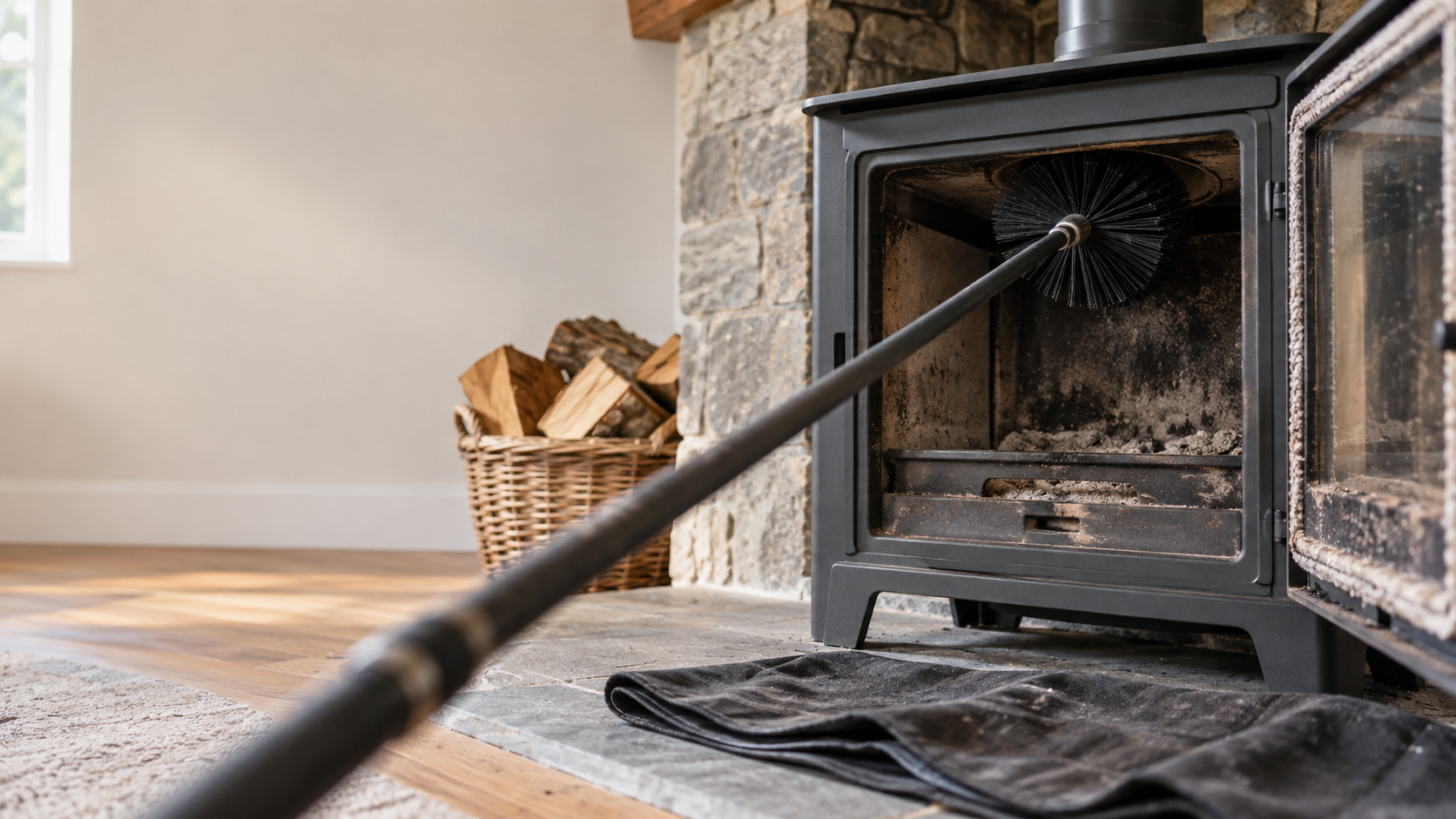
13. Does Your Chimney Need Sweeping First?
Yes, the chimney should usually be swept before a log burner is installed.
Sweeping helps remove:
- Soot
- Tar
- Creosote
- Bird nests
- Leaves
- Debris
- Old fuel deposits
A clean chimney makes it easier to inspect the flue properly and helps identify any hidden issues before the stove is fitted.
14. Is Your Property Listed or in a Conservation Area?
If your home is listed or located in a conservation area, extra rules may apply.
You may need permission before making changes to the chimney, fireplace, roofline, or external flue.
This is especially important if:
- The chimney stack is part of the building’s character
- An external flue will be visible
- Fireplace alterations affect historic features
- The property has listed status
Always check before carrying out work.
Simple Home Suitability Checklist
Use this checklist before planning a log burner installation:
| Suitability Check | Why It Matters |
|---|---|
| Existing chimney or flue route | Needed to remove smoke safely |
| Chimney condition | Damaged chimneys may need repairs |
| Flue liner requirements | May be needed for safety and performance |
| Room ventilation | Stove needs enough air to burn safely |
| Hearth suitability | Protects the floor and surrounding area |
| Fireplace opening | Must provide safe clearance |
| Smoke control area status | Affects which stove and fuel you can use |
| Stove size | Must match the room’s heating needs |
| Certification | Proves compliant installation |
| Carbon monoxide alarm | Essential safety requirement |
What Happens During a Log Burner Survey?
During a professional log burner survey, the installer may check:
- Chimney condition
- Flue route
- Room size
- Stove position
- Hearth requirements
- Ventilation needs
- Smoke control area rules
- Fireplace opening
- Roof access
- Flue liner requirements
- Building regulation requirements
After the survey, you should receive clear advice on whether your home is suitable and what work is needed.
Final Answer: How Do You Know If Your Home Is Suitable for a Log Burner?
Your home may be suitable for a log burner if it has a safe chimney or flue route, enough ventilation, a suitable hearth, correct clearances, and the installation can meet building regulations.
If you do not have a chimney, you may still be able to install a log burner with a twin-wall flue system.
The only reliable way to know for sure is to book a professional survey before installation.
Need a Chimney Checked Before Installing a Log Burner?
If you are thinking about installing a log burner, your chimney should be swept, inspected, and checked for suitability first.
A professional chimney sweep can identify blockages, soot build-up, chimney defects, flue issues, and ventilation concerns before installation begins.
Book a chimney inspection today and find out whether your home is suitable for a log burner.