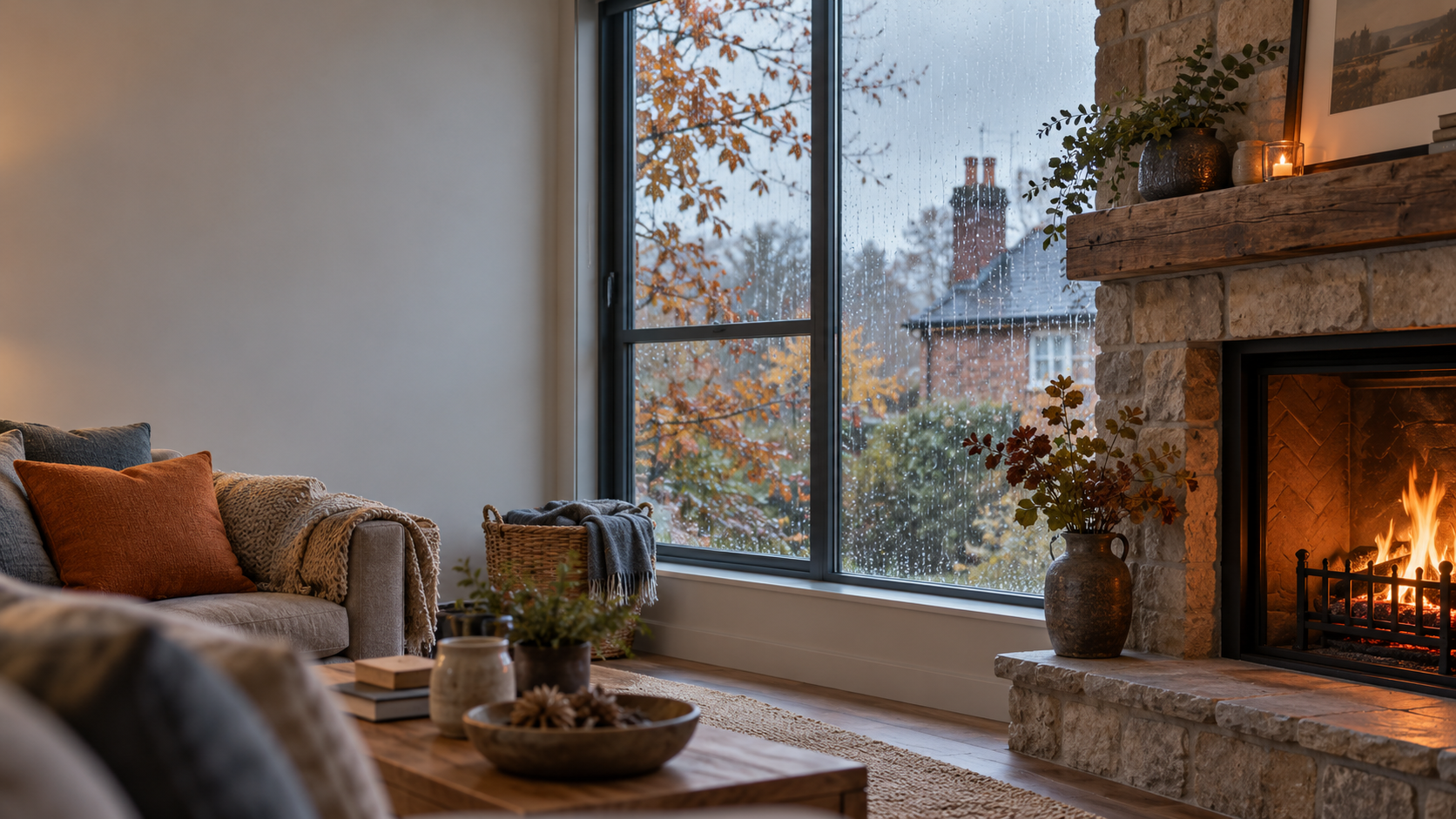

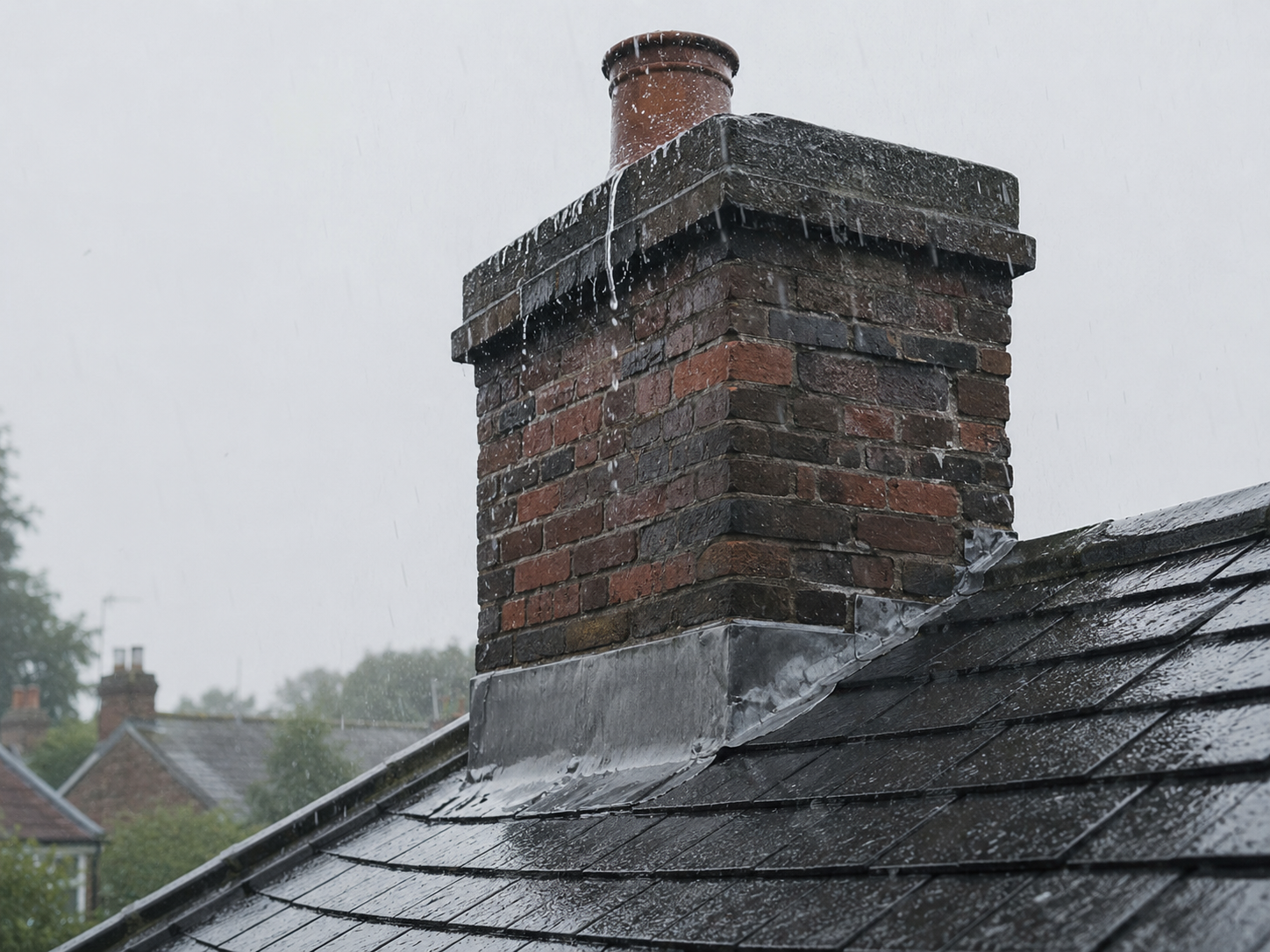
If water is coming down your chimney when it rains, it usually means rainwater is entering through the chimney opening, damaged masonry, faulty flashing, cracked flaunching, or another weak point around the chimney stack.
A small drip may not seem serious at first, but chimney leaks can lead to damp patches, staining, bad smells, damaged plaster, rusted stove parts, and long-term chimney deterioration.
If you notice water inside your fireplace, stove, or chimney breast, it is important to get the chimney inspected before the problem becomes worse.
Common Signs of a Chimney Leak
You may have a chimney leak if you notice:
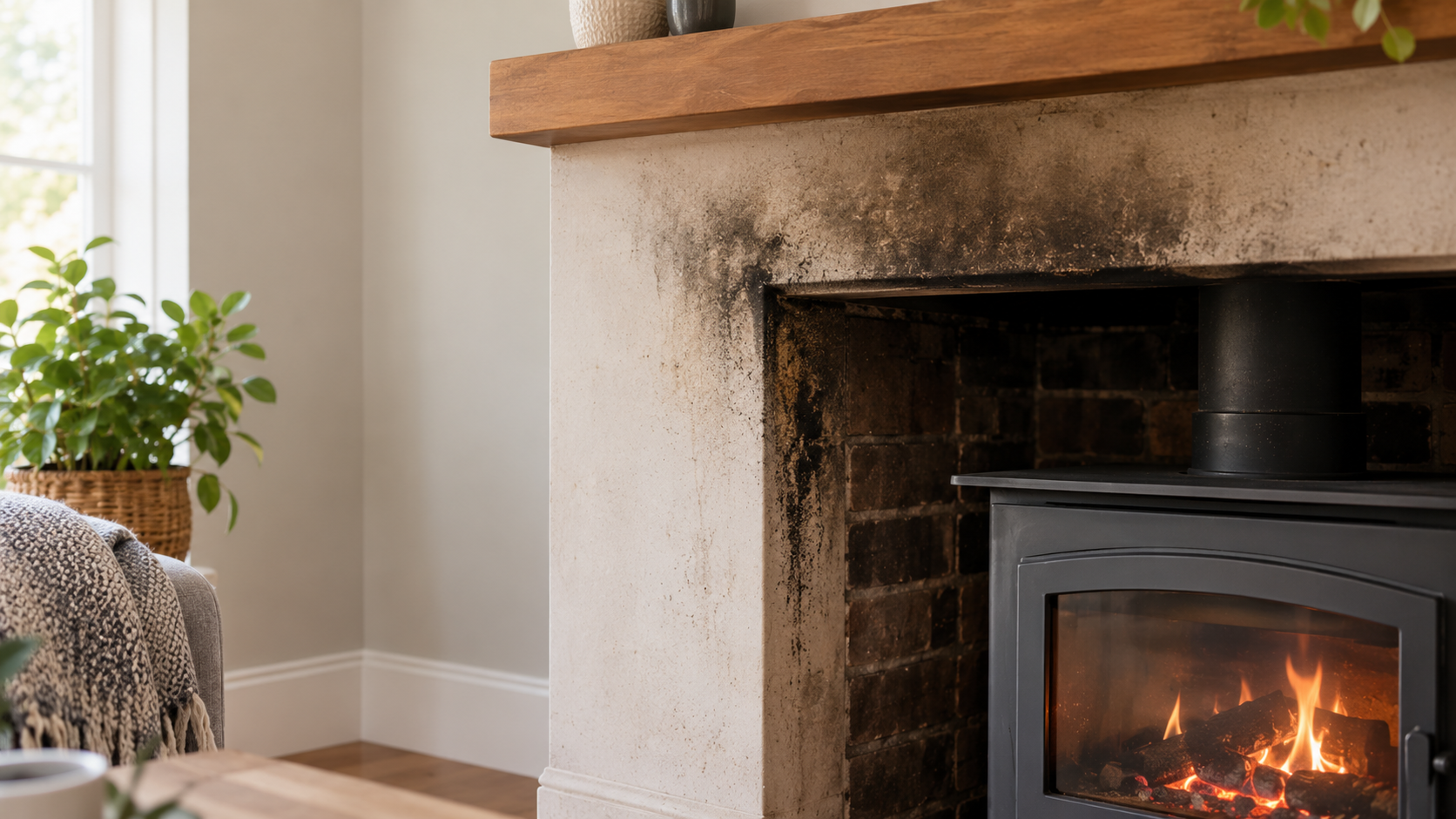
- Water dripping into the fireplace
- Damp patches around the chimney breast
- Brown staining on walls or ceilings
- A musty or smoky smell after rain
- Rust on stove parts or fireplace fittings
- Crumbling plaster near the chimney
- Damp soot or debris in the fireplace
- Water marks in the loft near the chimney stack
- Leaks that appear during heavy or wind-driven rain
If the problem happens only when it rains, the chimney, roofline, or flashing is likely allowing water in.
1. Missing or Damaged Chimney Cowl
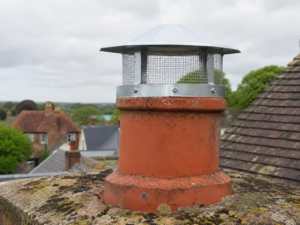
One of the most common reasons rain enters a chimney is a missing, damaged, or unsuitable chimney cowl.
A chimney cowl or rain cap helps reduce rain entry while still allowing smoke and gases to escape properly. It can also help prevent birds, leaves, and debris from entering the flue.
If your chimney pot is open at the top, rain can fall directly down the flue, especially during heavy rain or strong wind.
Fix
A professional can inspect the chimney and fit a suitable chimney cowl, rain cap, or bird guard. The cowl must be suitable for your appliance and flue type so it does not restrict airflow.
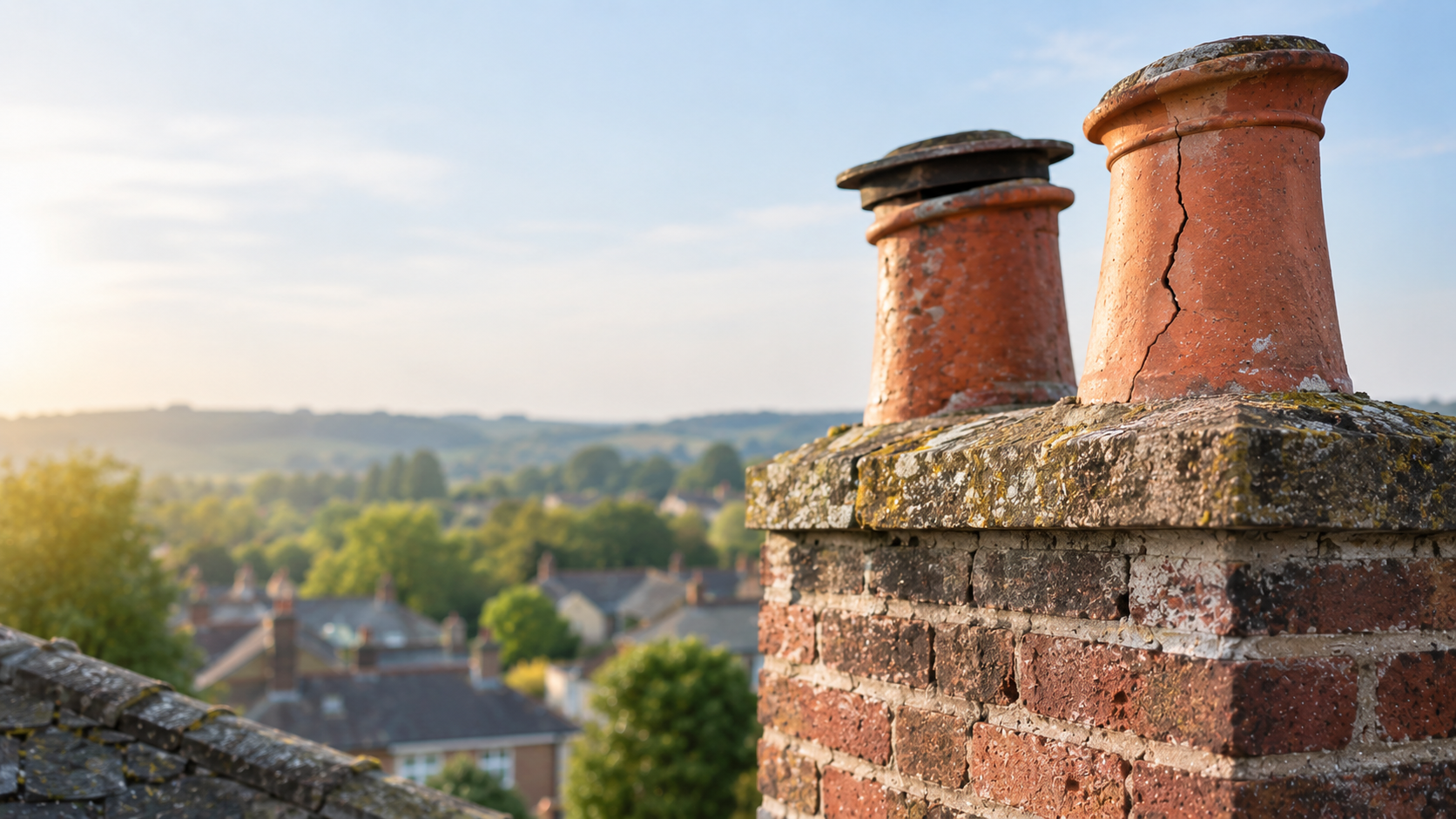
2. Cracked Chimney Flaunching
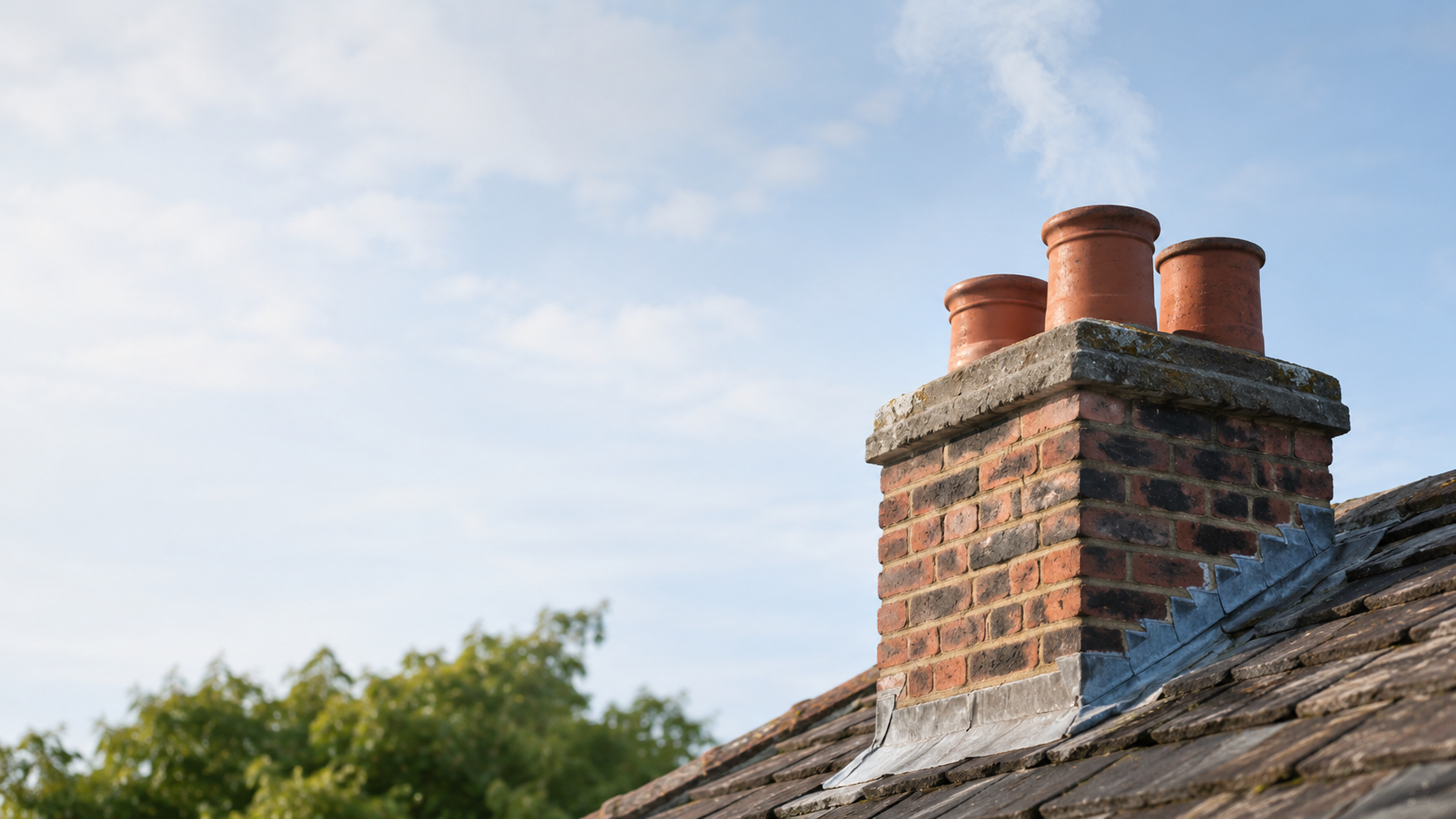
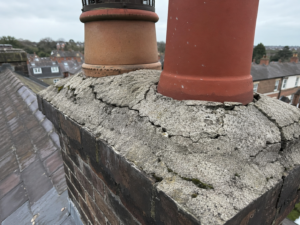
Flaunching is the sloped mortar around the chimney pots at the top of the chimney stack. Its job is to hold the pots in place and help rainwater run away from the openings.
Over time, flaunching can crack, break down, or pull away from the chimney pot. When this happens, rainwater can enter the stack and travel down into the chimney.
Fix
Damaged flaunching should be repaired or renewed by a professional. If the chimney pot is loose or unstable, it may also need resetting.
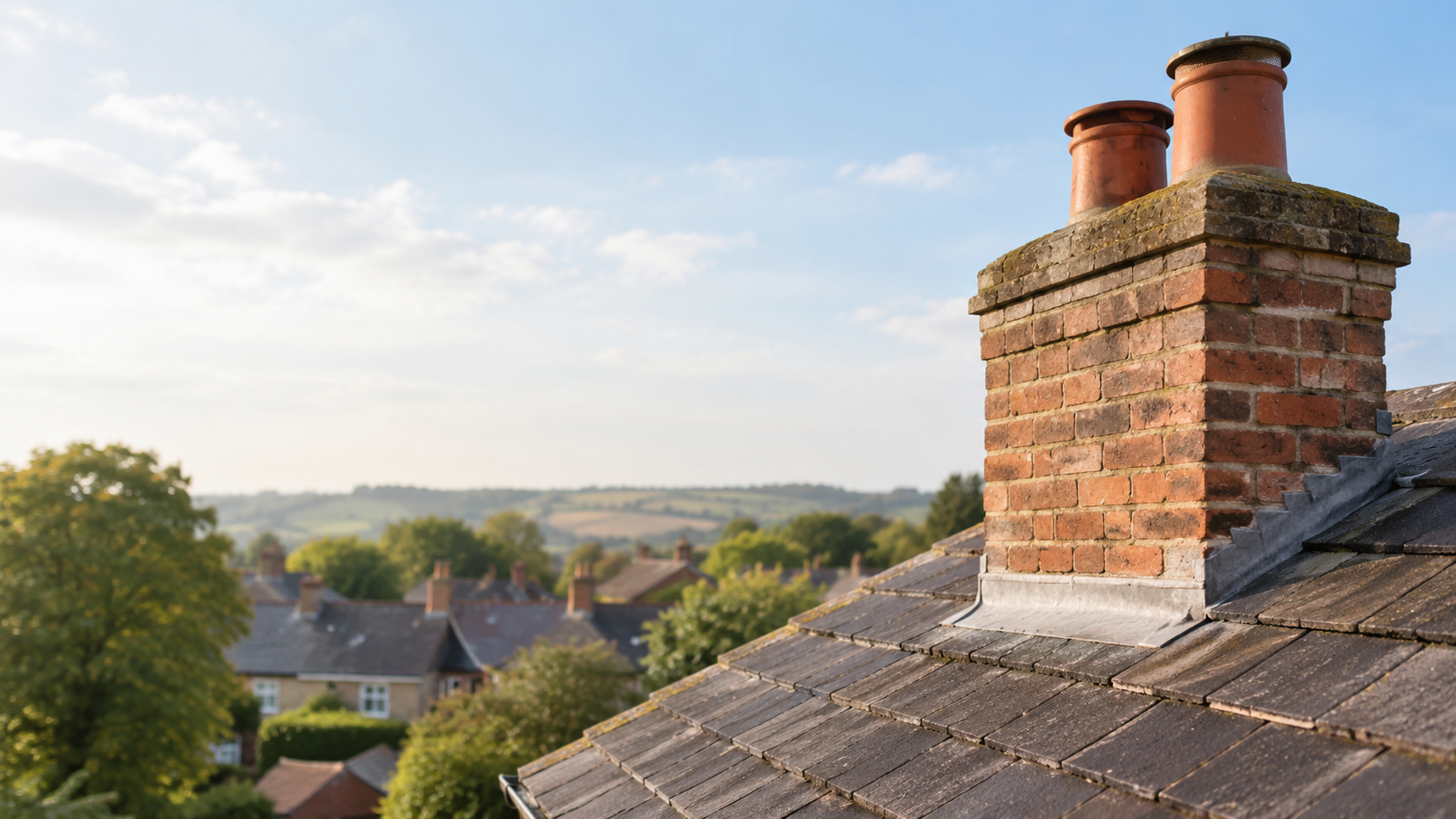
3. Damaged Lead Flashing
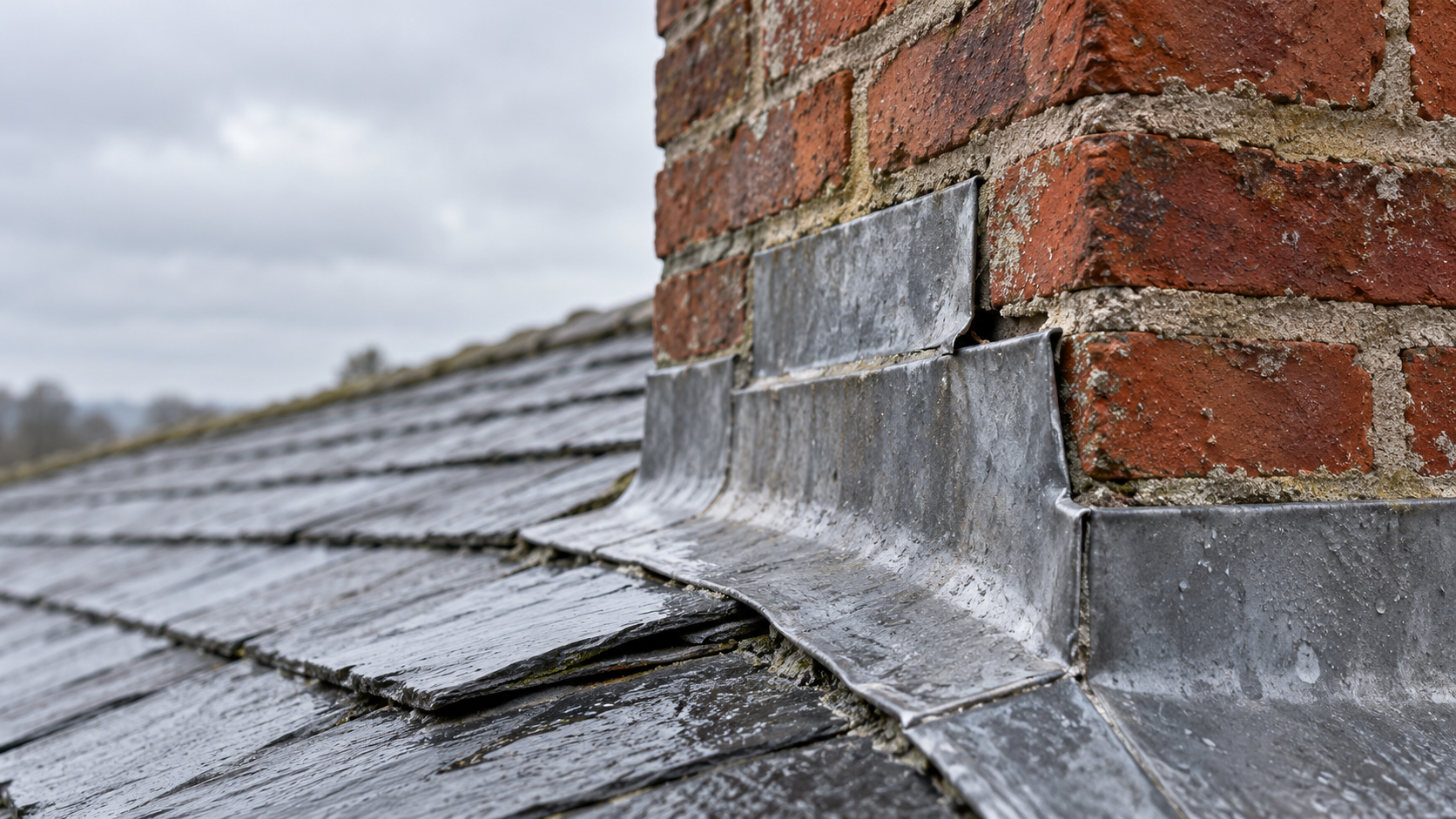
Lead flashing seals the area where the chimney stack meets the roof. If the flashing is cracked, lifted, poorly fitted, or worn, rainwater can enter around the base of the chimney.
This type of leak often shows as damp patches on ceilings, walls, or in the loft near the chimney breast.
Fix
A roofer or chimney specialist may need to repair, reseal, or replace the flashing around the chimney. In some cases, the surrounding roof tiles may also need checking.
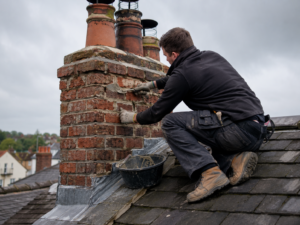
4. Cracked or Porous Brickwork
Chimney stacks are exposed to rain, frost, wind, and temperature changes throughout the year. Over time, brickwork can become cracked, porous, or weather-damaged.
If the bricks or mortar joints absorb water, moisture can travel through the chimney stack and cause damp inside the property.
Fix
The chimney may need repointing, brick repairs, or a breathable water-repellent treatment. Any treatment should be suitable for chimney masonry and should not trap moisture inside the bricks.
5. Damaged Chimney Pot
A cracked, loose, or poorly fitted chimney pot can allow rainwater to enter the chimney. A damaged pot may also affect the way smoke and gases leave the flue.
If the pot is unstable, it can become a safety risk in strong wind.
Fix
A professional should inspect the chimney pot and repair, reset, or replace it if needed. This is not a safe DIY job because it involves working at roof height.
6. Blocked Chimney or Debris Inside the Flue
A blocked chimney can make water problems worse. Leaves, bird nests, soot, and debris can trap moisture inside the flue.
When debris becomes wet, it can cause bad smells, staining, and poor airflow.
Fix
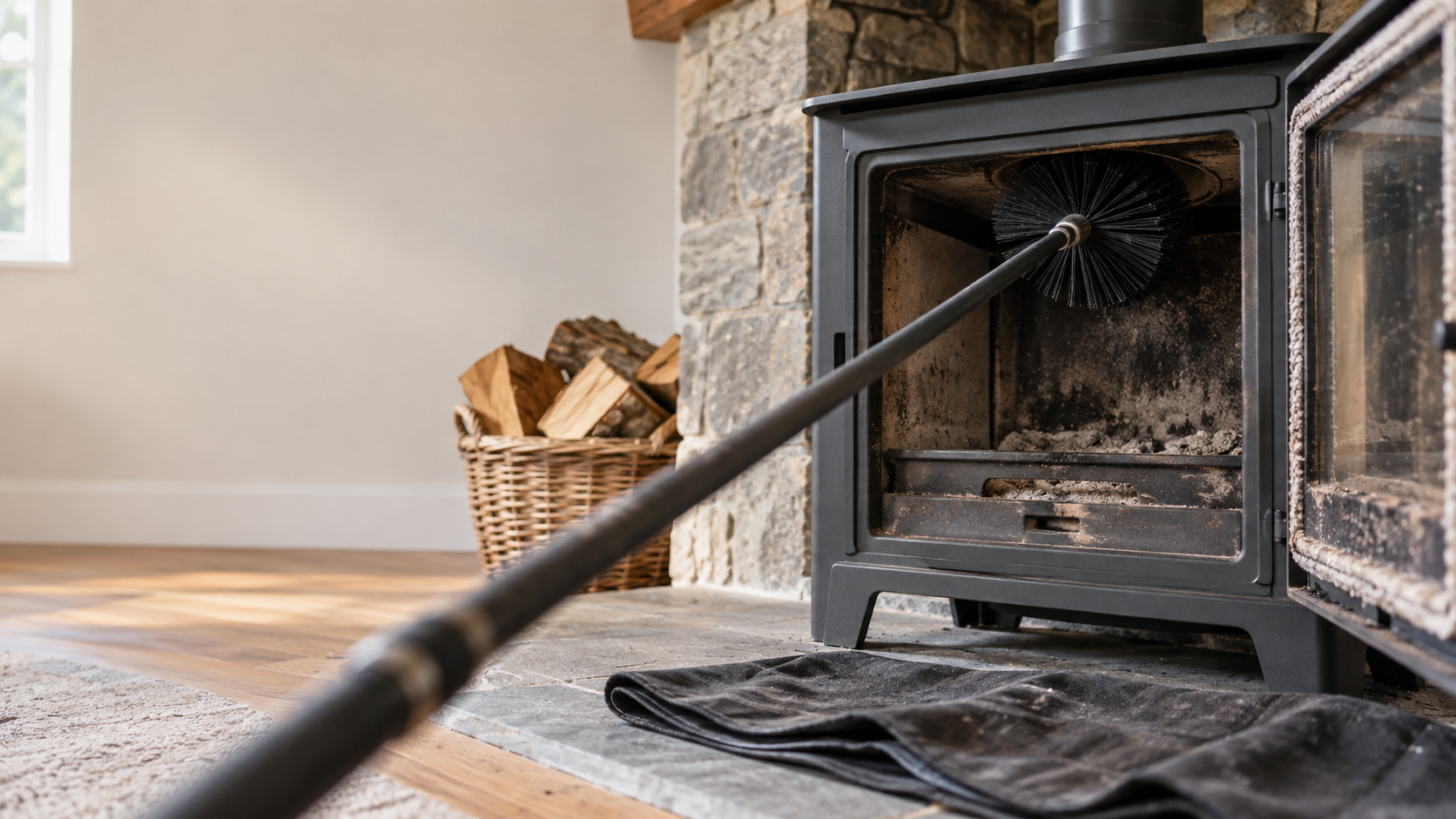
Once any active bird nesting issue has passed, a chimney sweep can remove debris, sweep the flue, and check whether further repairs are needed.
7. Condensation Inside the Chimney
Sometimes the issue may look like rainwater, but it is actually condensation inside the flue.
This can happen when warm, moist air meets a cold chimney surface. It may be more common in unused chimneys, poorly ventilated flues, or appliances that are not working efficiently.
Fix
A professional inspection can confirm whether the moisture is rainwater or condensation. The solution may involve ventilation, flue lining, improved appliance use, or chimney repairs.
What Should You Do If Water Is Coming Down the Chimney?
If water is entering your chimney, take these steps:
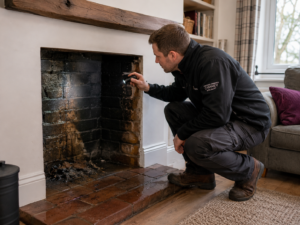
- Stop using the fireplace or stove until it has been checked
- Move rugs, furniture, and belongings away from the fireplace
- Take photos of any damp patches or staining
- Check whether the leak happens only during rain
- Look for water marks in the loft if it is safe to do so
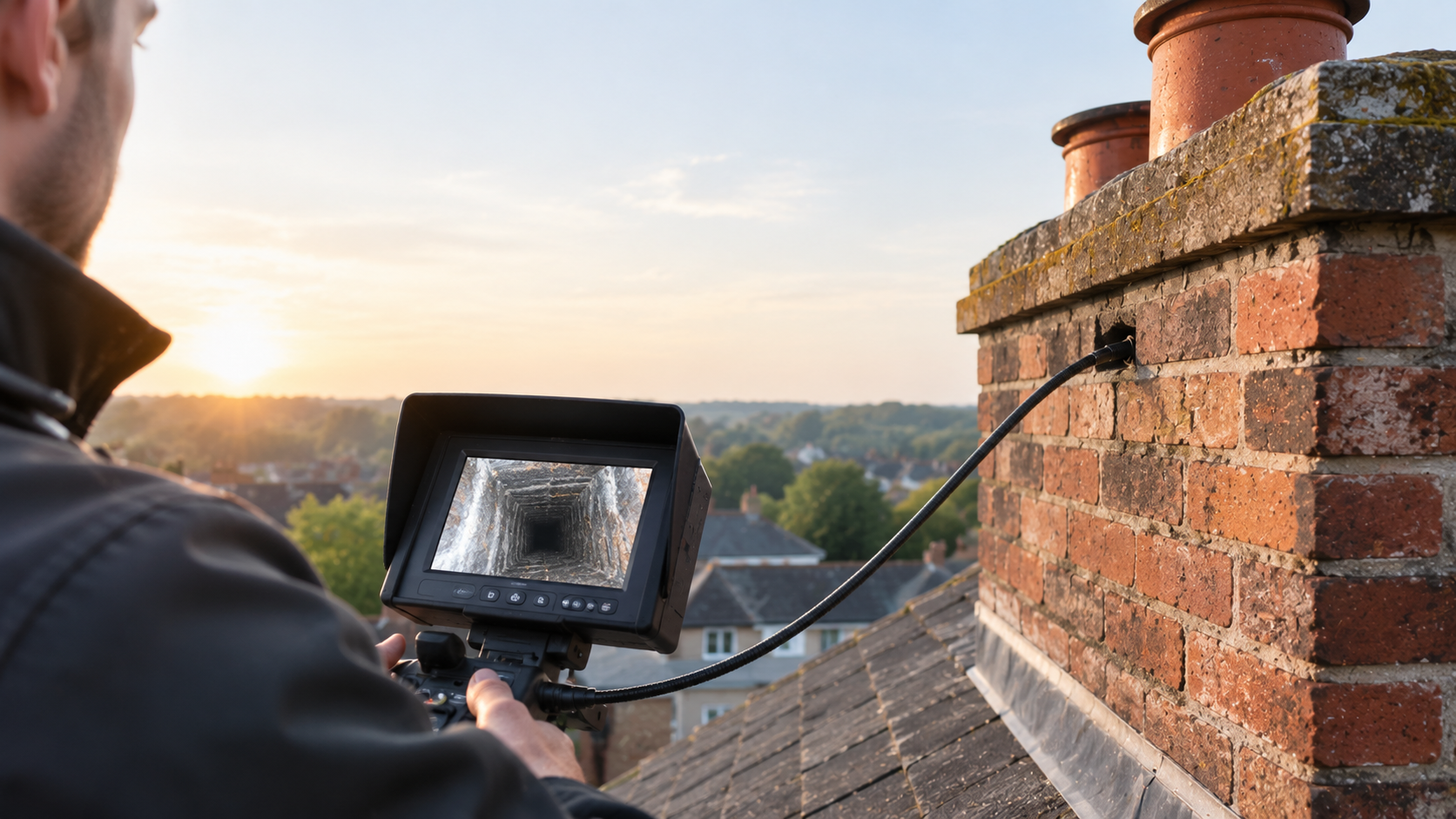
- Book a chimney inspection
- Arrange chimney sweeping if debris or damp soot is present
- Repair the cause before using the chimney regularly again
Do not climb onto the roof unless you are trained and have the correct equipment.
Can You Use a Fireplace If Water Has Come Down the Chimney?
You should avoid using the fireplace or log burner until the chimney has been inspected.
Water inside the chimney can mix with soot and deposits, causing unpleasant smells and possible staining. Damp debris can also restrict airflow.
If the chimney is leaking because of a blockage, damaged flue, or poor chimney condition, using the appliance could be unsafe.
How to Stop Rain Coming Down the Chimney
The right fix depends on the cause of the leak.
Common solutions include:
- Fitting a suitable chimney cowl or rain cap
- Repairing or replacing lead flashing
- Renewing cracked flaunching
- Repointing damaged mortar joints
- Repairing cracked brickwork
- Replacing a damaged chimney pot
- Removing bird nests, leaves, or debris
- Sweeping the chimney
- Improving ventilation in unused chimneys
- Installing or repairing a flue liner where needed
A proper inspection is the best way to avoid guessing and paying for the wrong repair.
Can a Chimney Sweep Help With Water Coming Down the Chimney?
Yes. A chimney sweep can help identify signs of water entry inside the fireplace, stove, and flue.
They can check for:
- Damp soot
- Blockages
- Bird nesting material
- Poor airflow
- Unusual smells
- Flue problems
- Debris inside the chimney
If the issue is caused by roof flashing, brickwork, or flaunching, they may recommend a roofer or chimney repair specialist.
When Should You Call a Professional?
You should call a professional if:
- Water drips into the fireplace when it rains
- Damp patches appear around the chimney breast
- The chimney smells damp, smoky, or musty
- You see staining on walls or ceilings
- Soot or debris is wet
- The chimney has not been swept recently
- You suspect a cracked chimney pot or damaged cowl
- The issue keeps returning after heavy rain
Leaving a chimney leak untreated can lead to more expensive repairs later.
Final Answer: Why Is Water Coming Down the Chimney When It Rains?
Water can come down a chimney when it rains because of a missing cowl, cracked flaunching, damaged flashing, worn brickwork, a damaged chimney pot, debris inside the flue, or condensation.
The best fix depends on where the water is getting in. A professional chimney inspection can identify the cause and help you choose the right repair.
Need Help With a Leaking Chimney?
If water is coming down your chimney when it rains, your chimney may need sweeping, inspection, or repair.
A professional chimney sweep can check for blockages, damp soot, debris, and flue issues before the problem gets worse.
Book a chimney inspection today and keep your home dry, safe, and ready for use.