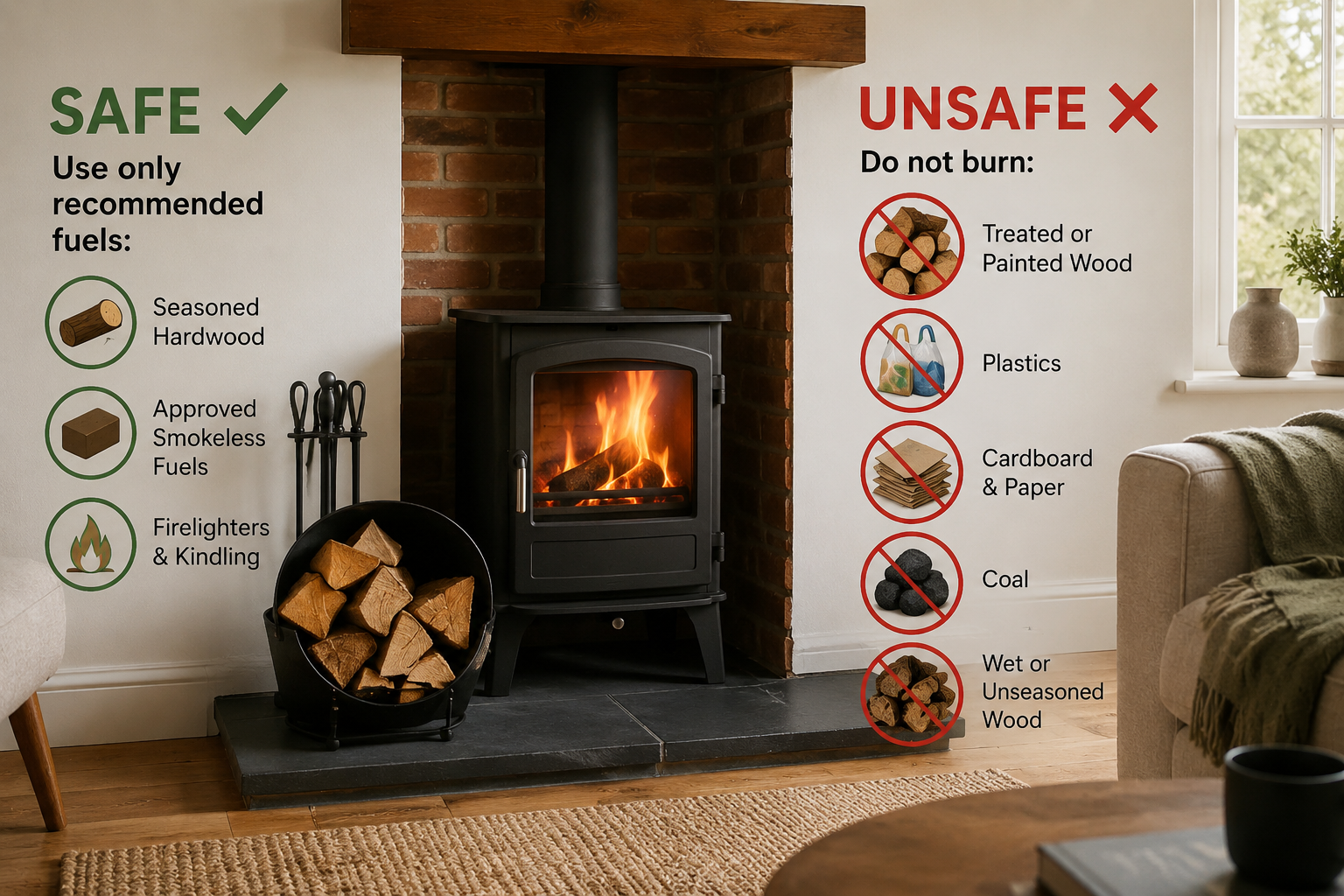
What you burn in your fireplace or log burner makes a big difference to safety, performance, air quality, and chimney condition.
The wrong fuel can create excess smoke, release harmful fumes, damage your stove, increase soot and tar build-up, and raise the risk of chimney fires.
For safer burning, you should only use suitable, dry, approved fuel for your appliance. If you are unsure, check the stove manufacturer’s instructions or speak to a professional chimney sweep.
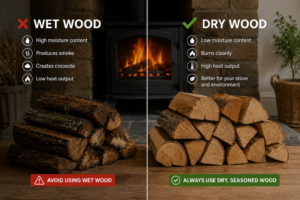
1. Do Not Burn Wet Wood
Wet wood is one of the most common causes of poor burning, excess smoke, and chimney problems.
When wood has a high moisture content, much of the fire’s heat is wasted trying to dry the wood instead of heating your room. This creates more smoke, more tar, and more deposits inside the chimney.
Wet wood can cause:
- Excess smoke
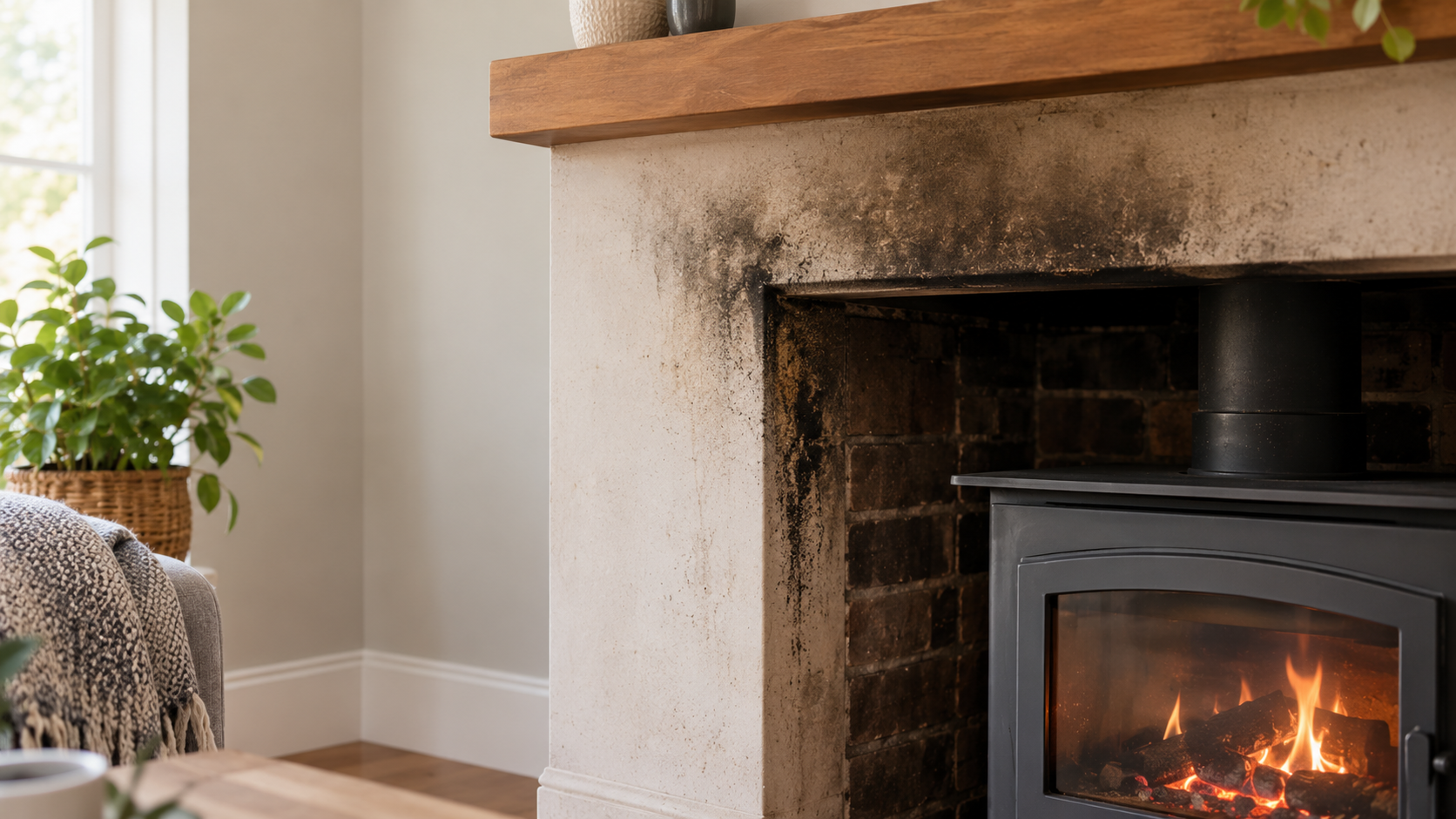
- Blackened stove glass
- Poor heat output
- Tar and creosote build-up
- Strong smoky smells
- Higher chimney fire risk
- More frequent chimney sweeping
For best results, use properly seasoned or kiln-dried wood with a moisture content of 20% or less.
2. Do Not Burn Painted or Treated Wood
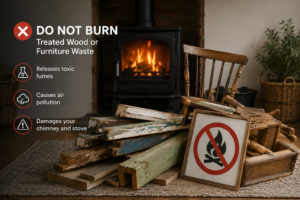
Painted, stained, varnished, pressure-treated, or chemically treated wood should never be burned in a fireplace or log burner.
This includes:
- Old fence panels
- Decking boards
- Painted skirting boards
- Treated construction timber
- Garden furniture
- Wood with preservatives
- Varnished or stained wood
When burned, treated wood can release toxic fumes and harmful pollutants into your home and the air outside.
3. Do Not Burn Old Furniture
Old furniture may look like ordinary wood, but it often contains glue, varnish, paint, laminate, foam, fabric, or chemical treatments.
Burning furniture can release harmful fumes and create dirty deposits inside the chimney.
Avoid burning:
- Chairs
- Tables
- Wardrobes
- Cabinets
- Shelving
- Bed frames
- Upholstered furniture
- Flat-pack furniture
Furniture should be disposed of properly through recycling, waste collection, or a local household waste centre.
4. Do Not Burn MDF, Chipboard, or Plywood
MDF, chipboard, plywood, and other manufactured boards contain glues, resins, and chemicals.
These materials can burn unpredictably and release harmful pollutants. They can also create heavy smoke and leave deposits inside your chimney or flue.
Do not burn:
- MDF boards
- Chipboard
- Plywood
- Laminate flooring
- Kitchen cabinet panels
- Flat-pack furniture panels
- Composite wood products
A log burner is designed for suitable fuel, not building waste.
5. Do Not Burn Household Rubbish
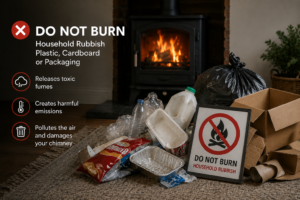
Never use your fireplace or log burner as a waste disposal system.
Household rubbish can release dangerous fumes and increase the risk of fire. It can also damage your stove, block the flue, and create unpleasant smells.
Do not burn:
- Food packaging
- Plastic wrapping
- Crisp packets
- Tissues and wipes
- Nappies
- General household waste
- Foam packaging
- Rubber materials
Household rubbish should be disposed of through the correct waste or recycling service.
6. Do Not Burn Plastic
Plastic should never be burned in a fireplace, stove, or open fire.
Burning plastic can release toxic smoke, unpleasant fumes, and harmful chemicals. It can also melt, stick to surfaces, and create a serious mess inside the appliance.
Avoid burning:
- Plastic bags
- Plastic bottles
- Food packaging
- Polystyrene
- Bubble wrap
- Plastic containers
- Synthetic materials
Plastic waste should always be recycled or disposed of correctly.
7. Do Not Burn Glossy Paper, Magazines, or Coloured Print
Small amounts of plain newspaper may sometimes be used for lighting a fire, but glossy paper, magazines, coloured print, and coated paper should be avoided.
These materials can contain inks, coatings, and chemicals that are not suitable for burning indoors.
They can also create floating embers, excess ash, and soot.
8. Do Not Burn Too Much Cardboard
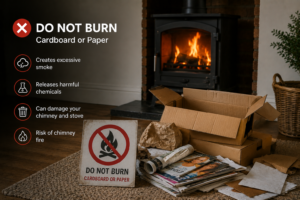
Cardboard may seem harmless, but it can burn very quickly and create large flames, floating embers, and excess ash.
Burning cardboard can increase the risk of sparks escaping from an open fireplace and can make the fire harder to control.
Avoid burning:
- Delivery boxes
- Glossy packaging
- Wax-coated cardboard
- Printed boxes
- Large amounts of cardboard
Recycle cardboard instead.
9. Do Not Burn Pallets
Pallet wood should not be burned unless you are completely certain it is untreated, clean, dry, and safe for burning.
Many pallets are treated, contaminated, painted, stained, or exposed to chemicals during transport and storage. Some may also contain nails, staples, or other metal fixings.
Because of these risks, it is safer to avoid burning pallet wood in your fireplace or log burner.
10. Do Not Burn Driftwood
Driftwood may look dry, but it can contain salt and other contaminants from seawater.
When burned, salt-contaminated wood can produce harmful fumes and may contribute to corrosion inside the stove or flue system.
It is best to avoid burning driftwood indoors.
11. Do Not Burn Christmas Trees
Old Christmas trees can be dry, resinous, and highly flammable. They can burn very quickly and create sparks, strong flames, and heavy smoke.
Do not put Christmas tree branches into your fireplace or log burner.
Use your local council’s Christmas tree recycling service instead.
12. Do Not Burn Liquid Fuels
Never use petrol, paraffin, lighter fluid, white spirit, or other liquid fuels to start or boost a fire.
These can ignite suddenly and cause serious injury, property damage, or uncontrolled flames.
Use suitable firelighters, dry kindling, and proper fire-starting methods instead.
13. Do Not Burn Traditional House Coal Unless It Is Legally Suitable
Rules around domestic solid fuels vary depending on where you live in the UK.
In England, the sale of traditional house coal has been phased out for domestic use, and manufactured solid fuels must meet smoke and sulphur standards. Many towns and cities also have smoke control areas where stricter rules apply.
If you use a multi-fuel stove, only burn fuel that is approved and suitable for your appliance.
What Should You Burn Instead?
For safer and cleaner burning, use:
| Fuel Type | Good Practice |
|---|---|
| Dry seasoned logs | Moisture content of 20% or less |
| Kiln-dried logs | Choose suitable firewood from a reliable supplier |
| Ready to Burn wood | Look for approved labelling where applicable |
| Approved smokeless fuel | Use only if suitable for your appliance |
| Natural firelighters | Use for safe lighting |
| Dry kindling | Helps start the fire cleanly |
Always follow your stove manufacturer’s instructions.
Why Burning the Wrong Materials Is Dangerous
Burning unsuitable materials can lead to:
- Chimney fires
- Toxic fumes
- Carbon monoxide risks
- Excess smoke
- Poor appliance performance
- Damaged stove parts
- Blocked flues
- Bad smells
- More soot and tar build-up
- Possible legal issues in smoke control areas
A fireplace or log burner should only be used with the correct fuel.
How to Tell If Your Fuel Is Too Wet
Wet wood may:
- Feel heavy
- Have a fresh or damp smell
- Be difficult to light
- Hiss or spit when burned
- Produce lots of smoke
- Leave black marks on stove glass
- Give off poor heat
A moisture meter is a simple way to check whether logs are dry enough to burn.
When Should You Have the Chimney Swept?
If you have burned the wrong materials in your fireplace or log burner, you should arrange a chimney sweep before using it regularly again.
You should also book a sweep if you notice:
- Smoke coming back into the room
- Strong smoky smells
- Soot falling into the fireplace
- Poor draught
- Black tar deposits
- Damp or sticky soot
- Difficulty lighting the fire
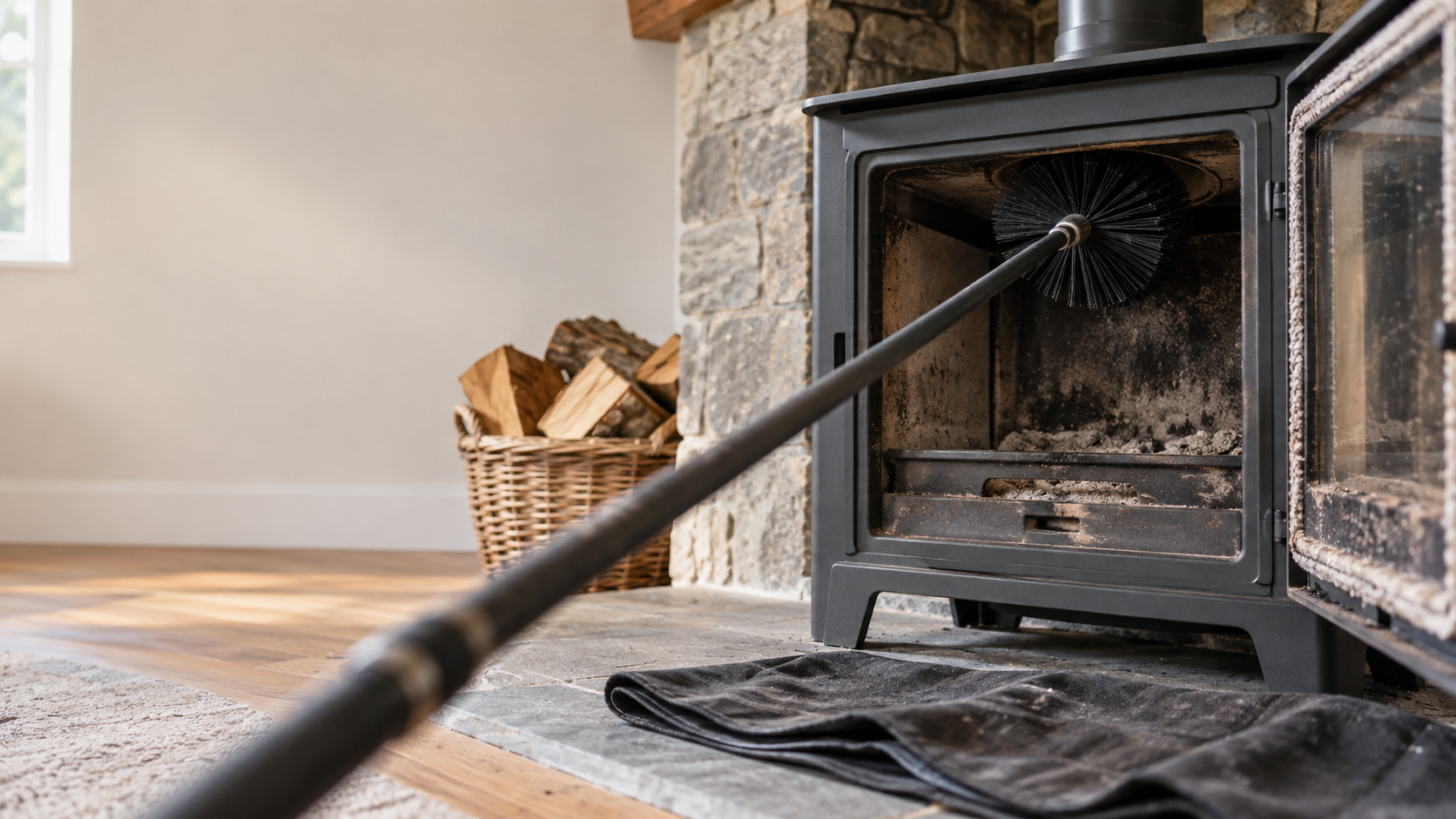
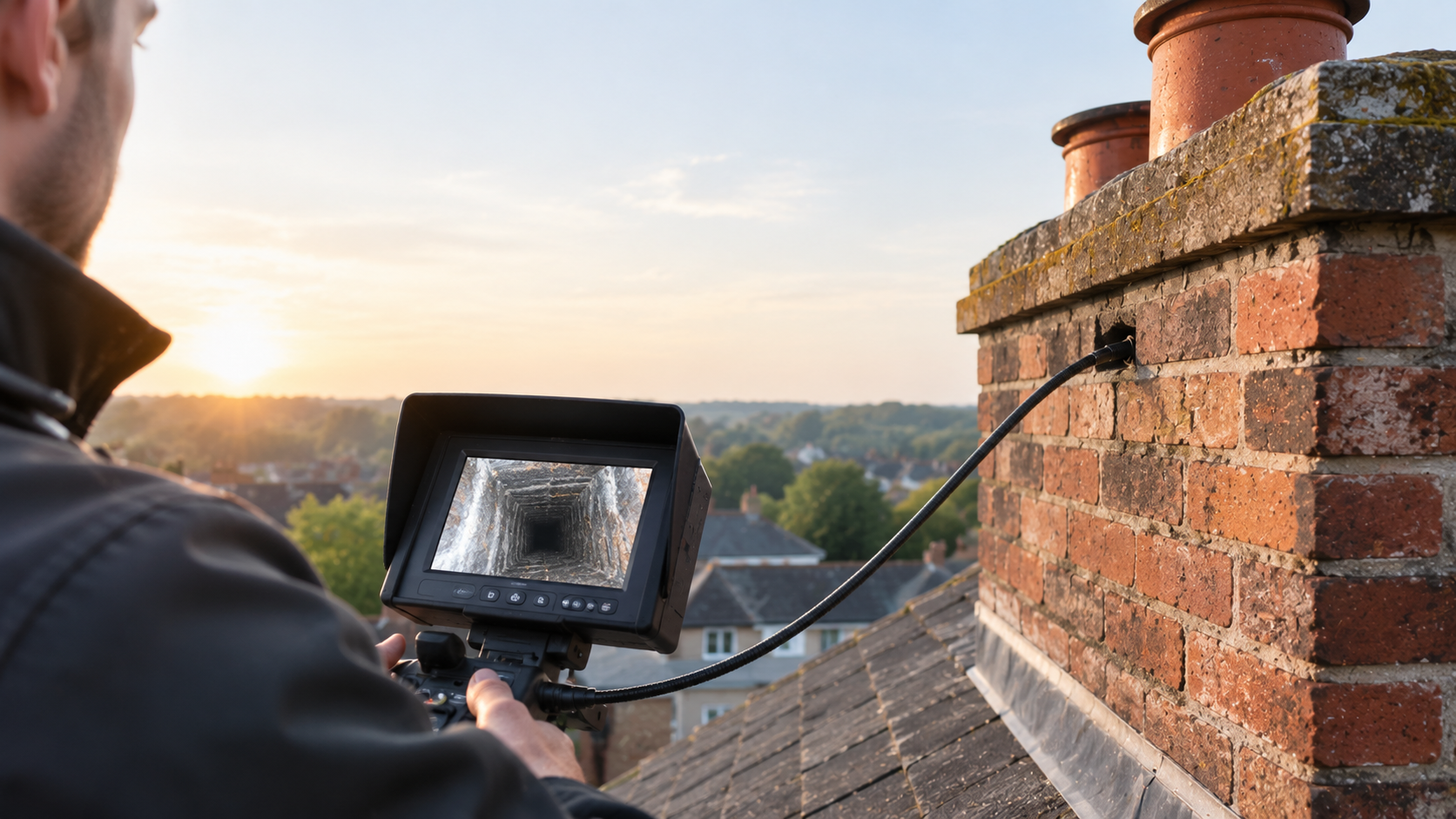
A professional chimney sweep can remove soot, tar, and debris from the flue and advise if further inspection is needed.
Final Answer: What Should You Not Burn in Your Fireplace or Log Burner?
You should not burn wet wood, treated wood, painted wood, old furniture, MDF, chipboard, plywood, household rubbish, plastic, glossy paper, cardboard, pallets, driftwood, Christmas trees, or liquid fuels in your fireplace or log burner.
Only burn dry, suitable, approved fuel that is designed for your appliance. This helps keep your chimney cleaner, your stove working properly, and your home safer.
Need Your Chimney Checked?
If you are unsure what has been burned in your fireplace or your chimney has not been swept recently, book a professional chimney sweep.
A chimney sweep can remove soot, tar, and debris, check for blockages, and help keep your fireplace or log burner safer to use.
Book your chimney sweep today and keep your fire burning safely this season.