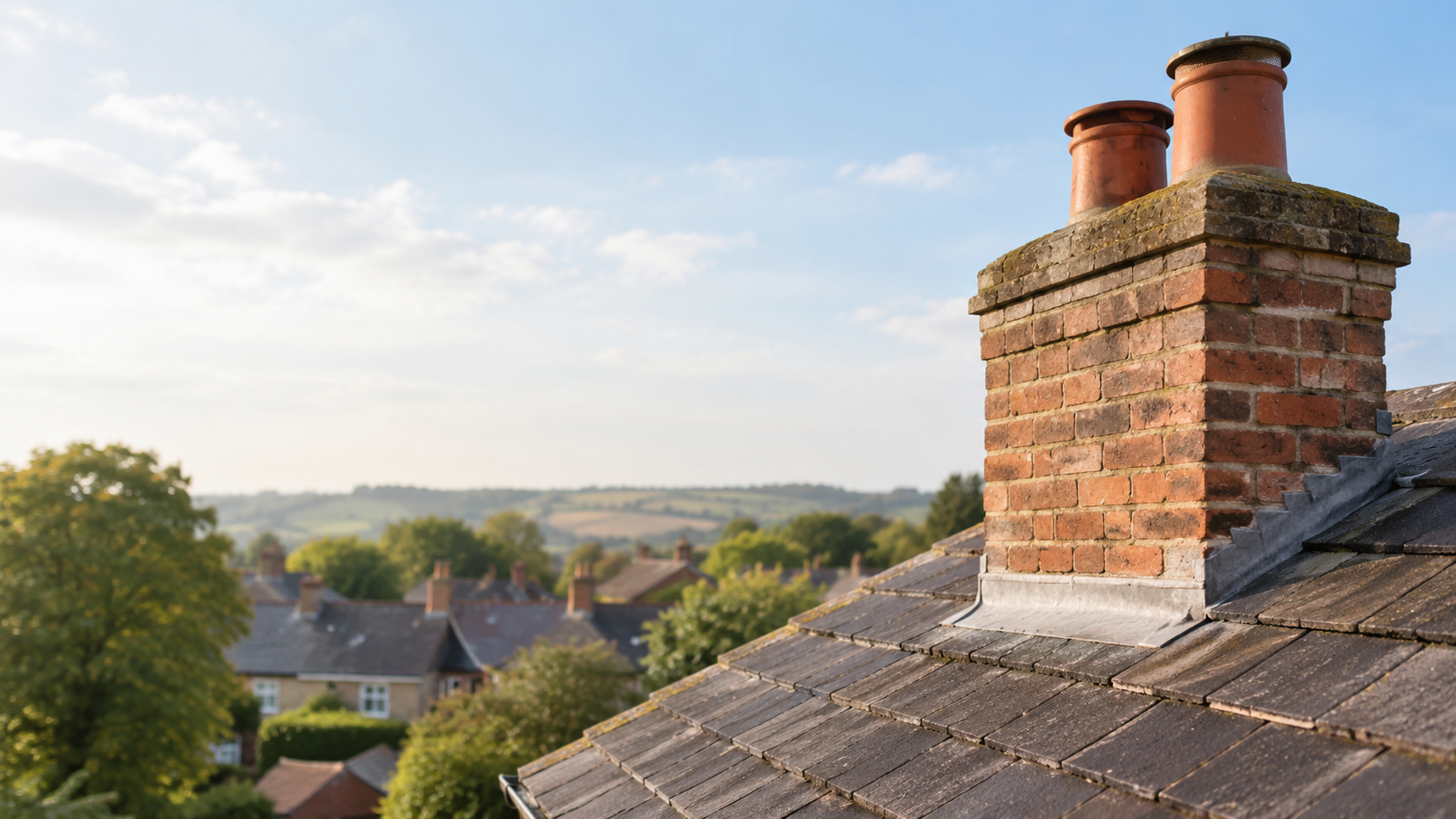
A blocked chimney can cause much more than poor fireplace performance. If smoke and combustion gases cannot travel freely through the flue, they may spill back into your home.
The problem is that chimney blockages are not always visible from the fireplace. Soot, creosote, bird nests, leaves and even damaged masonry can restrict the flue higher up where you cannot see them.
So, how can you tell if your chimney is blocked?
Common warning signs include smoke entering the room, weak chimney draught, unusual smells, falling debris, bird activity and difficulty keeping your fire burning.
Professional chimney-sweeping guidance confirms that soot, bird nests, cobwebs and other obstructions can restrict a chimney and should be removed through regular sweeping.
Below are 10 signs that your chimney may be blocked and what you should do if you notice them.
1. Smoke Is Coming Back Into the Room
One of the clearest signs of a blocked chimney is smoke entering your room instead of travelling up the flue.
If you have an open fireplace, you might notice smoke rolling out from underneath the fireplace opening.
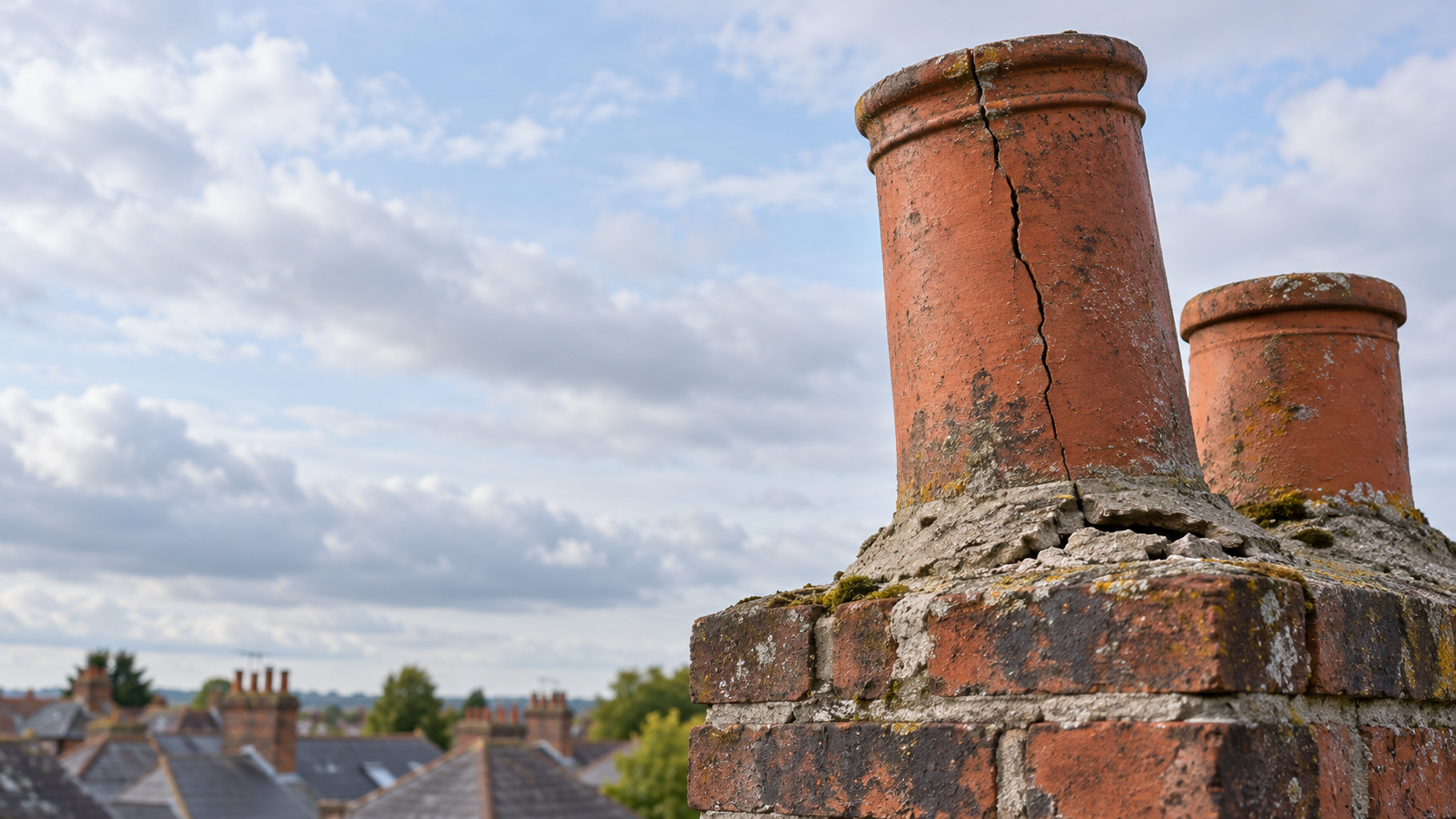
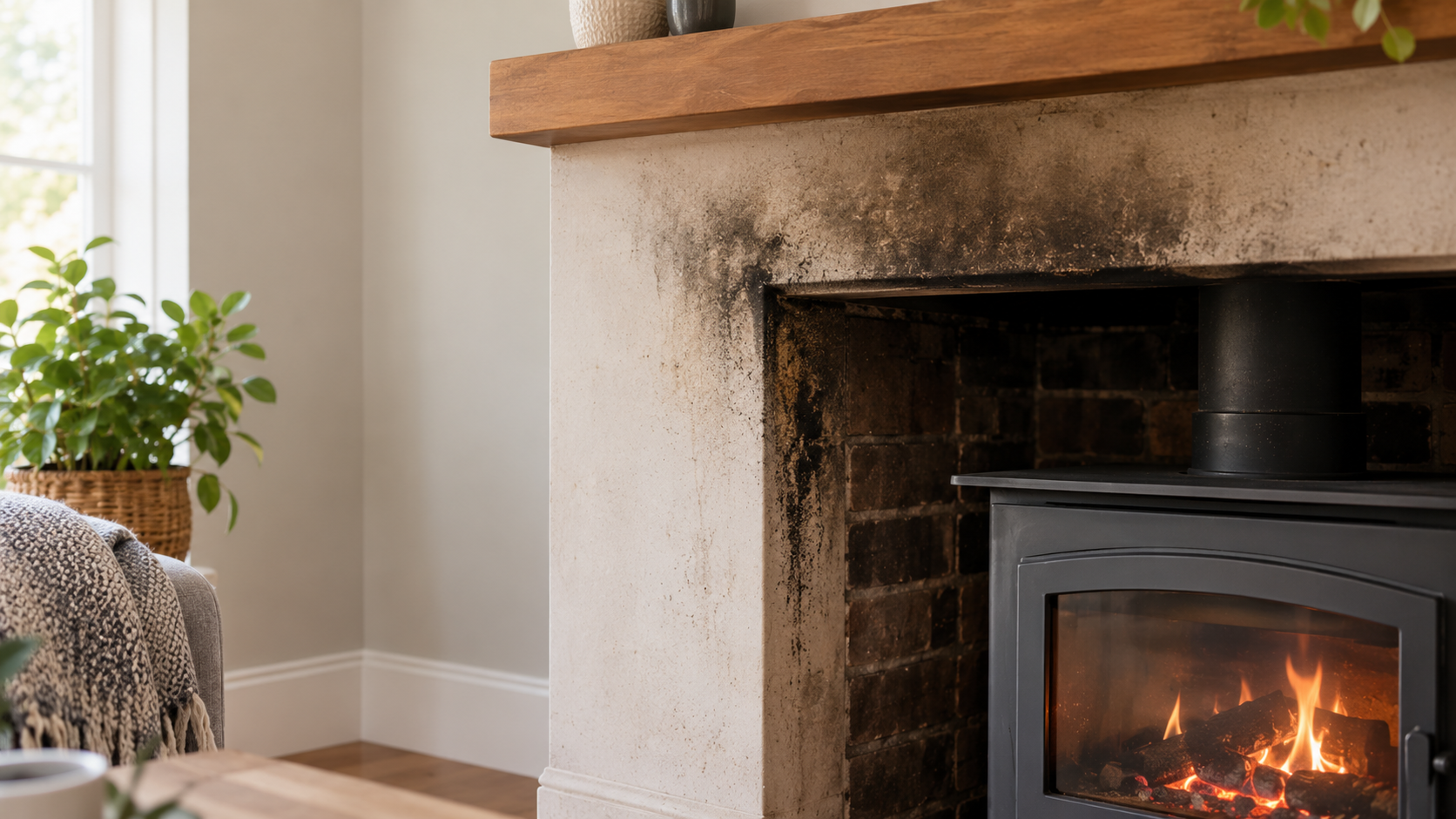
With a log burner, smoke may escape when you open the stove door or struggle to clear from the firebox.
Possible causes include:
- Heavy soot accumulation
- Creosote deposits
- A bird nest
- Fallen masonry
- Leaves and outdoor debris
- A damaged flue liner
- Poor chimney draught
- Insufficient ventilation
Smoke entering the room does not automatically confirm a physical blockage, because ventilation and draught problems can produce similar symptoms. However, it is a warning sign that should not be ignored.
HETAS warns that chimney restrictions such as creosote can reduce draught and allow harmful combustion products to enter the room.
If smoke repeatedly enters your home, stop using the fireplace or stove until the cause has been investigated.
2. Your Fire Is Difficult to Light
A chimney needs adequate draught to help a fire establish and continue burning.
When the chimney is restricted, air movement through the system may weaken.
You might notice that:
- The fire takes longer to start
- Flames repeatedly die down
- Logs struggle to stay alight
- The fire produces excessive smoke
- The appliance feels less responsive to its air controls
These symptoms can also be caused by damp wood, a cold chimney or inadequate room ventilation, so they are not proof of a blockage on their own.
However, if your fireplace previously worked correctly and suddenly becomes difficult to use, the flue should be checked.
3. You Notice a Strong Sooty or Smoky Smell
A strong chimney smell can indicate accumulated soot, creosote or debris.
You may notice an odour similar to:
- Burnt wood
- Old smoke
- Tar
- Damp soot
- A musty fireplace
The smell may become stronger during warm or damp weather.
HETAS advises that a smell of soot or creosote alongside smoke can indicate a blocked chimney or flue and recommends arranging professional chimney sweeping rather than continuing to use the appliance.
Unusual smells can also come from bird nesting material or an animal trapped inside the chimney.
4. Soot Is Falling Into Your Fireplace
Small amounts of loose soot can occasionally fall from an older chimney.
However, regularly finding black material in the fireplace may indicate significant build-up higher inside the flue.
Watch for:
- Black soot flakes
- Powdery deposits
- Hard dark pieces
- Sticky tar-like material
- Unusual amounts of ash
Creosote can develop in different forms, including flaky, sticky and harder deposits. Excessive accumulation can interfere with chimney draught and creates an additional fire risk because creosote is combustible.
If you continue finding deposits after cleaning the hearth, arrange a chimney sweep.
5. Twigs, Leaves or Feathers Are Falling Down the Chimney
Finding natural debris in your fireplace is a strong clue that something is happening further up the chimney.
Common materials include:
- Twigs
- Leaves
- Grass
- Moss
- Feathers
- Nesting material
Bird nests can cause substantial chimney blockages, particularly in open or infrequently used chimneys.
NACS specifically identifies bird nests and other obstructions among the materials removed during regular professional chimney sweeping.
Midlands Sweeps also identifies nesting activity as a particular concern for open and unlined chimneys and offers bird nest removal alongside chimney sweeping and inspection services.
Do not attempt to solve a suspected nest by lighting a fire underneath it.
6. Birds Are Frequently Around Your Chimney Pot
Seeing an occasional bird on the roof is normal.
However, repeated activity around the same chimney may indicate nesting.
Watch for birds:
- Entering the chimney pot
- Carrying twigs toward the chimney
- Repeatedly landing on the same pot
- Disappearing into the chimney
- Making scratching or fluttering sounds inside
If you have also noticed twigs falling into the hearth or suddenly poor chimney draught, there may be a nest inside.
A professional chimney sweep can investigate whether the flue is obstructed and advise what action is appropriate.
7. Your Log Burner Glass Is Blackening More Quickly
Black stove glass does not automatically mean you have a blocked chimney.
It can also result from:
- Wet firewood
- Low-temperature burning
- Restricting the stove’s air supply too much
- Poor burning technique
- Incorrect fuel
However, a restricted chimney can weaken draught and affect combustion, contributing to smokier fires.
If your stove glass previously remained relatively clear but has suddenly started blackening quickly alongside weak burning or smoke spillage, consider having the chimney checked.
8. You Cannot Feel Normal Chimney Draught
A functioning chimney normally creates an upward movement of air when operating correctly.
A severely restricted chimney may produce noticeably weaker draught.
Other chimney and weather conditions can also affect draught, so trying to diagnose the cause yourself is unreliable.
A professional sweep can assess the chimney, identify visible obstructions and determine whether additional investigation is required. HETAS describes an initial visual chimney-sweep inspection as a way to identify obstructions including creosote, bird nests and soot.
9. Debris or Pieces of Masonry Are Falling Into the Hearth
Not every chimney blockage consists of soot.
Older chimneys can deteriorate internally.
You may discover:
- Pieces of mortar
- Small pieces of brick
- Flue liner fragments
- Other hard debris
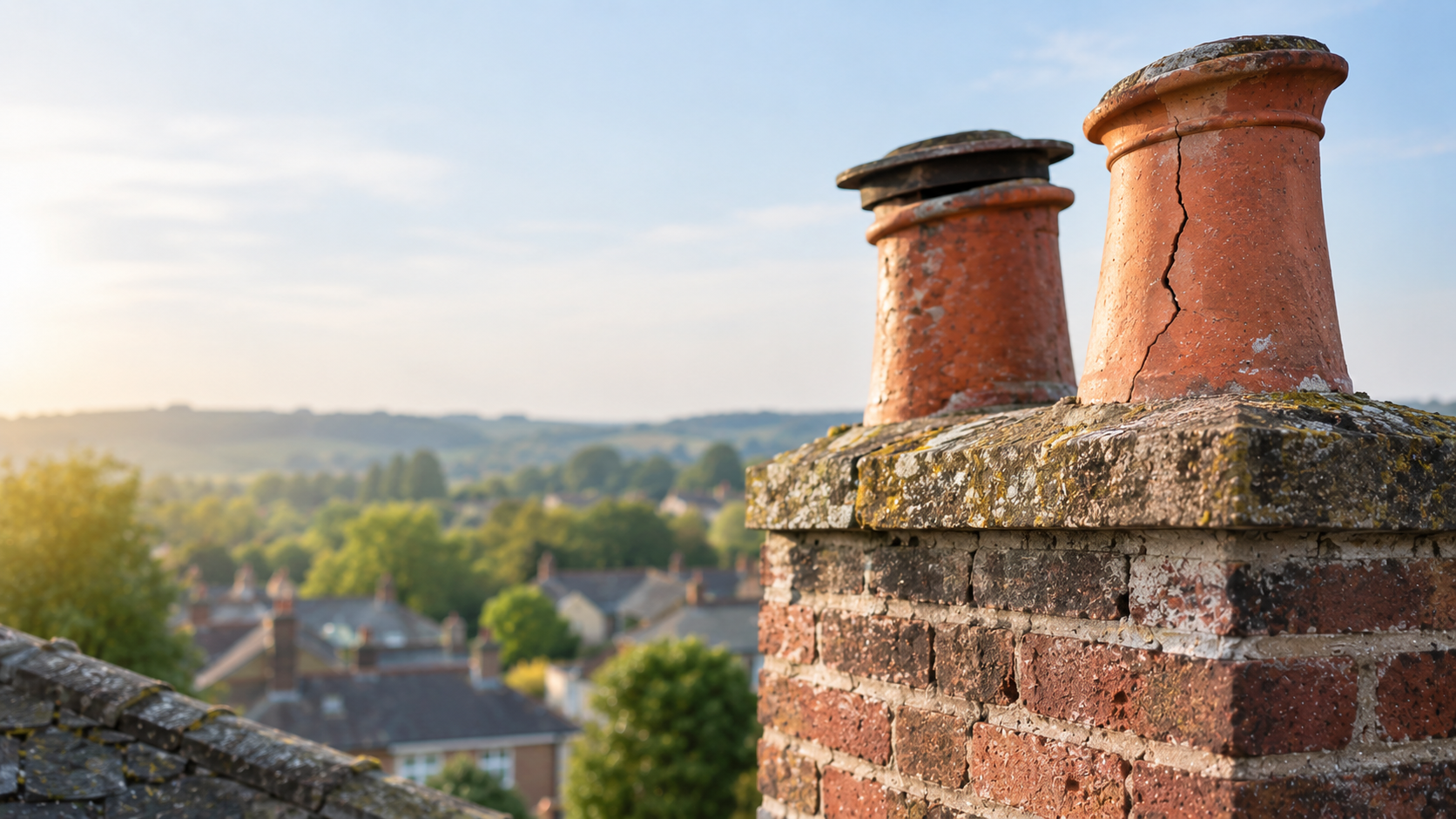
Fallen material could partially restrict the chimney or indicate deterioration that requires more than ordinary sweeping.
If significant masonry is appearing in your fireplace, a more detailed inspection may be appropriate.
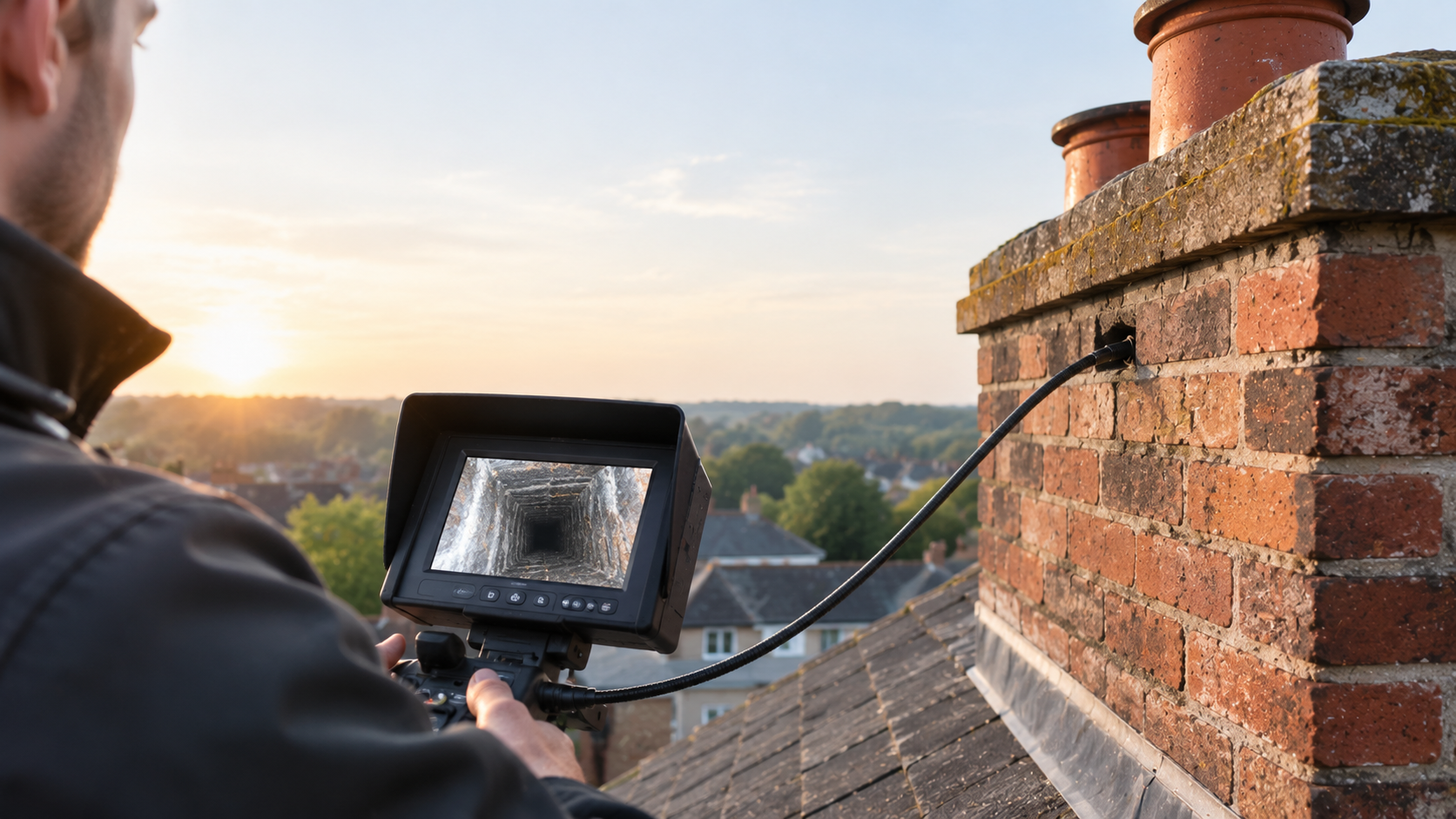
Midlands Sweeps offers high-definition internal CCTV inspection as well as drone and roof-stack assessment, which can be useful when the condition of areas that cannot be seen from the fireplace needs further investigation.
10. Your Carbon Monoxide Alarm Activates
This is the most serious warning sign.
Carbon monoxide can be produced when fuel does not burn properly, and a blocked or poorly maintained flue can prevent combustion gases from leaving the property safely.
UK fire-safety guidance warns that blocked or defective chimneys can contribute to carbon monoxide poisoning.
If your carbon monoxide alarm activates:
- Stop using the appliance.
- Leave the affected area and get into fresh air.
- Follow the alarm manufacturer’s emergency instructions.
- Do not use the fire or stove again until the problem has been professionally investigated.
Never assume that opening a window permanently solves a carbon monoxide problem.
What Causes a Blocked Chimney?
There are several possible causes of chimney blockages.
Soot Build-Up
Every time wood, coal or another suitable solid fuel is burned, combustion deposits can accumulate inside the flue.
Regular sweeping removes these deposits before they become excessive.
Creosote and Tar
Wood smoke can create creosote deposits inside a chimney.
Heavy accumulation can restrict the chimney and is also combustible, increasing chimney-fire risk.
Bird Nests
Birds may build nests inside quiet chimneys, particularly during periods when fireplaces are not being used.
A large nest can substantially restrict or completely obstruct the flue.
Leaves and Outdoor Debris
Leaves, twigs and other material can enter some open chimney systems and accumulate over time.
Fallen Masonry
Older brick chimneys can deteriorate internally, allowing mortar or masonry to fall into the flue.
Damaged Flue Liners
A damaged or displaced liner can potentially restrict the chimney or affect its safe operation.
Building Debris
Renovation work can sometimes introduce dust, mortar or other material into an existing chimney.
Can a Blocked Chimney Cause Carbon Monoxide?
Yes.
A chimney is designed to provide a route for combustion gases to leave the property.
When that route is obstructed, gases may not escape correctly. Fire and safety authorities specifically warn that blocked or poorly maintained chimneys and flues can contribute to dangerous carbon monoxide exposure.
Carbon monoxide cannot be seen, smelled or tasted.
A working carbon monoxide alarm is therefore essential where required around combustion appliances. England’s Approved Document J also requires appropriate provision for carbon monoxide detection where fixed combustion appliances are installed.
Can a Blocked Chimney Cause a Chimney Fire?
A dirty or obstructed chimney can increase fire risk when combustible deposits such as creosote are present.
Creosote can build up as wood smoke cools inside a chimney, and HETAS identifies it as a highly combustible substance associated with chimney-fire risk.
Regular professional sweeping helps remove soot and creosote before excessive deposits develop.
How Do You Check If a Chimney Is Blocked?
You can look for visible warning signs from inside the room, but you should not attempt to climb onto the roof or dismantle the chimney unless you are appropriately trained and equipped.
A homeowner can safely watch for:
- Falling soot
- Twigs or leaves
- Smoke entering the room
- Strong chimney smells
- Weak fire performance
- Bird activity
- Unusual debris
However, many chimney blockages occur beyond the section visible from the fireplace.
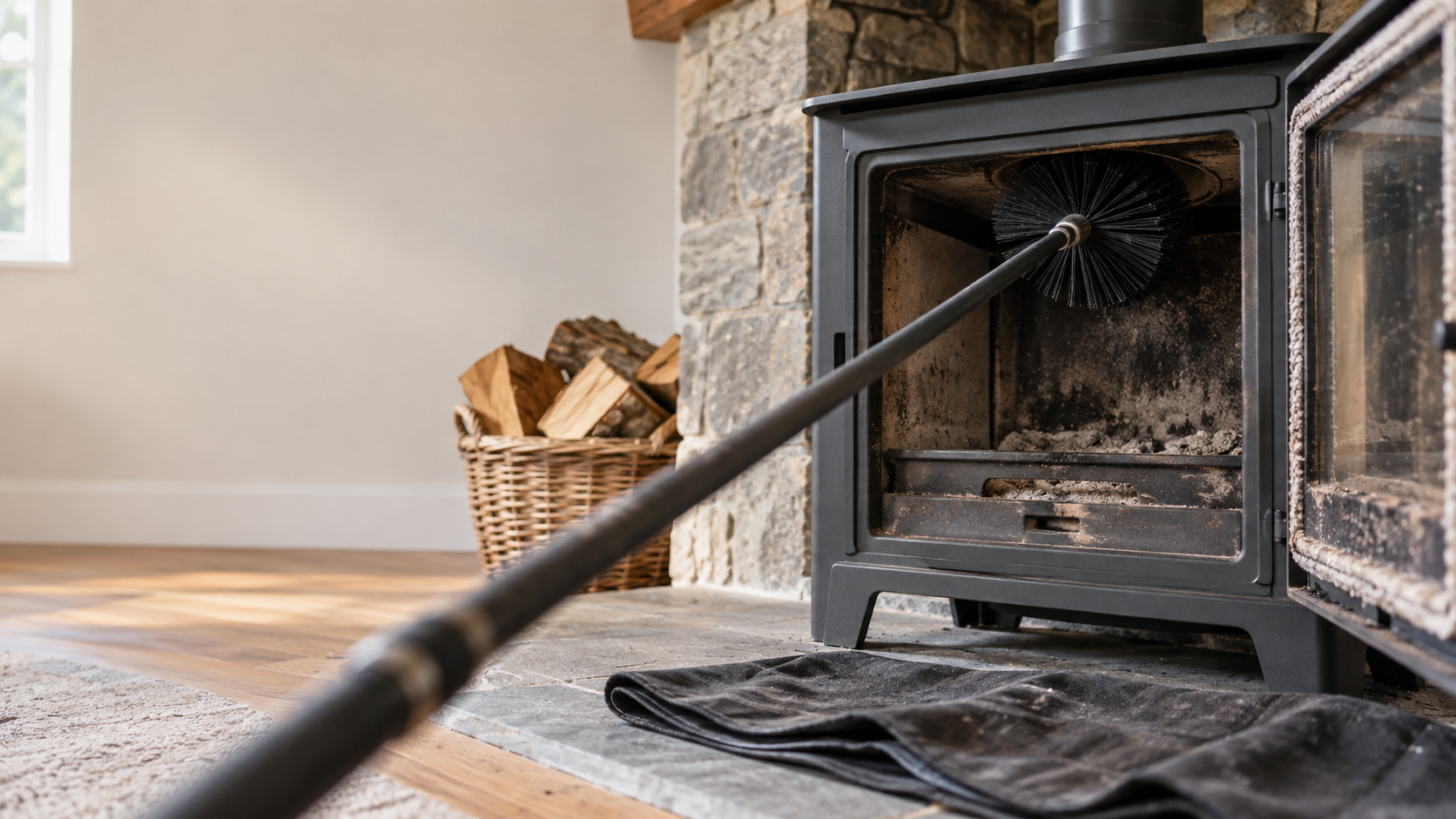
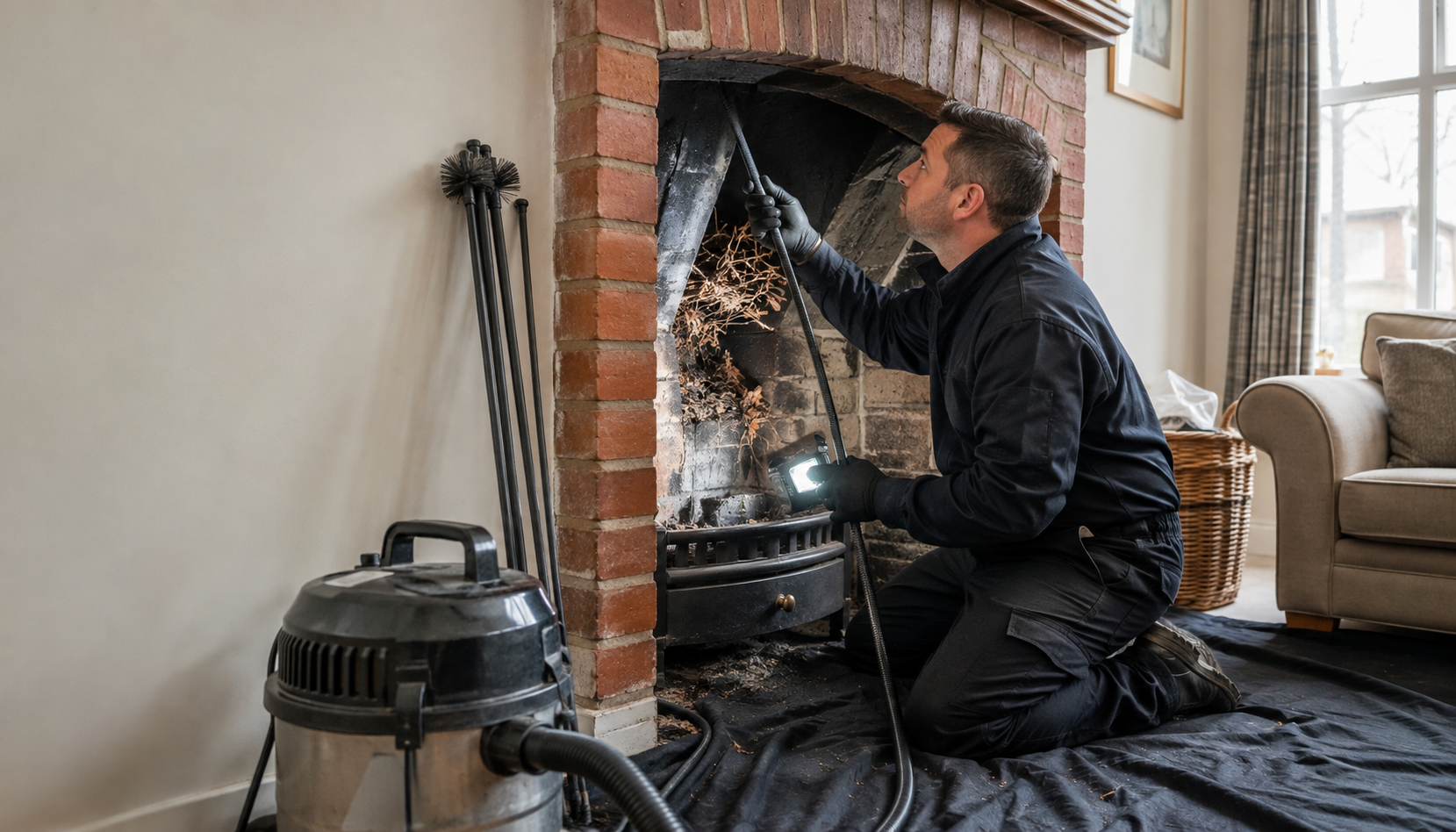
Professional chimney sweeps use suitable rods, brushes and inspection equipment to check and clean the flue. Some also use digital cameras when a more detailed view is required.
What Happens During a Professional Blocked Chimney Inspection?
The exact process depends on the type and severity of the blockage.
A professional sweep may:
- Ask about recent chimney performance.
- Visually inspect the accessible fireplace or appliance.
- Protect the flooring and fireplace area.
- Seal the fireplace where appropriate.
- Sweep the chimney using suitable rods and brushes.
- Remove soot and loose debris.
- Check for nesting material or other obstructions.
- Assess whether the chimney appears to be venting correctly.
- Recommend a CCTV inspection if the obstruction cannot be fully identified.
- Explain whether additional removal or repair work is required.
NACS requires its members to protect the fireplace and immediate floor area using suitable sealing methods before sweeping, while HETAS describes professional inspection and camera equipment as useful for locating chimney obstructions.
Will Chimney Sweeping Remove a Blockage?
It depends on what is causing the blockage.
Standard professional sweeping can commonly remove materials such as:
- Soot
- Loose creosote
- Cobwebs
- Leaves
- Small amounts of loose debris
NACS specifically states that regular sweeping removes soot, bird nests, cobwebs and other blockages, although difficult obstructions may require additional work.
A severe blockage caused by substantial nesting material, structural damage or a damaged liner may require a more specialised service.
When Is a CCTV Chimney Inspection Needed?
A CCTV chimney inspection can be valuable when normal sweeping does not fully explain the problem.
It may be recommended if:
- The chimney remains blocked after sweeping
- Smoke problems continue
- Fallen masonry is discovered
- A liner may be damaged
- The chimney has an unknown history
- There has been a previous chimney fire
- A new stove or liner is being considered
- Internal structural condition needs investigation
Midlands Sweeps provides high-definition internal CCTV surveys as part of its chimney inspection services.
Does an Unused Chimney Become Blocked?
Yes.
A chimney does not need to be actively used to develop an obstruction.
While an unused chimney may accumulate less fresh soot, it can still collect:
- Bird nests
- Leaves
- Twigs
- Cobwebs
- Fallen mortar
- Other debris
If you are planning to use a fireplace or stove after a long period of inactivity, having the chimney professionally checked first is sensible.
NACS includes bird nests, cobwebs and similar obstructions among the reasons regular chimney sweeping is necessary.
How Can You Help Prevent Chimney Blockages?
You cannot prevent every chimney problem, but regular maintenance can substantially reduce the likelihood of serious build-up.
Good practices include:
- Have the chimney swept at an appropriate frequency.
- Burn only suitable fuel.
- Use properly dried wood where applicable.
- Avoid repeatedly allowing wood fires to smoulder.
- Watch for bird activity.
- Do not ignore falling soot or masonry.
- Keep required ventilation openings unobstructed.
- Maintain a working carbon monoxide alarm.
- Have persistent smoke problems investigated promptly.
Regular professional sweeping removes soot and common obstructions while supporting the free passage of combustion gases.
Frequently Asked Questions
What is the most obvious sign of a blocked chimney?
Smoke entering the room is one of the most important warning signs. Falling debris, strong soot smells and weak chimney draught can also suggest an obstruction.
Why is smoke suddenly coming into my room?
Possible causes include a chimney blockage, accumulated soot or creosote, poor ventilation, bird nests or draught problems. Stop using the appliance if smoke continues entering the room.
Can a bird nest completely block a chimney?
Yes. Nesting material can create a substantial obstruction. NACS identifies bird nests as one of the common blockages removed during chimney sweeping.
Can I see a chimney blockage from the fireplace?
Sometimes, but many obstructions occur further up the flue and cannot be seen from below. Professional sweeping or CCTV inspection may be required.
Can I unblock my chimney myself?
Basic fireplace cleaning does not replace professional sweeping. Difficult chimney obstructions can occur high inside the flue and may involve soot, nests, liner damage or masonry. Professional assessment is the safer option.
Should I light a fire to test whether the chimney is blocked?
No. If the chimney is seriously obstructed, combustion gases may not escape safely. Arrange a professional inspection instead.
Will a chimney sweep tell me if my chimney is blocked?
A professional sweep should inspect for obstructions before and during the sweeping process. HETAS specifically identifies soot, creosote and bird nests among the obstructions looked for during a chimney-sweep inspection.
How often should I have my chimney checked?
The correct frequency varies according to the fuel, appliance and level of use. Regular professional sweeping is recommended to remove deposits and common blockages before they become significant.
Think Your Chimney Is Blocked?
If your fireplace is smoking, your stove is struggling to draw, debris is falling into the hearth or you suspect a bird nest, do not continue using the appliance and hope the problem clears itself.
A professional chimney sweep can remove common deposits and obstructions and identify when a more detailed inspection is needed.
Midlands Sweeps provides professional chimney sweeping as well as bird nest removal, CCTV chimney surveys, drone and roof inspections, flue liner installation and log burner installation. The company currently serves Swadlincote, Newhall, Derby, Burton upon Trent, Ashby-de-la-Zouch, Melbourne, Hilton, Etwall, Repton, Willington, Hatton and surrounding areas.
If you suspect your chimney is blocked, arrange an inspection before lighting the fire again.