An open fireplace can make a home feel warm, traditional and welcoming, but it also requires regular maintenance. One of the most important jobs is arranging a professional open fireplace chimney sweep.
Every time you light an open fire, soot, ash, tar and other combustion deposits can travel into the chimney. Over time, these materials can accumulate on the internal walls of the flue, restricting airflow and increasing the risk of smoke problems and chimney fires.
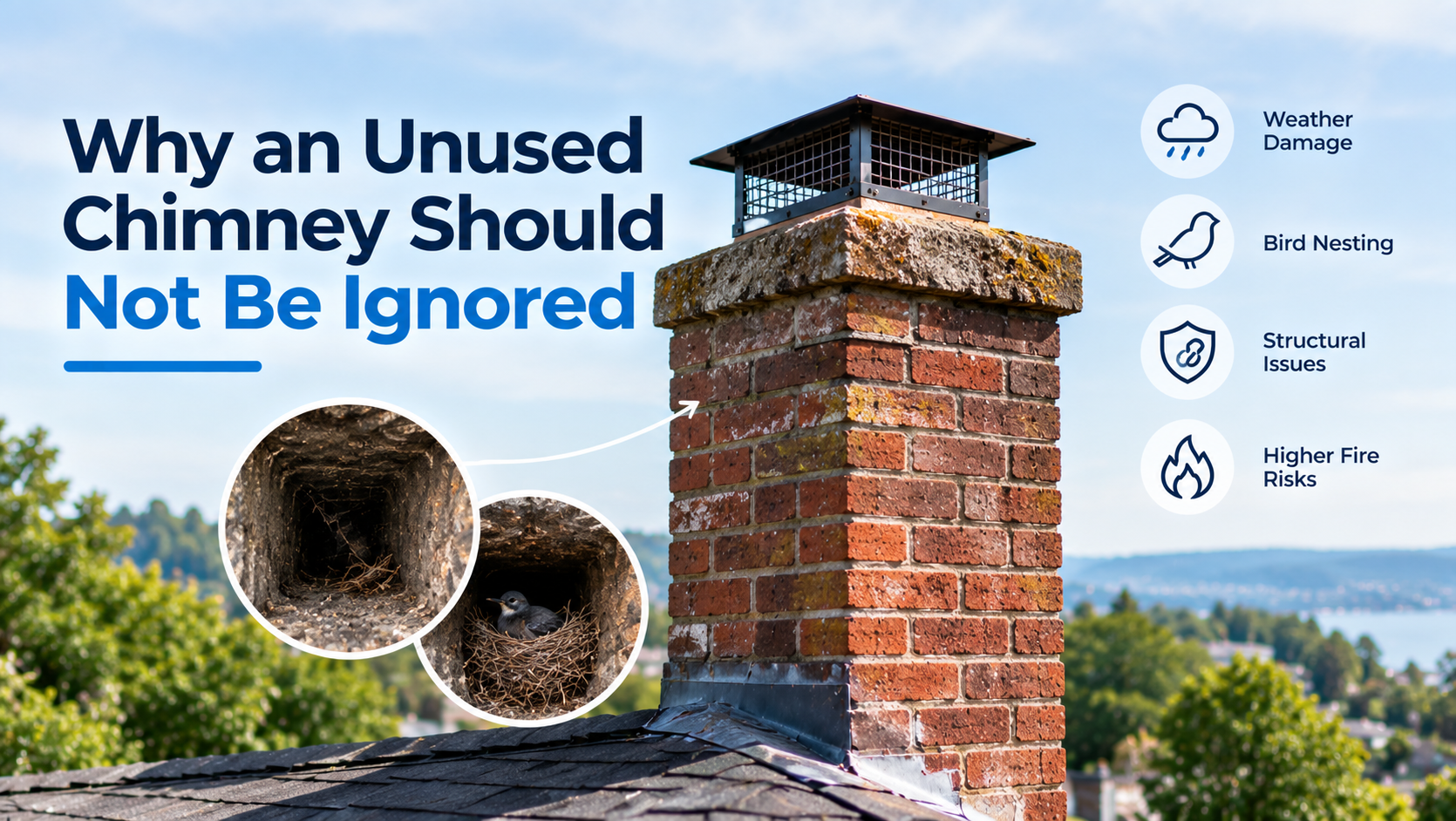
Bird nests, leaves and fallen masonry can also block an open chimney, particularly during periods when the fireplace is not being used.
Regular chimney sweeping keeps the flue clear and gives a professional the opportunity to identify visible problems before you light your next fire.
In this guide, we explain how often an open fireplace should be swept, what happens during a professional sweep, warning signs to look for and how to keep your chimney in good condition.
Does an Open Fireplace Need Chimney Sweeping?
Yes. Any working open fireplace connected to a chimney should be professionally swept at appropriate intervals.
Unlike a sealed stove, an open fire relies heavily on the natural draught created by the chimney to carry smoke and combustion gases safely away from the room.
If soot, creosote or debris restricts the flue, the chimney may struggle to draw correctly.
This can result in:
- Smoke entering the room
- Poorly burning fires
- Strong soot smells
- Falling chimney debris
- Increased creosote deposits
- Reduced chimney performance
- Increased chimney-fire risk
DEFRA recommends having chimneys serving open fires or stoves professionally swept at least once a year. Soot and tar accumulation can reduce chimney efficiency and increase the risk of chimney fires.
Why Do Open Fireplaces Produce So Much Soot?
An open fireplace generally burns fuel differently from a modern enclosed stove.
The combustion process is exposed to the room, and the temperature of the fire and chimney can vary significantly. Incomplete combustion can create smoke containing fine particles that attach to the chimney walls.
The amount of soot produced depends on factors including:
- The fuel being burned
- Moisture content of firewood
- Chimney temperature
- Amount of airflow
- How regularly the fireplace is used
- Chimney design
- Condition of the flue
- How efficiently the fire burns
Burning wet wood can dramatically increase smoke and deposits.
For cleaner and more efficient burning, use properly seasoned firewood with a moisture content of 20% or less.
What Builds Up Inside an Open Fireplace Chimney?
Several different materials can accumulate inside an open chimney.
Soot
Soot is the fine black material produced during combustion.
A small amount is normal, but continued use without sweeping can allow substantial deposits to develop.
Creosote
Creosote forms when smoke and other combustion products cool and condense inside the chimney.
It can appear as:
- Dry flakes
- Sticky deposits
- Thick tar
- Hard glazed coatings
Because creosote can be combustible, significant accumulation can increase chimney-fire risk.
Tar
Heavy tar deposits are often associated with burning damp wood or operating fires inefficiently.
Tar can be more difficult to remove than ordinary loose soot and may require additional treatment.
Bird Nesting Material
Open chimneys can provide attractive nesting locations for birds, particularly when they are unused during spring and summer.
Bird nests may contain:
- Twigs
- Leaves
- Grass
- Moss
- Feathers
- Other nesting material
A large nest can completely block the flue.
Fallen Masonry
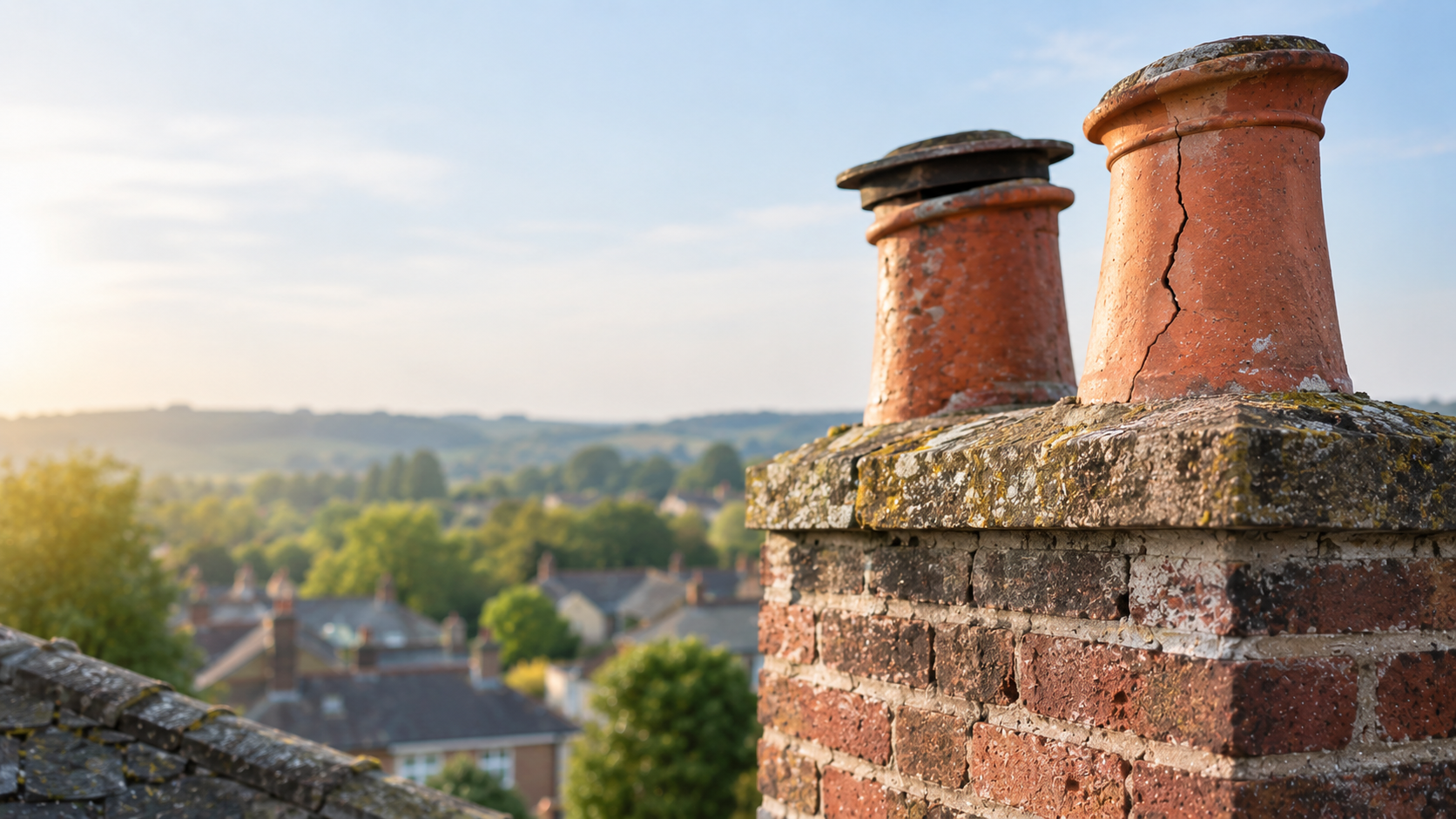
Older chimneys can gradually deteriorate.
Pieces of:
- Brick
- Mortar
- Chimney liner
- Render
- Other masonry
may fall into the fireplace or become lodged inside the chimney.
Finding masonry debris in your fireplace is a good reason to arrange an inspection.
How Often Should an Open Fireplace Chimney Be Swept?
There is no single sweeping schedule suitable for every chimney because the correct frequency depends on the fuel, chimney construction and how often the fire is used.
At minimum, annual professional sweeping is widely recommended for active fireplaces. HETAS also recommends chimney sweeping at least once a year, with frequency adjusted according to the appliance and fuel.
For wood-burning chimneys used regularly, more frequent sweeping can be appropriate. NACS guidance lists wood-burning chimneys as requiring quarterly sweeping while in use, while smokeless-fuel chimneys should generally be swept at least annually.
Your chimney sweep can recommend a schedule based on your individual fireplace.
When Should You Have an Open Fireplace Swept?
There are several good times to arrange chimney sweeping.
Before Autumn and Winter
Having your chimney swept before the main heating season ensures that soot, bird nests and debris accumulated during periods of inactivity can be removed before you begin lighting fires regularly.
After a Heavy Burning Season
If you use your fireplace frequently throughout winter, another sweep after the heating season may be recommended.
Before Using a Fireplace After a Long Break
If your open fire has not been used for a year or more, arrange a sweep before lighting it again.
An unused chimney can still become blocked.
After Moving Into a New Property
If you do not have documentation showing when the chimney was last swept, have it professionally checked before using the fireplace.
After a Chimney Fire
Do not use the fireplace after a suspected chimney fire until the chimney has been properly assessed.
Extreme temperatures can damage liners, mortar joints and other chimney components.
Signs Your Open Fireplace Needs Sweeping
You should not always wait for a scheduled appointment.
Several warning signs can indicate that your chimney needs attention.
Smoke Coming Back Into the Room
A correctly functioning chimney should draw smoke upwards.
If smoke begins entering your living room instead, possible causes include:
- Excessive soot
- Bird nests
- Fallen debris
- Poor chimney draught
- Insufficient ventilation
- Incorrect chimney termination
- Cold chimney conditions
- Structural problems
Persistent smoke entering the room should be investigated before you continue using the fireplace.
Strong Sooty Smells
A strong smoky or tar-like smell around an unused fireplace can indicate substantial deposits inside the chimney.
The smell may become particularly noticeable during warm or damp weather.
Soot Falling Into the Fireplace
Small amounts of loose soot can occasionally fall.
However, frequent deposits may indicate that the chimney needs cleaning.
Twigs or Feathers in the Hearth
Finding twigs, leaves, feathers or grass inside the fireplace is a strong indication of bird activity.
Do not light a fire if you suspect the chimney contains a nest.
Poor Fire Performance
A fire that previously burned well but now struggles may be experiencing weak chimney draught.
Restricted airflow can make fires:
- Difficult to light
- Smokier
- Slower to establish
- Less responsive
- More likely to go out
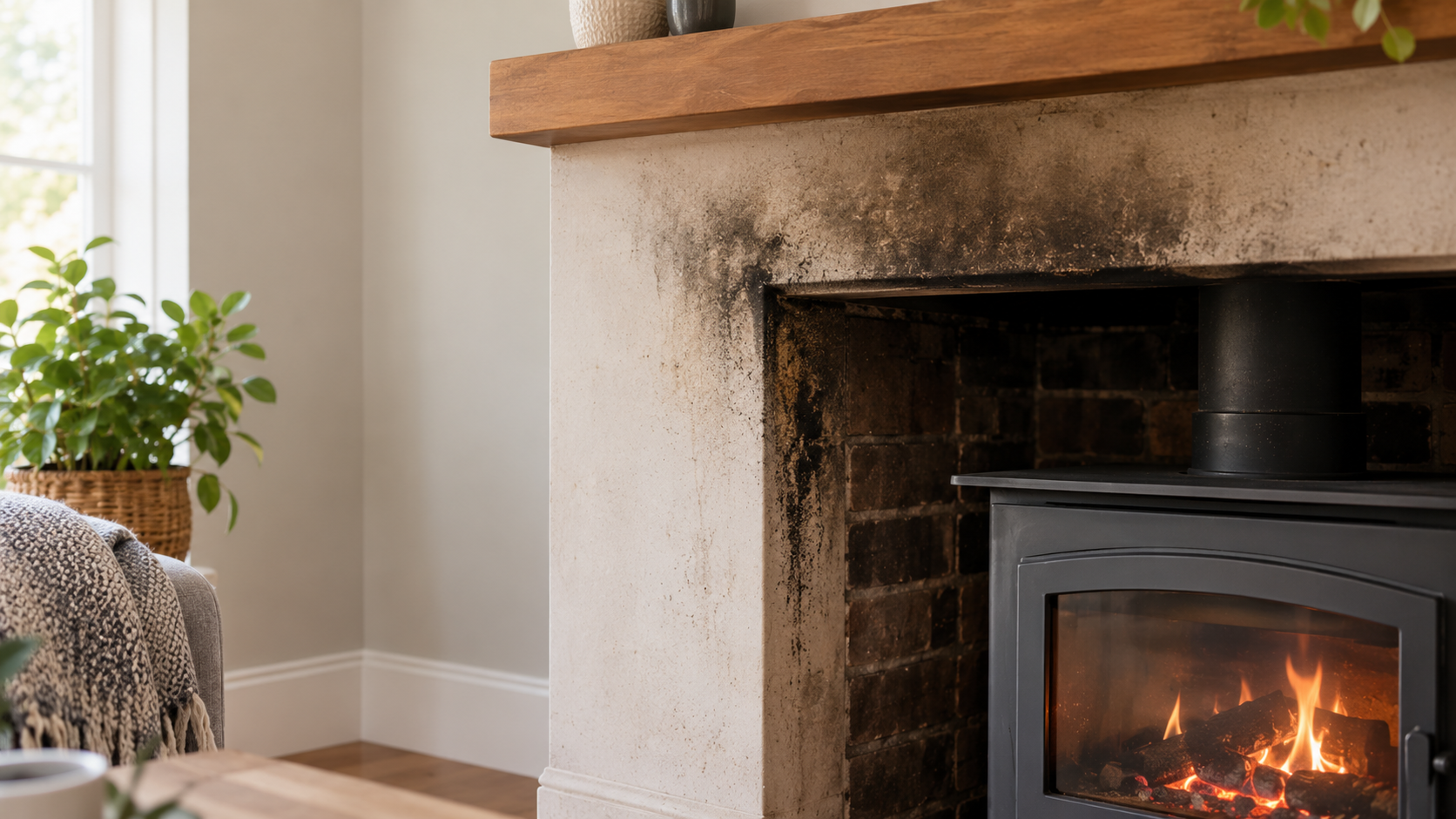
Black Deposits Around the Fireplace
Soot staining around the fireplace opening may indicate smoke spillage or poor chimney performance.
What Happens During an Open Fireplace Chimney Sweep?
A professional open fireplace chimney sweep involves considerably more than removing ash from the hearth.
A typical appointment may include the following steps.
1. Initial Fireplace Assessment
Before sweeping begins, the chimney sweep may ask questions such as:
- When was the chimney last swept?
- How frequently is the fireplace used?
- What type of fuel do you burn?
- Have you noticed smoke entering the room?
- Have you seen birds around the chimney?
- Has debris fallen into the fireplace?
- Have there been unusual smells?
- Has the chimney ever experienced a fire?
This helps the sweep determine the condition of the chimney and the most appropriate cleaning method.
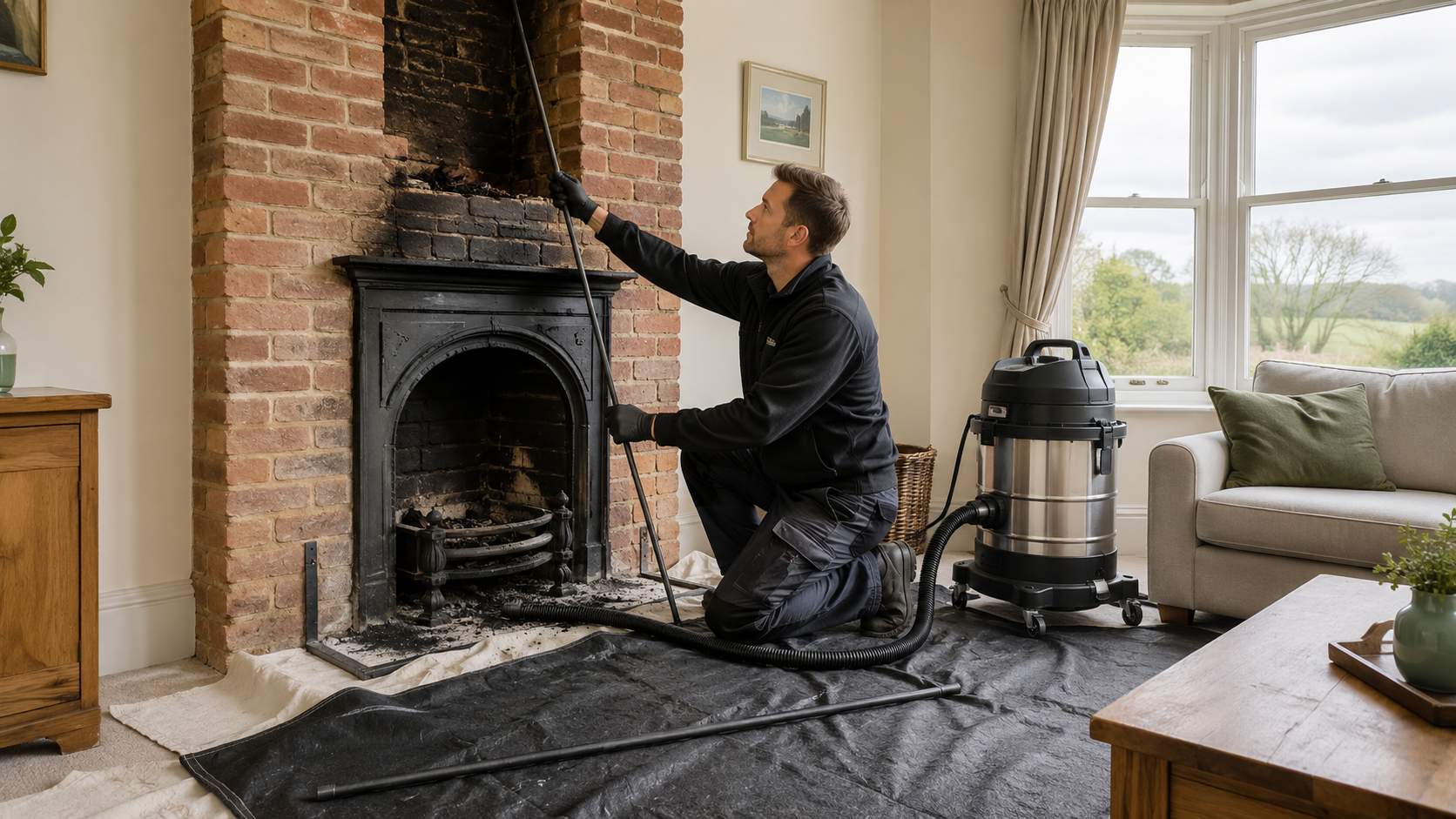
2. Protecting Your Room
One of the biggest concerns homeowners have about chimney sweeping is mess.
A professional sweep should protect the immediate working area before cleaning begins.
This may involve:
- Protective floor sheets
- Fireplace sealing systems
- Specialist soot vacuums
- Protective covers around the hearth
NACS requires professional sweeping methods to include protection of the floor area and fireplace opening before work begins, helping keep soot and dust to a minimum.
Modern chimney sweeping should not mean a room covered in soot.
3. Sweeping the Complete Chimney
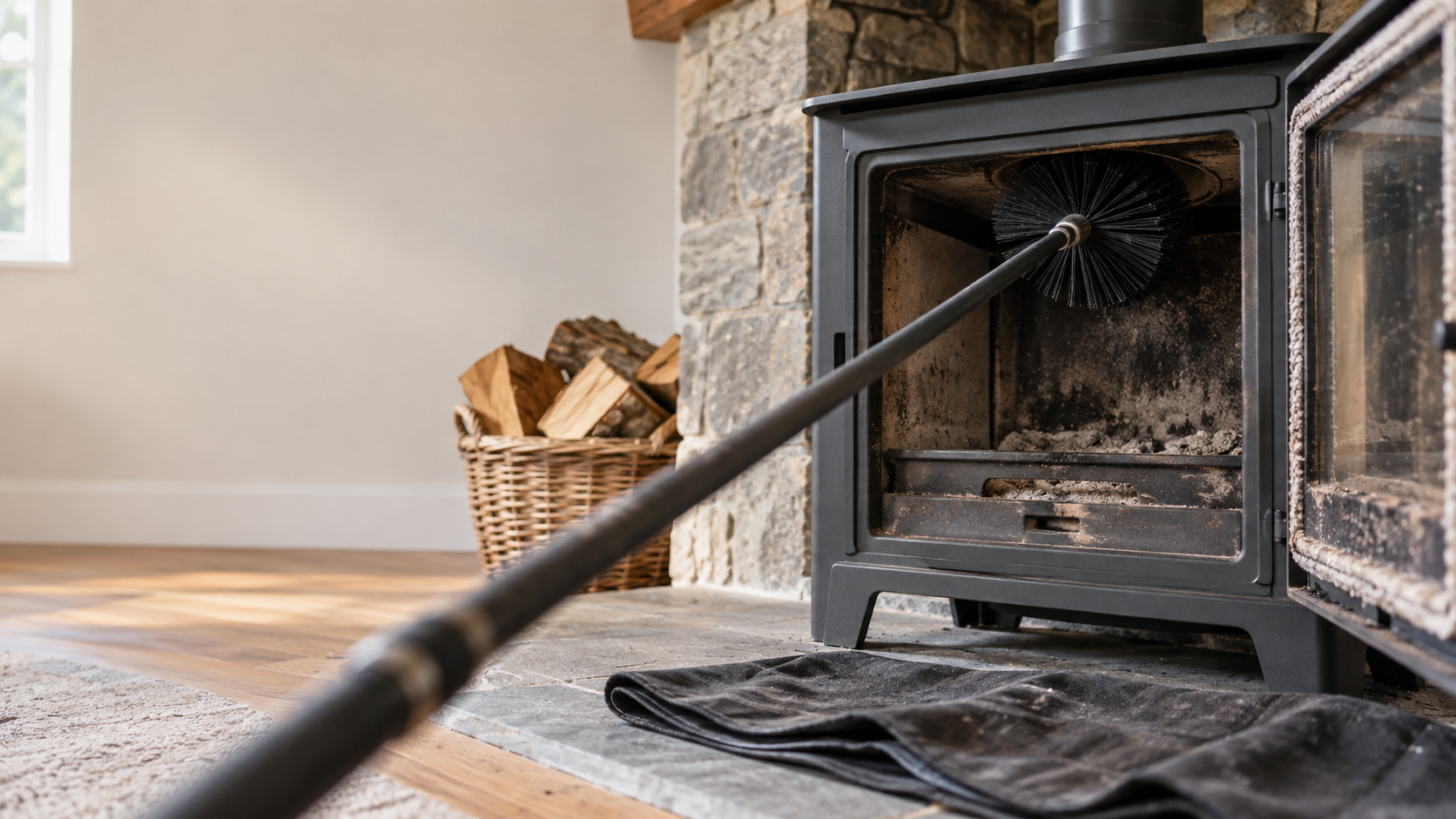
Suitable chimney brushes and rods are passed through the flue.
The objective is to clean the complete accessible length of the chimney rather than simply removing soot near the fireplace opening.
Depending on the chimney, a sweep may use:
- Traditional rods and brushes
- Flexible rods
- Rotary sweeping equipment
- Specialist attachments
NACS defines proper chimney sweeping as passing appropriately sized equipment through the complete length of the chimney or flue. Vacuuming alone is not considered a substitute for sweeping.
4. Removing Soot and Debris
As the chimney is swept, loose deposits fall toward the fireplace.
These can include:
- Soot
- Creosote flakes
- Ash
- Cobwebs
- Leaves
- Loose nesting material
- Small pieces of mortar
- General debris
A specialist vacuum can then be used to safely collect the material.
5. Checking for Blockages
During the sweeping process, the sweep should identify whether the brush encounters any unusual obstruction.
Possible blockages include:
- Bird nests
- Fallen masonry
- Heavy tar deposits
- Damaged liner sections
- Construction debris
Minor loose material may be removed during the sweep.
Large bird nests or difficult blockages may require a separate service.
6. Checking Chimney Draught
After cleaning, an appropriate smoke test may be carried out to confirm that the chimney appears to be venting.
NACS guidance includes proving that a chimney is venting using smoke-testing procedures as part of professional sweeping practice.
A basic smoke test should not be confused with a complete structural or pressure test.
If leakage or internal damage is suspected, further investigation may be required.
7. Providing a Chimney Sweeping Certificate
Professional chimney sweeps registered with organisations such as NACS provide documentation after completing their work.
NACS states that its members issue a Certificate of Chimney Sweeping and recommend when the chimney should next be cleaned.
Keep your certificate with your property maintenance records.
Will an Open Fireplace Chimney Sweep Make a Mess?
A properly carried out chimney sweep should create very little mess inside your home.
Professional sweeps use specialist sealing and vacuum equipment designed to keep soot contained.
NACS states that its chimney sweeps are trained in preventing dust from escaping during sweeping, although unusual situations such as heavily blocked bird nests can make complete dust control more difficult.
Before your appointment, you can help by:
- Removing ornaments from the mantelpiece
- Clearing fuel from the grate
- Removing loose ash
- Moving delicate belongings away
- Providing clear access to the fireplace
You should not need to cover your entire room yourself.
Can I Sweep an Open Fireplace Chimney Myself?
Cleaning ash from your fireplace is normal household maintenance.
However, cleaning the hearth is not the same as professionally sweeping the complete chimney.
A proper chimney sweep needs to reach the full flue and use equipment suitable for its diameter, construction and lining.
Attempting the job without appropriate equipment can result in:
- Areas of the chimney being missed
- Soot spreading through your home
- Blockages remaining undetected
- Damage to a chimney liner
- No professional maintenance record
- Potential safety problems being overlooked
Professional sweeping is therefore recommended.
Can You Vacuum an Open Fireplace Chimney?
A vacuum alone cannot properly sweep a chimney.
A specialist soot vacuum is useful for controlling and collecting material loosened during cleaning, but brushes or appropriate sweeping attachments still need to physically clean the chimney walls.
NACS specifically states that vacuum-only cleaning is not an acceptable method of chimney sweeping.
You should also avoid using an ordinary domestic vacuum for chimney soot.
Fine soot particles can damage household vacuum cleaners and may escape through filters back into the room.
Can Bird Nests Block an Open Fireplace Chimney?
Yes.
Open, unlined and infrequently used chimneys can be particularly attractive to nesting birds.
A nest can create a substantial blockage and prevent smoke from escaping properly.
Signs can include:
- Twigs falling into the fireplace
- Birds frequently landing on the chimney
- Scratching or fluttering sounds
- Feathers in the hearth
- Unusual smells
- Suddenly poor chimney draught
Never light a fire to try to remove a bird nest.
Active birds, nests and eggs are legally protected. A professional chimney sweep can assess the situation and advise when removal can safely and legally take place.
Midlands Sweeps provides bird nest removal alongside its chimney sweeping services.
Does a Rarely Used Open Fireplace Need Sweeping?
Yes.
A fireplace does not stay clean simply because it is rarely used.
Old soot and creosote may remain from previous fires, while the chimney can collect:
- Bird nests
- Leaves
- Cobwebs
- Moisture
- Fallen mortar
- Other debris
If you have not used your open fireplace for a long period, have the chimney checked before lighting it again.
Does Burning Wood Mean the Chimney Needs More Sweeping?
Potentially.
Wood can create soot and creosote, particularly when it is damp or burned inefficiently.
NACS recommends more frequent sweeping for wood-burning chimneys that are regularly in use.
To reduce unnecessary deposits:
- Burn properly seasoned wood
- Aim for moisture content of 20% or less
- Do not burn painted timber
- Avoid treated wood
- Do not burn household rubbish
- Maintain adequate airflow
- Avoid continually allowing the fire to smoulder
Cleaner fuel and good burning practices help, but they do not eliminate the need for chimney sweeping.
Can a Dirty Open Fireplace Cause Carbon Monoxide Problems?
A blocked or poorly drawing chimney can prevent combustion gases from leaving the property correctly.
This can increase the risk of smoke and carbon monoxide entering the living space.
Carbon monoxide cannot be seen or smelled.
Make sure you have a correctly positioned and functioning carbon monoxide alarm near fuel-burning appliances and test it regularly.
A carbon monoxide alarm provides an important warning system, but it does not replace professional chimney maintenance.
Open Fireplace vs Log Burner Chimney Sweeping
Both systems require regular chimney sweeping, but there are differences.
An open fireplace relies directly on natural chimney draught and can allow substantially more room air into the chimney.
A log burner is enclosed and controls combustion more precisely.
However, both can produce:
- Soot
- Creosote
- Tar
- Chimney deposits
And both can suffer from:
- Bird nests
- Poor draught
- Damaged flues
- Fallen masonry
- Chimney fires
The sweeping method should always be appropriate for the chimney and appliance.
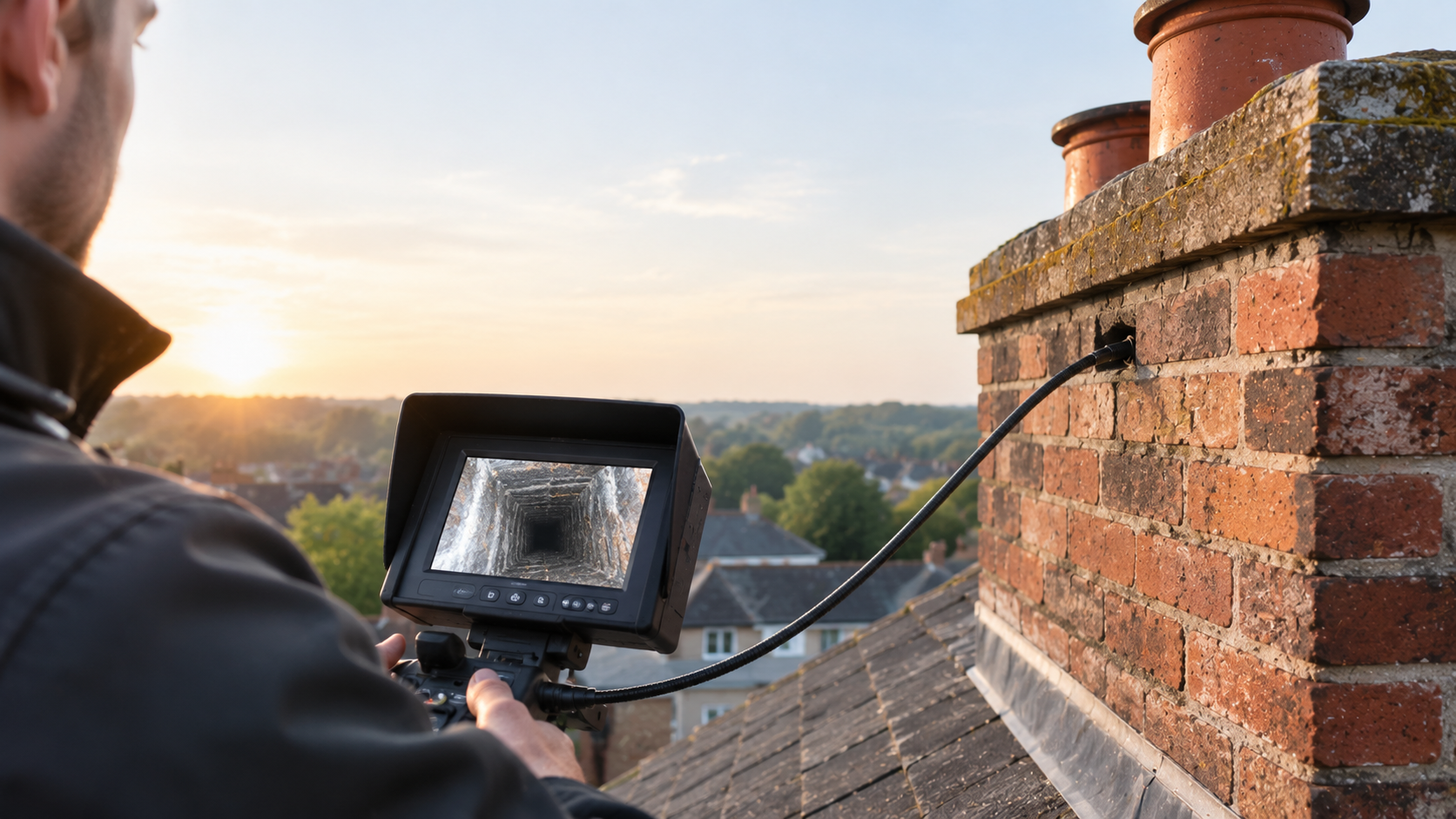
When Might You Need a CCTV Chimney Inspection?
Routine sweeping does not automatically provide a complete structural survey of the inside of a chimney.
A CCTV inspection may be recommended when:
- The chimney repeatedly blocks
- Smoke continues after sweeping
- Fallen masonry is discovered
- The chimney has experienced a fire
- A liner is suspected to be damaged
- The chimney has not been used for many years
- Major building work has taken place
- A new appliance will be installed
- Internal chimney condition is uncertain
A camera survey can help identify problems that cannot be seen from the fireplace opening.
Frequently Asked Questions
How often should an open fireplace be swept?
At least annual professional sweeping is widely recommended for active fireplaces. More frequent cleaning may be required when wood or other solid fuels are burned regularly.
Should I have my chimney swept before winter?
Yes. Having the chimney checked and swept before regular winter use can remove soot, debris and potential blockages that may have developed while the fireplace was inactive.
How long does an open fireplace chimney sweep take?
A straightforward chimney sweep will commonly take around an hour, although chimney size, condition, access and blockages can affect the appointment time.
Can I use my fireplace immediately after it has been swept?
Generally, yes, once the sweep has completed the work and confirmed that there is no reason the fireplace should remain out of use. Follow any specific advice provided after the inspection.
Why does my open fire smoke into the room?
Possible causes include a dirty or blocked chimney, poor draught, insufficient ventilation, weather conditions or chimney design problems. Persistent smoke should be professionally investigated.
Can a chimney sweep remove creosote?
Loose and moderate deposits can often be removed during professional sweeping. Severe hardened or glazed creosote may require additional treatment.
Does an unused open chimney need cleaning?
If you intend to use it again, arrange an inspection and sweep first, particularly when its maintenance history is unknown.
Will I receive a chimney sweeping certificate?
Registered professional sweeps should provide appropriate documentation after completing the service.
Book an Open Fireplace Chimney Sweep
Regular sweeping is one of the most important maintenance jobs for an open fireplace.
A clean chimney helps provide a clear route for smoke and combustion gases, removes combustible deposits and reduces the likelihood of blockages affecting your fireplace.
If your chimney has not been swept recently, your open fire is producing smoke, or you have noticed soot, smells or debris around the fireplace, arrange a professional inspection before continuing to use it.
Midlands Sweeps provides professional chimney sweeping from its base in Swadlincote, serving Burton upon Trent and surrounding Midlands locations. The company also provides bird nest removal, flue liner work, log burner installation and CCTV or drone chimney inspections.
Whether you use your open fireplace every winter or only occasionally, keeping the chimney professionally maintained can help make sure it is ready when you want to light your next fire.
Contact Midlands Sweeps to arrange your open fireplace chimney sweep.