If you regularly use a wood-burning stove or open fireplace, creosote buildup in your chimney is something you should understand.
Creosote is a combustible, tar-like deposit that can accumulate inside a chimney or flue as fuel burns. HETAS describes creosote as highly flammable, while the National Association of Chimney Sweeps states that regular sweeping removes creosote and helps reduce the risk of dangerous chimney fires.
Small deposits can gradually become thicker if the chimney is not properly maintained. Wet wood, low-temperature burning and poor combustion can make the problem considerably worse.
The danger is simple: if enough creosote accumulates and becomes hot enough to ignite, it can cause a chimney fire.
This guide explains what creosote is, why it forms, how to recognise it and what you can do to reduce buildup in your chimney.
What Is Creosote?
Creosote is a residue produced by combustion that collects on the inside of a chimney or flue.
It is particularly associated with wood-burning fires.
As smoke and combustion gases travel through the chimney and begin to cool, some of the substances carried in the smoke can condense onto the internal surfaces of the flue.
Over time, these deposits may accumulate.
Creosote can appear in different forms, including:
- Dry or flaky black deposits
- Brown or black sticky material
- Thick tar-like deposits
- Hard, shiny or glazed coatings
The exact appearance depends on factors such as combustion temperature, fuel quality, chimney temperature and how the appliance is operated.
It is important not to confuse ordinary loose soot with heavy creosote. While both need appropriate chimney maintenance, hardened or tar-like creosote can be significantly more difficult to remove.
What Causes Creosote Buildup in a Chimney?
Creosote is usually associated with incomplete or inefficient combustion.
Several factors can accelerate its formation.
1. Burning Wet Wood
Wet wood is one of the biggest contributors to excessive chimney deposits.
When a log contains too much moisture, much of the fire’s energy is used to evaporate water instead of producing heat.
This lowers combustion temperatures and creates more smoke.
DEFRA advises that wood should have a moisture content of 20% or less. Wet wood produces more smoke, particles and tar deposits and can increase both chimney-maintenance requirements and chimney-fire risk.
HETAS similarly advises that properly dried wood produces significantly less creosote than wet wood.
2. Allowing the Fire to Smoulder
A wood burner should not spend long periods producing weak flames and large amounts of smoke.
Restricting the appliance’s air controls excessively can lower combustion temperatures.
Cooler combustion means more unburned material can enter the flue.
Signs that a stove may be burning inefficiently include:
- Persistent dark smoke
- Rapidly blackening stove glass
- Poor heat output
- Strong tar smells
- Thick chimney deposits
Follow the manufacturer’s instructions for operating your particular stove.
3. A Cold Chimney or Flue
Creosote formation can increase when chimney gases cool too quickly.
A cold flue allows more condensation to develop before combustion gases leave the chimney.
This may be more likely with:
- External chimneys
- Oversized flues
- Long chimney systems
- Poorly insulated chimney systems
- Repeated low-temperature fires
Industry guidance warns that low flue-gas temperatures increase condensation and the risk of excessive tar and corrosive soot deposits.
4. Poor Chimney Draught
Good chimney draught helps combustion gases move through the flue efficiently.
If the chimney does not draw correctly, combustion may become less efficient and smoke can remain inside the system for longer.
Poor draught may result from:
- Chimney blockages
- Incorrect flue size
- Insufficient ventilation
- Chimney design problems
- Heavy soot deposits
- External wind conditions
If poor draught continues after the chimney has been swept, further investigation may be necessary.
5. Burning Unsuitable Materials
Your stove or fireplace should only burn fuel that is suitable for the appliance.
Avoid burning:
- Painted timber
- Treated wood
- MDF
- Chipboard
- Plastic
- Household rubbish
- Chemically treated materials
These materials can create harmful fumes and deposits and may damage the stove or chimney.
DEFRA recommends following the appliance manufacturer’s fuel requirements and using cleaner, suitable fuels.
Why Is Creosote Dangerous?
Creosote creates several potential problems, but the greatest concern is its flammability.
Creosote Can Cause Chimney Fires
Creosote can ignite when exposed to sufficiently high temperatures.
Once deposits catch fire inside a chimney, temperatures can rise rapidly.
A chimney fire may produce:
- A loud roaring sound
- Rumbling or cracking noises
- Sparks from the chimney pot
- Flames above the chimney
- Strong burning smells
- Excessive heat around the chimney breast
- Smoke inside the property
HETAS guidance identifies creosote and tar buildup in a flue as major causes of chimney fires.
Even if a chimney fire appears to extinguish itself, the heat may have damaged the liner, mortar or surrounding chimney structure.
Do not continue using the appliance after a suspected chimney fire until the system has been appropriately inspected.
Creosote Can Restrict Chimney Draught
Thick deposits reduce the internal area available for smoke and gases to travel through.
As buildup increases, the chimney may begin to draw less effectively.
Possible symptoms include:
- Difficulty lighting the fire
- Smoke entering the room
- Weak flames
- Poor stove performance
- Strong smoky smells
A restricted chimney can also make combustion less efficient, potentially encouraging even more deposits to form.
Heavy Deposits Can Damage Chimney Components
Tar, condensate and combustion residues may contribute to corrosion and deterioration within some chimney systems.
Industry guidance warns that corrosive soot and condensate left inside flues can damage metal chimney and appliance components.
This is another reason creosote problems should not simply be ignored between sweeping appointments.
What Does Creosote Look Like?
Creosote does not always look the same.
Dry and Flaky Deposits
These may resemble:
- Black flakes
- Dry soot-like material
- Crumbly deposits
Loose material may often be removed through normal professional sweeping.
Sticky or Tarry Creosote
More developed deposits can feel sticky and look dark brown or black.
They may have a strong smoky or tar-like smell.
Hard or Glazed Creosote
Severe buildup can form a hard, shiny coating inside the flue.
This type can be particularly difficult to remove using ordinary brushing alone.
Midlands Sweeps notes that hard glazed tar or severe creosote may require specialist treatment, additional cleaning or further investigation rather than a standard sweep alone.
What Does Creosote Smell Like?
Creosote often creates a strong smoky or tar-like smell.
The odour can sometimes become more noticeable:
- During warm weather
- When the chimney becomes damp
- When air travels down the chimney
- After long periods without use
A persistent chimney smell does not prove that severe creosote is present, because soot, damp, bird nests and other debris can also produce odours.
However, a strong tar smell alongside black or sticky deposits is worth having professionally investigated.
How Do You Know If You Have Too Much Creosote?
Possible warning signs include:
- Strong tar-like chimney smells
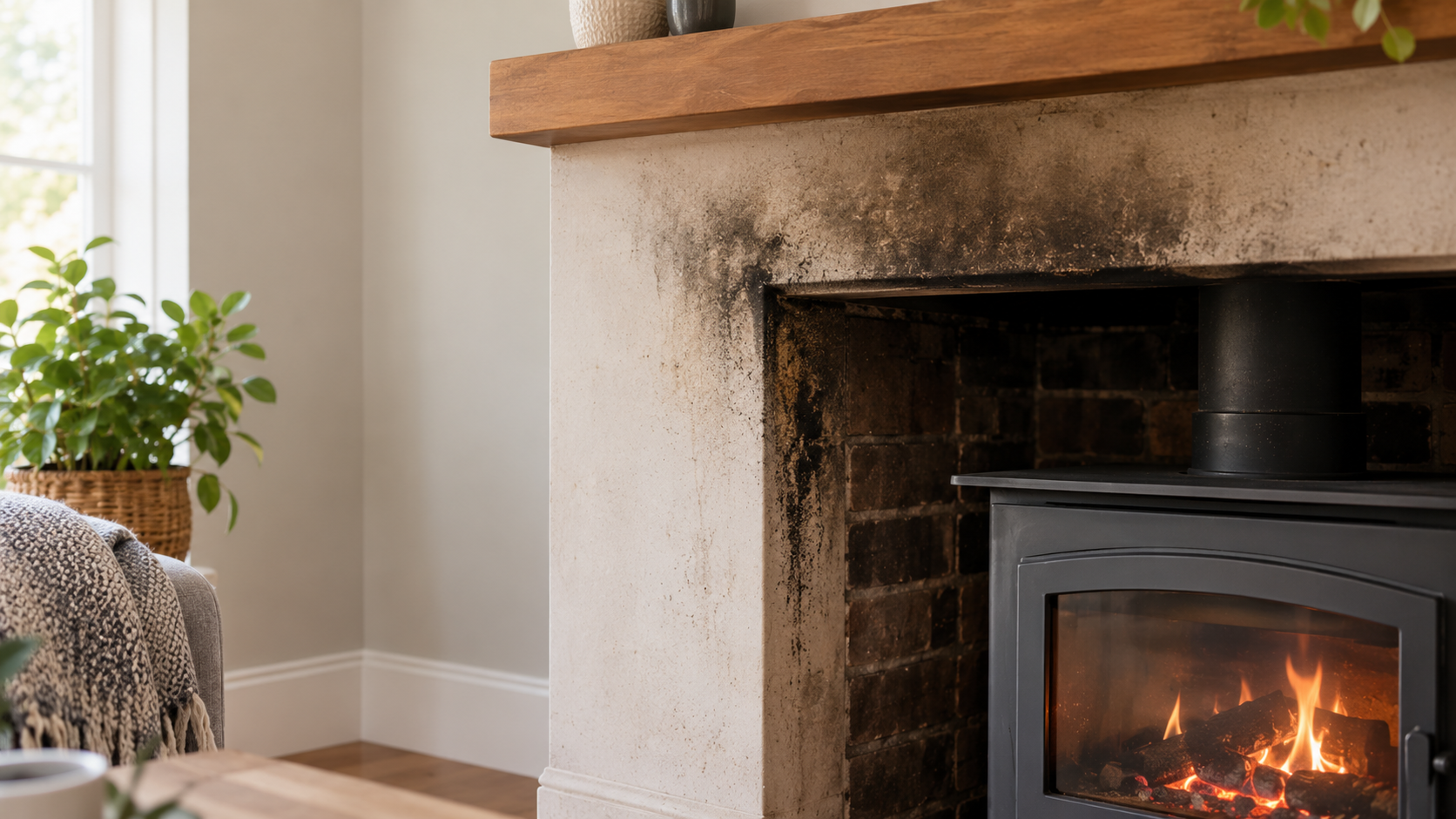
- Black flakes falling into the fireplace
- Sticky deposits around accessible flue areas
- Hard shiny deposits
- Excessive smoke
- Poor chimney draught
- Rapidly blackening stove glass
- A chimney that has not been swept recently
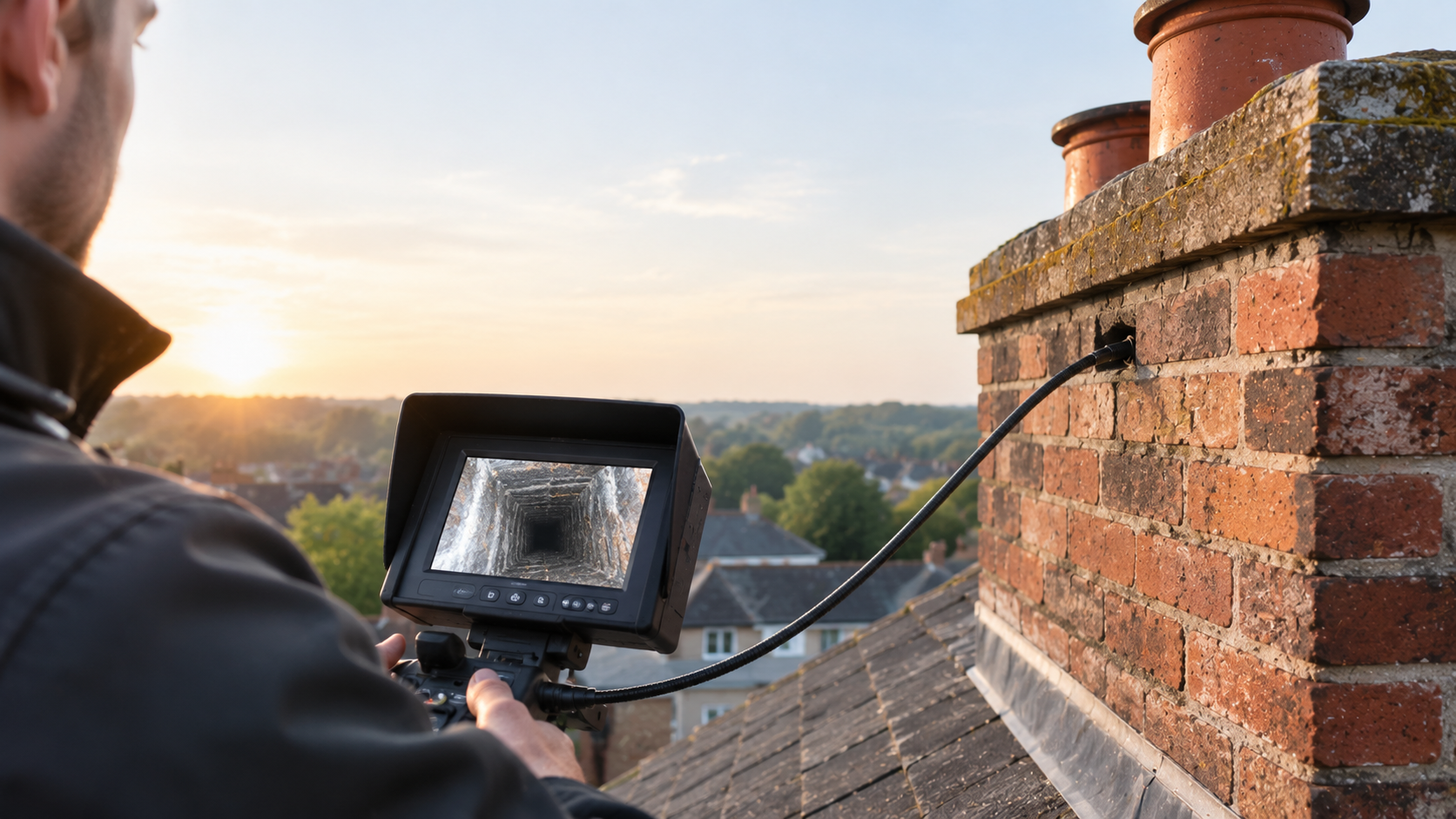
The difficulty is that most of the chimney cannot be seen from the fireplace.
A chimney can contain substantial deposits higher inside the flue without an obvious visual warning from below.
That is why regular professional chimney sweeping is important.
How Is Creosote Removed From a Chimney?
The appropriate removal method depends on the amount and type of deposit.
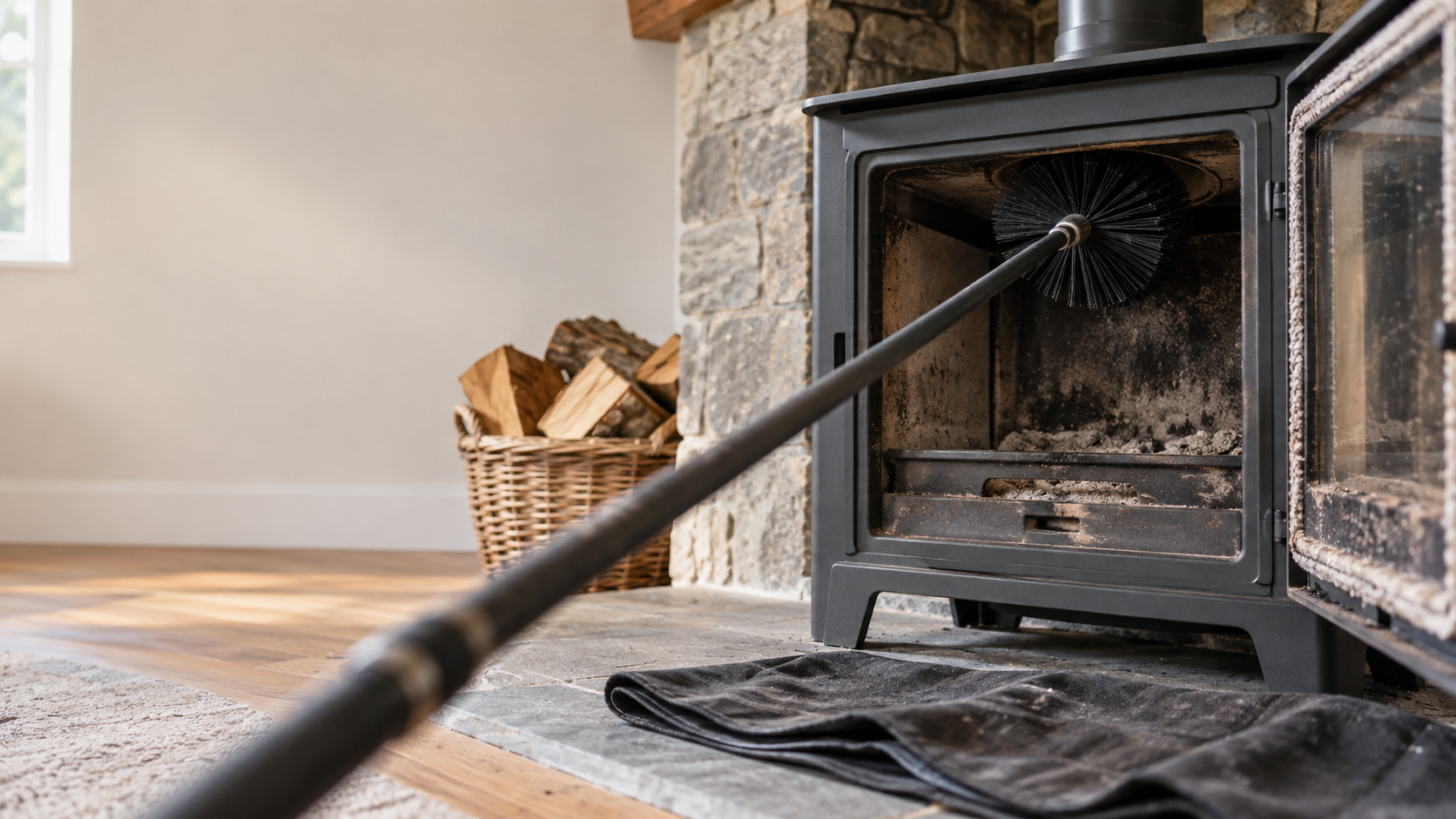
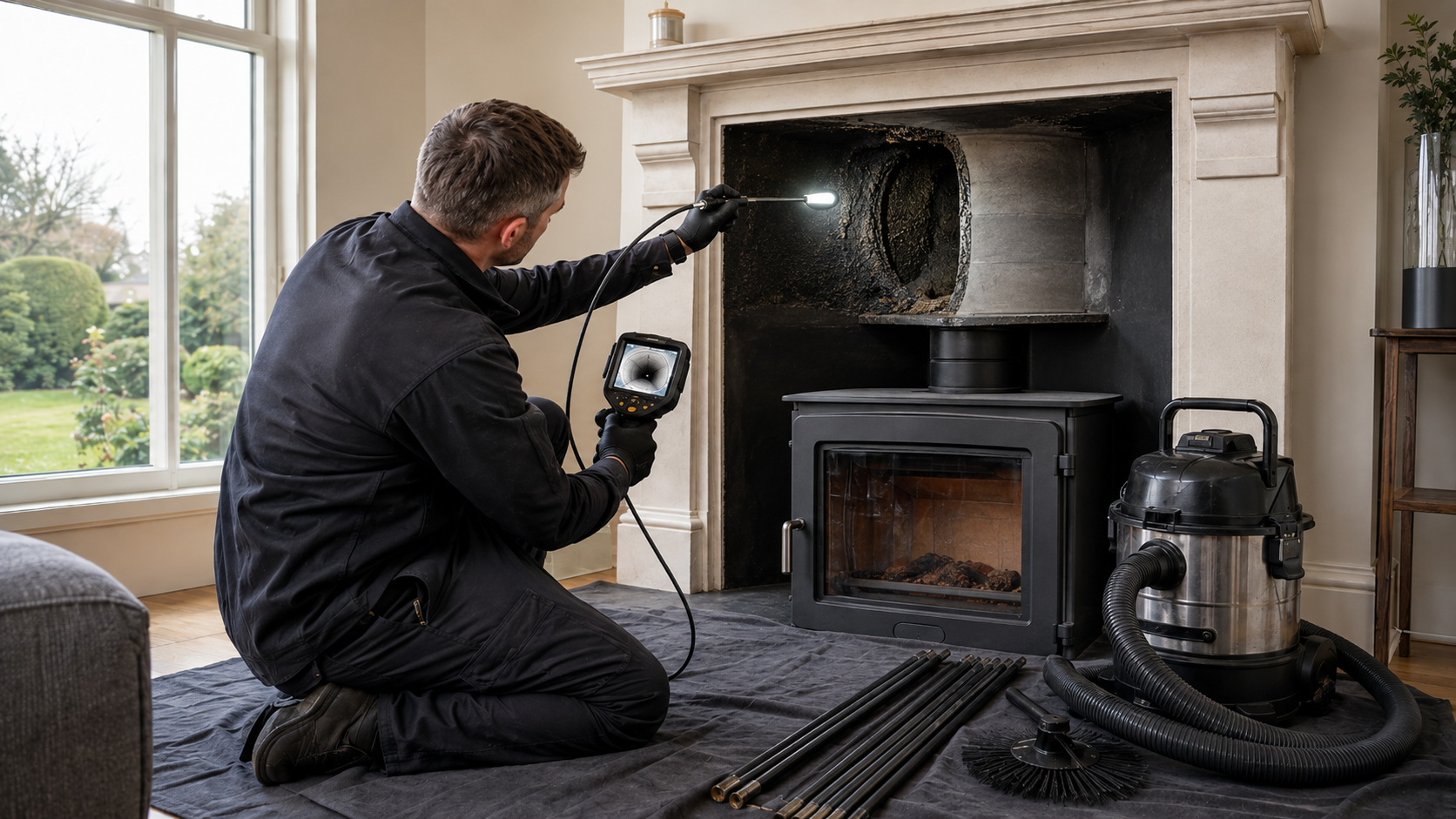
A professional chimney sweep may use:
- Suitable chimney brushes
- Flexible rods
- Rotary sweeping equipment
- Specialist attachments
- Industrial soot-vacuum equipment
NACS states that a chimney should be properly swept through its complete accessible length using appropriately sized brushes or suitable cleaning equipment. Vacuuming alone is not considered proper chimney sweeping.
Loose soot and lighter creosote can often be removed during routine sweeping.
Severe tar or glazed deposits may require more specialised cleaning.
Can You Remove Creosote Yourself?
Cleaning ash from your stove or fireplace is useful household maintenance, but attempting to clean the entire chimney yourself is different.
Creosote may be located:
- Several metres above the fireplace
- Behind bends in the chimney
- Inside a stainless steel liner
- In areas that cannot be seen from below
Using inappropriate equipment could damage the flue liner while failing to remove the deposit completely.
Professional sweeps can also identify when the chimney requires more than ordinary cleaning.
Do Chimney-Cleaning Logs Remove Creosote?
Products marketed as chimney-cleaning logs or powders should not be treated as a replacement for professional chimney sweeping.
Even if a product helps alter some deposits, the chimney still needs physical inspection and cleaning.
NACS states that regular sweeping is required to remove soot, creosote, nests and other blockages.
If severe creosote is present, ask a professional sweep which treatment is appropriate.
How Often Should a Chimney Be Swept to Prevent Creosote?
There is no single schedule suitable for every property.
Sweeping frequency depends on:
- Fuel type
- Appliance
- Frequency of use
- Moisture content of wood
- Chimney construction
- How the fire is operated
DEFRA recommends having chimneys serving open fires and stoves professionally swept at least once a year.
NACS provides more frequent guidance for some fuels, including quarterly sweeping for wood-burning chimneys while they are in regular use.
Your chimney sweep should recommend an interval based on your individual installation.
How Can You Prevent Creosote Buildup?
Creosote cannot necessarily be eliminated entirely from a working wood-burning chimney, but you can significantly reduce excessive accumulation.
Burn Dry Wood
Use firewood with a moisture content of 20% or less.
HETAS states that dry wood produces significantly less creosote, while wet wood can create large deposits of flammable creosote.
Use a Moisture Meter
If you source or season your own firewood, use a moisture meter rather than guessing.
Split the log and test the freshly exposed internal face for a more useful measurement.
Avoid Smouldering Fires
Operate your stove according to the manufacturer’s instructions and maintain sufficient airflow for effective combustion.
Do not repeatedly close the air controls too early simply to make the logs last longer.
Burn Only Suitable Fuel
Do not use your fireplace or stove as a household waste burner.
Have the Chimney Swept Regularly
Professional sweeping physically removes accumulated soot and creosote.
NACS specifically states that removing creosote through regular sweeping helps prevent dangerous chimney fires.
Maintain Your Stove
Damaged seals, worn components or other appliance problems can affect combustion.
Regular servicing and chimney maintenance work together.
Can Wet Wood Cause Creosote?
Yes.
Wet wood is one of the clearest preventable causes of excessive creosote and tar deposits.
DEFRA warns that wood with moisture content above 20% produces increased smoke, particles and tar deposits.
HETAS similarly states that wet wood can result in large amounts of flammable creosote accumulating in the chimney.
If you regularly experience heavy creosote buildup despite frequent sweeping, check your firewood moisture and how you operate the appliance.
Can Creosote Cause a Blocked Chimney?
Yes.
Heavy buildup can gradually reduce the internal diameter of the chimney or flue.
A badly restricted flue can contribute to:
- Poor draught
- Excessive smoke
- Difficulty lighting the fire
- Smoke spilling into the room
- Reduced appliance performance
NACS advises that chimneys need to remain clear so dangerous combustion gases can pass freely and specifically lists creosote among the deposits removed during sweeping.
Is Creosote More Common With Log Burners or Open Fires?
Creosote can occur in both.
Any chimney carrying combustion products from wood can develop deposits.
The amount depends more on:
- Fuel moisture
- Combustion temperature
- Chimney design
- Burning technique
- Frequency of use
- Chimney temperature
A modern log burner operated incorrectly can still create significant deposits.
Likewise, an open fireplace burning damp logs can create substantial soot and tar.
Neither type of appliance removes the need for chimney maintenance.
Can Creosote Damage a Stainless Steel Flue Liner?
Potentially.
Combustion condensates and corrosive soot can contribute to deterioration if they are allowed to accumulate.
Industry guidance notes that flexible metal liner life can be reduced where abnormal corrosive soot or condensate deposits develop and are not properly removed.
A stainless steel liner should therefore still be professionally swept using suitable equipment.
What Should You Do If You Find Heavy Creosote?
If you can see thick tar, sticky deposits or shiny glazed material inside your chimney or appliance:
- Avoid continuing to use the appliance heavily.
- Arrange a professional chimney inspection.
- Explain that you suspect creosote or tar buildup.
- Have the chimney swept using an appropriate method.
- Follow any recommendations for additional treatment or inspection.
- Review your fuel quality and burning technique to prevent the problem returning.
NACS warns that very tarry chimneys can remain at higher risk of chimney fire even when regular sweeping is carried out, meaning serious deposits should be acted upon before the fire is used again.
Frequently Asked Questions
Is creosote flammable?
Yes. Creosote is combustible and can ignite inside a chimney. Significant buildup increases chimney-fire risk.
Is a little creosote normal?
Some deposits can develop in chimneys serving wood-burning appliances. The objective is to prevent excessive buildup through proper fuel use, good burning practices and regular professional sweeping.
What is the difference between soot and creosote?
Soot is generally a fine, powdery combustion residue. Creosote can be more tar-like, sticky or hardened and is particularly associated with wood-smoke deposits.
Can creosote catch fire?
Yes. Creosote buildup is a recognised cause of chimney fires.
Does wet wood create more creosote?
Yes. Wet wood burns less efficiently and can produce substantially more soot, smoke, tar and creosote than properly dried wood.
Can chimney sweeping remove all creosote?
Routine sweeping can remove many loose deposits, but severe hardened or glazed creosote may require additional treatment or investigation.
How can I tell if creosote is glazed?
Glazed deposits typically appear hard, dark and shiny rather than loose and powdery. If you suspect this type of buildup, have the chimney professionally assessed.
Should I use my log burner if there is heavy creosote?
Heavy tar or creosote should be professionally assessed before continued use because of the associated chimney-fire risk.
Keep Creosote Under Control With Regular Chimney Sweeping
Creosote is one of the most important reasons not to neglect chimney maintenance.
Burning wet wood, allowing fires to smoulder and operating with poor chimney conditions can all encourage deposits to accumulate. Because creosote is flammable, excessive buildup can increase the risk of a serious chimney fire.
The most effective approach is prevention: burn dry fuel, operate your appliance correctly and have the chimney professionally swept at suitable intervals.
Midlands Sweeps provides professional chimney sweeping designed to remove soot and combustion deposits while keeping the surrounding home clean. Additional services include bird nest removal, flue liner installation, log burner installation and CCTV or drone chimney inspection.
If you have noticed heavy black deposits, strong tar smells or an overdue chimney, arrange a professional sweep before the buildup becomes a bigger problem.