
Moving into an older property often comes with questions about features that may not have been used for many years. A fireplace can be an attractive part of the room, but its appearance does not confirm that the chimney is clear, structurally sound, or suitable for use.
Before lighting a fire or connecting a stove, the complete chimney system should be assessed. This includes the fireplace opening, flue, chimney stack, and roof-level components.
Ask About the Chimney’s History
Begin by asking the previous owner when the chimney was last used, swept, or inspected. Any available certificates, invoices, or installation records may provide useful information about past work.
However, missing records do not automatically mean the chimney is unsafe. They simply make a fresh assessment more important. The fireplace may have been decorative for years, or an earlier appliance may have been removed without the flue being checked afterwards.
Arrange Professional Sweeping
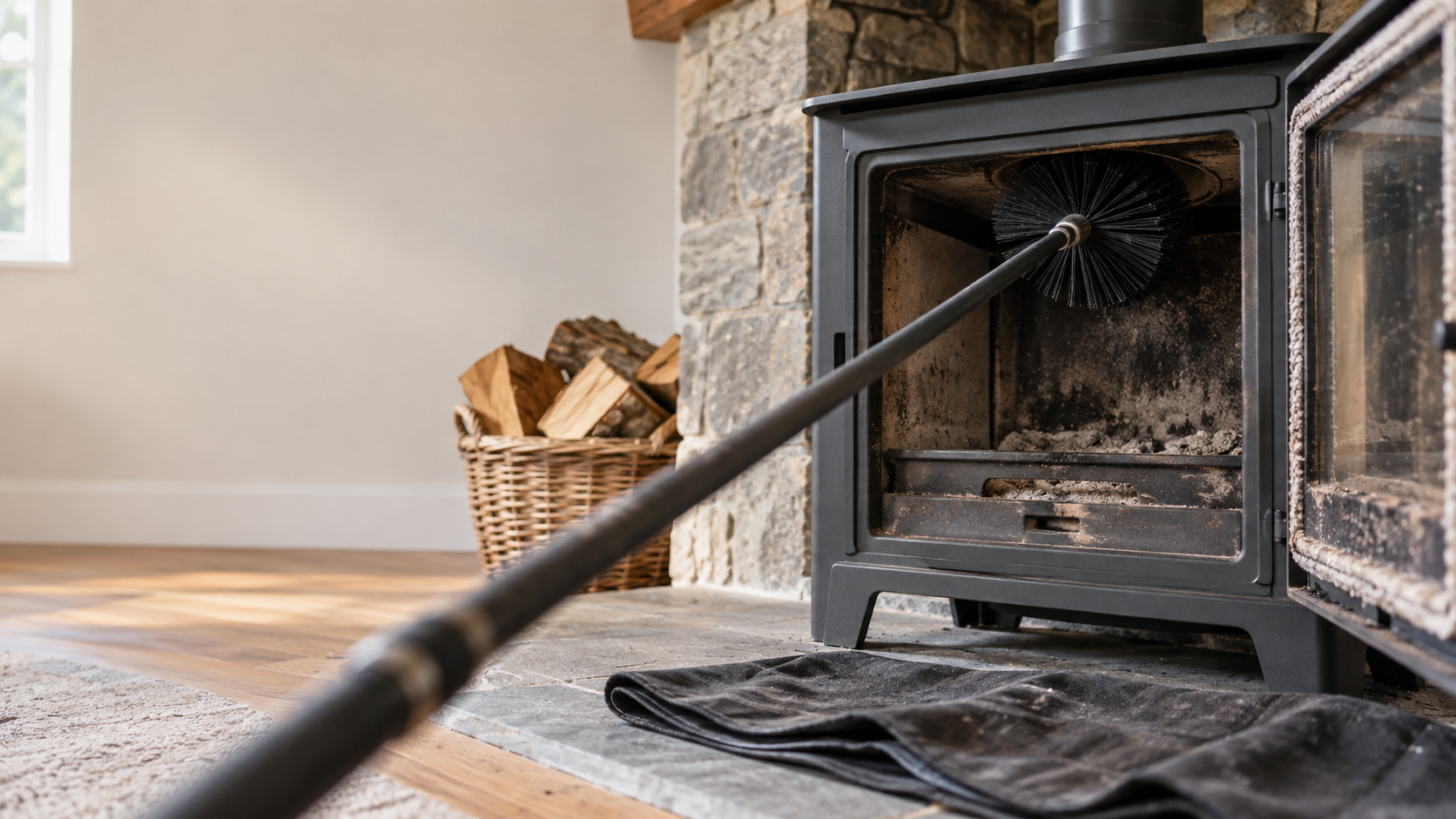
Even an unused chimney can contain old soot, loose debris, leaves, or nesting material. A professional chimney sweep can remove accessible deposits and identify anything unusual that comes down during cleaning.
Pieces of brick, mortar, or liner may suggest deterioration inside the chimney. Sweeping can improve visibility, but it does not replace a structural or camera inspection when hidden defects are suspected.
Look for Evidence of Birds
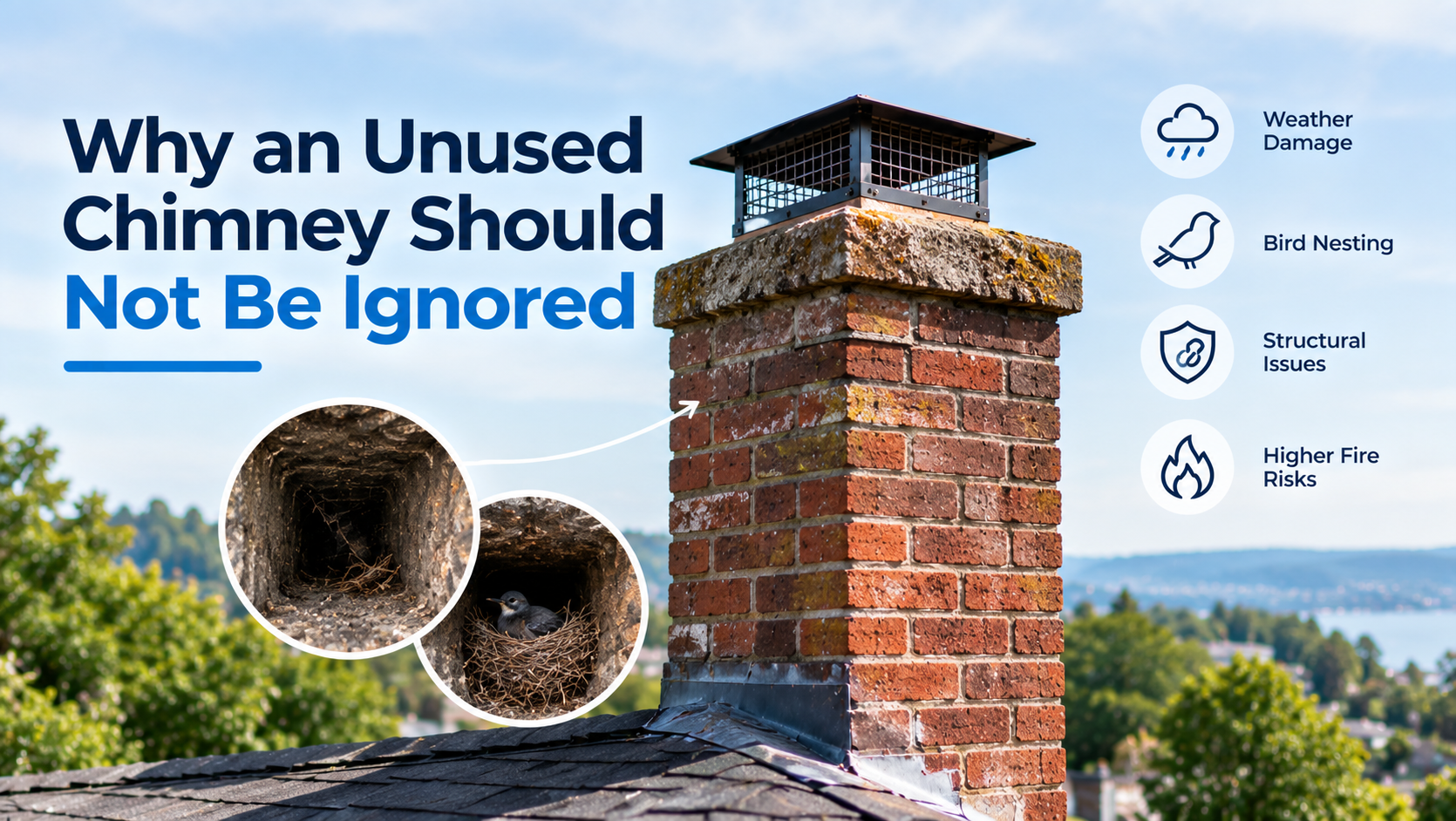
Open chimney pots can provide sheltered spaces for birds. Twigs, feathers, and dried grass around the fireplace may indicate activity inside the flue.
Bird nest removal must be carried out carefully because active nests, eggs, and wild birds may be legally protected. A fire should never be used to remove or burn through a suspected nest. The chimney should remain unused until the situation has been checked and any obstruction can be removed appropriately.
Examine the Inside of the Flue
Older chimneys may contain cracked clay liners, deteriorated mortar joints, or no effective lining at all. These conditions are difficult to confirm from the fireplace opening.
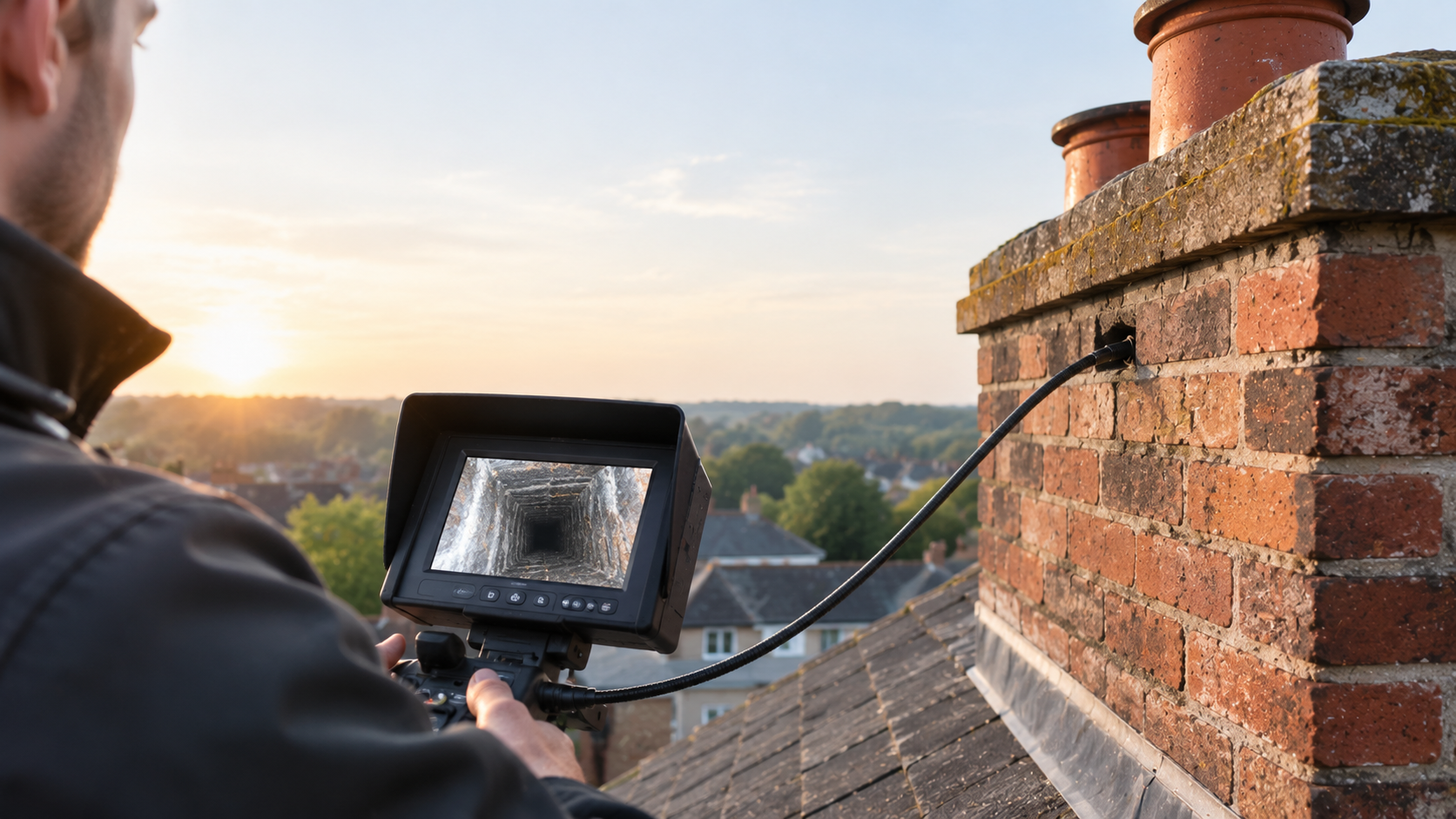
A CCTV survey can record internal areas and help locate cracks, restrictions, or changes in the flue. Combining CCTV and drone inspection offers a broader view by examining both the inside of the chimney and its external condition.
If the existing passage is unsuitable for the intended appliance, flue liner installation may be considered. The correct liner depends on the fuel, appliance, and chimney dimensions, so it should be selected after assessment.
Check the Chimney Stack and Roof
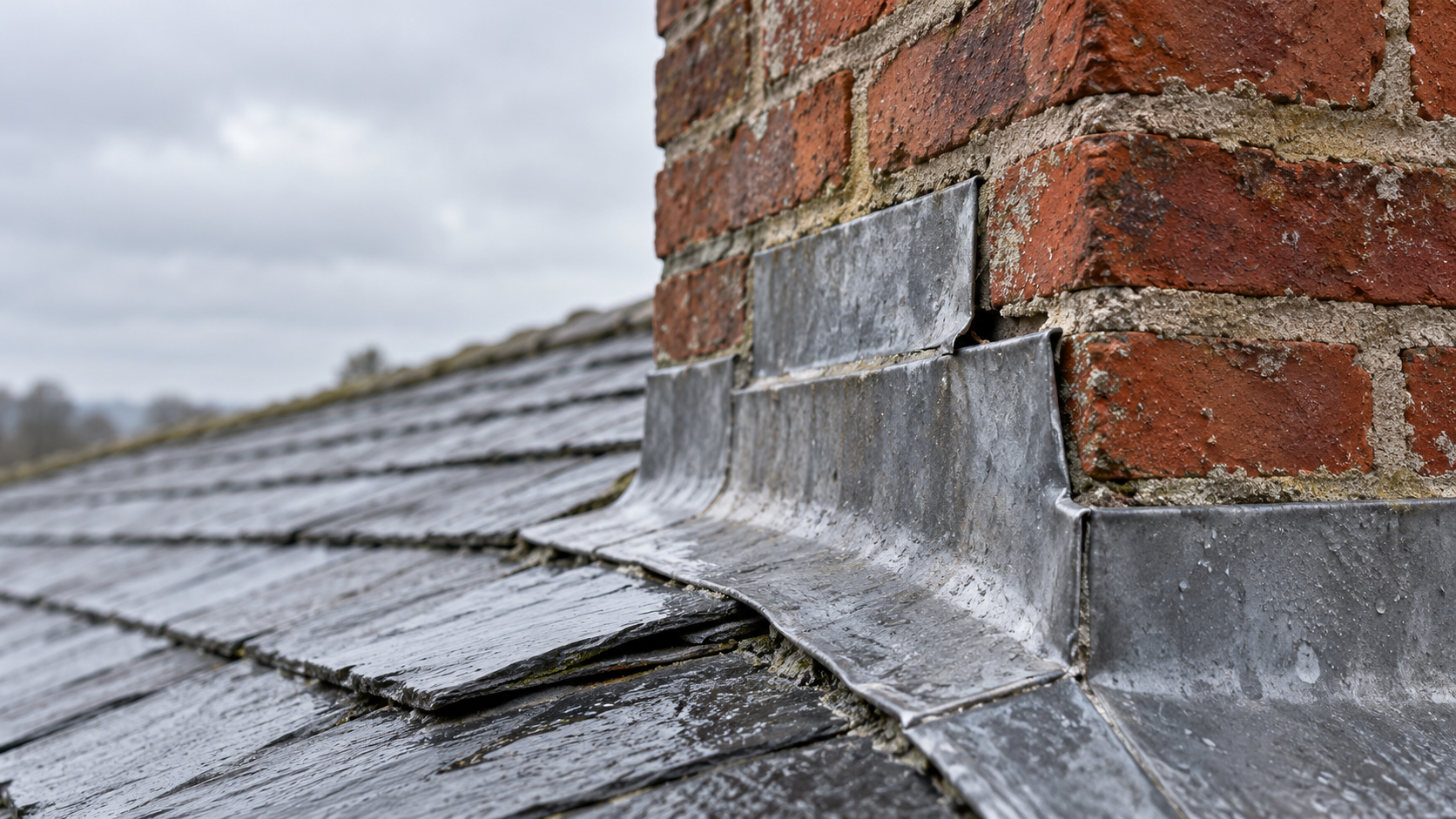
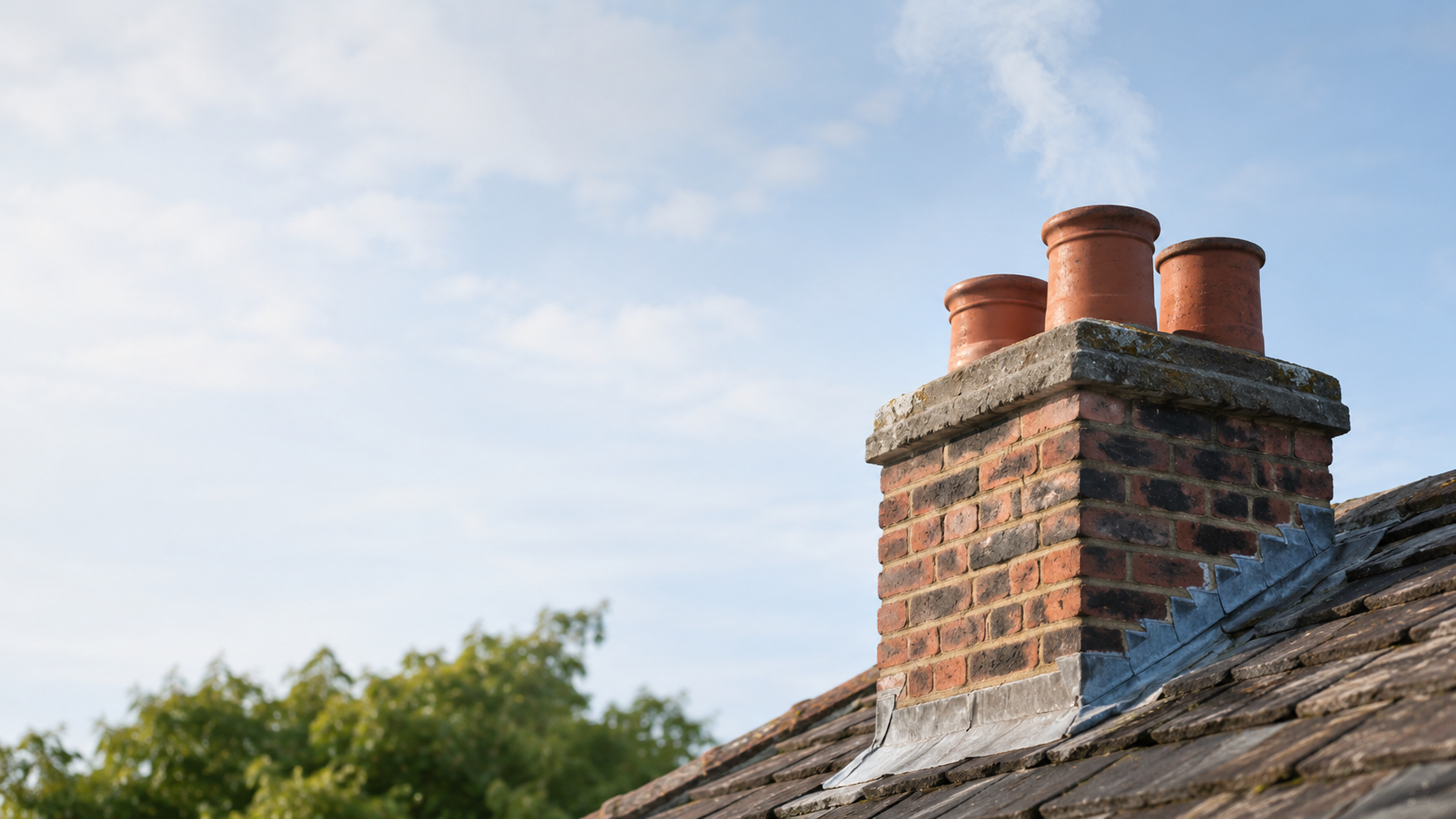
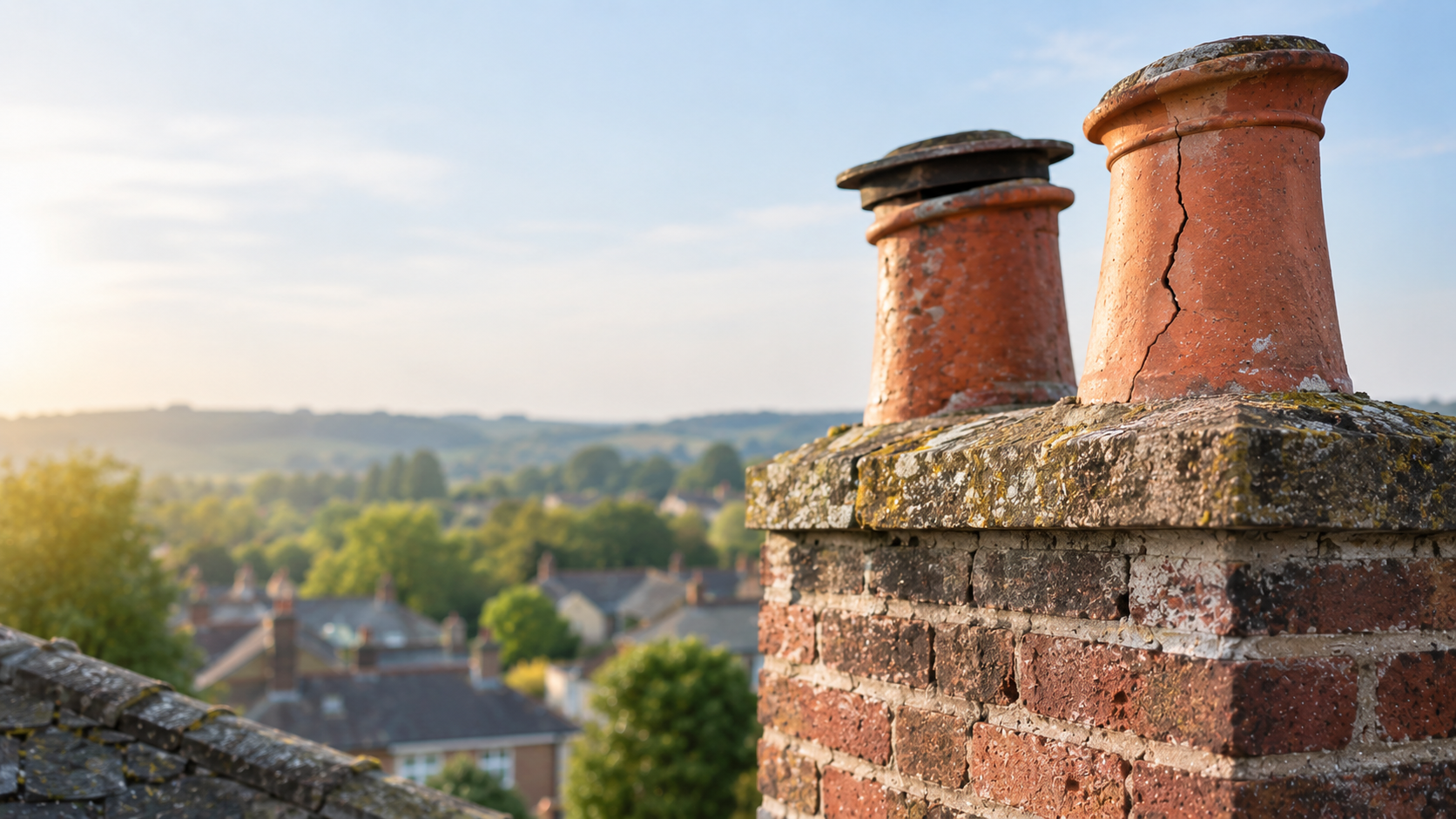
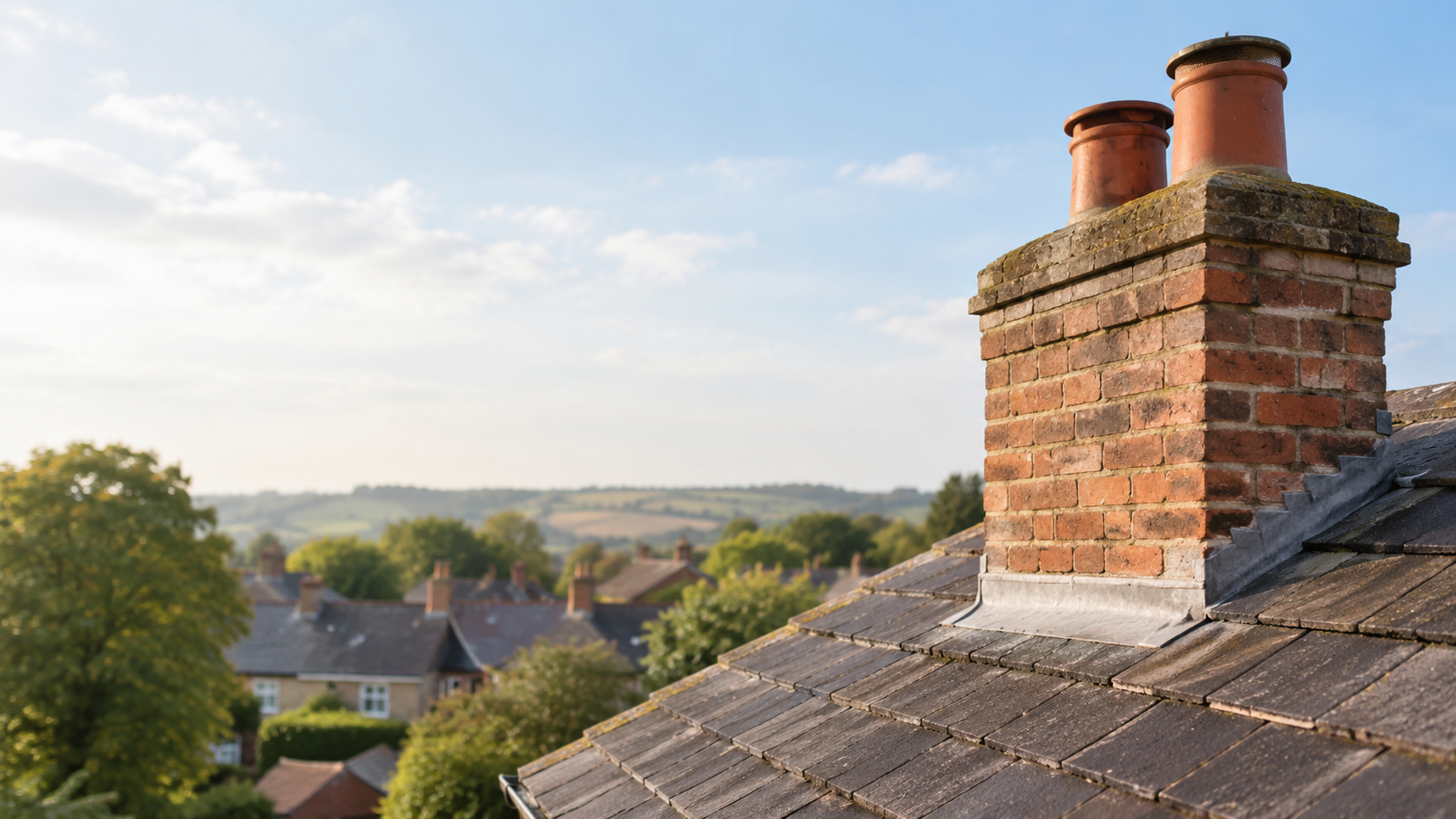
Years of exposure to wind, rain, and changing temperatures can affect chimney pots, cowls, masonry, and flashing. Damage at roof level may allow water to enter or cause loose fragments to fall into the flue.
A drone inspection and roof inspection can help identify visible cracks, missing mortar, leaning pots, or damaged flashing. Drone images are useful for an initial overview, although a close physical inspection may still be required before repairs are planned.
Planning a New Stove
A fireplace that once contained an open fire is not automatically ready for a modern stove. A safe log burner installation requires an assessment of the hearth, ventilation, chimney condition, and flue route.
The appliance output should also suit the room. A stove that is too large may make the space uncomfortable and encourage inefficient use, while an unsuitable flue can affect how combustion gases leave the property.
Watch for Damp and Staining
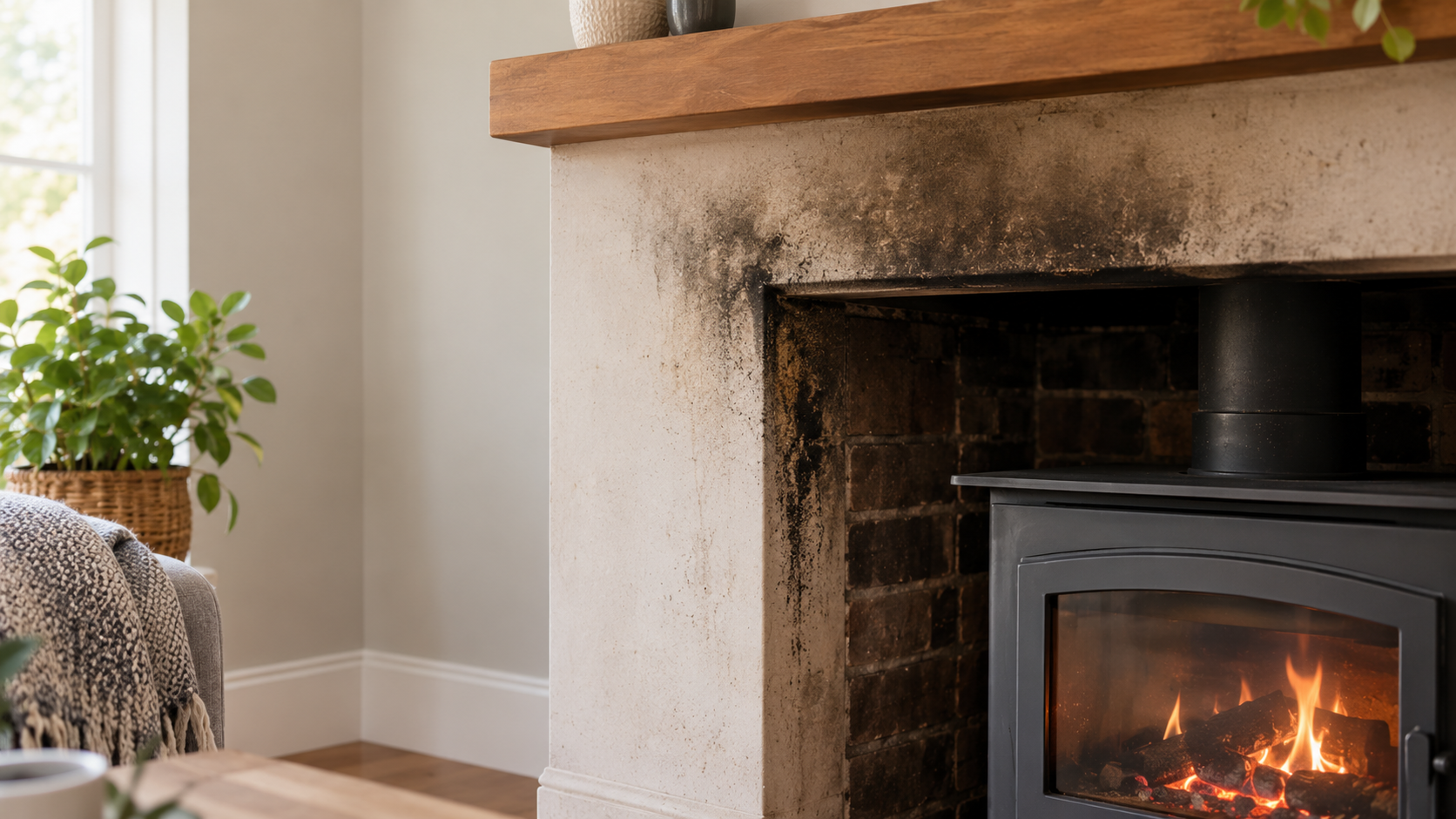
Yellow or brown marks near the chimney breast may be linked to moisture, old soot, or damaged masonry. Painting over the area before finding the cause may only hide the problem temporarily.
Midlands Sweeps can examine different parts of the chimney and explain whether cleaning, camera work, or a closer external inspection may be appropriate.
Conclusion
An older fireplace should be treated as an unknown system until its condition is understood. Sweeping, internal camera checks, and roof level inspection can help reveal blockages, deterioration, and previous alterations. Taking these steps before the first fire can help a new homeowner make informed decisions about maintenance, repairs, or appliance installation.
Frequently Asked Questions
Can I use a chimney that has been unused for years?
It should be swept and assessed before use because blockages or deterioration may have developed.
Does an older chimney always need a liner?
No. The need for a liner depends on its condition, construction, and the appliance being used.
Is a home survey enough to assess the chimney?
A general survey may identify visible concerns, but specialist sweeping, CCTV, or roof inspection may still be required.