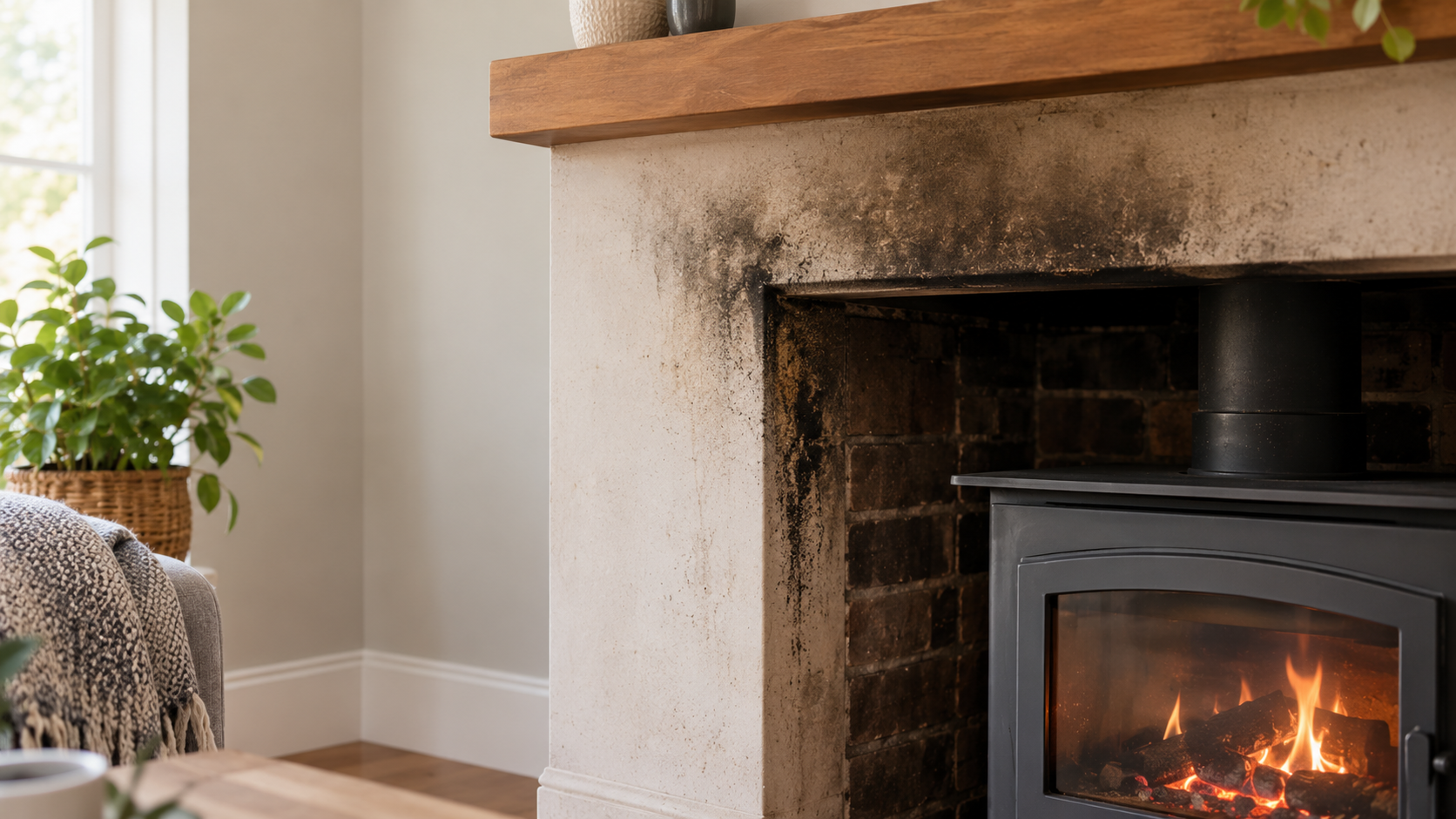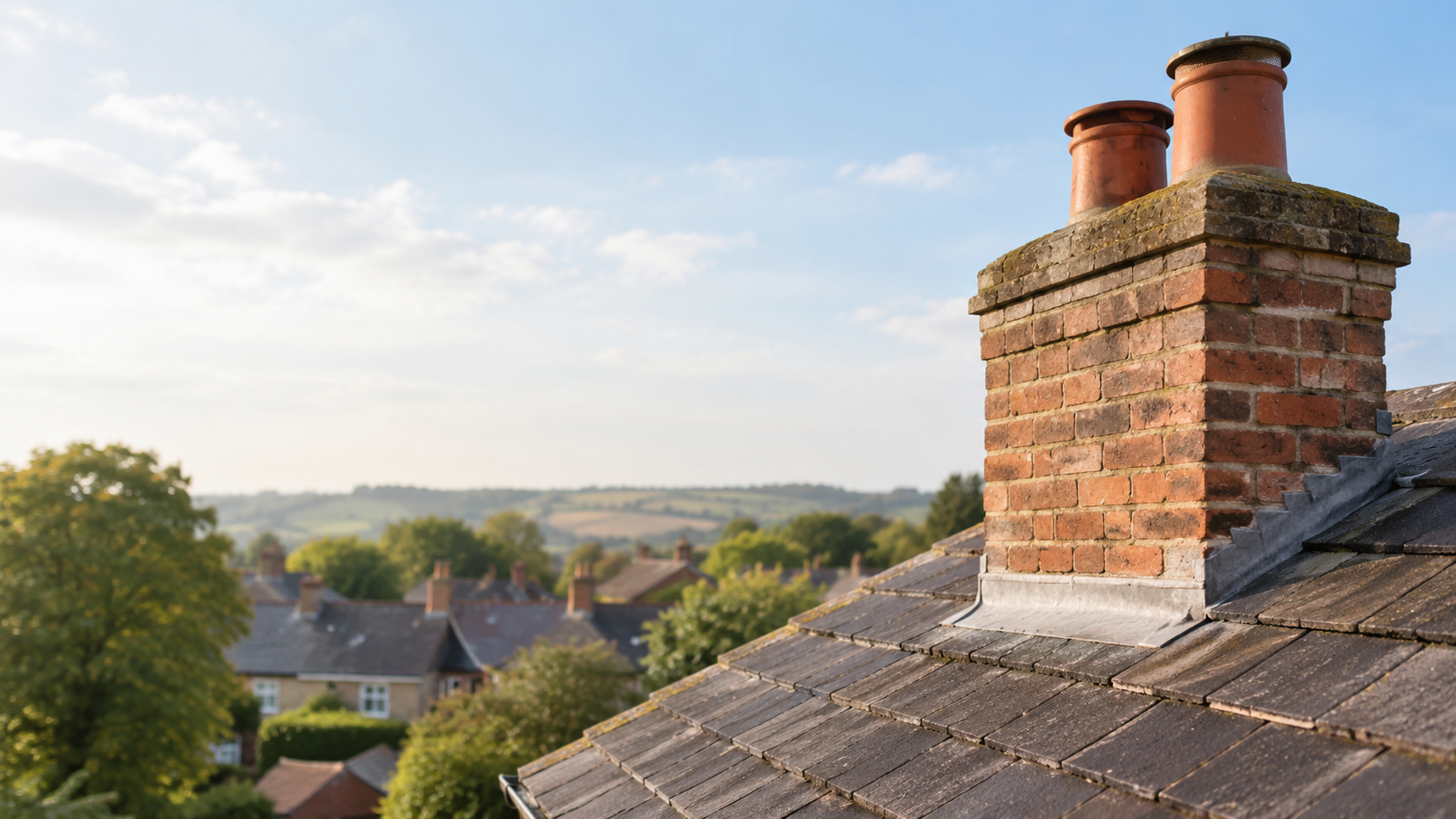
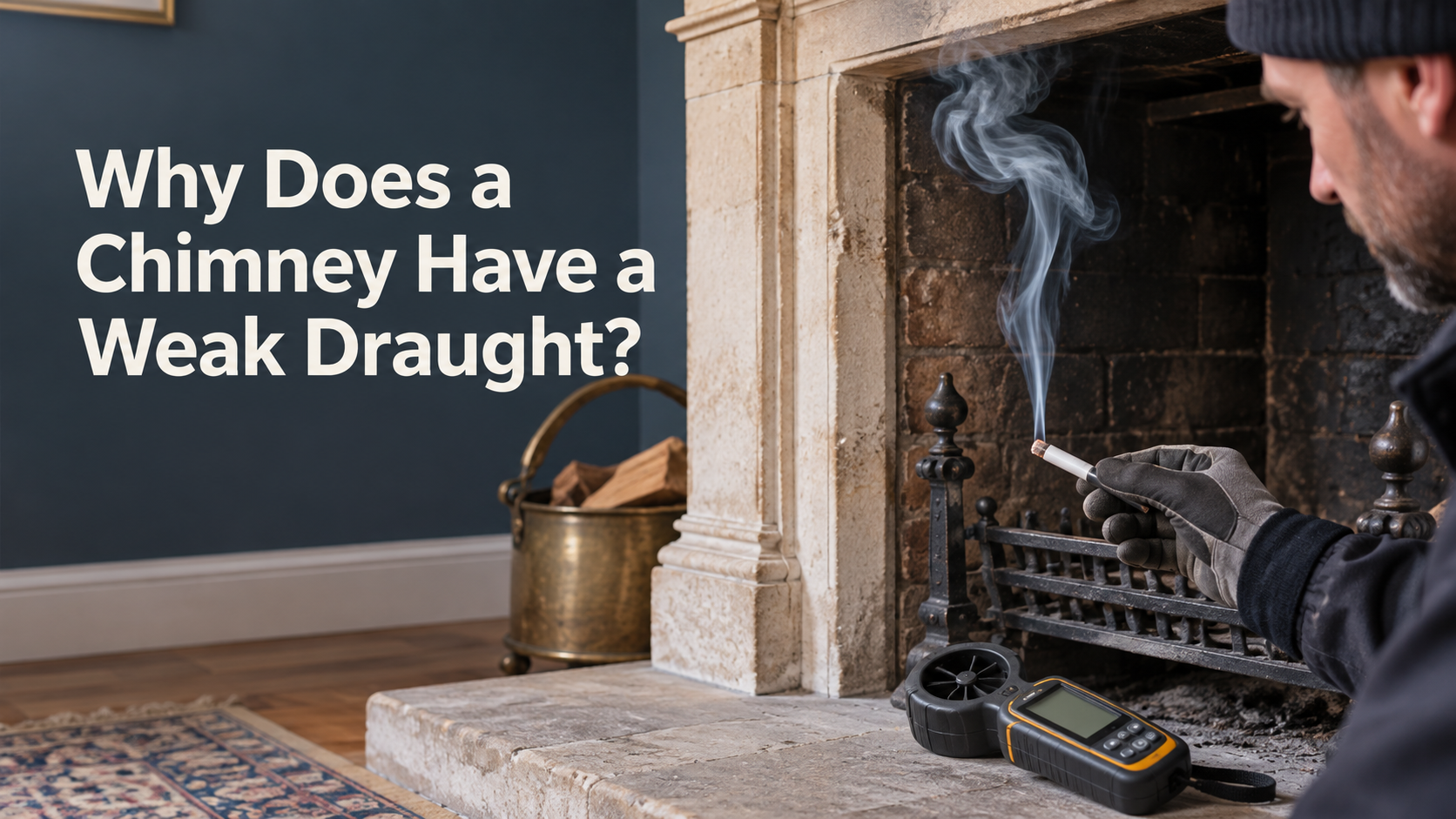
A chimney relies on draught to carry smoke and combustion gases away from a fireplace or stove. Warm air rises through the flue, creating movement that draws fresh air toward the fire. When this airflow is weak, the appliance may be difficult to light, burn poorly, or release smoke into the room.
Several issues can affect chimney draught. Understanding the common causes helps homeowners describe the problem clearly and choose a suitable inspection.
A Cold or Unused Chimney
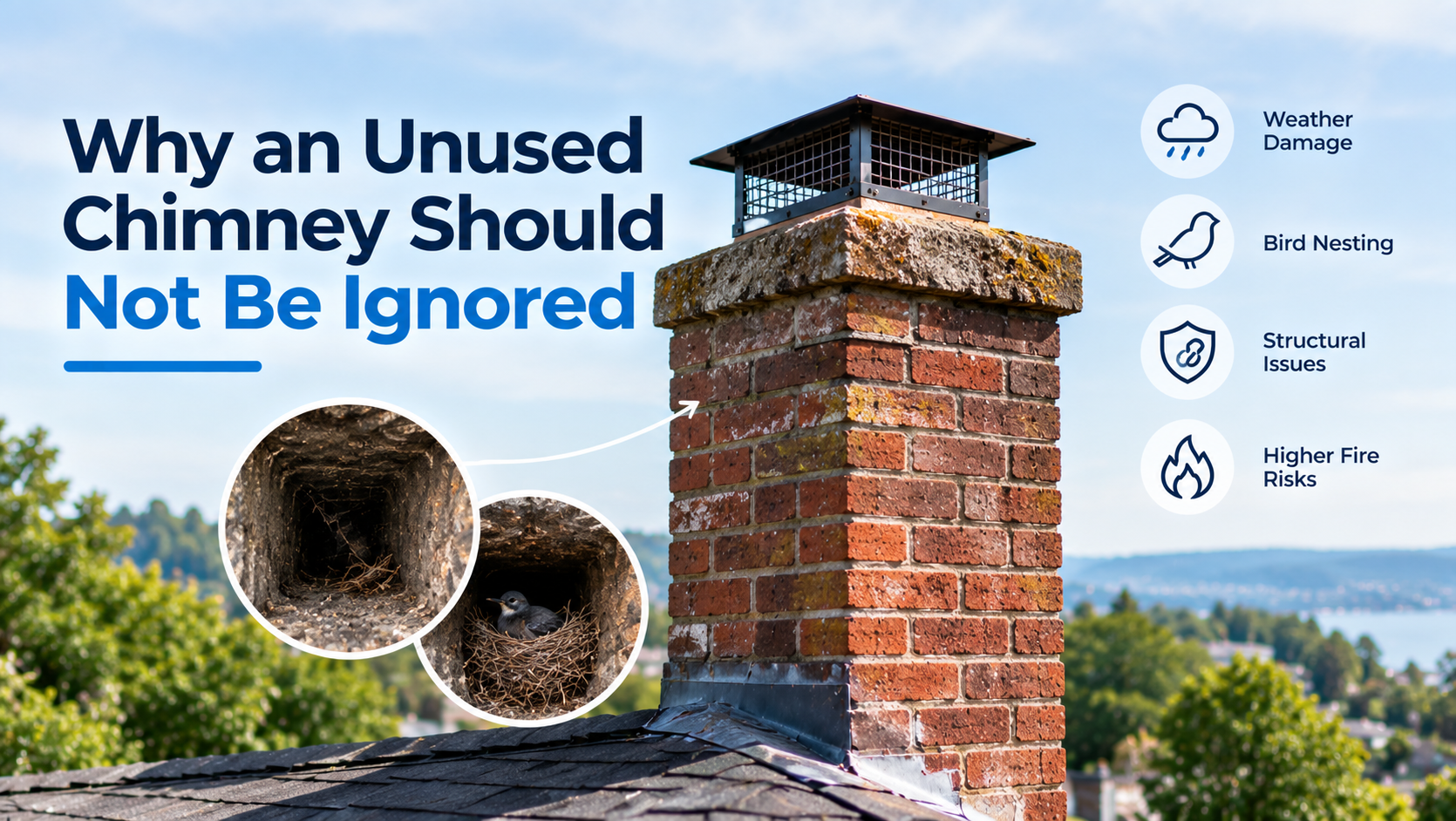
A chimney that has not been used for several months can contain a column of cold, dense air. This air may resist the warm smoke rising from a newly lit fire. The problem is often more noticeable during cold weather or in chimneys positioned on an outside wall.
The draught should improve as the flue warms. If smoke continues to enter the room after the chimney has heated, another problem may be affecting the system.
Soot and Debris Inside the Flue
Soot, tar, and loose debris reduce the available space inside a chimney. Even a partial restriction can affect how easily smoke travels upward.
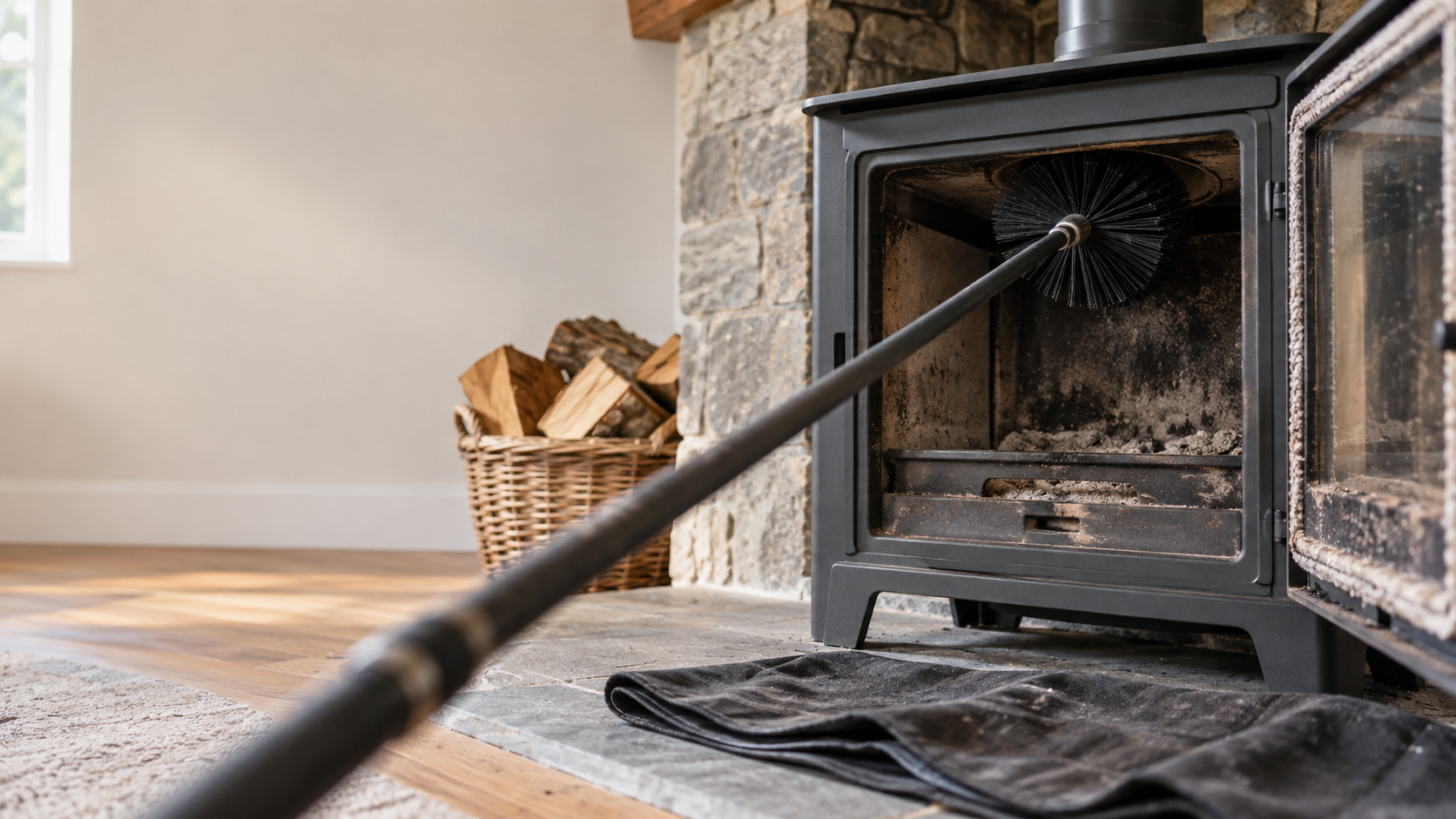
A professional Chimney Sweep removes deposits and loose material from the flue. The correct sweeping frequency depends on the appliance, fuel and level of use. If cleaning does not improve the draught, closer investigation may be needed.
Bird Nests and Other Blockages
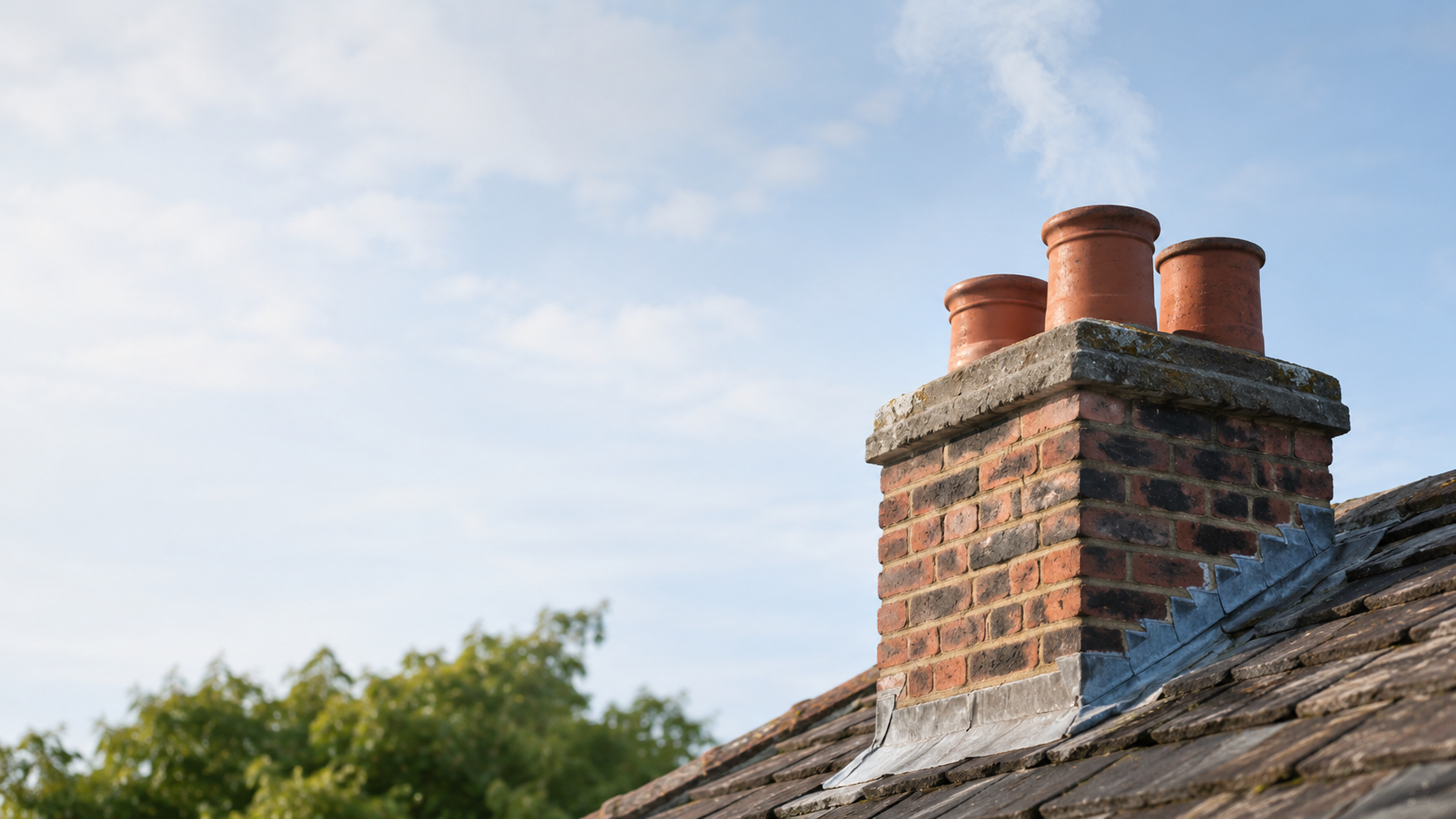
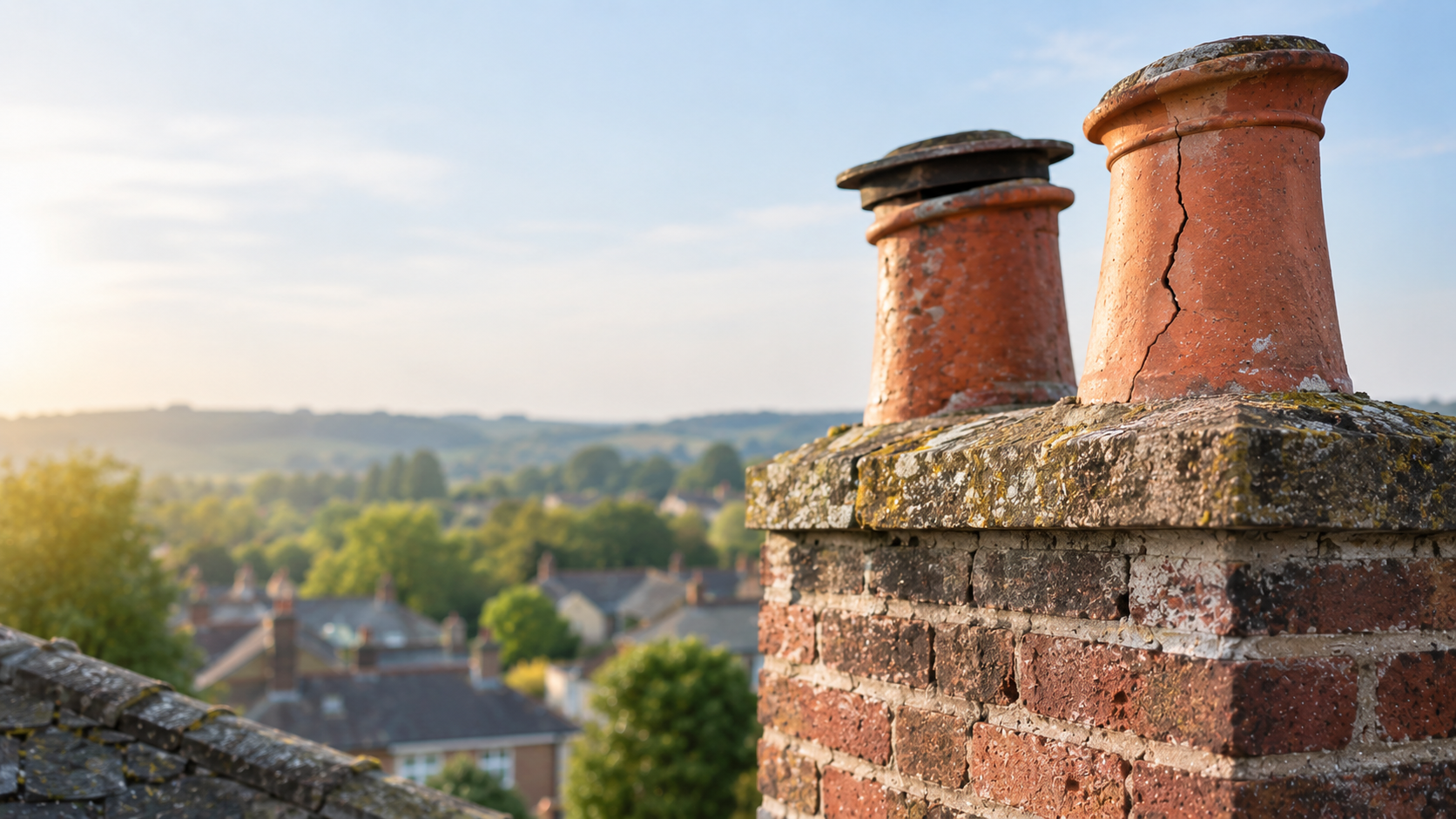
Birds may build nests inside open chimney pots, particularly when a fireplace remains unused during warmer months. Twigs can form a dense blockage that prevents gases from escaping.
Leave the appliance unlit if nesting material, feathers, or bird sounds are noticed. Bird nest removal must follow wildlife protection rules because active nests, eggs and birds may be legally protected. The chimney should be assessed before anything is disturbed.
Ventilation and Air Pressure
A fire needs enough air to maintain combustion. Sealed windows, closed vents, and powerful extractor fans can change pressure inside the property. An extractor may pull air down the chimney, causing smoke to spill into the room.
Opening a window briefly can help indicate whether room ventilation is contributing to the problem. It does not provide a permanent solution, and any fixed ventilation should suit the appliance and property.
Checking Hidden Areas
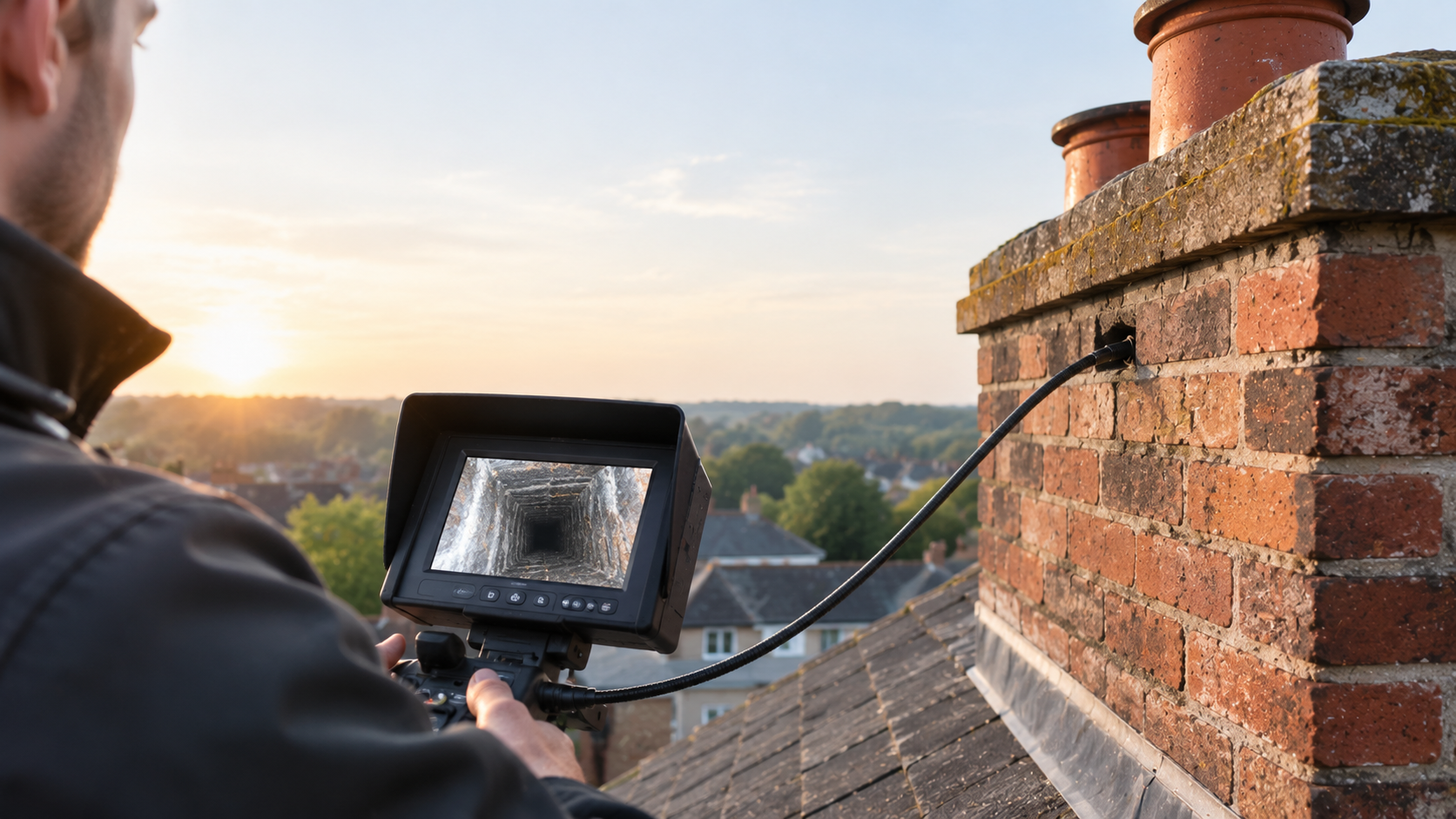
A normal visual check cannot reveal every section of a chimney. Cracks, damaged liners, unusual flue routes, and internal restrictions may require a camera survey.
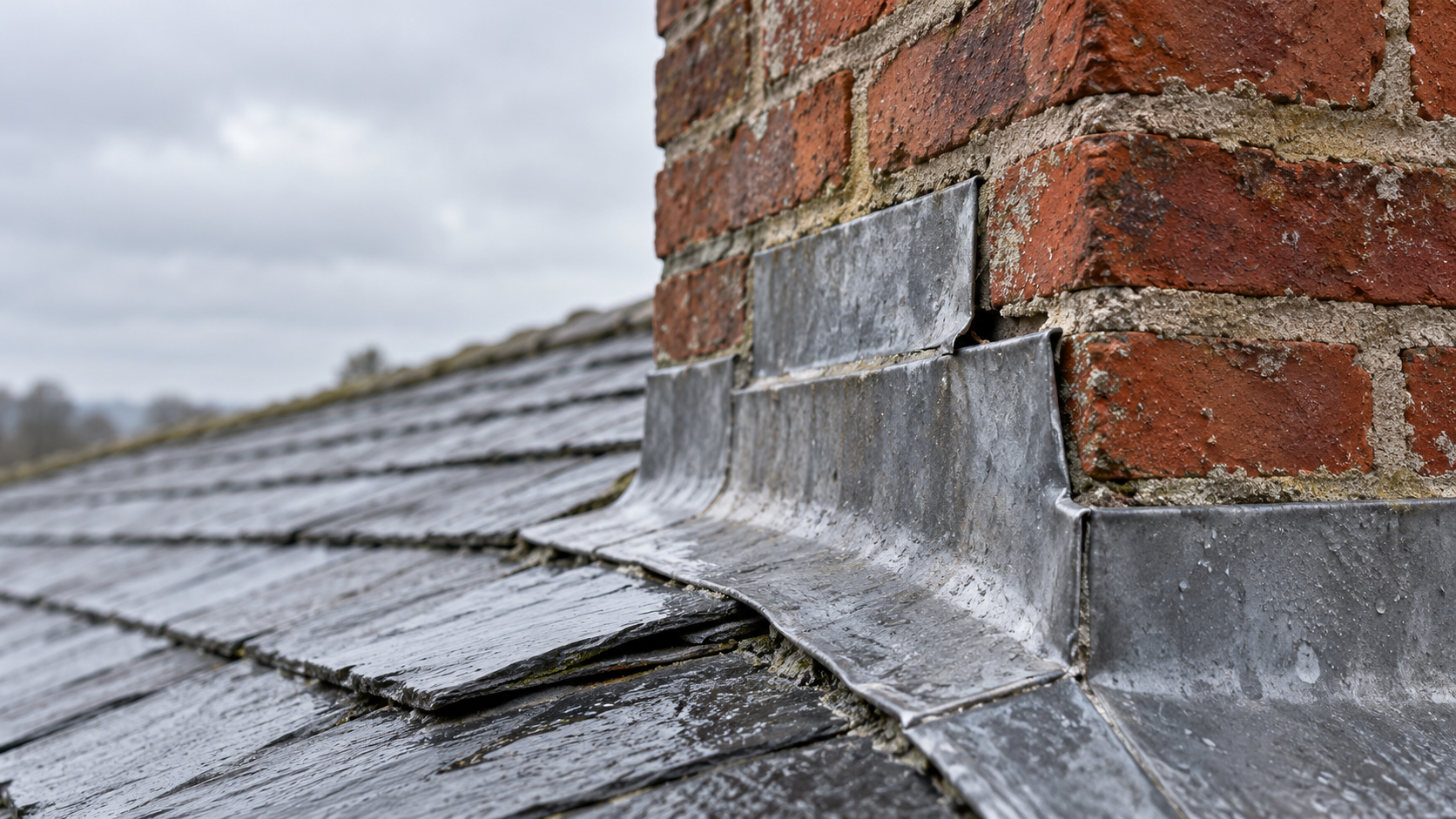
A CCTV and drone inspection can examine both the internal flue and the chimney above the roof. A drone inspection and roof inspection may also reveal damaged pots, loose cowls, missing mortar, or nearby structures that affect airflow. Close roof access may still be required to confirm some defects.
The Flue Liner and Appliance Connection
An unsuitable liner size or poor appliance connection can influence draught. Flue liner installation may be considered when the existing flue is damaged, unlined, or unsuitable for the intended appliance. The correct liner depends on the chimney, fuel, and appliance specifications.
The same assessment matters before a Log burner installation. Stove output, ventilation, hearth construction, and the flue route must work together. A stove that does not suit the chimney may be difficult to operate effectively.
Midlands Sweeps provides sweeping, inspections, liner work, nest removal, and stove installation across its listed service areas. The appropriate service depends on whether the draught problem comes from deposits, ventilation, structural condition, or appliance design.
Conclusion
Weak chimney draught may result from cold air, soot, a bird nest, poor ventilation, flue damage, or an unsuitable appliance connection. Stop using the fire if smoke enters the room or fumes do not appear to be leaving correctly. A focused inspection can identify the cause and help determine the next step.
Frequently Asked Questions
Can windy weather affect chimney draught?
Yes. Nearby buildings, trees, and roof shapes can influence how wind moves around a chimney pot.
Will a taller chimney always improve the draught?
Not necessarily. Chimney height is only one factor, and changes should follow a proper assessment.
Should I use the stove if the draught is weak?
Do not continue using it if smoke enters the room, alarms sound, or combustion gases may not be escaping safely.