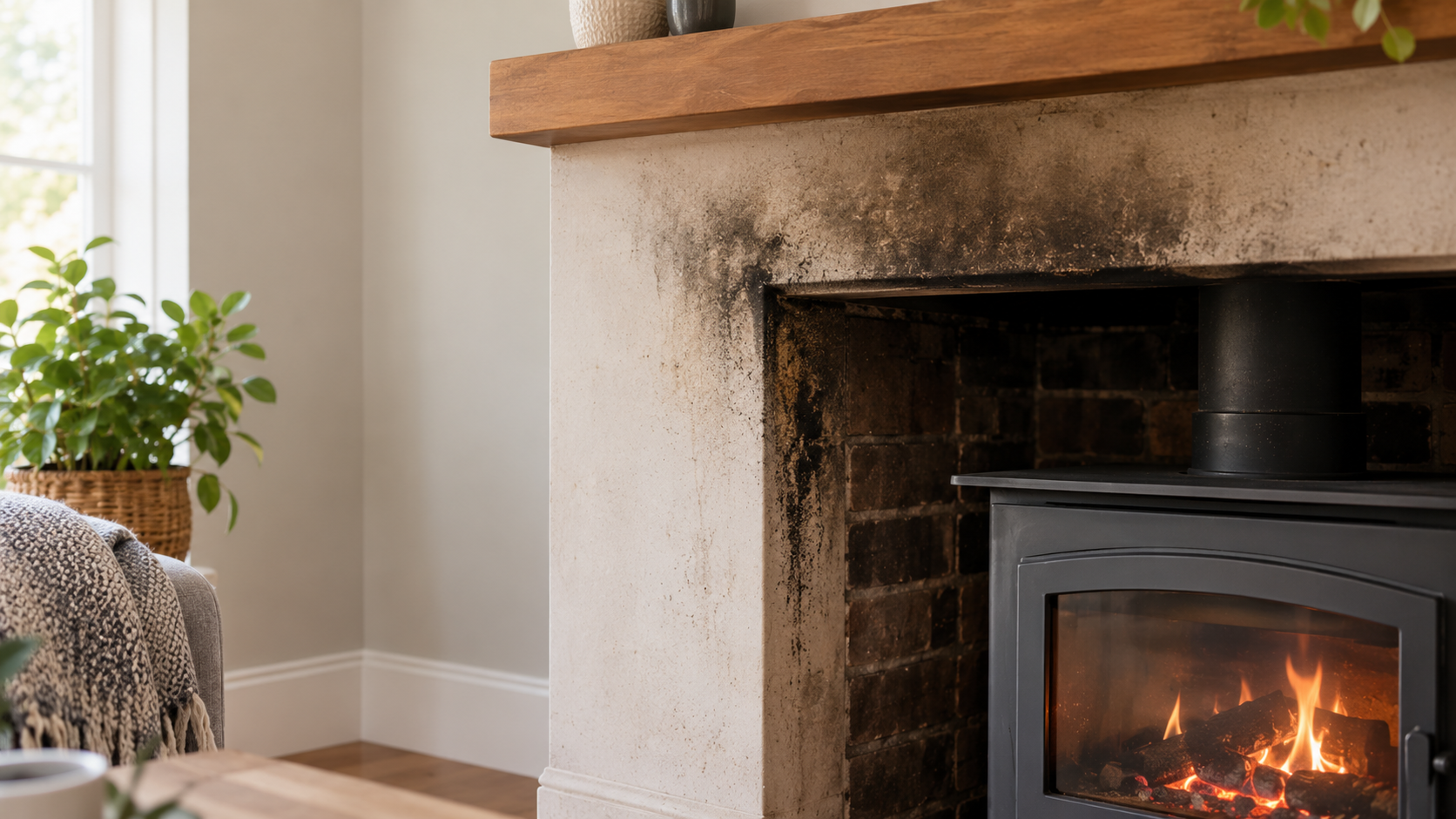

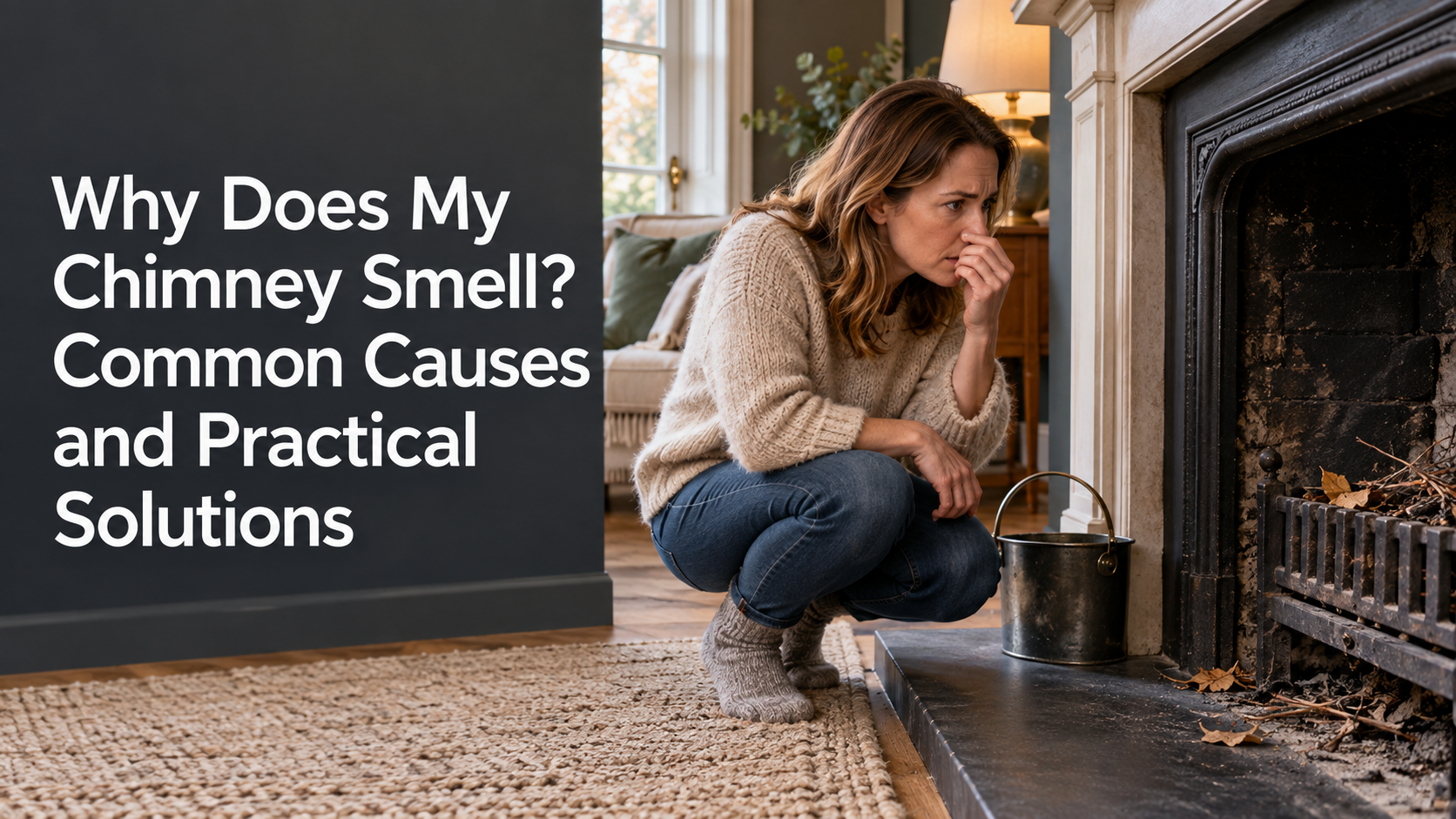
An unpleasant smell coming from a fireplace can affect a room even when the fire is not being used. Some chimney odors are strongest during warm or wet weather, while others appear after lighting a stove. The type of smell and when it occurs can offer useful clues about its cause.
Chimney smells should not be hidden with air fresheners. Finding the source can reveal problems such as soot deposits, moisture, a blockage, or poor airflow. This guide explains some common causes and the checks that may help.
Soot and Creosote Deposits
Burning wood produces soot and tar like deposits that collect inside the chimney. These materials can create a smoky smell, especially during humid weather. Moisture in the air can make old deposits smell stronger, allowing the odor to move down the flue and into the room.
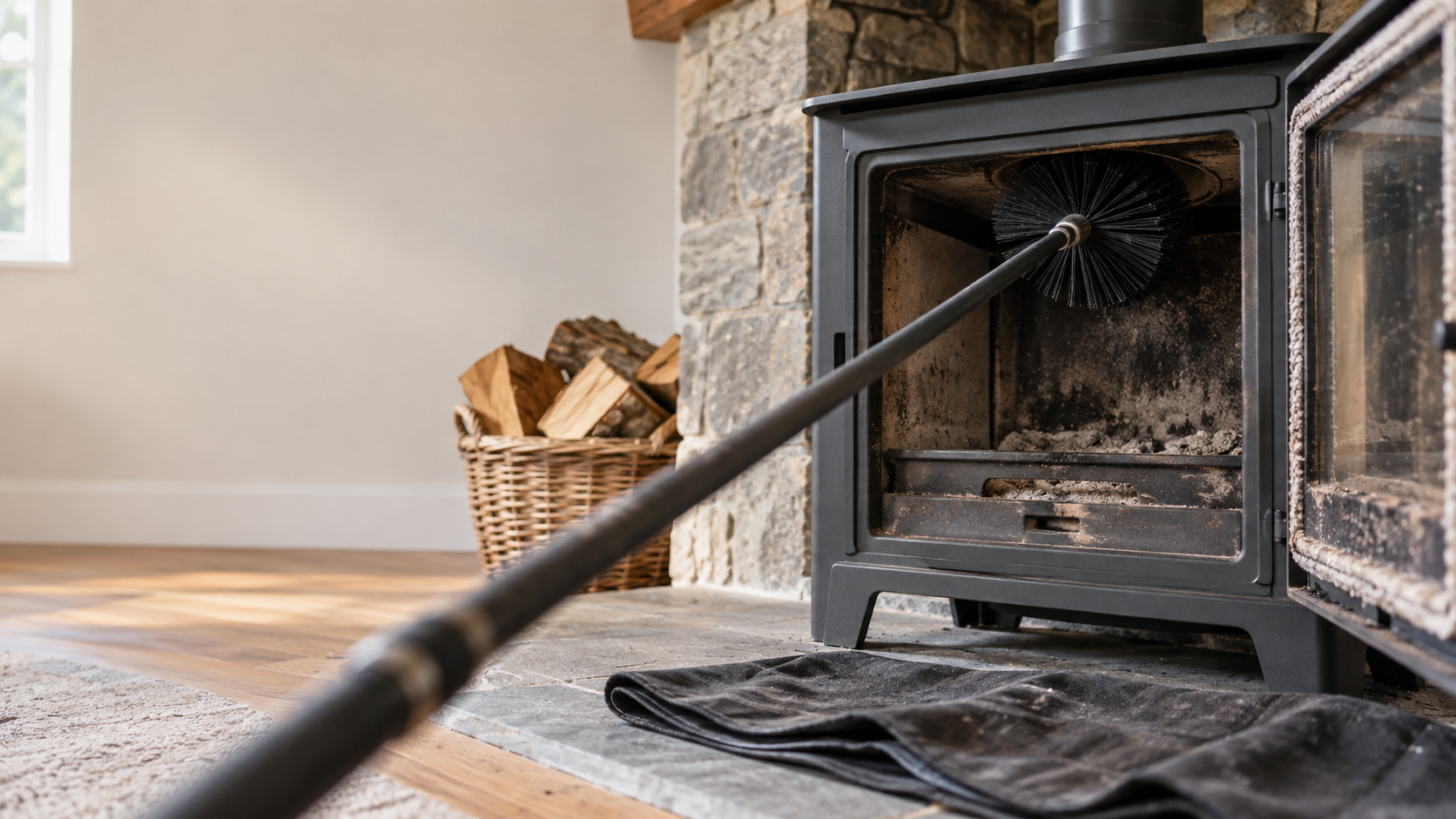
A professional chimney sweep can remove soot, loose debris, and other deposits from the flue. Sweeping frequency depends on the appliance, fuel, and how often the fireplace is used. If the chimney still smells after it has been cleaned, further investigation may be required.
Birds, Nests, and Organic Material
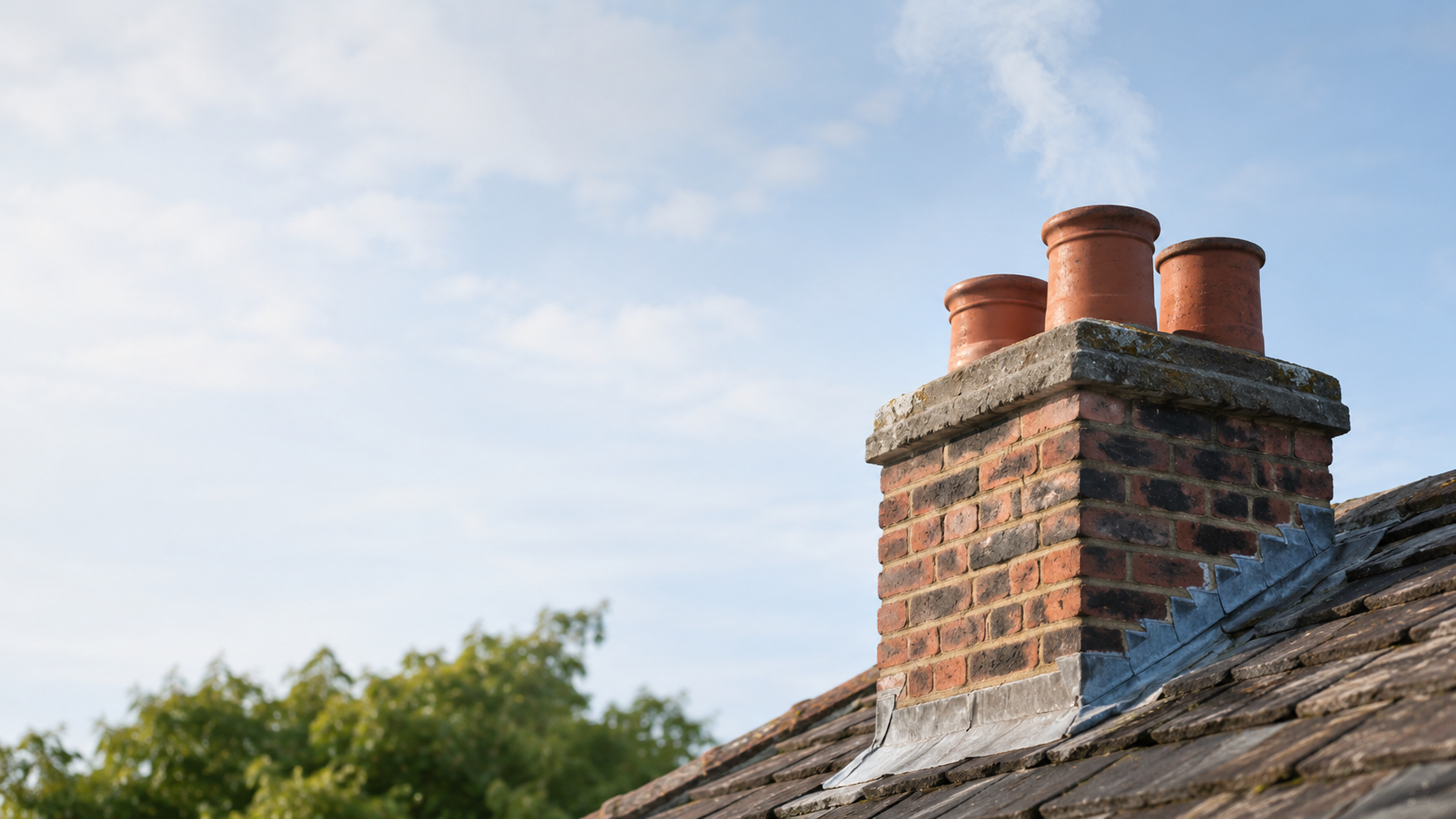
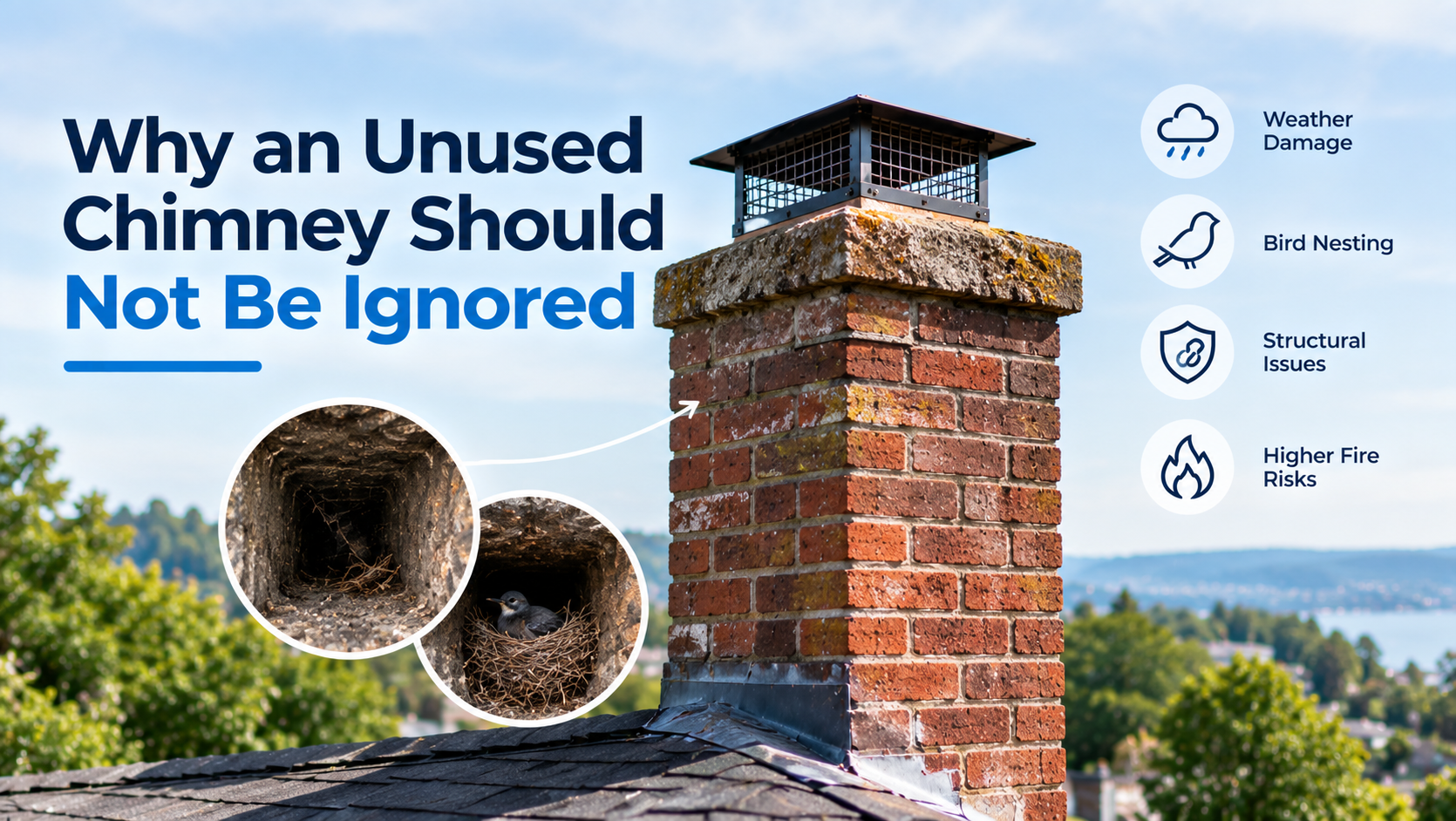
An open chimney pot can provide a sheltered nesting place for birds. Twigs, feathers, and other organic materials may produce an unpleasant smell as they become damp or begin to break down. A nest can also restrict ventilation and prevent smoke and gases from leaving correctly.
Do not light a fire if a nest or other obstruction is suspected. Bird nest removal must follow wildlife protection rules because active nests, eggs, and wild birds may be legally protected. The chimney should be assessed before removal is attempted. After the nest has been cleared at an appropriate time, a suitable cowl may help reduce future nesting.
Rainwater and Damp Inside the Chimney
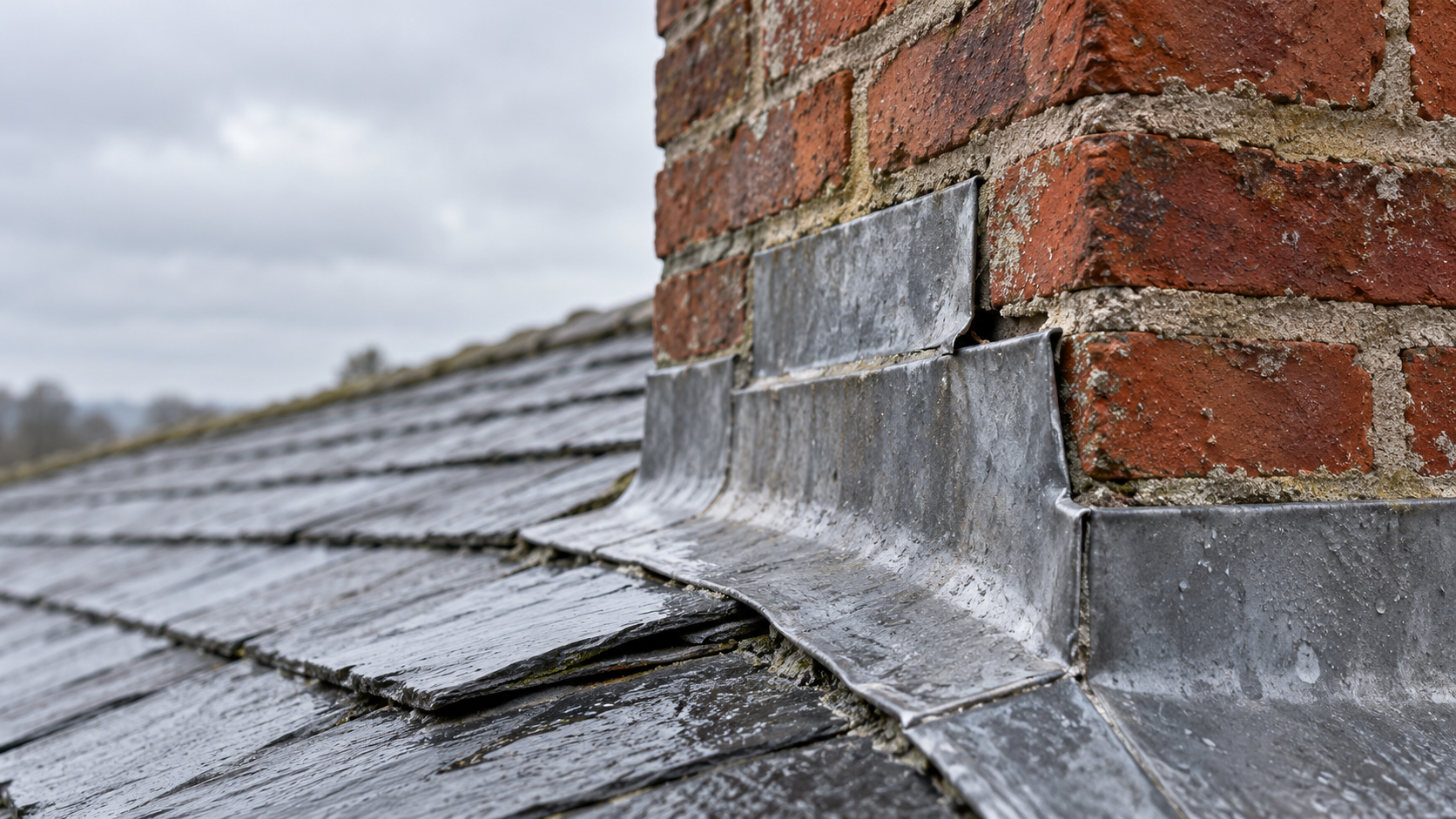
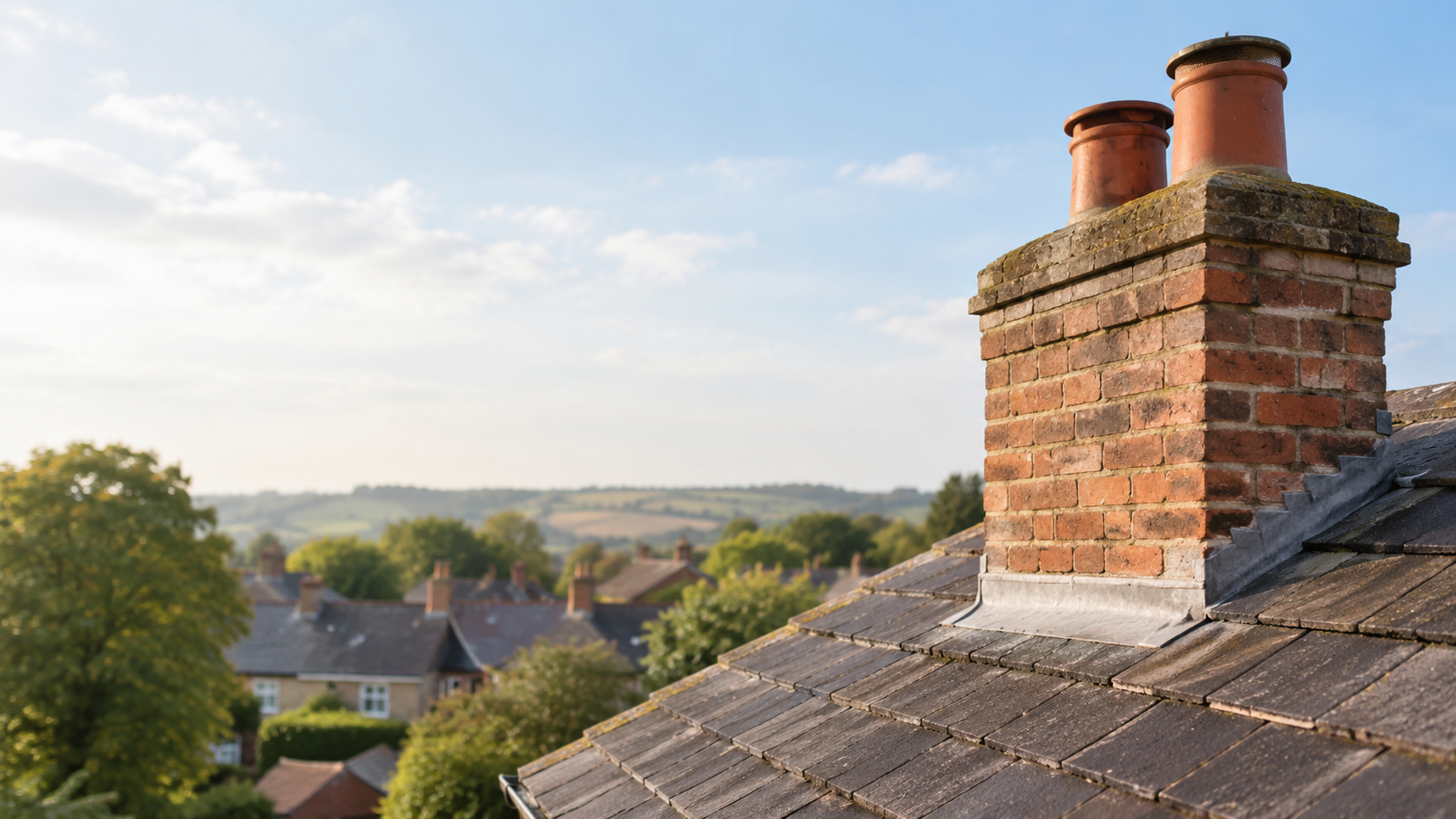
Chimney stacks are exposed to rain, wind, frost, and changing temperatures. Cracked chimney pots, damaged mortar, worn flashing, or missing cowls may allow water to enter. Damp soot and masonry can then produce a musty or smoky odor.
A drone inspection and roof inspection can help identify visible problems around the stack, pots, and nearby roofing. Drone images are useful for examining areas that cannot be seen clearly from the ground. A closer roof inspection may still be necessary to check loose mortar, lead work, tiles, or structural movement.
Poor Airflow and Chimney Downdraft
A chimney relies on airflow to carry smoke and gases out of the property. In some homes, air can travel down the chimney instead, bringing soot smells into the room. Extractor fans, sealed windows, and changes to household ventilation can influence this movement.
Opening a nearby window briefly may help reveal whether air supply is part of the issue, but it is not a permanent solution. A qualified professional should assess recurring downdraft, especially when smoke enters the room while the appliance is operating.
Hidden Problems Inside the Flue
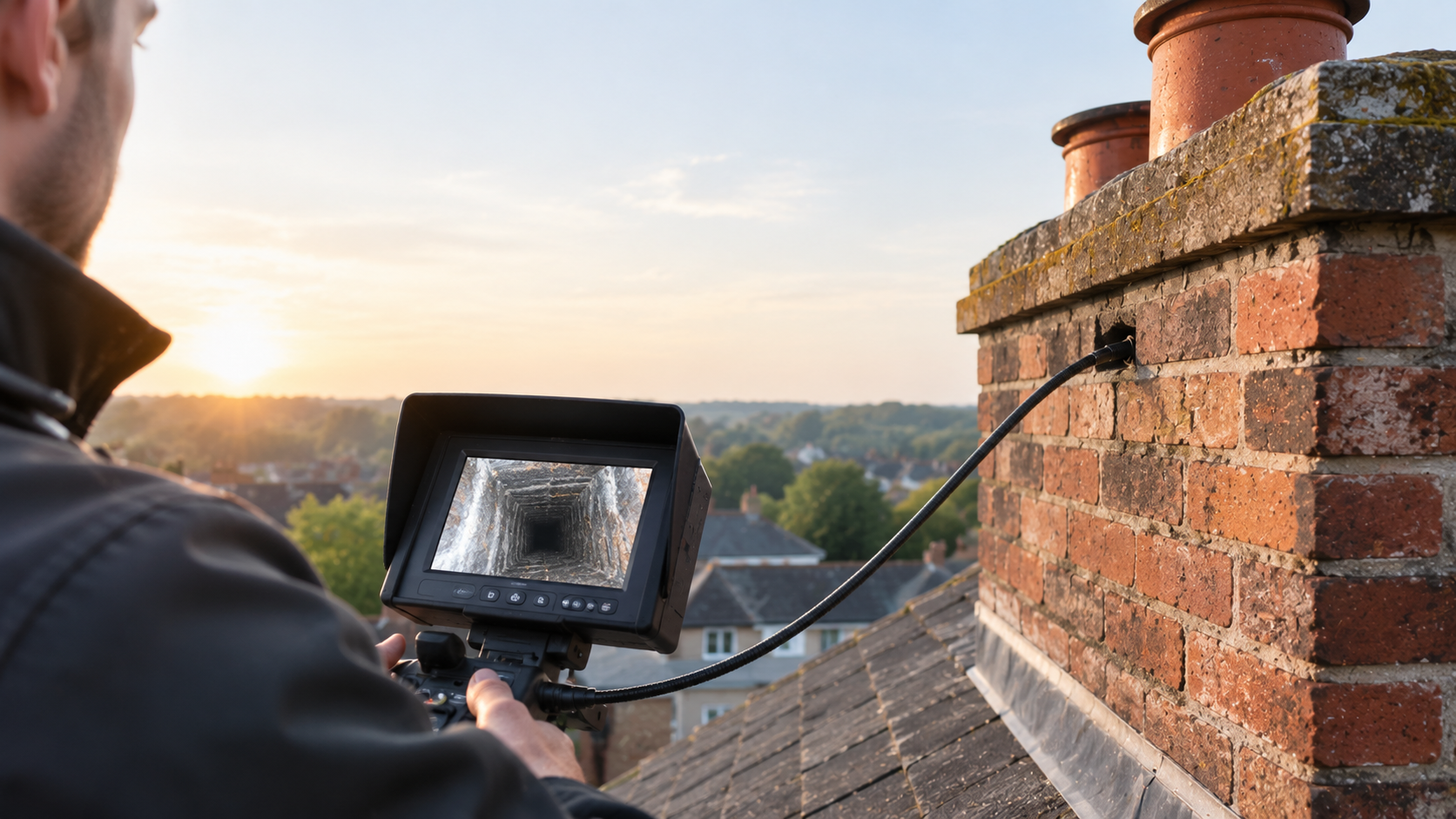
A standard visual check cannot show the complete internal condition of a chimney. Cracks, damaged joints, deteriorated liners, and concealed blockages may exist higher in the flue.
A CCTV and drone inspection combines internal and external views. CCTV equipment can record areas inside the chimney, while a drone can examine the exposed stack and roof line. These findings may help determine whether cleaning, repair work, or flue liner installation should be considered. A liner should only be selected after the chimney and appliance have been properly assessed.
Odors Following a New Stove Installation
Occasional smells can occur when a new stove or heat-resistant coating is used for the first few times. These should be distinguished from persistent smoke, tar, or damp odors.
A safe log burner installation considers the appliance, hearth, ventilation, flue route, and chimney condition as one system. If a strong smell continues, smoke enters the room, or an alarm sounds, stop using the appliance and arrange an inspection. Do not assume that a recently installed stove rules out a chimney or ventilation issue.
Midlands Sweeps provides chimney sweeping, inspection, nest removal, flue lining, and log burner services across its listed coverage areas. These services address different causes, so the appropriate starting point depends on the symptoms and condition of the property.
Conclusion
A chimney smell may come from soot, nesting material, moisture, poor airflow, or damage inside the flue. Note when the odor appears, whether it becomes stronger during wet weather, and whether smoke enters the room. This information can make an assessment more focused and help identify the appropriate next step.
Frequently Asked Questions
Why does my chimney smell worse in summer?
Warm, humid weather and downward airflow can carry odors from soot, damp masonry, or debris into the room.
Will sweeping remove every chimney smell?
Sweeping can remove deposits and loose material, but smells caused by dampness, structural damage, or airflow problems may require further investigation.
Should I use the fireplace if it smells strongly?
Avoid using it if you suspect a blockage, notice smoke entering the room, or feel uncertain about the flue’s condition. Arrange an assessment before relighting it.