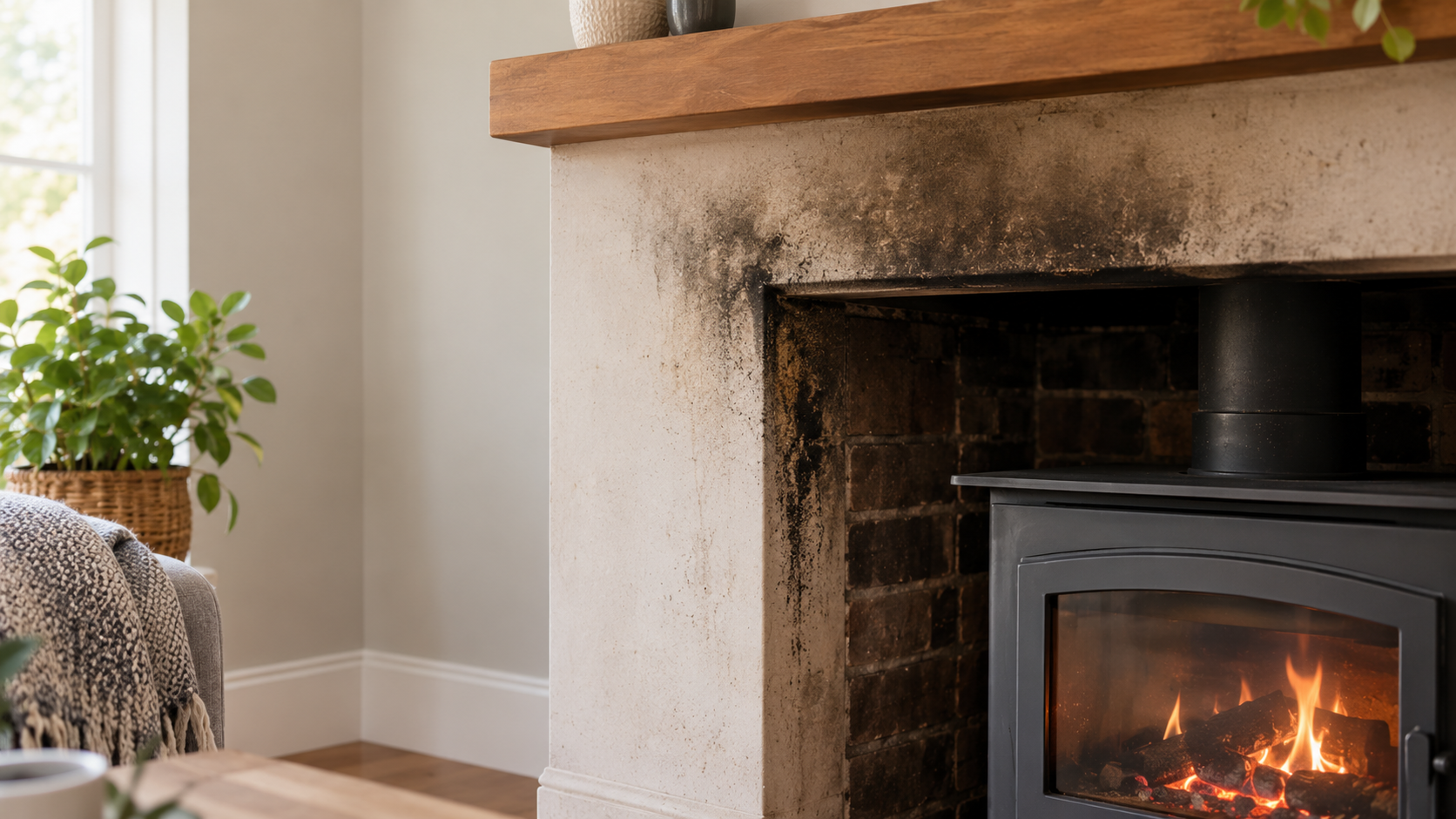
If your fireplace is smoking into the room, something is preventing smoke from travelling safely up the chimney and outside.
A properly functioning open fireplace relies on chimney draught to pull smoke and combustion gases away from your living space. When that airflow is weakened or reversed, smoke can spill out of the fireplace instead.
The problem may be as simple as a cold chimney or damp firewood, but it can also indicate a blocked chimney, bird nest, heavy soot build-up, poor ventilation or chimney damage.
Smoke repeatedly entering your home should never be considered normal. If the problem continues, stop using the fireplace until the chimney has been inspected.
Here are 10 of the most common reasons an open fireplace may smoke into the room.
1. Your Chimney Is Blocked or Dirty
One of the first things to investigate is the condition of the chimney.
Every time you use an open fire, soot and other combustion deposits collect inside the flue. If the chimney is not swept regularly, these deposits can gradually restrict the space available for smoke to escape.
A chimney can also become obstructed by:
- Bird nests
- Leaves
- Twigs
- Cobwebs
- Fallen mortar
- Damaged chimney-liner material
- Heavy soot
- Tar or creosote
- Other debris
A partially blocked chimney may still allow some smoke through, which is why the problem can initially appear as occasional smoke spillage rather than a completely unusable fireplace.
UK government guidance recommends having chimneys serving open fires and stoves professionally swept at least once a year because soot and tar accumulation reduces efficiency and increases chimney-fire risk.
If you cannot remember when your chimney was last swept, arranging a professional chimney sweep is a sensible first step.
2. Your Chimney Has Poor Draught
Chimney draught, sometimes called chimney draw, is the movement of air that carries smoke upward through the flue.
Hot gases produced by the fire rise through the chimney. As they rise, they create pressure that helps pull more combustion gases away from the fireplace.
If the chimney does not generate enough draught, smoke may escape into the room.
Poor chimney draught can be caused by:
- A restricted flue
- Incorrect chimney dimensions
- A chimney that is too short
- Excessive bends or offsets
- A cold chimney
- Nearby buildings or trees
- Poor chimney-pot positioning
- Ventilation problems
- Changes made to the fireplace
Government guidance on domestic chimneys notes that smoking can result from physical blockages, chimney dimensions and other factors affecting draw.
If the chimney is clean but the fireplace continues smoking, the draught may need further investigation.
3. The Chimney Is Cold
If your fireplace mainly smokes when you first light it, a cold chimney may be responsible.
Cold air sitting inside the chimney is denser than the warm air in your room. Before smoke can rise freely, the fire needs to create enough heat to establish an upward draught.
This problem is more likely when:
- The fireplace has not been used recently
- The weather is particularly cold
- The chimney is positioned on an external wall
- The chimney is very tall
- The flue loses heat quickly
Once the chimney begins warming, the smoke should normally start travelling upward more effectively.
If smoke continues entering the room after the chimney is warm, another issue is likely contributing to the problem.
4. Your Room Does Not Have Enough Ventilation
A fireplace needs air to burn fuel and maintain chimney draught.
Modern homes can be relatively airtight because of:
- Double or triple glazing
- Draught-proof doors
- Improved insulation
- Sealed windows
- Renovation work
If insufficient replacement air can enter the room, the chimney may struggle to pull smoke upward effectively.
Safety guidance for combustion appliances stresses the importance of maintaining an adequate air supply and not sealing ventilation openings or air bricks required for combustion.
Never permanently block a ventilation opening installed to support a fireplace or combustion appliance.
If your smoke problem began after installing new windows, doors or draught-proofing, ventilation should be considered as a possible cause.
5. An Extractor Fan Is Pulling Air the Wrong Way
Kitchen extractor fans, bathroom fans and other powerful ventilation systems can affect an open fireplace.
An extractor removes air from inside the property.
If replacement air cannot enter quickly enough, negative pressure may develop inside the house. In some situations, the chimney then becomes an alternative source of replacement air.
Instead of smoke rising through the chimney, air can travel down the flue and push smoke into the room.
You might notice that your fireplace:
- Works normally until the kitchen extractor starts
- Smokes more when bathroom fans are operating
- Behaves differently when certain internal doors are closed
If this consistently happens, have the ventilation and chimney arrangement professionally assessed rather than simply opening random vents or modifying the fireplace yourself.
6. You Are Burning Wet Wood
If you have a wood-burning open fireplace, the condition of your logs makes a major difference.
Wet or unseasoned wood contains excessive moisture.
Before the wood can burn effectively, much of the fire’s energy has to evaporate that moisture. This lowers combustion temperature and creates considerably more smoke.
Wet wood can contribute to:
- Excessive fireplace smoke
- Poor fire performance
- Soot build-up
- Tar deposits
- Creosote formation
- Black staining
- Strong chimney smells
DEFRA advises using dry wood and notes that cleaner fuels produce less smoke and pollution than wet wood.
Where applicable, look for Ready to Burn firewood or use a moisture meter to check your logs.
Aim for firewood with a moisture content of 20% or less.
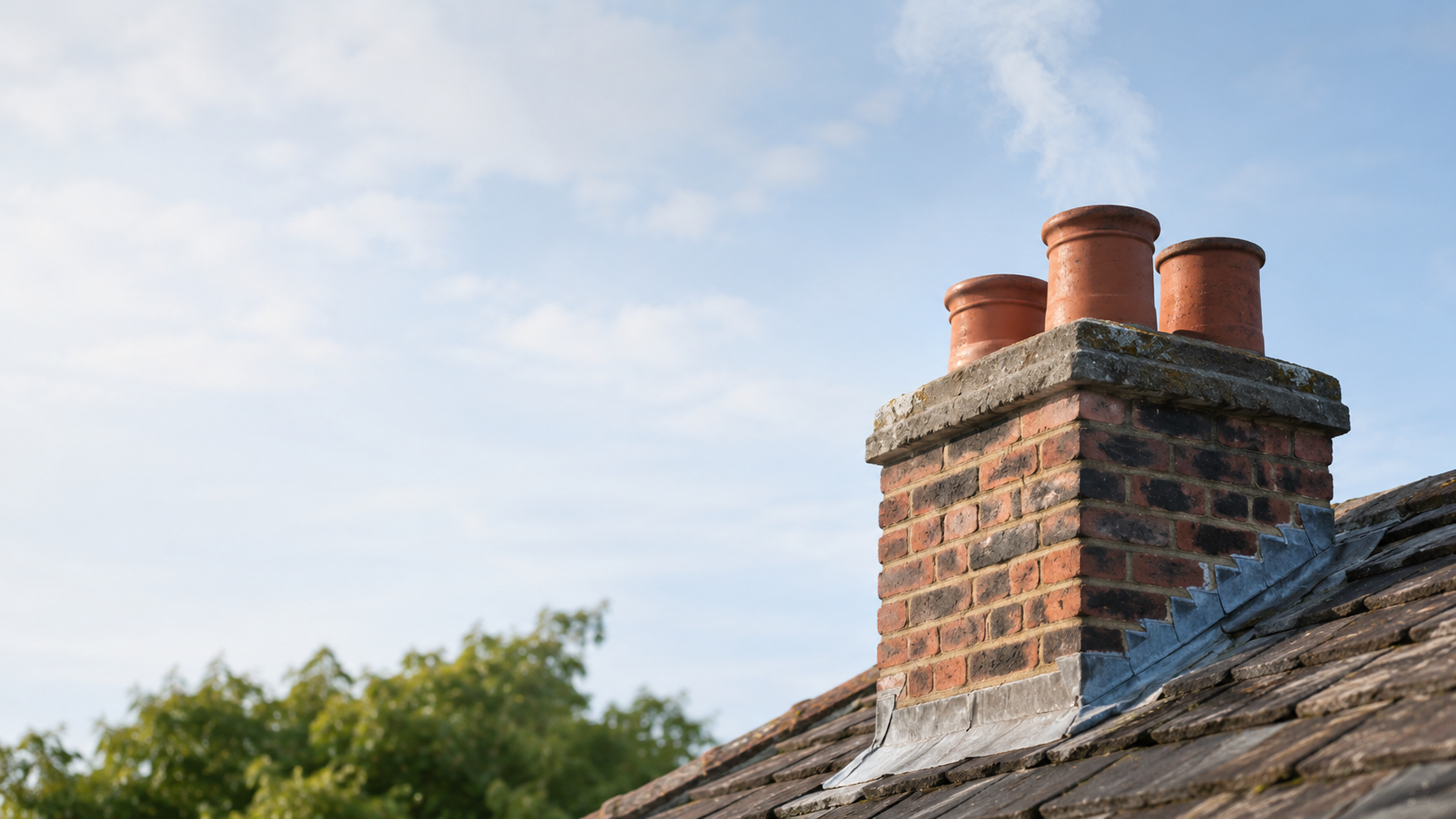
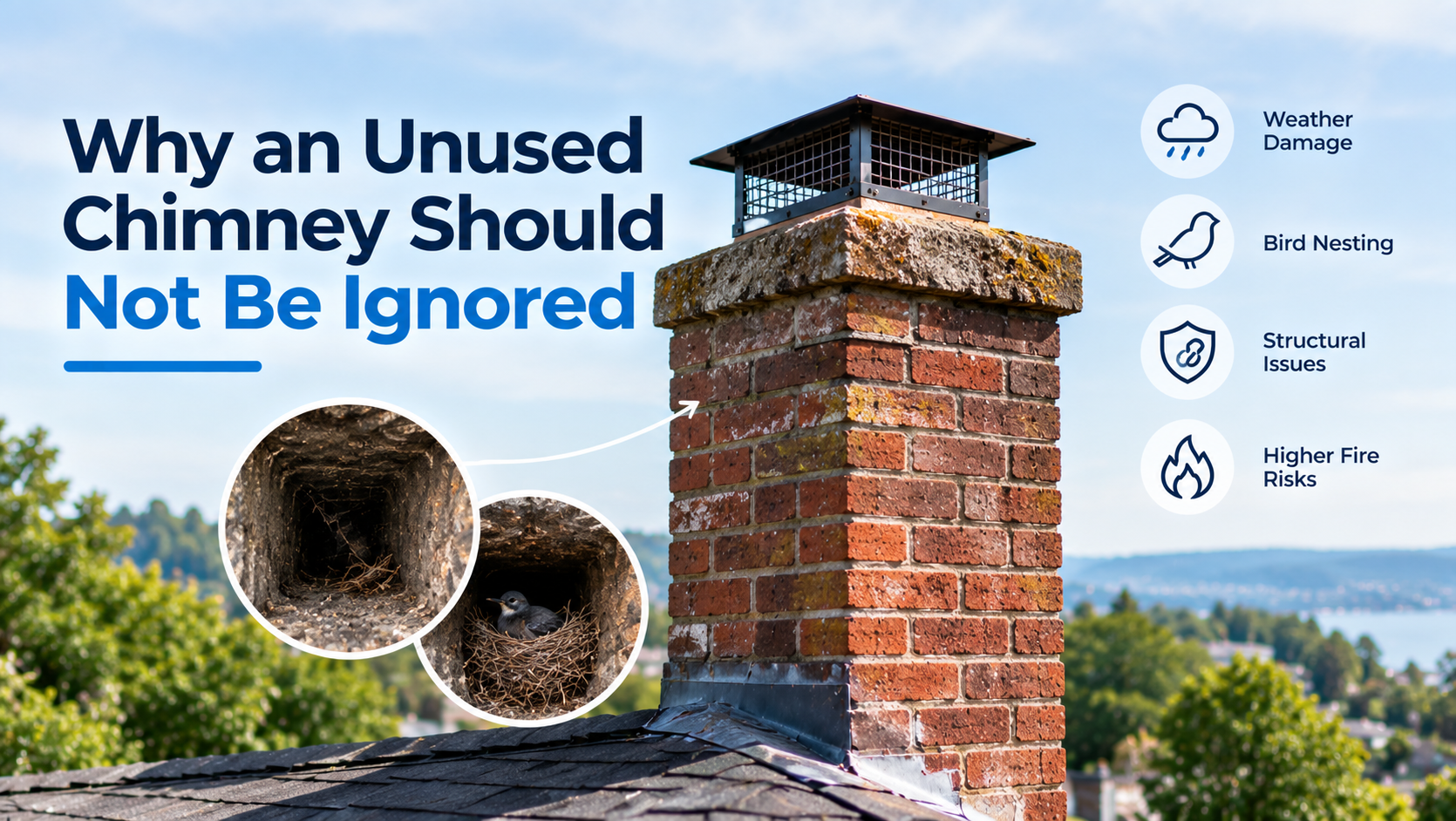
7. A Bird Nest Is Blocking the Chimney
Unused open chimneys can provide attractive nesting locations for birds.
A bird nest can contain an enormous amount of material, including:
- Twigs
- Leaves
- Grass
- Moss
- Feathers
- Other nesting material
Even if the chimney is not completely blocked, a large nest can significantly reduce airflow.
Signs that birds may be inside your chimney include:
- Twigs falling into the fireplace
- Scratching or fluttering sounds
- Birds repeatedly entering the chimney pot
- Feathers in the hearth
- Sudden poor draught
- Unusual smells
- Smoke returning to the room
Midlands Sweeps specifically identifies open and unlined chimneys as common nesting locations and provides bird nest removal alongside chimney sweeping services.
Never light a fire to try to burn a bird nest out of the chimney.
If you suspect nesting activity, stop using the fireplace and arrange professional advice.
8. The Fireplace Opening May Be Too Large for the Chimney
The size of an open fireplace affects how much air and smoke the chimney needs to handle.
If the fireplace opening is unusually large compared with the chimney flue, the chimney may not generate enough draught to carry the volume of smoke produced.
This can occur when:
- A fireplace has been enlarged
- An older fireplace has been modified
- A stove has previously been removed
- A flue has been relined
- Renovation work has changed the original fireplace dimensions
Government guidance on traditional domestic chimneys notes that there is an important relationship between the fireplace opening and the chimney opening, and alterations can affect how well the chimney draws.
If smoke problems began after fireplace alterations, the dimensions and flue arrangement should be professionally checked.
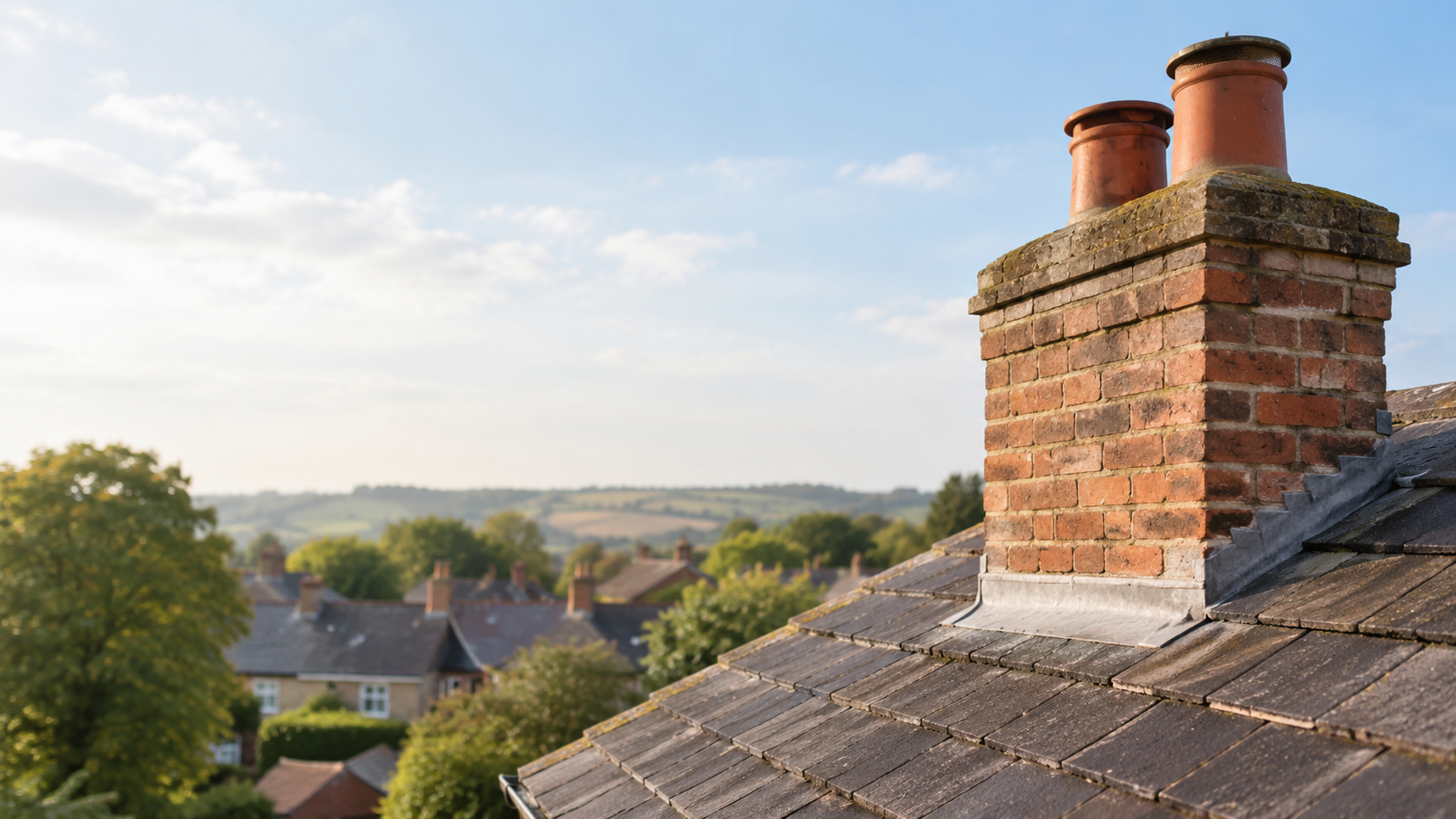
9. Wind Is Causing a Downdraught
Does your fireplace only smoke on particularly windy days?
The problem may be downdraught.
Wind passing across a roof creates areas of positive and negative pressure. Depending on the position of your chimney, surrounding structures and wind direction, air may sometimes be forced downward through the chimney.
Possible contributing factors include:
- Nearby tall buildings
- Trees
- Roof extensions
- Chimney height
- Chimney-pot location
- Local terrain
- Roof shape
You may notice that the fireplace works perfectly under normal weather conditions but smokes during strong winds from a particular direction.
A professional chimney or roof assessment can help identify whether external conditions are contributing to the problem.
Do not automatically install a new chimney cowl without identifying the underlying cause first.
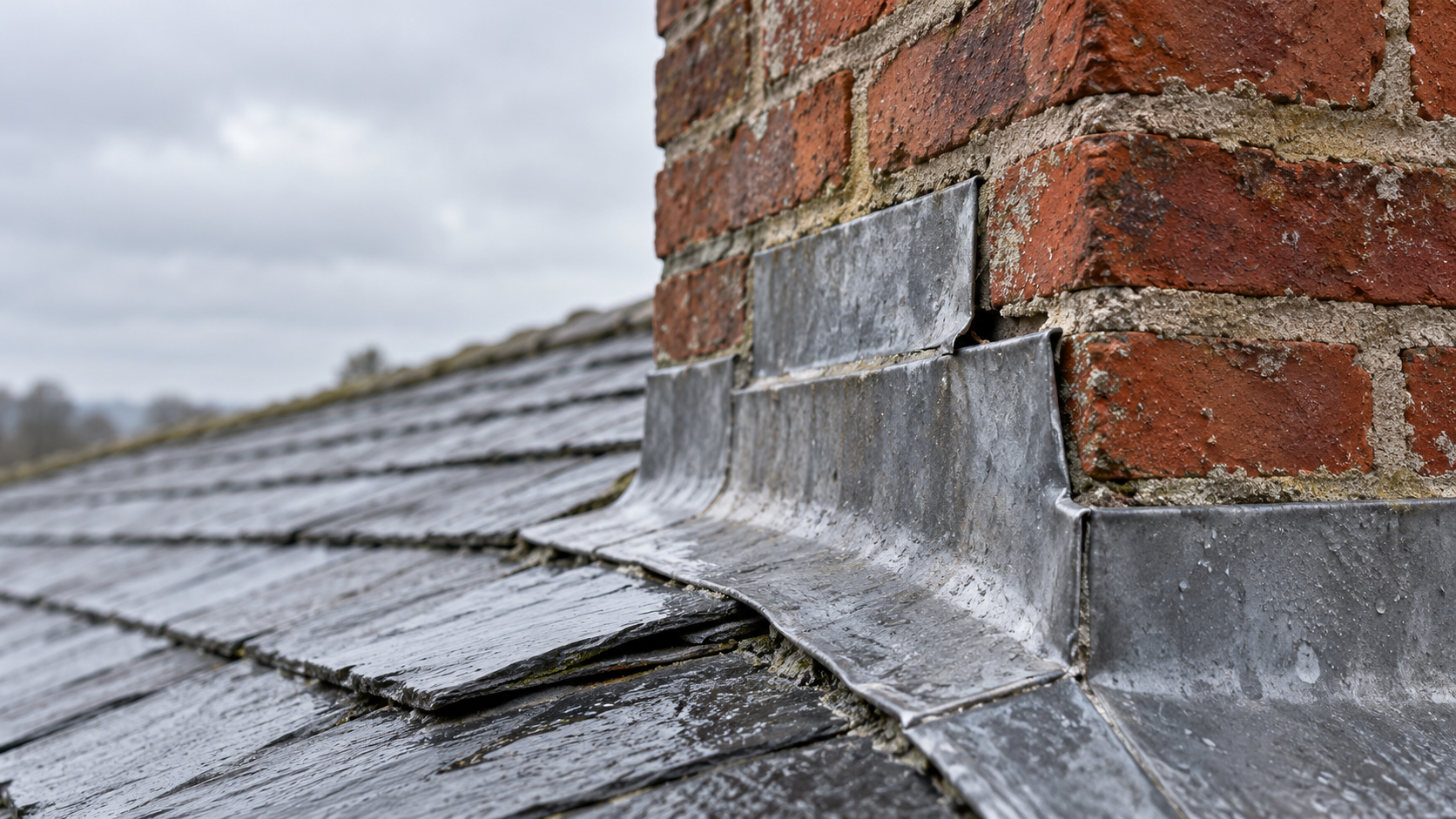
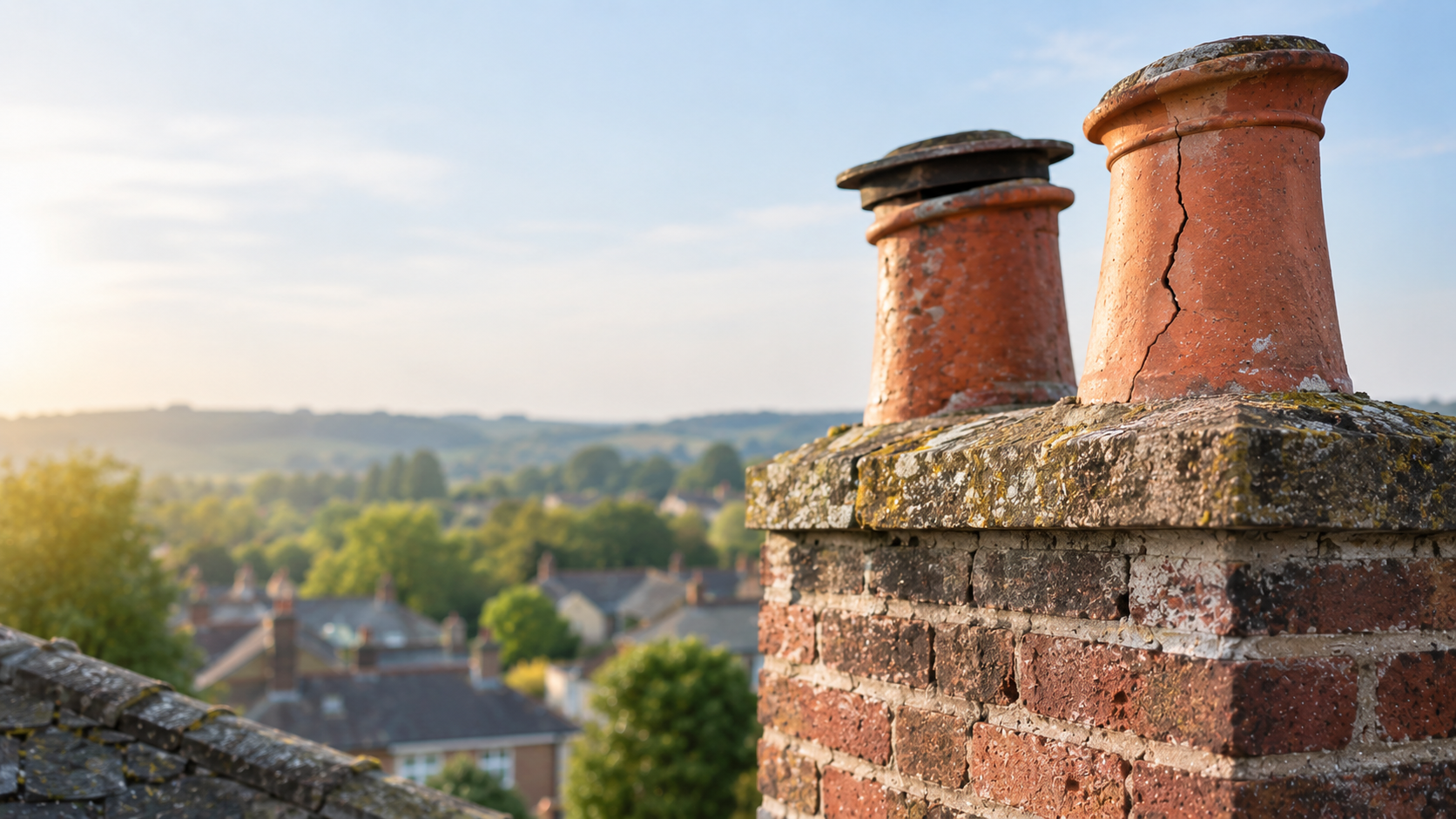
10. Your Chimney May Be Damaged
Sometimes fireplace smoke indicates a more significant chimney problem.
Older chimneys can deteriorate internally due to:
- Age
- Moisture
- Previous chimney fires
- Damaged mortar
- Failed liners
- Building movement
- Poor previous repairs
Fallen masonry can restrict the flue, while internal defects can interfere with normal chimney performance.
Warning signs may include:
- Pieces of mortar falling into the fireplace
- Brick fragments in the hearth
- Persistent smoke despite sweeping
- Damp around the chimney breast
- Strong chimney smells
- Visible cracking
- Evidence of previous chimney fires
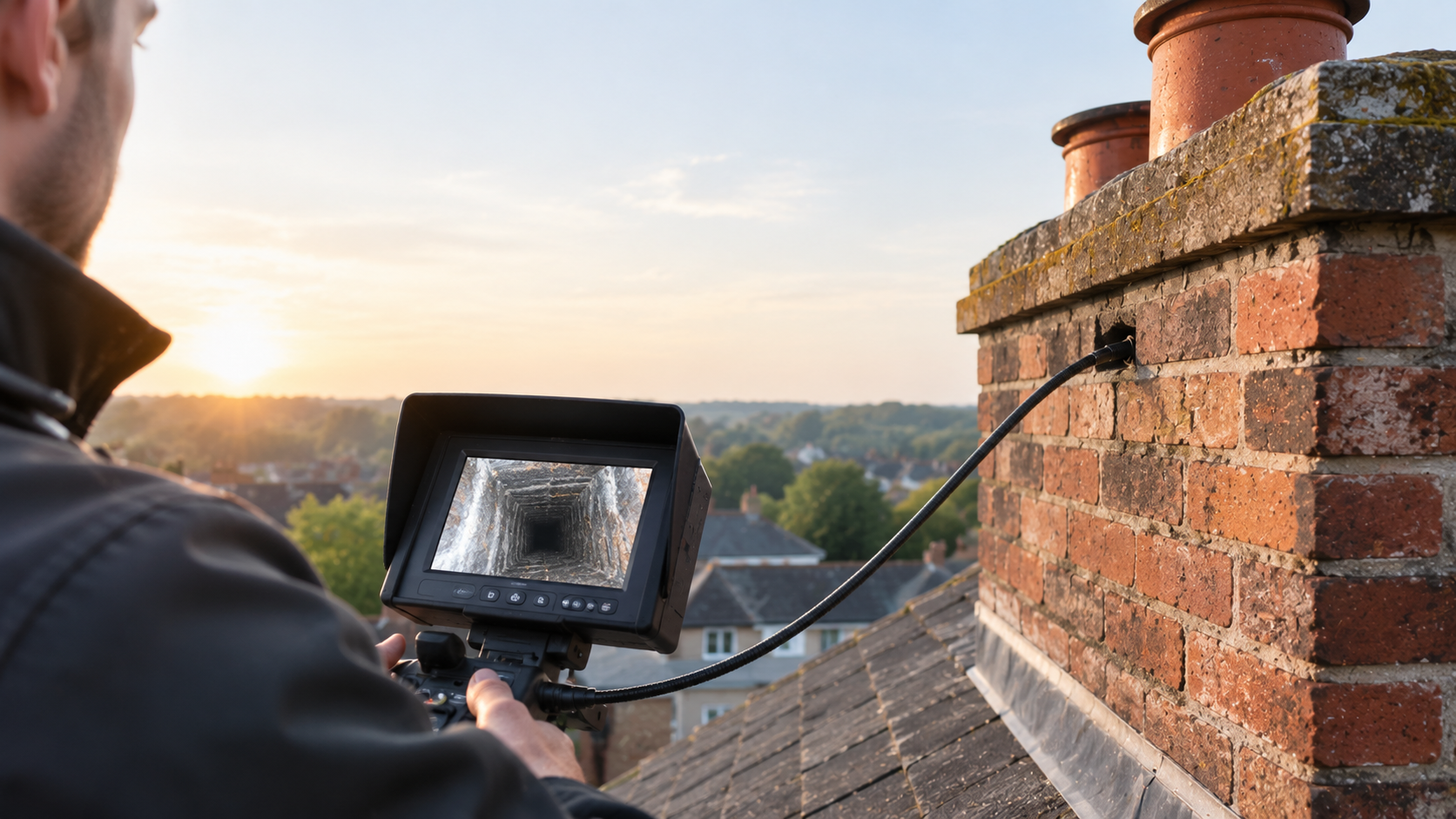
A standard chimney sweep can identify many obvious problems, but hidden internal defects may require a CCTV chimney survey.
Midlands Sweeps provides high-definition CCTV chimney inspection as well as drone and roof inspection services where a more detailed assessment is required.
Why Does My Fireplace Smoke When I First Light It?
If smoke only enters the room during the first few minutes, a cold chimney is one possible cause.
The flue initially contains cold air, which can resist the rising warm gases from the new fire.
The problem should normally improve once:
- The fire becomes established
- The chimney warms
- A stable upward draught develops
However, repeated or severe smoke spillage should still be investigated.
A blocked chimney, insufficient ventilation or another draught problem may be making the cold-flue effect worse.
Why Does My Fireplace Smoke When It Is Windy?
Wind can change the pressure around your chimney terminal.
If the chimney is positioned within an unfavourable pressure zone, wind may push air downward rather than allowing smoke to escape upward.
This is known as downdraught.
If the problem only occurs:
- During strong winds
- When wind comes from one direction
- After a nearby extension was built
- After trees have grown substantially
- Following changes to the roof
then an external chimney assessment may help identify the cause.
Why Does My Fireplace Smoke After Adding More Wood?
Adding too much fuel at once can temporarily create a large volume of smoke.
Wet wood makes the problem considerably worse.
Other possibilities include:
- Weak chimney draught
- Too much ash restricting airflow
- A partially blocked flue
- Poorly seasoned firewood
- Insufficient ventilation
Add appropriate quantities of dry fuel and allow good airflow so the new wood can establish a clean flame.
Can a Dirty Chimney Cause Smoke to Enter the House?
Yes.
As soot, creosote and debris accumulate, the effective diameter of the chimney can decrease.
This restricts airflow and may prevent smoke from escaping as effectively.
Regular chimney sweeping removes deposits and common obstructions. Fire and rescue guidance also recommends inspection and cleaning to reduce chimney-fire risk and clear blockages such as bird nests, leaves and debris.
Can Smoke Coming Into the Room Be Dangerous?
Yes.
Fireplace smoke contains particles and combustion products that should be carried outside through the chimney.
Smoke spilling into your home can also be a warning that the chimney is not removing combustion gases properly.
A blocked or defective chimney can contribute to carbon monoxide entering the property. Fire and rescue guidance warns that poorly maintained or obstructed chimneys can create both fire and carbon monoxide risks.
If significant smoke is entering the room:
- Stop adding fuel.
- Allow the fire to go out safely.
- Ventilate the room.
- Check your carbon monoxide alarm.
- Stop using the fireplace until the cause has been investigated.
If a carbon monoxide alarm activates or anyone develops symptoms consistent with carbon monoxide exposure, leave the property and seek emergency assistance.
Can Opening a Window Stop a Fireplace Smoking?
Sometimes opening a window temporarily improves fireplace draught because it allows more replacement air into the room.
If this consistently solves the problem, insufficient ventilation or negative pressure may be contributing.
However, opening a window is not a permanent repair.
You should have the fireplace and ventilation requirements assessed so the underlying reason can be identified.
Never rely on an open window to make an otherwise unsafe chimney usable.
Will Sweeping the Chimney Stop My Fireplace Smoking?
It can, particularly when the cause is:
- Soot build-up
- Loose creosote
- Bird nesting material
- Leaves
- Cobwebs
- Loose debris
- Another removable obstruction
But sweeping will not solve every smoke problem.
If the chimney is already clean, the problem may involve:
- Ventilation
- Chimney height
- Fireplace dimensions
- Downdraught
- Flue condition
- Structural damage
- Building alterations
This is why a professional assessment is important rather than assuming every smoky fireplace has the same cause.
How Often Should an Open Fireplace Chimney Be Swept?
At minimum, UK government guidance advises having chimneys serving open fires or stoves professionally swept at least once a year.
More frequent sweeping may be appropriate depending on the fuel and level of use. Fire-service guidance recommends especially frequent sweeping for chimneys regularly burning wood because soot and fuel residues can accumulate more rapidly.
Your chimney sweep should recommend an appropriate schedule for your particular fireplace.
Do not wait for smoke to enter the room before arranging maintenance.
Signs Your Fireplace Chimney Needs Sweeping
Book a professional sweep if you notice:
- Smoke entering the room
- Weak chimney draught
- Soot falling into the fireplace
- Strong smoky or tar smells
- Twigs or feathers in the hearth
- Birds entering the chimney
- A fire that has become difficult to light
- Excessive soot around the fireplace opening
- Unknown chimney-maintenance history
- The fireplace has not been used for a long period
Fire-safety guidance recommends sweeping a chimney before bringing it back into use after an extended period of inactivity.
What Will a Chimney Sweep Do?
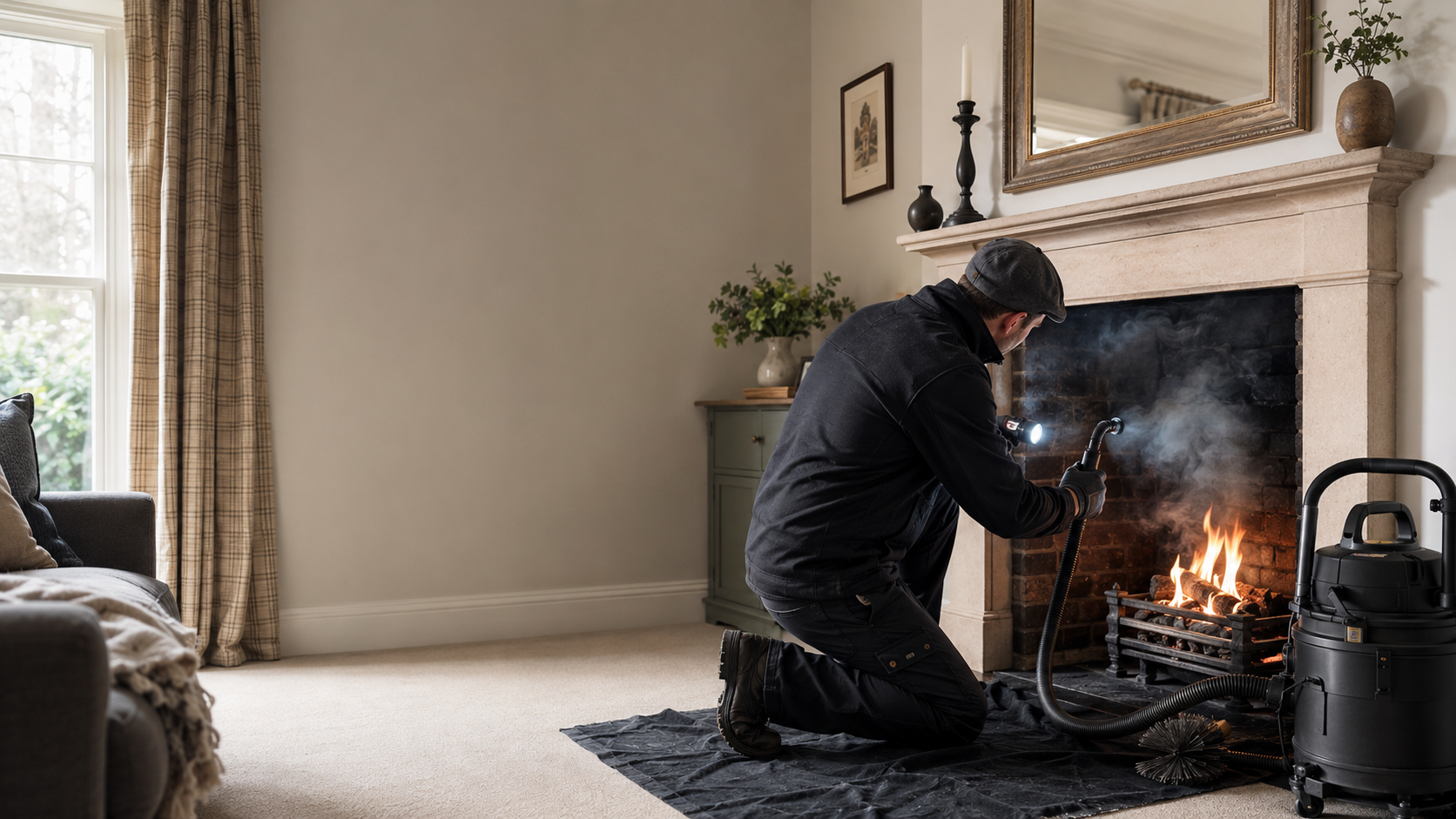
When investigating a fireplace that is smoking into the room, a professional chimney sweep may:
- Ask about when the problem occurs
- Check when the chimney was last swept
- Inspect accessible fireplace components
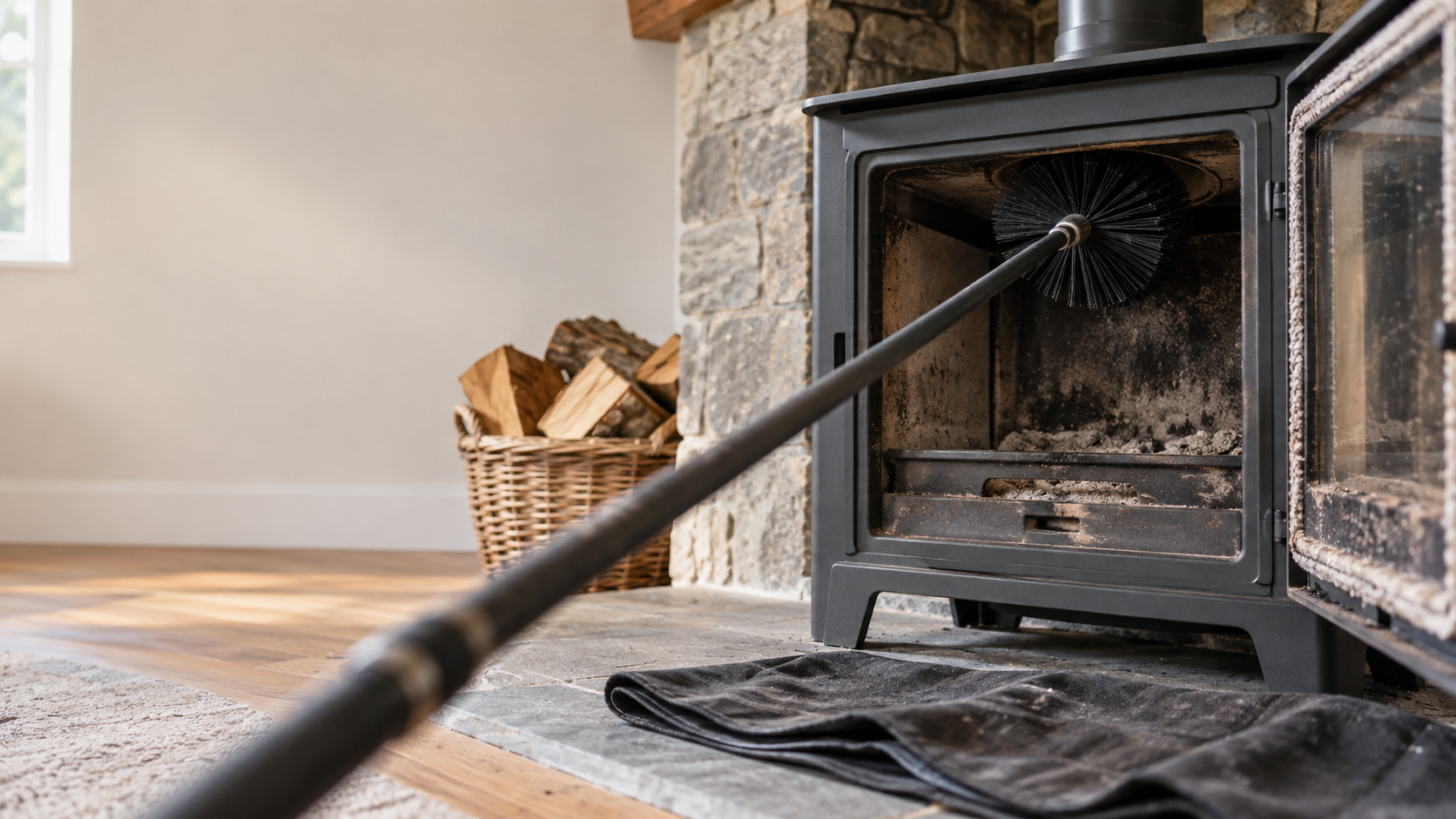
- Protect your floor and surrounding room
- Sweep the chimney using suitable equipment
- Remove soot and loose deposits
- Check for bird nests and debris
- Assess basic chimney draught
- Look for visible signs of deterioration
- Carry out appropriate smoke testing
- Recommend further investigation if required
If normal sweeping does not solve the problem, a CCTV inspection may help locate hidden damage, blockages or liner problems.
How to Reduce Fireplace Smoke Problems
Good chimney and fireplace maintenance can reduce the chance of smoke entering your home.
Have Your Chimney Swept Regularly
Do not allow soot and debris to accumulate until the chimney becomes noticeably restricted.
Burn Dry Wood
Use suitable, properly seasoned wood with moisture content of 20% or less where burning wood is appropriate.
Avoid Burning Household Waste
Do not burn:
- Painted timber
- Treated wood
- MDF
- Chipboard
- Plastic
- Household rubbish
These materials can produce harmful pollutants and contribute to chimney contamination.
Keep Required Ventilation Clear
Never block air bricks or permanent vents that have been provided for a combustion appliance.
Watch for Bird Activity
If birds repeatedly enter your chimney, arrange an inspection before lighting a fire.
Maintain Your Carbon Monoxide Alarm
Test the alarm regularly according to the manufacturer’s instructions.
Do Not Ignore Changes in Fireplace Performance
If a fireplace that previously worked correctly suddenly begins smoking, something has changed.
Investigating the issue early can prevent a minor problem from becoming more serious.
Frequently Asked Questions
Why is smoke coming out of my fireplace instead of going up the chimney?
The chimney may have poor draught. Common causes include soot build-up, a blockage, bird nest, insufficient ventilation, a cold flue, downdraught or chimney damage.
Is it normal for an open fireplace to smoke a little?
A properly functioning fireplace should carry smoke up the chimney. A small amount during initial lighting can sometimes occur with a cold flue, but recurring smoke entering the room should be investigated.
Can a bird nest make my fireplace smoke?
Yes. Nesting material can substantially restrict a chimney and prevent smoke from escaping correctly.
Why does my fireplace smoke on windy days?
Wind around the chimney terminal may create downdraught or interfere with the normal upward flow of smoke.
Why does my fireplace smoke when the kitchen extractor is on?
A powerful extractor fan can reduce air pressure inside the house and interfere with chimney draught, particularly in an airtight property.
Can wet wood cause fireplace smoke?
Yes. Wet wood burns less efficiently and creates considerably more smoke, soot and tar than properly dried firewood.
Should I keep using my fireplace if smoke enters the room?
No. If smoke repeatedly enters your living space, stop using the fireplace until the cause has been properly investigated.
Does a smoky fireplace mean I need a new chimney liner?
Not necessarily. A dirty chimney, ventilation problem, fuel choice or downdraught may be responsible. A professional inspection can help identify whether the existing flue or liner is actually defective.
Get a Smoking Fireplace Checked by Midlands Sweeps
If your fireplace is smoking into the room, do not simply assume that it is normal for an open fire.
A blocked chimney, accumulated soot, poor draught, bird nest, ventilation problem or damaged flue could be responsible.
Midlands Sweeps provides professional chimney sweeping, bird nest removal, log burner installation, flue liner installation, CCTV chimney surveys and drone or roof inspections. Its chimney sweeping service is designed to keep the home clean while thoroughly maintaining the flue.
If smoke is coming from your fireplace instead of travelling safely up the chimney, arrange a professional chimney sweep and inspection before continuing to use it.