
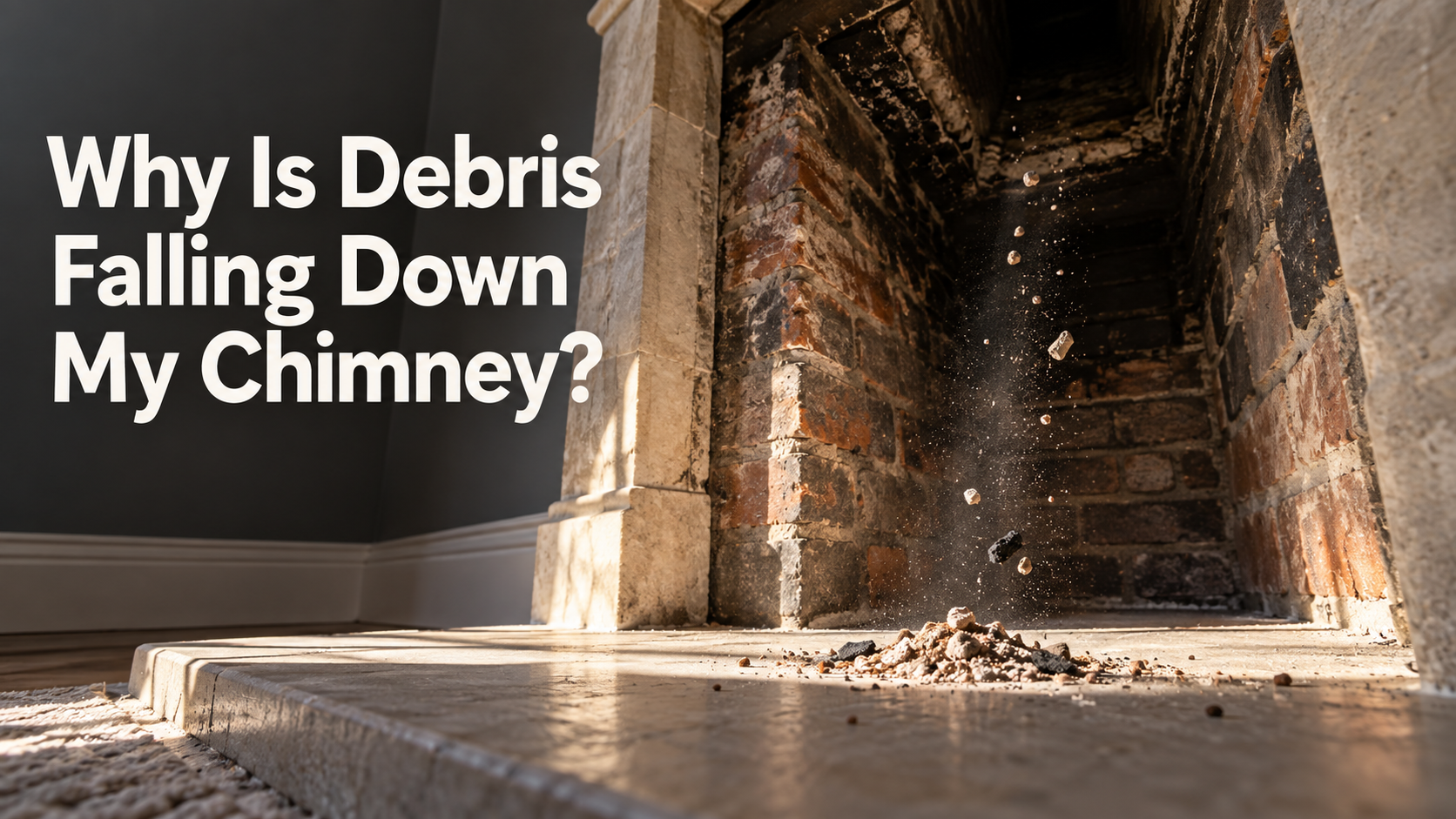
Finding soot, twigs, mortar, or pieces of brick in a fireplace can be concerning. A small amount of loose material may fall after strong weather or long periods without use, but repeated debris can indicate a blockage or deterioration inside the chimney.
The type of material can provide clues, although a proper assessment is usually needed to confirm where it came from.
Black Soot and Flaky Deposits
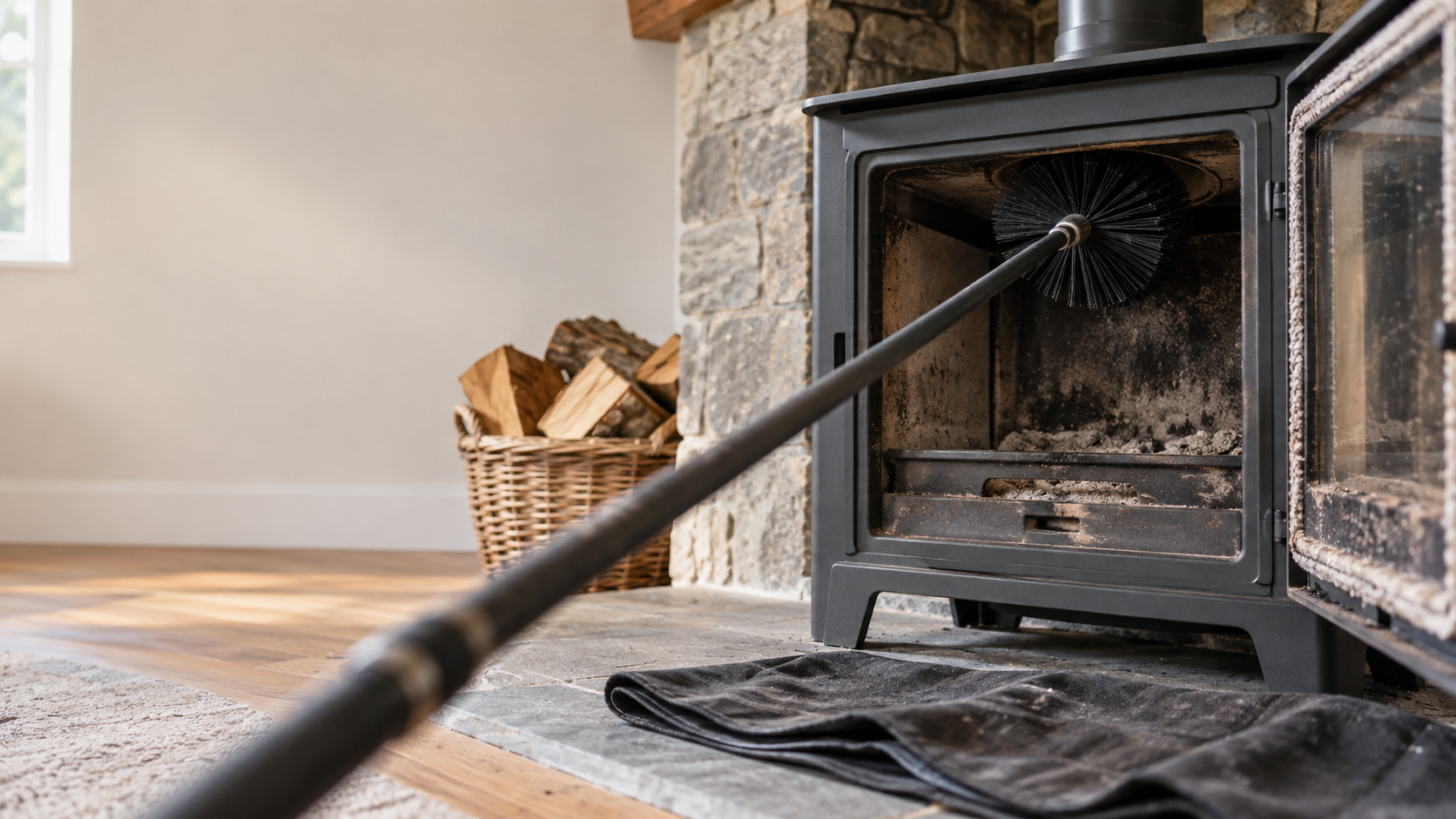
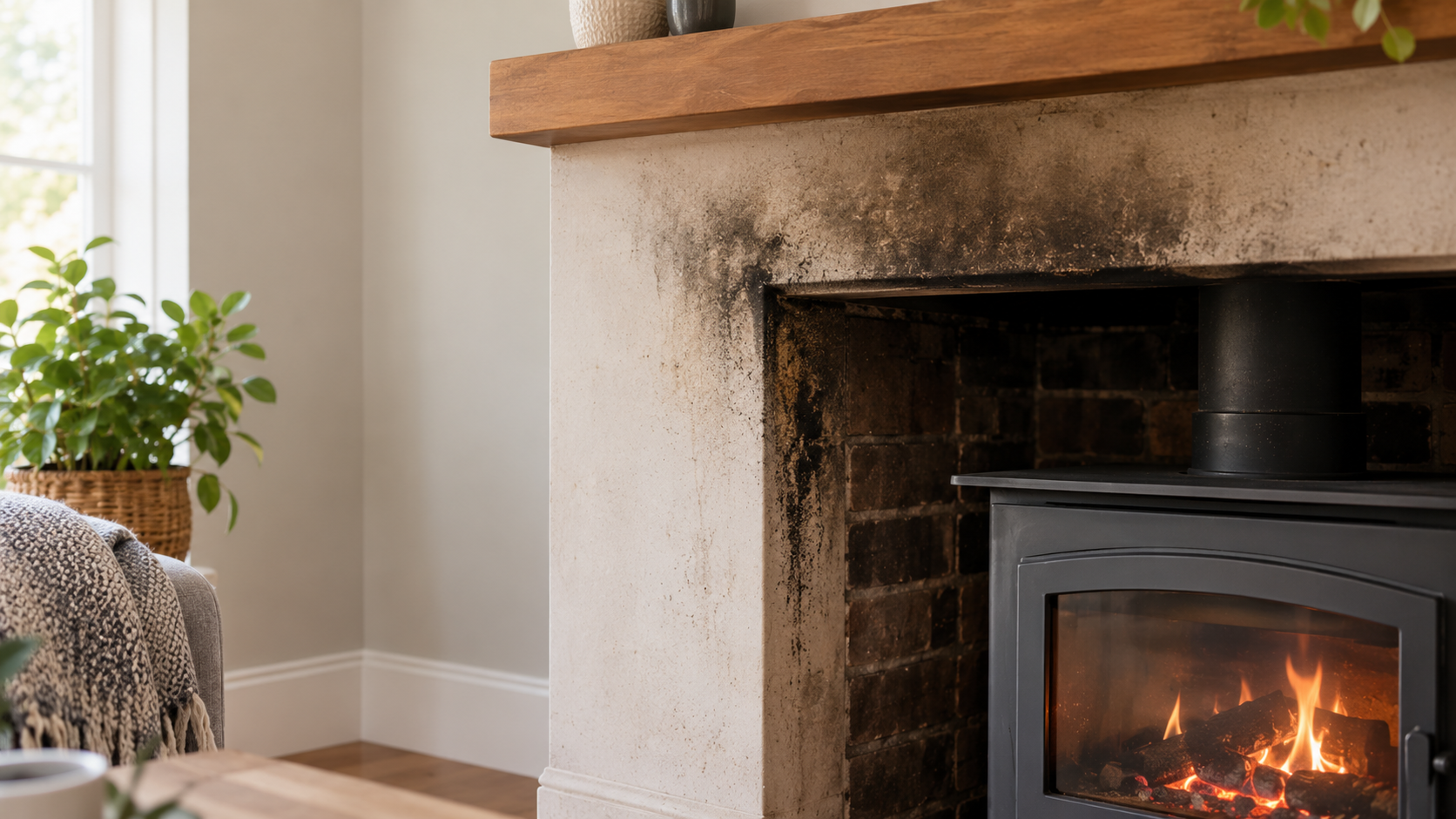
Black dust and flakes are often soot or tar deposits that have loosened from the flue. These materials build up when wood, coal, or other approved fuels are burned. Moisture and changes in temperature can cause older deposits to fall into the fireplace.
A professional chimney sweep can remove soot and loose material before it restricts airflow. Regular sweeping also provides an opportunity to identify unusual deposits or signs that further inspection may be useful.
Twigs, Leaves, and Feathers
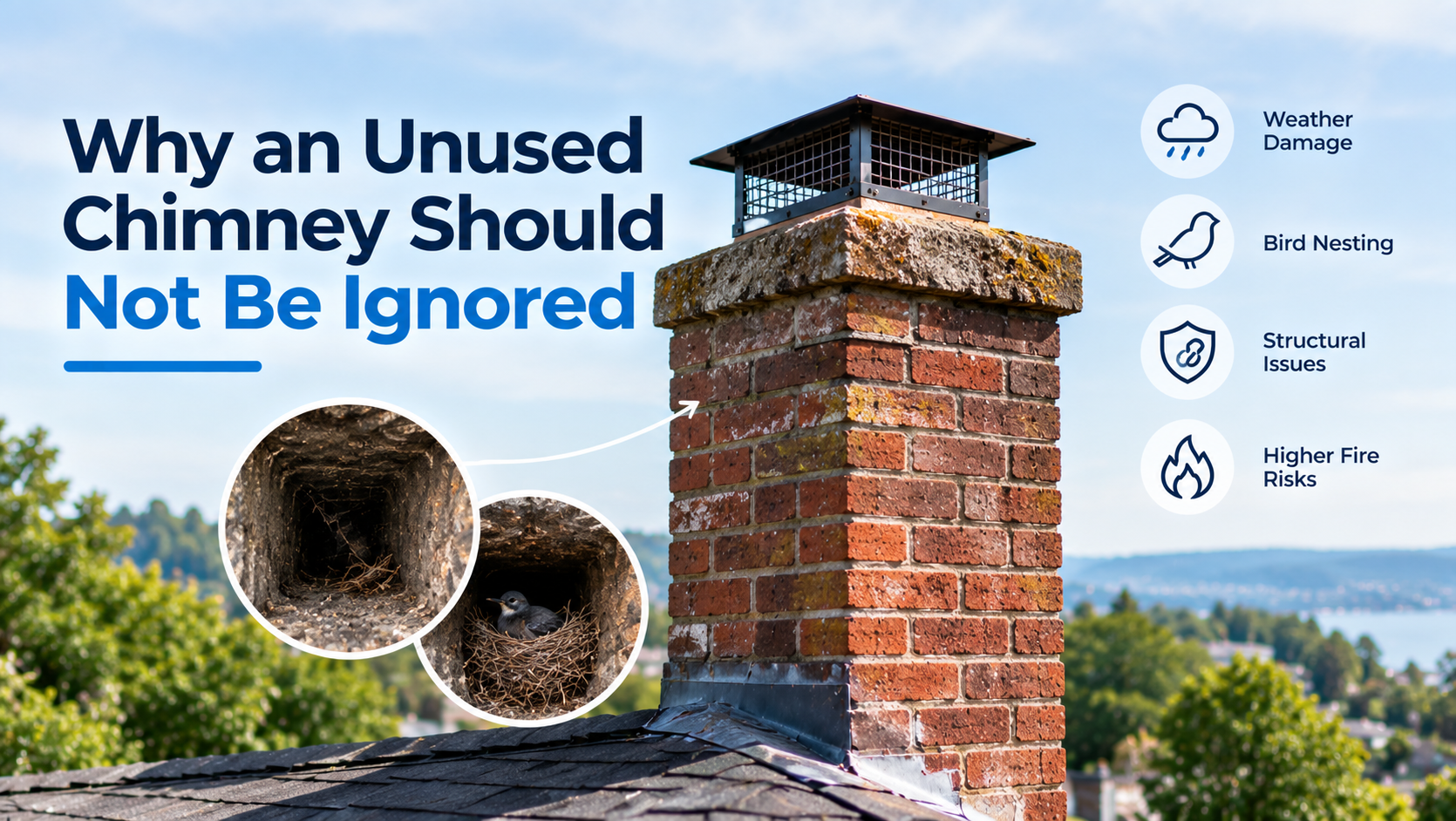
Twigs and feathers may suggest that birds have entered the chimney. Nesting material can create a serious obstruction and prevent smoke or gases from escaping properly.
Do not light the fire when a nest is suspected. Bird nest removal must be handled carefully because active nests, eggs, and wild birds may be legally protected. The chimney should be checked before removal begins, and work may need to wait until the nest is no longer active.
Mortar, Brick, and Clay Pieces
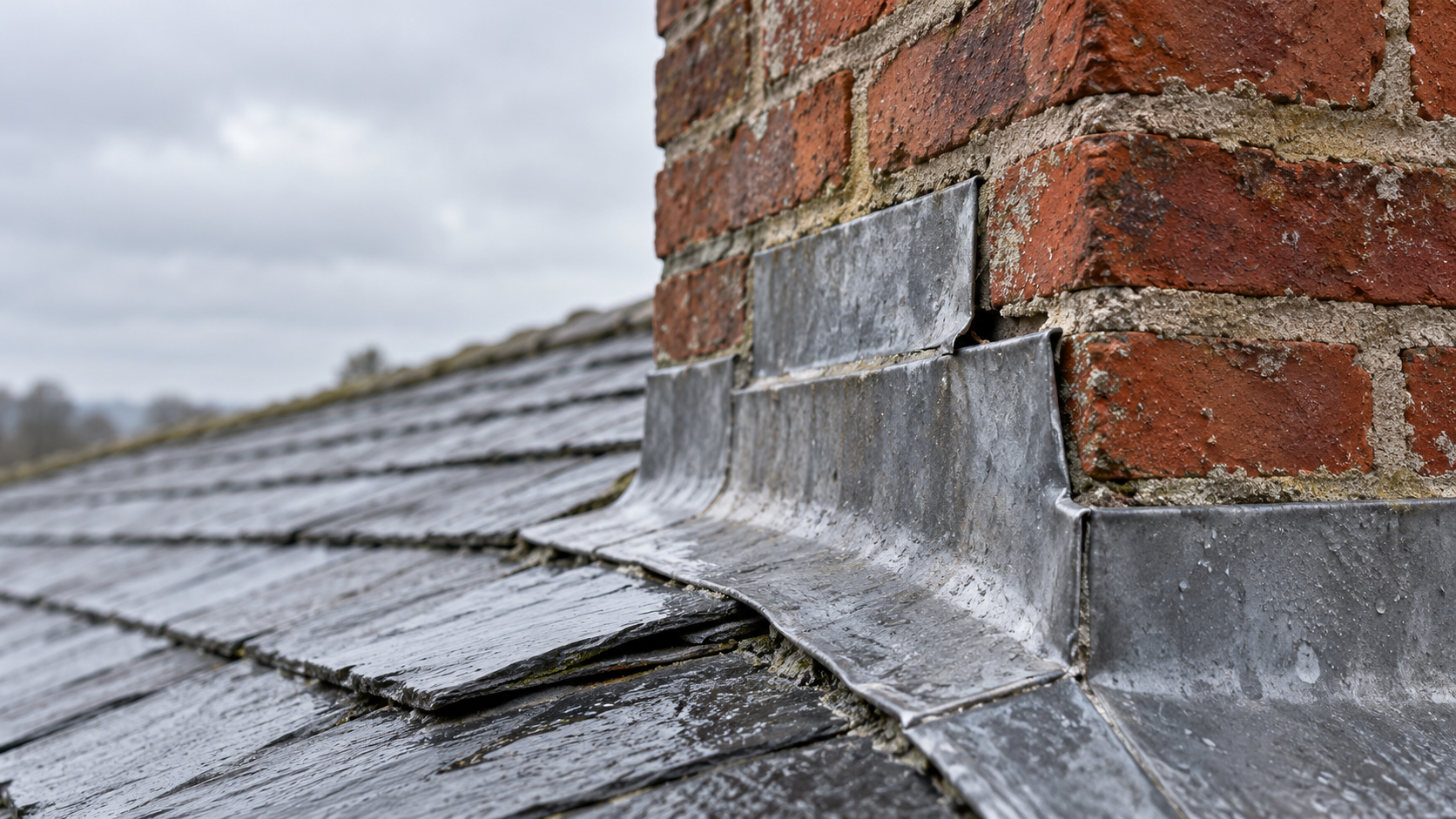
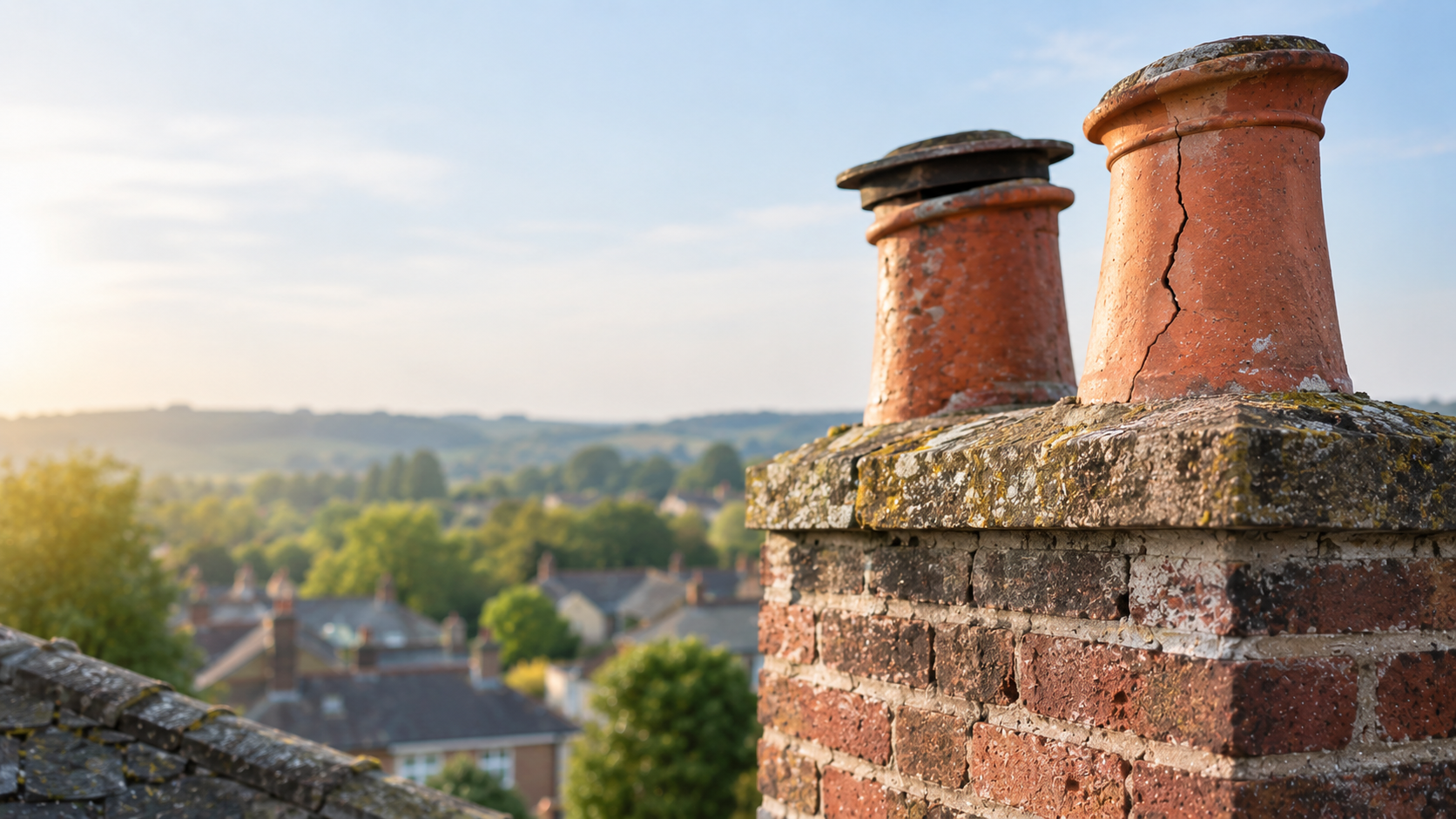
Fragments of mortar or brick can indicate that part of the chimney is deteriorating. Water penetration, frost, and age may weaken internal joints or external masonry. Pieces of clay could come from a damaged chimney pot or liner.
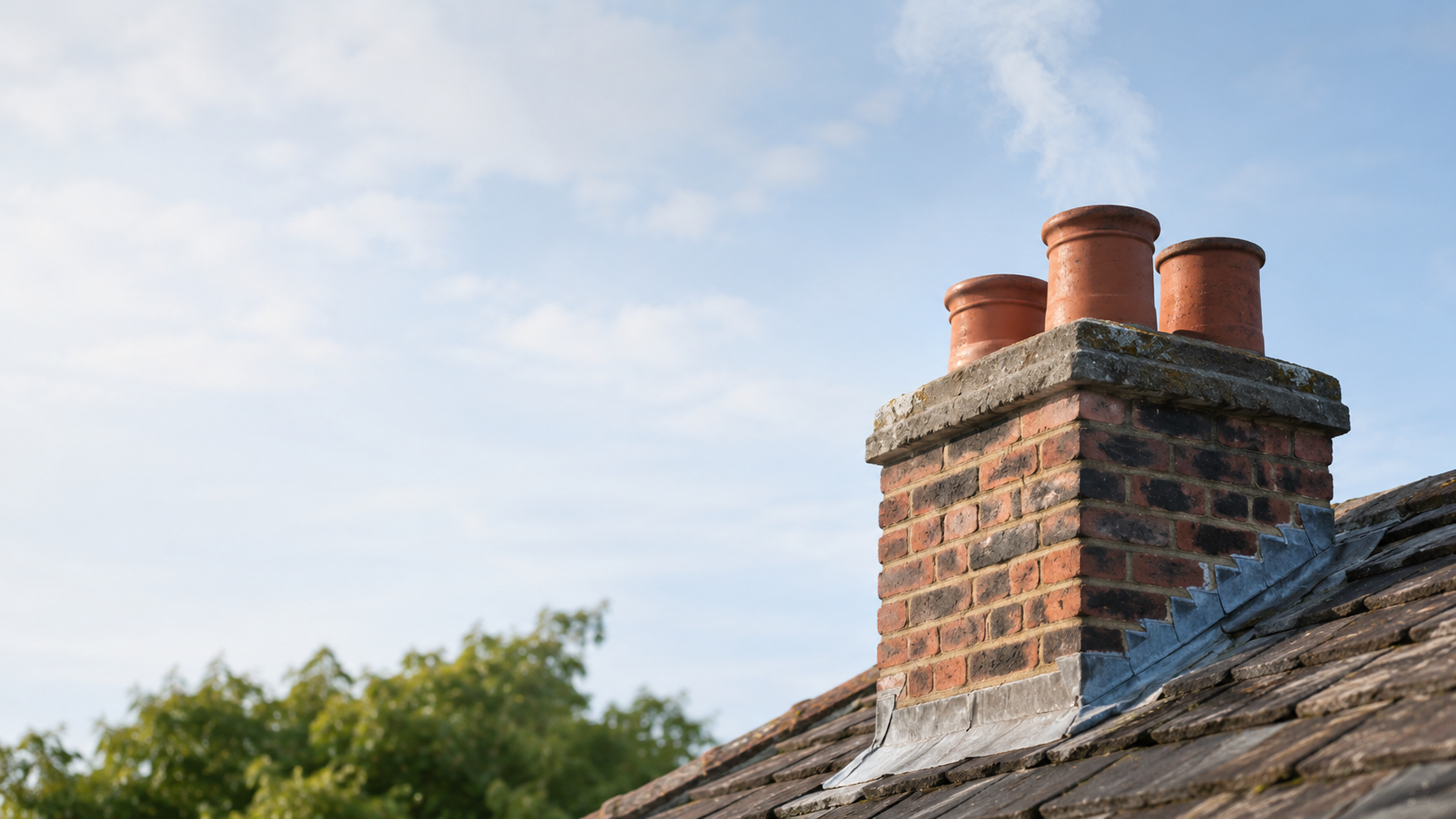
A drone inspection and roof inspection can help examine the stack, pots, flashing, and surrounding roof. Drone images provide a useful overview, while close access may be required to test loose materials or confirm the extent of damage.
Looking Inside the Flue
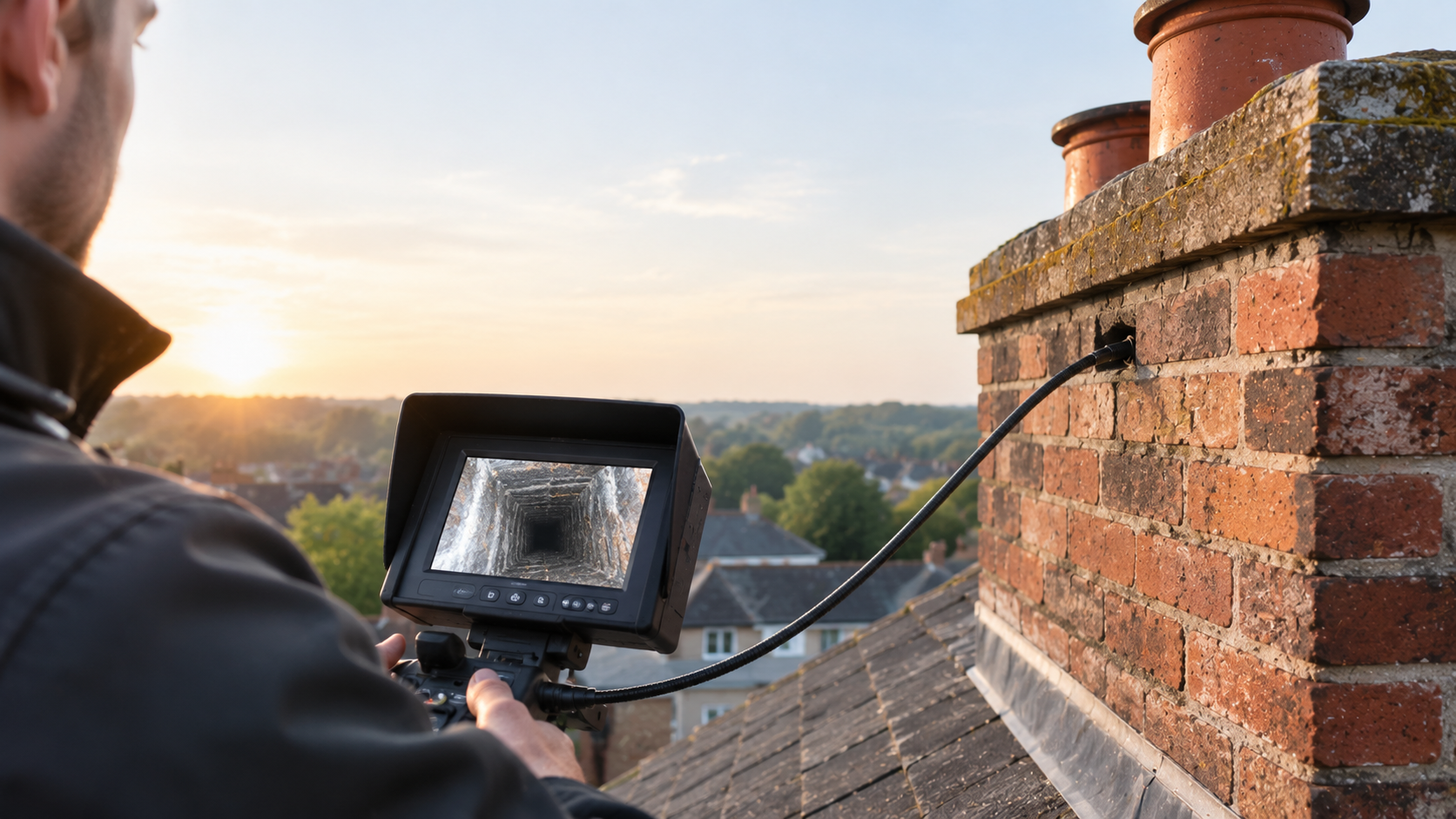
Some defects cannot be identified from the fireplace or roof. An internal camera can help locate damaged masonry, cracks, displaced liners, and hidden obstructions.
A CCTV and drone inspection combines views from inside the flue and above the roof. These images can help determine whether the debris comes from ordinary deposits or an external defect or deterioration within the chimney structure.
Does the Flue Liner Need Attention?
A liner creates a defined passage for smoke and combustion gases. If pieces of liner material appear in the fireplace, the system should be inspected before further use.
Flue liner installation may be considered when an existing liner is damaged or unsuitable for the appliance. The correct liner depends on the chimney, fuel, and appliance, so replacement should follow an assessment.
Planning Changes to the Fireplace
Falling debris should also be investigated before a log burner installation. A new stove will not correct hidden damage or an obstructed flue. The chimney, hearth, ventilation, and intended appliance must be considered together.
Midlands Sweeps provides sweeping, inspections, lining, nest removal, and stove installation throughout its service areas. The appropriate service depends on what has fallen and what the inspection reveals.
Conclusion
Debris in a fireplace can come from soot, bird nests, damaged mortar, broken pots, or a deteriorating liner. Avoid using the fire if material continues to fall or includes masonry. Identifying its source can prevent a blockage or structural issue from becoming more serious.
Frequently Asked Questions
Is a little soot in the fireplace normal?
Small amounts may fall occasionally, but repeated deposits or large pieces should be investigated.
Can I remove chimney debris myself?
Loose material in the hearth can be cleared carefully, but suspected nests, blockages, or masonry damage require professional assessment.
Should I stop using the fireplace?
Stop using it if debris continues to fall, smoke enters the room, or the flue may be blocked or damaged.