Older homes have a character that modern properties often struggle to replicate. From exposed brick fireplaces and traditional chimney breasts to period cottages and Georgian townhouses, historic buildings offer distinctive architectural features worth preserving.
However, owning an older property also means paying particular attention to maintenance, especially when it comes to the chimney.
In Ashby-de-la-Zouch, many established homes contain traditional masonry chimneys that were constructed long before modern wood-burning stoves and stainless-steel flue liners became common.
While these original features add charm, they may also present maintenance challenges that require professional attention.
Understanding proper chimney care for older properties in Ashby-de-la-Zouch can help homeowners protect historic features, identify potential problems and maintain their fireplaces and heating appliances.
Why Older Chimneys Need Special Attention
Ashby-de-la-Zouch is a historic Leicestershire market town known for its traditional architecture, including Georgian and Victorian buildings.
Many older properties were originally designed around open fireplaces that provided warmth and, in some cases, cooking facilities.
Unlike modern chimney systems, traditional masonry flues were often constructed using brickwork, mortar and internal bends that can make maintenance more complicated.
Over time, these materials may deteriorate due to exposure to heat, moisture and changing weather conditions.
Older chimneys may also have undergone modifications during previous renovations.
For example, a traditional fireplace might have been converted for a gas fire, later disconnected and eventually fitted with a wood-burning stove.
Each alteration can affect how the chimney operates.
For homeowners arranging a chimney sweep in Ashby-de-la-Zouch, understanding the age and construction of the chimney can help determine the most appropriate cleaning and inspection methods.
1. Understanding Traditional Masonry Chimneys
Many historic properties contain brick-built chimneys rather than modern factory-manufactured flue systems.
These chimneys may have several internal passages serving different fireplaces throughout the building.
Some flues contain changes in direction, narrow sections or traditional internal coatings that have deteriorated over time.
Older masonry chimneys can develop problems such as:
- Loose or deteriorating mortar joints.
- Cracks within the chimney structure.
- Fallen brick or masonry debris.
- Damaged internal flue surfaces.
- Accumulated soot and tar deposits.
- Unidentified obstructions in unused flues.
These issues are not always visible from the fireplace opening.
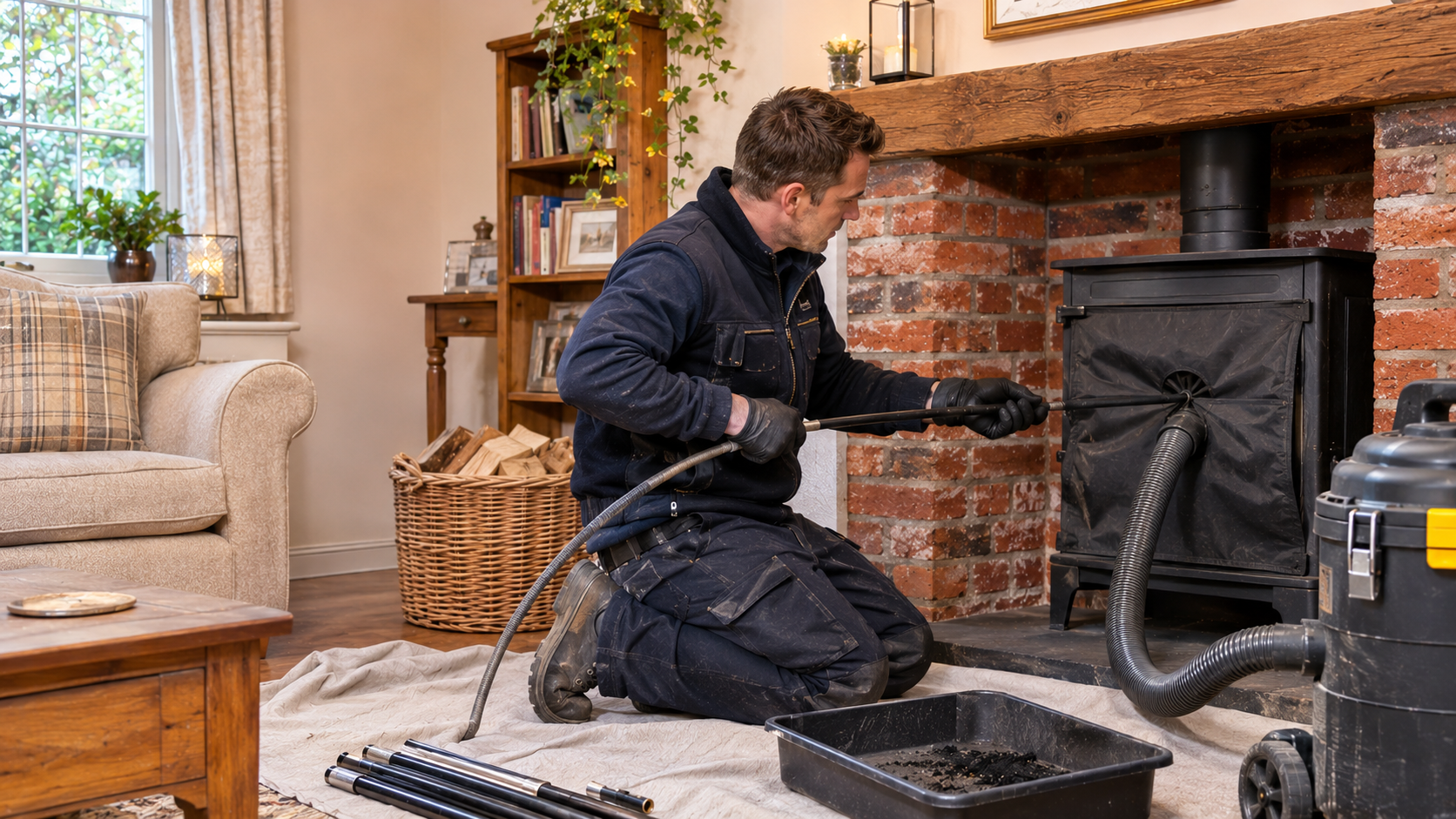
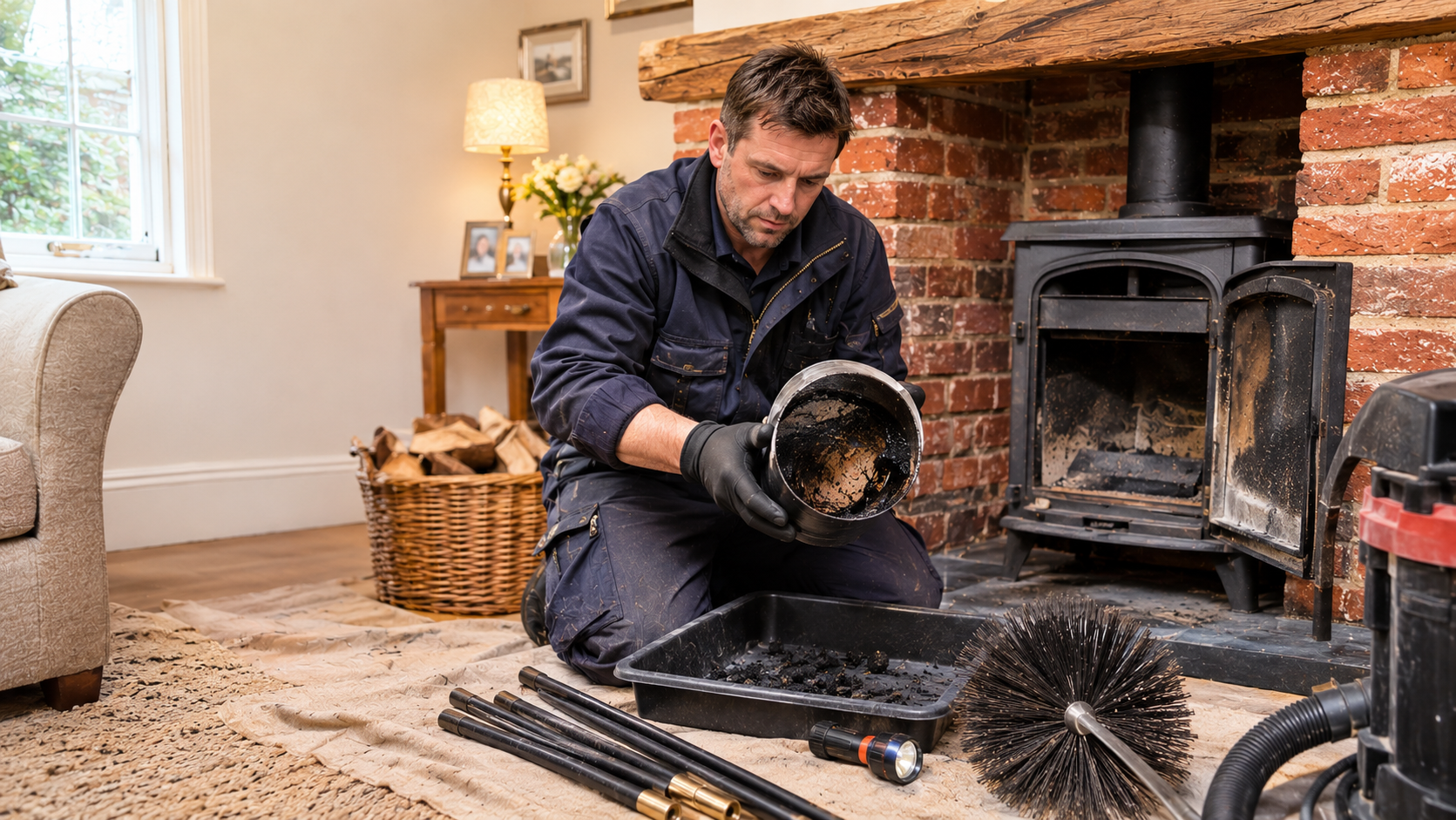
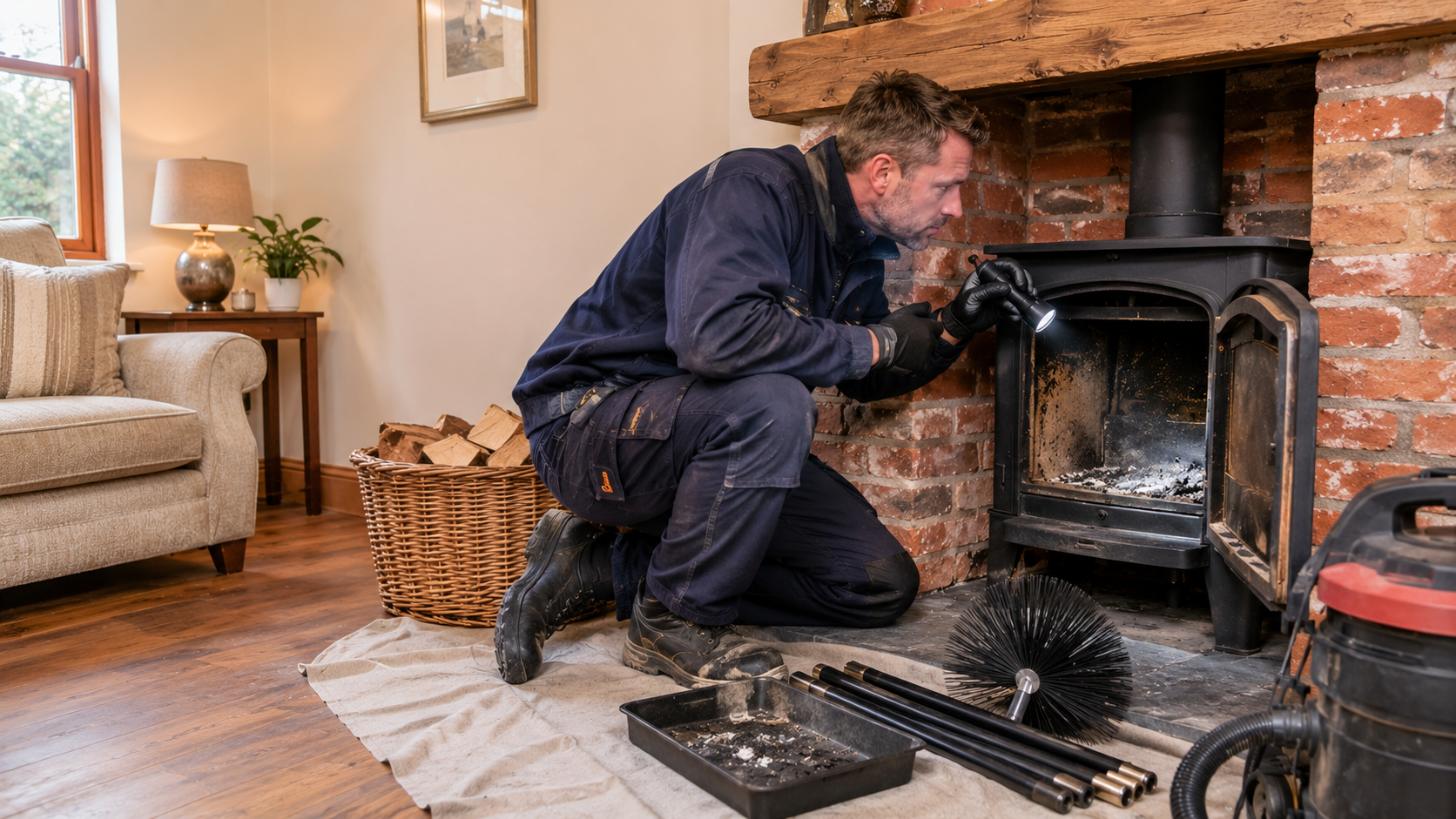
A professional chimney sweep can remove accumulated deposits and identify certain warning signs, while a more detailed inspection may be necessary to assess hidden damage.
2. Why Regular Chimney Sweeping Matters in Period Homes
Regular chimney sweeping in Ashby-de-la-Zouch is important for both modern and traditional chimney systems.
Whenever wood or other solid fuels burn, combustion produces soot and additional deposits that may accumulate inside the flue.
Over time, these materials can restrict the passage of smoke and combustion gases.
Combustible deposits can also increase the risk of chimney fires.
In older chimneys, cleaning requires particular care because the internal surfaces may be more vulnerable to damage.
Professional chimney sweeps select appropriate brushes and cleaning techniques based on the construction and condition of the chimney.
A routine sweeping service helps remove accessible soot and loose deposits while providing an opportunity to identify unusual debris or other concerns.
However, sweeping alone cannot repair deteriorating mortar, cracked masonry or damaged flue liners.
These conditions require appropriate investigation and, where necessary, specialist repairs.
3. Checking Old Flue Liners and Chimney Modifications
Not every old chimney has a modern flue liner.
Some traditional chimneys contain historic internal coatings, while others have been fitted with clay, concrete or metal liners during previous renovations.
If you’re buying or renovating an older home in Ashby-de-la-Zouch, it is worth establishing whether the chimney has been lined and whether the existing liner is suitable for the appliance.
A damaged or unsuitable flue system may allow combustion gases to escape through unintended openings.
Signs that further investigation may be needed include poor chimney draught, unusual staining, repeated blockages or uncertainty about previous installation work.
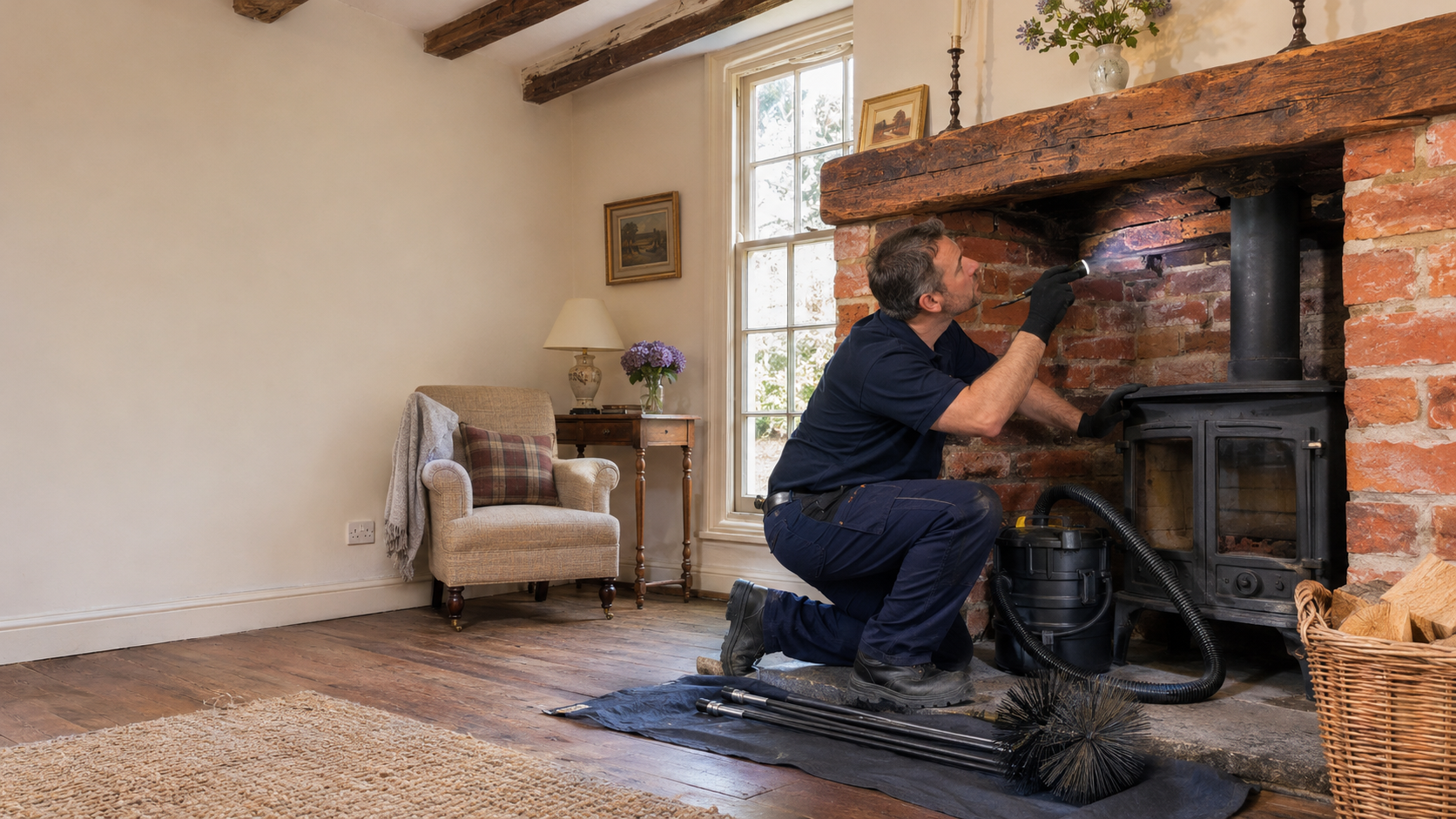
A CCTV chimney inspection can help examine inaccessible areas and identify some forms of internal deterioration.
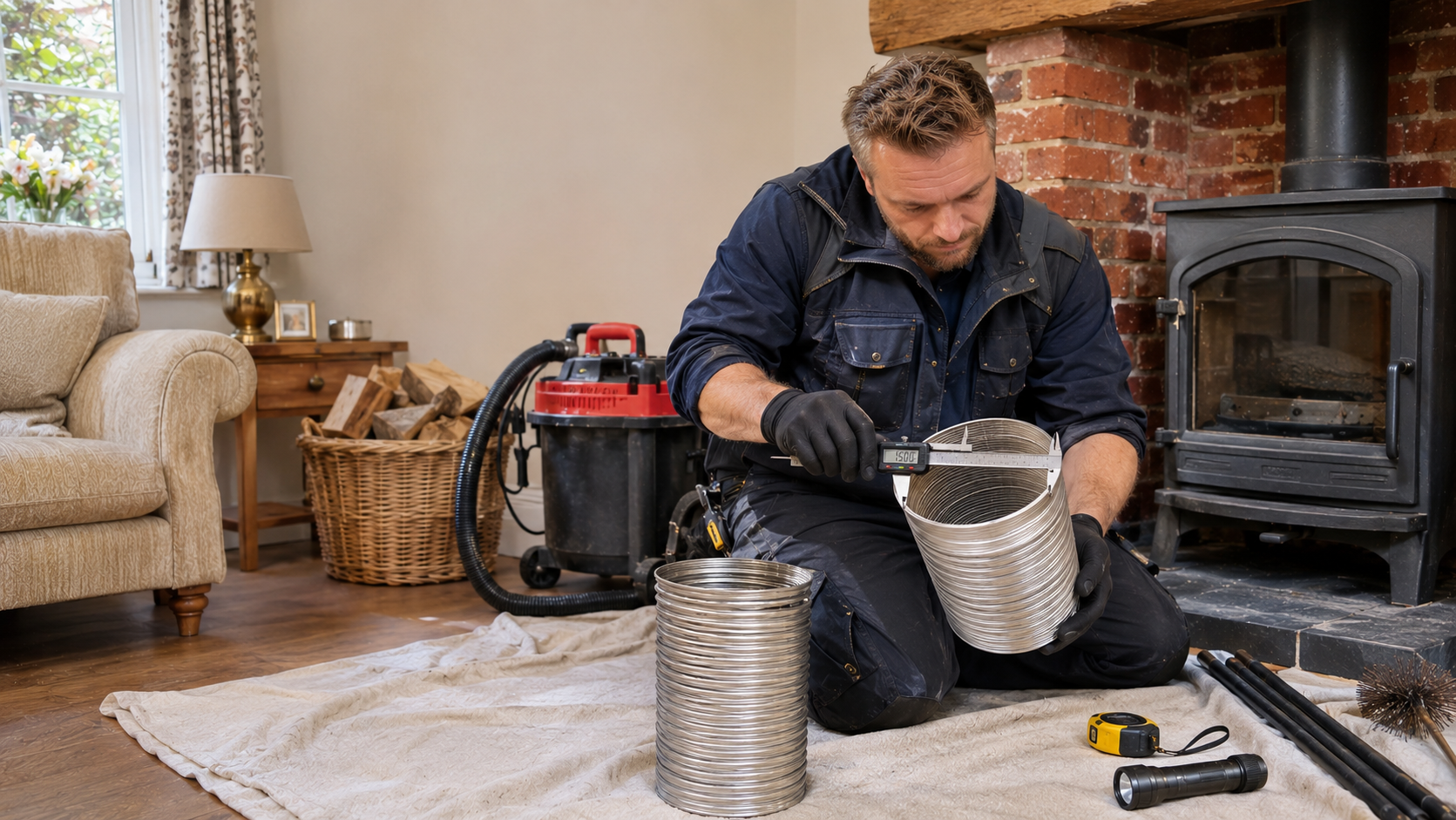
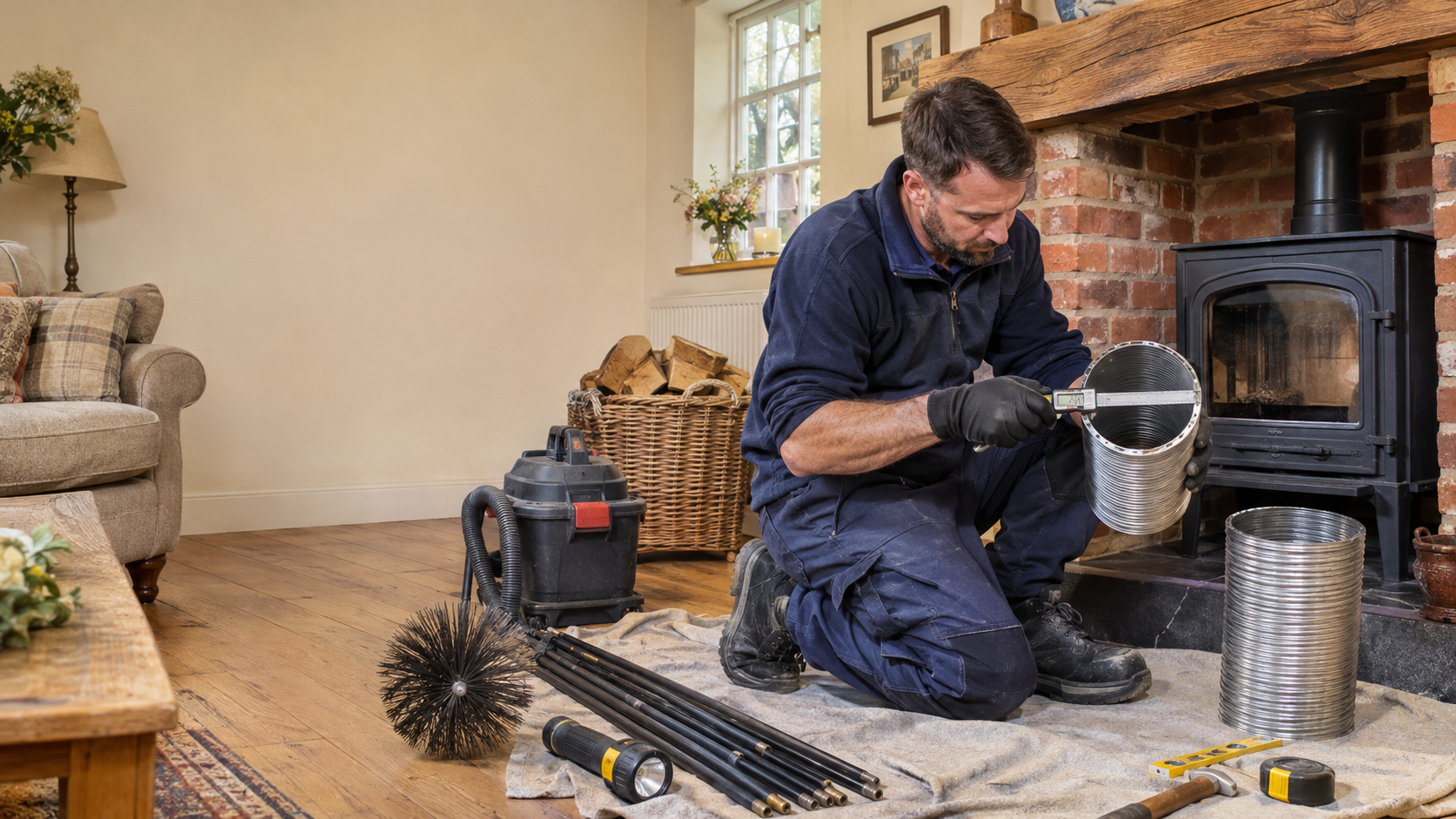
Importantly, not every traditional chimney can accommodate a new flexible liner without alterations.
Historic flues can be narrow or contain difficult bends, so any proposed liner installation should be assessed by a competent specialist.
4. Damp and Water Damage in Historic Chimneys
Moisture is another common concern in older chimney structures.
Traditional brick chimneys are exposed to rain, wind and temperature changes throughout the year.
As masonry ages, deteriorating mortar joints, damaged flashing or problems around the chimney pot can allow water to enter.
Possible warning signs include:
- Brown staining on walls surrounding the chimney breast.
- Damp patches appearing after heavy rainfall.
- Flaking paint or damaged plaster.
- White salt deposits on brickwork.
- Persistent musty smells near unused fireplaces.
- Visible deterioration around the external chimney stack.
Not every damp patch is caused by rain entering the chimney. Condensation, blocked ventilation and moisture retained by old combustion deposits can also contribute.
A professional assessment is important before choosing a repair method.
Older buildings may require traditional, compatible repair materials, and inappropriate modern materials can sometimes trap moisture or accelerate deterioration.
Addressing the underlying cause is generally more effective than simply covering visible stains.
5. Reopening an Unused Fireplace Safely
Many older houses contain fireplaces that were sealed or abandoned during previous renovations.
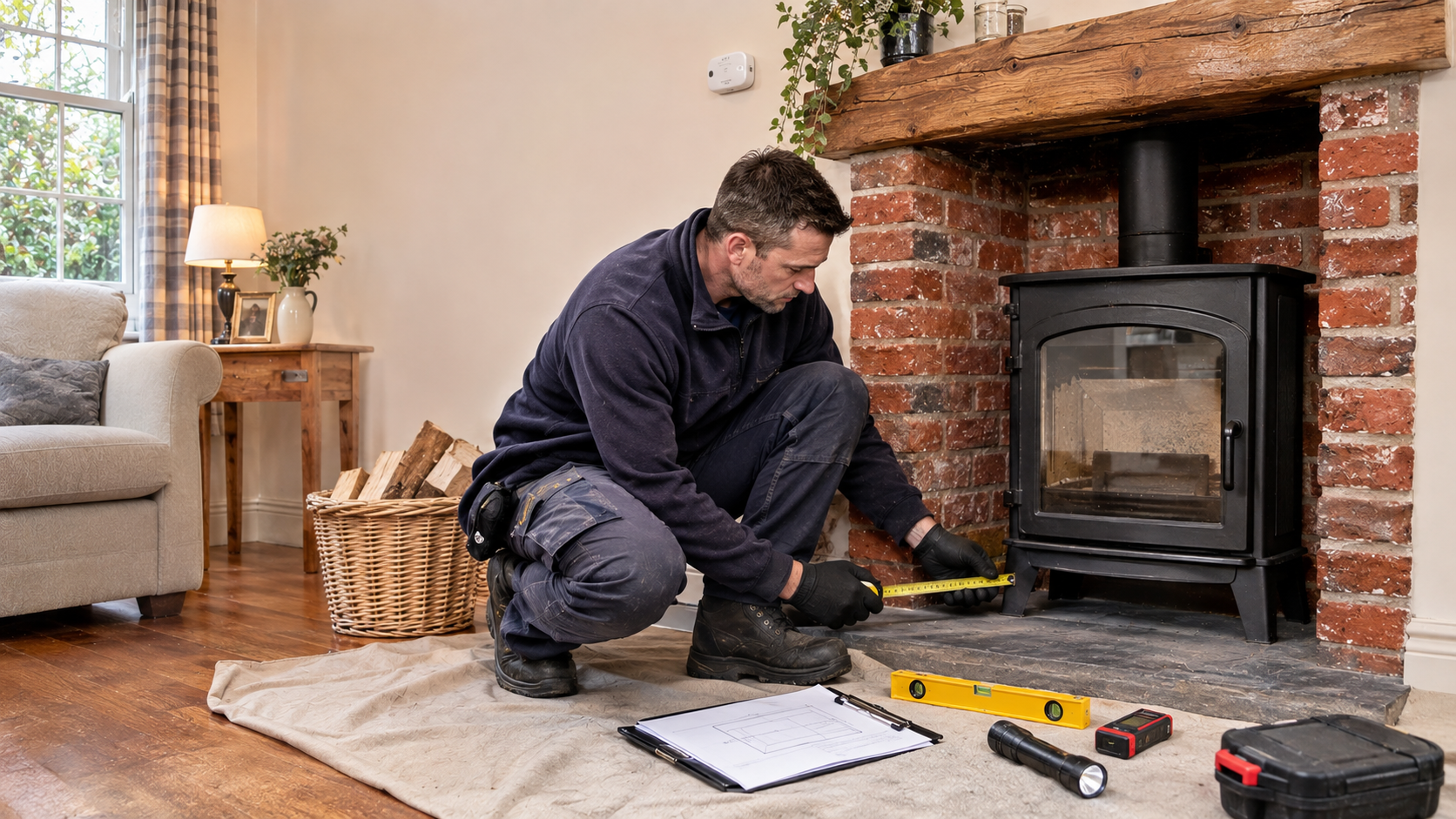
When homeowners restore these features, they often want to install a modern wood-burning stove or return the fireplace to use.
However, an old chimney should never be assumed to be suitable for immediate use.
A fireplace that has remained unused for several years could contain nesting materials, loose masonry, damaged internal surfaces or previously concealed alterations.
Before reopening an old fireplace, arrange an appropriate chimney assessment.
Depending on the installation, this may involve professional sweeping, CCTV inspection, structural checks or suitable flue testing.
If you’re considering installing a wood burner, the chimney and appliance must be assessed for compatibility and installed in accordance with applicable building regulations.
For a listed property, additional heritage considerations may apply.
6. Bird Nests and Blockages in Older Chimneys
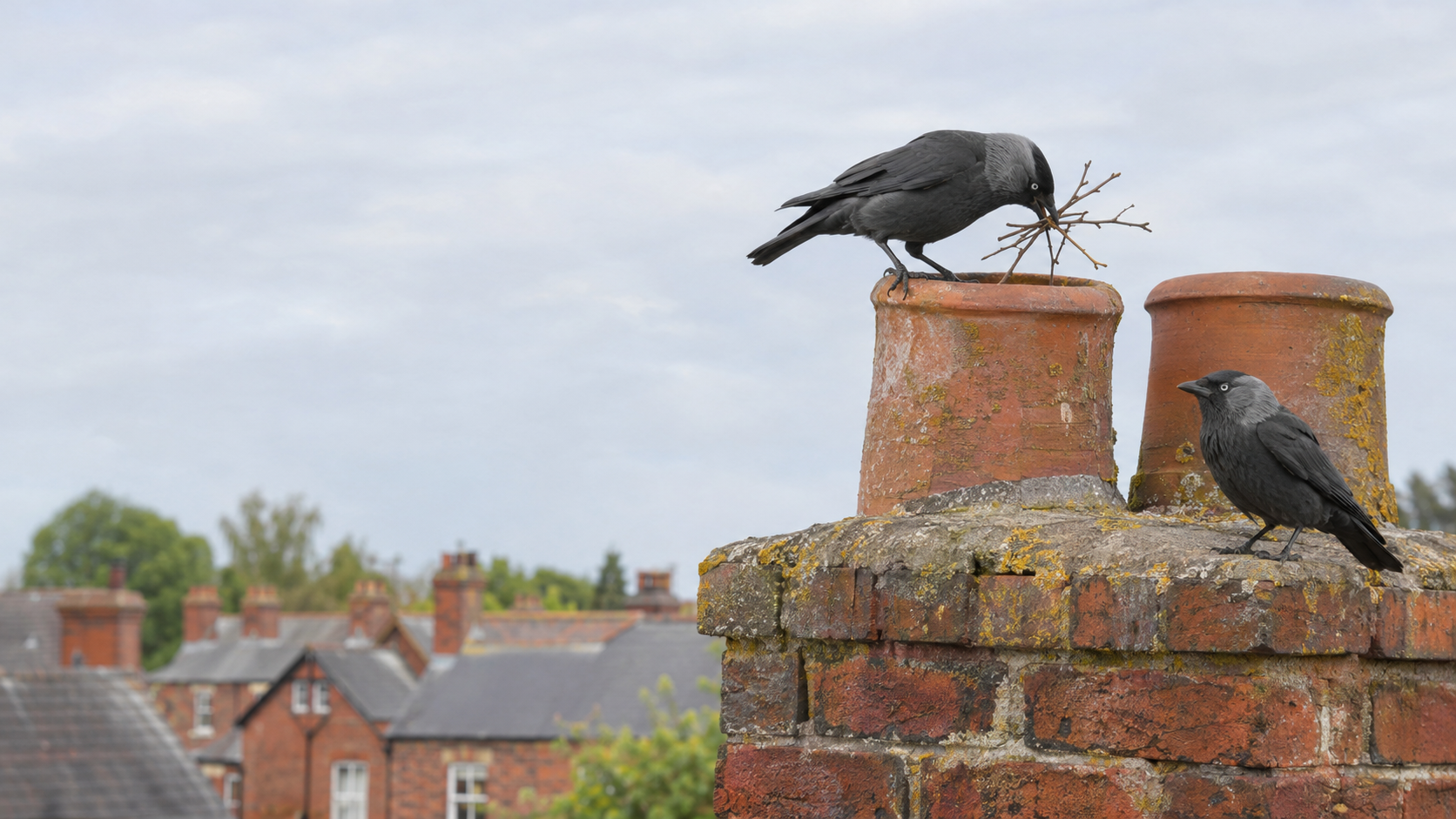
Unused chimneys can provide sheltered spaces for birds.
Jackdaws and other nesting birds may carry twigs and vegetation into chimney openings, creating significant obstructions.
Older properties with multiple unused flues can be particularly difficult to monitor from ground level.
Possible signs include birds repeatedly visiting chimney pots, scratching or movement sounds within the chimney and nesting debris appearing in the fireplace.
A blockage can prevent smoke and combustion gases from escaping correctly.
If you suspect a bird nest or other obstruction, avoid lighting the fireplace until the chimney has been assessed.
Active nests and nesting birds are protected under wildlife legislation, so removal must be handled lawfully.
After the chimney is clear and any relevant nesting restrictions have been addressed, an appropriate ventilated chimney guard may help prevent future problems.
7. Preserving Historic Fireplaces and Chimney Features
For owners of period homes, chimney maintenance is not only about function.
Original brickwork, stone surrounds, chimney pots, cast-iron inserts and decorative fireplaces can contribute to the historical character of a property.
In listed buildings, certain alterations may require Listed Building Consent.
Chimney-related works can also be subject to planning controls within conservation areas.
Before undertaking major modifications, homeowners should check the relevant requirements with North West Leicestershire District Council.
Routine maintenance and sympathetic repairs can help protect original features, but extensive changes should be planned carefully.
Historic England advises that older flues should be assessed before reuse and that alterations should avoid unnecessary damage to historic building fabric.
Preserving the character of an older home should go hand in hand with meeting modern safety requirements.
8. When Should Older Chimneys Be Professionally Inspected?
Not every chimney needs a detailed camera inspection at every sweeping appointment.
However, further checks may be appropriate when:
- The property has recently changed ownership.
- The chimney has not been used for several years.
- The maintenance history is unknown.
- Loose masonry or debris is falling into the fireplace.
- Persistent smoke or draught problems occur.
- Water damage is visible around the chimney breast.
- A new stove or flue liner is being considered.
- Previous building work may have altered the chimney.
For homeowners in older Ashby properties, a professional chimney inspection can help clarify the condition of the flue before further maintenance or installation work begins.
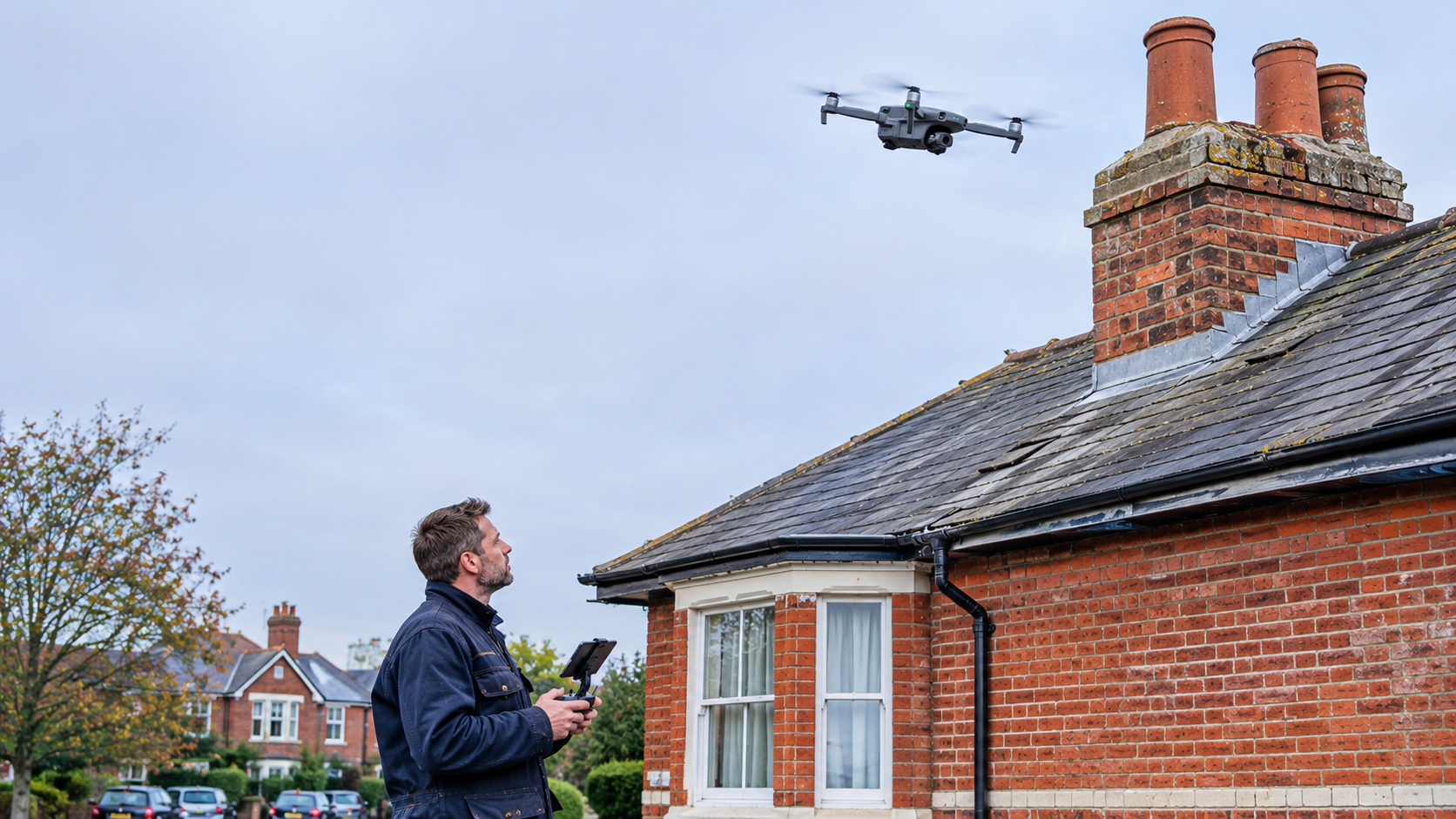
Midlands Sweeps offers CCTV and drone chimney inspection services to investigate internal chimney concerns and assess relevant external features.
9. How Often Should Older Chimneys Be Swept?
The appropriate sweeping schedule depends on the fuel, appliance, frequency of use and chimney condition.
HETAS recommends:
- Wood-burning appliances: At least twice a year.
- Smokeless-fuel appliances: At least once a year.
- Frequently used fireplaces: Additional sweeping where appropriate.
Other industry guidance recommends more frequent sweeping for some wood-burning systems, particularly during periods of regular use.
Older chimney construction does not automatically determine sweeping frequency, but deteriorating internal surfaces, unusual deposits or a history of blockages may justify more frequent attention.
A professional sweep can recommend a suitable maintenance schedule after assessing the chimney.
10. Practical Chimney Maintenance Tips for Owners of Older Homes
A few sensible habits can help homeowners stay on top of chimney maintenance.
Maintain a regular sweeping schedule. Arrange chimney cleaning based on your fuel, appliance use and professional advice.
Keep maintenance records. Save sweeping certificates, inspection reports and details of previous chimney repairs.
Monitor signs of moisture. Check chimney breasts and accessible external areas for staining or visible deterioration.
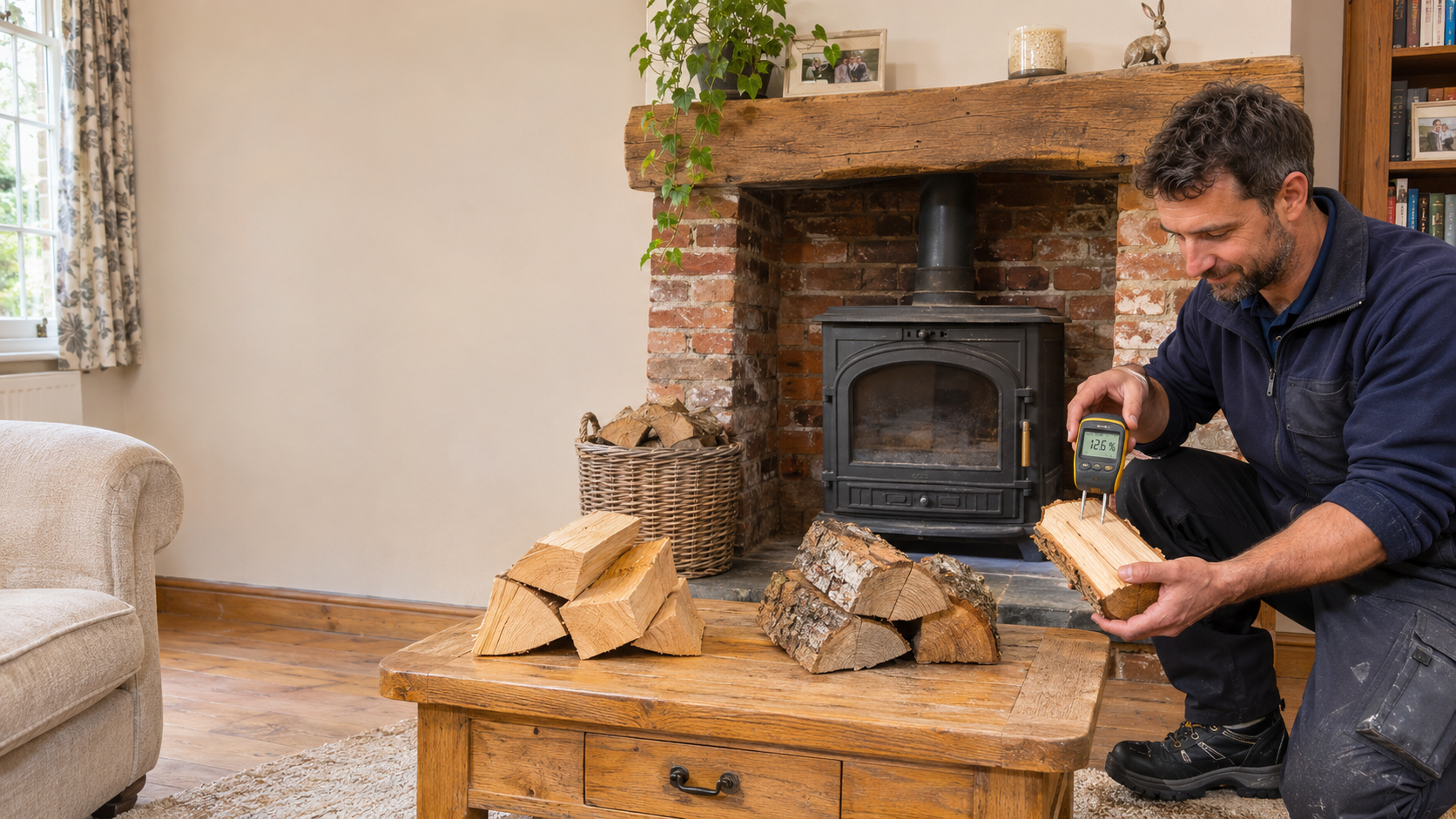
Use suitable fuel. For wood-burning appliances, choose appropriately seasoned, dry wood and follow the stove manufacturer’s operating instructions.
Check carbon monoxide alarms. Ensure suitable alarms are installed, positioned and maintained according to current requirements and manufacturer guidance.
Avoid unnecessary DIY alterations. Do not remove internal chimney components or attempt structural repairs without appropriate expertise.
Investigate unusual symptoms promptly. Stop using a fireplace or stove if you suspect a blockage, combustion-gas leakage or significant damage.
These steps can help maintain your heating system while respecting the construction of an older property.
Why Choose Midlands Sweeps for Chimney Care in Ashby-de-la-Zouch?
Older homes can require a more considered approach to chimney maintenance.
From traditional brick fireplaces to modern log burners installed within period chimney breasts, different systems require appropriate equipment and technical understanding.
Midlands Sweeps provides professional chimney sweeping and related services for homeowners throughout Ashby-de-la-Zouch and surrounding areas of Leicestershire.
As a veteran-owned, fully insured business and registered member of the National Association of Chimney Sweeps, Midlands Sweeps offers a range of chimney maintenance and inspection services.
These include professional chimney sweeping, flue liner services, CCTV chimney inspections, bird nest removal and log burner installations.
Whether you’re maintaining an original fireplace or investigating concerns with an older chimney, the right assessment can help you decide what work is necessary.
Frequently Asked Questions About Chimney Care in Older Ashby Homes
Are old brick chimneys safe to use?
An older brick chimney can remain suitable for use when it is in appropriate condition and meets the requirements of the connected appliance. However, age alone cannot establish safety. An inspection may be necessary to identify deterioration, blockages or other problems.
Do all old chimneys need a new flue liner?
No. The need for a liner depends on the chimney’s construction, condition, intended appliance and applicable installation requirements. A competent professional should assess the system before recommending alterations.
Can an old fireplace be converted into a wood-burning stove?
Many traditional fireplaces can accommodate suitable modern stoves, but the chimney, hearth, ventilation and installation requirements must be assessed. Listed buildings may require additional consent.
How do I know if my chimney has deteriorating mortar?
Possible warning signs include falling masonry debris, visible cracks, moisture staining or loose brickwork. Hidden deterioration may require specialist inspection.
Can a CCTV inspection identify problems in a historic chimney?
CCTV equipment can help identify internal cracks, obstructions, fallen masonry and other visible defects that are difficult to assess from the fireplace. However, specialist structural investigations or flue testing may still be necessary.
Should an unused chimney be completely sealed?
Not necessarily. Older chimneys often need suitable ventilation to reduce moisture accumulation. Any capping or ventilation arrangement should be appropriate for the building and should never be used to conceal unresolved damp or structural problems.
Book Professional Chimney Care in Ashby-de-la-Zouch
Older homes deserve careful maintenance that protects both their original character and the people living inside them.
From regular chimney sweeping to detailed flue inspections, professional chimney care can help identify problems before they lead to more extensive repairs.
At Midlands Sweeps, we provide chimney sweeping, inspections and related services for traditional and modern properties across Ashby-de-la-Zouch and nearby areas.
Whether you own a period cottage, Victorian terrace, Georgian property or renovated family home, contact our team to discuss the appropriate chimney maintenance service.
Arrange your professional chimney sweep in Ashby-de-la-Zouch today.
Phone: +44 782 483 0604
Email: midlandsweeps@gmail.com
Website: www.midlandsweeps.com
Our Services: Professional Chimney Sweeping
Book an Appointment: Contact Midlands Sweeps
Midlands Sweeps — professional chimney care for traditional and modern homes.