A warm fire or wood-burning stove can make a home feel comfortable during the colder months. However, behind every well-maintained fireplace is a chimney that needs regular attention. Soot, creosote, tar and other debris gradually accumulate inside the flue, potentially affecting airflow and increasing fire risks.
If you’re looking for a chimney sweep in Swadlincote, understanding what a professional service includes can help you make informed decisions about maintaining your fireplace or log burner.
Whether you own a traditional open fireplace, a modern wood-burning stove or a multi-fuel burner, professional chimney sweeping is an important part of keeping your heating system in good working condition.
This guide explains what happens during a chimney sweep appointment, why regular maintenance matters and when homeowners in Swadlincote should arrange their next service.
Why Is Professional Chimney Sweeping Important?
Every time you burn wood or other solid fuels, combustion produces soot and other deposits. Some of these particles accumulate along the internal walls of your chimney or flue liner.
Without regular cleaning, these deposits can gradually restrict the passage of smoke and combustion gases.
A professional chimney sweeping service in Swadlincote can help:
- Reduce the risk of chimney fires caused by combustible deposits.
- Clear soot and loose debris from the chimney.
- Maintain proper airflow and chimney draught.
- Reduce problems with smoke entering the room.
- Support efficient operation of wood burners and fireplaces.
- Identify visible signs of chimney deterioration or obstruction.
A clean chimney does not guarantee that every part of the system is safe. However, regular sweeping, combined with appropriate inspections and appliance servicing, is an essential part of responsible fireplace maintenance.
What Does a Professional Chimney Sweep in Swadlincote Include?
A professional chimney sweeping appointment involves more than simply removing soot. The exact work depends on your fireplace, chimney design and appliance, but a standard service will generally follow several important stages.
1. Initial Chimney and Fireplace Assessment
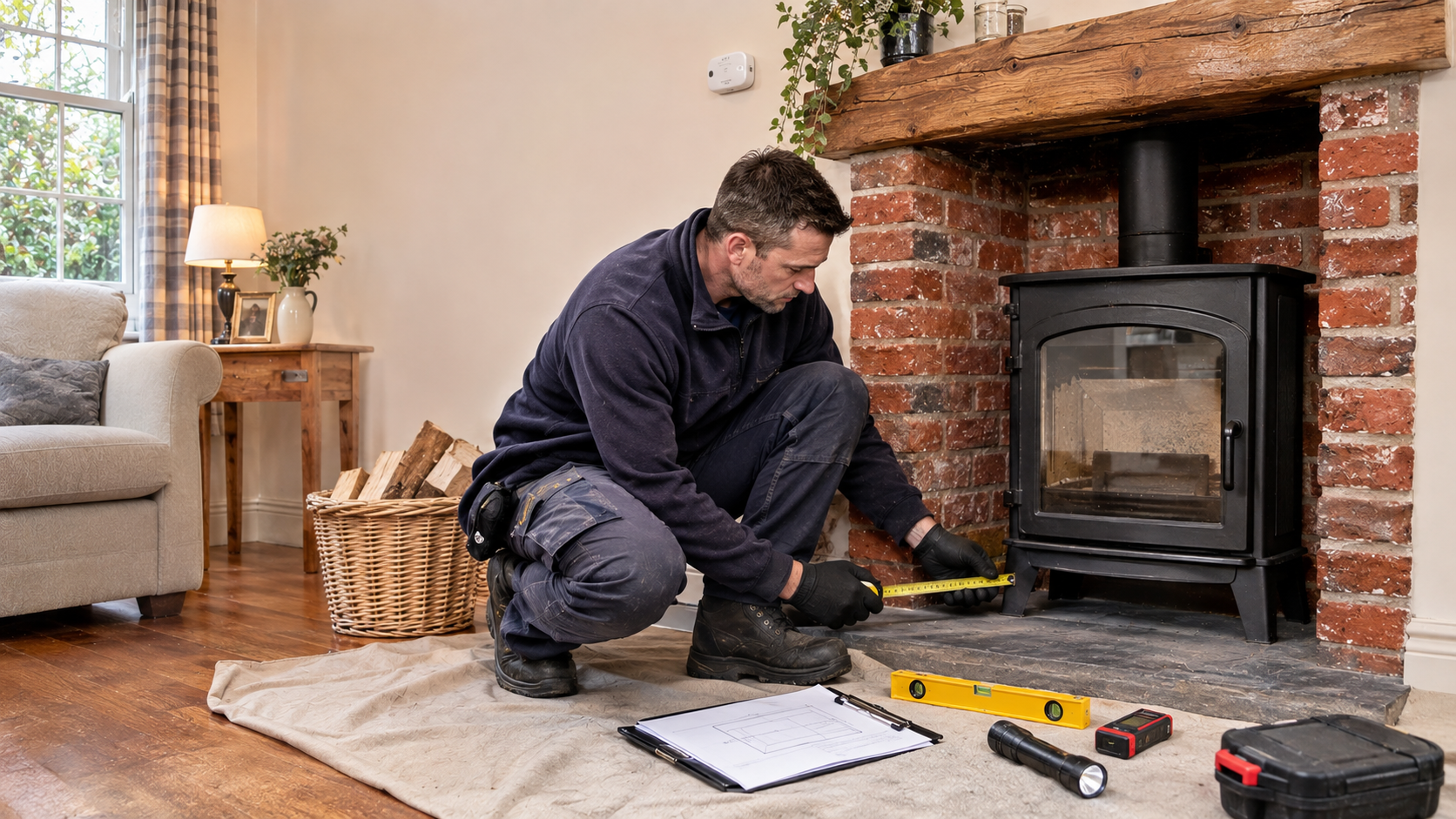
Before beginning the cleaning process, the chimney sweep will usually assess the accessible parts of your fireplace or stove.
They may ask when your chimney was last cleaned, which fuel you use and whether you have experienced problems such as smoke entering the room, unusual smells or poor draught.
This initial assessment helps determine the appropriate sweeping method and whether any obvious problems require additional attention.
For homeowners who have recently moved into a property in Swadlincote, arranging a chimney assessment before using an unfamiliar fireplace is particularly worthwhile.
2. Protecting Your Home From Soot and Dust
One common concern among homeowners is whether chimney sweeping will leave their living room covered in soot.
Modern chimney cleaning uses protective equipment designed to minimise mess.
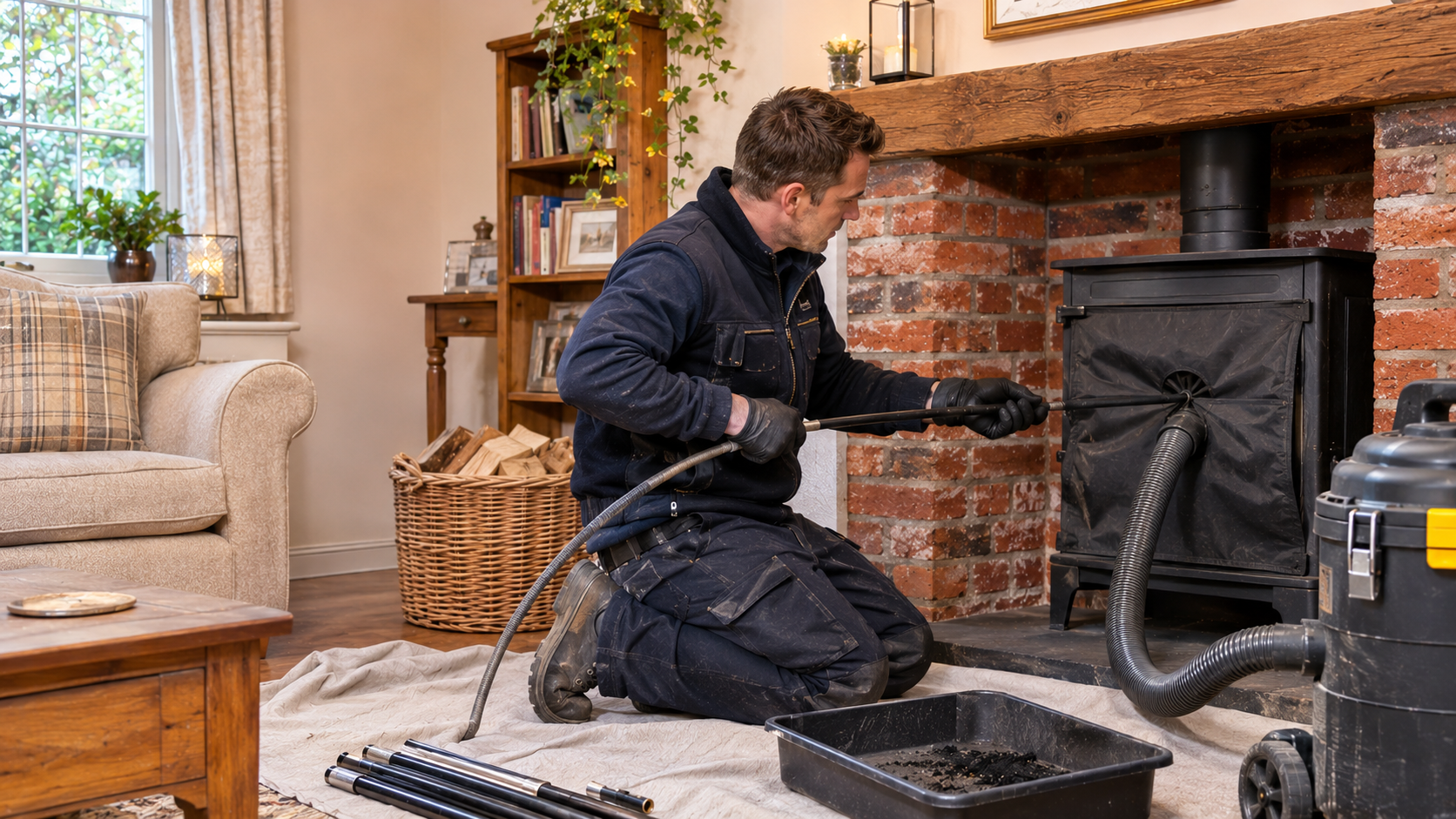
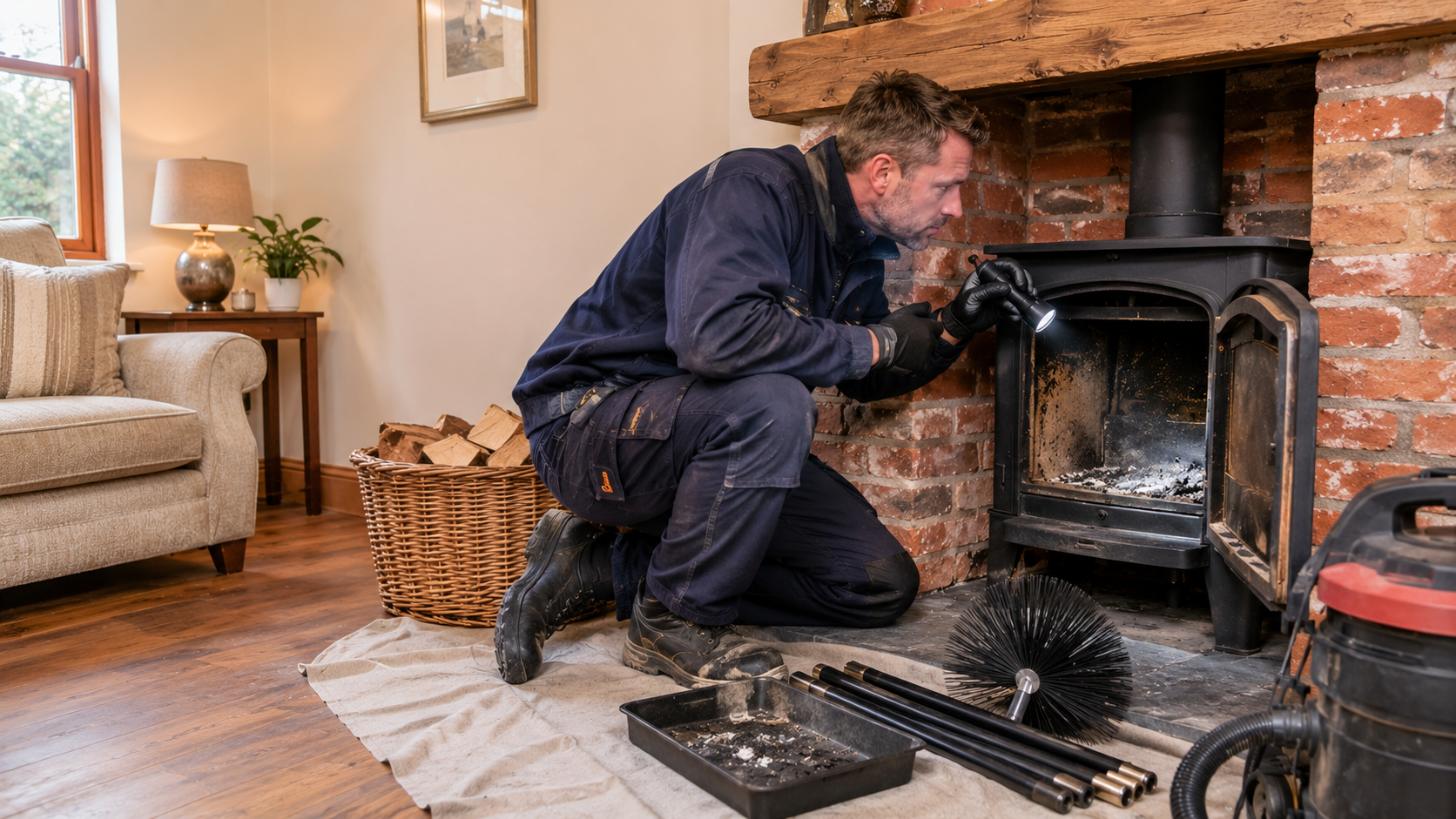
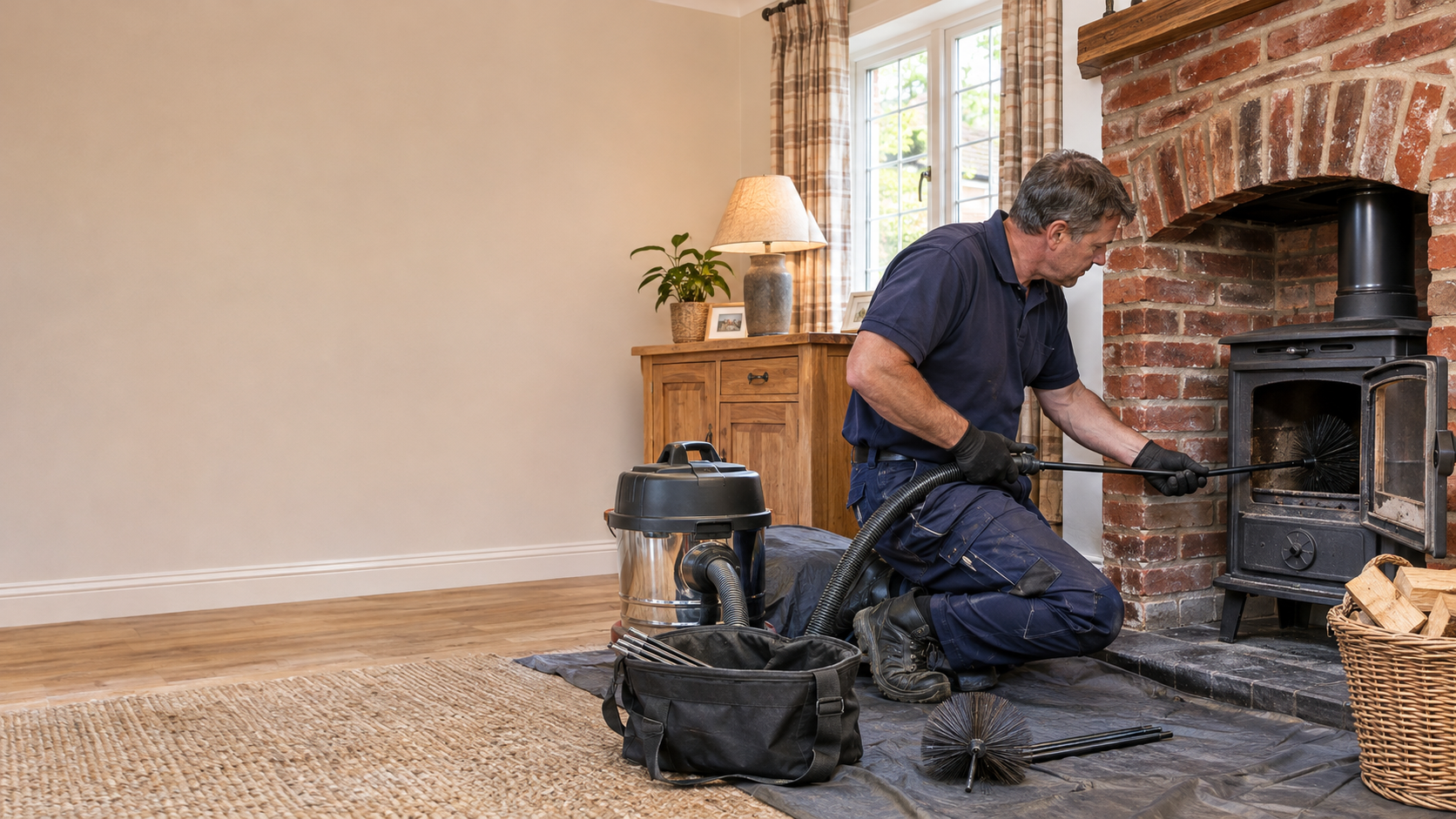
A professional sweep typically places protective sheets around the working area, uses suitable coverings to contain dust and operates specialist vacuum equipment to collect soot.
The aim is to complete the work with minimal disruption to your home while maintaining a clean working environment.
3. Sweeping the Chimney and Flue Liner
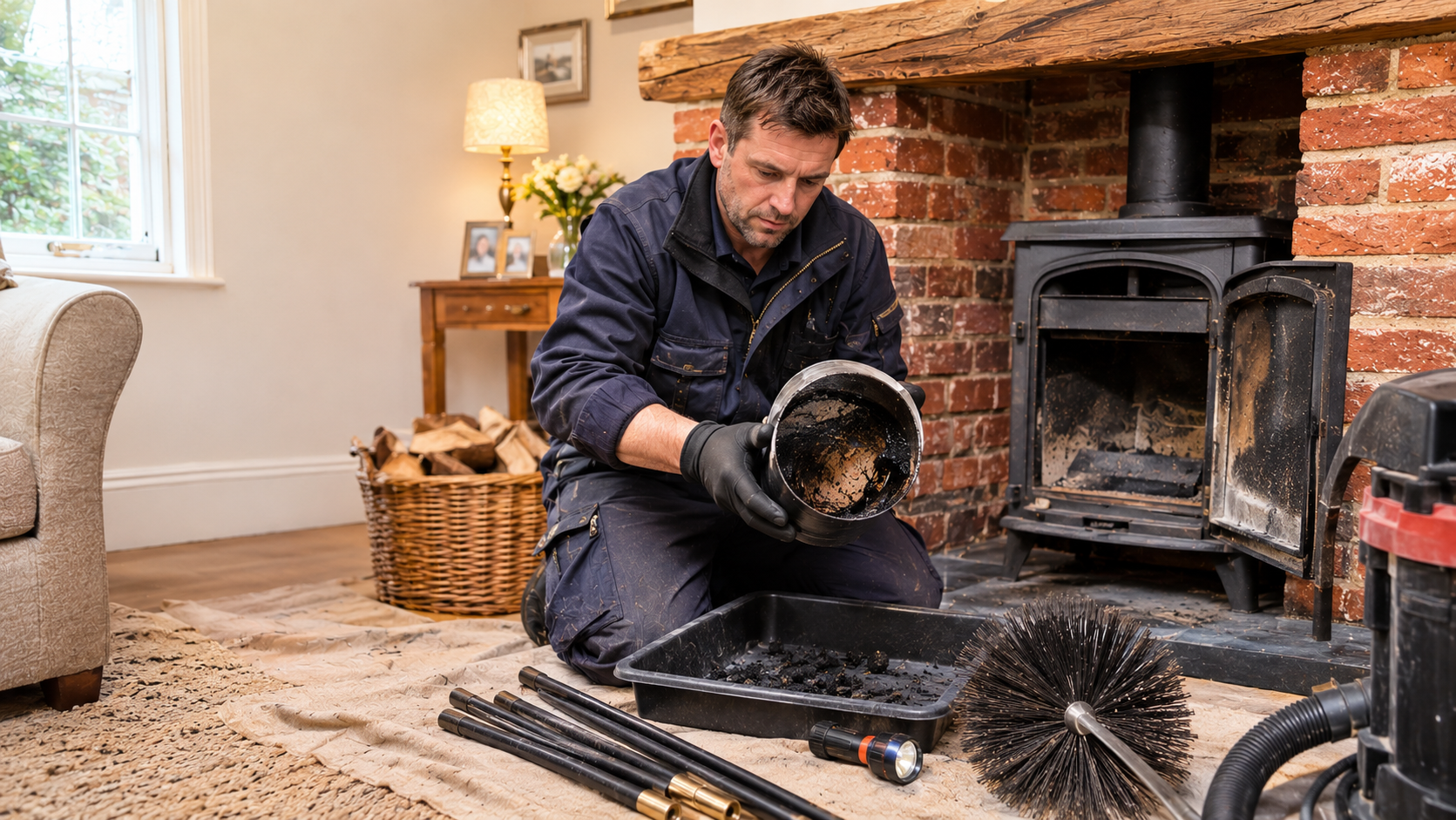
The main part of the service involves removing deposits from the internal surfaces of the chimney.
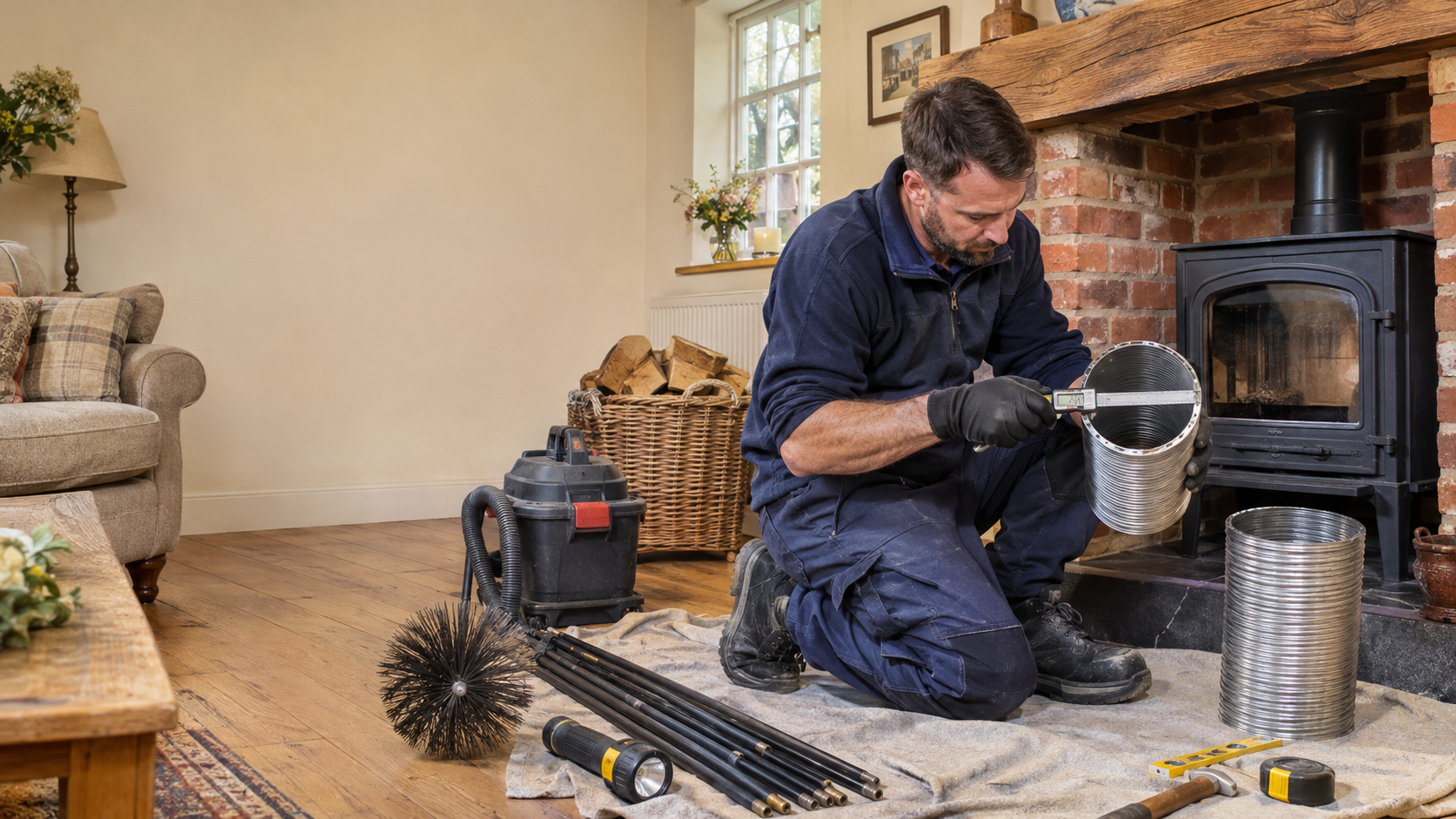
Depending on the chimney construction and condition, the sweep may use traditional chimney rods and brushes or specialist rotary sweeping equipment.
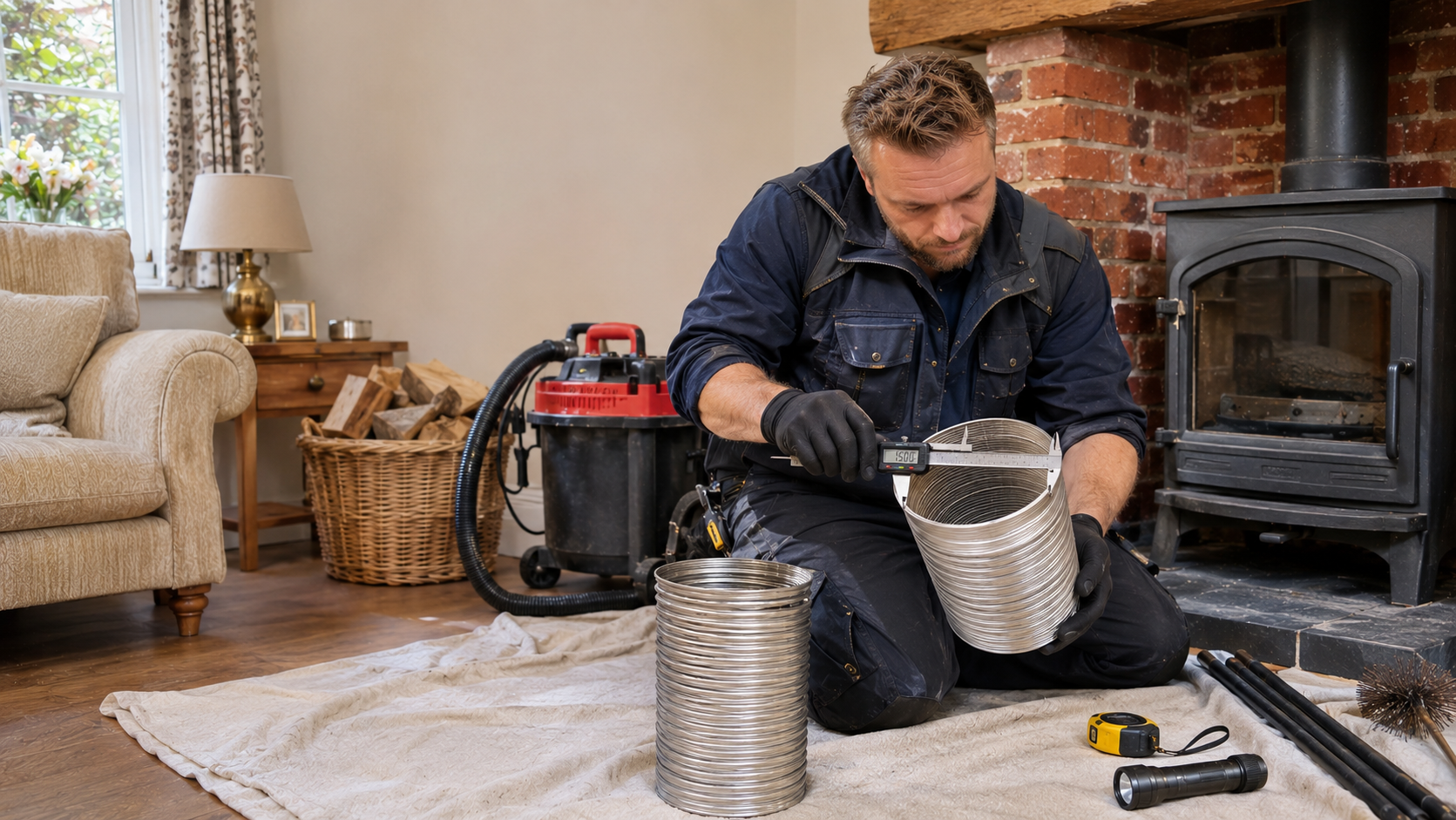
These tools are selected to suit the appliance and flue system. For example, some flexible metal chimney liners require specific brushes to avoid unnecessary damage.
Professional flue liner sweeping helps remove accumulated soot and other deposits that could restrict airflow.
More stubborn tar or heavily glazed creosote may require specialist treatment beyond a routine sweeping appointment.
4. Checking for Obstructions and Bird Nesting Materials
Chimneys can become blocked by more than soot.
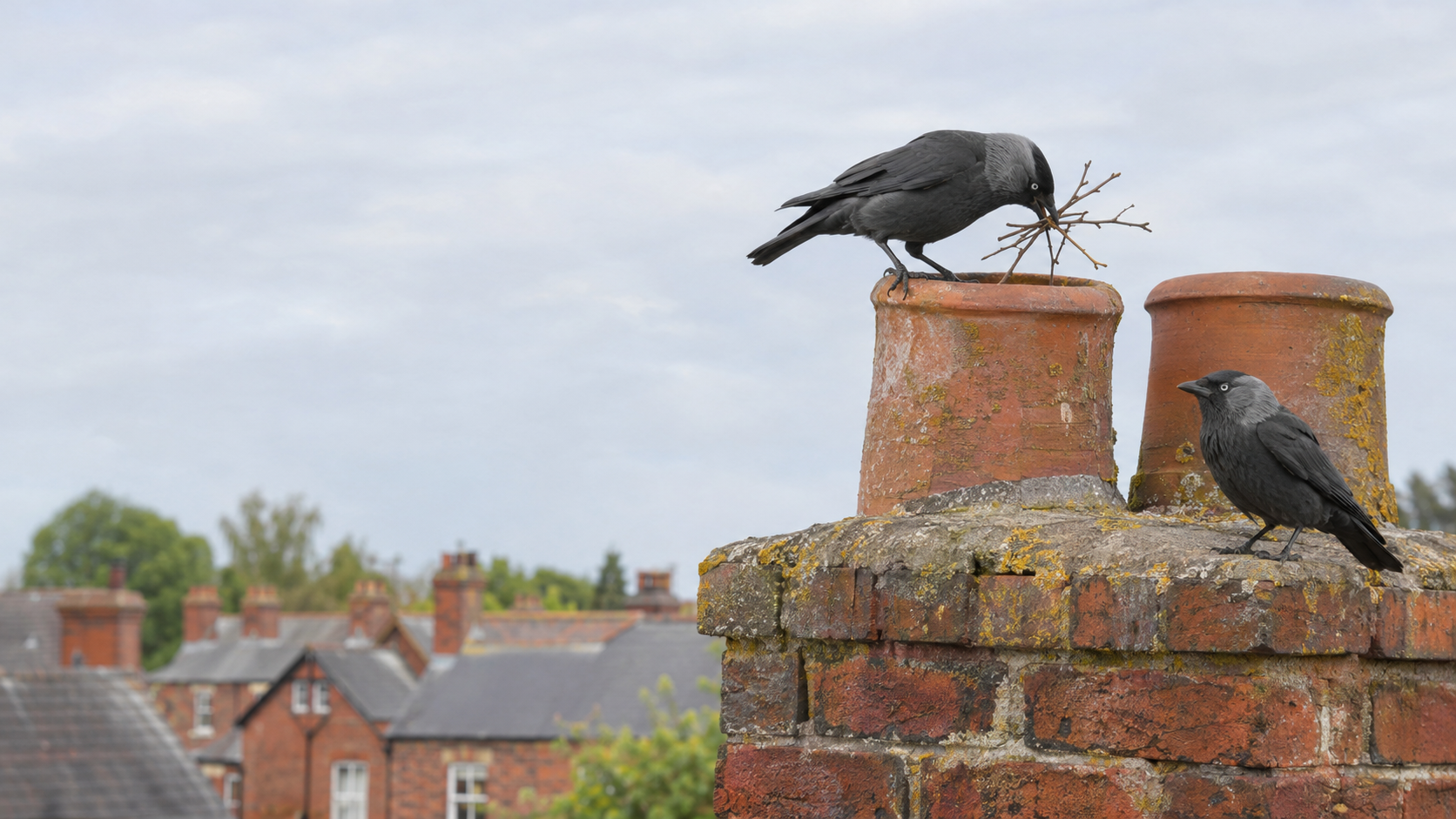
Leaves, twigs, fallen mortar and bird nesting materials may collect inside an unused chimney, particularly during periods when the fireplace is not operating.
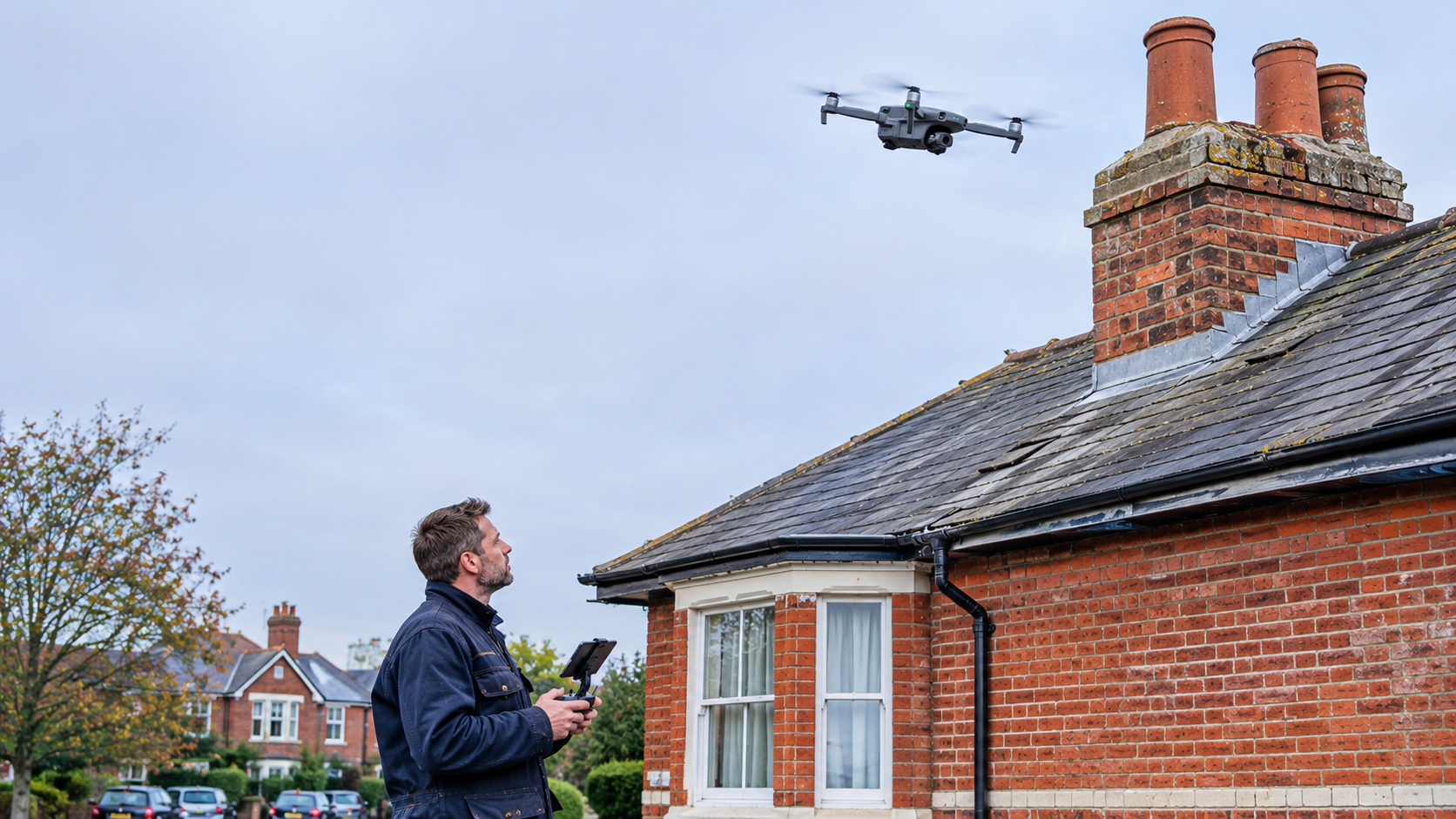
Bird activity around chimney pots can be a warning sign of a potential obstruction.
During a sweep, the technician can identify restrictions that interfere with cleaning and advise whether additional work is necessary.
If a significant bird nest is found, specialist removal may be needed. Active nests and nesting birds are legally protected in many circumstances, so removal must be assessed and carried out lawfully.
For suspected nesting problems, Midlands Sweeps also offers professional bird nest removal services.
5. Visual Checks and Chimney Performance Testing
After sweeping, the technician may assess accessible chimney components for visible signs of deterioration.
Depending on the service and installation, appropriate smoke evacuation or draught checks may also be carried out.
These checks can help identify certain airflow problems, but they are not a replacement for a detailed structural inspection or specialist flue integrity test.
If cracked components, suspected liner damage or persistent smoke problems are identified, a more detailed chimney inspection may be recommended.
6. Chimney Sweeping Documentation and Maintenance Advice
Following the appointment, a professional sweep should explain any important findings and provide an appropriate record or sweeping certificate.
The document records the sweeping work and any relevant observations. It does not automatically certify the entire chimney or installation as safe.
Your chimney sweep may also recommend an appropriate maintenance schedule based on the fuel you use, how frequently you operate your stove and the condition of the chimney.
How Often Should You Book a Chimney Sweep in Swadlincote?
The correct sweeping frequency depends largely on the type of fuel and how often you use your appliance.
According to HETAS guidance, chimneys used for burning wood should generally be swept at least twice a year, while those using smokeless fuels should be swept at least once a year. Heavy use or other fuel types may require more frequent cleaning.
For many households, arranging a chimney sweep before the colder months is a sensible approach.
A second appointment may be appropriate during or after the main heating season, particularly when a wood-burning stove is used frequently.
Regular maintenance is often easier to manage than dealing with a heavily blocked chimney or unexpected heating problems during winter.
Signs Your Chimney May Need Attention Before Its Next Scheduled Sweep
Even if your chimney was cleaned recently, certain warning signs should not be ignored.
These include smoke entering the room, persistent tar-like smells, unusual amounts of soot, falling debris, poor chimney draught or suspected bird activity.
A wood-burning stove that suddenly becomes difficult to operate may also indicate an issue requiring investigation.
If smoke repeatedly enters your home or you suspect the flue is blocked, stop using the appliance until it has been assessed by a competent professional.
Waiting until your next scheduled appointment could allow an existing problem to become more serious.
How to Prepare for a Chimney Sweeping Appointment
Before your chimney sweep arrives, a few simple preparations can help the appointment run smoothly.
Make sure the fireplace or stove is completely cool, following the sweep’s instructions about how long it must remain unused.
Clear away loose fireplace accessories, decorative items and furniture that could obstruct access. You should also provide enough working space for the technician’s equipment.
If you have experienced smoke problems or unusual smells, mention them before work begins.
It is also helpful to explain whether the property has an existing flue liner, a recently installed log burner or a chimney that has not been used for several years.
These details allow the professional to assess the installation more effectively.
Is Chimney Sweeping Different From Log Burner Servicing?
Although chimney sweeping and log burner servicing are closely related, they are not the same service.
Chimney sweeping primarily focuses on clearing soot and deposits from the chimney or flue.
Log burner servicing focuses on the condition and operation of the appliance itself. This may involve inspecting door seals, firebricks, baffle plates, air controls and other components.
A wood-burning stove may require both regular flue sweeping and periodic appliance servicing to remain in good working condition.
Homeowners should confirm which tasks are included when booking, as a standard chimney sweep does not necessarily include a complete stove service.
Why Choose a Local Chimney Sweep in Swadlincote?
Choosing a local chimney sweep offers a convenient way to arrange regular maintenance and obtain advice about your fireplace or heating appliance.
Midlands Sweeps provides professional chimney cleaning and flue liner sweeping in Swadlincote and surrounding areas of South Derbyshire.
As a veteran-owned business offering chimney sweeping, log burner installation, flue liner services and specialist inspections, Midlands Sweeps helps homeowners address a range of chimney maintenance needs.
Whether you have a traditional fireplace in an older property or a recently installed log burner, choosing the correct service can help keep your chimney properly maintained.
Explore the chimney sweeping services provided by Midlands Sweeps to learn more about available maintenance options.
Frequently Asked Questions About Chimney Sweeping in Swadlincote
How much does a chimney sweep cost in Swadlincote?
The cost varies depending on the type of appliance, accessibility, chimney condition and whether additional cleaning or inspection is necessary. Contact a local chimney sweeping company for a quotation based on your installation.
How long does a professional chimney sweep take?
The time required depends on the chimney design, appliance access and amount of soot or debris present. Straightforward appointments may be relatively quick, while heavily soiled or obstructed chimneys can require additional time.
Can I use my log burner immediately after chimney sweeping?
If the sweep confirms that no problems prevent use and any required checks have been completed, you can follow their advice on when to use the appliance again. If defects or safety concerns have been identified, do not use it until those issues have been resolved.
Does an unused chimney still need sweeping?
Yes. Even when a fireplace is rarely used, dust, debris and bird nesting materials can accumulate inside the chimney. Arrange an appropriate inspection and sweep before bringing a long-unused fireplace back into service.
Does chimney sweeping include a CCTV inspection?
Not normally. A routine sweep may involve basic visual checks, but a full CCTV chimney inspection is a separate procedure used to investigate hidden defects, damaged liners or recurring blockages.
Book a Professional Chimney Sweep in Swadlincote With Midlands Sweeps
Regular chimney maintenance is an important investment in the condition and performance of your fireplace or wood-burning stove.
From removing soot and debris to identifying potential chimney problems, a professional sweeping service helps homeowners stay on top of essential maintenance.
If you are looking for a reliable chimney sweep in Swadlincote, Midlands Sweeps provides professional cleaning services for chimneys, fireplaces, wood-burning stoves and flue liners.
Arrange your next chimney sweeping appointment with Midlands Sweeps today.
Phone: +44 782 483 0604
Website: www.midlandsweeps.com
Book an appointment: Contact Midlands Sweeps