If you own a wood-burning stove, multi-fuel burner or traditional fireplace, regular maintenance is essential for keeping your heating system in good working condition. However, two terms often cause confusion among homeowners: chimney sweeping and stove servicing.
Although both are important parts of maintaining a solid-fuel heating system, they are not the same service.
Chimney sweeping focuses primarily on removing soot, creosote and debris from the chimney or flue. Stove servicing, on the other hand, concentrates on inspecting, cleaning and maintaining the appliance itself.
Understanding the difference can help homeowners across Swadlincote, Derby, Burton on Trent and surrounding areas arrange the correct maintenance and avoid overlooking potential problems.
In this guide, we’ll explain what each service includes, how often you should arrange them and why your wood-burning stove may need both.
What Is Professional Chimney Sweeping?
Professional chimney sweeping involves cleaning the internal passage that carries smoke and combustion gases away from your fireplace or stove.
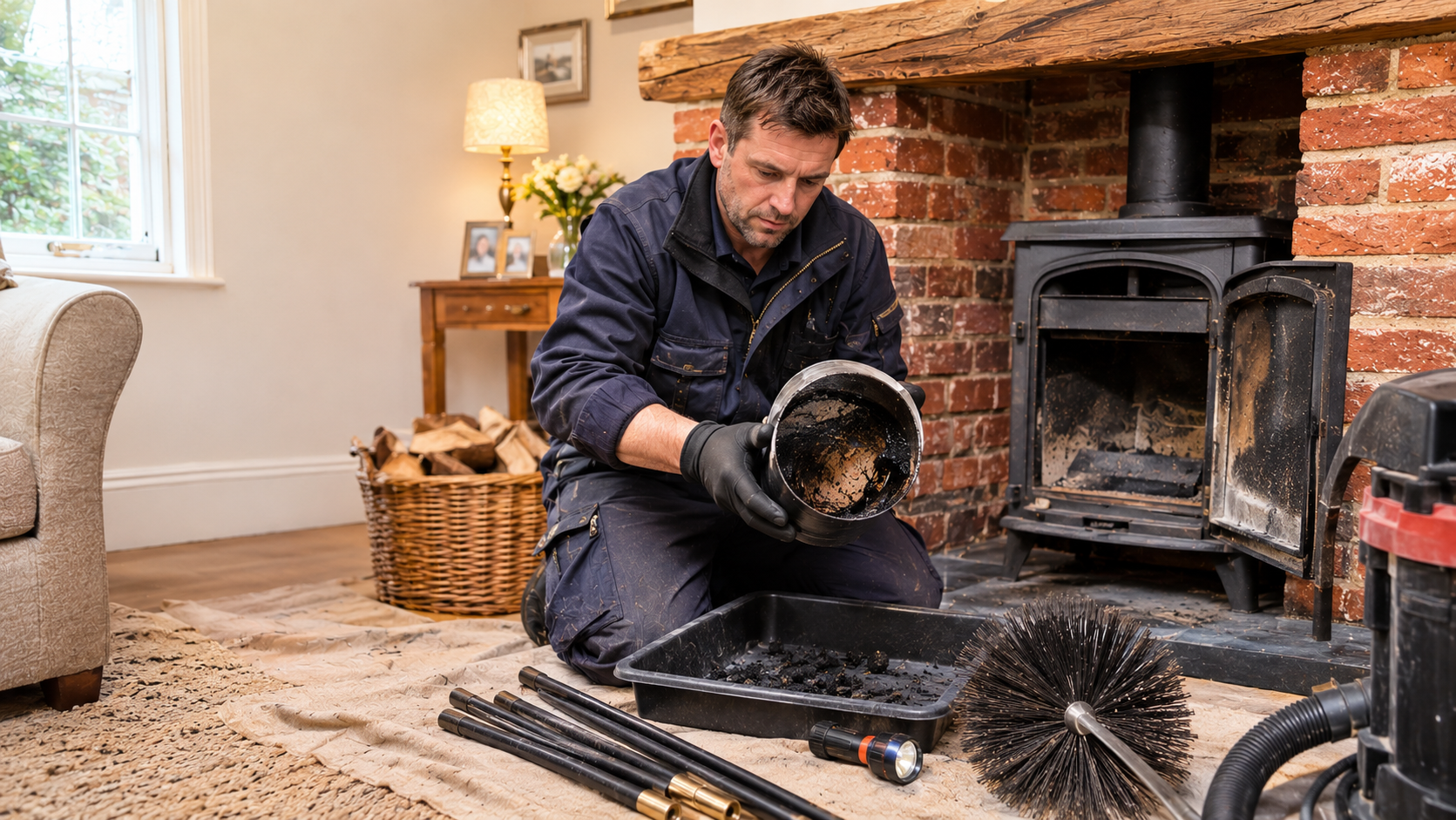
Whenever you burn wood or other solid fuels, combustion produces soot and other deposits. Over time, these materials can accumulate inside the chimney or flue liner.
If left untreated, deposits may restrict airflow, affect chimney draught and increase the risk of chimney fires.
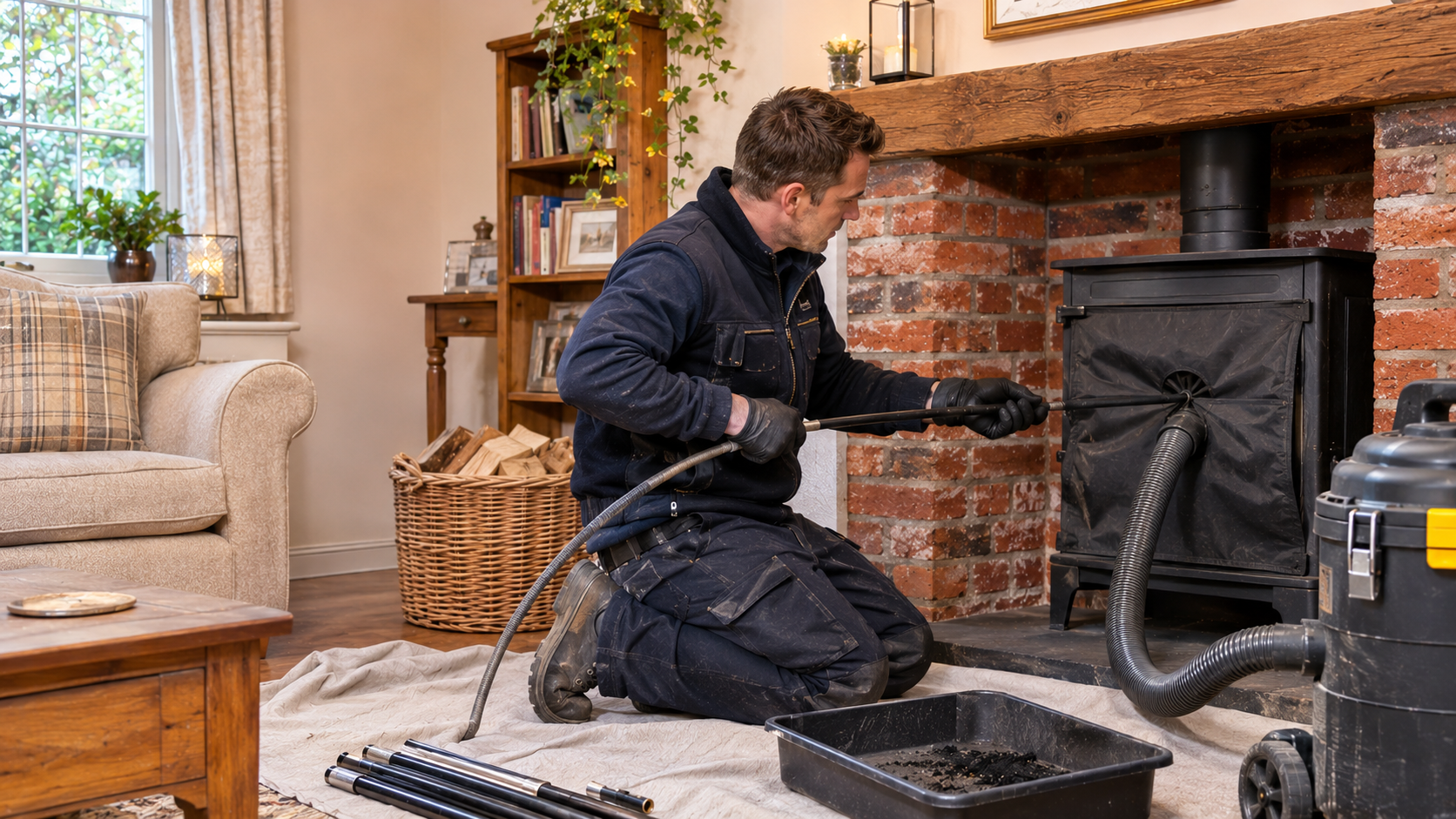
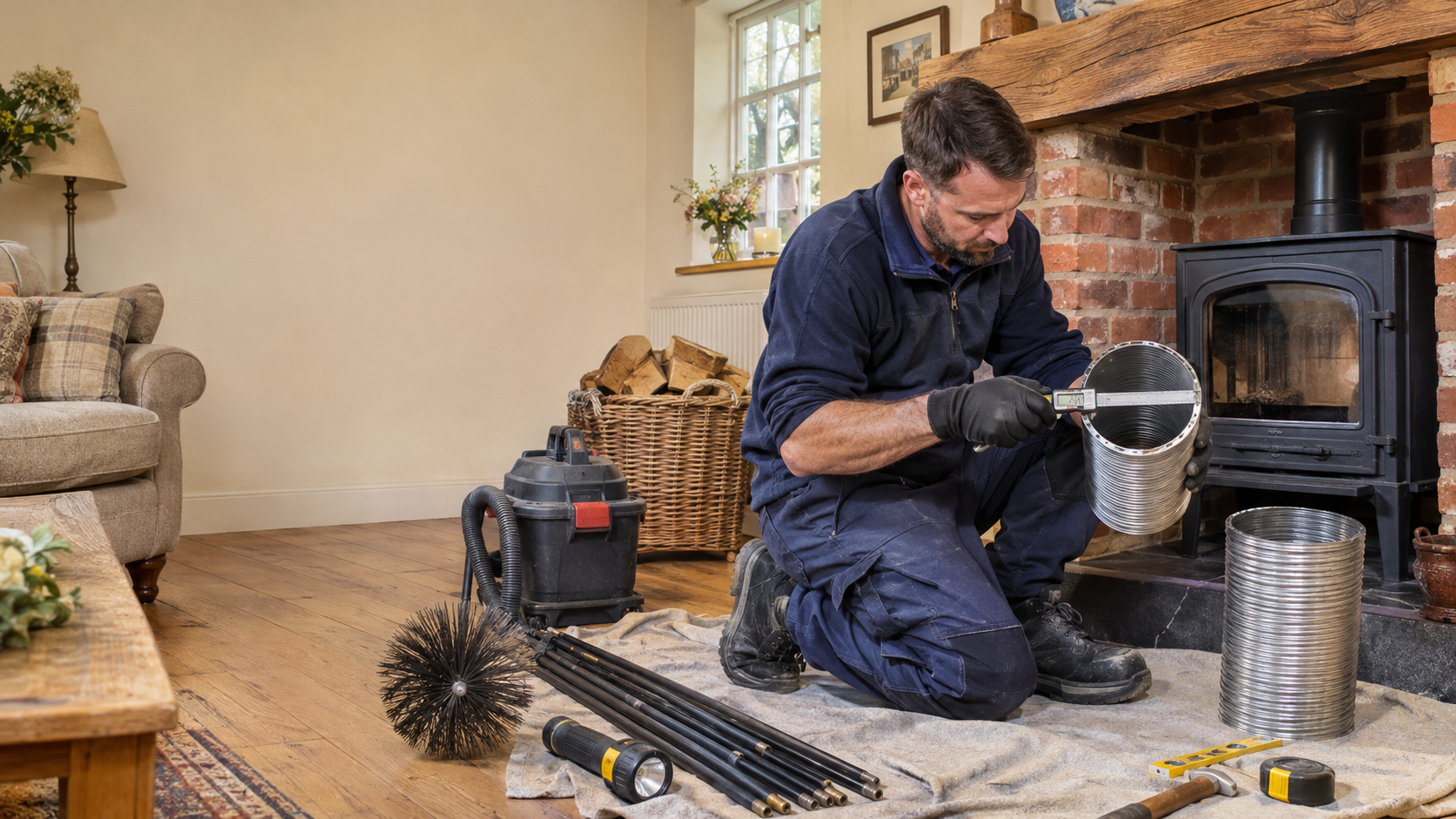
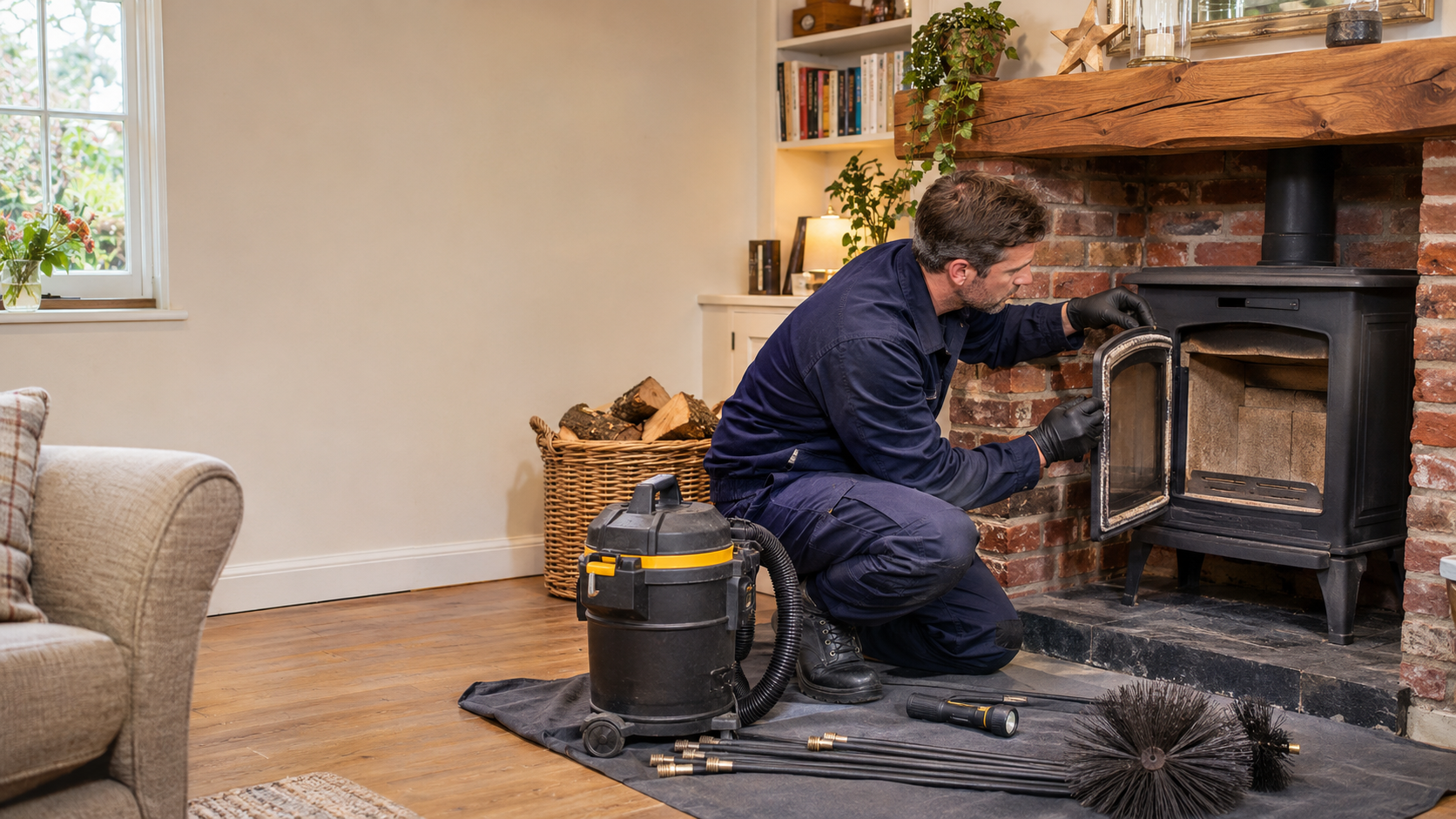
A professional chimney sweep uses specialist brushes, sweeping rods and appropriate dust-control equipment to remove accumulated material.
What Does a Chimney Sweeping Service Include?
Depending on the chimney construction and the service booked, professional chimney sweeping typically involves:
- Removing accumulated soot and loose creosote deposits.
- Clearing loose debris from the chimney or flue.
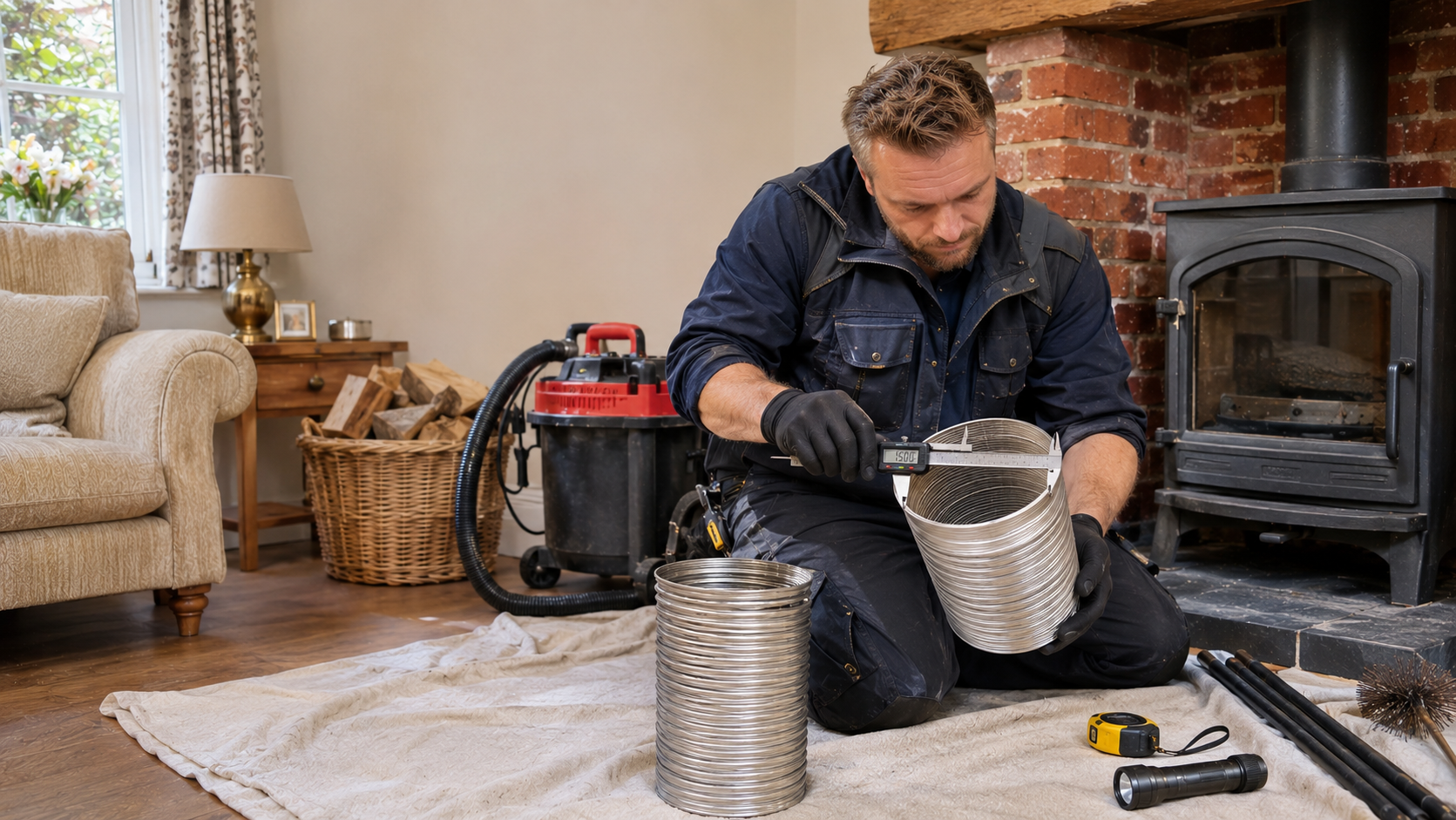
- Sweeping stainless-steel flue liners using suitable equipment.
- Identifying potential obstructions or unusual deposits.
- Performing appropriate basic checks where included.
- Collecting soot and debris using specialist vacuum equipment.
- Providing maintenance advice and relevant sweeping documentation.
The technician may need to temporarily remove an accessible baffle plate or other internal stove components to reach the flue. These should be correctly refitted after sweeping.
However, this does not automatically mean the stove has received a complete service.
Routine sweeping also does not replace a detailed structural survey, specialist flue integrity test or CCTV chimney inspection.
What Is Wood-Burning Stove Servicing?
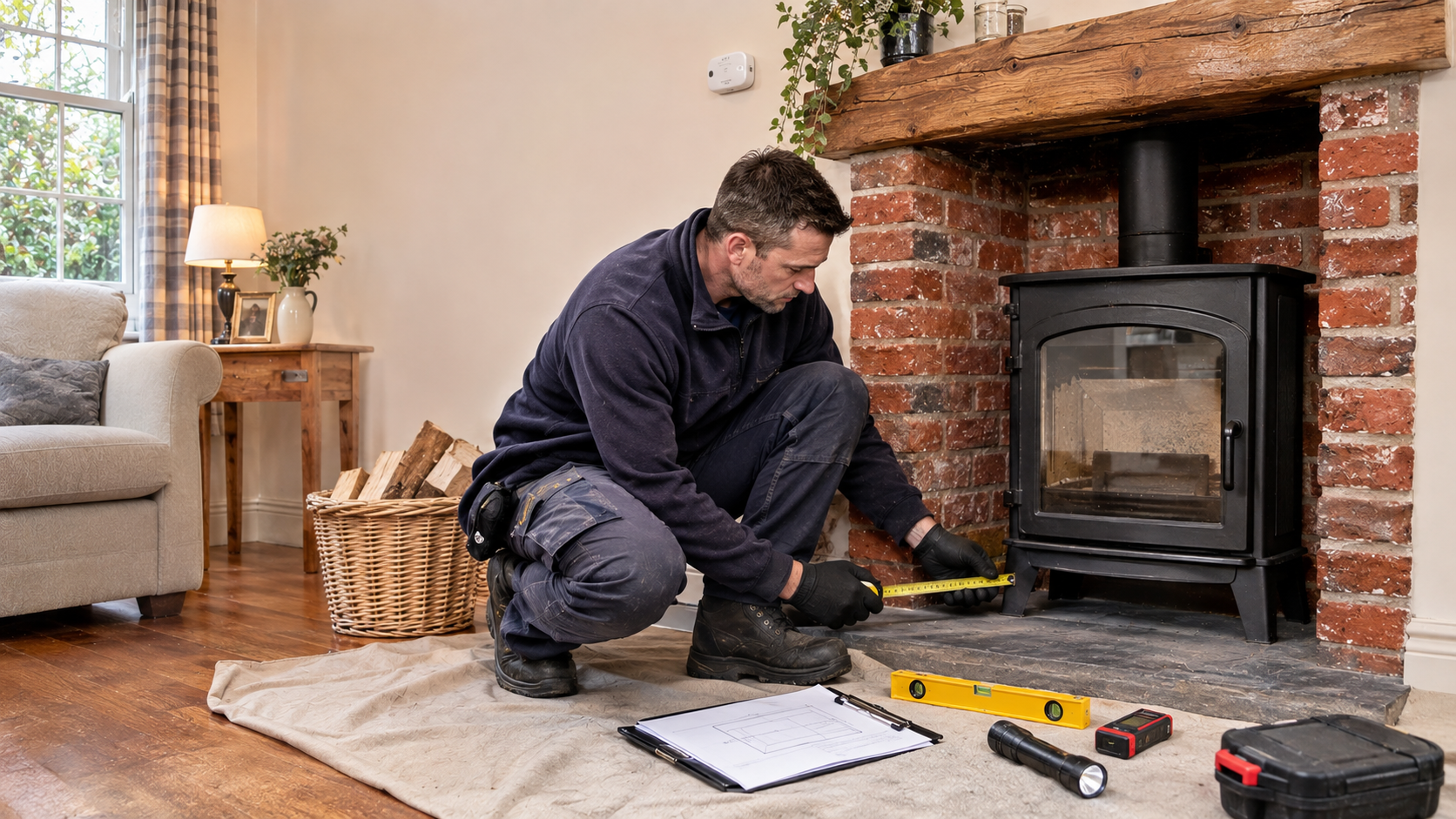
Wood-burning stove servicing focuses on the appliance rather than primarily on the chimney.
Even when a chimney is clean, the stove itself may develop problems through repeated heating and cooling.
Door seals can deteriorate, firebricks may crack, moving components can become stiff and baffle plates can suffer wear or distortion.
These issues may affect how the stove burns fuel, controls airflow and contains combustion gases.
A professional stove service involves examining the appliance and addressing maintenance needs according to its design and the manufacturer’s instructions.
What Does a Log Burner Service Include?
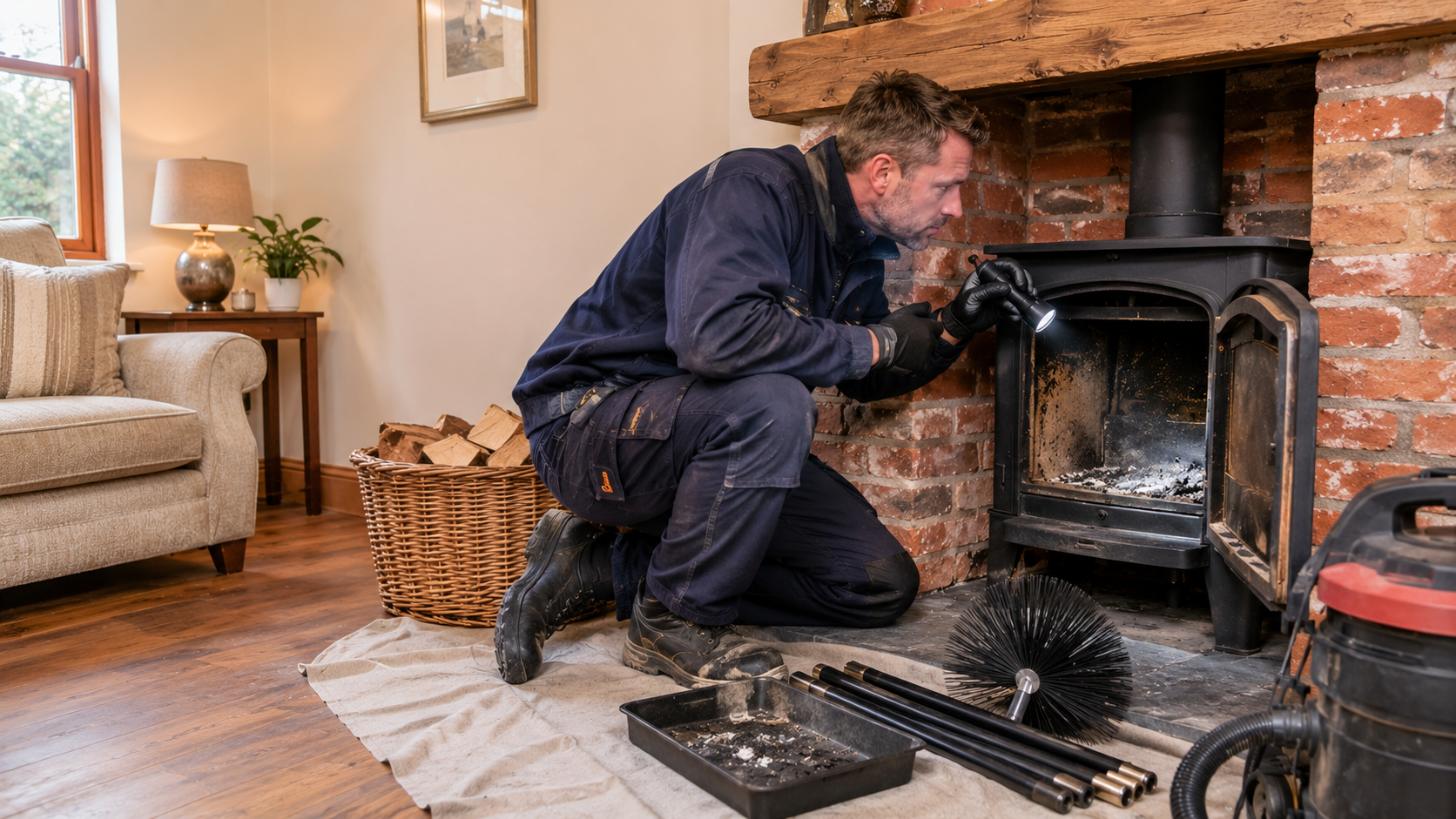
A typical log burner servicing appointment may involve:
- Inspecting stove door seals and rope gaskets.
- Checking the condition of firebricks and internal liners.
- Examining the baffle or throat plate.
- Checking the door glass and its seals.
- Inspecting air vents and air-control mechanisms.
- Removing internal ash and combustion deposits.
- Looking for corrosion, cracks or other visible damage.
- Checking relevant accessible connections and components.
- Identifying worn parts that may need replacement.
Depending on the service agreed and the technician’s competence, additional operational checks may be included.
Replacement parts, specialist repairs and chimney sweeping may be charged separately.
The exact servicing process depends on the manufacturer’s recommendations and the type of stove installed.
Chimney Sweeping vs Stove Servicing: Key Differences
Although the services are closely connected, they address different parts of your heating system.
| Feature | Chimney sweeping | Stove servicing | Main focus | Chimney and flue | Stove and its components | Primary purpose | Remove deposits and debris | Assess and maintain appliance condition | Soot removal | Yes, from the flue | Yes, from relevant appliance areas | Door seal inspection | Not normally a full check | Usually included | Firebrick and baffle checks | Limited, where relevant | Normally assessed | Flue cleaning | Main activity | Not necessarily included | Component replacement | Usually separate | May be offered at extra cost | Maintenance documentation | Sweeping record or certificate | Service record, where provided |
|---|
The main difference is simple: chimney sweeping cleans the route through which smoke escapes, while stove servicing maintains the appliance that produces the heat.
One service should not automatically be considered a substitute for the other.
Why Do You Need Both Chimney Sweeping and Stove Servicing?
A wood-burning stove relies on several components working together.
The appliance needs to burn fuel correctly, control airflow and direct combustion gases into a suitable flue.
The chimney then carries those gases outside.
If either part of the system develops a problem, the performance and safety of the entire installation may be affected.
A Clean Chimney Cannot Fix a Damaged Stove
Imagine having your chimney professionally swept while the rope seal around your stove door is badly worn.
The flue may be clear, but the damaged seal could affect air control and combustion performance.
A stove service can identify this type of problem and determine whether replacement parts are required.
A Serviced Stove Still Needs a Clean Chimney
Similarly, a stove with sound seals, correctly fitted firebricks and working air controls can still experience problems if the chimney contains heavy soot deposits or a blockage.
Professional chimney sweeping removes combustible deposits and helps maintain a clear passage for smoke and combustion gases.
Combining appropriate stove servicing with regular chimney sweeping provides a more complete approach to heating system maintenance.
How Often Should Your Chimney Be Swept?
The frequency of chimney sweeping depends on the fuel used, appliance type and how frequently the system operates.
According to HETAS recommendations:
- Wood-burning appliances: Chimneys should generally be swept at least twice a year.
- Smokeless-fuel appliances: Chimneys should generally be swept at least once a year.
- Heavy-use appliances: Additional sweeping may be required depending on deposits and operating conditions.
It is usually sensible to schedule a sweep before the main heating season and plan further cleaning where appropriate.
The condition of the chimney, moisture content of the fuel and burning habits can all influence how quickly soot accumulates.
Homeowners should ask their chimney sweep for a maintenance schedule suitable for their installation.
How Often Should a Wood-Burning Stove Be Serviced?
HETAS recommends having a solid-fuel stove serviced at least once a year.
Annual servicing provides an opportunity to examine components exposed to repeated heating and cooling.
Ideally, maintenance should be arranged before the main heating season, allowing time for necessary repairs or replacement parts.
However, you should not wait for an annual appointment if your stove develops a problem.
Follow the appliance manufacturer’s maintenance instructions and seek professional advice whenever you notice unusual operation or visible damage.
Signs Your Chimney or Stove Needs Professional Attention
Some symptoms suggest a chimney problem, while others may indicate a fault with the appliance itself.
Signs Your Chimney May Need Sweeping or Inspection
- Smoke entering the room.
- Poor chimney draught.
- Excessive soot or tar-like deposits.
- Debris falling into the fireplace.
- Evidence of birds nesting inside the chimney.
- Persistent unusual smells.
- An unknown or overdue sweeping history.
These symptoms can have several causes and may require additional investigation.
Signs Your Stove May Need Servicing
- Loose or damaged door rope seals.
- Cracked or badly deteriorated firebricks.
- Warped or damaged baffle plates.
- Stiff or faulty air controls.
- Cracked stove glass.
- Visible corrosion or deterioration.
- Noticeable changes in combustion behaviour.
If you suspect a blocked chimney, damaged stove or combustion-gas leakage, stop using the appliance until a competent professional has assessed it.
A working carbon monoxide alarm is essential, but it does not replace proper appliance maintenance and flue checks.
Can a Chimney Sweep Service Your Log Burner Too?
Some professionals are trained and equipped to provide both chimney sweeping and stove servicing.
However, not every chimney sweep offers complete appliance servicing.
Likewise, a technician who services stoves may not necessarily carry out chimney sweeping.
When booking, ask exactly what is included.
Useful questions include:
- Does the appointment include a full chimney or flue sweep?
- Will the technician inspect the stove’s door seals, firebricks and baffle plate?
- Are replacement parts included or charged separately?
- Will any relevant operational checks be carried out?
- Will I receive documentation explaining the work completed?
Asking these questions helps you arrange the appropriate maintenance rather than assuming both services are included in one quotation.
What About Flue Liners and Chimney Inspections?
Homeowners sometimes assume that modern stainless-steel flue liners require less attention than traditional masonry chimneys.
Although the construction is different, stainless-steel liners still need regular sweeping.
Soot and combustion deposits can accumulate inside lined flues, particularly when wood is burned frequently or under poor combustion conditions.
The correct sweeping equipment should be selected for the liner’s construction and manufacturer’s requirements.
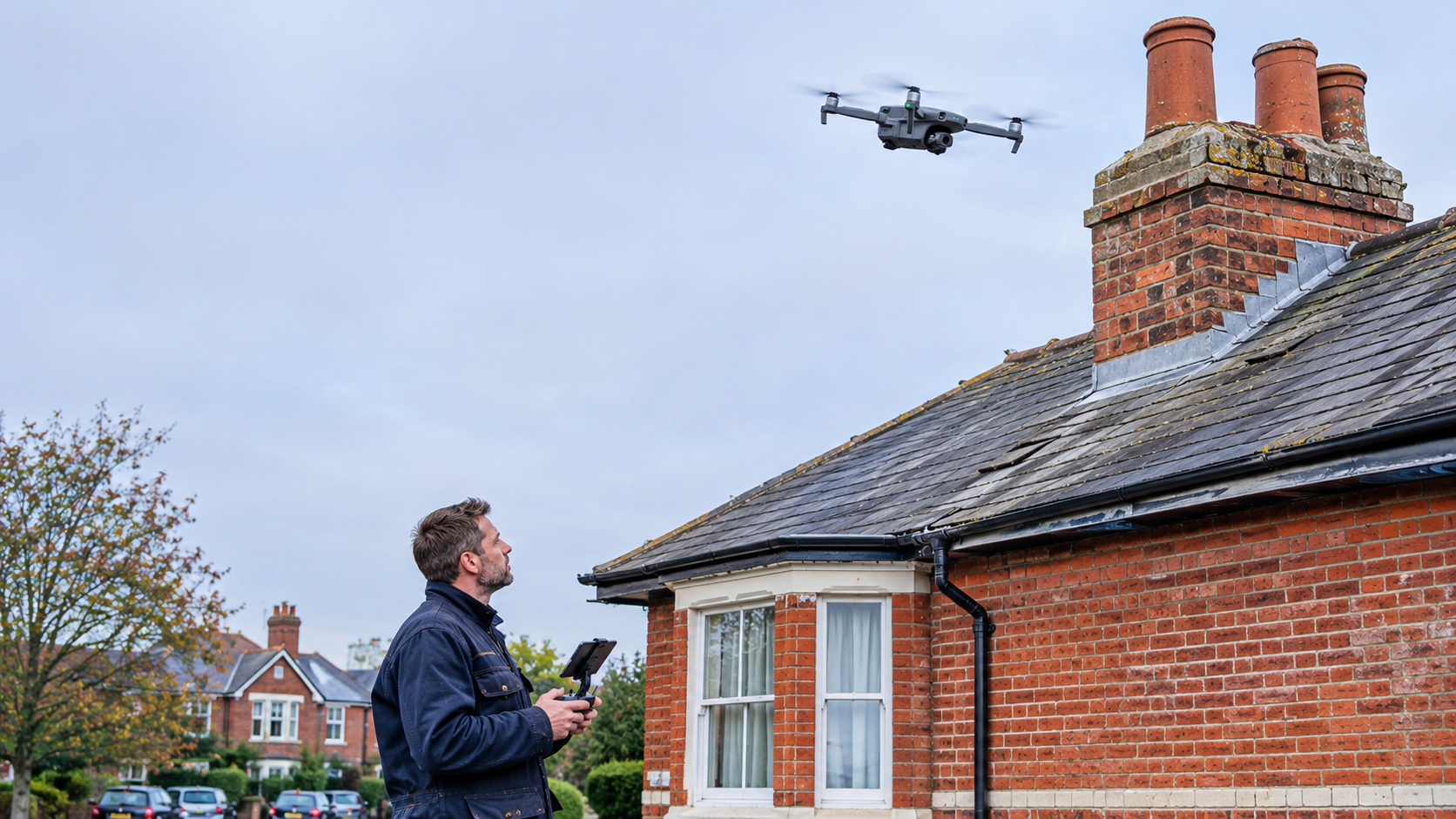
If a technician suspects liner damage, corrosion or an unusual obstruction, a CCTV chimney inspection may be recommended.
Detailed camera inspections and specialist testing are separate from ordinary chimney sweeping and stove servicing.
For homes with older chimney systems or an uncertain maintenance history, these additional checks can be particularly valuable.
Chimney and Stove Maintenance Across Derbyshire and the Midlands
Homes throughout Swadlincote, Derby, Burton on Trent and surrounding areas have a wide variety of heating installations.
Traditional properties may contain older masonry chimneys, while renovated homes often feature modern wood-burning stoves connected to flexible flue liners.
Some properties use twin-wall insulated flue systems rather than traditional brick chimneys.
Each installation requires maintenance suited to its design.
Midlands Sweeps provides professional chimney sweeping and flue liner cleaning across these areas, alongside other chimney and log burner services.
Whether your chimney is connected to a traditional open fireplace or a modern stove, selecting an appropriate maintenance service helps address potential problems before they become more serious.
Learn more about our professional chimney sweeping services.
Frequently Asked Questions About Chimney Sweeping and Stove Servicing
Is chimney sweeping included in a log burner service?
Not necessarily. Some technicians offer a combined service, while others charge separately for chimney sweeping and appliance servicing. Always confirm what is included before booking.
Can I use my stove if the chimney has been swept but the stove hasn’t been serviced?
A clean chimney does not confirm that the stove itself is in suitable condition. If the appliance is overdue for servicing, has known defects or shows signs of malfunction, arrange an appropriate assessment before continuing to use it.
Does a new wood-burning stove need servicing?
Yes. New appliances require ongoing maintenance according to the manufacturer’s instructions. Their chimneys also need regular sweeping once the appliances are in use.
Will chimney sweeping improve my stove’s heating performance?
Removing soot and obstructions can help maintain proper chimney draught and combustion-gas flow. However, worn seals, damaged components, fuel quality and operating practices can also affect stove performance.
Is a chimney inspection the same as stove servicing?
No. A chimney inspection assesses the condition of the chimney or flue, while stove servicing focuses on the appliance. Some basic checks may overlap, but a detailed chimney survey is a separate procedure.
Should I book chimney sweeping and stove servicing at the same time?
Arranging both around the same period can be convenient, especially before winter. However, the appropriate maintenance schedule depends on the appliance, fuel use and the services offered by your chosen technician.
Book Professional Chimney Sweeping With Midlands Sweeps
Understanding the difference between chimney sweeping and stove servicing helps you make informed decisions about your heating system.
Regular chimney sweeping removes soot and deposits from the flue, while stove servicing focuses on maintaining the appliance and identifying worn or damaged components.
Both play an important role in the long-term care of a wood-burning or multi-fuel stove.
At Midlands Sweeps, we provide professional chimney sweeping, flue liner cleaning and related chimney services for homeowners across Swadlincote, Derby, Burton on Trent, Ashby-de-la-Zouch and surrounding areas.
If you are unsure whether your fireplace needs a chimney sweep, an appliance service or further inspection, contact us to discuss your installation and available options.
Arrange your next professional chimney sweep with Midlands Sweeps today.
Phone: +44 782 483 0604
Email: midlandsweeps@gmail.com
Website: www.midlandsweeps.com
Book an appointment: Contact Midlands Sweeps
Midlands Sweeps — professional chimney care for your home.