
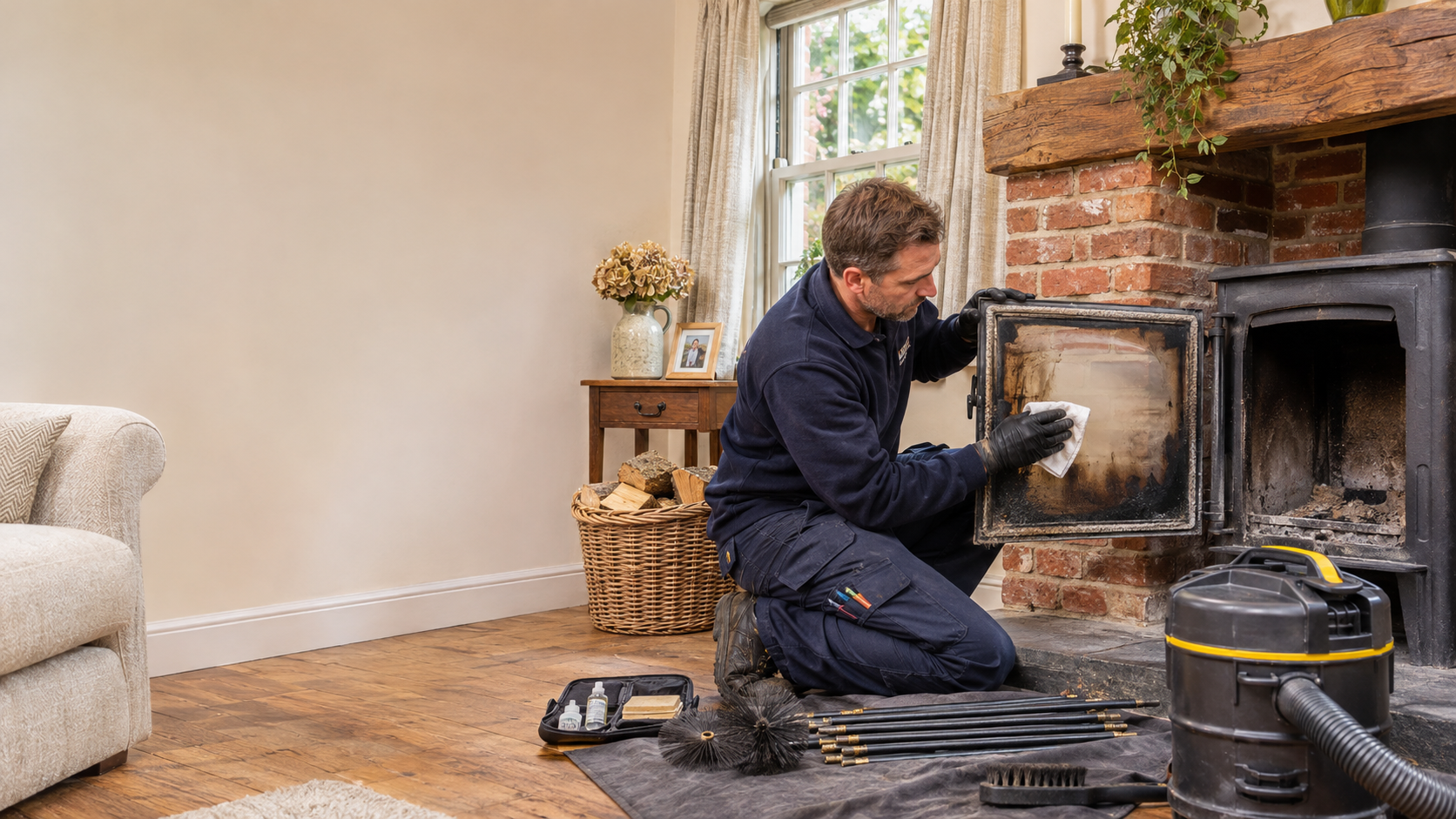
One of the most appealing features of a wood-burning stove is being able to watch the flames through its glass door. However, many homeowners notice that their once-clear stove glass gradually turns black, making it difficult to enjoy the view of the fire.
Blackened log burner glass is a common issue, but it can also provide useful clues about how your stove is operating.
While a small amount of soot is normal, excessive black deposits may indicate incomplete combustion, unsuitable firewood, poor airflow or chimney maintenance problems.
Understanding why your log burner glass turns black can help you improve your burning habits, reduce unnecessary soot build-up and keep your stove operating more effectively.
In this guide, Midlands Sweeps explains the most common causes of black stove glass, how to prevent excessive deposits and when professional chimney sweeping may be necessary.
Why Does Log Burner Glass Turn Black?
Black deposits form on stove glass when soot and other combustion by-products come into contact with the cooler glass surface.
When wood burns efficiently, much of the combustible material is consumed in the fire. However, if the fire receives insufficient oxygen or operates at an unsuitable temperature, combustion becomes less complete.
This produces additional smoke and soot, some of which can settle on the inside of the stove door.
The result is a dark, sometimes sticky coating that gradually obscures the view of the flames.
Several factors can contribute to this problem, and identifying the underlying cause is more effective than repeatedly cleaning the glass.
1. Burning Wet or Unseasoned Firewood
One of the most common causes of black log burner glass is burning wood that contains too much moisture.
When damp logs are placed inside a stove, energy is used to evaporate the excess water before the wood can burn efficiently.
This can lower combustion temperatures and increase smoke production, leading to more soot collecting on the glass and inside the flue.
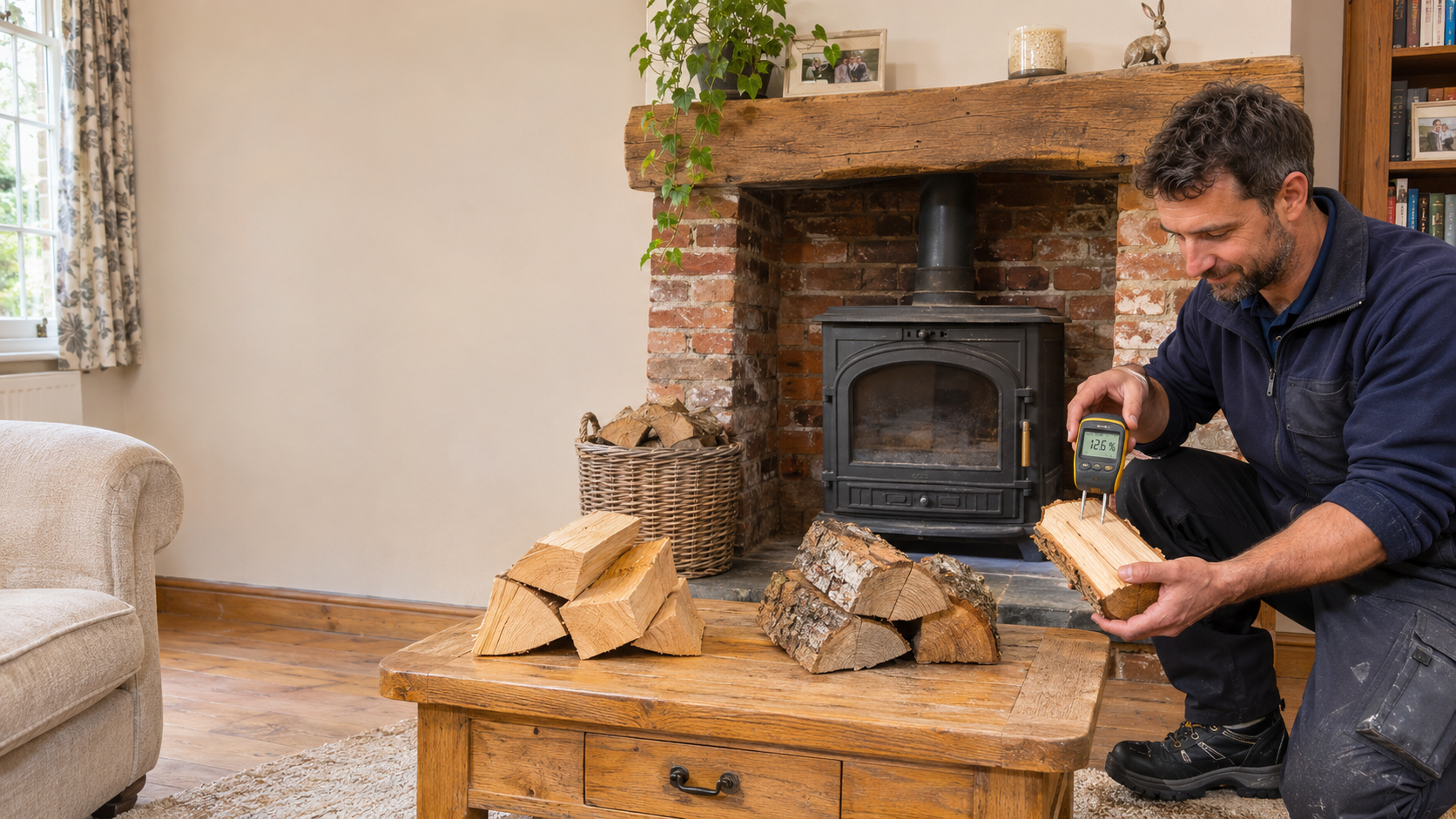
HETAS recommends burning wood with a moisture content of 20% or less.
To reduce problems caused by damp firewood:
- Choose properly seasoned or kiln-dried logs.
- Look for appropriately certified Ready to Burn firewood.
- Store logs in a dry, well-ventilated location.
- Keep firewood protected from direct rainfall.
- Use a moisture meter to check logs when necessary.
Dry firewood generally burns more efficiently, produces less smoke and can help keep your stove glass cleaner.
2. Closing the Air Vents Too Much
Modern log burners use adjustable air controls to manage combustion.
These controls regulate how much oxygen enters the firebox, influencing how quickly and efficiently the wood burns.
Some homeowners reduce airflow excessively because they want their logs to last longer.
However, restricting oxygen too much can cause the fire to smoulder rather than burn efficiently.
This creates additional smoke, soot and potentially harmful combustion products.
To maintain cleaner stove glass, follow the manufacturer’s instructions for operating the air controls.
Allow newly lit or refuelled logs to establish an active flame before adjusting the vents to their recommended operating position.
Avoid deliberately keeping the stove smouldering for extended periods.
Remember: More airflow is not always better. Excessive air supply can cause overfiring and damage the appliance. The goal is to maintain the appropriate combustion conditions for your particular stove.
3. Your Stove’s Airwash System May Not Be Working Effectively
Many modern wood-burning stoves feature an airwash system designed to help keep the glass clear.
The system directs a controlled stream of air across the inside surface of the stove door, helping limit soot deposits.
However, an airwash system cannot compensate for every burning problem.
If the stove is operated at an excessively low temperature, the firewood is damp or the air controls are set incorrectly, the glass may still turn black.
Restricted airwash passages or damaged internal components can also affect performance.
If your stove glass suddenly starts blackening more quickly than usual, check the manufacturer’s operating instructions.
If the issue continues, arrange an appropriate stove inspection rather than attempting to modify the appliance yourself.
4. Burning Your Log Burner at Too Low a Temperature
Wood-burning stoves are designed to operate within particular temperature ranges.
When a fire struggles to reach a suitable operating temperature, combustion may become incomplete.
This often occurs when:
- The fire is started with insufficient kindling.
- Air controls are reduced too soon.
- Large logs are added before the fire is established.
- Damp wood is used.
- The stove is continuously operated at a low output.
A struggling, smoky fire may produce more soot than one burning correctly.
Using suitable kindling and following the manufacturer’s recommended lighting procedure can help establish proper combustion.
Some homeowners use stove thermometers where appropriate for their appliance, but the correct operating temperature and thermometer position should always follow manufacturer guidance.
Never attempt to burn soot away by deliberately overheating the stove.
5. Poor Chimney Draught or a Restricted Flue
Sometimes, the problem is not simply the stove or firewood.
Your chimney plays an essential role in maintaining the airflow needed for combustion.
As warm gases rise through the flue, they help draw combustion air into the stove.
If the chimney is restricted by soot, creosote, debris or an obstruction, the resulting poor draught can affect how the stove burns.
Possible warning signs include:
- Log burner glass turning black unusually quickly.
- Difficulty lighting or maintaining a fire.
- Smoke entering the room.
- Weak or inconsistent chimney draught.
- Unusual soot or tar-like smells.
- Excessive deposits inside the appliance.
If you notice several of these symptoms, your chimney may require professional attention.
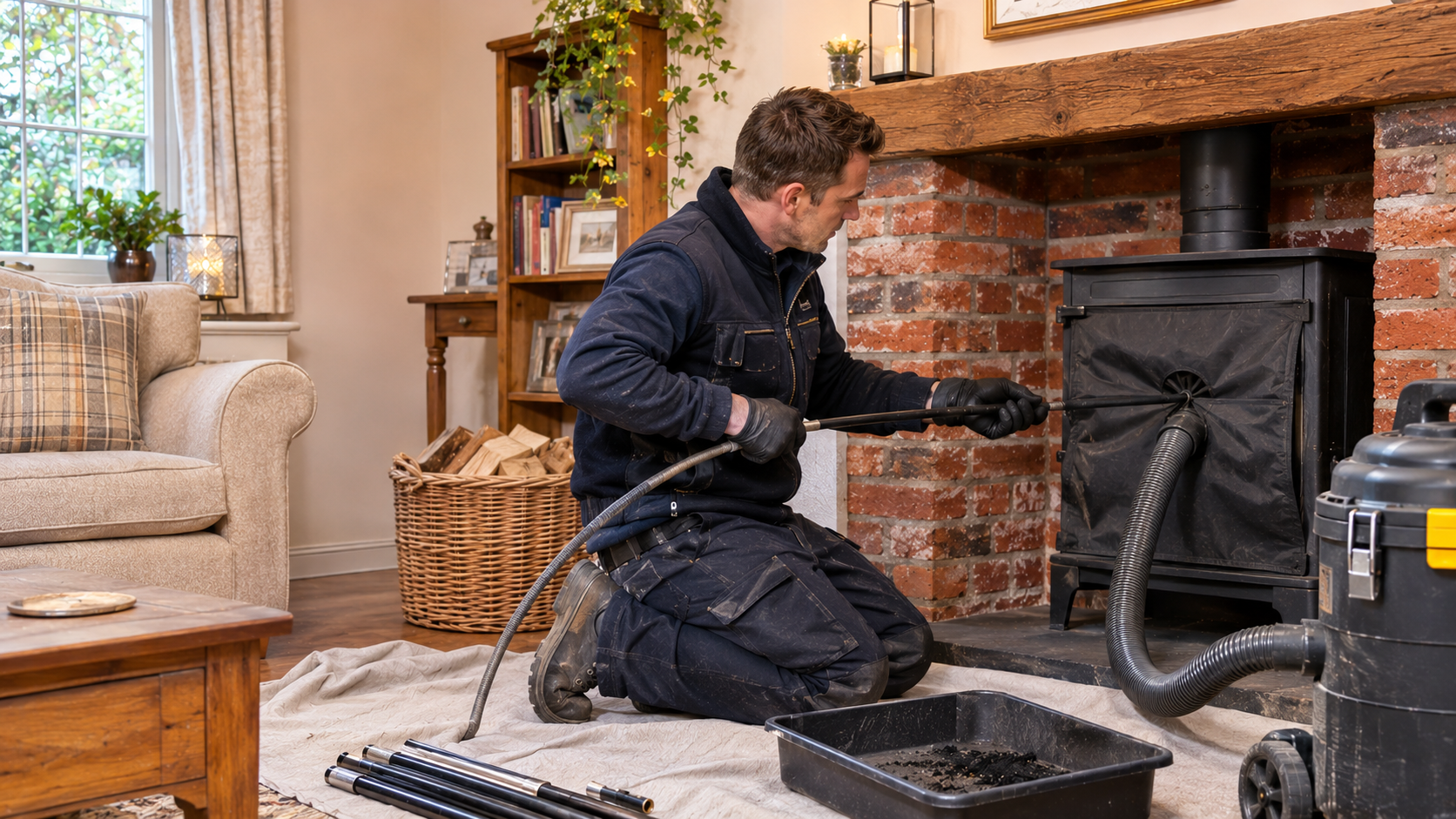
A professional chimney sweep can remove accumulated soot and appropriate removable deposits, while further inspection may be needed to investigate other draught problems.
Midlands Sweeps provides professional chimney sweeping services throughout Swadlincote, Derby, Burton on Trent and surrounding areas.
6. Worn Stove Components and Maintenance Problems
Wood-burning stoves contain components that can wear or deteriorate through regular use.
Door rope seals, baffle plates, firebricks and air-control mechanisms all contribute to the way the appliance operates.
Although worn components do not always directly cause blackened glass, they can affect combustion and airflow.
A stove with damaged seals may admit uncontrolled air, while a damaged baffle or obstructed air passage can alter combustion conditions.
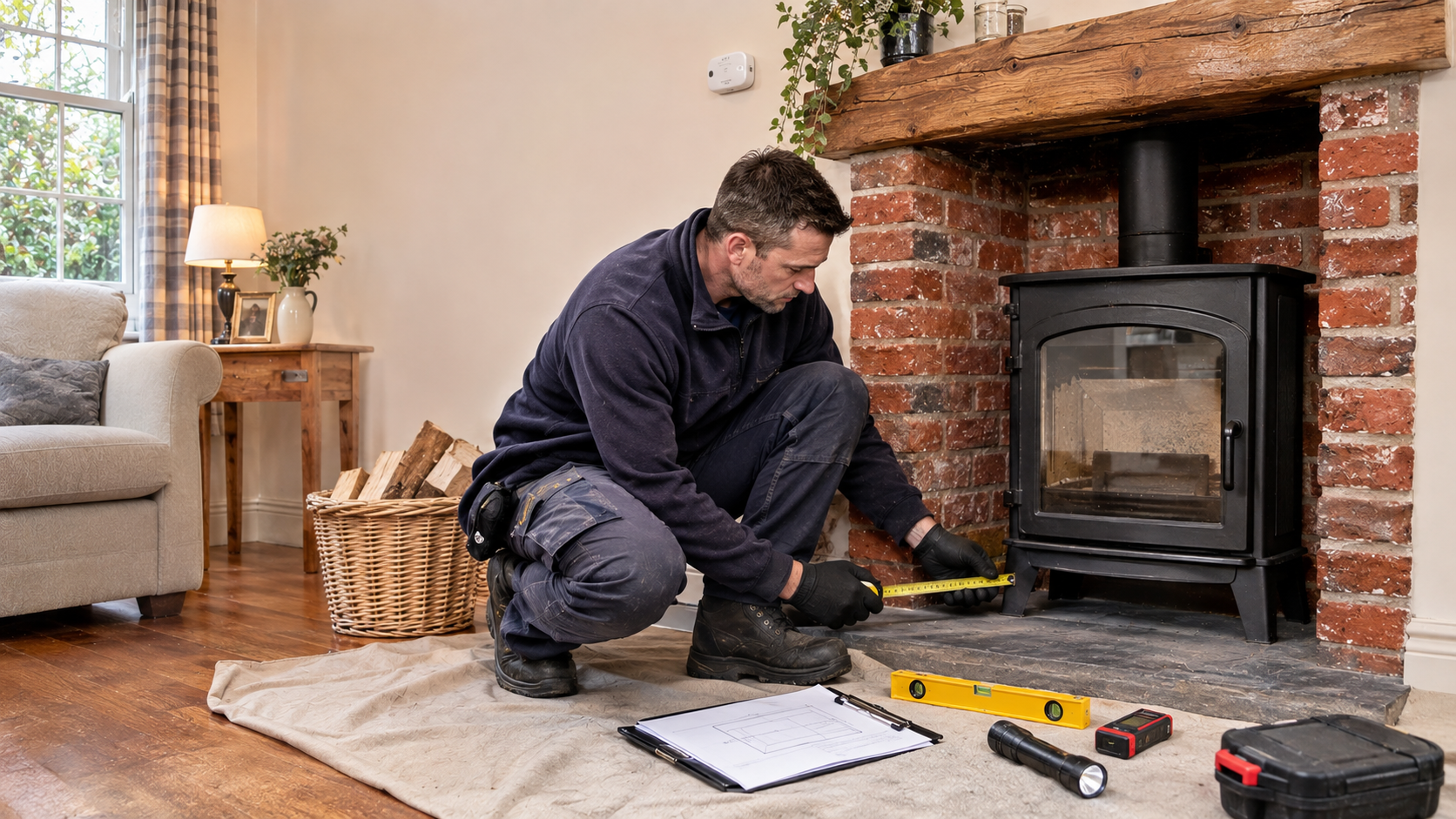
Annual stove servicing provides an opportunity to identify these issues.
If your stove continues to produce excessive soot despite using dry wood and following the manufacturer’s instructions, it may be worth arranging a professional service assessment.
How to Clean Black Log Burner Glass Safely
Even with correct operation, stove glass may require occasional cleaning.
The important thing is to remove deposits without damaging the ceramic glass or surrounding components.
Step 1: Allow the Stove to Cool Completely
Never attempt to clean hot stove glass.
Sudden temperature changes and inappropriate cleaning methods can damage the glass, while hot surfaces can cause serious burns.
Wait until the appliance is completely cold before beginning.
Step 2: Use a Suitable Stove Glass Cleaner
Choose a product specifically recommended for wood-burning stove glass and compatible with your appliance.
Apply it according to the product instructions, using a soft, non-scratch cleaning pad or cloth.
Avoid allowing cleaning products to soak into door rope seals or surrounding components.
Step 3: Gently Remove the Deposits
For light soot deposits, a damp, soft cloth may be sufficient.
Some stove manufacturers permit cleaning with damp newspaper and a small amount of fine, cold wood ash, but this method is not suitable for every type of glass.
Always follow your stove manufacturer’s guidance, as abrasive particles can scratch or damage some glass surfaces.
Step 4: Wipe Away Residue
Remove any remaining cleaning product using a clean, suitable cloth.
Allow the glass and nearby components to dry fully before using the stove again.
Avoid sharp scrapers, wire wool and harsh abrasive cleaning products unless the manufacturer specifically approves them.
How to Prevent Soot Build-Up on Log Burner Glass
Although some deposits are unavoidable, good burning habits can help keep your stove glass clearer for longer.
The following practices are particularly useful:
- Use properly dried wood: Aim for firewood with a moisture content of 20% or less.
- Maintain correct airflow: Use your stove’s air controls according to its operating instructions.
- Avoid prolonged smouldering: Keep the fire burning within the manufacturer’s recommended conditions.
- Use the correct fuel load: Do not overload the firebox or place logs directly against the glass.
- Clean the glass regularly: Remove light deposits before they become difficult to clean.
- Maintain your chimney: Arrange professional sweeping at appropriate intervals.
- Service the stove: Have worn seals, damaged baffles and other components assessed when necessary.
These habits can improve combustion conditions, reduce excessive soot formation and support the long-term care of your stove.
Does Black Stove Glass Mean Your Chimney Needs Sweeping?
Not necessarily.
Blackened stove glass alone does not confirm that your chimney is blocked or excessively dirty.
In many cases, the cause is related to fuel moisture, combustion temperature or incorrect air-control settings.
However, soot collecting rapidly on the glass alongside poor draught, smoke entering the room or unusual tar-like smells may indicate a wider issue.
A dirty chimney can restrict the movement of combustion gases and contribute to inefficient stove operation.
Regular chimney sweeping helps remove accumulated soot and combustible deposits from the flue.
HETAS recommends sweeping chimneys used for burning wood at least twice a year, with more frequent cleaning potentially necessary depending on use and conditions.
If your stove has developed sudden or persistent problems, do not rely on glass cleaning alone to resolve them.
When Should You Call a Professional Chimney Sweep?
Consider arranging a professional assessment if:
- Your log burner glass becomes heavily blackened after every fire.
- The stove produces persistent smoke despite using dry wood correctly.
- You notice unusual tar-like deposits or strong chimney smells.
- Smoke enters the room or escapes from the stove unexpectedly.
- The appliance struggles to maintain a normal fire.
- You cannot remember when your chimney was last swept.
These symptoms can indicate combustion or flue problems requiring investigation.
If smoke enters your home, you suspect combustion-gas leakage or your carbon monoxide alarm activates, stop using the appliance and follow appropriate safety and emergency procedures.
Professional chimney sweeping may resolve problems caused by removable deposits, while damaged components, ventilation issues or defective flue systems can require additional work.
Frequently Asked Questions About Black Log Burner Glass
Is it normal for log burner glass to turn black?
A small amount of soot can develop during normal operation, particularly during lighting and refuelling. However, excessive or persistent blackening may indicate poor combustion, unsuitable fuel or an appliance maintenance problem.
Why does my log burner glass go black overnight?
This often happens when a stove is deliberately left smouldering at a very low temperature with limited airflow. Such operation can increase smoke, soot and creosote deposits and should be avoided unless the appliance manufacturer’s instructions specifically provide for an appropriate operating method.
Will burning hotter clean my stove glass?
Some light deposits may diminish during normal, efficient operation. However, deliberately overfiring your stove to clean its glass is unsafe and can damage the appliance.
Can wet wood cause black stove glass?
Yes. Wet wood reduces combustion efficiency and can produce additional smoke and soot. Properly dried firewood with a moisture content of 20% or less is recommended.
How often should I clean my wood burner glass?
There is no universal cleaning schedule. Check the glass regularly and remove deposits as necessary, following your stove manufacturer’s cleaning instructions.
Can a chimney sweep stop my stove glass from turning black?
A chimney sweep can remove soot and deposits from the flue and may identify signs of restricted draught. However, if the cause is wet wood, incorrect air-control settings or worn appliance components, those issues must also be addressed.
Professional Chimney Sweeping and Log Burner Care With Midlands Sweeps
Blackened log burner glass is often more than a cleaning inconvenience. It can be a useful indication of how efficiently your wood-burning stove is operating.
Choosing dry firewood, maintaining correct airflow and following good stove maintenance practices can help reduce unnecessary soot build-up.
However, if your glass continues to blacken rapidly or your stove shows signs of poor chimney draught, professional attention may be necessary.
At Midlands Sweeps, we provide professional chimney sweeping, flue liner cleaning and related chimney services for homeowners across Swadlincote, Burton on Trent, Derby, Ashby-de-la-Zouch, Coalville and surrounding areas.
Whether your chimney is overdue for sweeping or you’re concerned about unusual soot deposits, contact our team to discuss the most appropriate service.
Arrange your next professional chimney sweep with Midlands Sweeps today.
Phone: +44 782 483 0604
Email: midlandsweeps@gmail.com
Website: www.midlandsweeps.com
Book an Appointment: Contact Midlands Sweeps
Midlands Sweeps — professional chimney maintenance for cleaner, better-performing wood-burning stoves.